 Primary School Profiles 2026

 Primary School Profiles 2026
| Address: | Tin Fu Court, Tin Shui Wai, Yuen Long, N.T. | |||
| Phone: | 24450580 | Email: | info@cymcaps.edu.hk | |
| Fax: | 24483960 | Website: | http://www.cymcaps.edu.hk | |
 School Information
 | Supervisor/ Chairman of Management Committee | : | Mr. Yeung Pee Tak Peter |
| School Head | : | Ms. Mah Wing Yee Vernier |
| Incorporated Management Committee been established? | : | Established |
| Percentage of School Supervisor and Managers / Chairperson and Members of School Management Committee (SMC) of Government Schools Fulfilling the Training Targets | : | Not Applicable |
| School Type | : | Aided Whole Day |
| Student Gender | : | Co-ed |
| Sponsoring Body | : | Chinese YMCA of Hong Kong |
| Religion | : | Protestantism / Christianity |
| Year of Commencement of Operation | : | 2000 |
| School Motto | : | Full development of Spirit, Body and Mind. |
| Area Occupied by the School | : | About 5575 Sq. M |
| Through-train Secondary School | : | - |
| Feeder Secondary School | : | - |
| Nominated Secondary School | : | - |
| Medium of Instruction | : | Chinese |
| School Bus Service | : | School Bus |
| Parent-Teacher Association | : | Yes |
| Past Students' Association/Alumni Association | : | Yes |
| 4Rs Mental Health Charter | : | Yes |
| Whole School Health Programme | : | Action School |
 2026/2027 Annual School Charges
| School Fee | : | - |
| Tong Fai | : | - |
| PTA Fee | : | 40 |
| Approved Charges for non-standard items | : | Fees for specific purposes: $450 |
| Other Charges | : | - |
 School Facilities
 | Number of Classroom(s) | : | 33 |
| Number of School Hall(s) | : | 1 |
| Number of Playground(s) | : | 4 |
| Number of Library(ies) | : | 1 |
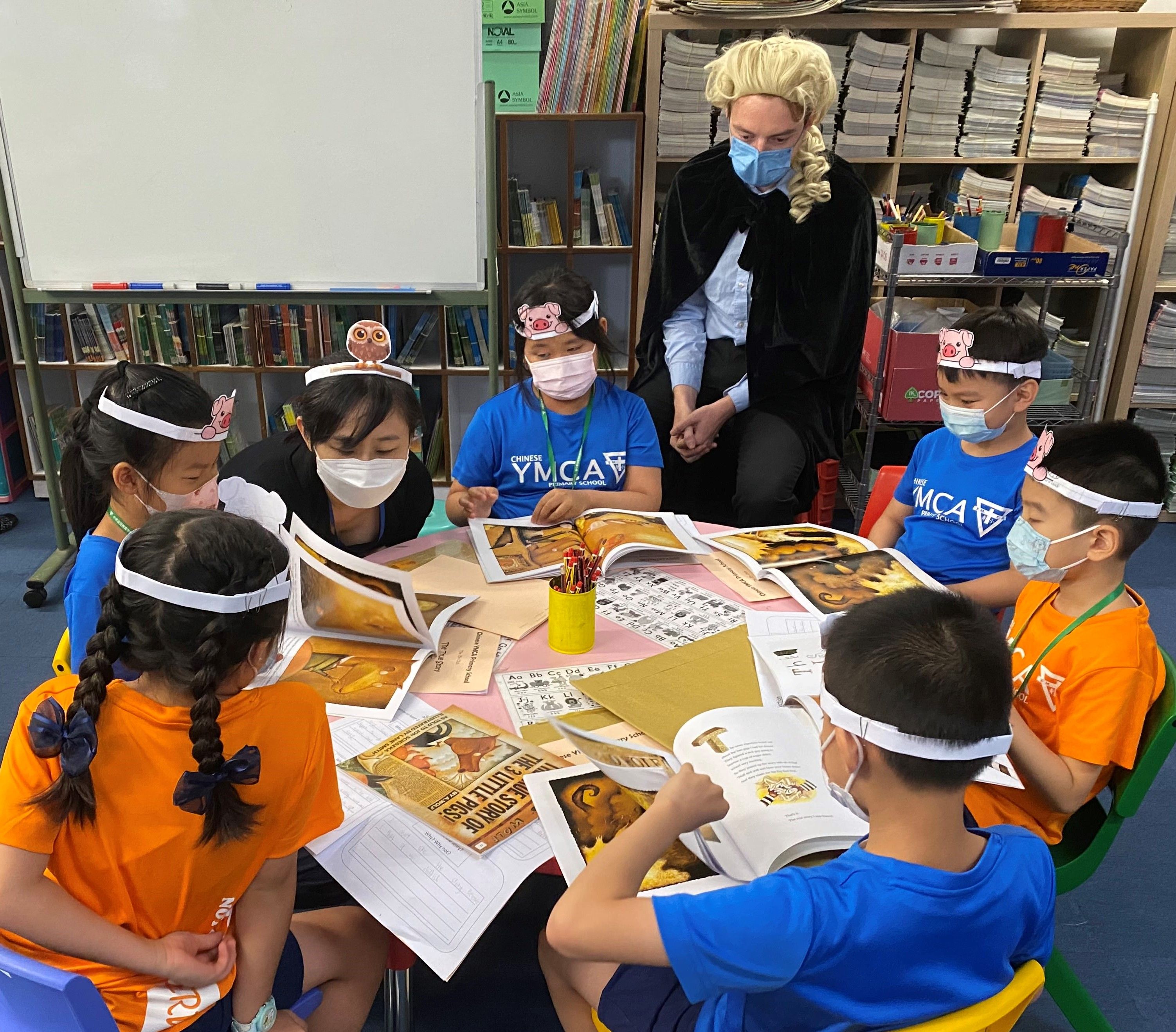
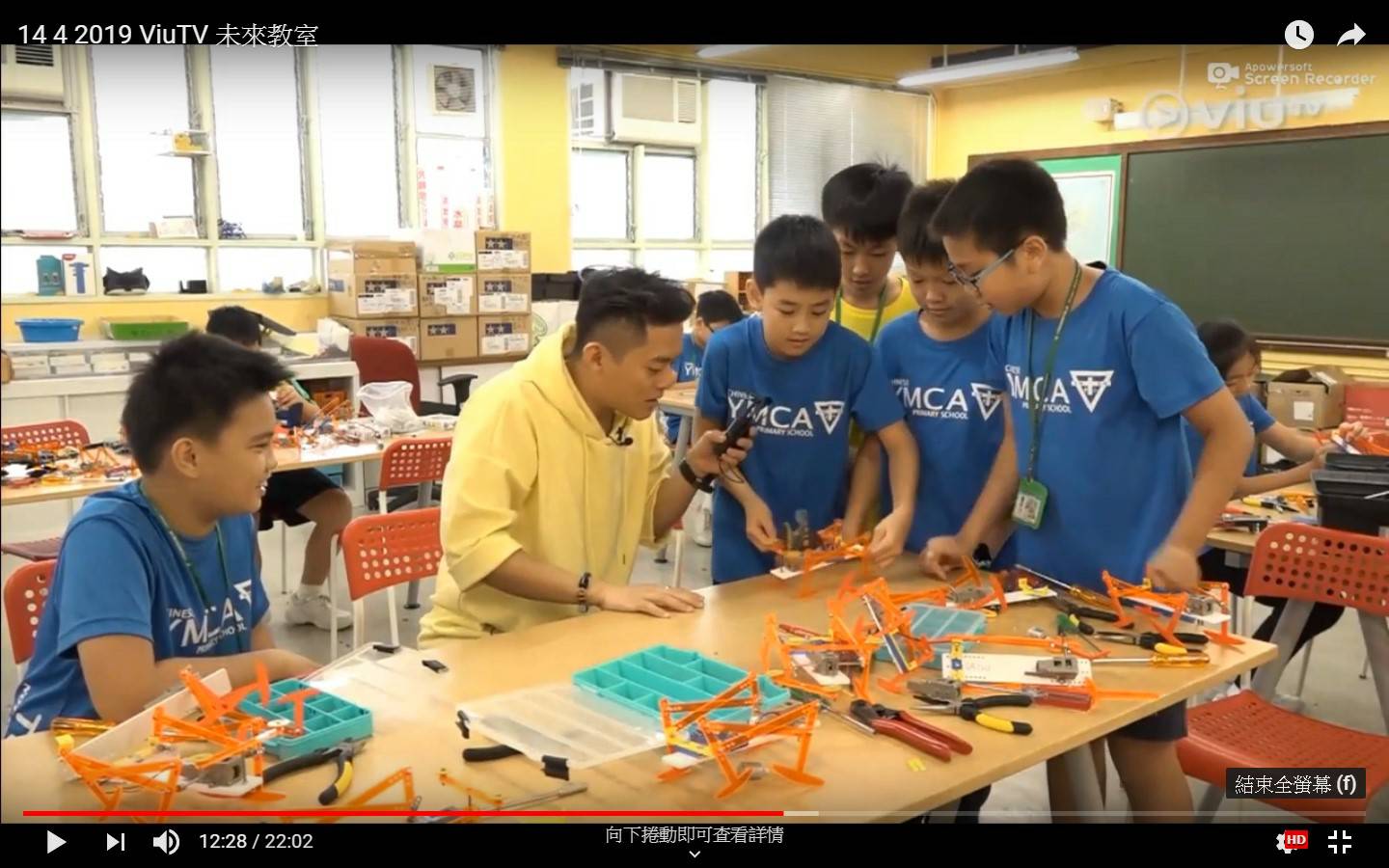
| Special Rooms | : | English Wonderland, Steam Lab room, Chinese Culture Room, Visual Art room, Metaverse room, Music room, Student Activity Centre, Smart Sports Centre, Counselling Room. |
| Facility(ies) for Supporting Students with Special Educational Needs | : | Ramp, Accessible lift and Accessible toilet. |
| Others | : | 3 Remedial teaching / counselling rooms. |
 Teaching Staff Information (Including School Head) in the 2025/2026 school year
 | Number of teaching posts in the approved establishment | : | 56 |
| Total number of teachers in the school | : | 63 |
| Qualifications and professional training (%) | ||
| Had Received Teacher Training | : | 95% |
| Bachelor Degree | : | 100% |
| Master/ Doctorate Degree or above | : | 44% |
| Special Education Training | : | 63% |
| Years of Experience (%) | ||
| 0 - 4 years | : | 22% |
| 5 - 9 years | : | 36% |
| 10 years or above | : | 42% |
 Class Structure
 | 2025/26 school year | ||
| P1 Number of classes | : | 5 |
| P2 Number of classes | : | 5 |
| P3 Number of classes | : | 5 |
| P4 Number of classes | : | 5 |
| P5 Number of classes | : | 5 |
| P6 Number of classes | : | 5 |
| Total | : | 30 |
| 2026/27 school year (Based on the number of classes approved by EDB in 2026) | ||
| P1 Number of classes | : | 4 |
| P2 Number of classes | : | 5 |
| P3 Number of classes | : | 5 |
| P4 Number of classes | : | 5 |
| P5 Number of classes | : | 5 |
| P6 Number of classes | : | 5 |
| Total | : | 29 |
| Mode of teaching at different levels | ||
| 1. Different pedagogies (especially Brain-based learning strategies) are adopted to enhance learning and teaching effectiveness. 2. Remedial classes are arranged to narrow the learning gap. 3. Whole school approach to cater for different learning needs. |
||
| Remarks | ||
| Small class teaching approach is undertaking for all classes to cater individual differences among students. | ||
 Performance Assessment
 | Applicable to P1 only | ||
| Number of test(s) per year | : | 0 |
| Number of exam(s) per year | : | 0 |
| Replace tests and examinations with diversified assessments in the first term of P1 | : | Yes |
| Applicable to P2 to P6 only | ||
| Number of test(s) per year | : | 0 |
| Number of exam(s) per year | : | 2 |
| Applicable to P1 to P6 | ||
| Formulate appropriate school-based assessment and assignment policies, inform parents of related arrangements, and collect views from teachers, students and parents regularly (at least once per school year) for ongoing review and optimisation of the school assessment and assignment policies | : | Yes |
| Upload the school-based assessment policy onto the school webpage for information of the public and stakeholders | : | Yes |
| Upload the school-based assignment policy onto the school webpage for information of the public and stakeholders | : | Yes |
| Diversified Assessment for Learning | : | 1. Formative and diversified assessment. 2. Summative assessment: P.1 No exams in the year; P.2 to P.5 - twice a year. P.6 three times a year 3. Assessment of generic skills through project learning. |
| Avoid arranging tests or examinations immediately after long holidays in order to let students take more rest during the holidays | : | Yes |
| Arrange the timetable flexibly according to the school context, with a tutorial session provided in the afternoon as far as possible for students to finish some of their homework under teachers’ guidance | : | Yes |
| Streaming arrangement | : | 1. Students are evenly grouped in different classes according to their academic performance. No streaming classes arrangement. 2. Based on the abilities of students, teachers adopt the curriculum and design learning materials to cater for learning differences. |
 School Life
 | Number of school days per week | : | 5 |
| Number of periods per day | : | 7 |
| Duration of each normal period | : | 35 |
| School starts at | : | 8:10 AM |
| School ends at | : | 3:00 PM |
| Lunch break | : | 1:15 - 2:15 |
| Lunch arrangement | : | Provided by designated supplier and arranged by parents. |
| Healthy school life | : | "Healthy campus" has been one of the goals of a long-term development plan of our school. We have participated in the Quality Education Fund "Thematic Network on Healthy Schools". With the help of self-assessment and monitoring system, it can effectively assist in the review and development of a culture of health awareness. |
| Remarks | : | 1. We have morning assembly & morning prayer. 2. Native Eng teachers work concertedly with local Eng teachers to provide a rich English learning atmosphere. 3. Students learn Life Education in classrooms and through co-curricular activities. 4. Orientation Day is organized for P.1 students. 5. High school bridging courses are organized for P.6 students. 6. No Homework Day scheme to enhance parent-child relationship. |
 Life-wide Learning
 | We provide over 80 kinds of multi-intelligence courses such as musical instruments, Language ambassadors, Hong Kong Grasshopper Scouts, creative drama, career and life planning. We also provide more than 50 extra-curricular activities such as English drama, puppetry, science team, Chinese dance, Chinese drum and different learning trips overseas to broaden students' view. |
 School Mission
 | To observe the Bible spirit "Not to be served, but to serve" and provide quality education to pupils. Our school also tries, by all means, to enhance our pupils' multiple intelligence inside and outside the classrooms. |
 School Characteristics
 | School Management | ||
| School Management Organisation | : | Education Department of the Sponsoring Body manages all the schools or institutes under CYMCA. Incorporated Management Committee manages the development and operations of CYMCAPS. Principal leads the school; Vice-principal manages the daily routines and administration work of the school; Middle-manager for Curriculum Development leads all the teachers to develop school-based curriculum in order to enhance teaching and learning in the school. |
| Incorporated Management Committee / School Management Committee/ Management Committee | : | Incorporated Management Committee |
| School Green Policy | : | 1. To promote paperless office. 2. To establish traditional farms. 3. Install solar energy collection devices. 4. Co-operate with Green@Community to recycle. |
| School's Major Concerns | : | 1. To enhance students' flexibility, resilience and courage facing challenges. 2. To enhance students' learning abilities through multi-dimensional learning experiences and prepare for fitting the future digital environment. |
| Learning and Teaching Plan | ||
| Learning & Teaching Strategies | : | Diverse and different teaching and learning strategies are adopted to cater for students' needs and interests, providing them with an all-round and well-balanced education in the following areas: values and attitudes; intellect; physique; social skills; aesthetics and spirituality. |
| Development of Major Renewed Emphases of the Primary Education Curriculum | : | 1. Enhance STEAM education, let students get equipped for the digital learning environment in the future. 2. Nurture students to be a responsible citizen in the country and the world, to develop students' correct values. |
| Development of Generic Skills | : | The activity teaching approach and I.T. teaching are adopted to facilitate the enhancement of students' creativity, problem-solving skills, collaborative skills and high-order thinking skills. |
| Cultivation of Proper Values, Attitudes and Behaviours | : | Through assembly, class building activities, 'Healthy Life' curriculum, uniform groups, community service and different programs, we aim to nurture students with positive values and attitude. There is a Bible lesson in P.1-6. Through Bible stories and games, students are nurtured to take Jesus as an example and love their neighbors as themselves. |
| Student Support | ||
| Whole School Approach to Catering for Learner Diversity | : | Remedial teaching is adopted to uplift students' academic performance as well as to cater for their learning differences. Moreover, we arrange the advanced students to be small teachers. During recesses, they study with lower primary students, giving them instructions in their learning. Besides that, our school has Student Support Team, which gives help and support to individual student in their learning need. To further strengthen gifted students' learning, we provide Mathematical Olympiad, Junior Space and Science Discovery classes. |
| Whole School Approach to Integrated Education | : | 'Early Identification and Intervention Programme for Primary One Students with Learning Difficulties', teaching and homework adaptation and assessment accommodation, remedial learning groups, training on social skills, Enhanced School-based Speech Therapy Service, Individual Education Plans (IEPs) for students with special educational needs. |
| Education Support for Non-Chinese Speaking(NCS) Students | : | Our school provides additional support for NCS students to facilitate their learning of Chinese: appointing additional teacher(s)/teaching assistant(s) to support NCS students' learning of Chinese; arranging intensive Chinese learning and teaching mode(s), e.g. pull-out learning if necessary, split-class/group learning, etc; developing school-based Chinese Language curriculum and/or adapting learning and teaching materials; organising activities to create an inclusive learning environment in the school; and hiring additional manpower and/or translation/interpretation services to facilitate the communication with parents of NCS students. By creating a richer language context and providing different learning opportunities, non-Chinese speaking students can learn with confidence and develop their strengths. |
| Curriculum Tailoring and Adaptation | : | 1. Providing suitable adjustment on homework and assessments for students with learning difficulties. Students with reading and writing difficulties will be given extra time 2. We have developed a school-based curriculum to cater the individual differences among students. Teachers renew the contents of the curriculum every academic year. 3. Based on the abilities of students, teachers adopt the curriculum and design learning materials for different needs. |
| Home-school Co-operation and School Ethos | ||
| Home-School Co-operation | : | 1. A parent-teacher association is established. 2. Home-school activities are held regularly to help children grow up healthily and happily. 3. We organise "Parents Academy" Programmes (16 sessions per year), providing parents the techniques of nurturing children. |
| School Ethos | : | 1. Our school strives to nurture love education as well as develop students' character and their academic achievement. 2. We participate in the Quality Education Fund "Thematic Network on Healthy Schools", to develop healthy culture. 3. We participate in the Adolescent Project and cooperate with the churches to promote a nurturing and caring school culture. |
| Future Development | ||
| School Development Plan | : | 1. Interface between kindergarten, primary and secondary school is well-established. 2. Unique school-based curriculum including English, STEAM, AI in education, Chinese picture book and experiential Learning 3. Character education: Healthy campus, Parent Academy, Healthy Life Education. 4. Global Campus. |
| Teacher Professional Training & Development | : | Teachers enroll different kinds of courses and workshop in subject matter and administrative aspect. All the subject panels and departments of the school will make a plan for the professional development each academic year in order to deal with the recent education trend. |
| Others | : | Chinese YMCA of HK is an international organization which actively supports the school to organize cross-cultural and cross-boundary programmes in order to broaden the life experience and international perspective of the students. Also, school sets a platform for students using different languages. YMCA provides resources for the school to promote two concepts "International Here" and "International There" at school. Students will be immersed in an internationalized environment through different programmes while staying in HK. |
 School Map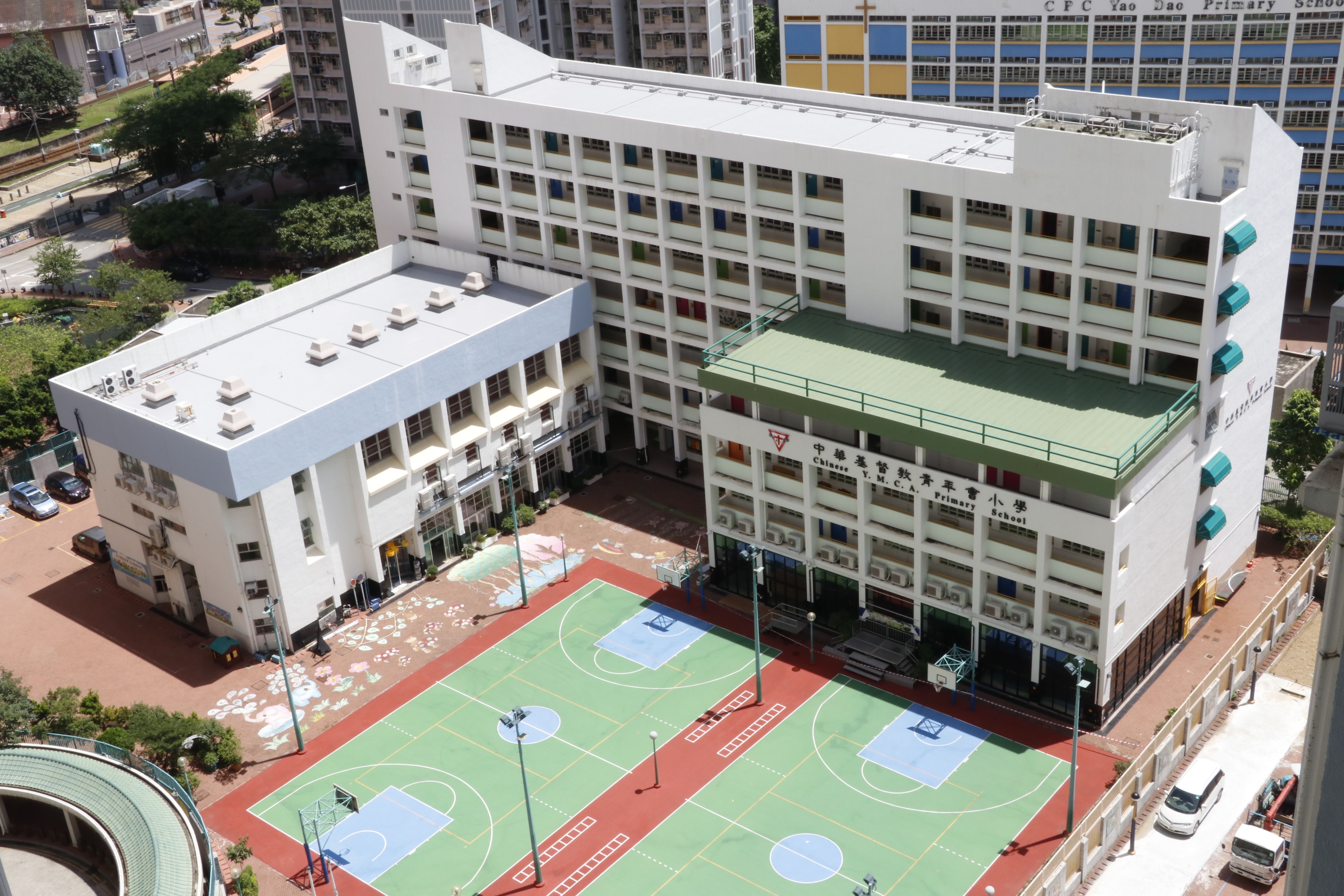
Last revision date:01 September 2026


