 Primary School Profiles 2026

 Primary School Profiles 2026
| Address: | Tin Yiu Estate, Phase III, Tin Shui Wai, Yuen Long, N.T. | |||
| Phone: | 24463018 | Email: | cyps@ms.cyps.edu.hk | |
| Fax: | 24486756 | Website: | https://www.cyps.edu.hk | |
 School Information
 | Supervisor/ Chairman of Management Committee | : | Dr. Choi Siu Wai William |
| School Head | : | Ms. Lai Pui Yu |
| Incorporated Management Committee been established? | : | Established |
| Percentage of School Supervisor and Managers / Chairperson and Members of School Management Committee (SMC) of Government Schools Fulfilling the Training Targets | : | 82% |
| School Type | : | Aided Whole Day |
| Student Gender | : | Co-ed |
| Sponsoring Body | : | Chiu Yang Residents Association of Hong Kong Ltd. |
| Religion | : | Not Applicable |
| Year of Commencement of Operation | : | 1993 |
| School Motto | : | Please refer to the Chinese version. |
| Area Occupied by the School | : | About 3500 Sq. M |
| Through-train Secondary School | : | - |
| Feeder Secondary School | : | - |
| Nominated Secondary School | : | - |
| Medium of Instruction | : | Chinese |
| School Bus Service | : |
- |
| Parent-Teacher Association | : | Yes |
| Past Students' Association/Alumni Association | : | Yes |
| 4Rs Mental Health Charter | : | Yes |
| Whole School Health Programme | : | Pledged School |
 2026/2027 Annual School Charges
| School Fee | : | - |
| Tong Fai | : | - |
| PTA Fee | : | $20 |
| Approved Charges for non-standard items | : | $470 |
| Other Charges | : | - |
 School Facilities
 | Number of Classroom(s) | : | 31 |
| Number of School Hall(s) | : | 2 |
| Number of Playground(s) | : | 2 |
| Number of Library(ies) | : | 2 |
| Special Rooms | : | TV Campus, Joyful corner, Visual Arts Room, Pottery Room, General Studies Room, Dancing Room, Computer Room/Innovation and Technology Room, Music Room, English Reading Room, Library, Counseling Room. |
| Facility(ies) for Supporting Students with Special Educational Needs | : | Ramp, Accessible lift and Accessible toilet. |
| Others | : | Classrooms are equipped with air conditioners, computers, interactive flat panel display, LCD projectors and visualizers. Tablets are available. The rooftop garden has a plant nursery for students. |
 Teaching Staff Information (Including School Head) in the 2025/2026 school year
 | Number of teaching posts in the approved establishment | : | 55 |
| Total number of teachers in the school | : | 58 |
| Qualifications and professional training (%) | ||
| Had Received Teacher Training | : | 93% |
| Bachelor Degree | : | 97% |
| Master/ Doctorate Degree or above | : | 17% |
| Special Education Training | : | 68% |
| Years of Experience (%) | ||
| 0 - 4 years | : | 16% |
| 5 - 9 years | : | 19% |
| 10 years or above | : | 65% |
 Class Structure
 | 2025/26 school year | ||
| P1 Number of classes | : | 5 |
| P2 Number of classes | : | 4 |
| P3 Number of classes | : | 5 |
| P4 Number of classes | : | 5 |
| P5 Number of classes | : | 5 |
| P6 Number of classes | : | 5 |
| Total | : | 29 |
| 2026/27 school year (Based on the number of classes approved by EDB in 2026) | ||
| P1 Number of classes | : | 4 |
| P2 Number of classes | : | 5 |
| P3 Number of classes | : | 4 |
| P4 Number of classes | : | 5 |
| P5 Number of classes | : | 5 |
| P6 Number of classes | : | 5 |
| Total | : | 28 |
| Mode of teaching at different levels | ||
| Our school implements a small class teaching and group learning model to enhance student learning effectiveness. Small class settings allows teachers to provide more guidance to students, while group learning promotes communication among students, fostering their problem-solving skills and collaborative spirit. | ||
| Remarks | ||
| - | ||
 Performance Assessment
 | Applicable to P1 only | ||
| Number of test(s) per year | : | 0 |
| Number of exam(s) per year | : | 2 |
| Replace tests and examinations with diversified assessments in the first term of P1 | : | Yes |
| Applicable to P2 to P6 only | ||
| Number of test(s) per year | : | 0 |
| Number of exam(s) per year | : | 3 |
| Applicable to P1 to P6 | ||
| Formulate appropriate school-based assessment and assignment policies, inform parents of related arrangements, and collect views from teachers, students and parents regularly (at least once per school year) for ongoing review and optimisation of the school assessment and assignment policies | : | Yes |
| Upload the school-based assessment policy onto the school webpage for information of the public and stakeholders | : | Yes |
| Upload the school-based assignment policy onto the school webpage for information of the public and stakeholders | : | Yes |
| Diversified Assessment for Learning | : | Our school's curriculum effectively integrates teaching strategies with various assessment methods. Beyond paper-and-pencil exams, we utilize formative assessments, project-based learning, oral presentations and practical evaluations to evaluate students' learning performance. Additionally, we conduct different assessments and parental evaluations to provide a holistic view of students' learning. |
| Avoid arranging tests or examinations immediately after long holidays in order to let students take more rest during the holidays | : | Yes |
| Arrange the timetable flexibly according to the school context, with a tutorial session provided in the afternoon as far as possible for students to finish some of their homework under teachers’ guidance | : | Yes |
| Streaming arrangement | : | 1. P.5 (2026-2027): Students are streamed, 2 classes with higher ability. 2. P.6 (2026-2027): Students are streamed, 2 classes with higher ability. |
 School Life
 | Number of school days per week | : | 5 |
| Number of periods per day | : | 9 |
| Duration of each normal period | : | 35 |
| School starts at | : | 8:15 AM |
| School ends at | : | 3:40 PM |
| Lunch break | : | 12:50 - 1:50 |
| Lunch arrangement | : | Provided by designated supplier and arranged by parents. |
| Healthy school life | : | Our school has established a Lunch Monitoring Committee to ensure the quality of food provided by vendors. We conduct a whole-school morning exercise program every week and have designated sports areas where students can engage in physical activities during recess and lunchtime. We also implement Physical Award Scheme aimed at encouraging students to exercise and develop healthy lifestyle habits. |
| Remarks | : | In addition to the lunch break, there are two twenty-minute breaks every school day. There are two personal growth education classes on Monday afternoons. Students can do homework in the last lesson on Tuesdays, Thursdays and Fridays. On Wednesday afternoons, multiple intelligences classes are provided. |
 Life-wide Learning
 | Training: Scouts, Community Youth Group, Flag Raising Team, Campus Reporters, Mathematics, English, Visual Arts, Robotics, Choir, Athletics, Ball Games, Dance, Handbells, Quiz Team, Little Master of Ceremonies. Experiential Activities: Magic, Musical Instruments, Sand Painting, Chinese Painting, Ball Games, Rope Skipping, Street Dance, Creative Robotics, Adventure Activities, STEAM Activities , Floral Workshop. Outdoor Activities: Various Field Trips, Overseas Exchange Programmes, Primary 6 Educational Camp. |
 School Mission
 | To provide our students with a well-rounded education in order to develop their moral, intellectual, physical, social and aesthetic values. To strengthen students' sense of national identity and encourage them to make contribution and commitment to the nation. |
 School Characteristics
 | School Management | ||
| School Management Organisation | : | Chiu Yang Primary School of Hong Kong is managed by Chiu Yang Residents Association of Hong Kong Limited. School Management Committee and the principal are responsible for making decisions and managing school affairs. Different committees, including administrative committee, academic committees and functional committees also help to ensure the smooth operation in school, and carrying out the administrative duties, the teaching duties in various subjects. |
| Incorporated Management Committee / School Management Committee/ Management Committee | : | The School Management Committee consists of seven members from the sponsoring body, one Independent Manager, one School Principal (ex-officio manager), one Teacher Manager, one Parent Manager and one Alumni Manager. |
| School Green Policy | : | 1. School Green Policy includes source separation of waste and encouraging recycling of waste. 2. School uniform recycling program |
| School's Major Concerns | : | Resilience and Responsibility; Exploration and Innovation for Tomorrow. Major Concern One: Strengthening Values Education (1. Nurture students to become resilient, responsible, and accountable citizens. 2. Enhance students' understanding of the nation and foster a sense of belonging.) Major Concern Two: Enhancing Students' Inquiry Spirit (1. Improve students' ability to utilize tools in conjunction with subject knowledge to explore concepts and solve problems. 2. Strengthen students' programming skills.) |
| Learning and Teaching Plan | ||
| Learning & Teaching Strategies | : | Based on the curriculum guides proposed by the Curriculum Development Council (CDC), we have developed a school-based curriculum in different Key Learning Areas (KLAs). Our lessons are conducted with a diversity of learning activities, such as group discussions, role-playing, note-taking, thinking training using concept maps, class reports and presentations and e-learning activities. Small class teaching in Primary 1 to Primary 6. Primary Literacy Programme-Reading is implemented in Primary 1 to Primary 3. |
| Development of Major Renewed Emphases of the Primary Education Curriculum | : | Focus on the following seven major renewed emphases to enhance the whole school curriculum, and develop distinctive school-based curriculum with reference to the central curriculum framework: Strengthening values education (including life education, national education and national security education); making good use of learning time and creating space to promote a balanced physical and mental development; enriching life-wide learning experiences and promoting whole-person development; better catering for learner diversity; reinforcing STEAM education, and nurturing students’ media and digital literacy; strengthening cross-curricular learning and reading across the curriculum for developing lifelong learning capabilities; and enhancing assessment literacy for promoting learning and teaching effectiveness. |
| Development of Generic Skills | : | Generic skills are developed through the learning and teaching of the KLAs and other contexts and activities such as interactive learning activities and extra-curricular activities. |
| Cultivation of Proper Values, Attitudes and Behaviours | : | Promote the learning of proper values in the subjects through the life-wide learning activities and morning speeches. In addition, through counselling activities and Volunteer Service Program to promote life education, national education and national security education, etc., to create a school-wide atmosphere, and at the same time provide students with practical opportunities to enrich what they have learned. |
| Student Support | ||
| Whole School Approach to Catering for Learner Diversity | : | Remedial Teaching Classes in Primary 2, 3 and 4,Language Reading and Writing groups(Chinese and English),I Can Do It Group(Behavioral Improvement and Self-care counselling), Emotional management and Social Skills Group, Attention training groups ,Self-confidence enhancement group ,Resilience enhancement group, Understanding Adolescent Project (intensive programme), Service Learning Activities, AIM-Project |
| Whole School Approach to Integrated Education | : | Our school's 'Student Support Team' caters for students with different special education needs. Co-teaching in remedial class, curriculum adaption, homework adaption, assessment adaptation (dictation, quiz and examination), Enhanced School-based Speech Therapy Service and School-based Educational Psychology Service are implemented. We will discuss the progress of the student with the parents to ensure that the student receives appropriate support. Talks and workshops are organized regularly for parents on enhancing children's Chinese reading and writing skills and building a good parent-child relationship. |
| Education Support for Non-Chinese Speaking(NCS) Students | : | Our school provides additional support for NCS students to facilitate their learning of Chinese: providing after-school support programmes in learning Chinese; appointing additional teacher(s)/teaching assistant(s) to support NCS students' learning of Chinese; developing school-based Chinese Language curriculum and/or adapting learning and teaching materials; and organising activities to create an inclusive learning environment in the school. |
| Curriculum Tailoring and Adaptation | : | Our teachers have co-planning meetings regularly for the subjects Chinese Language, English Language, Mathematics, General Studies, Humanities and Science in order to select right learning materials and make adaption from textbooks. For students with high potential, we provide different enhancement programmes. Implement the 'three-tiered implementation mode of gifted education', infusing higher-order thinking skills, creativity, and personal-social competence into classroom learning to unleash students' potential. Establish a school-based talent pool and optimise the use of school-based and external resources to cater for students' diverse developmental needs at different stages and foster whole-person development. |
| Home-school Co-operation and School Ethos | ||
| Home-School Co-operation | : | 1. The Parent-Teacher Association convenes monthly meetings, serving as a vital bridge for communication and connection between the school and parents, thereby promoting home-school co-operation. 2. The Parent-Teacher Association organizes a variety of parent and family activities to cultivate students' positive values. This includes different parent seminars, workshops, and adventure activities to enhance communication between parents and children while collaborating with the school to create diverse learning and growth opportunities for students. |
| School Ethos | : | Through academic activities, discipline, student guidance and extra-curricular activities to cultivate students to attain all-round development in the domains of ethics, the intellect, the physique, social skills and aesthetics. |
| Future Development | ||
| School Development Plan | : | Based on EDB Primary Education Curriculum Guide (2024), and in line with our school vision, development priorities and students’ needs, we review the areas that schools need to sustain, deepen and focus on. We focus on the following seven major renewed emphases to enhance the whole-school curriculum in providing students with diversified, appropriate and meaningful learning experiences, and broaden their scope of learning and horizons to achieve whole-person development and establish a solid foundation for lifelong learning. Strengthening values education (including life education, national education and national security education), making good use of learning time and creating space to promote a balanced physical and mental development, enriching life-wide learning experiences and promoting whole-person development, better catering for learner diversity, reinforcing STEAM education and nurturing students' media and digital literacy, strengthening cross-curricular learning and reading across the curriculum for developing lifelong learning capabilities, enhancing assessment literacy for promoting learning and teaching effectiveness. |
| Teacher Professional Training & Development | : | 1. Teachers participate in different training courses in order to enhance teacher professional development. 2. To cultivate a culture of sharing and mutual learning, teachers take part in co-planning, peer lesson observation and sharing sessions regularly. 3. Strengthen STEAM and AI teaching training for teachers. |
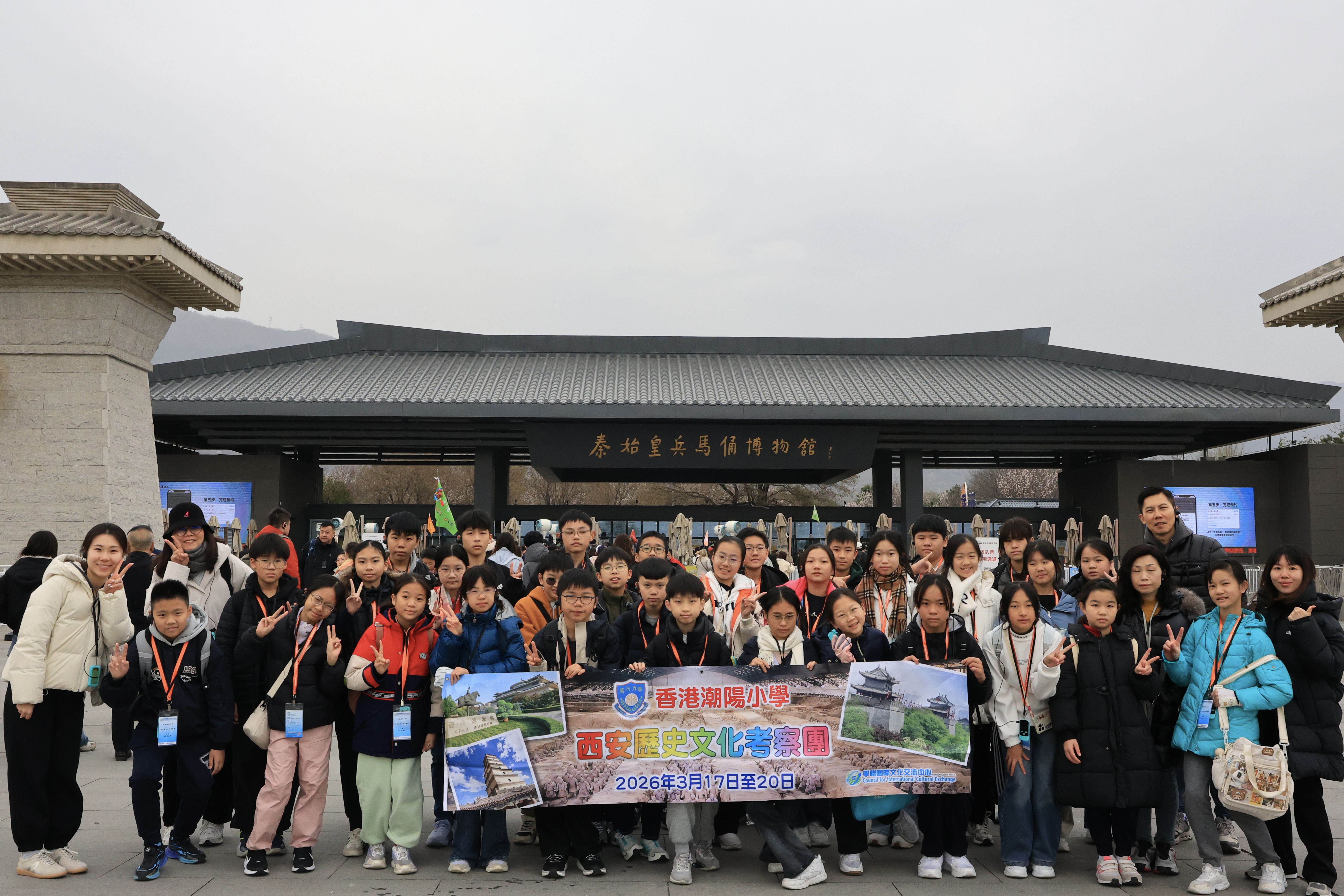
| Others | : | 1. Students will be awarded scholarships for the following aspects: Academic performance, Outstanding behaviour, Extra-curricular activities. 2. The school recommend gifted students participate in the enrichment and gifted education programs offered by the Education Bureau, the Hong Kong Academy for Gifted Education, and various higher education institutions. 3. The Dancing Group got outstanding achievements in the inter-school dance competitions. 4. Exchange programmes are organised for Primary 5 and 6 students to visit the Mainland sister schools and join the overseas learning tour. |
 School Map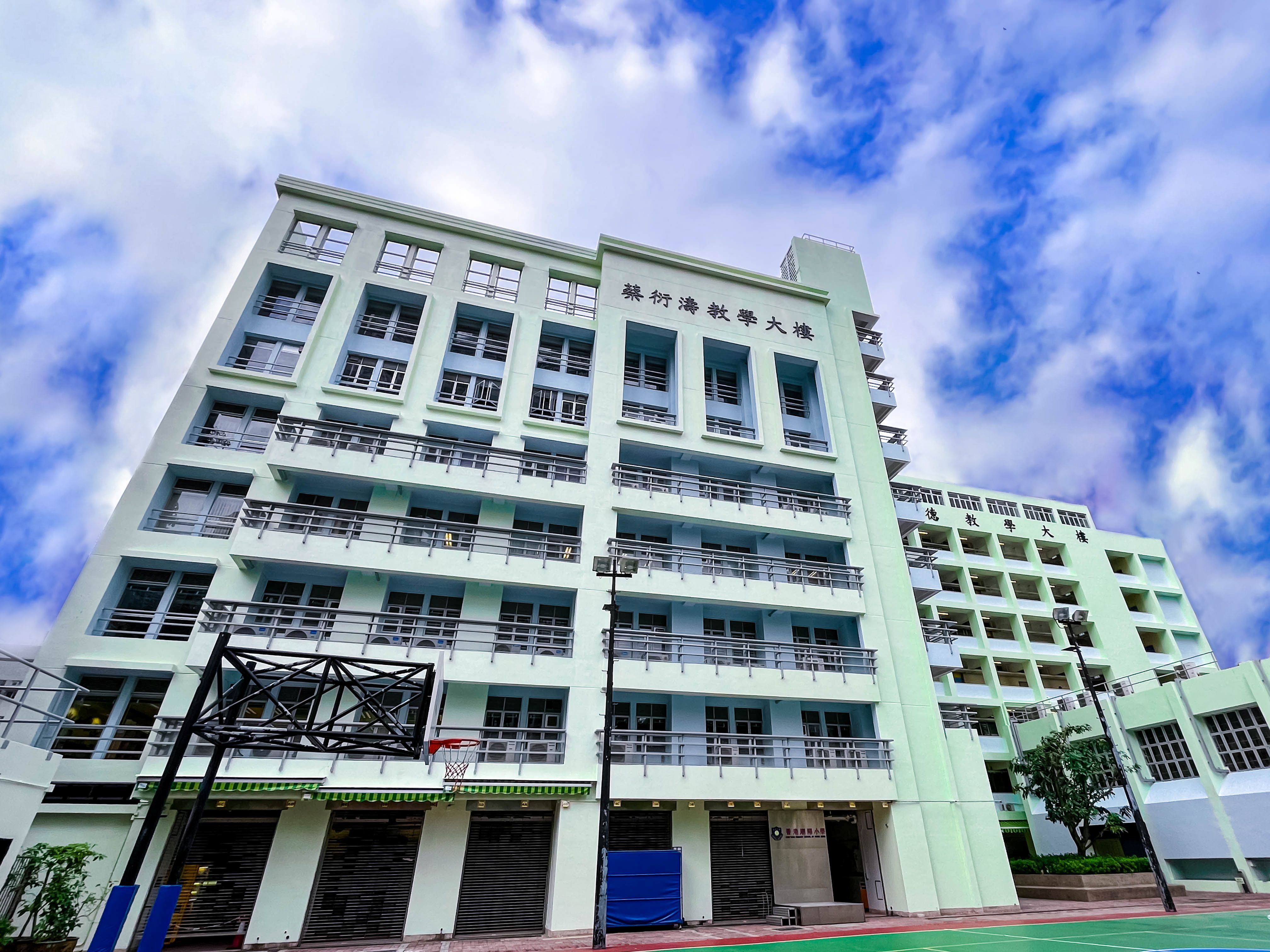

Last revision date:01 September 2026


