 Primary School Profiles 2026


 Primary School Profiles 2026
| Address: | 82 Tin Shui Road, Tin Shui Wai, Yuen Long, N.T. | |||
| Phone: | 24461633 | Email: | info@skhtswlo.edu.hk | |
| Fax: | 24461630 | Website: | https://www.skhtswlo.edu.hk | |
 School Information
| Supervisor/ Chairman of Management Committee | : | Ms. Kwok Che Chin Cindy |
| School Head | : | Ms. Chan Sze Kit |
| Incorporated Management Committee been established? | : | Established |
| Percentage of School Supervisor and Managers / Chairperson and Members of School Management Committee (SMC) of Government Schools Fulfilling the Training Targets | : | Not Applicable |
| School Type | : | Aided Whole Day |
| Student Gender | : | Co-ed |
| Sponsoring Body | : | Anglican (Hong Kong) Primary Schools Council Limited |
| Religion | : | Protestantism / Christianity |
| Year of Commencement of Operation | : | 2002 |
| School Motto | : | Not to be served but to serve |
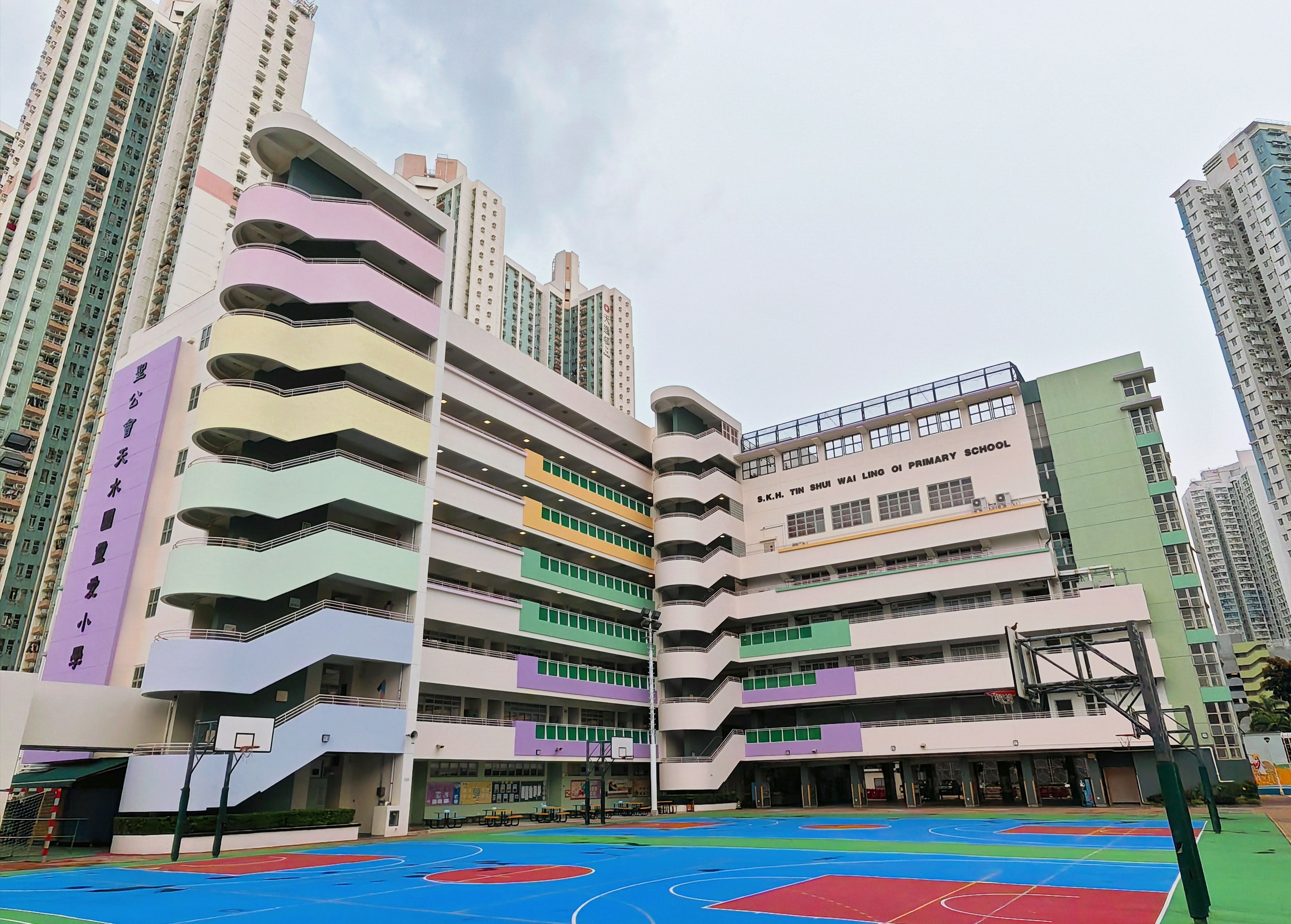
| Area Occupied by the School | : | About 6280 Sq. M |
| Through-train Secondary School | : | - |
| Feeder Secondary School | : | - |
| Nominated Secondary School | : | - |
| Medium of Instruction | : | Chinese |
| School Bus Service | : | Nanny van |
| Parent-Teacher Association | : | Yes |
| Past Students' Association/Alumni Association | : | Yes |
| 4Rs Mental Health Charter | : | Yes |
| Whole School Health Programme | : | Action School |
 2026/2027 Annual School Charges
| School Fee | : | - |
| Tong Fai | : | - |
| PTA Fee | : | $45 |
| Approved Charges for non-standard items | : | $450 |
| Other Charges | : | - |
 School Facilities
| Number of Classroom(s) | : | 32 |
| Number of School Hall(s) | : | 1 |
| Number of Playground(s) | : | 2 |
| Number of Library(ies) | : | 1 |
| Special Rooms | : | Computer Room, Music Room, STEAM Centre, Visual Art Room, General Studies Room, The Way, Library, Language Room, Annex Block, Conference Room, Social Worker Room, Small Group Teaching Rooms, Emmanuel Room, Dancing Room, Tin Ling Gallery, PTA Resources Room, Covered Playground, Playground, Hall |
| Facility(ies) for Supporting Students with Special Educational Needs | : | Accessible lift, Accessible toilet, Tactile guide path and Accessible public information / service counter. |
| Others | : | Tin Ling Gallery, PTA Resources Room, Chinese Cultural Room |
 Teaching Staff Information (Including School Head) in the 2025/2026 school year
| Number of teaching posts in the approved establishment | : | 47 |
| Total number of teachers in the school | : | 50 |
| Qualifications and professional training (%) | ||
| Had Received Teacher Training | : | 100% |
| Bachelor Degree | : | 100% |
| Master/ Doctorate Degree or above | : | 33% |
| Special Education Training | : | 93% |
| Years of Experience (%) | ||
| 0 - 4 years | : | 0% |
| 5 - 9 years | : | 11% |
| 10 years or above | : | 89% |
 Class Structure
| 2025/26 school year | ||
| P1 Number of classes | : | 2 |
| P2 Number of classes | : | 3 |
| P3 Number of classes | : | 4 |
| P4 Number of classes | : | 5 |
| P5 Number of classes | : | 5 |
| P6 Number of classes | : | 5 |
| Total | : | 24 |
| 2026/27 school year (Based on the number of classes approved by EDB in 2026) | ||
| P1 Number of classes | : | 2 |
| P2 Number of classes | : | 2 |
| P3 Number of classes | : | 3 |
| P4 Number of classes | : | 4 |
| P5 Number of classes | : | 5 |
| P6 Number of classes | : | 5 |
| Total | : | 21 |
| Mode of teaching at different levels | ||
| The school adopts small-class teaching and an experiential learning-based curriculum, allowing every student to learn in different contexts. This helps students develop 21st-century competencies and become globally aware citizens. | ||
| Remarks | ||
| 1. Experiential Learning and Life-wide Learning activities are held in class to encourage students to reflect on and learn from their personal experience. 2. A variety of assessment methods are used to evaluate student learning, allowing teaching progress to be adjusted in a timely manner. |
||
 Performance Assessment
| Applicable to P1 only | ||
| Number of test(s) per year | : | 0 |
| Number of exam(s) per year | : | 1 |
| Replace tests and examinations with diversified assessments in the first term of P1 | : | Yes |
| Applicable to P2 to P6 only | ||
| Number of test(s) per year | : | 0 |
| Number of exam(s) per year | : | 2 |
| Applicable to P1 to P6 | ||
| Formulate appropriate school-based assessment and assignment policies, inform parents of related arrangements, and collect views from teachers, students and parents regularly (at least once per school year) for ongoing review and optimisation of the school assessment and assignment policies | : | Yes |
| Upload the school-based assessment policy onto the school webpage for information of the public and stakeholders | : | Yes |
| Upload the school-based assignment policy onto the school webpage for information of the public and stakeholders | : | Yes |
| Diversified Assessment for Learning | : | We use various forms of assessment in each subject. We emphasis on students' self- assessment and reflection. Therefore, formative assessment and dictation results will not be counted on their grade. All students work towards creating a portfolio, a written report (comments and suggestions) and a multiple intelligence analysis. All P.6 students must complete the final year project (FYP). |
| Avoid arranging tests or examinations immediately after long holidays in order to let students take more rest during the holidays | : | Yes |
| Arrange the timetable flexibly according to the school context, with a tutorial session provided in the afternoon as far as possible for students to finish some of their homework under teachers’ guidance | : | Yes |
| Streaming arrangement | : | Students are allocated to classes of mixed ability levels at each grade. For P.5 and 6, students are grouped by ability for Chinese and English lessons. The school promotes differentiated instruction, designing appropriate learning tasks based on each student's individual ability. |
 School Life
| Number of school days per week | : | 5 |
| Number of periods per day | : | 9 |
| Duration of each normal period | : | 35 |
| School starts at | : | 8:00 AM |
| School ends at | : | 3:20 PM |
| Lunch break | : | 1:10 - 2:10 |
| Lunch arrangement | : | Provided by designated supplier and arranged by parents. |
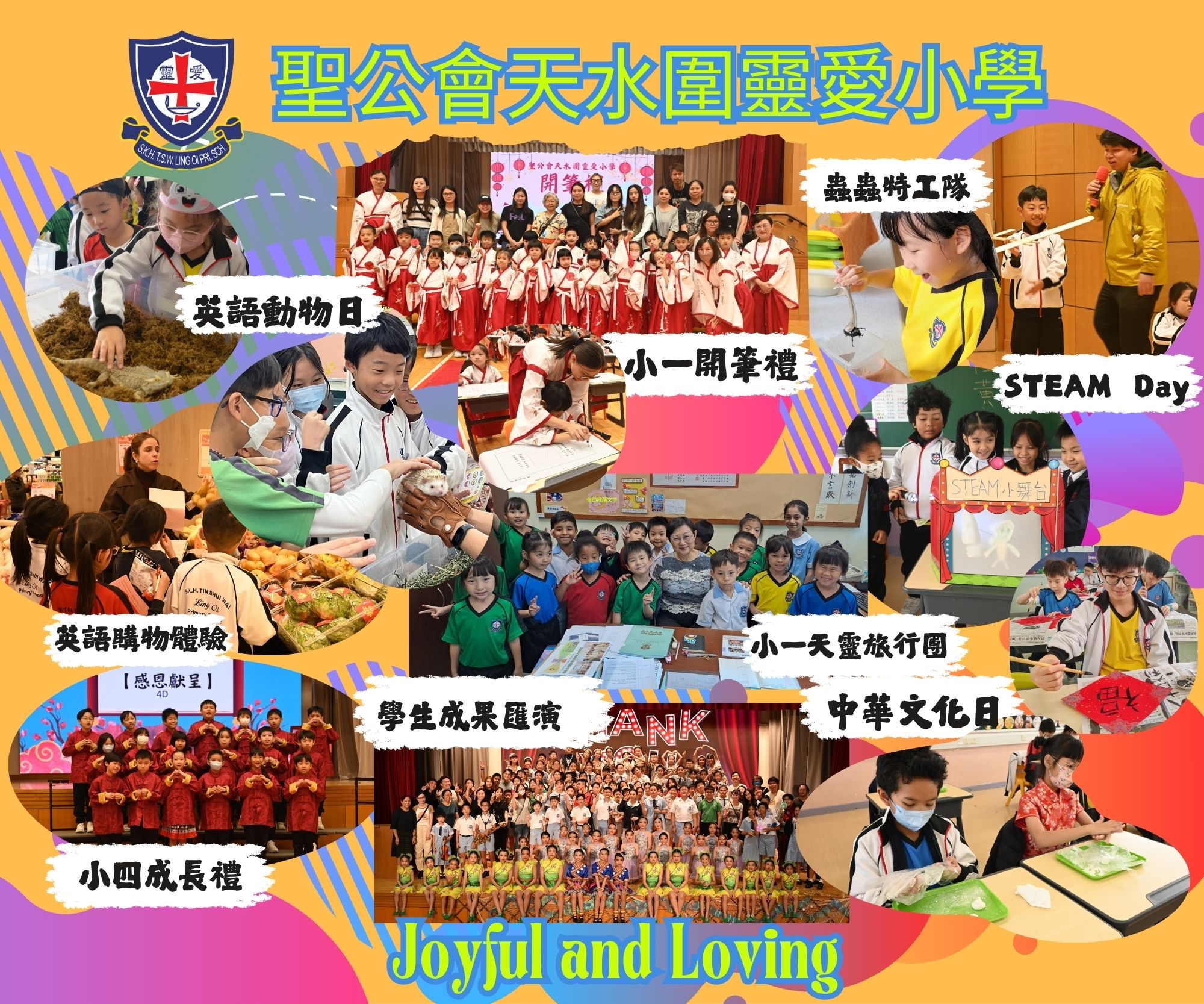
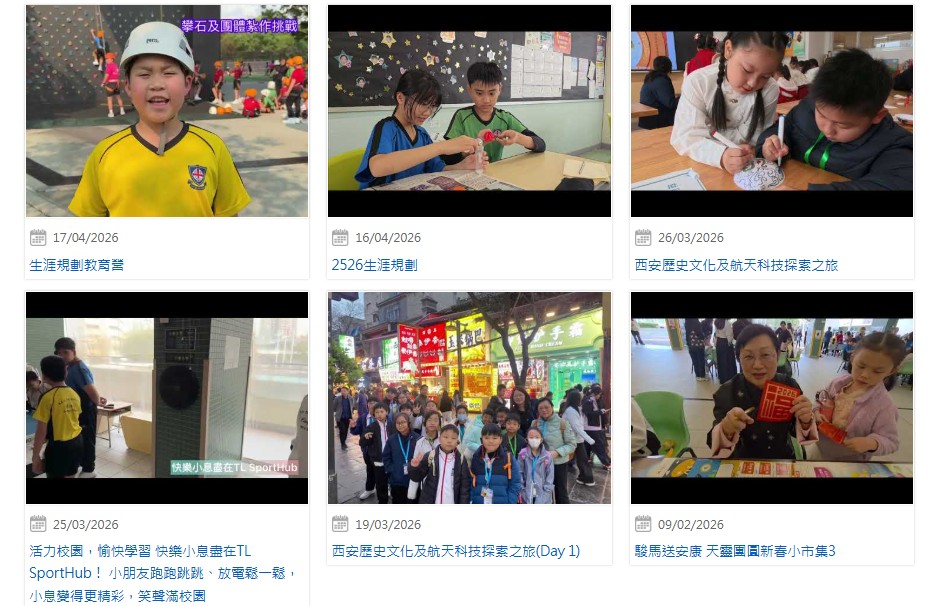
| Healthy school life | : | Our school makes good use of campus spaces, having set up an AI sports station and TL SportHub to promote digital sports. Through the school-based MVPA60 timetable, diverse experiential PE lessons, cross-curricular thematic activities, various sports reward schemes, sports ambassador training and parent participation, we create a strong sports atmosphere, developing students' regular exercise habits, and establishing a healthy lifestyle. |
| Remarks | : | The Student Affairs Team monitors the food quality supplied by vendors. It also promotes various programmes including vegetarian meals, parent food tasting sessions, Fruit Month, spinal care campus initiatives and eye-care activities. The team keeps track of school bag weight. |
 Life-wide Learning
| Our school adopts Experiential Learning, offering over 70 after-school activities covering intelligence, service, arts, career exploration and more. Through real-life contexts, thematic events and joyful recess, we nurture students’ 21st-century skills and global citizenship vision, promoting whole-person development, unleashing their potential, and shaping them into "Shining Star." |
 School Mission
| Our school motto is "Not to be served but to serve." We act out of the Sponsoring Body's aim to promote, in Christian spirit, the whole-person development of students, their ethics, intellect, physique, social skills, aesthetics and spiritual domains, so that they may develop a sound character and the spirit of fellowship to serve the society and the nation in order to contribute to the betterment of mankind. |
 School Characteristics
| School Management | ||
| School Management Organisation | : | The school is managed by the IMC. The principal leads the vice-principals and the administrative committee to ensure sustainable development of the school and manages the daily operation of the school. |
| Incorporated Management Committee / School Management Committee/ Management Committee | : | The IMC consists of a priest, a parent, an alumnus, a teacher, our principal and some professional administrative managers. |
| School Green Policy | : | To promote sustainable environmental development on campus, the school is dedicated to advancing environmental education. We have established a team of "Environmental Ambassadors" to encourage students to participate in eco-friendly activities and practice a green lifestyle. Furthermore, we collaborate with the community to conduct environmental outreach programmes and services. |
| School's Major Concerns | : | We strive to optimize teaching and learning strategies in order to enhance students’ learning capabilities. We continue to cultivate students’21st century generic skills. We continuously promote positive education, strengthen students’ values, and enhance their sense of well-being. |
| Learning and Teaching Plan | ||
| Learning & Teaching Strategies | : | We put emphasis on learning from experience. Students' generic skills, positive values and attitudes are cultivated through diversified experiential learning scenarios related to their life experience, so they are confident to face any challenges in the future. Teachers adjust the teaching strategies to address students' difficulties. We keep everyone a personal portfolio so that they can take control of their own learning process according to their personal interests and character traits. |
| Development of Major Renewed Emphases of the Primary Education Curriculum | : | Our curriculum is designed on a “cross- curriculum experiential learning" basis. The six-year study of students starts from getting to know the campus, through caring for families to nature and the social environment. Also, students are guided in their life planning and finally become global citizens. The curriculum enhances students’ whole-person development. Each grade carries out different experiential learning activities according to themes, including national security education, values education, service learning, STEAM education, reading, healthy life practice and other aspects of learning. For example, in the themed study of HK, students read books about old HK, explore the Houhai Bay preserved in Shenzhen and Hong Kong, explore the issue of population ageing with gerontology etc. Before graduation, students need to complete the final year project study. |
| Development of Generic Skills | : | The school-based experiential learning curriculum integrates the learning foci of different subjects, allowing students to learn through life-wide learning activities, such as field trips, forest experiences, contextual learning, orienteering activities, lectures, etc. The purpose of our curriculum is to enhance students' generic skills, well-being and personal responsibility to care about the world so that our students become optimistic and positive learners of the 21st century with the qualities of global citizens. |
| Cultivation of Proper Values, Attitudes and Behaviours | : | Based upon Christian values, we are committed to promoting positive education to help children understand themselves, develop their potential, respect each other, establish healthy interpersonal relationships and become responsible citizens. We integrate national security education into daily life to increase students' national identity and social responsibility. We actively promote healthy campus culture, cultivate perseverance and positive thinking. Our kids are to become future citizens with a sense of responsibility and positive values. |
| Student Support | ||
| Whole School Approach to Catering for Learner Diversity | : | We use the whole-school approach and the 3-tier intervention model to cater for students' diversity. We provide varied support to different SEN students. We also provide gifted education to talented students. |
| Whole School Approach to Integrated Education | : | Core members of our School Student Support Team include Special Educational Needs Coordinator, Special Educational Needs Support Teachers, teaching assistants and school social workers. We carry out a whole school approach to support SEN students. Related training courses, homework adaptation, small group teaching, social skills training courses and school-based speech therapy services are provided for students with special educational needs. |
| Education Support for Non-Chinese Speaking(NCS) Students | : | Our school provides additional support for NCS students to facilitate their learning of Chinese: providing after-school support programmes in learning Chinese; appointing additional teacher(s)/teaching assistant(s) to support NCS students' learning of Chinese; arranging intensive Chinese learning and teaching mode(s), e.g. pull-out learning if necessary, split-class/group learning, etc; developing school-based Chinese Language curriculum and/or adapting learning and teaching materials; and organising activities to create an inclusive learning environment in the school. |
| Curriculum Tailoring and Adaptation | : | 1. Curriculum adaptation in all subjects. 2. Implementation of assignment and assessment accommodation. 3. Provide suitable curriculum adaptation for SEN students. 4. Extra time allowance, reading aloud of papers and enlarged question papers are provided for students with SpLD in reading and writing. 5. Provide counselling programs, enhancement classes and various elite learning groups. |
| Home-school Co-operation and School Ethos | ||
| Home-School Co-operation | : | 1. The PTA and PTA voluntary team is valuable in implementing various activities in schools. 2. School organizes parent education programmes, various kinds of activities for parents to nurture their children in a happy, healthy and balanced way. 3. School organizes "Parent-teacher gatherings" and "Gathering with the Principal" for all levels to encourage effective communication among parents and teachers. |
| School Ethos | : | Promoting the sense of "serving one another" through Christian education and to develop a pleasurable, friendly and caring school culture with gratitude. |
| Future Development | ||
| School Development Plan | : | 1. We continue to enhance the efficacy of teaching and learning. 2. We continue to strengthen values education, positive education, national education and national security education while cultivating students' correct values and positive thinking. 3. We strive to develop STEAM education and promote innovative learning. Our main goal is to develop self-directed learners. 4. We make good use of learning time and create space to promote a balanced physical and psychological development to promote healthy lifestyle. 5. We have launch an AI school-based curriculum in order to enhance students' understanding of artificial intelligence and nurture their media and information literacy. |
| Teacher Professional Training & Development | : | Aligning with our school’s major concerns and curriculum development, we organize multiple staff development days and varied professional sharing sessions for our teachers annually. We organize a professional development session every week to share the insights and reflections in teaching. Co-planning meetings and subject lesson observation are held frequently. |
| Others | : | Our students actively participate in various competitions and have achieved numerous honors, such as: Our school won the championship in the Yuen Long District Schools Volleyball Competition this year. Every year, several of our students have been selected for the Yuen Long District Primary School representatives in athletics, volleyball and football. They represent Yuen Long District in All HK Inter-Area Primary Schools Competitions. Our school organises various overseas exchange activities every year, including: • Sports study tours: Beijing, Shanghai, Singapore, South Korea • Arts exchange tours: South Korea, Taipei, Taichung • History, culture and aerospace technology development tours: Xi'an, Hangzhou, Foshan, Sichuan |
 School Map
Last revision date:01 September 2026


