| School Management |
| School Management Organisation |
:
| Under the governance of the IMC, the school's development direction is strategically planned and implemented. Under the leadership of the Principal, Vice Principals and members of the Administrative Committee coordinate planning and oversight, leading the teaching team to implement school initiatives effectively. Through clear strategies, data-informed planning and a collaborative professional culture, the school promotes continuous improvement, enhances educational quality and supports students' whole-person development. |
| Incorporated Management Committee / School Management Committee/ Management Committee |
:
| The Incorporated Management Committee (IMC) comprises representatives of the sponsoring body, the Principal, teachers, parents, alumni and independent members. Upholding a student-centred philosophy, members work collaboratively to guide school development. Through broad participation and professional input, the IMC strengthens governance, promotes continuous improvement and supports the school's vision of whole-person education. |
| School Green Policy |
:
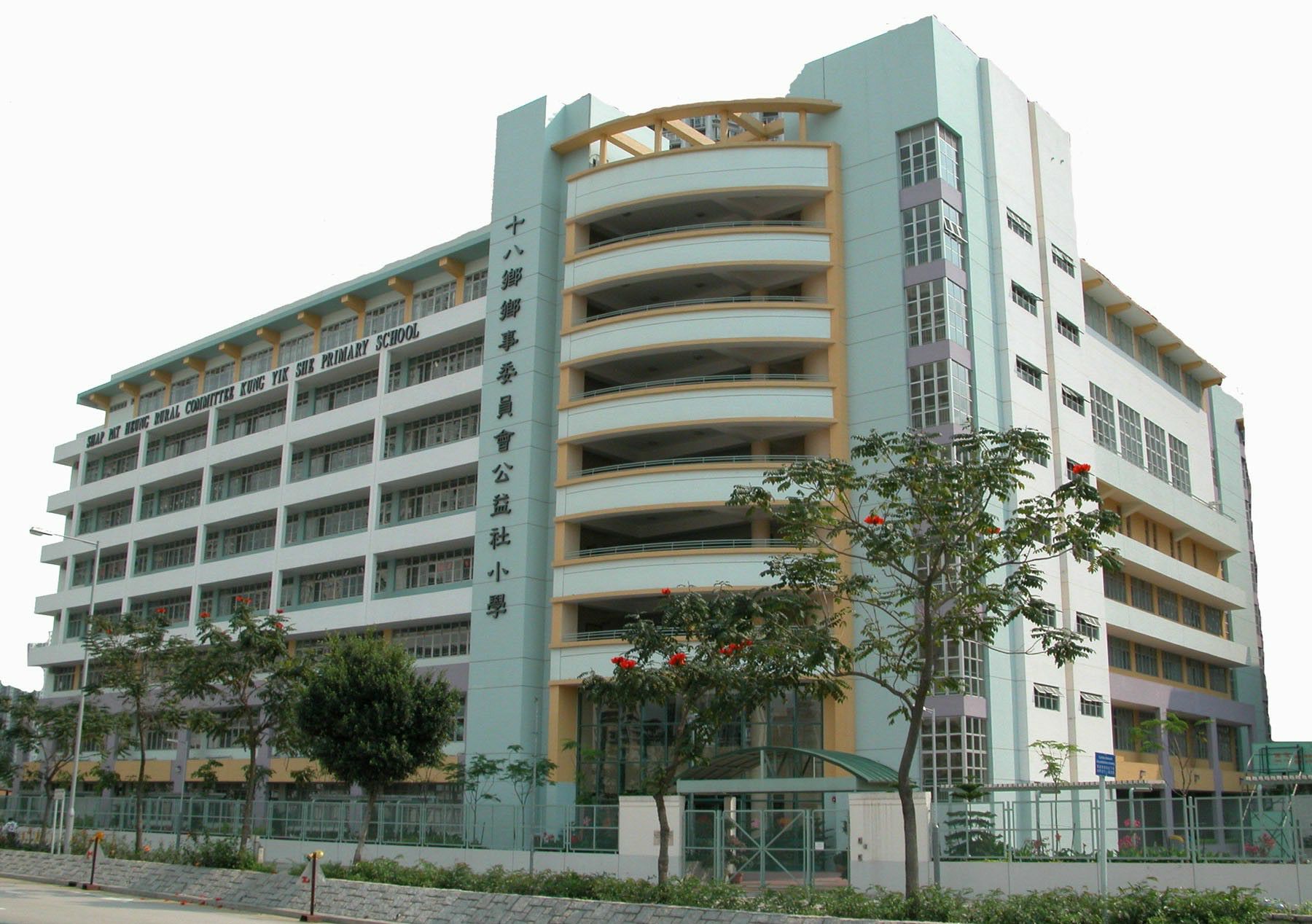
| The school upholds an environmental philosophy and actively promotes a green campus, creating a healthy and sustainable learning environment. A signature bougainvillea corridor enriches the campus with natural beauty and allows students to appreciate greenery in daily school life, fostering a closer connection with nature. Through environmental education and daily exposure, students develop environmental awareness, learn to cherish resources and cultivate a caring attitude towards the environment. |
| School's Major Concerns |
:
| (1) Enhancing Students' Self-Directed Learning Skills Through Experiential Learning.
(2) Promoting students' health literacy. |
| Learning and Teaching Plan |
| Learning & Teaching Strategies |
:
| The school implements a school-based reading curriculum in both Chinese and English, using quality texts and diverse reading materials to strengthen reading comprehension and broaden learning experiences. In Mathematics, students explain reasoning and problem-solving processes to develop logical thinking and deepen conceptual understanding. STEM education is promoted through scientific inquiry and technology application, enhancing creativity and problem-solving skills. Experiential learning beyond the classroom enables students to construct knowledge in authentic contexts. Guided by a “learning through talk” approach, classroom dialogue fosters thinking, expression and self-directed learning. |
| Development of Major Renewed Emphases of the Primary Education Curriculum |
:
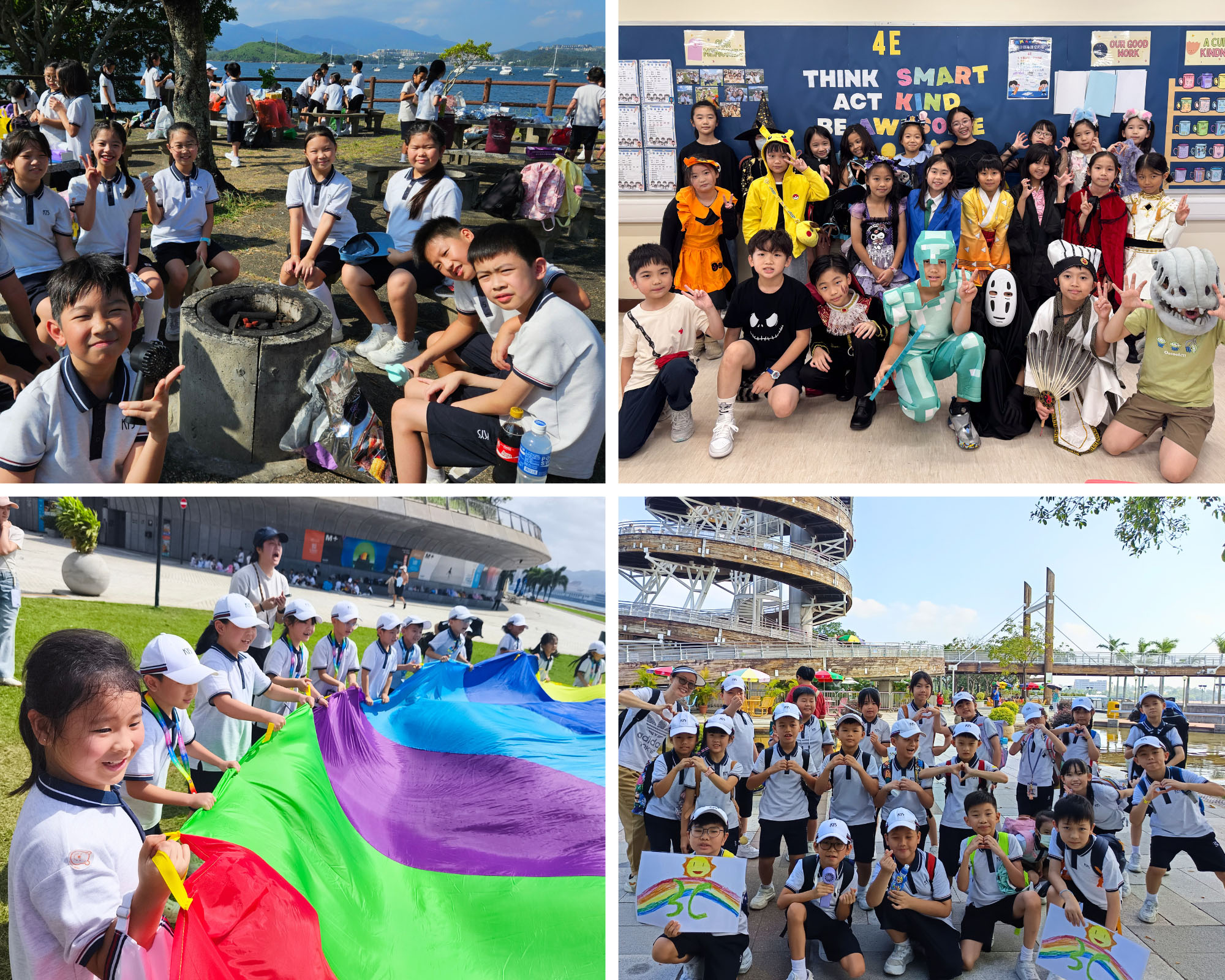
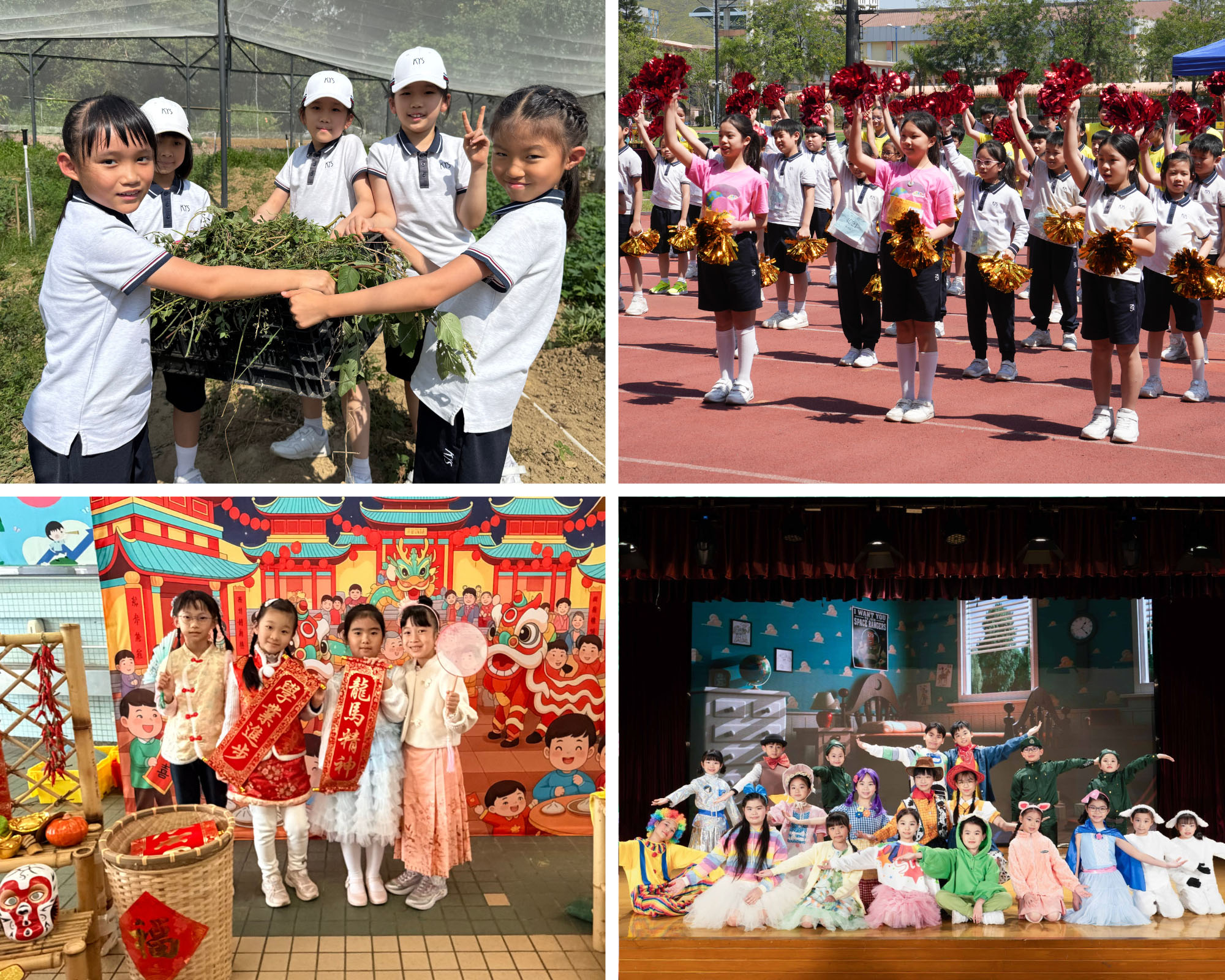
| The school adopts a split-day timetable, with academic learning in the morning and life-wide learning and values education in the afternoon, promoting balanced development in knowledge, character and wellbeing. Cross-curricular programmes, including Curriculum Integration Week, Multicultural Day and Chinese Culture Day, broaden students’ learning experiences. The school also develops school-based signature programmes, including a Biotechnology curriculum with a dedicated laboratory and a Campus Anchoring programme, providing authentic contexts for communication and presentation. Through diversified experiential learning, students develop perseverance, responsibility, confidence and self-directed learning abilities. |
| Development of Generic Skills |
:
| The school develops students’ generic skills through the “Leader of Tomorrow” framework, integrating a learning-through-talk approach with curriculum design that connects knowledge and practice. Students take up authentic roles such as class representatives, prefects, campus TV members, library assistants and team captains, gaining practical experience to develop leadership capacity. Through school teams, co-curricular activities and the leadership certification programme, students strengthen communication, collaboration, problem-solving, creativity and leadership qualities. |
| Cultivation of Proper Values, Attitudes and Behaviours |
:
| The school promotes positive values and behaviour through its moral education curriculum, integrating social-emotional learning and career planning elements. Values education is embedded across daily learning and reinforced through assemblies, cross-curricular activities and whole-school programmes. Experiential activities, including Outward Bound training, sea-based adventure, camps, Chinese Culture Day, Mainland study tours and sister school exchanges, deepen students’ understanding of the nation, strengthen national identity and support the internalisation of positive values. |
| Student Support |
| Whole School Approach to Catering for Learner Diversity |
:
| The school adopts a whole-school approach to cater for learner diversity while maintaining a strong focus on academic development. Through diversified teaching and assessment strategies, students’ learning effectiveness is enhanced. Classroom learning, co-curricular activities and school teams provide opportunities for students of different abilities to develop strengths, build confidence and achieve holistic development. |
| Whole School Approach to Integrated Education |
:
| Integrated education is guided by the principles of Early Identification and Intervention, Home-School Co-operation and Cross-Sector Collaboration. A three-tier support model is adopted to cater for students’ diverse needs and promote an inclusive and caring school culture. |
| Education Support for Non-Chinese Speaking(NCS) Students |
:
|
Our school provides additional support for NCS students to facilitate their learning of Chinese: providing after-school support programmes in learning Chinese; appointing additional teacher(s)/teaching assistant(s) to support NCS students' learning of Chinese; arranging intensive Chinese learning and teaching mode(s), e.g. pull-out learning if necessary, split-class/group learning, etc; developing school-based Chinese Language curriculum and/or adapting learning and teaching materials; and organising activities to create an inclusive learning environment in the school.
|
| Curriculum Tailoring and Adaptation |
:
| The school adopts a school-based curriculum and refines it through ongoing review to enhance learning effectiveness. Flexible homework arrangements are implemented according to students’ learning progress, enabling them to learn with an appropriate level of challenge. Assessment accommodations are also provided to support students in demonstrating their learning under suitable conditions. |
| Home-school Co-operation and School Ethos |
| Home-School Co-operation |
:
| The school values a strong partnership with parents and fosters a culture of home-school collaboration. Through parent activities and campus experiences, parents gain a deeper understanding of the school’s vision while engaging in students’ learning journeys. Regular surveys strengthen two-way communication, while the KYS Parents Club provides volunteering opportunities and thematic talks that encourage active participation in school life. Through diverse engagement platforms, the school works closely with parents to support students’ holistic development. |
| School Ethos |
:
| The school is guided by the philosophy of “Care as the Foundation, Strengthening Core Values, and Nurturing Leaders of Tomorrow,” and is committed to developing students’ self-awareness, empathy and global outlook. Staff and students work collaboratively to create a positive school environment and continuously enhance learning and teaching. Teachers form a supportive professional team that fosters meaningful classroom interaction. Students develop confidence, respect for others and a strong sense of belonging, while effective class management nurtures a positive and forward-looking class culture. |
| Future Development |
| School Development Plan |
:
| The school adopts a cyclical development approach to drive continuous improvement and sustainable growth. In the current cycle, emphasis is placed on enhancing students’ self-directed learning through experiential learning and strengthening health literacy. Through diversified learning experiences and purposeful curriculum design, students develop positive learning habits, personal growth and balanced physical and mental well-being. Guided by whole-person education, the school nurtures students with the qualities of The Leaders of Tomorrow while advancing innovation in curriculum, pedagogy and assessment. Through sustained teacher professional development and collaboration, the school continues to enhance teaching quality and professional capacity. |
| Teacher Professional Training & Development |
:
| The school places strong emphasis on teachers’ professional development through diversified training and professional exchange. A systematic and forward-looking framework includes collaborative lesson planning, peer lesson observation, research lessons and professional sharing, promoting reflective practice and professional dialogue. The school also promotes the effective use of artificial intelligence (AI) and digital technology in teaching. Through Staff Development Days, Education Bureau initiatives and inter-school collaboration, teachers engage in continuous professional learning and innovation. |
| Others |
:
| The school adopts a recognition framework to celebrate students’ achievements across academic, sports, arts and character development, including the Leader Badge Certification (LBC). Students achieve excellent results in local and territory-wide competitions, consistently ranking among the top three in English debating competitions. The school also records strong performance in the HK Schools Speech Festival and the HK Schools Music Festival. Students perform well in fencing, swimming, handbell, choir, orchestra and dance. |
 Primary School Profiles 2026



 School Information
 2026/2027 Annual School Charges
 School Facilities
 Teaching Staff Information (Including School Head) in the 2025/2026 school year
 Class Structure
 Performance Assessment
 School Life
 Life-wide Learning
 School Mission
 School Characteristics
 School Map