 Primary School Profiles 2026

 Primary School Profiles 2026

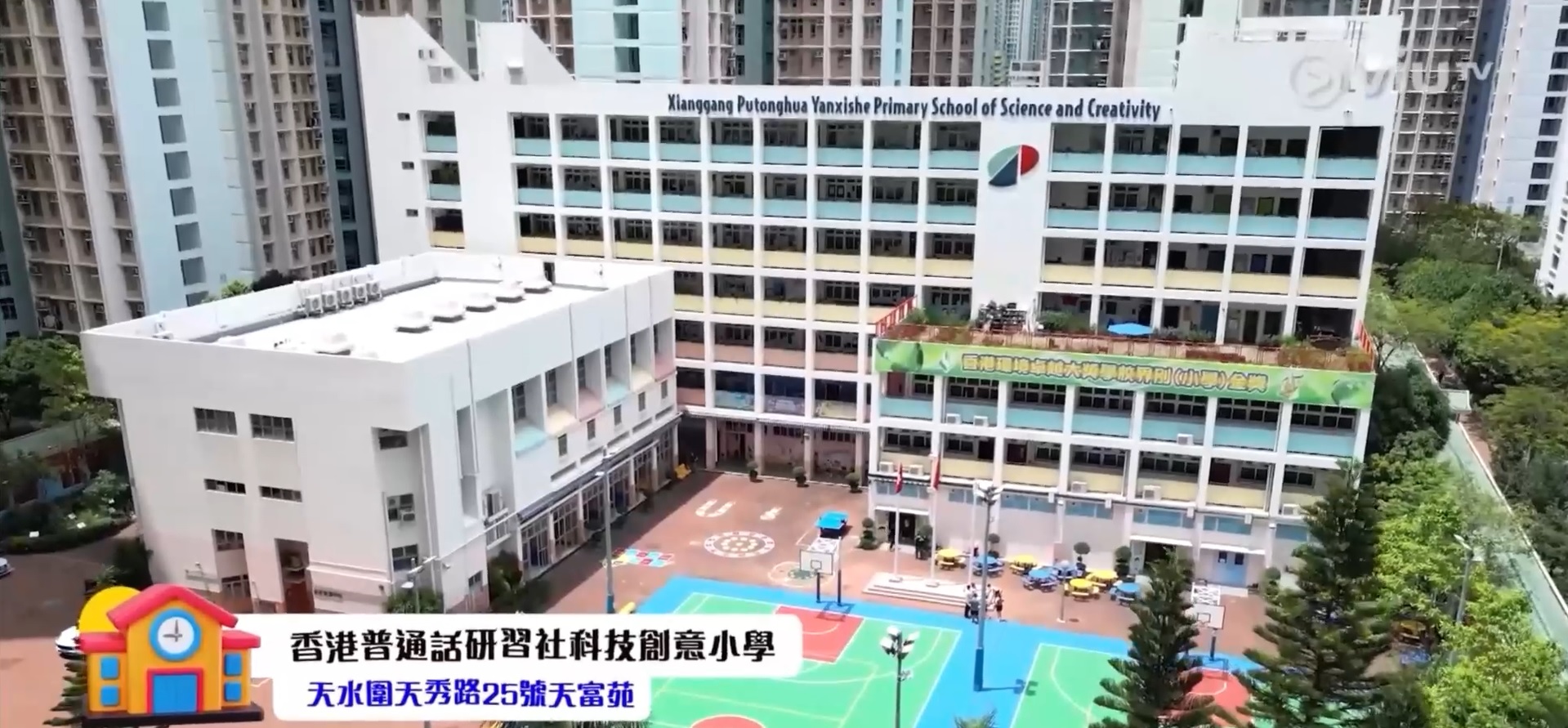
| Address: | Tin Fu Court, 25 Tin Sau Road, Tin Shui Wai, N.T. | |||
| Phone: | 24708080 | Email: | info@xpypssc.edu.hk | |
| Fax: | 24708070 | Website: | https://www.xpypssc.edu.hk | |
 School Information
 | Supervisor/ Chairman of Management Committee | : | M.H. Leung Siu Tong |
| School Head | : | Ms. To Kwan Kuen Daisy |
| Incorporated Management Committee been established? | : | Established |
| Percentage of School Supervisor and Managers / Chairperson and Members of School Management Committee (SMC) of Government Schools Fulfilling the Training Targets | : | Not Applicable |
| School Type | : | Aided Whole Day |
| Student Gender | : | Co-ed |
| Sponsoring Body | : | Xianggang Putonghua Yanxishe Ltd. |
| Religion | : | Not Applicable |
| Year of Commencement of Operation | : | 2001 |
| School Motto | : | Please refer to the Chinese version. |
| Area Occupied by the School | : | About 6185 Sq. M |
| Through-train Secondary School | : | - |
| Feeder Secondary School | : | - |
| Nominated Secondary School | : | - |
| Medium of Instruction | : | Chinese(incl.: Putonghua) and English |
| School Bus Service | : | School Bus; Nanny van |
| Parent-Teacher Association | : | Yes |
| Past Students' Association/Alumni Association | : | Yes |
| 4Rs Mental Health Charter | : | Yes |
| Whole School Health Programme | : | Advanced School |
 2026/2027 Annual School Charges
| School Fee | : | - |
| Tong Fai | : | - |
| PTA Fee | : | $20 |
| Approved Charges for non-standard items | : | General expenses $470 |
| Other Charges | : | - |
 School Facilities
 | Number of Classroom(s) | : | 30 |
| Number of School Hall(s) | : | 1 |
| Number of Playground(s) | : | 2 |
| Number of Library(ies) | : | 1 |
| Special Rooms | : | English Room, Music Room, Art Room, Student Activity Centre, Creativity and Science Park, Dream Chasers, Dreamland, Science Room, Historical Gallery, Chinese Culture Room, Speech Therapy Room, Social Worker's Office and Homework Guidance Room. |
| Facility(ies) for Supporting Students with Special Educational Needs | : | Ramp, Accessible lift and Accessible toilet. |
| Others | : | Basketball Courts, Eco-pond, Butterfly Paradise, Eco-study Resources Centre, Play Room, Art Corridor, Reading Corner, Chinese Culture Gallery, etc. |
 Teaching Staff Information (Including School Head) in the 2025/2026 school year
 | Number of teaching posts in the approved establishment | : | 47 |
| Total number of teachers in the school | : | 55 |
| Qualifications and professional training (%) | ||
| Had Received Teacher Training | : | 100% |
| Bachelor Degree | : | 100% |
| Master/ Doctorate Degree or above | : | 35% |
| Special Education Training | : | 46% |
| Years of Experience (%) | ||
| 0 - 4 years | : | 13% |
| 5 - 9 years | : | 13% |
| 10 years or above | : | 74% |
 Class Structure
 | 2025/26 school year | ||
| P1 Number of classes | : | 3 |
| P2 Number of classes | : | 3 |
| P3 Number of classes | : | 4 |
| P4 Number of classes | : | 5 |
| P5 Number of classes | : | 5 |
| P6 Number of classes | : | 5 |
| Total | : | 25 |
| 2026/27 school year (Based on the number of classes approved by EDB in 2026) | ||
| P1 Number of classes | : | 2 |
| P2 Number of classes | : | 3 |
| P3 Number of classes | : | 3 |
| P4 Number of classes | : | 4 |
| P5 Number of classes | : | 5 |
| P6 Number of classes | : | 5 |
| Total | : | 22 |
| Mode of teaching at different levels | ||
| The mediums of instruction are Putonghua and English. Adopt activity-based learning and implement small-class teaching, alongside e-learning classes for P.3-P.6. | ||
| Remarks | ||
| - | ||
 Performance Assessment
 | Applicable to P1 only | ||
| Number of test(s) per year | : | 1 |
| Number of exam(s) per year | : | 1 |
| Replace tests and examinations with diversified assessments in the first term of P1 | : | Yes |
| Applicable to P2 to P6 only | ||
| Number of test(s) per year | : | 2 |
| Number of exam(s) per year | : | 2 |
| Applicable to P1 to P6 | ||
| Formulate appropriate school-based assessment and assignment policies, inform parents of related arrangements, and collect views from teachers, students and parents regularly (at least once per school year) for ongoing review and optimisation of the school assessment and assignment policies | : | Yes |
| Upload the school-based assessment policy onto the school webpage for information of the public and stakeholders | : | Yes |
| Upload the school-based assignment policy onto the school webpage for information of the public and stakeholders | : | Yes |
| Diversified Assessment for Learning | : | 1. With module assessment, formative and summative assessment. 2. No formative and summative assessment in the first term for P.1 pupils. 3. Diversified assessments are implemented in Science and Humanities. 4. Performance Assessment Reports are made to assess pupils' knowledge, skills and attitudes in STEM lessons. |
| Avoid arranging tests or examinations immediately after long holidays in order to let students take more rest during the holidays | : | Yes |
| Arrange the timetable flexibly according to the school context, with a tutorial session provided in the afternoon as far as possible for students to finish some of their homework under teachers’ guidance | : | Yes |
| Streaming arrangement | : | P.4 - P.6 pupils are divided into different classes based on their learning abilities. |
 School Life
 | Number of school days per week | : | 5 |
| Number of periods per day | : | 10 |
| Duration of each normal period | : | 35 |
| School starts at | : | 8:20 AM |
| School ends at | : | 3:45 PM |
| Lunch break | : | 12:35 - 1:35 |
| Lunch arrangement | : | Provided by designated supplier, arranged by parents and Self-provided lunch or dine out. |
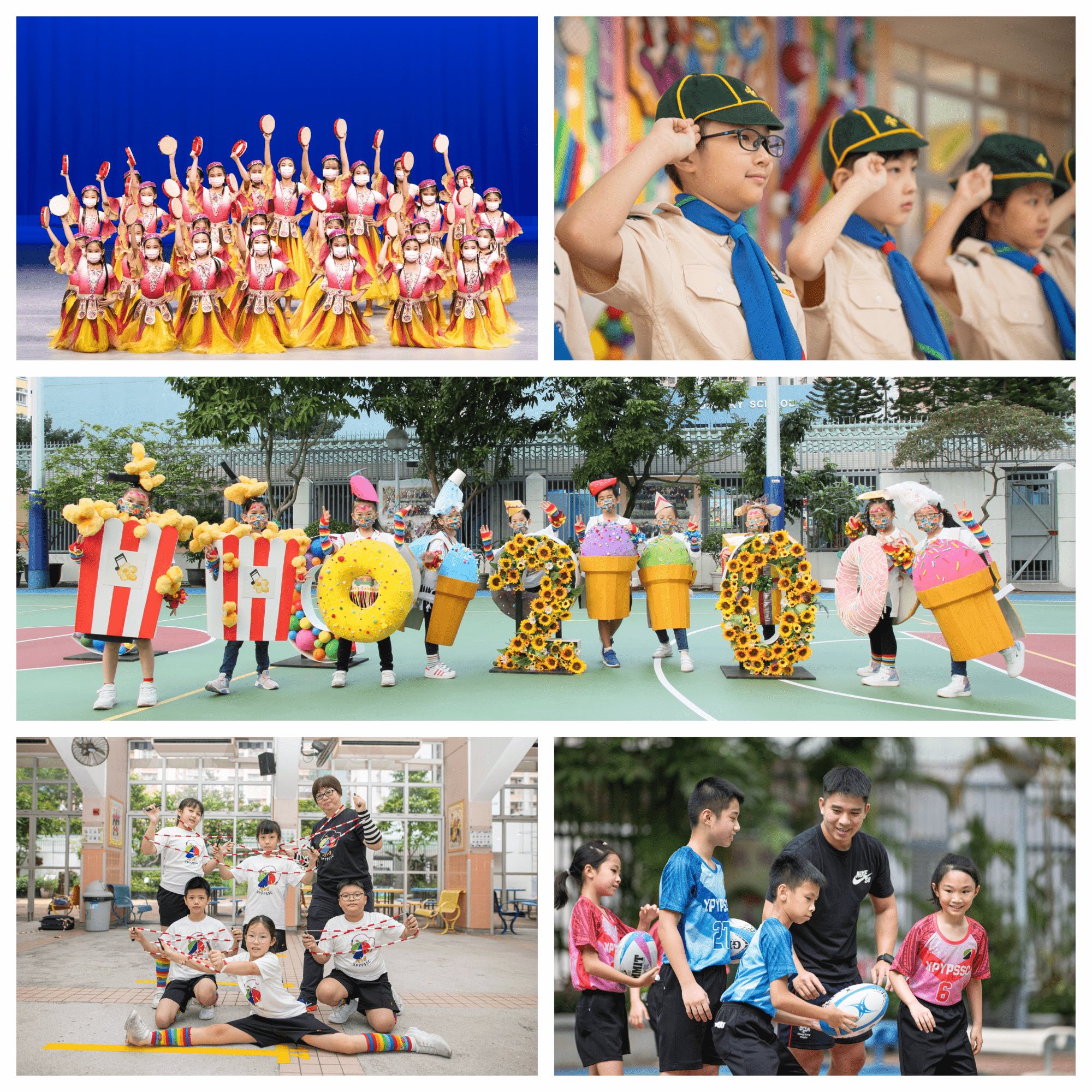
| Healthy school life | : | To improve students' health as well as to enhance the educational outcomes, we organise annual sports day, Joyful Fruit Month, morning run, morning exercises (including stretching up exercises and Martial Arts Exercise) and eye massage. We have also set up lunch recess activity zone and AI sports system so that students can do different kinds of sports there. |
| Remarks | : | 1. To cultivate a good reading habit, we have reading lessons. 2. Class teachers or subject teachers provide homework help to students during homework lessons. 3. We arrange various activities, workshops, visits or talks in the experiential learning classes to enrich students' diverse learning experiences. 4. We implement the 'One Student, One Uniformed Group' Scheme to cultivate lifelong self-discipline, leadership skills, and a sense of belonging. |
 Life-wide Learning
 | Multiple Intelligences Programme is held weekly. A wide range of activity choices are provided for students to select. Experiential learning lessons are organized so that students are encouraged to experience their learning through hands-on experiences and reflection. Besides, some activities are held either after school or on Saturdays, including Cambridge Young Learners English courses, RoboMaster courses, VEX robotics courses, fencing classes, different kinds of musical instruments (Western and Chinese) classes, different kinds of sports training programmes, rope skipping team and Chinese dance classes. |
 School Mission
 | To develop a new generation contributing to the sustainable growth and development of China and the world. To develop creative life-long learners with a holistic curriculum. |
 School Characteristics
 | School Management | ||
| School Management Organisation | : | Our Incorporated Management Committee (IMC) plans and manages financial and human resources available to the school. They ensure that the mission of the school is carried out and there is self-improvement. |
| Incorporated Management Committee / School Management Committee/ Management Committee | : | IMC was established on 12th August, 2005. |
| School Green Policy | : | 1. Integrate the Green Policy into all subjects. 2. Environmental Monitors are appointed in each class, and Eco-Leaders are established for the whole school. 3. Set up Eco-School. |
| School's Major Concerns | : | 1. Continuously optimize teaching and learning strategies, cultivate students' ability for independent learning, and enhance learning effectiveness. 2. Promote positive education, cultivate students' positive values and co-create a positive campus. |
| Learning and Teaching Plan | ||
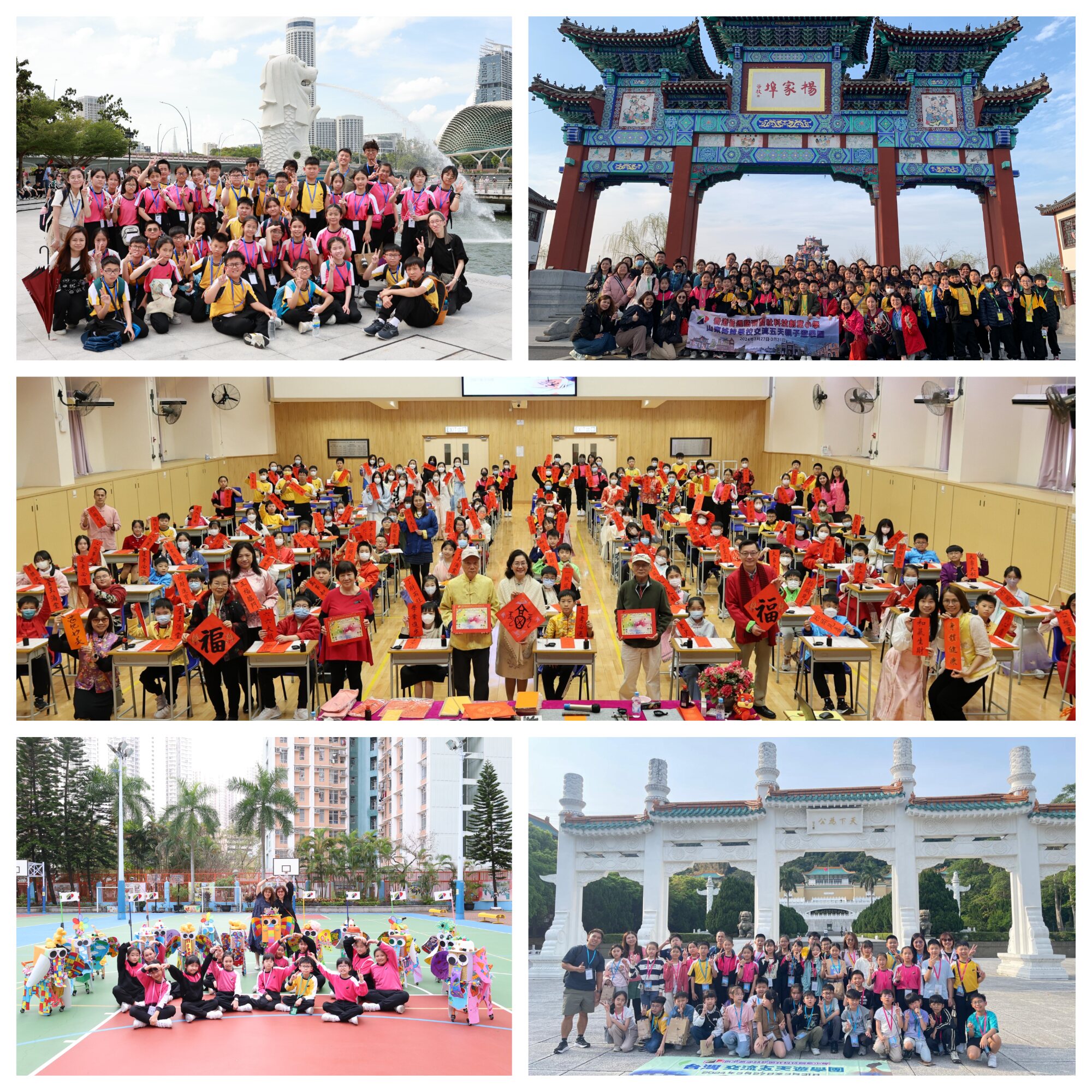
| Learning & Teaching Strategies | : | 1. Implement small class teaching, e-Learning and adopt the 'biliterate and trilingual' language policy. 2. Implement Native-speaking English Teacher (NET) Scheme at all levels, introduce phonics, Primary Literacy Programme - Reading (KS1), Keys 2 Literacy Development and Language Across Curriculum (LaC) programme in the English curriculum. 3. Establish a "STEM" subject, implement school-based STEAM modules and promote the use of various AI learning platforms. 4. Implement school-based Arts education (Parsons Music Education Platform, School-based Arts Programme and Arts Award Scheme). 5. Introduce rugby in the PE curriculum and participate in EACT Jockey Club Active School Programme. 6. Introduce environmental education. 7. Organise Chinese Culture Day, Integrated Curriculum Learning Day and Overseas Learning Programmes regularly. |
| Development of Major Renewed Emphases of the Primary Education Curriculum | : | We have STEM lessons to develop students' generic skills and inquiry thinking holistically, and learn independently and actively. Apart from library classes, we have reading classes to cultivate students an interest in extensive reading and develop an active reading habit. Experimental learning classes are held to enrich students' learning experiences through games, outings and service learning. Multiple Intelligences Programme is set up to provide students with diversified learning opportunities, develop their potential, help them build self-confidence, foster mutual care and support and help them make better use of their time after school. We also cultivate among students a sense of belonging towards the country, a sense of national identity and positive values and attitudes through different subject teaching. Besides, our school-based moral education curriculum strengthens students' understanding of the importance of safeguarding national security and the Chinese culture. |
| Development of Generic Skills | : | Collaboration skills, communication skills, creativity, critical thinking skills, information technology skills, numeracy skills, problem solving skills, self-management skills and study skills. |
| Cultivation of Proper Values, Attitudes and Behaviours | : | We promote positive values (centered on 6 virtues and 24 character strengths) and attitudes through the school-based counseling activities that integrate with the various subjects in the curriculum. |
| Student Support | ||
| Whole School Approach to Catering for Learner Diversity | : | 1. Heterogeneous Grouping. 2. Multisensory teaching strategies. 3. Several in-school social workers provide counselling services for students in need. 4. Chinese, English and Mathematics Remedial Classes to help less able students. 5. Enhancement Programmes for more capable students to pursue excellence. |
| Whole School Approach to Integrated Education | : | 1. Provide School-based Speech Therapy Service. 2. Utilize Learning Support Grant to hire professional services and employ teaching assistants for supporting SEN programmes. 3. Provide School-based Educational Psychology Service. 4. Provide training programmes for parents. |
| Education Support for Non-Chinese Speaking(NCS) Students | : | Our school provides additional support for NCS students to facilitate their learning of Chinese: providing after-school support programmes in learning Chinese; appointing additional teacher(s)/teaching assistant(s) to support NCS students' learning of Chinese; organising activities to create an inclusive learning environment in the school; and our school uses Putonghua to teach Chinese in all classes / groups at all levels with extra support as appropriate, e.g. pull-out/small-group classes, learning and teaching resources with Pinyin, etc. Our school provides after-school Chinese language learning support classes to help NCS students nurture their interest in learning Chinese and build up their self-confidence. |
| Curriculum Tailoring and Adaptation | : | 1. Tailor and adapt the curriculum, assessments and homework. 2. Utilise co-teaching. 3. Utilise individualised educational plans. |
| Home-school Co-operation and School Ethos | ||
| Home-School Co-operation | : | 1. Organise a variety of activities every year. 2. Organise a Parent-child Studying Scheme. 3. Organise regular Parents' Days and seminars. 4. Publish the Parents Newsletter regularly. 5. Organise Parent-volunteer team. |
| School Ethos | : | 1. Build a caring and loving school culture. 2. Build a healthy and energetic school culture. 3. Promote Environmental Protection Programme. 4. Promote One Life, One Service Programme and Service-Learning Programme. 5. Organize Induction Programme for Primary 1 and programmes for Primary 6 regarding secondary school admission. |
| Future Development | ||
| School Development Plan | : | 1. Actively promote moral education. 2. Promote Putonghua and English as major mediums of instruction. 3. Encourage the use of I.T. in daily life. 4. Develop students' creative thinking. 5. Establish "One Sport One Art". 6. Promote Environmental Protection Programme. 7. Hold experiential learning activities regularly to raise students' motivation and interest in learning. |
| Teacher Professional Training & Development | : | Devoted to assisting teachers in selecting suitable domains, including Teaching and Learning, Student Development, School Development and Professional Relationships and Services. |
| Others | : | 1. Our students were selected to represent Hong Kong to join the VEX Robotics Competition-Singapore Cup (2024-25) and got the Teamwork Champion Award, and have been selected to represent Hong Kong at the World Championship in the USA. 2. Several teachers awarded 'Outstanding Teacher Award' in the Outstanding Teacher Election and awarded 'Excellence Award' in HK Outstanding Teacher Ethics and Style Selection. 3. Launch after school care programme, such as School-based After School Care Service Scheme (Expanded Programme), 333 Learning Companion Leadership Program and Hands Together Project. 4. Approximately 20 scholarships are awarded to students with outstanding performance in academic, sports, arts and voluntary service. |
 School Map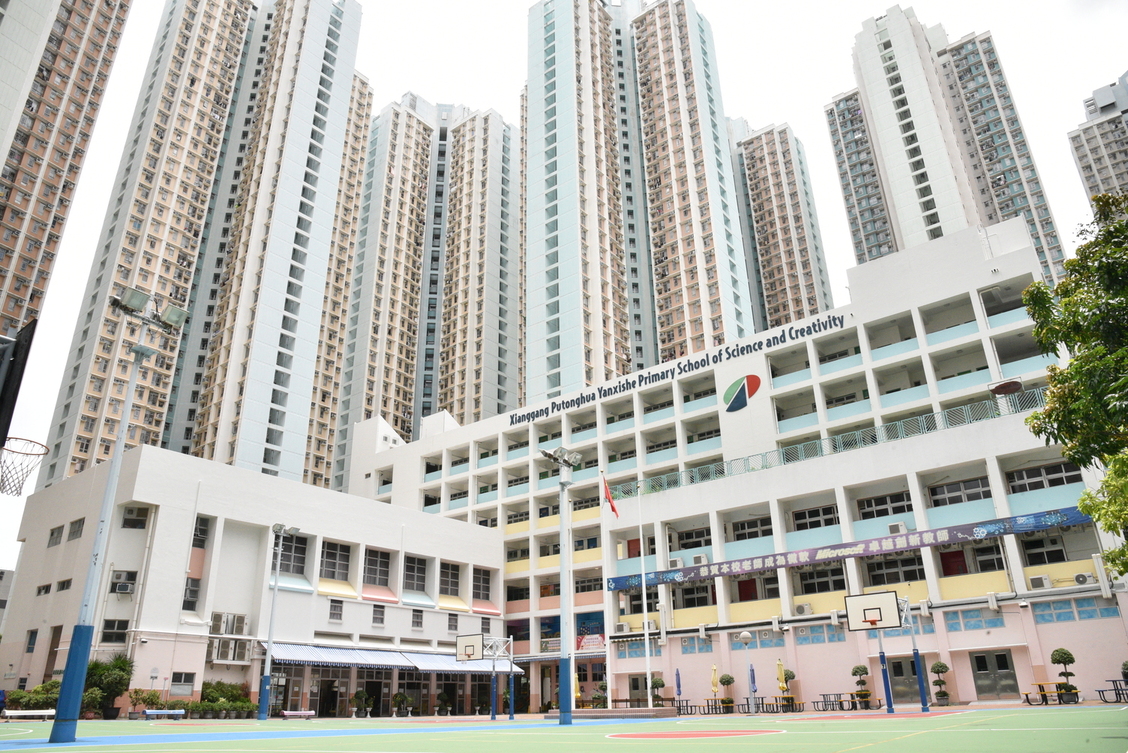
Last revision date:01 September 2026


