 Primary School Profiles 2026


 Primary School Profiles 2026
| Address: | 40 Po Hing Fong, Sheung Wan, Hong Kong | |||
| Phone: | 25477575 | Email: | office@kcobaps2.edu.hk | |
| Fax: | 25473555 | Website: | http://www.kcobaps2.edu.hk | |
 School Information
| Supervisor/ Chairman of Management Committee | : | Mr. Lam Nathaniel |
| School Head | : | Ms. Lam Shuk Fong |
| Incorporated Management Committee been established? | : | Established |
| Percentage of School Supervisor and Managers / Chairperson and Members of School Management Committee (SMC) of Government Schools Fulfilling the Training Targets | : | 100% |
| School Type | : | Aided Whole Day |
| Student Gender | : | Co-ed |
| Sponsoring Body | : | King's College Old Boys' Association School Limited |
| Religion | : | Not Applicable |
| Year of Commencement of Operation | : | 1960 |
| School Motto | : | Please refer to the Chinese version. |
| Area Occupied by the School | : | About 4948 Sq. M |
| Through-train Secondary School | : | - |
| Feeder Secondary School | : | - |
| Nominated Secondary School | : | - |
| Medium of Instruction | : | Chinese |
| School Bus Service | : | Nanny van |
| Parent-Teacher Association | : | Yes |
| Past Students' Association/Alumni Association | : | Yes |
| 4Rs Mental Health Charter | : | Yes |
| Whole School Health Programme | : | Pledged School |
 2026/2027 Annual School Charges
| School Fee | : | - |
| Tong Fai | : | - |
| PTA Fee | : | 30 |
| Approved Charges for non-standard items | : | $310 (Annual) |
| Other Charges | : | - |
 School Facilities
| Number of Classroom(s) | : | 18 |
| Number of School Hall(s) | : | 1 |
| Number of Playground(s) | : | 1 |
| Number of Library(ies) | : | 1 |
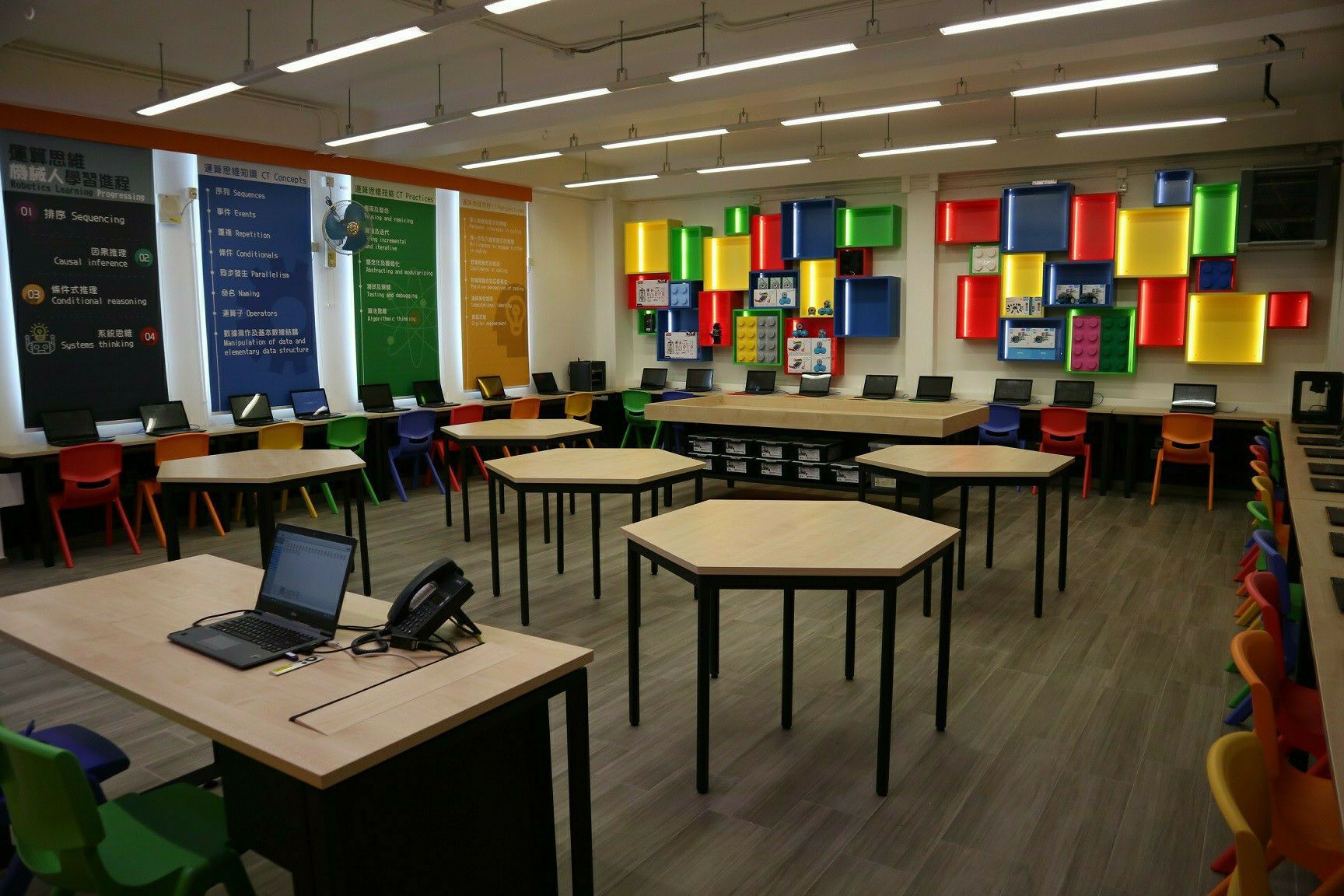
| Special Rooms | : | Library, Visual Art Room, Music Room, Computer Room, STEM Lab, English Activity Room, Science Room , Counselling Room and Conference Room. |
| Facility(ies) for Supporting Students with Special Educational Needs | : | - |
| Others | : | Garden, roof garden, green corridor and tuck shop. |
 Teaching Staff Information (Including School Head) in the 2025/2026 school year
| Number of teaching posts in the approved establishment | : | 35 |
| Total number of teachers in the school | : | 39 |
| Qualifications and professional training (%) | ||
| Had Received Teacher Training | : | 100% |
| Bachelor Degree | : | 100% |
| Master/ Doctorate Degree or above | : | 44% |
| Special Education Training | : | 80% |
| Years of Experience (%) | ||
| 0 - 4 years | : | 32% |
| 5 - 9 years | : | 8% |
| 10 years or above | : | 60% |
 Class Structure
| 2025/26 school year | ||
| P1 Number of classes | : | 3 |
| P2 Number of classes | : | 3 |
| P3 Number of classes | : | 3 |
| P4 Number of classes | : | 3 |
| P5 Number of classes | : | 3 |
| P6 Number of classes | : | 3 |
| Total | : | 18 |
| 2026/27 school year (Based on the number of classes approved by EDB in 2026) | ||
| P1 Number of classes | : | 3 |
| P2 Number of classes | : | 3 |
| P3 Number of classes | : | 3 |
| P4 Number of classes | : | 3 |
| P5 Number of classes | : | 3 |
| P6 Number of classes | : | 3 |
| Total | : | 18 |
| Mode of teaching at different levels | ||
| Primary Literacy Programme-Reading and Writing (PLP-R/W) for J.1-J.3. Small class teaching for P.1-P.6. Scheme of using Putonghua to teach Chinese Language subject in J.4-J.6. Activity-based teaching and learning for all grades. | ||
| Remarks | ||
| High level of students' participation is emphasized for promoting self-directed learning. To enhance the teaching and learning effectiveness, high-order thinking skills and positive learning environment, we provide various teaching modes, including collaborative teaching and curriculum integration. | ||
 Performance Assessment
| Applicable to P1 only | ||
| Number of test(s) per year | : | 2 |
| Number of exam(s) per year | : | 2 |
| Replace tests and examinations with diversified assessments in the first term of P1 | : | Yes |
| Applicable to P2 to P6 only | ||
| Number of test(s) per year | : | 2 |
| Number of exam(s) per year | : | 2 |
| Applicable to P1 to P6 | ||
| Formulate appropriate school-based assessment and assignment policies, inform parents of related arrangements, and collect views from teachers, students and parents regularly (at least once per school year) for ongoing review and optimisation of the school assessment and assignment policies | : | Yes |
| Upload the school-based assessment policy onto the school webpage for information of the public and stakeholders | : | Yes |
| Upload the school-based assignment policy onto the school webpage for information of the public and stakeholders | : | Yes |
| Diversified Assessment for Learning | : | There are two tests and two exams for the whole academic year, including written and oral tests/exams. There are various assessments for learning for each subject, including teachers' observation, pupils' oral report, project learning, mini-project learning, Physical Fitness Award Scheme and formative assessments. |
| Avoid arranging tests or examinations immediately after long holidays in order to let students take more rest during the holidays | : | No |
| Arrange the timetable flexibly according to the school context, with a tutorial session provided in the afternoon as far as possible for students to finish some of their homework under teachers’ guidance | : | Yes |
| Streaming arrangement | : | For J.1 to J.3, streaming according to academic results. For J.4 to J.6, the top one-third of the students will be allocated to Elite Class (Class A), while the rest will be allocated to Class B and Class C. |
 School Life
| Number of school days per week | : | 5 |
| Number of periods per day | : | 10 |
| Duration of each normal period | : | 30 |
| School starts at | : | 8:25 AM |
| School ends at | : | 3:25 PM |
| Lunch break | : | 12:55 - 1:50 |
| Lunch arrangement | : | Provided by designated supplier and arranged by parents. |
| Healthy school life | : | Lunch-box Monitoring Committee and SportAct Award Scheme. |
| Remarks | : | The school holds health talks and conducts broadcasting on health topics during lunch time to promote healthy eating habits among students. There are 2 periods of extra-curricular activities on Friday afternoons (Duration: 1 hour). All interest groups and cub scout activities are held at 3:30p.m. after school or on Saturdays. |
 Life-wide Learning
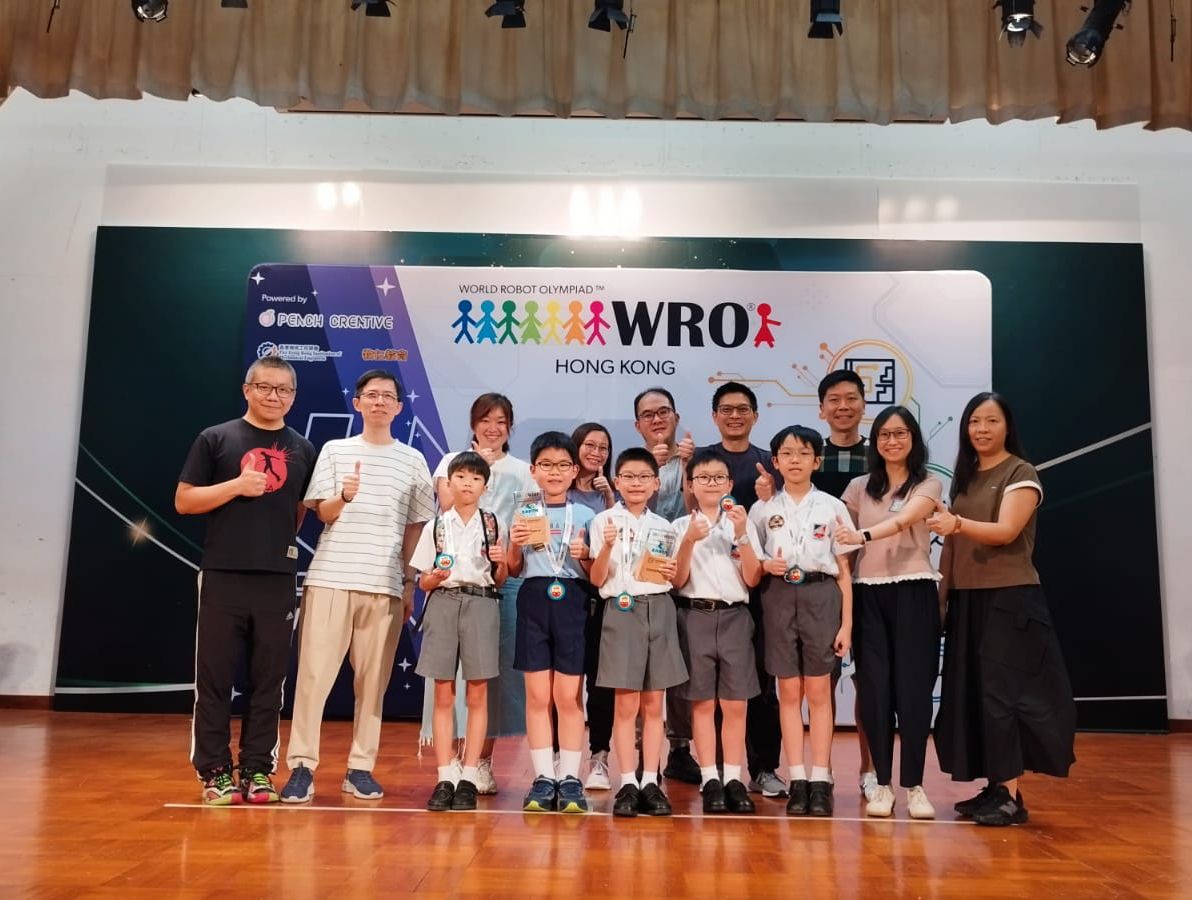
| Cub scout, Table-tennis, Football, Basketball, Badminton, Tag rugby, taekwondo, Creative Music Group, Choir, Chinese orchestra, Ukulele team, Harmonica team, AI Drone Class, Lego coding class, Reading Group, Native English Teacher Activities (Oral, Phonics, Drama), Creative Writing, Multiple Intelligence Activities, ArtRage Artist etc. |
 School Mission
| The School provides education for all who come, through balanced curriculum and in the best possible, free and pleasant environment; develops personal potentials; and helps cultivate good citizens with values of virtue, positive mind, independent thinking, unceasing quest for knowledge and sense of responsibility. |
 School Characteristics
| School Management | ||
| School Management Organisation | : | Sponsoring Body: King's College Old Boys' Association School Limited. |
| Incorporated Management Committee / School Management Committee/ Management Committee | : | IMC was established in September 2008. |
| School Green Policy | : | School promotes environmental education through organizing different kinds of activities and competitions, including Environmental Protection Talks, Students are selected to be Environmental Protection Ambassadors. The objectives are to foster a friendly attitude in our students towards our environment and to encourage them to actually enjoy environmental life. |
| School's Major Concerns | : | 1. Reinforce values education to enhance whole-person development of students. 2. Promote positive education to enable students to live their lives to the fullest. 3. Deepen self-directed learning for the implementation of gifted education. |
| Learning and Teaching Plan | ||
| Learning & Teaching Strategies | : | To provide students with diversified learning experience through teacher-students/students-students interactive learning activities in the classroom or online lessons. Different learning and teaching strategies include curriculum adaptation, co-operative learning, activities that enhance students' creativity, critical thinking, level of participation, small class teaching and brain-based learning. We also arrange visiting activities for students through flexible arrangements of lesson time and encourage students to use intranet and various IT technology for self-learning. Strategies to promote students' reading habits and quality are also promoted. Students work is also displayed or presented inside and outside the classroom. |
| Development of Major Renewed Emphases of the Primary Education Curriculum | : | The major renewed emphases include: strengthening values education (including life education, national education and national security education)*; making good use of learning time and creating space to promote a balanced physical and mental development; enriching life-wide learning experiences and promoting whole-person development; better catering for learner diversity; reinforcing, STEAM education, and nurturing students' media and information literacy; strengthening cross-curricular learning and reading across the curriculum for developing lifelong learning capabilities; and enhancing assessment literacy for promoting learning and teaching effectiveness. |
| Development of Generic Skills | : | Generic skills are fundamental to learning. They are developed through learning and teaching in the context of different subjects or KLAs and are transferable from one learning situation to another. Communication skills and collaboration skills are emphasized in junior classes while creativity, critical thinking skills, study skills, self-management skills and problem-solving skills are emphasized in senior classes. |
| Cultivation of Proper Values, Attitudes and Behaviours | : | School promotes positive learning through "Learn It, Teach It, Live It and Embed It", which include Positive Education workshop, Strengths of Character course, birthday casual wear day, positive ambassador, School Play Time. Also, National Security Education helps students develop a sense of national identity. |
| Student Support | ||
| Whole School Approach to Catering for Learner Diversity | : | Set up "Student Support Team", whole school approach to cater for students with special educational needs. In addition to school-based curriculum, different activities and plans are also provided to cater for students with special educational needs. |
| Whole School Approach to Integrated Education | : | Set up "Student Support Team", whole school approach to cater for students' diverse learning needs. In addition to school-based curriculum, remedial and enhancement curriculum is also provided to cater for more-able or less-able students' needs. |
| Curriculum Tailoring and Adaptation | : | Support Measures for Academically Gifted students: Lego Programming, Mathematical Olympiad Training Course, Creative Writing Course and Information Technology Learning Programme, Art Class, School Reporter. Support Measure for Academically Under-Privileged Students: Pre-school remedial classes, After-school homework tutorials, holiday academic tutorial classes and special courses for newly-arrived children from China and non-Chinese Speaking Students, Speech and Language Therapy. Curriculum Tailoring and Adaptation: Co-planning for curriculum tailoring, adaptation for assessment. |
| Home-school Co-operation and School Ethos | ||
| Home-School Co-operation | : | Activities include PTA Annual General Meeting cum Students' Cultural and Artistic Performance, Day Trip, Games Day, Educational talks, Interest class etc. |
| School Ethos | : | We foster modest, caring, and loving culture and maintain a good teacher-student rapport. To cultivate students' moral development, we have moral talks conducted by our teachers every week and have various moral education and counselling activities. We also apply "The Jockey Club Comprehensive Student Guidance Grant" for students coming from low-income families. We also set up prizes and scholarships for distinctive students. |
| Future Development | ||
| School Development Plan | : | 1. Reinforce values education to enhance whole-person development of students. 2. Promote positive education to enable students to live their lives to the fullest. 3. Deepen self-directed learning for the implementation of gifted education. 4. EDB Gifted Education School Network-STEAM 5. Sister School Scheme: Computational Thinking Curriculum Design. 6. EDB School-based Curriculum Development Support for English Language Education. 7. The "Blended Learning" Project for Math, The Hong Kong Jockey Club Charities Trust 8. Application of brain-based teaching techniques for the enhancement of learning. |
| Teacher Professional Training & Development | : | The school is very concerned about the curriculum reform trends and so has put a lot of effort into enhancing the teachers' professional development. Examples of this include a personal development profile which has been created for every teacher. A peer learning circle is also organized among teachers teaching different grades and different subjects. There are also collaborative lesson planning meetings, evaluations and lesson observations being held throughout the year in different subjects. There are also sharing sessions on subject knowledge and pedagogy, to encourage peer-learning among teachers and to enhance the quality of teaching as a whole. The school also invites professionals in education to conduct seminars for our teachers' professional development on a regular basis. E.g. 'To promote teachers' teaching effectiveness with the application of Brain Base Learning Skills' lesson observation and evaluation activities. |
| Others | : | https://www.kcobaps2.edu.hk/tc/awards |
 School Map
Last revision date:01 September 2026


