 Primary School Profiles 2026


 Primary School Profiles 2026
| Address: | 100 Shing Tai Road, Heng Fa Chuen, Hong Kong | |||
| Phone: | 25582111 | Email: | info@annwyllie.edu.hk | |
| Fax: | 28984377 | Website: | http://www.annwyllie.edu.hk | |
 School Information
| Supervisor/ Chairman of Management Committee | : | Mr. LO YIU KEI DANIEL |
| School Head | : | Mr. Tang Sai Ho |
| Incorporated Management Committee been established? | : | Established |
| Percentage of School Supervisor and Managers / Chairperson and Members of School Management Committee (SMC) of Government Schools Fulfilling the Training Targets | : | Not Applicable |
| School Type | : | Aided Whole Day |
| Student Gender | : | Co-ed |
| Sponsoring Body | : | The Salvation Army |
| Religion | : | Protestantism / Christianity |
| Year of Commencement of Operation | : | 1987 |
| School Motto | : | Integrity, Faith, Love, Diligence |
| Area Occupied by the School | : | About 5000 Sq. M |
| Through-train Secondary School | : | - |
| Feeder Secondary School | : | - |
| Nominated Secondary School | : | - |
| Medium of Instruction | : | Chinese |
| School Bus Service | : | School Bus |
| Parent-Teacher Association | : | Yes |
| Past Students' Association/Alumni Association | : | Yes |
| 4Rs Mental Health Charter | : | Yes |
| Whole School Health Programme | : | Action School |
 2026/2027 Annual School Charges
| School Fee | : | - |
| Tong Fai | : | - |
| PTA Fee | : | $80 |
| Approved Charges for non-standard items | : | $150 |
| Other Charges | : | - |
 School Facilities
| Number of Classroom(s) | : | 24 |
| Number of School Hall(s) | : | 1 |
| Number of Playground(s) | : | 3 |
| Number of Library(ies) | : | 1 |
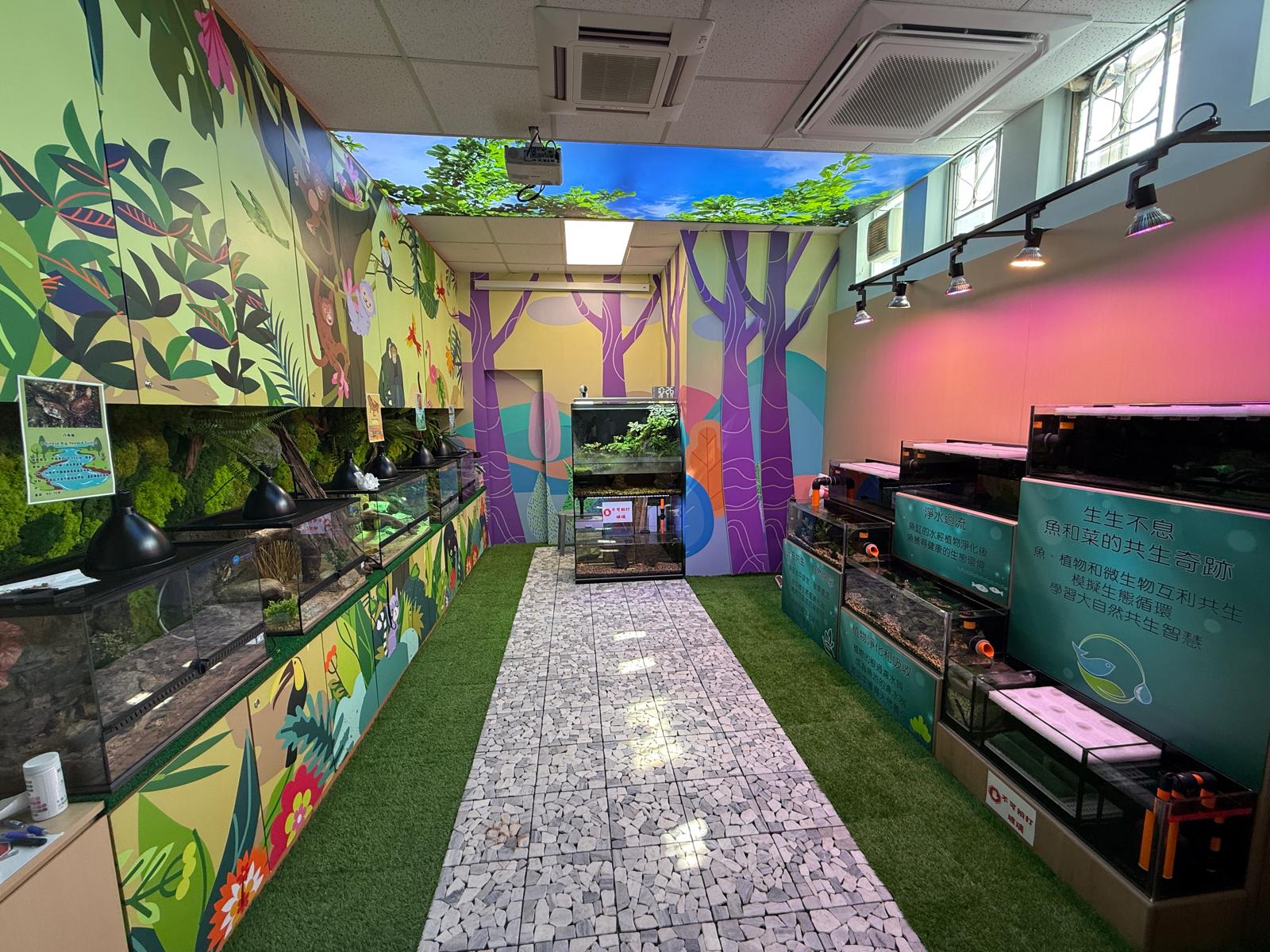
| Special Rooms | : | Library, Computer Rooms, Visual Art Room, Music Room, Dancing Room, Language Learning Room, STEM Room, Student Activity Room, Students' Counselling Room, Toy's Room, Intangible cultural heritage Room, Teaching Resources Room, Reptile House and Conference Room. |
| Facility(ies) for Supporting Students with Special Educational Needs | : | Ramp and Accessible lift. |
| Others | : | - |
 Teaching Staff Information (Including School Head) in the 2025/2026 school year
| Number of teaching posts in the approved establishment | : | 33 |
| Total number of teachers in the school | : | 41 |
| Qualifications and professional training (%) | ||
| Had Received Teacher Training | : | 100% |
| Bachelor Degree | : | 100% |
| Master/ Doctorate Degree or above | : | 20% |
| Special Education Training | : | 50% |
| Years of Experience (%) | ||
| 0 - 4 years | : | 23% |
| 5 - 9 years | : | 20% |
| 10 years or above | : | 57% |
 Class Structure
| 2025/26 school year | ||
| P1 Number of classes | : | 1 |
| P2 Number of classes | : | 2 |
| P3 Number of classes | : | 2 |
| P4 Number of classes | : | 3 |
| P5 Number of classes | : | 4 |
| P6 Number of classes | : | 4 |
| Total | : | 16 |
| 2026/27 school year (Based on the number of classes approved by EDB in 2026) | ||
| P1 Number of classes | : | - |
| P2 Number of classes | : | 1 |
| P3 Number of classes | : | 2 |
| P4 Number of classes | : | 2 |
| P5 Number of classes | : | 3 |
| P6 Number of classes | : | 4 |
| Total | : | 12 |
| Mode of teaching at different levels | ||
| All classes will be in small class teaching. | ||
| Remarks | ||
| - | ||
 Performance Assessment
| Applicable to P1 only | ||
| Number of test(s) per year | : | 0 |
| Number of exam(s) per year | : | 1 |
| Replace tests and examinations with diversified assessments in the first term of P1 | : | Yes |
| Applicable to P2 to P6 only | ||
| Number of test(s) per year | : | 0 |
| Number of exam(s) per year | : | 3 |
| Applicable to P1 to P6 | ||
| Formulate appropriate school-based assessment and assignment policies, inform parents of related arrangements, and collect views from teachers, students and parents regularly (at least once per school year) for ongoing review and optimisation of the school assessment and assignment policies | : | Yes |
| Upload the school-based assessment policy onto the school webpage for information of the public and stakeholders | : | Yes |
| Upload the school-based assignment policy onto the school webpage for information of the public and stakeholders | : | Yes |
| Diversified Assessment for Learning | : | Meaningful learning tasks and homework are designed to strengthen students' knowledge and develop various skills. Students' learning effectiveness is assessed through observation, thematic projects and formative assessments (Chinese, English, Maths) so that feedback can be provided to optimise teaching and learning. Exams are adopted to assess students' overall performance. |
| Avoid arranging tests or examinations immediately after long holidays in order to let students take more rest during the holidays | : | Yes |
| Arrange the timetable flexibly according to the school context, with a tutorial session provided in the afternoon as far as possible for students to finish some of their homework under teachers’ guidance | : | Yes |
| Streaming arrangement | : | Streaming in P.4-P.6 classes according to academic performance. |
 School Life
| Number of school days per week | : | 5 |
| Number of periods per day | : | 10 |
| Duration of each normal period | : | 30 |
| School starts at | : | 8:15 AM |
| School ends at | : | 3:40 PM |
| Lunch break | : | 12:40 - 1:40 |
| Lunch arrangement | : | Provided by designated supplier and arranged by parents. |
| Healthy school life | : | To promote healthy life style, our school participates various sports-related activities and schemes (e.g. Healthy Schools Award Scheme, Physical Fitness, Fruit Day, etc.). |
| Remarks | : | There are morning assemblies, class teacher period and homework tutoring class in every school day as well as weekly assemblies. A caring school atmosphere and positive education would be enhanced. Besides, there are also three recesses for students to take part in various physical activities to establish healthy exercise habit. |
 Life-wide Learning
| At present, there are above 30 extra-curricular activity groups for diversified development of our students. Besides, there are interest groups organised by professional tutors, e.g. ball games, athletic training, swimming, dancing, musical instruments, African drums, drawing, 3D painting, English and Chinese drama, Choir, Chinese debate team, English Ambassadors, Mathematical Olympiad, STEM Group; uniformed groups such as Cub Scouts, CYC and JPC. |
 School Mission
| Through the teaching and sharing of the love and faith in Christ, our School aims at nurturing our pupils both in knowledge and personal growth. We also provide all-round quality education to develop the potentials of our students so that they would grow in morality, wisdom, sports, gregariousness, aesthetics and spirit, and become quality citizens in the community. Our School is committed to providing all-round and pleasant learning environment for our students to learn cheerfully. |
 School Characteristics
| School Management | ||
| School Management Organisation | : | Our school is managed and monitored by the IMC. The principal leads the groups of school assessment policy, curriculum development, learning and teaching, students' growth and support, students learning support, extracurricular activities, students affairs, general affairs, information technology, crisis and campus ministry to manage and develop the school. (For more details, please visit our school website.) |
| Incorporated Management Committee / School Management Committee/ Management Committee | : | Established on 31 August 2009. |
| School Green Policy | : | 1. We circulate the school notices, push message by Eclass Parent APPS. 2. We organize different environmental education activities such as paper recycling, clothes recycling and Environmental Protection Ambassador Scheme. |
| School's Major Concerns | : | 1. Optimize self-study skills, Enhance the effectiveness of teaching and learning; 2. Implement Value Education, Develop a caring campus. |
| Learning and Teaching Plan | ||
| Learning & Teaching Strategies | : | 1. Students should be well-equipped with self-directed learning skills. 2. We put heavy emphasis on biliteracy and trilingualism. We emphasise the importance of reading. 3. We have adopted Inquiry-based learning. This could help students enhance and develop their nine generic skills using in General Studies. 4. The school promotes inquiry-based learning, using problem-solving in mathematics and inquiry-based methods in general studies to enhance thinking skills and grasp abstract concepts. |
| Development of Major Renewed Emphases of the Primary Education Curriculum | : | 1. Reading Programmes: With a well-stocked library, we launch various programs including Extensive Reading Schemes; Online Reading Platform, Family Reading Challenge Awards Programme, Stories by Mums and Dads, Morning Reading Time, Peer-Reading, and Reading Ambassador Scheme. 2. IT for Interactive Learning: We use different IT materials, tablets and electronic whiteboards in lessons. We set up data banks and established diversified online learning platforms for students to develop self-study skills and high-ordered thinking. 3. Project Learning: Launched in all class levels and related skills are penetrated in subjects to raise students' capabilities in exploration and inquiry. 4. Values Education: We boost the development of students' moral and personal growth through weekly moral and personal growth sessions. 5. STEAM Education: We enhance students' interest in STEM-related disciplines and strengthen their ability to integrate and apply knowledge and skills through Science Day and ECA groups. |
| Development of Generic Skills | : | Through diversified learning activities such as project-based learning, reading, and extracurricular activities across subjects and learning areas, the school promotes higher-order thinking skills. This approach enhances students' critical thinking, problem-solving abilities, and communication and collaboration skills, supporting their holistic development. |
| Cultivation of Proper Values, Attitudes and Behaviours | : | 1. Our school is committed to promoting positive values education. By optimizing the Personal Development curriculum, we help our students to establish seven core values of The Salvation Army including compassion, respect, excellence, integrity, relevance, co-operation and celebration. 2. To create a campus with love and care, as well as to develop students' leadership and adaptability, programs like "Big Brother Big Sister Scheme", "School Prefect Team", "Counselling Team's Caring Ambassador Training" and "Understanding Adolescent Project" are specially designed for the Primary-One students. |
| Student Support | ||
| Whole School Approach to Catering for Learner Diversity | : | Our School has launched Collaborative Learning Approach to enhance students' inquiring minds and team spirit. We also organize gifted courses, e-learning platforms, before and after-school consolidation groups, elite classes to cater for students' learning diversities. Good Kids Awarding Scheme is implemented to raise students' learning motivation. |
| Whole School Approach to Integrated Education | : | 1. The "Student Support Team" is established while school-based speech therapist and school-based educational psychologist provide support services for students, parents and teachers in a multi-disciplinary support model. 2. Training is provided for teachers to enhance the teaching support strategies in classrooms. 3. Homework and assessment adjustments are provided for individual students with special learning needs. 4. The purchase of special services helps arranging different group training for students. 5. Different multi-intelligent activities are arranged to cater for students' learning diversity. |
| Education Support for Non-Chinese Speaking(NCS) Students | : | Our school provides additional support for NCS students to facilitate their learning of Chinese: providing after-school support programmes in learning Chinese; appointing additional teacher(s)/teaching assistant(s) to support NCS students' learning of Chinese; and organising activities to create an inclusive learning environment in the school. Study Chinese language with a Chinese E-platform. |
| Curriculum Tailoring and Adaptation | : | Based on students' abilities and needs, small group teaching is implemented in some lessons to cater for learner diversity and enhance learning effectiveness. For students with special needs, homework and examination adjustments are provided upon assessment. Additionally, various types of after-school remedial classes and bridging programmes for kindergarten-to-primary and primary-to-secondary transitions are offered to support students' learning |
| Home-school Co-operation and School Ethos | ||
| Home-School Co-operation | : | Our parents participate enthusiastically in all school activities, and groups of volunteers are formed to assist in all co-ordination work. The home-school cooperation is fully shown. To conform to the school theme of love, caring and environmental protection, the PTA recycles the used uniforms and passes onto those in need. To help develop students' positive values and attitudes, we co-operate with parents and enhance their parenting skills by organizing parenting seminars and workshops. To help develop students' positive values and attitudes, our school co-operates with parents and enhances their parenting skills by organizing parenting seminars and workshops. |
| School Ethos | : | Our school is renowned for a loving and caring atmosphere, students' good conduct and harmonious relationship between teachers and students. We are highly concerned about and place great emphasis on helping our students to adapt to changes in their learning stages such as providing counseling services to new Primary-One students as well as the to-be Secondary-One students. On top of Parent Meetings, we also provide "Primary-One Bridging Course", "After-school Small Groups" and "Thematic Activities" in order to help our students to adapt to the new school life. |
| Future Development | ||
| School Development Plan | : | 1. To enhance lesson effectiveness by refining self-directed learning; 2. To cultivate caring culture in schools through value education; 3. To nurturing students' holistic growth through physical and artistic cultivation. |
| Teacher Professional Training & Development | : | 1. Emphasizing peer learning and collaboration through co-planning sessions and peer lesson observations to enlarge the repertoire of teaching strategies and hence enhance teaching effectiveness. 2. Strengthening the bonds with other educational organizations in order to improve teaching effectiveness through professional sharing and workshops. 3. Organize professional development programs and Joint-school Teacher Professional Development Days to enhance teachers' professional standards. |
| Others | : | You are most welcome to visit our School Website for details. |
 School Map
Last revision date:11 September 2026


