 Primary School Profiles 2026


 Primary School Profiles 2026

| Address: | 51 Pitt Street, Yaumatei, Kowloon | |||
| Phone: | 27800039 | Email: | lycps@tungwah.org.hk | |
| Fax: | 23841605 | Website: | http://www.twghlycp.edu.hk | |
 School Information
| Supervisor/ Chairman of Management Committee | : | JP. Yeung Yin Chi Jennifer |
| School Head | : | Principal Lam Siu Wai |
| Incorporated Management Committee been established? | : | Established |
| Percentage of School Supervisor and Managers / Chairperson and Members of School Management Committee (SMC) of Government Schools Fulfilling the Training Targets | : | Not Applicable |
| School Type | : | Aided Whole Day |
| Student Gender | : | Co-ed |
| Sponsoring Body | : | Tung Wah Group of Hospitals |
| Religion | : | Not Applicable |
| Year of Commencement of Operation | : | 1968 |
| School Motto | : | Diligence, Frugality, Loyalty, Trustworthiness |
| Area Occupied by the School | : | About 2550 Sq. M |
| Through-train Secondary School | : | - |
| Feeder Secondary School | : | - |
| Nominated Secondary School | : | - |
| Medium of Instruction | : | Chinese |
| School Bus Service | : |
- |
| Parent-Teacher Association | : | Yes |
| Past Students' Association/Alumni Association | : | Yes |
| 4Rs Mental Health Charter | : | Yes |
| Whole School Health Programme | : | Pledged School |
 2026/2027 Annual School Charges
| School Fee | : | - |
| Tong Fai | : | - |
| PTA Fee | : | $60 |
| Approved Charges for non-standard items | : | - |
| Other Charges | : | - |
 School Facilities
| Number of Classroom(s) | : | 30 |
| Number of School Hall(s) | : | 1 |
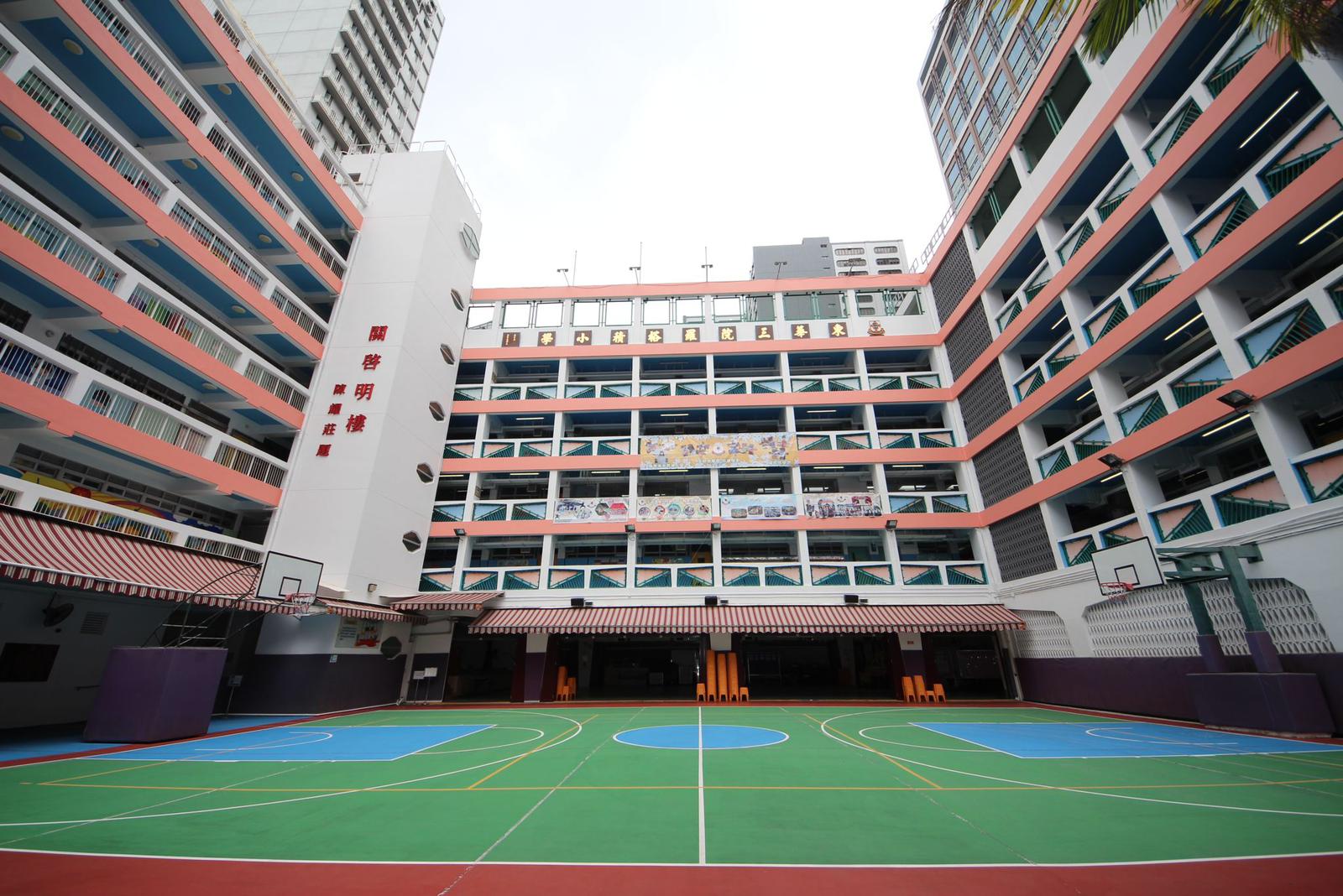
| Number of Playground(s) | : | 1 |
| Number of Library(ies) | : | 1 |
| Special Rooms | : | English Room, Library, Computer Room, STEAM Room, Music Room, Visual Arts Room, Guidance Room, Science Room |
| Facility(ies) for Supporting Students with Special Educational Needs | : | Ramp, Accessible lift and Accessible toilet. |
| Others | : | LED Wall, Wireless Network Campus, Digital Interactive Whiteboard, Interactive Projection System, Smart Farm |
 Teaching Staff Information (Including School Head) in the 2025/2026 school year
| Number of teaching posts in the approved establishment | : | 43 |
| Total number of teachers in the school | : | 47 |
| Qualifications and professional training (%) | ||
| Had Received Teacher Training | : | 100% |
| Bachelor Degree | : | 100% |
| Master/ Doctorate Degree or above | : | 35% |
| Special Education Training | : | 58% |
| Years of Experience (%) | ||
| 0 - 4 years | : | 4% |
| 5 - 9 years | : | 13% |
| 10 years or above | : | 83% |
 Class Structure
| 2025/26 school year | ||
| P1 Number of classes | : | 3 |
| P2 Number of classes | : | 3 |
| P3 Number of classes | : | 3 |
| P4 Number of classes | : | 3 |
| P5 Number of classes | : | 5 |
| P6 Number of classes | : | 5 |
| Total | : | 22 |
| 2026/27 school year (Based on the number of classes approved by EDB in 2026) | ||
| P1 Number of classes | : | 3 |
| P2 Number of classes | : | 3 |
| P3 Number of classes | : | 3 |
| P4 Number of classes | : | 3 |
| P5 Number of classes | : | 3 |
| P6 Number of classes | : | 5 |
| Total | : | 20 |
| Mode of teaching at different levels | ||
| Our school provides small group pull-out remedial programme for P.4 to P.6 to cater to the diverse learning needs of students. | ||
| Remarks | ||
| - | ||
 Performance Assessment
| Applicable to P1 only | ||
| Number of test(s) per year | : | 0 |
| Number of exam(s) per year | : | 1 |
| Replace tests and examinations with diversified assessments in the first term of P1 | : | Yes |
| Applicable to P2 to P6 only | ||
| Number of test(s) per year | : | 0 |
| Number of exam(s) per year | : | 3 |
| Applicable to P1 to P6 | ||
| Formulate appropriate school-based assessment and assignment policies, inform parents of related arrangements, and collect views from teachers, students and parents regularly (at least once per school year) for ongoing review and optimisation of the school assessment and assignment policies | : | Yes |
| Upload the school-based assessment policy onto the school webpage for information of the public and stakeholders | : | Yes |
| Upload the school-based assignment policy onto the school webpage for information of the public and stakeholders | : | Yes |
| Diversified Assessment for Learning | : | 1. Summative: One exam per academic year for P.1; three exams per academic year for P.2-P.6. 2. Formative: Based on dictation, class participation, learning attitude, and project-based work. |
| Avoid arranging tests or examinations immediately after long holidays in order to let students take more rest during the holidays | : | Yes |
| Arrange the timetable flexibly according to the school context, with a tutorial session provided in the afternoon as far as possible for students to finish some of their homework under teachers’ guidance | : | Yes |
| Streaming arrangement | : | One express class at each P.3-P.6 level, with streaming based on overall scores in Chinese, English and Mathematics. Other classes are evenly distributed based on the average scores across all subjects. |
 School Life
| Number of school days per week | : | 5 |
| Number of periods per day | : | 8 |
| Duration of each normal period | : | 35 |
| School starts at | : | 8:35 AM |
| School ends at | : | 3:30 PM |
| Lunch break | : | 1:00 - 2:00 |
| Lunch arrangement | : | Provided by designated supplier and arranged by parents. |
| Healthy school life | : | 1. Do exercises in the daily morning assembly. 2. Set up Lunch Team to supervise the quality of the school lunch to comply with the 'Nutritional Guidelines on School Lunch for Primary School Students' published by Department of Health. 3. Organize Positive Song Dedication, Blissful Birthday Parties and Wall of Encouragement. |
| Remarks | : | 1. Morning reading lesson (Tue.-Thu.), tutorial lesson (Mon.-Thu.); 2. After-lunch activities in Hall (e.g. basketball arcade games, board games), Library, English Room and Computer Room. |
 Life-wide Learning
| Athletics Team, Swimming Team, Basketball Team, Football Team, Table Tennis Team, Wushu Team, Solo Verse and Choral Speaking, Dance Team, Choir, Chinese Zither Class, Violin Class, Taekwondo Team, English Drama Team, English Public Speaking Class, Cambridge English Class, Math Olympiad Class, Coding, Drone Football, 3D Printing Class, Micro:bit, Little Scientists, Balloon Twisting Class, Pastel Nagomi Art Class, Mindfulness Training, Cub Scouts, Little Postman, Junior Police Call, Flag Raising Team, Abacus Class, Lego Spike, Drawing Class, Magic Class and Chinese Chess Class |
 School Mission
| It is the mission of Tung Wah Group of Hospitals to provide comprehensive educational services to the society. We endeavour to realize all-rounded development of students who can achieve their potential and serve the society when they grow up. Grounded on the school motto: 'Diligence, Frugality, Loyalty and Trustworthiness' as the guiding principle of students' moral and intellectual development, we strive to enable them to lead a rich and meaningful life. |
 School Characteristics
| School Management | ||
| School Management Organisation | : | Our school is managed by Incorporated Management Committee (IMC). We have different administrative groups to work in different areas, including curriculum development section, teaching affairs section, guidance and counselling section, extra-curricular activities section, student affairs section etc. |
| Incorporated Management Committee / School Management Committee/ Management Committee | : | The school IMC was set up on 1 Feb 2006. Members include representatives from the sponsoring body, headteacher, teachers, parents and independent persons. |
| School Green Policy | : | Promote a series of environmentally friendly activities, including waste recycling scheme and participate in Student Environmental Protection Ambassador Scheme. |
| School's Major Concerns | : | 1. Further promote positive values education and cultivate students’ civic virtues 2. Further enhance students' learning motivation and foster a community of enthusiastic learners. |
| Learning and Teaching Plan | ||
| Learning & Teaching Strategies | : | 1. Implement self-directed learning, cooperative learning and digital education in different subjects. 2. Implement 'reading strategies' and 'integration of reading and writing' in Chinese learning. 3. Implement Primary Literacy Programme – Reading and Writing (PLP-R/W) with support by NET Section (EDB) to enhance students' reading and writing abilities. 4. Develop students' number sense, promote inquiry-based learning and problem-solving skills in Maths learning. 5. Implement inquiry-based learning in General Studies and promote STEAM Education through learning activities in the Science Education. 6. To broaden students’ learning experiences, moral and civic education lessons and diversified learning lessons are held on Wednesdays and Fridays respectively. |
| Development of Major Renewed Emphases of the Primary Education Curriculum | : | 1. Organise school-based values education by creating a supportive atmosphere and providing classroom learning, team training, and Mainland and overseas exchange tours to cultivate students’ sense of national identity and foster values such as perseverance, optimism, critical thinking, law-abidingness, empathy, and gratitude. 2. Schedule diverse learning activities on Friday afternoons to foster balanced development of students. 3. Develop STEAM activities to boost students' science, technology and computational thinking abilities, to nurture students' media and information literacy and to use information technology in a rational and responsible manner. 4. A school-based cross-curricular thematic learning programme is implemented, along with morning reading lessons, reading lessons, and thematic reading months to establish a reading culture on campus. 5. Set up teacher and student-centered diversified modes of assessments to enhance assessment literacy. |
| Development of Generic Skills | : | 1. To enhance the generic skills of students through classroom teaching and life-wide learning activities 2. To integrate different thinking strategies in lessons to foster multi-dimensional thinking abilities. |
| Cultivation of Proper Values, Attitudes and Behaviours | : | 1. Foster positive values in students, including good manners and compliance with rules, perseverance and hard work, sincerity, and filial piety. 2. Facilitate students' affective development and cultivate positive mindset including emotional management, positive thinking and perseverance. 3. Strengthen students' social skills to handle family and peer relationships. |
| Student Support | ||
| Whole School Approach to Catering for Learner Diversity | : | 1. Incorporate cooperative learning strategies in lessons. 2. Design graded assignments in Chinese, English, and Mathematics. 3. Provide remedial classes including small-group remedial classes before school. 4. Offer pull-out enrichment programmes (for gifted learners) including training for Cambridge Young Learners' English Test, Mathematics Elite Class and Chinese Literature Class. 5. Provide English Course and Immersion Programme for Newly-Arrived Students. 6. Provide learning support groups. |
| Whole School Approach to Integrated Education | : | 1. Establish Student Support Team and adopt the Whole School Approach to offer appropriate and diverse support services to all students with SEN. 2. Provide small class remedial teaching and pull-out classes for P.4-P.6 students with learning difficulties. 3. Provide school-based speech therapy services and deliver regular individual and group therapy sessions for students with speech impairment. 4. Offer individual and small group support to students with SEN including academic, social, emotion management and self-management groups. 5. Adapt curriculum and provide assessment accommodation. |
| Education Support for Non-Chinese Speaking(NCS) Students | : | Our school provides additional support for NCS students to facilitate their learning of Chinese: providing after-school support programmes in learning Chinese; appointing additional teacher(s)/teaching assistant(s) to support NCS students' learning of Chinese; arranging intensive Chinese learning and teaching mode(s), e.g. pull-out learning if necessary, split-class/group learning, etc; and organising activities to create an inclusive learning environment in the school. |
| Curriculum Tailoring and Adaptation | : | Through regular co-planning meetings, we develop tailor-made learning materials to cater for learner diversity and to enhance learning effectiveness. |
| Home-school Co-operation and School Ethos | ||
| Home-School Co-operation | : | Our school maintains close ties with parents in order to strengthen the communication between parents and teachers. PTA actively promotes various activities and talks for parents, enhancing the effectiveness of family education and facilitating Home-School Co-operation. |
| School Ethos | : | School emphasizes moral and values education. The students are well-behaved and motivated to learn. |
| Future Development | ||
| School Development Plan | : | 1. Establish a positive atmosphere on campus through the whole-school approach; promote positive values education, and cultivate students' civic virtues. 2. Enhance students' interest, motivation, and skills in learning, foster self-directed learning, and develop students into a community of enthusiastic learners through diverse learning activities. |
| Teacher Professional Training & Development | : | 1. Enhance teaching effectiveness through regular co-planning and lesson observation of the core subjects, and scheduled teacher sharing sessions and workshops on curriculum development. 2. Increase teacher capacity through participating in the school-based support services provided by EDB. |
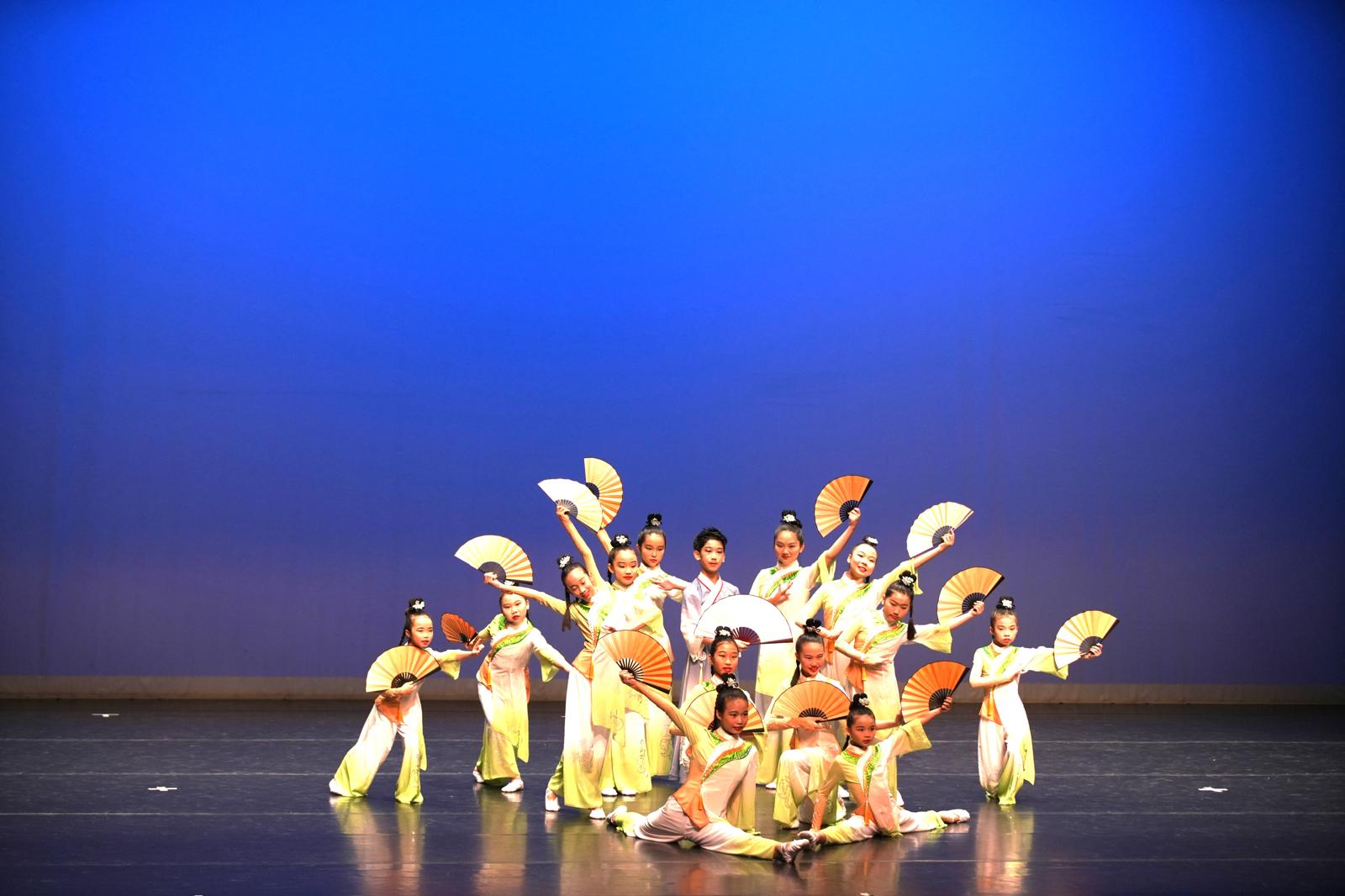
| Others | : | 1. Four awards in 25/26 Hong Kong School Drama Festival (Primary English Group) : Award for Outstanding Performer, Award for Outstanding Script, Award for Outstanding Director, Award for Outstanding Stage Effects. 2. Gold award in 2026 Hong Kong Inter-School Choral Festival – Competition cum Masterclass. |
 School Map

Last revision date:01 September 2026


