 Primary School Profiles 2026


 Primary School Profiles 2026

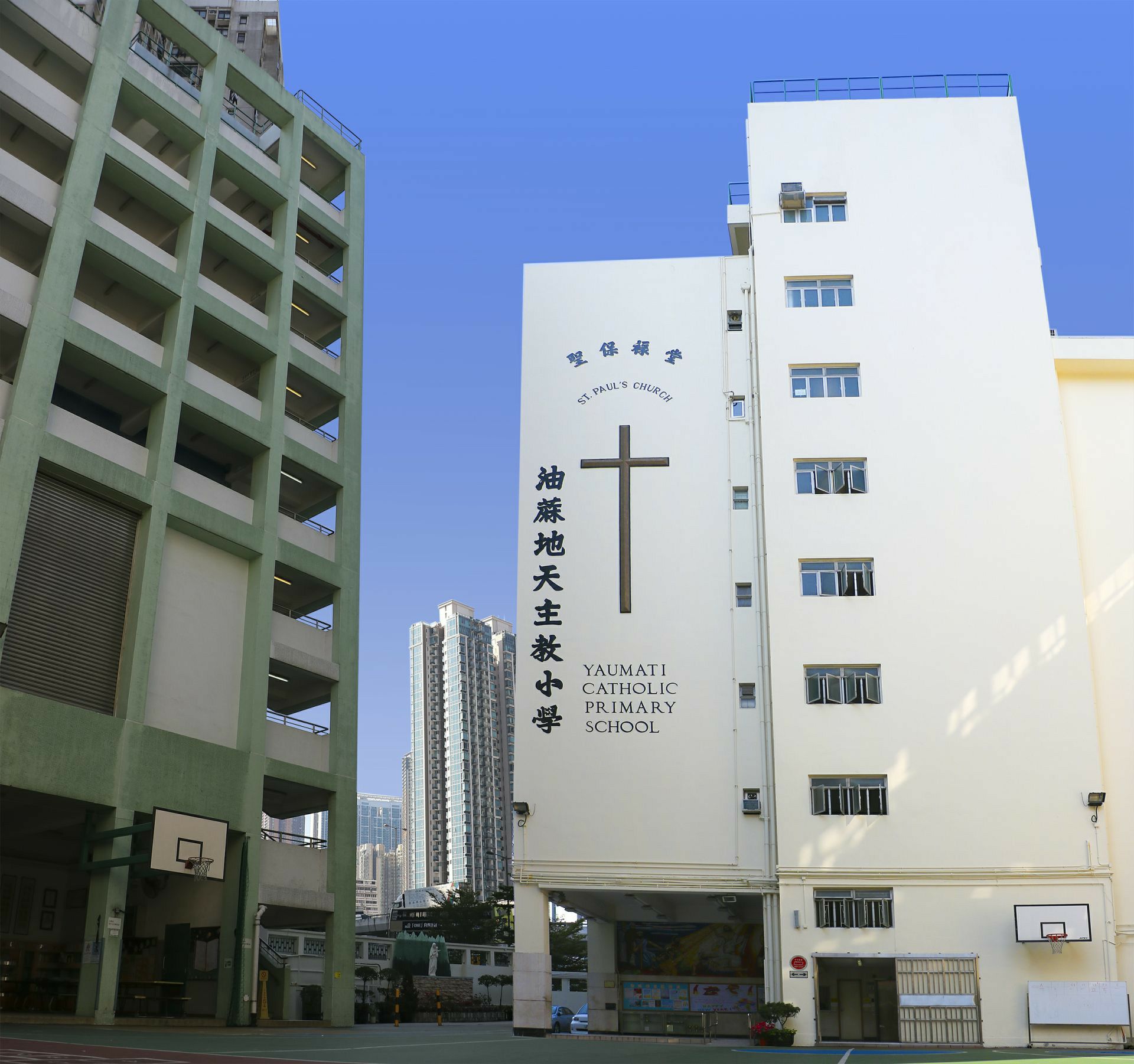
| Address: | 41 Tung Kun Street, Kowloon | |||
| Phone: | 27807311 | Email: | ycps@ymtcps.hktedu.com | |
| Fax: | 27807313 | Website: | http://www.ymtcps.edu.hk | |
 School Information
| Supervisor/ Chairman of Management Committee | : | Father Ip Ting Kwok |
| School Head | : | Dr. Cheung Chok Fong |
| Incorporated Management Committee been established? | : | Established |
| Percentage of School Supervisor and Managers / Chairperson and Members of School Management Committee (SMC) of Government Schools Fulfilling the Training Targets | : | Not Applicable |
| School Type | : | Aided Whole Day |
| Student Gender | : | Co-ed |
| Sponsoring Body | : | Catholic Diocese of Hong Kong |
| Religion | : | Catholicism |
| Year of Commencement of Operation | : | 1968 |
| School Motto | : | Diligence in Learning, Cultivation of Morality, Charity and Gregariousness. |
| Area Occupied by the School | : | About 4000 Sq. M |
| Through-train Secondary School | : | - |
| Feeder Secondary School | : | - |
| Nominated Secondary School | : | - |
| Medium of Instruction | : | Chinese |
| School Bus Service | : | Nanny van |
| Parent-Teacher Association | : | Yes |
| Past Students' Association/Alumni Association | : | Yes |
| 4Rs Mental Health Charter | : | Yes |
| Whole School Health Programme | : | Pledged School |
 2026/2027 Annual School Charges
| School Fee | : | - |
| Tong Fai | : | - |
| PTA Fee | : | $40 |
| Approved Charges for non-standard items | : | $400 |
| Other Charges | : | $30 (replacement of student card) |
 School Facilities
| Number of Classroom(s) | : | 30 |
| Number of School Hall(s) | : | 2 |
| Number of Playground(s) | : | 1 |
| Number of Library(ies) | : | 1 |
| Special Rooms | : | Multi-purpose Rooms, Multi-media Learning Centre, SMART LAB, Visual Art Room, 2 Music Rooms, Student Counselling & Activity Room, STEM LAB, English Room, Smart library. |
| Facility(ies) for Supporting Students with Special Educational Needs | : | Accessible lift. |
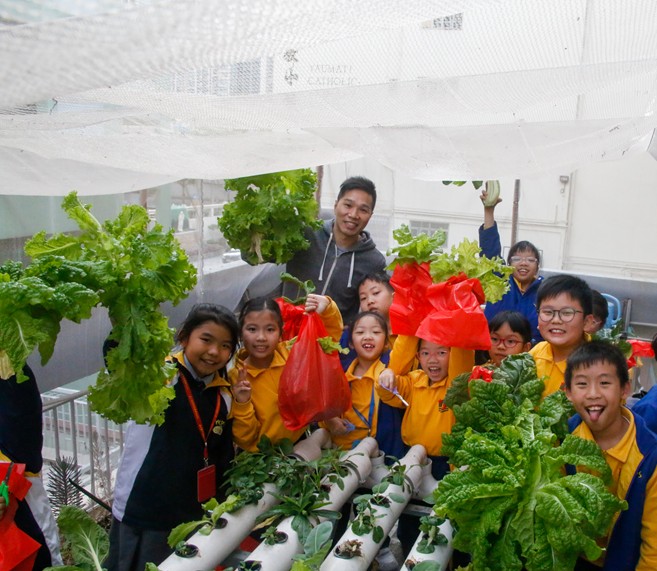
| Others | : | Wifi Campus, Church, Mountain of Holy Mother, Multi-purpose Room, Group Activities Room, Reading Room, Hydro Farm, Butterfly Garden. |
 Teaching Staff Information (Including School Head) in the 2025/2026 school year
| Number of teaching posts in the approved establishment | : | 58 |
| Total number of teachers in the school | : | 59 |
| Qualifications and professional training (%) | ||
| Had Received Teacher Training | : | 98% |
| Bachelor Degree | : | 100% |
| Master/ Doctorate Degree or above | : | 32% |
| Special Education Training | : | 79% |
| Years of Experience (%) | ||
| 0 - 4 years | : | 5% |
| 5 - 9 years | : | 20% |
| 10 years or above | : | 75% |
 Class Structure
| 2025/26 school year | ||
| P1 Number of classes | : | 5 |
| P2 Number of classes | : | 5 |
| P3 Number of classes | : | 5 |
| P4 Number of classes | : | 5 |
| P5 Number of classes | : | 5 |
| P6 Number of classes | : | 5 |
| Total | : | 30 |
| 2026/27 school year (Based on the number of classes approved by EDB in 2026) | ||
| P1 Number of classes | : | 5 |
| P2 Number of classes | : | 5 |
| P3 Number of classes | : | 5 |
| P4 Number of classes | : | 5 |
| P5 Number of classes | : | 5 |
| P6 Number of classes | : | 5 |
| Total | : | 30 |
| Mode of teaching at different levels | ||
| 1. Putonghua is used as the medium of instruction for Chinese Language for all levels. Primary Literacy Programme is implemented in P.1 and P.2. Through story-book learning, enhance students' writing from reading. 2. Information technology skills are applied in different subjects to enhance the effectiveness of students' learning. |
||
| Remarks | ||
| 1. Enrichment and intervention programmes are provided afternoon school classes. 2. We have two Native-speaking English Teachers(NET) to provide an authentic environment for children to learn English. |
||
 Performance Assessment
| Applicable to P1 only | ||
| Number of test(s) per year | : | 2 |
| Number of exam(s) per year | : | 2 |
| Replace tests and examinations with diversified assessments in the first term of P1 | : | No |
| Applicable to P2 to P6 only | ||
| Number of test(s) per year | : | 2 |
| Number of exam(s) per year | : | 2 |
| Applicable to P1 to P6 | ||
| Formulate appropriate school-based assessment and assignment policies, inform parents of related arrangements, and collect views from teachers, students and parents regularly (at least once per school year) for ongoing review and optimisation of the school assessment and assignment policies | : | Yes |
| Upload the school-based assessment policy onto the school webpage for information of the public and stakeholders | : | Yes |
| Upload the school-based assignment policy onto the school webpage for information of the public and stakeholders | : | Yes |
| Diversified Assessment for Learning | : | Formal Assessment is emphasized to keep track of students' learning performance. Lesson observation, tasks, oral presentation and project learning reports are employed as learning evidence. Peer assessment and self assessment are also used to foster the development of self-learning and generic skills. Two written examinations are arranged as summative assessment. |
| Avoid arranging tests or examinations immediately after long holidays in order to let students take more rest during the holidays | : | No |
| Arrange the timetable flexibly according to the school context, with a tutorial session provided in the afternoon as far as possible for students to finish some of their homework under teachers’ guidance | : | Yes |
| Streaming arrangement | : | P.1 - P.3 mixed abilities; P.4 - P.6 streamed according to academic performance. |
 School Life
| Number of school days per week | : | 5 |
| Number of periods per day | : | 9 |
| Duration of each normal period | : | 35 |
| School starts at | : | 8:15 AM |
| School ends at | : | 3:20 PM |
| Lunch break | : | 1:05 - 2:10 |
| Lunch arrangement | : | 1. Provided by designated supplier. 2. Delivered by parents. 3. Students bring their own lunch. |
| Healthy school life | : | 1. PE Corner 2. Life-Wide Learning Program |
| Remarks | : | 1. Students' physical, mental and spiritual development is nurtured in a healthy learning environment. 2. Homework lessons, personal growth lessons and activities are provided to strengthen teacher-student relationship. |
 Life-wide Learning
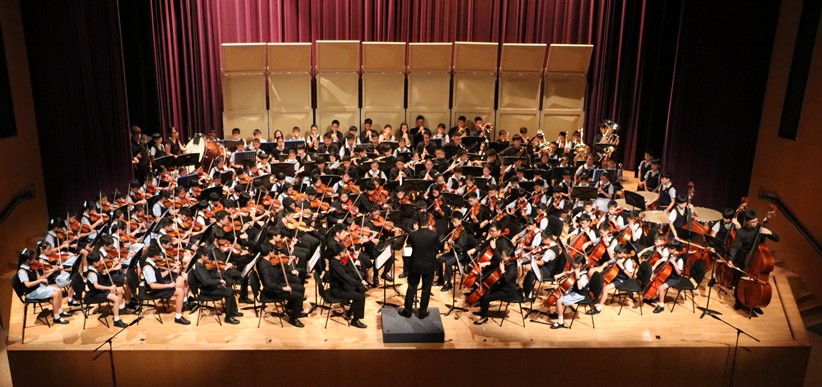
| School Orchestra, School Chinese Orchestra, Oriental Dance, Western Dance, Boy Scouts, Brownies, Pioneers of Christ, Coding and Robot Team, Mathematics Olympiad, Putonghua Drama, Table Tennis, Basketball, Swimming, Volleyball, Chinese Calligraphy, Art Class, Community Youth Club, English Debate Club, English Drama, School Choir, Rope-skipping, Red Cross, Road Safety Patrol, Fencing, School Flag-guards and STEM Club. |
 School Mission
| Our school is committed to providing our students with an integral development of the spiritual, moral, intellectual, physical, social and aesthetic aspects, and a holistic education in accordance with the five core values of Catholic Education. We hope our students live up to the school motto, 'Diligence in Learning, Cultivation of Morality, Charity and Gregariousness' and serve our community with dedication. |
 School Characteristics
| School Management | ||
| School Management Organisation | : | Catholic Diocese of Hong Kong Catholic Education Office, IMC, Principal and different administrative committees. |
| Incorporated Management Committee / School Management Committee/ Management Committee | : | The members of the IMC include the Supervisor, School Sponsoring Body Managers, the Principal, Teacher Manager, Parent Manager, Alumni Manager and Independent Manager. |
| School Green Policy | : | 1. Guidelines of air-conditioning. 2. Wasted paper recycling plan and education activities. |
| School's Major Concerns | : | 1. Develop new thoughts of teaching in order to promote diversification of learning and enhance learning interests of students. 2. Strengthen value education and raise their awareness of national identity for reinforcing students' positive thinking. |
| Learning and Teaching Plan | ||
| Learning & Teaching Strategies | : | 1. English and Putonghua Assemblies provide a language-rich environment for students to foster biliteracy and trilingualism. 2. Use of generative AI and information technology to build up a new environment of learning and teaching and develop students' self-learning abilities. 3. Develop STEM education and enhance students' inquiry spirit. 4. Through co-operative learning and different levels of questioning techniques to develop students' higher order thinking skills. 5. Through life-wide learning, service learning and overseas study program to broaden students' horizons and enrich their learning experience. |
| Development of Major Renewed Emphases of the Primary Education Curriculum | : | 1. Implementing “Reading across the Curriculum (RaC)” enables students to develop the ability to read in a language. RaC leads students to become independent learners by integrating and constructing different subject knowledge. 2. Making good use of learning time, designing meaningful assignment and creating space for promoting balanced physical and mental development with afternoon homework tutoring session. 3. Fostering students’ development of positive values can equip them with virtues such as a sense of responsibility, respect for others, perseverance, integrity and caring to contribute to their families, society and the nation. 4. Developing generic skills and inquiry thinking can let students learn independently and actively. 5. Through national and national security education, students have better understanding of Chinese culture and national identity. 6. Constructing and comprehending 8 Key Learning Area for equipping students’ personal development and life-wide learning. |
| Development of Generic Skills | : | Students are motivated by the interactive and cross-curricular learning activities. The students develop learning strategies and their generic skills in learning are strengthened. |
| Cultivation of Proper Values, Attitudes and Behaviours | : | Promote positive culture with the foundation of five core values of catholic education. |
| Student Support | ||
| Whole School Approach to Catering for Learner Diversity | : | Students Support Team co-ordinates all the suitable counselling and training services to meet diverse educational needs of the students. |
| Whole School Approach to Integrated Education | : | Student Support Team is set up to adopt the Whole School Approach to integrated education. The school-based educational psychologist, school-based speech therapist, special education needs coordinator, and support teachers work together with the entire school to implement and provide support services for students with SEN. |
| Education Support for Non-Chinese Speaking(NCS) Students | : | Our school provides additional support for NCS students to facilitate their learning of Chinese: providing after-school support programmes in learning Chinese; appointing additional teacher(s)/teaching assistant(s) to support NCS students' learning of Chinese; organising activities to create an inclusive learning environment in the school; and our school uses Putonghua to teach Chinese in all classes / groups at all levels with extra support as appropriate, e.g. pull-out/small-group classes, learning and teaching resources with Pinyin, etc. Our school provides after school support for NCS students to facilitate their learning of Chinese. |
| Curriculum Tailoring and Adaptation | : | The school provides enrichment courses, gifted programmes and remedial classes to address students with diverse learning needs. |
| Home-school Co-operation and School Ethos | ||
| Home-School Co-operation | : | 1. The home-school relationship is close and harmonious. 2. The PTA and its parent volunteers team are very supportive with the school development and student activities. 3. To enhance home-school co-operation and communication, PTA newsletter is published annually. |
| School Ethos | : | 1. The school aims to foster students' development by religious atmosphere. The students enjoy their school life and have a harmonious relationship between teachers and peers. Teachers are committed and caring. 2. We have high expectations on students' virtues, performance on academic and extra-curricular activities. Various award schemes are introduced to encourage students to develop their full potential and live up to the school motto, 'Diligence in Learning, Cultivation of Morality, Charity and Gregariousness'. |
| Future Development | ||
| School Development Plan | : | 1. Strengthen school curriculum development to enhance the effectiveness of teaching and learning. 2. Cultivate the five core values of Catholic Education (Truth, Justice, Love, Life and Family) to nurture students to be wholesome in body, mind and soul. 3. Integrate generative AI and information technology into the learning and teaching activities of various subjects, and make use of online learning platforms to promote creativity and problem-solving skills. This allows teachers and students to promote self-directed learning. |
| Teacher Professional Training & Development | : | Encourage and organize professional development activities for teachers depending on the direction of school development. |
| Others | : | 1. Yuen Siew Georgiana Bernadette Memorial Education Fund and various students award schemes are organised to encourage students to strive for excellence. 2. Exchange Trips in different themes. |
 School Map
Last revision date:01 September 2026


