 Primary School Profiles 2026

 Primary School Profiles 2026

| Address: | C C Lot Nos 916 & 1092, Church Road, Cheung Chau, N.T. | |||
| Phone: | 29810330 | Email: | ccshs@ccshs.edu.hk | |
| Fax: | 29819244 | Website: | https://www.ccshs.edu.hk | |
 School Information
 | Supervisor/ Chairman of Management Committee | : | Mr. Yeung Kam Chuen Anthony |
| School Head | : | Mr. Wong Leung Hoi |
| Incorporated Management Committee been established? | : | Established |
| Percentage of School Supervisor and Managers / Chairperson and Members of School Management Committee (SMC) of Government Schools Fulfilling the Training Targets | : | 93% |
| School Type | : | Aided Whole Day |
| Student Gender | : | Co-ed |
| Sponsoring Body | : | The Catholic Diocesan of Hong Kong |
| Religion | : | Catholicism |
| Year of Commencement of Operation | : | 1953 |
| School Motto | : | Faith, Hope, Love |
| Area Occupied by the School | : | About 2000 Sq. M |
| Through-train Secondary School | : | - |
| Feeder Secondary School | : | - |
| Nominated Secondary School | : | - |
| Medium of Instruction | : | Chinese(incl.: Putonghua) and English |
| School Bus Service | : |
- |
| Parent-Teacher Association | : | Yes |
| Past Students' Association/Alumni Association | : | Yes |
| 4Rs Mental Health Charter | : | Yes |
| Whole School Health Programme | : | Action School |
 2026/2027 Annual School Charges
| School Fee | : | - |
| Tong Fai | : | - |
| PTA Fee | : | $40 |
| Approved Charges for non-standard items | : | Approved Fee for Specific Purposes: $280 |
| Other Charges | : | - |
 School Facilities
 | Number of Classroom(s) | : | 12 |
| Number of School Hall(s) | : | 1 |
| Number of Playground(s) | : | 2 |
| Number of Library(ies) | : | 1 |
| Special Rooms | : | STEAM room, Music room, English room, Tutorial room and Counselling room. |
| Facility(ies) for Supporting Students with Special Educational Needs | : | - |
| Others | : | Classrooms w/interactive panels, notebooks, VR and 1-to-1 tablet. Bouldering wall, School Hall w/LED wall, Garden, Solar power generation system, Floral wall at the school entrance. |
 Teaching Staff Information (Including School Head) in the 2025/2026 school year
 | Number of teaching posts in the approved establishment | : | 22 |
| Total number of teachers in the school | : | 27 |
| Qualifications and professional training (%) | ||
| Had Received Teacher Training | : | 92% |
| Bachelor Degree | : | 100% |
| Master/ Doctorate Degree or above | : | 40% |
| Special Education Training | : | 57% |
| Years of Experience (%) | ||
| 0 - 4 years | : | 30% |
| 5 - 9 years | : | 15% |
| 10 years or above | : | 55% |
 Class Structure
 | 2025/26 school year | ||
| P1 Number of classes | : | 1 |
| P2 Number of classes | : | 1 |
| P3 Number of classes | : | 2 |
| P4 Number of classes | : | 2 |
| P5 Number of classes | : | 2 |
| P6 Number of classes | : | 2 |
| Total | : | 10 |
| 2026/27 school year (Based on the number of classes approved by EDB in 2026) | ||
| P1 Number of classes | : | 1 |
| P2 Number of classes | : | 1 |
| P3 Number of classes | : | 1 |
| P4 Number of classes | : | 2 |
| P5 Number of classes | : | 2 |
| P6 Number of classes | : | 2 |
| Total | : | 9 |
| Mode of teaching at different levels | ||
| School-based small class teaching is adopted to cater for the diverse learning needs of students through the whole-school approach. 1. All language teachers are subject trained. 2. Two class teachers in P.1. 3. Small class teaching, different learning groups and remedial classes. |
||
| Remarks | ||
| Use Cantonese as the media of instruction in learning and teaching Chinese. We provide School-based English Phonics Class in key stage 1 and English Drama Class in key stage 2 in order to enhance their English competence. Foreign English teacher teaches P.1 and P.2 English. | ||
 Performance Assessment
 | Applicable to P1 only | ||
| Number of test(s) per year | : | 0 |
| Number of exam(s) per year | : | 1 |
| Replace tests and examinations with diversified assessments in the first term of P1 | : | Yes |
| Applicable to P2 to P6 only | ||
| Number of test(s) per year | : | 0 |
| Number of exam(s) per year | : | 2 |
| Applicable to P1 to P6 | ||
| Formulate appropriate school-based assessment and assignment policies, inform parents of related arrangements, and collect views from teachers, students and parents regularly (at least once per school year) for ongoing review and optimisation of the school assessment and assignment policies | : | Yes |
| Upload the school-based assessment policy onto the school webpage for information of the public and stakeholders | : | Yes |
| Upload the school-based assignment policy onto the school webpage for information of the public and stakeholders | : | Yes |
| Diversified Assessment for Learning | : | P.1 has 1 Summative Assessment, P.2-P.6 have 2 Summative Assessments. There is also Formative Assessment that includes assignments/course work, class observation, practical assessment and unit tests to give students feedback and improve learning. |
| Avoid arranging tests or examinations immediately after long holidays in order to let students take more rest during the holidays | : | Yes |
| Arrange the timetable flexibly according to the school context, with a tutorial session provided in the afternoon as far as possible for students to finish some of their homework under teachers’ guidance | : | Yes |
| Streaming arrangement | : | Heterogenous grouping. |
 School Life
 | Number of school days per week | : | 5 |
| Number of periods per day | : | 9 |
| Duration of each normal period | : | 30 |
| School starts at | : | 8:45 AM |
| School ends at | : | 3:00 PM |
| Lunch break | : | 12:45 - 1:40 |
| Lunch arrangement | : | Students bring back their own meals, Parents deliver meals, Ordering meals from restaurants. |
| Healthy school life | : | "Whole School Health Programme" Install clean drinking water machines and encourage healthy snacks. Students participate in fitness activities, back care exercises, and plans for daily physical activity of 60 minutes. Catholic religious education, student participation in the 4R mental health program, and the school-based "Monthly Bible verses, Moral and Civic, and Growth" curriculum. |
| Remarks | : | Major subjects are held in the morning while non-core subjects are arranged in the afternoon. The interest group slot on Tuesday afternoons. Self-directed learning period on Friday afternoons. Establish after-school homework tutoring classes, after-school interest classes, and training for school teams. |
 Life-wide Learning
 | Athletics, basketball, football, badminton, table tennis, Taekwondo, rope skipping, skateboarding, floorball, ballet, K-pop dance, Chinese dance, handbell, choir, drama, Go, English and Putonghua choral speaking, Mathematical Olympiad, Cambridge English, Little English Chefs, STEAM, CoSpaces, science exploration, stargazing, Little Pioneers of Christ, flag raising team, Scouts, Community Youth Club (CYC), Junior Police Call (JPC), lion dance, and field trips. |
 School Mission
 | To foster students' whole-person development, our school shares the universal mission of Catholic Schools in the development of holistic education. It includes spiritual, moral, intellectual, physical, social and aesthetic formation, thereby nurturing students with the spirit of love and a strong sense of commitment towards the community. It helps to equip themselves and confront the challenges in the coming future. |
 School Characteristics
 | School Management | ||
| School Management Organisation | : | The Incorporated Management Committee > Supervisor > Principal > Deputy Principal > PSM / APSM > Teacher > EO > Clerk > Janitor Staff. Under the leadership of the principal, executive teams, teachers and other staff carry out the school policy established by the Incorporated Management Committee. |
| Incorporated Management Committee / School Management Committee/ Management Committee | : | Incorporated Management Committee was established on 1st April, 2015. Composition of the IMC: sponsoring body managers, parent managers, teacher managers, alumni manager, independent manager and the principal (an ex-officio member). |
| School Green Policy | : | We participate in the "Jockey Club Energy Saver in Schools Project" and "Green Schools 2.0" project. Solar power generation systems are installed on the rooftop. We also participate in CLP's Feed-in Tariff (FiT) Scheme, and use the income from the scheme for students' environmental protection education activities. Recycling collection boxes are placed in the playground, classrooms, staff rooms and the general office. Other organised activities: recycling Mid-Autumn Festival mooncake boxes, red pockets and conducting beach clean-ups. |
| School's Major Concerns | : | 1. Uphold the core values of Catholic education and cultivate in students the values of love for others and love for the country. [Love] 2. Optimize the curriculum and learning and teaching strategies to enhance students' independent learning and self-assessment abilities. |
| Learning and Teaching Plan | ||
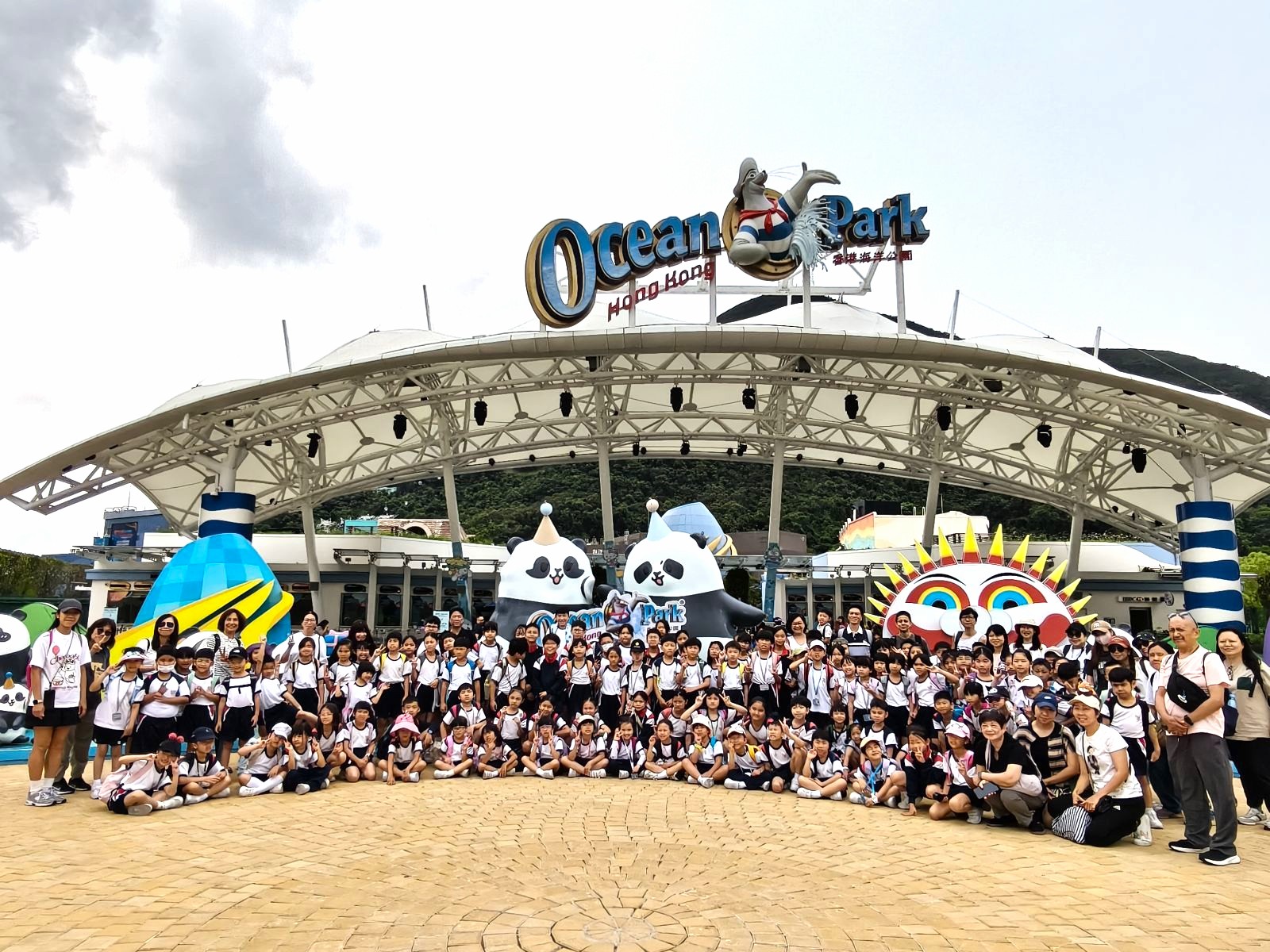
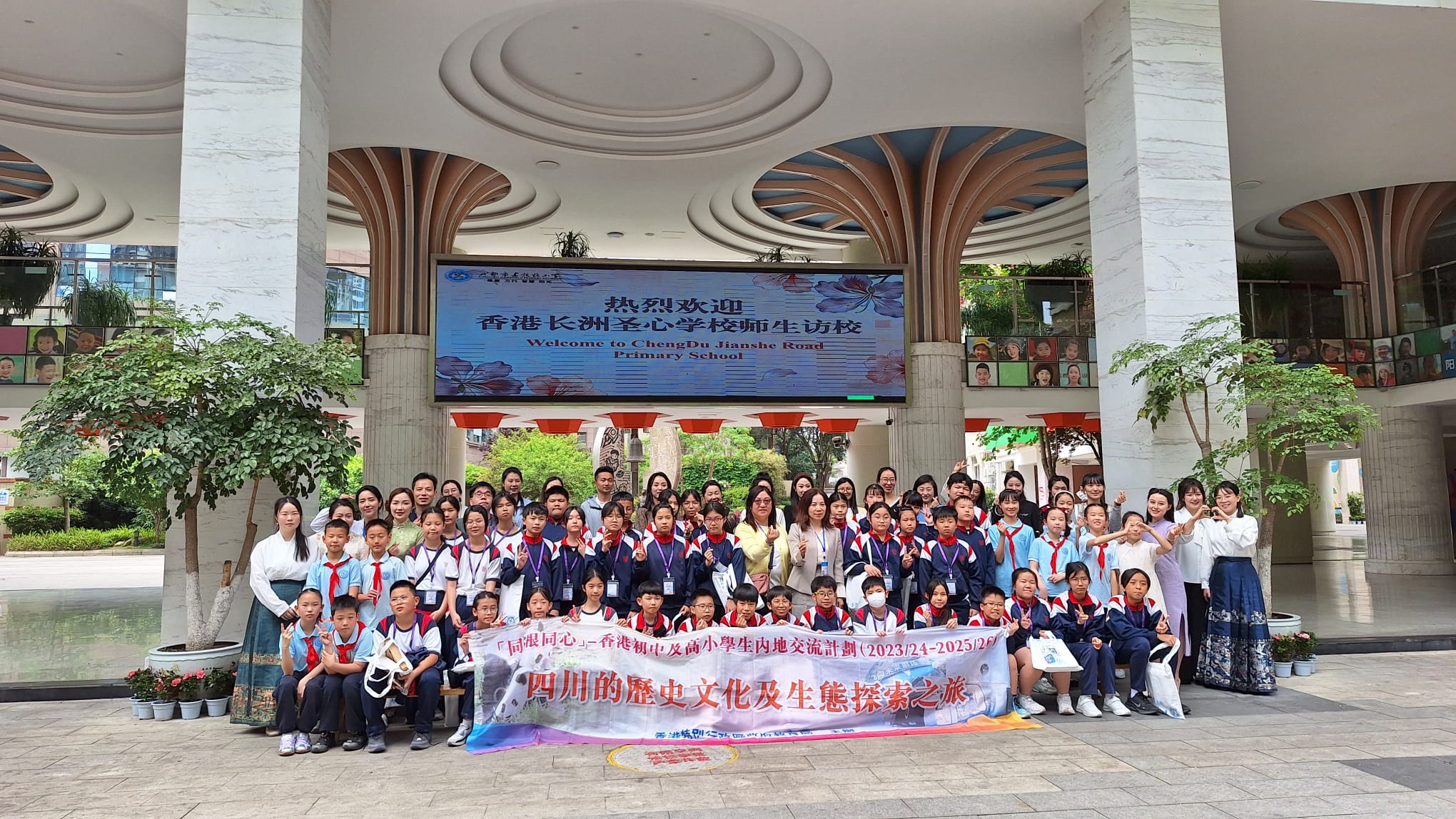
| Learning & Teaching Strategies | : | 1. Diverse learning experiences: Twice-weekly Multiple Intelligences (MI) lessons covering physical education, music, art, science, information technology, and more. 2. Experiential learning: Activities include two-day, one-night educational camps for lower primary students, overseas study tours for upper primary students, and Life-wide Learning Weeks for all students. 3. Continuous participation in school-based support programmes organised by the Education Bureau. For instance, the Chinese and Mathematics departments have recently joined the "Mainland-Hong Kong Teachers Exchange and Collaboration Programme." The English department has engaged in professional development learning communities to enhance teaching and learning. In the coming academic year, both the Chinese and English departments will co-participate in a cross-linguistic collaborative learning community programme. |
| Development of Major Renewed Emphases of the Primary Education Curriculum | : | 1. Regular religious sharing sessions are held during weekly school assembly periods to foster students' spiritual development. 2. Weekly Humanities lessons are provided for each grade, dedicated to National Security and Values Education. These sessions also serve as platforms for school-wide seminars, sharing information on topics such as National Security, Civic Education, and Life Education. 3. Diverse learning experiences to promote holistic development, including twice-weekly Multiple Intelligences (MI) lessons, daily extracurricular activity slots, various sports school teams, and service groups (such as the Little Pioneers of Christ and the Volunteer Team). 4. Enhanced support for student diversity, with daily after-school homework tutorials and various types of learning support groups. 5. The school will introduce new facilities, including a STEAM Room and a Bio-Lab (Biological Gallery), to continuously strengthen STEAM education. |
| Development of Generic Skills | : | 1. Curriculum, pedagogy, and assignment designs are aimed at fostering students' self-learning, communication and collaboration skills. 2. Students' self-management skills are cultivated through various learning activities, such as study tours and educational camps. 3. Through Life-wide Learning Weeks and participation in external competitions, students' creativity and problem-solving abilities are enhanced. |
| Cultivation of Proper Values, Attitudes and Behaviours | : | 1. Integrating the five core values of Catholic education into the school curriculum helps develop students' positive moral attitude. 2. The goal of the Sacred Heartian Award Scheme is to enhance students' self-esteem, self-confidence, and self-image. Students can learn how to achieve the virtue of "Love the Lord, Love everyone". 3. Enhance campus facilities and decorations by integrating positive values, such as the "Path of Charity" located at the main entrance of the school. |
| Student Support | ||
| Whole School Approach to Catering for Learner Diversity | : | We provide remedial classes, pull-out classes, and after-school tutorials to meet the needs of students with different abilities. In addition, we arrange assessment and homework adjustments, and various training supports for weaker students or students with special needs, such as support with social skills, attention, speech, and reading and writing. We also offer diversified extra-curricular activities to cater to learners' diversity. |
| Whole School Approach to Integrated Education | : | We have established a Student Support Core Team to address learners’ diverse needs by providing support and training for students with special needs. In addition, our school-based Educational Psychologist and Speech Therapist conduct intelligence, dyslexia, and speech assessments for students with suspected needs. |
| Education Support for Non-Chinese Speaking(NCS) Students | : | Our school provides additional support for NCS students to facilitate their learning of Chinese: providing after-school support programmes in learning Chinese; appointing additional teacher(s)/teaching assistant(s) to support NCS students' learning of Chinese; arranging intensive Chinese learning and teaching mode(s), e.g. pull-out learning if necessary, split-class/group learning, etc; and organising activities to create an inclusive learning environment in the school. |
| Curriculum Tailoring and Adaptation | : | We provide curriculum tailoring and adjust homework and assessments to meet students' individual needs. In addition, we use small-group teaching to support low-achieving students, and an Independent Educational Plan (IEP) is set up for students with individual needs. |
| Home-school Co-operation and School Ethos | ||
| Home-School Co-operation | : | We value close partnerships between the school and parents. A number of Home–School Cooperation activities are organised regularly, through collaboration and joint efforts, we work to provide the best possible support for both parents and students. |
| School Ethos | : | With the spirit of "Faith, Hope, Love" as the school motto, students are encouraged to strive for progress, learn and seek truth, experience the qualities of a Sacred Heart person who loves the Lord and others. So they become a Sacred Heart person themselves, who "loves life, cares for others and upholds the truth". |
| Future Development | ||
| School Development Plan | : | 1. Foster our students' moral development based on the core values (Truth, Justice, Love, Life and Family) of Catholic schools and provide students with a learning atmosphere with care and love. It can help students equip themselves and contribute to society in the future. 2. Develop school-based signature curricula that integrate Cheung Chau’s natural environment and traditional culture into daily teaching. This involves utilising the island's unique resources—such as marine ecology, fishing village culture, traditional customs and intangible cultural heritage—for subject-specific and cross-curricular learning. 3. Enhance students' interest in learning and their capacity for self-directed learning, while strengthening their self-confidence to help them realise their full potential and become future leaders. |
| Teacher Professional Training & Development | : | Professional development and training for teachers is arranged in alignment with school development goals, while a culture of collaborative lesson preparation and professional sharing is promoted within the school. Teachers are required to participate in subject-based seminars or workshops annually to enhance teaching effectiveness. |
| Others | : | 1. As the only Catholic primary school on Cheung Chau, the school places a special emphasis on students' spiritual education. 2. The school strategically utilises Cheung Chau’s unique geographical features to design and implement school-based signature curricula. 3. The "Campus Parents" scheme is established to provide holistic care for students and strengthen their sense of belonging to the school. 4. The "Class of 72 AM Session Alumni Association Scholarship" is offered to encourage students to pursue their studies with diligence and enthusiasm. |
 School Map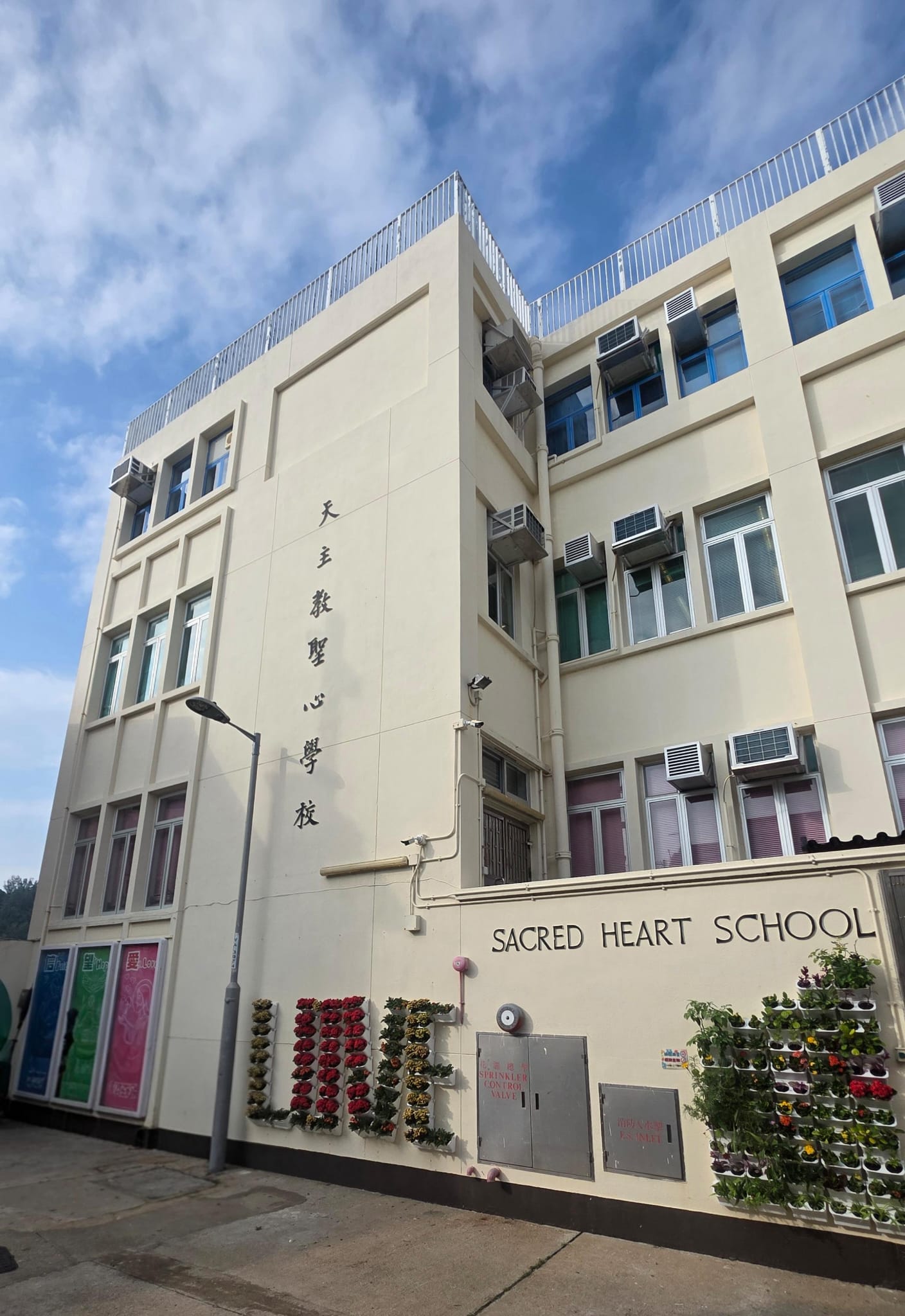
Last revision date:01 September 2026


