 Primary School Profiles 2026

 Primary School Profiles 2026
| Address: | 1 Fuk Cheung Street, Tokwawan, Kowloon | |||
| Phone: | 27115548 | Email: | mtcgps@edb.gov.hk | |
| Fax: | 27144258 | Website: | https://www.mtcgps.edu.hk | |
 School Information
 | Supervisor/ Chairman of Management Committee | : | Mr. Ngan Man Kit, Andrew |
| School Head | : | Ms. Chan Yim Chuk |
| Incorporated Management Committee been established? | : | Not Applicable |
| Percentage of School Supervisor and Managers / Chairperson and Members of School Management Committee (SMC) of Government Schools Fulfilling the Training Targets | : | 100% |
| School Type | : | Gov't Whole Day |
| Student Gender | : | Co-ed |
| Sponsoring Body | : | Government |
| Religion | : | Not Applicable |
| Year of Commencement of Operation | : | 1962 |
| School Motto | : | Please refer to the Chinese version. |
| Area Occupied by the School | : | About 2300 Sq. M |
| Through-train Secondary School | : | - |
| Feeder Secondary School | : | - |
| Nominated Secondary School | : | Queen Elizabeth Secondary School, Homantin Government Secondary School and Jockey Club Government Secondary School |
| Medium of Instruction | : | Chinese |
| School Bus Service | : | School Bus |
| Parent-Teacher Association | : | Yes |
| Past Students' Association/Alumni Association | : | Yes |
| 4Rs Mental Health Charter | : | Yes |
| Whole School Health Programme | : | Action School |
 2026/2027 Annual School Charges
| School Fee | : | - |
| Tong Fai | : | - |
| PTA Fee | : | $80 |
| Approved Charges for non-standard items | : | - |
| Other Charges | : | - |
 School Facilities
 | Number of Classroom(s) | : | 30 |
| Number of School Hall(s) | : | 1 |
| Number of Playground(s) | : | 3 |
| Number of Library(ies) | : | 1 |
| Special Rooms | : | Computer Room, IT Learning Centre, Art Room, Performance Room, Apps TV Station, Library, Music Rooms, Activity Rooms, Muti-functional Room etc. |
| Facility(ies) for Supporting Students with Special Educational Needs | : | Ramp, Accessible lift and Accessible toilet. |
| Others | : | MTC Literature Garden, a Historical Gallery and Hall. |
 Teaching Staff Information (Including School Head) in the 2025/2026 school year
 | Number of teaching posts in the approved establishment | : | 54 |
| Total number of teachers in the school | : | 55 |
| Qualifications and professional training (%) | ||
| Had Received Teacher Training | : | 100% |
| Bachelor Degree | : | 100% |
| Master/ Doctorate Degree or above | : | 38% |
| Special Education Training | : | 74% |
| Years of Experience (%) | ||
| 0 - 4 years | : | 6% |
| 5 - 9 years | : | 7% |
| 10 years or above | : | 87% |
 Class Structure
 | 2025/26 school year | ||
| P1 Number of classes | : | 5 |
| P2 Number of classes | : | 5 |
| P3 Number of classes | : | 5 |
| P4 Number of classes | : | 5 |
| P5 Number of classes | : | 5 |
| P6 Number of classes | : | 5 |
| Total | : | 30 |
| 2026/27 school year (Based on the number of classes approved by EDB in 2026) | ||
| P1 Number of classes | : | 5 |
| P2 Number of classes | : | 5 |
| P3 Number of classes | : | 5 |
| P4 Number of classes | : | 5 |
| P5 Number of classes | : | 5 |
| P6 Number of classes | : | 5 |
| Total | : | 30 |
| Mode of teaching at different levels | ||
| 1. Small Class Teaching is mainly used in lessons. 2. Elite training courses are provided for students with exceptional potentials in English, Mathematics starting from P2 3. Remedial Teaching Programme is conducted to cater for students who are relatively weak in some aspects. |
||
| Remarks | ||
| - | ||
 Performance Assessment
 | Applicable to P1 only | ||
| Number of test(s) per year | : | 0 |
| Number of exam(s) per year | : | 0 |
| Replace tests and examinations with diversified assessments in the first term of P1 | : | Yes |
| Applicable to P2 to P6 only | ||
| Number of test(s) per year | : | 0 |
| Number of exam(s) per year | : | 2 |
| Applicable to P1 to P6 | ||
| Formulate appropriate school-based assessment and assignment policies, inform parents of related arrangements, and collect views from teachers, students and parents regularly (at least once per school year) for ongoing review and optimisation of the school assessment and assignment policies | : | Yes |
| Upload the school-based assessment policy onto the school webpage for information of the public and stakeholders | : | Yes |
| Upload the school-based assignment policy onto the school webpage for information of the public and stakeholders | : | Yes |
| Diversified Assessment for Learning | : | We aim at stimulating the students' motivation of learning and enhancing their learning effects through formative assessments. |
| Avoid arranging tests or examinations immediately after long holidays in order to let students take more rest during the holidays | : | Yes |
| Arrange the timetable flexibly according to the school context, with a tutorial session provided in the afternoon as far as possible for students to finish some of their homework under teachers’ guidance | : | Yes |
| Streaming arrangement | : | 1. Primary 1 to Primary 3 levels are mixed abilities. 2. Elite classes (A & B) are practised from Primary 4 to Primary 6 levels according to the academic results and the rest will be allocated to C, D and E classes. |
 School Life
 | Number of school days per week | : | 5 |
| Number of periods per day | : | 9 |
| Duration of each normal period | : | 35 |
| School starts at | : | 7:55 AM |
| School ends at | : | 3:00 PM |
| Lunch break | : | 12:10 - 1:10 |
| Lunch arrangement | : | Provided by designated supplier and arranged by parents. |
| Healthy school life | : | 1. Participate in "SportACT" programme. 2. MVPA60. 3. Health Promoting School Programmes, such as the "EatSmart@school.hk" Campaign (ESSS), Joyful Fruit Month and Bright Smiles School Campus promoted by the Health Department. 4. 4Rs Mental Health Charter. 5. Monthly "No Homework Day" and birthday parties. 6. Promote Moral and Civic Education. |
| Remarks | : | 1. "One Life One Art/Sport" scheme offers over 100 high-quality, diverse training classes. 2. Most classes held during afternoon homework sessions or Saturday mornings for a vibrant campus life. 3. Covering sports, music, drama, language, digital education, etc. 4. Divided into interest classes and school team training. 5. Scout activities on Saturday afternoons. |
 Life-wide Learning
 | Every Wednesday and Friday afternoon, the whole school engages in activities such as library time, personal growth, moral and civic education, subject-based thematic learning, and interest groups (e.g., Girl Guides, magic, balloon twisting, juggling, coding, drones, percussion, guzheng, choir, lion dance, Shaolin kung fu, ball games, swimming, athletics, calligraphy, etc.). Saturday afternoons are for Cub Scouts. Additionally, over 100 diverse, self-financed sports, arts, and gifted education classes are offered each week. |
 School Mission
 | We endeavour to create the best learning environment for our students with a view to achieving a balanced education which places equal emphasis on moral education, intellectual growth, physical education, social development and aesthetic education. It is our mission to excel students' abilities, cultivate in them an indomitable spirit and develop their civic mind. |
 School Characteristics
 | School Management | ||
| School Management Organisation | : | As a government primary school, the school is managed by the School Management Committee (SMC). Under SMC, there are headmistress, deputy heads, senior teachers, subject teachers, a librarian, social workers and native-speaking English teachers. Clerical staff, teaching assistants and computer technicians support the administrative work of the teaching staff. The SMC has been established to manage, administer and operate the School, ensuring that fair, open and formal systems and procedures are in place. |
| Incorporated Management Committee / School Management Committee/ Management Committee | : | The School Management Committee is chaired by Principal Assistant Secretary of Education Bureau. Other committee members include the headmistress, teacher representatives, parent representatives, alumni representative and representative from the community. |
| School Green Policy | : | Through launching a great variety of activities, we aim at raising our students' awareness of environmental protection, such as saving energy, planting, conserving water and practicing the 4Rs (Refuse, Reuse, Recycle and Reduce). |
| School's Major Concerns | : | (2024-2027) School's Major Concerns: 1. To enrich learning experiences through natural connections, and inspiring diverse intelligences both inside and outside the classroom; 2. To foster positive values and promote holistic well-being of the mind, body and spirit. |
| Learning and Teaching Plan | ||
| Learning & Teaching Strategies | : | The education theme is formulated every year and the learning target and activities are set up in each subject in line with the education theme. Our teachers skillfully adopt the activity approach to teach students, and the campus TV produces programmes for various subjects to enhance the learning interest of students. To stress the importance of the holistic development, we provide daily classes with various arts and sports training activities to help students to develop good interests and confidence. |
| Development of Major Renewed Emphases of the Primary Education Curriculum | : | 1. Strengthen positive value education(covering national education [including patriotic education, national security education], life planning); 2. Enrich all-round learning experience and promote whole-person development; 3. Strengthen care for the diversity of students; 4. Strengthen STEAM education and training Students' media and information literacy; 5. Strengthen cross-curricular learning and reading, and develop lifelong learning capabilities; 6. Establish a healthy living style and strengthen environmental protection education; 7. Enhancing assessment literacy for promoting learning and teaching effectiveness. |
| Development of Generic Skills | : | Generic skills are effectively developed through participating in inter-school and extra-school activities. |
| Cultivation of Proper Values, Attitudes and Behaviours | : | Based on our school development plan, we aim at "enhancing students' positive values and attitudes through adopting a thematic approach. Elements of NSE can be integrated organically in and connected naturally with the curriculum contents of various subjects to strengthen students understanding of the rule of law, national conditions, and enable them to understand the importance of safeguarding national security. This also enhances students' sense of national identity and facilitates their development of important concepts such as nationhood, "One Country, Two Systems", rule of law, rights and duties, responsibility, commitment, respect for others and self-discipline. |
| Student Support | ||
| Whole School Approach to Catering for Learner Diversity | : | 1. Support measure for academically gifted students: Starting from P.2, students who are gifted in a particular subject receive the elite development training before or after school. 2. Support measures for under-privileged students: Co-teaching, Remedial teaching in small groups in both morning and afternoon session, Buy service training group. 3. Professional Support: School-based educational psychologist, School social work provides stationing service at school, Comprehensive Student Guidance Service, School-based Speech Therapist. 4. Organize P.1 Orientation Day, English Fun Day and "Big brother and sister" programme to help P.1 students adapt to campus life. 5. Bridging programmes for P.6 students to help them experience a smooth transition of new learning stages. |
| Whole School Approach to Integrated Education | : | 1. Implement the Whole School Approach (WSA) to integrated education (IE) based on five underlying principles, namely early identification, early intervention, WSA, home-school co-operation and cross-sector collaboration, premised on the synergy of culture, policies and practices. 2. The practicable strategies and relevant policies are launched with the full support from other school administrative teams, including Student Discipline and Guidance, School Academic Assessment, School Curriculum and Information Technology. 3. Strongly encourage and facilitate teachers to participate in special needs and inclusive education programmes. |
| Curriculum Tailoring and Adaptation | : | 1. To enhance students' learning effectiveness, curriculum adjustment is conducted by the teachers of different subjects and of the same teaching level. 2. Through participating actively in School-based after-school learning and support programmes organised by Education Bureau and the universities, we cater for students' learning diversity. |
| Home-school Co-operation and School Ethos | ||
| Home-School Co-operation | : | 1. Parent-Teacher Association and Parent Support Team are conducted in school. 2. Talks, seminars and activities about parent education and Parent-child Interest Classes are organised regularly. 3. Organizing Parents' Day and "Parent-teacher gatherings" in all the levels to encourage effective communication among parents and teachers. |
| School Ethos | : | Various measures have been undertaken to cultivate school ethos, which include civic and moral education, counselling, one-life-one-art/sport scheme, training programme for gifted and talented, home-school cooperation, etc. Our school received very good comments from the external school reviewers on school ethos and student support. |
| Future Development | ||
| School Development Plan | : | 1. Understand our country and the Chinese culture, cultivate a sense of belonging and national identity towards our country through national education and national security education. 2. With the help of the reading plan and information technology education, students can develop self-learning ability. 3. The effectiveness of learning and teaching is further enhanced through teacher's professional development, course curriculum reform and self-assessment. 4. "One-Life-one-art/sport scheme" to help students achieve their full potential and enhance self-confidence. 5. We endeavour to implement Healthy School Policy with a view to helping students lead a healthy lifestyle, develop personal hobbies and talents, take pleasure in engaging in different communities, and foster interests and essential skills to appreciate aesthetic and physical activities in order to achieve balanced physical and psychological development. 6. Promote digital education curricula. 7. Organising exchange tours to the Mainland and overseas. 8. Continuously refine teaching and learning while promoting values education. |
| Teacher Professional Training & Development | : | The school organizes various professional development activities for teachers each year, including "Joyful Gatherings for Teaching and Learning," "School-Based Teacher Development Days," and "Teacher Gatherings." The school encourages teachers to pursue further studies, and all teachers actively participate in mandatory online courses as well as various professional development activities such as joint lesson planning, lesson observation, and post-lesson evaluation to enhance professional exchange among teachers. |
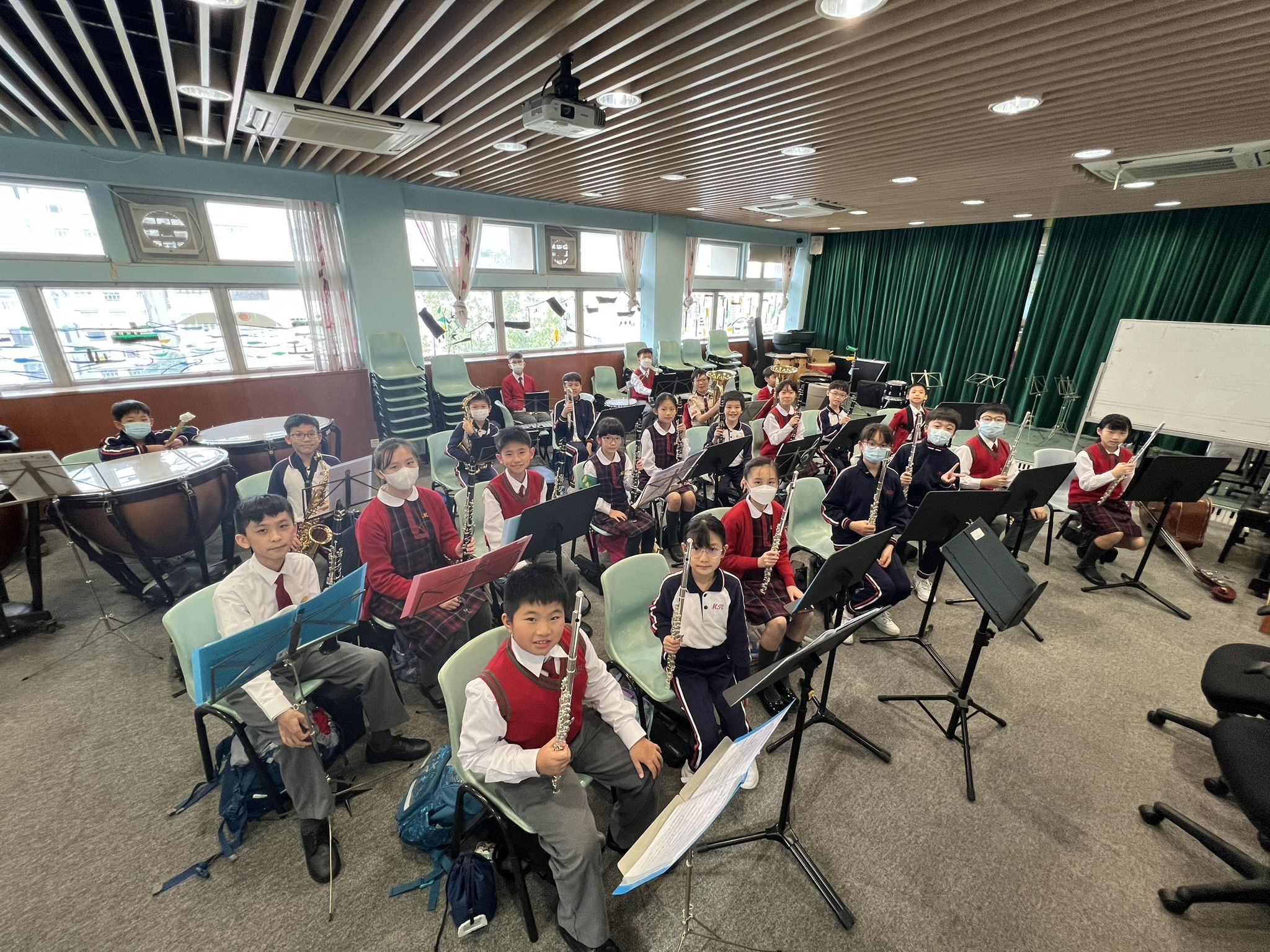
| Others | : | 1.“Dream One” Drone Competition (Primary School Group) (Champion) 2. WRO2025 Hong Kong Inter-School Sumo Robot Tournament & Greater Bay Area Invitational (champion) Challenge (Programming Group) (Gold Award) 3. Hong Kong Outstanding Students Award, Kowloon City District Outstanding Students Award, Hong Kong Youth Improvement Award, Outstanding Student Award for Values Education (Commitment) 4. Fruitful achievements in recitation, orchestra, athletics and swimming. 5. The teaching team has won numerous awards across multiple areas. 6. Overseas study tours (Australia, New Zealand, Singapore), Mainland sister school exchange program and Mainland Exchange Program for Junior Secondary and Upper Primary Students" of EDB. 7. Publish campus publications to engage stakeholders. |
 School Map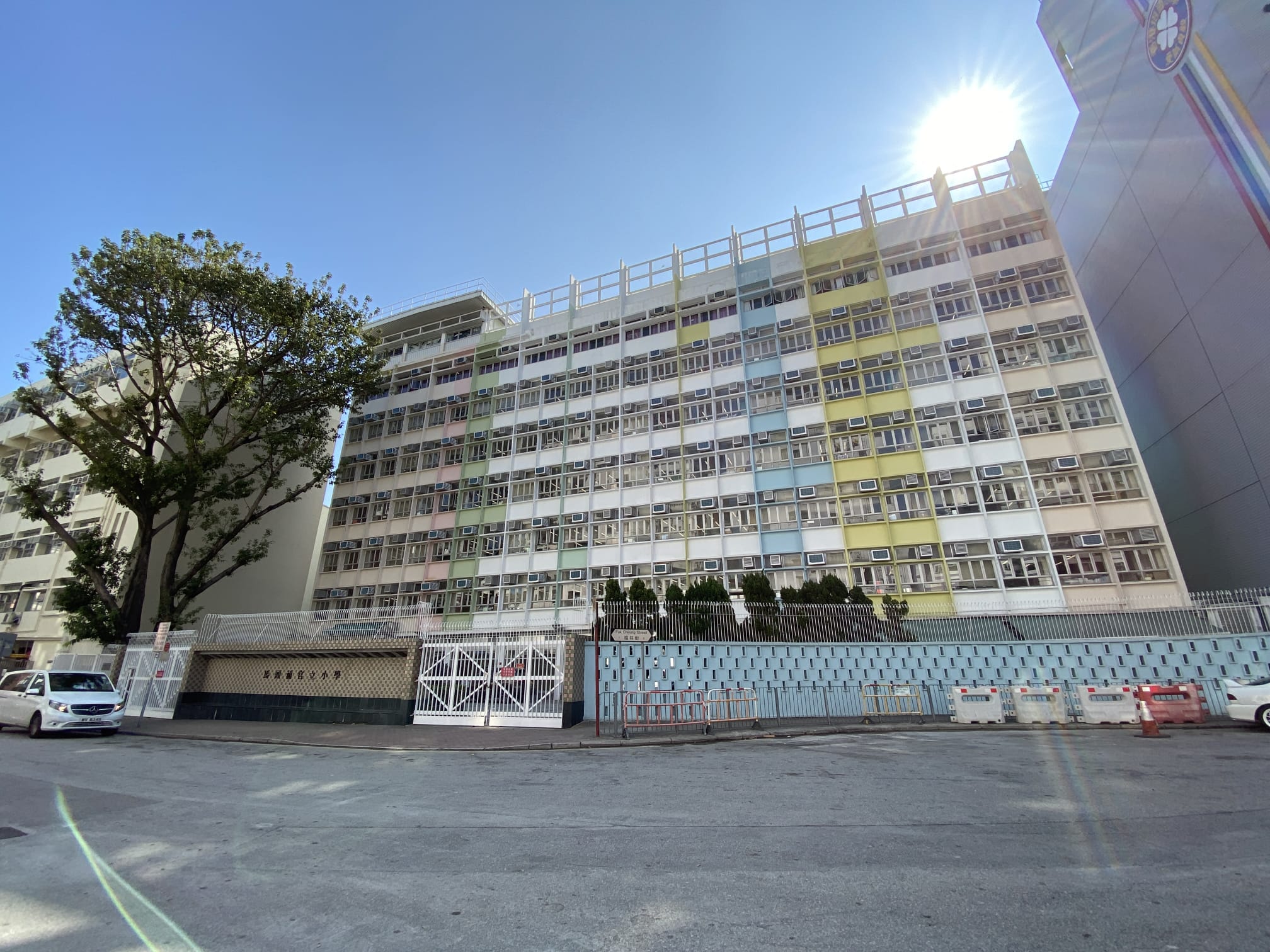

Last revision date:01 September 2026


