| School Management |
| School Management Organisation |
:
| The School is founded by Franciscan Missionaries of Mary. In August 2015, the school established its Incorporated Management Committee which is responsible for the direction and development of the School. The School Sponsoring Body, the Incorporated Management Committee, the Supervisor, the Principal, the School Executive Committee and the School Development Committee work collaboratively for the development of the school. |
| Incorporated Management Committee / School Management Committee/ Management Committee |
:
| The Incorporated Management Committee was established in August 2015. The IMC consists of Sponsoring body managers, the Principal, Teacher manager, Parent manager and Independent manager. The managers manage the School, formulate school policies to ensure that the vision, mission and core values of the School are implemented effectively. |
| School Green Policy |
:
| We have green and clean campus scheme which enables the students to cherish a green and low-carbon lifestyle. |
| School's Major Concerns |
:
| 1. Fostering students' self-understanding and cultivating a positive attitude to help them realise their potential and serve the community.
2. Strengthening students' generic skills and broaden their horizons. |
| Learning and Teaching Plan |
| Learning & Teaching Strategies |
:
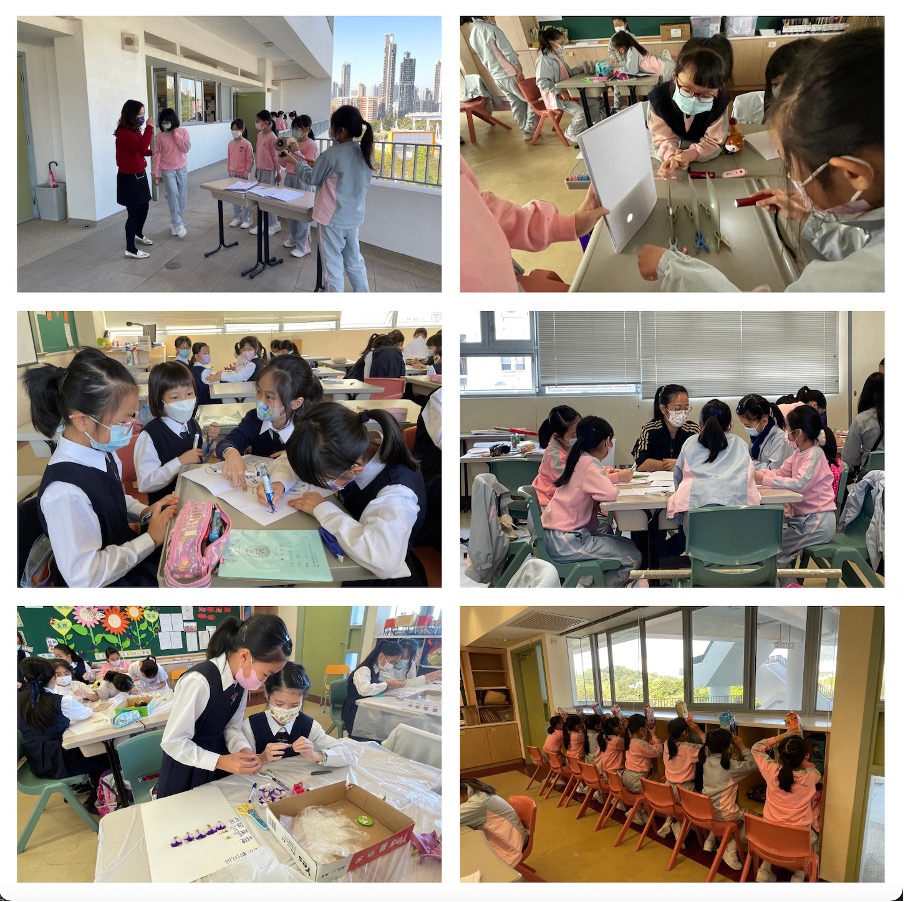
| 6-day cycle, with morning/afternoon reading sessions, afternoon life-wide learning periods and cross-curricular activities. A variety of learning activities are organised to enrich students' learning experiences. Every year, learning and teaching and student strategies and student support strategies are refined according to the major concerns of the school. Inquiry-based approach is adopted to ignite students' curiosity, to motivate students to become proactive learners and to increase their interest in reading. Experiential learning opportunities are provided to support students to achieve some learning goals that are more difficult to attain through classroom learning alone. Deeper learning is promoted through hands-on experience and reflection. |
| Development of Major Renewed Emphases of the Primary Education Curriculum |
:
| Strengthening values education (life education, patriotic education and national security education, 5 Core Values of HK Catholic Education, positive education); making good use of learning time and creating space to promote a balanced physical and mental development; enriching life-wide learning experiences and promoting whole-person development; better catering for learner diversity; reinforcing STEAM education, and nurturing students’ media and information literacy; strengthening cross-curricular learning and reading across the curriculum for developing lifelong learning capabilities; and enhancing assessment literacy for promoting learning and teaching effectiveness. |
| Development of Generic Skills |
:
| To foster students' 21st century skills through conducting learning activities in different Key learning areas, cross-curricular activities (Intangible Cultural Heritage projects, STEM projects), life-wide learning activities and extra-curricular activities. |
| Cultivation of Proper Values, Attitudes and Behaviours |
:
| Our school promotes Values Education through nurturing in our students the twelve priority values and attitudes: "Perseverance", "Respect for Others", "Responsibility", "National Identity", "Commitment", "Integrity" "Benevolence", "Law-abidingness", "Empathy", "Diligence", "Unity" and "Filial Piety" to promote whole-personal development and to equip students to contribute to the society. Our school aims at fostering students' positive values and attitudes through the learning and teaching of various Key Learning Areas/subjects and the provision of relevant learning experiences. We strive for developing students' ability to identify the values embedded, analyse objectively and make reasonable judgements in different issues they may encounter at different developmental stages so that they could take proper actions to deal with the challenges in their future life. |
| Student Support |
| Whole School Approach to Catering for Learner Diversity |
:
| 1. Differentiation instruction is adopted to cater for learner diversity to improve the effectiveness of learning and teaching. Teachers differentiate the curriculum, learning and teaching strategies and use different modes of assessment to assess the performance of students.
2. Bridging Programme for P1 students is arranged to help them experience a smooth transition of the new learning environment.
3. Enrichment Classes and Remedial Classes are designed to support student learning.
4. Learning programmes are designed to identify and develop students who demonstrate exceptional achievement or potential in specific academic subject area(s), creative thinking and leadership skills; remarkable talent and outstanding performance in different domains like visual and performing arts, sports and technology. |
| Whole School Approach to Integrated Education |
:
| The school has established a "Student Support Team" led by the Special Educational Needs Coordinator to plan, implement, and review support for students with special educational needs. Different modes of support (remedial classes, various courses focused on academic improvement, skills enhancement groups, interest development) are provided to address the needs of students with special educational needs. A school-based speech therapist has been hired to provide group or individual speech therapy training sessions for students with language disorders. |
| Curriculum Tailoring and Adaptation |
:
| Differentiation instruction is adopted to cater for learner diversity to improve the effectiveness of learning and teaching. Teachers differentiate the curriculum, learning and teaching strategies and use different modes of assessment to assess the performance of students. |
| Home-school Co-operation and School Ethos |
| Home-School Co-operation |
:
| Home-school co-operation is fostered and parent education is promoted to create a positive environment for students to enhance learning effectiveness and foster their healthy development. PTA acts as a medium of communication between the school and the parents. The active participation of parents fosters the collaboration between the school and families and parents gain a better understanding of the school through different types of school activities. The Parents' Academy has been set up to promote parent education. Learning opportunities are offered for SROLS parents on six categories–Religious formation, Academic, Parenting, Higher-order thinking skills, Innovative Technology and Parent-child workshops. |
| School Ethos |
:
| St. Rose of Lima's School has the characteristics of simplicity and harmony, with a strong emphasis on Christian faith and positive attitudes and values. The relationship between students and teachers is good and our students have a strong sense of belonging to the school. |
| Future Development |
| School Development Plan |
:
| In the past two development cycles, the school has been committed to nurturing students’ leadership qualities and spirit of serving the community through understanding and practicing the “7 Habits” and the five core values of Catholic education. These efforts have also aimed to help students unleash their diverse potential.
To sustain and deepen the achievements of the past cycles and further enhance students’ leadership qualities, the school will focus in this cycle on inspiring students to explore themselves, understand their character strengths, discover their interests and talents, and build a positive attitude. This will help them become leaders who understand themselves and actively utilize their strengths and potential to serve others.
Moreover, to build on the six years of experience in promoting self-directed learning and to further develop students’ critical thinking, self-management, and independent learning skills, the school will focus on enhancing students’ generic skills and broadening their horizons in this development cycle. |
| Teacher Professional Training & Development |
:
| Our school emphasises teacher professional development. Through internal lesson studies and collaborating with universities, Education Bureau and other organisations, teachers keep abreast of the latest developments in curriculum, teaching pedagogies and assessments to continuously improve the school-based curriculum to enhance learning and teaching effectiveness. |
| Others |
:
| Our school has formed sister school pairs with Qingdao Hainuo School. School management and teachers enhance their professionalism through exchanges of school management experiences, lesson observations. Students broaden their horizons and deepen their understanding of the Mainland/Hong Kong by participating in exchange activities, thereby enhancing their sense of national identity. |
 Primary School Profiles 2026


 School Information
  2026/2027 Annual School Charges
 School Facilities
  Teaching Staff Information (Including School Head) in the 2025/2026 school year
  Class Structure
  Performance Assessment
  School Life
  Life-wide Learning
  School Mission
  School Characteristics
  School Map