 Primary School Profiles 2026

 Primary School Profiles 2026

| Address: | 21 Tak Fung Street, Whampoa Garden, Hung Hom, Kowloon | |||
| Phone: | 23367742 | Email: | info@apsw.edu.hk | |
| Fax: | 21428096 | Website: | https://www.apsw.edu.hk | |
 School Information
 | Supervisor/ Chairman of Management Committee | : | Dr. Kam Wai Keung |
| School Head | : | Mr. Lee Tak Hang |
| Incorporated Management Committee been established? | : | Established |
| Percentage of School Supervisor and Managers / Chairperson and Members of School Management Committee (SMC) of Government Schools Fulfilling the Training Targets | : | 100% |
| School Type | : | Aided Whole Day |
| Student Gender | : | Co-ed |
| Sponsoring Body | : | Kowloon Tong Church of The Chinese Christian & Missionary Alliance |
| Religion | : | Protestantism / Christianity |
| Year of Commencement of Operation | : | 1997 |
| School Motto | : | The fear of the LORD is the beginning of wisdom and knowledge of the Holy is understanding. (Proverbs 9:10) |
| Area Occupied by the School | : | About 6200 Sq. M |
| Through-train Secondary School | : | - |
| Feeder Secondary School | : | - |
| Nominated Secondary School | : | - |
| Medium of Instruction | : | Chinese |
| School Bus Service | : | School Bus; Nanny van |
| Parent-Teacher Association | : | Yes |
| Past Students' Association/Alumni Association | : | Yes |
| 4Rs Mental Health Charter | : | Yes |
| Whole School Health Programme | : | Action School |
 2026/2027 Annual School Charges
| School Fee | : | - |
| Tong Fai | : | - |
| PTA Fee | : | $75 (per year and per family) |
| Approved Charges for non-standard items | : | $720 fee for employing two extra native English-speaking teachers and one extra native PTH-speaking teacher. |
| Other Charges | : | $180 fee for copying learning materials. |
 School Facilities
 | Number of Classroom(s) | : | 30 |
| Number of School Hall(s) | : | 1 |
| Number of Playground(s) | : | 3 |
| Number of Library(ies) | : | 2 |
| Special Rooms | : | Visual Art Room, Music room, Science Laboratory, Aviation Discovery Centre, English Reading Castle, Stream Inno-Tech Lab, Counselling room, Well-being Room, three Small Group Teaching Rooms, Dance Room, STREAM Corner, Well-being Recharge Corner |
| Facility(ies) for Supporting Students with Special Educational Needs | : | Accessible lift. |
| Others | : | English library, Chinese library, halls, air-conditioned canteens, running track, Multi-purpose Complex, Toy Library, basketball courts, volleyball court, Indoor badminton and volleyball courts |
 Teaching Staff Information (Including School Head) in the 2025/2026 school year
 | Number of teaching posts in the approved establishment | : | 57 |
| Total number of teachers in the school | : | 61 |
| Qualifications and professional training (%) | ||
| Had Received Teacher Training | : | 100% |
| Bachelor Degree | : | 100% |
| Master/ Doctorate Degree or above | : | 32% |
| Special Education Training | : | 51% |
| Years of Experience (%) | ||
| 0 - 4 years | : | 6% |
| 5 - 9 years | : | 8% |
| 10 years or above | : | 86% |
 Class Structure
 | 2025/26 school year | ||
| P1 Number of classes | : | 5 |
| P2 Number of classes | : | 5 |
| P3 Number of classes | : | 5 |
| P4 Number of classes | : | 5 |
| P5 Number of classes | : | 5 |
| P6 Number of classes | : | 5 |
| Total | : | 30 |
| 2026/27 school year (Based on the number of classes approved by EDB in 2026) | ||
| P1 Number of classes | : | 5 |
| P2 Number of classes | : | 5 |
| P3 Number of classes | : | 5 |
| P4 Number of classes | : | 5 |
| P5 Number of classes | : | 5 |
| P6 Number of classes | : | 5 |
| Total | : | 30 |
| Mode of teaching at different levels | ||
| Small-class teaching is implemented in P.1-P.2 to cater and address individual student needs. "BYOD-O" tablet initiative continues for P.4-P.6, including dedicated "BYOD" e-textbook classes for P.5-P.6. Remedial and enrichment programs utilize customized curricula to consolidate foundations and optimize learning outcomes. | ||
| Remarks | ||
| In 2024-25, we became the first primary school Satellite Centre of Hong Kong Academy for Gifted Education. We popularize gifted education via a 3-tier model: Infusing gifted elements into the curriculum; Pull-out small-group learning; Advanced training programmmes with EDB and universities. | ||
 Performance Assessment
 | Applicable to P1 only | ||
| Number of test(s) per year | : | 0 |
| Number of exam(s) per year | : | 1 |
| Replace tests and examinations with diversified assessments in the first term of P1 | : | Yes |
| Applicable to P2 to P6 only | ||
| Number of test(s) per year | : | 0 |
| Number of exam(s) per year | : | 3 |
| Applicable to P1 to P6 | ||
| Formulate appropriate school-based assessment and assignment policies, inform parents of related arrangements, and collect views from teachers, students and parents regularly (at least once per school year) for ongoing review and optimisation of the school assessment and assignment policies | : | Yes |
| Upload the school-based assessment policy onto the school webpage for information of the public and stakeholders | : | Yes |
| Upload the school-based assignment policy onto the school webpage for information of the public and stakeholders | : | Yes |
| Diversified Assessment for Learning | : | Beyond written exams, assessments cover Chinese and English listening and speaking skills, practical exams in Music, PE and Visual Arts. Activity books are integrated into Humanities and Science. Self and peer evaluations are implemented to foster critical thinking. Furthermore, projects and formative assessments are utilized to enhance students' generic skills and self-directed learning. |
| Avoid arranging tests or examinations immediately after long holidays in order to let students take more rest during the holidays | : | Yes |
| Arrange the timetable flexibly according to the school context, with a tutorial session provided in the afternoon as far as possible for students to finish some of their homework under teachers’ guidance | : | Yes |
| Streaming arrangement | : | P.1-P.3 students are placed in mixed‑ability classes with balanced gender ratios, while P.4-P.6 students are grouped according to overall academic performance. To better observe and support student development, each class is supported by a class teacher and an assistant class teacher. |
 School Life
 | Number of school days per week | : | 5 |
| Number of periods per day | : | 10 |
| Duration of each normal period | : | 30 |
| School starts at | : | 8:00 AM |
| School ends at | : | 3:15 PM |
| Lunch break | : | 1:00 - 1:50 |
| Lunch arrangement | : | Provided by designated supplier and arranged by parents. |
| Healthy school life | : | As a dedicated healthy campus, our school has received the "EatSmart School" Gold Award and accreditation from the Department of Health. To ensure nutritional balance and food safety, we implement: 1. Continuous promotion of balanced diets, increased fruit and vegetable intake, and regular exercise. 2. A "Lunch Monitoring Group" of staff and parents conducts at least four site inspections and tastings annually to ensure meal quality. |
| Remarks | : | To provide a comfortable dining environment, senior students eat in batches in the air-conditioned canteen. We adopt an "on-site cooking and immediate distribution" model, where the caterer prepares two nutritious dishes and fresh vegetables in the school kitchen. This approach, combined with portioning arrangements, ensures food quality, provides balanced nutrition, and promotes environmental responsibility and reduces food wastage among students. |
 Life-wide Learning
 | Our school provide a wide range of extracurricular activities, including a percussion ensemble, orchestra, handbell team, choir, swimming team, basketball team, badminton team, volleyball team, athletics team, contemporary dance team, rope skipping team, visual arts team, STREAM engineers, MEV electric vehicle engineers, aviation team, Olympiad Mathematics team, choral speaking team, Cub Scouts, Brownies, etc. |
 School Mission
 | In accordance with the KTAC's mission for education, our school's mission is "Glorifying God by loving Christ, loving one another, & reaching the world with the gospel." |
 School Characteristics
 | School Management | ||
| School Management Organisation | : | The school is governed and monitored by the Incorporated Management Committee. Under the IMC, the Principal, Vice-Principal, Assistant Principals, and the Administrative Core Committee plan school development and manage daily operations. Each subject department is led by 2–3 subject heads to steer the academic advancement. |
| Incorporated Management Committee / School Management Committee/ Management Committee | : | The Incorporated Management Committee has been established since the school year 2008-2009. Its members include representatives from the Sponsoring Body, the Principal, Independent Managers, Parent Managers, Teacher Managers, and Alumni Managers. |
| School Green Policy | : | Our school has established an Environmental Protection Group to coordinate green policies, supported by Student Environmental Ambassadors who promote sustainability. We implement waste sorting and encourage recycling, energy conservation, and paper saving. Furthermore, we have adopted electronic filing systems to minimize paper consumption. |
| School's Major Concerns | : | School Development Plan 2024-2027: Major Concern 1: Aligning with Christian core values to focus on value education. Major Concern 2: Optimizing curriculum planning to cater to learner diversity. |
| Learning and Teaching Plan | ||
| Learning & Teaching Strategies | : | 1. The school places strong emphasis on biliteracy and trilingualism, and actively promotes gifted education, e‑learning through interactive classroom technologies, drama education, service learning, and inquiry‑based learning, enabling students to develop and discover their diverse talents. 2. Gifted students are identified through multiple channels and supported through appropriate pull‑out programmes or individualised curriculums. A Spanish language programme is also offered. 3. The school nurtures students’ integrated learning and application skills in STREAM (Science, Technology, Reading, Engineering, Arts and Mathematics). 4. Through theme‑based activities such as Chinese Cultural Day, English Day, Putonghua Day, Mathematics and Science Day, STREAM Day, and Overseas Study Tours, students are encouraged to participate in a wide range of co‑curricular activities to broaden their horizons. |
| Development of Major Renewed Emphases of the Primary Education Curriculum | : | Enhancing Value Education: Based on Christian core values, the 12 priority values, National and Security Education, and Positive Education, we develop a school-based framework to systematically implement values education across all subjects. Optimizing School Time: The afternoon session includes Integrated Lessons for cross-curricular activities and projects, plus Tutorial Lessons where students complete homework with teacher support. Optimize teaching strategies: We design diverse tasks to inspire learning. Strengthening STREAM Education: We reinforce school-based STREAM through thematic cross-disciplinary learning, incorporating Chinese cultural elements, cross-curricular reading, and value education. This fosters students' scientific inquiry skills and media and information literacy. |
| Development of Generic Skills | : | Promote holistic development by fostering students' generic skills, such as communication, collaboration, and problem-solving, through subject-specific learning activities, pedagogical strategies, project-based learning, cross-curricular learning, and STREAM activities. |
| Cultivation of Proper Values, Attitudes and Behaviours | : | Based on Christian core values and positive education, we foster students' values and character through interdisciplinary collaboration, diverse activities, service learning, and a supportive campus culture, while enhancing their civic responsibility. |
| Student Support | ||
| Whole School Approach to Catering for Learner Diversity | : | Student Support Team is established to coordinate a range of support programmes that cater for students' diverse learning needs. These include the Early Identification and Intervention Programme for P.1 students with learning difficulties, Enhanced School-based Speech Therapy Services, the Little Buddies Learning Programme, remedial learning groups, and homework and assessment accommodations. These measures aim to support students who are academically less advanced or who have special educational needs. Also, the school implements pre-tests and post-tests in the 3 core subjects—Chinese, English, and Mathematics—to better understand students' learning baselines and progress. Through systematic analysis of students' strengths and areas for improvement, teachers can refine instructional strategies, enhance learning and teaching effectiveness and promote students' development. |
| Whole School Approach to Integrated Education | : | Our school is committed to developing an inclusive culture through the Whole School Approach to support students with SEN. Resources (LSG) are deployed to provide appropriate and diversified support to these students so as to enhance their learning efficacy and adjustment to school life. Students with SEN and ALAs are provided with the following support measures: 1. Learning Support Groups 2. School-based Educational Psychology Services 3. School-based Speech therapy services 4. Homework adaptation and assessment accommodation 5. Group training on social skills / attention 6. Individual education plan |
| Education Support for Non-Chinese Speaking(NCS) Students | : | Our school provides additional support for NCS students to facilitate their learning of Chinese: providing after-school support programmes in learning Chinese; developing school-based Chinese Language curriculum and/or adapting learning and teaching materials; organising activities to create an inclusive learning environment in the school; and hiring additional manpower and/or translation/interpretation services to facilitate the communication with parents of NCS students. |
| Curriculum Tailoring and Adaptation | : | Enriched and tailored courses, including homework support, step-up, and enhancement classes, along with leadership training, are provided to offer students in need with appropriate academic and extracurricular activities, thereby enhancing their learning capabilities. |
| Home-school Co-operation and School Ethos | ||
| Home-School Co-operation | : | The school has a Parent-Teacher Association and Parent Managers. Parent representatives actively participate in school activities and governance. Through the Parent Academy, Parent Weekends, Parents' Day, and questionnaires, the school regularly collects feedback as a reference for policy improvement. |
| School Ethos | : | Rooted in Biblical truths, we integrate discipline and guidance to foster holistic development and character building, instilling values of courtesy and mutual respect. Guided by the APSW spirit (Appreciation, Perseverance, Sincerity, Wisdom), our Four-House system transcends grade boundaries, empowering senior students to mentor juniors while strengthening a sense of belonging. To cultivate a harmonious campus, we host vibrant initiatives such as, Class Day, Heart-to-Heart Radio, and the P.1 100-Day Celebration. Programmes such as Big Hands Hold Small Hands and Transfer Student Welcome Circle ensure every child flourishes within a nurturing and loving environment. |
| Future Development | ||
| School Development Plan | : | 1. Focus on value education and optimize curriculum planning. Promote the twelve priority values and attitudes through classroom learning, school-wide and external life-wide learning activities, and practical service opportunities. 2. Optimize curriculum planning by applying diverse teaching and assessment strategies to cater for learner diversity. Strengthen teachers' professional development in Learning, Teaching, and Assessment. |
| Teacher Professional Training & Development | : | We organize no less than three Teacher Development Days annually, featuring school-based workshops and EDB-led programmes. Teaching effectiveness is enhanced through peer lesson observations, research lessons, open classes, collaborative lesson planning, and professional exchanges with local and overseas schools. Furthermore, teachers are encouraged to participate in EDB secondment schemes annually to sharpen their subject expertise and engage in diverse pedagogical research activities. |
| Others | : | We optimize school hours by scheduling tutorial and integrated lessons after lunch. These include cross-curricular reading, Multiple Intelligences, interdisciplinary STREAM, life growth lessons, and assemblies. These sessions empower students to engage in self-directed and service learning, enriching their experiences while ensuring a balanced and diversified curriculum. |
 School Map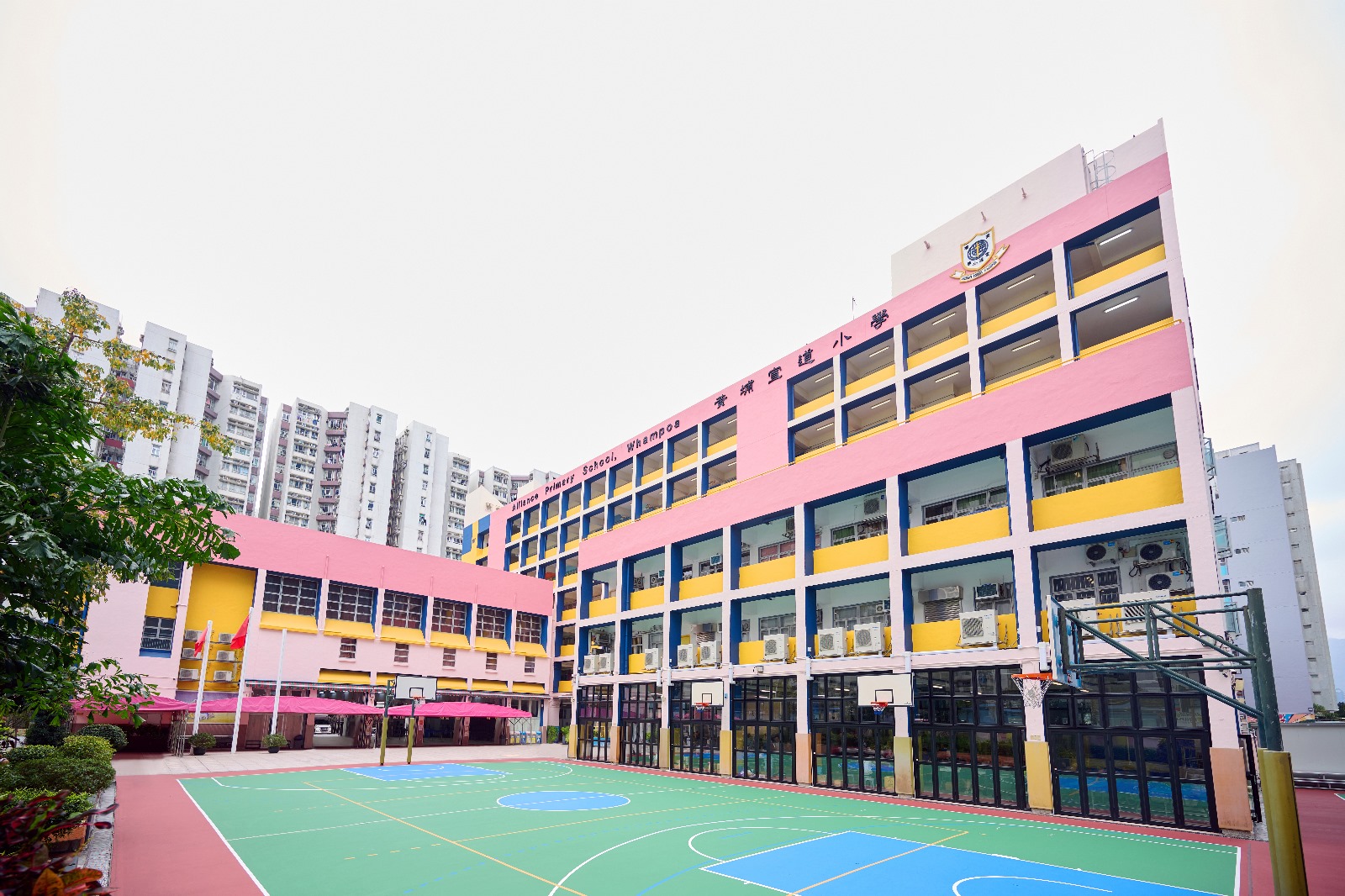

Last revision date:01 September 2026


