 Primary School Profiles 2026

 Primary School Profiles 2026

| Address: | 130 Waterloo Road, Kowloon City, Kowloon | |||
| Phone: | 23360611 | Email: | mcs_gen_office3@mcsps.edu.hk | |
| Fax: | 23363154 | Website: | http://www.mcsps.edu.hk | |
 School Information
 | Supervisor/ Chairman of Management Committee | : | Ms. Ho Main Wai Amy |
| School Head | : | Ms. Chan Ka Cheuk |
| Incorporated Management Committee been established? | : | Established |
| Percentage of School Supervisor and Managers / Chairperson and Members of School Management Committee (SMC) of Government Schools Fulfilling the Training Targets | : | 100% |
| School Type | : | Aided Whole Day |
| Student Gender | : | Girls |
| Sponsoring Body | : | Maryknoll Convent School Foundation |
| Religion | : | Catholicism |
| Year of Commencement of Operation | : | 1925 |
| School Motto | : | Sola Nobilitas Virtus (Virtue Alone Ennobles) |
| Area Occupied by the School | : | About 18697 Sq. M |
| Through-train Secondary School | : | - |
| Feeder Secondary School | : | Maryknoll Convent School (Secondary Section) |
| Nominated Secondary School | : | - |
| Medium of Instruction | : | English |
| School Bus Service | : | School Bus |
| Parent-Teacher Association | : | Yes |
| Past Students' Association/Alumni Association | : | Yes |
| 4Rs Mental Health Charter | : | Yes |
| Whole School Health Programme | : | Pledged School |
 2026/2027 Annual School Charges
| School Fee | : | - |
| Tong Fai | : | $6000 |
| PTA Fee | : | 100 |
| Approved Charges for non-standard items | : | - |
| Other Charges | : | - |
 School Facilities
 | Number of Classroom(s) | : | 30 |
| Number of School Hall(s) | : | 2 |
| Number of Playground(s) | : | 5 |
| Number of Library(ies) | : | 1 |
| Special Rooms | : | Science Room, STEM Room, STEM Makerspace, Music Rooms, Art Room, Computer Rooms, Prayer Room, Student Activity Centre, Medical Inspection Room, Digital Music Room |
| Facility(ies) for Supporting Students with Special Educational Needs | : | Ramp. |
| Others | : | Swimming Pool, Heritage Centre. |
 Teaching Staff Information (Including School Head) in the 2025/2026 school year
 | Number of teaching posts in the approved establishment | : | 56 |
| Total number of teachers in the school | : | 57 |
| Qualifications and professional training (%) | ||
| Had Received Teacher Training | : | 100% |
| Bachelor Degree | : | 100% |
| Master/ Doctorate Degree or above | : | 49% |
| Special Education Training | : | 62% |
| Years of Experience (%) | ||
| 0 - 4 years | : | 5% |
| 5 - 9 years | : | 36% |
| 10 years or above | : | 59% |
 Class Structure
 | 2025/26 school year | ||
| P1 Number of classes | : | 5 |
| P2 Number of classes | : | 5 |
| P3 Number of classes | : | 5 |
| P4 Number of classes | : | 5 |
| P5 Number of classes | : | 5 |
| P6 Number of classes | : | 5 |
| Total | : | 30 |
| 2026/27 school year (Based on the number of classes approved by EDB in 2026) | ||
| P1 Number of classes | : | 5 |
| P2 Number of classes | : | 5 |
| P3 Number of classes | : | 5 |
| P4 Number of classes | : | 5 |
| P5 Number of classes | : | 5 |
| P6 Number of classes | : | 5 |
| Total | : | 30 |
| Mode of teaching at different levels | ||
| To enhance learning and teaching effectiveness, different pedagogies such as inquiry-based learning, cooperative learning and project learning are adopted. | ||
| Remarks | ||
| - | ||
 Performance Assessment
 | Applicable to P1 only | ||
| Number of test(s) per year | : | 2 |
| Number of exam(s) per year | : | 0 |
| Replace tests and examinations with diversified assessments in the first term of P1 | : | Yes |
| Applicable to P2 to P6 only | ||
| Number of test(s) per year | : | 3 |
| Number of exam(s) per year | : | 3 |
| Applicable to P1 to P6 | ||
| Formulate appropriate school-based assessment and assignment policies, inform parents of related arrangements, and collect views from teachers, students and parents regularly (at least once per school year) for ongoing review and optimisation of the school assessment and assignment policies | : | Yes |
| Upload the school-based assessment policy onto the school webpage for information of the public and stakeholders | : | Yes |
| Upload the school-based assignment policy onto the school webpage for information of the public and stakeholders | : | Yes |
| Diversified Assessment for Learning | : | P.1: 2 tests per year; P.2-P.4: 3 tests per year; P.5-P.6: 3 examinations per year. A diversified mode of assessment: projects, learning tasks, written & oral assessments, web-based assessment, self-assessment, peer and parent assessments. |
| Avoid arranging tests or examinations immediately after long holidays in order to let students take more rest during the holidays | : | Yes |
| Arrange the timetable flexibly according to the school context, with a tutorial session provided in the afternoon as far as possible for students to finish some of their homework under teachers’ guidance | : | Yes |
| Streaming arrangement | : | Mixed ability classes from P.1-P.6. |
 School Life
 | Number of school days per week | : | 5 |
| Number of periods per day | : | 9 |
| Duration of each normal period | : | 35 |
| School starts at | : | 7:55 AM |
| School ends at | : | 2:50 PM |
| Lunch break | : | 12:50 - 1:50 |
| Lunch arrangement | : | Provided by designated supplier and arranged by parents. |
| Healthy school life | : | Our school has attained both the Advanced Level Accreditation (Lunch) and the Advanced Level Accreditation (Snacks) for the "EatSmart School Accreditation Scheme". Our school implements the measures outlined in the "4Rs Mental Health Charter" to promote students' mental well-being in accordance with the principles of the Charter. |
| Remarks | : | - |
 Life-wide Learning
 | To provide students opportunities to gain the five essential learning experiences, different clubs and cross-curricular activities, such as Chinese, English, Mathematics, Reading, School Post, STEM, Debate, Athletics, Gymnastics, Ball Games, Lion Dance, Chinese Dance, Calligraphy, Ink Painting, Visual Arts, Drama, Choir, String Orchestra, Chinese Orchestra, Digital Music, Brownies and Young Pioneers of Christ have been offered. |
 School Mission
 | Maryknoll provides quality, affordable education for girls, nurturing all-round development and a love for learning. We foster moral values, responsibility, and global awareness, encouraging each student to realise her potential. In partnership with parents and society, we promote a safe, caring environment where students grow in faith, knowledge, and service. |
 School Characteristics
 | School Management | ||
| School Management Organisation | : | School-based management under the supervision of and guidance from the Incorporated Management Committee. |
| Incorporated Management Committee / School Management Committee/ Management Committee | : | The Incorporated Management Committee includes representatives from the School Sponsoring Body, Principal, teachers, parents, alumni and an independent manager. |
| School Green Policy | : | To implement environmental education through a whole school approach and to provide teachers and students with suggested measures and activities in saving resources, reducing wastes and upholding the sustainability policy for our environmentally-friendly school campus. |
| School's Major Concerns | : | 1. To cultivate an open learning environment for fostering students' abilities to become independent and motivated learners to cope with the ever-changing learning environment in the new era. 2. To nurture our students to live in a way of life with Maryknoll Spirit. 3. To nurture an effective and committed professional team for sustainable growth, and enhancement of the educational leadership through staff development programmes, and support newly recruited teachers to adjust to inherit the school culture through mentorship and induction programmes. |
| Learning and Teaching Plan | ||
| Learning & Teaching Strategies | : | Students gain knowledge through various learning experiences, including inquiry-based learning and project learning, which are implemented using an interdisciplinary approach. To enhance students' higher-order thinking skills, a variety of questioning techniques, blended learning methods, and assessment for learning strategies are utilized. |
| Development of Major Renewed Emphases of the Primary Education Curriculum | : | 1. Our school launches a reading scheme with the aim of nurturing extensive reading habits among students, fostering a positive reading environment, and enhancing their reading skills and techniques. 2. Our school has 2 Computer Rooms, STEM Room, STEM Makerspace and Digital Music Room to facilitate IT in Education. All classrooms and other learning areas are equipped with WIFI. eLearning is incorporated into all subjects. 3. Project learning is arranged in different subjects to enhance students' self-learning abilities and vary the mode of assessments. 4. Through formal and informal curriculum, our school organizes moral educations talks, workshops and various activities to cultivate position values and attitudes among students. |
| Development of Generic Skills | : | Students’ nine generic skills are developed and applied in an integrative manner through learning and teaching in all KLAs. |
| Cultivation of Proper Values, Attitudes and Behaviours | : | Our school is committed to promote values education through the provision of learning experiences at school and beyond. Students can reinforce the core MCS values and cultivate a harmonious campus atmosphere. The school emphasizes students' wellbeing and the development of positive values. A variety of activities are organized, such as flag-raising ceremonies, moral talks, moral education lessons and school-based programmes, so as to enhance resilience and foster kindness in our students. Furthermore, the school implements school service teams and service learning programmes to build a caring community while allowing students to display leadership skills and exhibit their strengths. |
| Student Support | ||
| Whole School Approach to Catering for Learner Diversity | : | Besides implementing differentiated instruction in the core learning, we have pull-out programmes such as debate, Maths Elite and other school teams during the ECA hours to cater for students' different abilities and interests. Apart from the remedial lessons, our school implements the "Big Sister Scheme" to help the students in the lower grades in adapting to the school life and school work. |
| Whole School Approach to Integrated Education | : | 1. Our school promotes integrated education through service learning programme to realise the Maryknoll Spirit of Service. 2. Through the allocation of resources, we provide students with diversified modes of support to enhance learning effectiveness and help them adapt to school life. |
| Education Support for Non-Chinese Speaking(NCS) Students | : | Our school provides additional support for NCS students to facilitate their learning of Chinese: providing after-school support programmes in learning Chinese; appointing additional teacher(s)/teaching assistant(s) to support NCS students' learning of Chinese; arranging intensive Chinese learning and teaching mode(s), e.g. pull-out learning if necessary, split-class/group learning, etc; and organising activities to create an inclusive learning environment in the school. |
| Curriculum Tailoring and Adaptation | : | To align with recent trends in education development and the school's vision, school-based adaptation policy, which provides support for students with different learning needs and styles, is implemented. |
| Home-school Co-operation and School Ethos | ||
| Home-School Co-operation | : | To coordinate with the school development, activities such as seminars for parents, parent-child learning programmes, volunteering service, visits and picnics are carried out. Newsletter is published every year to promote home-school communication. |
| School Ethos | : | 1. The school places great importance on character education, nurturing students with strong moral values. 2. A rich array of extracurricular activities is provided, allowing students to explore and develop their unique talents. 3. A caring and supportive school culture is deeply rooted, fostering warm and respectful relationships between teachers and students. 4. Learning at school is engaging and enjoyable, making students enthusiastic about their studies. |
| Future Development | ||
| School Development Plan | : | 1. To help students develop 21st Century skills and lifelong learning abilities to become self-directed learners. 2. To promote values education through nurturing our students to live in a way of life with Maryknoll Spirit. 3. To nurture and sustain professional teaching team through establishing learning communities and implementing leadership and mentorship programmes. |
| Teacher Professional Training & Development | : | Teachers keep abreast of the current educational trends through various staff development activities. To enhance teaching effectiveness, teachers participate actively in workshops, visits, sharing sessions, talks and seminars to learn and have professional exchanges within the education community. |
| Others | : | - |
 School Map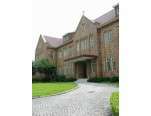
Last revision date:01 September 2026


