 Secondary School Profiles 2025/2026


 Secondary School Profiles 2025/2026
| Address: | 2 Fu Yee Road Siu Sai Wan Chai Wan | |||
| Phone: | 25669223 | Email: | email@fss.edu.hk | |
| Fax: | 25669020 | Website: | http://www.fss.edu.hk | |
School Mission
To develop a school environment conducive to quality education embracing academic, moral, physical and aesthetic elements;
To cultivate a school culture that focuses on strict discipline, self-respect and care for others;
To nurture students to be proficient in Chinese and English and become useful members of the community and the country with a strong sense of social responsibility and national identity.
 School Information
 | District | : | Eastern |
| Other District(s) | : | |
| Supervisor / Chairman of School Management Committee | : | Mr. Ngan Kam Wai Albert |
| Principal (with Qualifications / Experiences) | : | Dr. Leung Kin Man (B.Sc., Dip.Ed., Dip. Psy., M.Ed. (Counseling), M.Ed.(TESOL), M.A. (SIL), Ed.D.) |
| School Type | : | Aided |
| Student Gender | : | Co-ed |
| Area Occupied by the School | : | About 5600 Sq. M |
| Name of Sponsoring Body | : | Hong Kong Fukien Chamber of Commerce Education Fund Limited |
| Incorporated Management Committee | : | Established |
| Percentage of School Supervisor and Managers / Chairperson and Members of School Management Committee (SMC) of Government Schools Fulfilling the Training Targets | : | 100% |
| Religion | : | Not Applicable |
| Year of Commencement of Operation | : | 1998 |
| School Motto | : | In pursuit of truthfulness and perfection |
| Parent-Teacher Association | : | Yes |
| Student Union / Association | : | No |
| Past Students’ Association / School Alumni Association | : | Yes |
| 4Rs Mental Health Charter | : | Yes |
| Whole School Health Programme | : | Action School |
 Chargeable Fees (2025/2026)
| School Fee ($) | Tong Fai ($) | ||
| S1 | - | - | |
| S2 | - | - | |
| S3 | - | - | |
| S4 | - | $340 | |
| S5 | - | $340 | |
| S6 | - | $340 | |
| Parent-Teacher Association Fee (Annual) ($) | : $50 | ||
| Student Union / Association Fee ($) | : - | ||
| Approved Charges for Non-standard Items (Annual)($) | : - | ||
| Other Charges / Fees ($) | : - | ||
 School Facilities
 | Number of Classroom(s) | : | 26 |
| School Facilities | : | Special rooms in our school include an iCenter, a multi-purpose foyer, a multi-media History-Geography room, a studio for Campus Radio and TV, a Students Activity Centre, an English Corner, a Computer Room, five Laboratories, an Arts Room, a Home Technology Room and a Library. All classrooms and special rooms are equipped with computers, visualizer, audio system and wireless networking, etc. To further enhance learning and teaching effectiveness, tablets are provided and free Wifi6 is available on the school premises. |
| Facility(ies) for Supporting Students with Special Educational Needs | : | Accessible lift and Accessible toilet. |
 Teaching Staff Information (Including School Head) in the 2025/2026 School Year
 | Number of Teaching Posts in the Approved Establishment | : | 56 |
| Total Number of Teachers in the School | : | 59 |
| Qualifications and Professional Training | : | Percentage of Teaching Staff (%) |
| Had Received Teacher Training | : | 92% |
| Bachelor Degree | : | 35% |
| Master / Doctorate Degree or above | : | 65% |
| Special Education Training | : | 66% |
| Years of Experience | : | Percentage of Teaching Staff (%) |
| 0-4 Years | : | 10% |
| 5-9 Years | : | 13% |
| 10 Years or above | : | 77% |
 2025/2026 Class Structure
 | Number of Classes | ||
| S1 | : | 4 |
| S2 | : | 4 |
| S3 | : | 4 |
| S4 | : | 4 |
| S5 | : | 4 |
| S6 | : | 4 |
 Subjects Offered
 | Subjects Offered in the 2025/2026 School Year | : | S.1 - S.3 |
| Chinese as the Medium of Instruction | : | Chinese Language, Citizenship, Economics and Society*, Geography*, Chinese History, Computer Literacy*, Home Economics*, Visual Arts*, Physical Education*, Music* |
| English as the Medium of Instruction | : | English Language, Integrated Science (S.1 & S.2), Science* (Chemistry (S.3), Physics (S.3)) |
| Adopt a Different Medium of Instruction by Class or by Group / School-based Curriculum | : | Mathematics |
| Subjects Offered in the 2025/2026 School Year | : | S.4 - S.6 |
| Chinese as the Medium of Instruction | : | Chinese Language, Citizenship and Social Development, Chinese History, Tourism and Hospitality Studies, Business, Accounting and Financial Studies, Economics, Geography, Physics, Biology, Information and Communication Technology, Visual Arts, Health Management and Social Care |
| English as the Medium of Instruction | : | English Language, Mathematics Extended Part (Module 2) |
| Adopt a Different Medium of Instruction by Class or by Group / School-based Curriculum | : | Mathematics, Chemistry |
| Subjects to be Offered in the 2026/2027 School Year | : | S.1 - S.3 |
| Chinese as the Medium of Instruction | : | Chinese Language, Citizenship, Economics and Society*, Geography*, Chinese History, Computer Literacy*, Home Economics*, Visual Arts*, Physical Education*, Music* |
| English as the Medium of Instruction | : | English Language, Integrated Science (S.1 & S.2), Science (Chemistry (S.3), Physics (S.3), Biology (S.3)) |
| Adopt a Different Medium of Instruction by Class or by Group / School-based Curriculum | : | Mathematics |
| Subjects to be Offered in the 2026/2027 School Year | : | S.4 - S.6 |
| Chinese as the Medium of Instruction | : | Chinese Language, Citizenship and Social Development, Chinese History, Tourism and Hospitality Studies, Business, Accounting and Financial Studies, Economics, Geography, Physics, Biology, Information and Communication Technology, Visual Arts, Health Management and Social Care |
| English as the Medium of Instruction | : | English Language, Mathematics Extended Part (Module 2), Physics |
| Adopt a Different Medium of Instruction by Class or by Group / School-based Curriculum | : | Mathematics, Chemistry |
*Subjects with Extended Learning Activities (ELA) in English
 Secondary One Admission, Orientation Activities & Healthy School Life
 | Secondary One Admission | : | Our school will accept discretionary places. Our school will participate in the Secondary School Places Allocation System through central allocation stage (Applicable for admission to S.1 in September 2026 ).A. Admission Criteria: P.5 & P.6 academic performance (50%); Conduct (20%); Sports, arts & services (10%); Interview performance (20%) B. Details of interview: 1. All applicants must be accompanied by parents. 2. The interview will be conducted in Cantonese, English and Putonghua. |
| Orientation Activities and Healthy Life | : | Bridging programmes and Parents' Day are organized in summer to help new students and their parents gain a better understanding of the school policies and requirements. Bridging programmes are held to prepare new Form One students for secondary school life. A Summer Enhancement Program which aims at promoting all-round development is also in place. To promote a healthy school life, unhealthy snacks such as deep-fried foods are banned and our tuck shop is closely monitored by parents and teacher representatives. Besides, our lunch-box caterer is chosen by student representatives each year. |
 School Characteristics
 | School Management | ||
| (1) School's Major Concerns | : | 1. To enhance students' language proficiency. 2. To cultivate good study habits and enhance learning effectiveness. 3. To develop students' potential, enhance students' self-confidence and plan their lives. |
| (2) School Management Organisation | : | The school is managed by Incorporated Management Committee, teachers and parents working in collaboration and with the help of an effective monitoring and evaluation mechanism. |
| (3) Incorporated Management Committee / School Management Committee / Management Committee | : | Ngan Kam Wai Albert (Supervisor), Lo Kam Wing, Hung Kevin Dingteng, Ng Wai Ngai Ringo, Li Siu Bun, Ngan Ka Mok, Chang Song Hing, Wong Ho Put, Leung Kin Man, Cheng Yung Ting, Kwong Siu Leung, Tsang Ching Yee Yuki, Leung Pui Ling. |
| (4) School Green Policy | : | Through a wide range of environmental initiatives, the school aims to arouse students' awareness of environmental protection and enhance their responsibility for leading a green lifestyle. |
| Learning and Teaching Plan | ||
| (1) Whole-school Language Policy | : | The school places great importance on cultivating students' "biliteracy and trilingualism." Putonghua is used as the medium of instruction in junior secondary. The English curriculum aims to enhance students' proficiency in English and employs thematic teaching to develop students’ listening, speaking, reading, and writing skills. Outside the classroom, students can engage in a variety of enjoyable English experiences, including lively English drama lessons, English musicals, and festive English celebrations. Additionally, the English Department implements an interdisciplinary English reading program and organizes an English Day Camp every Saturday to integrate English into daily activities. The department also plans to organize overseas exchange tours to Singapore to broaden students' horizons and provide them with cultural experiences. Furthermore, the school offers English as the medium of instruction for junior secondary mathematics and science courses, as well as for senior secondary science courses. These initiatives aim to equip students with the necessary English proficiency and confidence to successfully transition to the University’s English-based programs. |
| (2) Learning and Teaching Strategies | : | Strong emphasis is placed on the effective teaching and learning with clear goals of delivering a good lesson and teaching every student as an individual. While top priority is given to students' intellectual pursuits, attention is also given to their overall development. For English Language, a variety of teaching materials are used to provide oral and aural practices as well as reading and writing opportunities. Our school-based Chinese curriculum has been awarded the Chief Executive's Award for Teaching Excellence and the National Award for Educational Research (First Class). Information Technology (IT) is utilized to foster interactive teaching and learning. Provided with a favourable learning environment, students are encouraged to participate actively in learning and develop multiple intelligence. The school invites academic consultants from China and overseas to help improve the curricula and teaching methods. To meet the requirements of the New Senior Secondary (NSS) Curricula, the curricula of many subjects are under constant review to ensure that they enhance students' higher-order thinking and investigative abilities. A variety of approaches to learning such as project-based learning and local and overseas study tours are organised to strengthen the effectiveness of learning and teaching. Recognition has been given by the Education Bureau to our efforts in cultivating students' reading habits. In addition to Extensive Reading Scheme, morning and afternoon reading sessions are scheduled on a daily basis. A broad range of reading materials related to the subjects of Chinese Language and Chinese History are infused into the curricula to extend students' learning and enable them to learn through reading. |
| (3) School-based Curriculum | : | 1. Electives: 2X and 3X. To cater for the diverse learning needs of students, 11 NSS elective subjects are offered. (Please refer to the school website for details.) 2. Curriculum highlights: To cater for students' diverse abilities and learning needs, school-based curricula are developed in a number of subjects, including Chinese History, English Drama, STEM in Action. |
| (4) Major Renewed Emphases in the School Curriculum | : | 1. Moral and Civic Education: (i) To create a platform to promote students to develop their potential and confidence, and enrich their lives through lessons and diversified learning experiences; (ii) To nurture students to be upstanding, be diligent, be keen to learn, be patriotic, be responsible and be caring. Students are openly commended for displaying good conduct; (iii) To formulate appropriate themes and moral education goals, and systematically implement moral education courses, including, self-discipline, courage, hope, benevolence, perseverance, and gratitude in response to the challenges faced by students in their growth stages. Class Teachers, form teachers, subject groups and administrative groups cooperate in the implementation to help cultivate students’ positive values and attitudes towards life. 2. Reading across the Curriculum (RaC): (i) To promote reading in different subjects through Morning Reading (focusing on content area reading materials in English and Chinese), Afternoon Reading (focusing on social issues) and Library lessons; (ii) To encourage students to read extensively through Extensive Reading Scheme; (iii) To enrich students' knowledge in different areas and enhance their reading skills and strategies through RaC. 3. Project Learning: (i) To enhance students' motivation in learning different subjects and develop their generic skills through project learning; (ii) To develop students' independent learning abilities through implementing project learning in connection with other programs such as exchange programs and cross-curricular projects. 4. Use of IT to enhance Interactive teaching and learning: (i) All classrooms and special rooms are equipped with computers, visualizers and wireless networking, etc. Online learning platforms and well-equipped computer rooms enable teachers of different subjects to conduct lessons and activities; (ii) School-based curriculum in Computer Studies is implemented to give support to other subjects and project learning. |
| (5) Life Planning Education | : | The school has established a dedicated administrative team for career planning education, responsible for developing a school-based policy and coordinating related activities. This approach encourages whole-school participation and integrates theme-based homeroom class planning across all levels. The goal is to help students gain self-awareness, build confidence, and enhance their skills, ensuring they are well-prepared for university studies and future career development. Additionally, teachers provide guidance on further education options. In the 2025 academic year, nearly 50% of graduating students are expected to enroll in university degree programs, while the remainder will primarily pursue associate degree programs. |
| Student Support | ||
| (1) Whole School Approach to Catering for Learner Diversity | : | With love and care, we accept and cater for the individual needs of our students, including those with special educational needs. |
| (2) Whole School Approach to Integrated Education | : | The school adopts a Whole School Approach and promotes teacher training. Various departments collaborate to optimize resources to cater to the learning needs of students with SEN by means of a "Three-Tier Intervention Model". Preventive, developmental and remedial support programs are also provided to help students overcome learning difficulties and help handle behavioral problems. Through home-school co-operation, we provide students with a satisfactory school life. |
| (3) Education Support for Non-Chinese Speaking (NCS) Students | : | Our school provides additional support for NCS students to facilitate their learning of Chinese: organising activities to create an inclusive learning environment in the school. Facilitate the learning of Chinese Language of Non-Chinese Speaking Students through after school support. |
| (4) Measures to Provide Adaptation for Learning and Assessment | : | Assessment is based on two uniform tests, two examinations, class performance, homework and projects. In addition, students are given OLE reports in which their performance on extra-curricular activities and social services are recorded. |
| Home-School Co-operation and School Ethos | ||
| (1) Home-School Co-operation | : | We treasure parent-school connections. We hope to work hand-in-hand with parents to build a healthy and favourable campus where students learn and grow happily. Parent-Teacher Association organizes a series of parent-child activities, including interest groups, picnic, barbecue and talks. Through those activities, parents are able to gain a better understanding of our school and form a closer bond with their children. |
| (2) School Ethos | : | Our students are well-disciplined. They also enjoy a harmonious relationship with both their peers and teachers. Communications with parents are established through Sunshine calls, home visits and parents' day. Emphasis is also placed on home-school co-operation to ensure that our students are well cared for. All students are given opportunities to make visits outside Hong Kong. Outstanding students are sponsored to improve their English abroad. |
| Future Development | ||
| (1) School Development Plan | : | 1. The primary objective of the school is to strengthen students' biliteracy and trilingualism. The Chinese Department offers after-school group support for senior secondary students, guided by experienced external teachers. Additionally, teachers train Mandarin ambassadors to assist them in preparing for the National Language Commission exams. English camps are held on Saturdays for junior secondary students, providing a fun environment to learn everyday English phrases. The school also offers English drama classes and an annual English musical performance. Starting in 2024, junior secondary mathematics and science will be taught in English on a unit-by-unit basis. By 2025, S1 and S2 Science will transition to fully English-based instruction, while S1 to S4 Mathematics Elite classes will be taught in English, along with a new S4 Chemistry English class. In 2026, S1 to S3 science subjects, as well as Elite Mathematics, will all be taught in English. Additionally, senior secondary Chemistry and Physics will shift to English instruction. In 2027, the Mathematics Elite Class will be taught in English, with S1 to S3 Science fully delivered in English, as well as high school Chemistry, Physics, and Biology. 2. The school is committed to developing students' potential and enhancing their self-confidence through class activities that foster class spirit and build an interpersonal support network, along with leadership qualities. 3. Students need to broaden their horizons. The school's University Counselling Team arranges visits to universities and companies, helping students connect their knowledge with the world of work. This experience emphasizes that knowledge can change destinies and improve lives, encouraging students to set learning goals and strive to achieve them. 4. The school continues to invest heavily in STEM and computer education to enhance students' creativity and appreciation of aesthetics. |
| (2) Teacher Professional Training and Development | : | To enhance teachers' professional capabilities and to promote life-long learning, activities including lesson co-planning, peer lesson observation and discussion are organised within the school and with our network schools. Currently, more than 60% of our teachers are Master or Doctor degree holders. |
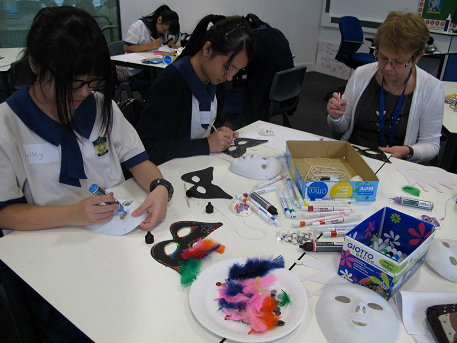
| Life-wide Learning (Including Five Essential Learning Experiences to be Provided through Key Learning Areas, Extra-curricular Activities, Co-curricular Activities, etc.) | : | 1. Cross-curricular learning activities, project learning activities, immersion programs and visits to foreign countries (e.g. Australia, England and Singapore) and Mainland are organized to help students develop higher-order thinking skills; 2. To help students develop their lifelong interests in sports and arts as well as get them involved in community services, the programme ‘Stars of FSS’, the internal and external academic and non-academic activity award scheme, and about 40 co-curricular and extra-curricular activities, including uniform groups, social service groups, sports and arts clubs, are organized outside class time. All Form One to Five students participate in at least one extra-curricular activity on a regular basis. |
| Others | : | - |
| Direct Public Transportation to School | : | Buses: A12, 8X, 8P, 19, 82, 82X, 85, 106, 118, 606, 682, 788, 789; Public light buses at Chai Wan and Heng Fa Chuen MTR stations. |
| Remarks | : | 1. Apart from traditional academic subjects, our school also offers school-based programmes on English Drama in junior forms. 2. In senior forms, learning activities including SDL, aesthetic and physical programmes, service learning and career related learning experience are incorporated in the curriculum. 3. Students can opt to take Applied Learning Courses (Mode 1) starting in F.5. |
 School Map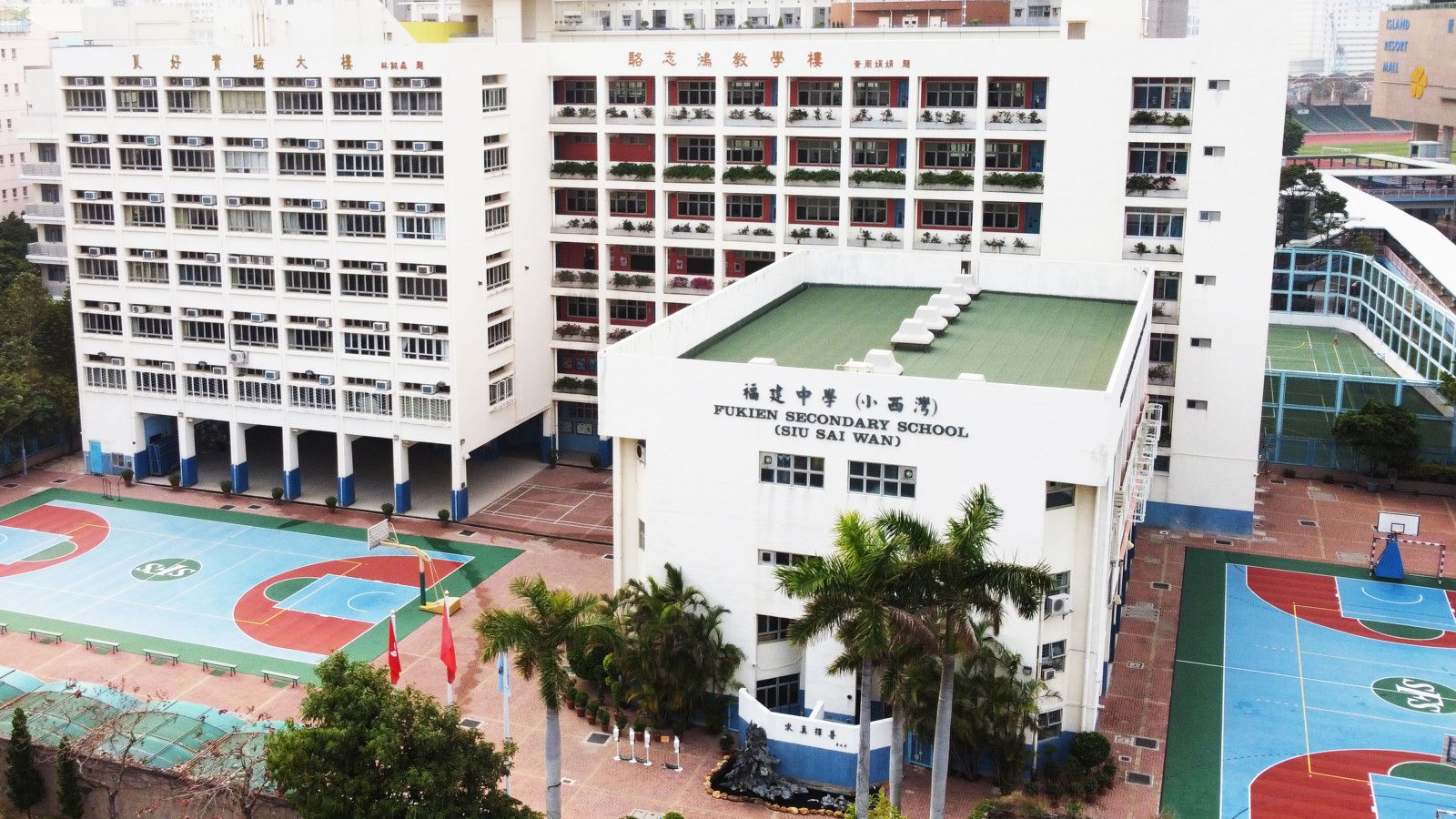

Last revision date: 5/12/2025


