 Secondary School Profiles 2025/2026


 Secondary School Profiles 2025/2026

| Address: | 12 - 20 On Yin Street Tsuen King Circuit Tsuen Wan | |||
| Phone: | 24983393 | Email: | inquiry@plklsp.edu.hk | |
| Fax: | 24142077 | Website: | http://www.plklsp.edu.hk | |
School Mission
Fine traditions Accommodate the current needs People-oriented Care and appreciation Optimal use of resources Cost effectiveness.
 School Information
 | District | : | Tsuen Wan |
| Other District(s) | : | |
| Supervisor / Chairman of School Management Committee | : | Mr. David C H Ho, BBS, JP |
| Principal (with Qualifications / Experiences) | : | Ms. Fung Nga Sze Agnes (B.A., Cert. Ed., M.Ed.) |
| School Type | : | Aided |
| Student Gender | : | Co-ed |
| Area Occupied by the School | : | About 7760 Sq. M |
| Name of Sponsoring Body | : | Po Leung Kuk |
| Incorporated Management Committee | : | Established |
| Percentage of School Supervisor and Managers / Chairperson and Members of School Management Committee (SMC) of Government Schools Fulfilling the Training Targets | : | 100% |
| Religion | : | Not Applicable |
| Year of Commencement of Operation | : | 1982 |
| School Motto | : | Love, Respect, Diligence, Integrity |
| Parent-Teacher Association | : | Yes |
| Student Union / Association | : | Yes |
| Past Students’ Association / School Alumni Association | : | Yes |
| 4Rs Mental Health Charter | : | Yes |
| Whole School Health Programme | : | Action School |
 Chargeable Fees (2025/2026)
| School Fee ($) | Tong Fai ($) | ||
| S1 | - | - | |
| S2 | - | - | |
| S3 | - | - | |
| S4 | - | $340 | |
| S5 | - | $340 | |
| S6 | - | $340 | |
| Parent-Teacher Association Fee (Annual) ($) | : $30 | ||
| Student Union / Association Fee ($) | : $40 | ||
| Approved Charges for Non-standard Items (Annual)($) | : - | ||
| Other Charges / Fees ($) | : Replacement of student card $20 | ||
 School Facilities
 | Number of Classroom(s) | : | 29 |
| School Facilities | : | 2 Computer Rooms, Computer-assisted Learning Centre, Multi-media Broadcast Centre, Multi-media Learning Centre, Language Laboratory, Multi-purpose Room, Student Activity Centre, STEAM Laboratory, Design and Technology Room, Home Economics Room, 4 Laboratories, Library, Parent-teacher Resources Centre, Social Worker's Office, Wellness Hub, Conference Room and an Air-conditioned Hall. |
| Facility(ies) for Supporting Students with Special Educational Needs | : | Ramp, Accessible lift and Accessible toilet. |
 Teaching Staff Information (Including School Head) in the 2025/2026 School Year
 | Number of Teaching Posts in the Approved Establishment | : | 55 |
| Total Number of Teachers in the School | : | 61 |
| Qualifications and Professional Training | : | Percentage of Teaching Staff (%) |
| Had Received Teacher Training | : | 77% |
| Bachelor Degree | : | 100% |
| Master / Doctorate Degree or above | : | 43% |
| Special Education Training | : | 65% |
| Years of Experience | : | Percentage of Teaching Staff (%) |
| 0-4 Years | : | 23% |
| 5-9 Years | : | 43% |
| 10 Years or above | : | 34% |
 2025/2026 Class Structure
 | Number of Classes | ||
| S1 | : | 4 |
| S2 | : | 4 |
| S3 | : | 4 |
| S4 | : | 4 |
| S5 | : | 4 |
| S6 | : | 4 |
 Subjects Offered
 | Subjects Offered in the 2025/2026 School Year | : | S.1 - S.3 |
| Chinese as the Medium of Instruction | : | Chinese Language, Putonghua, Citizenship, Economics & Society (S.1,S.2) Life & Society (S.3), Chinese History, Design and Technology, Physical Education, Technology and Living, Intellectual Growth (S.1), Expressive Arts (S.1), Visual Arts (S.2, S.3), Japanese (S.2), Economics and Business Fundamentals (S.3), STEAM (S.3) |
| English as the Medium of Instruction | : | English Language, Mathematics, Science |
| Adopt a Different Medium of Instruction by Class or by Group / School-based Curriculum | : | Geography, History, Computer Literacy, Music |
| Subjects Offered in the 2025/2026 School Year | : | S.4 - S.6 |
| Chinese as the Medium of Instruction | : | Chinese Language, Citizenship and Social Development, Chinese History, History, Visual Arts, Physical Education, Tourism and Hospitality Studies, Chinese Literature |
| English as the Medium of Instruction | : | English Language, Mathematics, Mathematics Extended Part, Information and Communication Technology, Japanese Language (S.5,S.6), Biology (S.4,S.5), Physics (S.4,S.5), Chemistry (S.4,S.5) |
| Adopt a Different Medium of Instruction by Class or by Group / School-based Curriculum | : | Biology (S.6), Physics (S.6), Chemistry (S.6), Geography, Economics, Business Accounting and Financial Studies, Applied Learning, Career Life Planning (S.4, S.5) |
| Subjects to be Offered in the 2026/2027 School Year | : | S.1 - S.3 |
| Chinese as the Medium of Instruction | : | Chinese Language, Putonghua, Citizenship, Economics & Society, Chinese History, Design and Technology, Physical Education, Technology and Living, Expressive Arts (S.1), Visual Arts (S.2, S.3), Japanese (S.2), STEAM (S.3) |
| English as the Medium of Instruction | : | English Language, Mathematics, Science |
| Adopt a Different Medium of Instruction by Class or by Group / School-based Curriculum | : | Geography, History, Computer Literacy, Music |
| Subjects to be Offered in the 2026/2027 School Year | : | S.4 - S.6 |
| Chinese as the Medium of Instruction | : | Chinese Language, Citizenship and Social Development, Chinese History, History, Visual Arts, Physical Education, Tourism and Hospitality Studies, Chinese Literature |
| English as the Medium of Instruction | : | English Language, Mathematics, Mathematics Extended Part, Information and Communication Technology, Japanese Language (S.6), Biology, Physics, Chemistry |
| Adopt a Different Medium of Instruction by Class or by Group / School-based Curriculum | : | Geography, Economics, Business Accounting and Financial Studies, Applied Learning, Career Life Planning (S.4, S.5) |
 Secondary One Admission, Orientation Activities & Healthy School Life
 | Secondary One Admission | : | Our school will accept discretionary places. Our school will participate in the Secondary School Places Allocation System through central allocation stage (Applicable for admission to S.1 in September 2026 ).Admission criteria: 1. Academic results and EDB rank order 40%; 2. Conduct 15%; 3. Extra-curricular activities and awards 15%; 4. Performance in interview 30%. |
| Orientation Activities and Healthy Life | : | Seminars for first formers' parents, Form One Orientation activities (includes: Day Camp and bridging courses), and whole year Form One Lunch programme (activities include guidance counseling, value education, class ethos building and CCA recruitment.) In order to provide effective health care to students in our school, a Health Record card is kept for all students. There is a variety of activities to help students acquire health information and take preventive measures against common diseases. Working with some health care organizations, our students can participate in campaigns to promote the importance of a healthy lifestyle. |
 School Characteristics
 | School Management | ||
| (1) School's Major Concerns | : | 1. Enhance students' language proficiency and confidence in application. 2. Cultivate students' sense of proactiveness and drive for excellence. |
| (2) School Management Organisation | : | Under the adoption of school-based management, the Principal and Vice-Principals cooperate with other departments and committees while discussing and making policies. Opinions from parents and students will also be sought. We adopt a school governance approach which is conducive to student centeredness and their balanced development of moral, intellectual, physical, social and aesthetic well-being. |
| (3) Incorporated Management Committee / School Management Committee / Management Committee | : | The Incorporated Management Committee oversees the operation of the school as well as renders its support to school development. Through regular meetings with the Principal, teacher, parent and alumni representatives and school visits, members can keep track of and be consulted about the school development. |
| (4) School Green Policy | : | Values Education Committee promotes environmental awareness through talks and activities. Smart water refill stations encourage reusable bottles, reducing plastic waste. Recycling is supported with proper facilities, and energy-saving policies help cut energy use and emissions. The school also uses solar panels to generate renewable energy. |
| Learning and Teaching Plan | ||
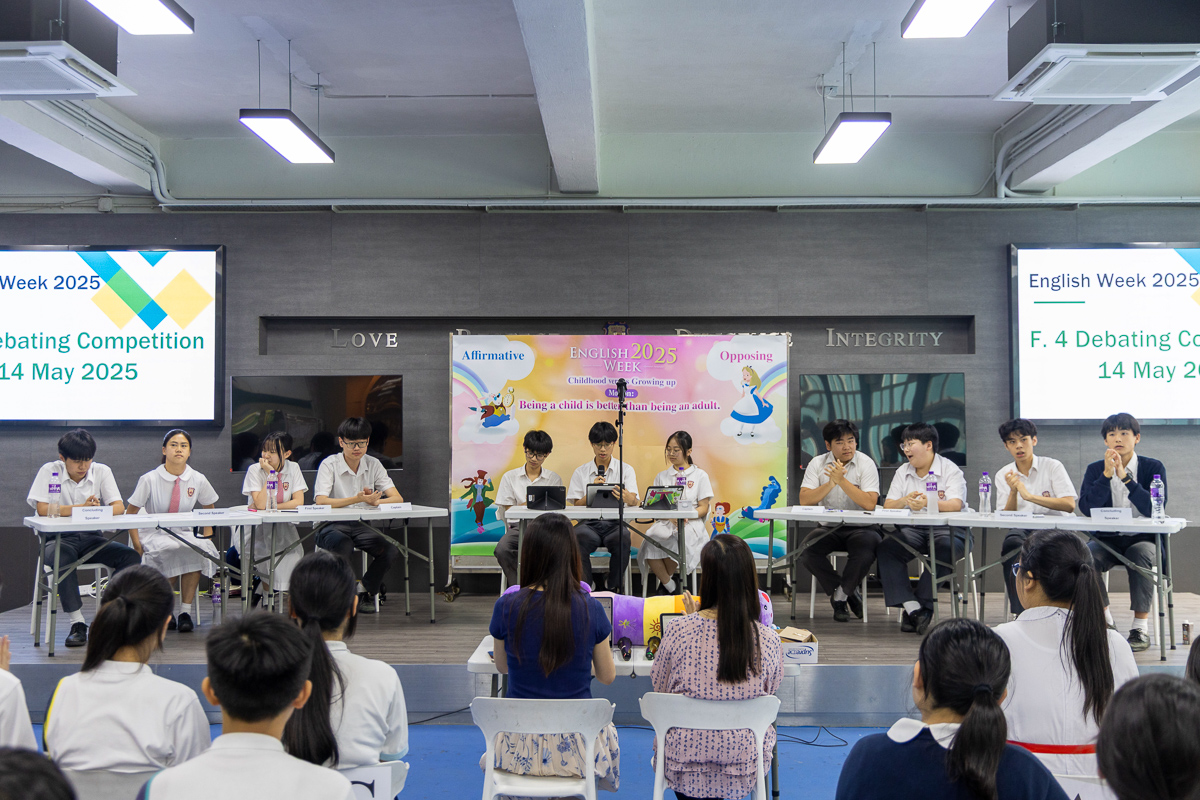
| (1) Whole-school Language Policy | : | The school has strengthened its whole-school language policy to enhance students’ proficiency in both Chinese and English, aiming to cultivate bi-literate and tri-lingual capabilities. A rich language-learning environment is provided, including weekly English assemblies, school-wide Chinese and English speech contests, reading programmes, multimedia language learning, campus radio, English drama, debate competitions, English activity lessons, and creative writing. The school actively supports the fine-tuning of the medium of instruction policy. Junior form students learn Mathematics and Science in English. Some subjects in selected classes are also taught in English, with extended English learning activities to help students build a solid foundation for studying all subjects in English at senior levels. |
| (2) Learning and Teaching Strategies | : | Our school is committed to providing an all-rounded education. We continuously enhance teaching and learning strategies to cater for students’ diverse learning needs, boost motivation, and increase classroom engagement: 1. Diverse Teaching Strategies 2. Catering for Individual Differences 3. Challenging Learning Environment 4. Promoting Interaction and Collaboration 5. Advancing AI and Digital Education 6. Teacher Professional Development |
| (3) School-based Curriculum | : | 1. Electives: 3X. Based on their competence and at their discretion, students can opt three elective subjects and applied learning courses. 2. Curriculum highlights: Our school boasts a diversified curriculum with 13 Elective subjects on offer and English-medium and Chinese-medium classes are available in many subjects. The various subject combinations also allow the flexibility for students to make the most appropriate choices based on their competence and talent and a balance between arts and science subjects can be achieved. |
| (4) Major Renewed Emphases in the School Curriculum | : | 1. Strengthening values education 2. Enhancing the learning of Chinese history and Chinese culture 3. Extending "Reading to Learn" to "Language across the Curriculum" 4. Promoting STEAM education and information technology in education 5. Cultivating an entrepreneurial spirit |
| (5) Life Planning Education | : | Our school offers a well-structured, school-based career and life planning curriculum to help students set clear life goals and gain a better understanding of workplace expectations. Experienced career guidance teachers and class teachers provide regular individual and group counselling to support students in setting personal goals and formulating appropriate strategies for further studies and learning. Students are also encouraged to participate in a wide range of career planning activities, including industry and tertiary education talks, subject selection workshops for S.3 students, mock interviews, exchange programmes, mentorship sharing, and work experience opportunities. These activities help students develop a positive outlook on life and actively plan their personal development pathways. |
| Student Support | ||
| (1) Whole School Approach to Catering for Learner Diversity | : | Academic Board and the Committees under Pastoral Care Board, i.e. Discipline, Guidance, Careers and Life Planning, Values Education, Form Teacher Coordinators, etc. regularly meet and collaborate to analyze and understand students’ needs in learning and personal development. Relevant activities and programmes would be designed for needed students. In addition, there are Committees on Gifted and Talented Nurturing, Overseas Cultural Exchange, Voluntary and Social Learning, etc. to develop multiple intelligence of students. |
| (2) Whole School Approach to Integrated Education | : | The school supports students with Special Educational Needs (SEN) through a dedicated Student Support Team, which also works closely with parents. Regular programmes include social thinking groups, speech therapy, individual training, and executive function workshops. Parent meetings are held to enhance communication and collaboration. Team members include the SEN Coordinator, support teachers, educational psychologist, school social worker, and department heads from student development, counselling, academic affairs, and core subjects. Teachers attend Education Bureau-accredited SEN training courses at basic, advanced, and thematic levels to strengthen their knowledge, communication skills, and teaching strategies for SEN students. At the start of each year, the team meets with class and subject teachers to discuss student needs and support plans. The Learning Support Grant is also used to hire counsellors, providing structured care for students' overall development. |
| (3) Education Support for Non-Chinese Speaking (NCS) Students | : | Our school provides additional support for NCS students to facilitate their learning of Chinese: providing after-school support programmes in learning Chinese; appointing additional teacher(s)/teaching assistant(s) to support NCS students’ learning of Chinese; and organising activities to create an inclusive learning environment in the school. |
| (4) Measures to Provide Adaptation for Learning and Assessment | : | Apart from tests and examinations, other forms of assessment such as ongoing assessment for learning, teachers' observation of students' performance in class and homework, presentations, project reports are conducted. Subject panels tailor the curriculum contents to cater for the needs and abilities of students. |
| Home-School Co-operation and School Ethos | ||
| (1) Home-School Co-operation | : | A Parent Teacher Resource Centre has been set up for liaison with parents. Communication between school and parents has been stepped up through the publication of newsletter "Bridge" and the launching of PTA web-page. Communication with parents of Form One students is emphasized so as to help their children adapt to the secondary school life. |
| (2) School Ethos | : | Our school endeavors to promote humility and modesty among students and attach great importance to moral education. Students are nurtured to be responsible and righteous citizens through civic education and volunteer services. In pastoral care, the school adopts the "coaching complemented with discipline" policy, allowing students to learn to be reflective, self-disciplined, courteous, and rational, to know the law, and to abide by the rules. |
| Future Development | ||
| (1) School Development Plan | : | Our school promotes whole-person education and lifelong learning, with a focus on balanced development in five key areas. Students are encouraged to explore their potential through diverse learning experiences. 1. Innovative and Interdisciplinary Learning We implement BYOD and e-learning to boost engagement and adapt teaching through real-time data. Interdisciplinary projects develop design thinking and problem-solving skills. 2. Values and Civic Responsibility We strengthen national identity and patriotic values. Clear rules and positive reinforcement foster respect and responsibility. Leadership and service programmes build social awareness. 3. Arts and Sports Development A balanced platform for sports and the arts is provided, offering opportunities in school teams, dance teams, choirs, innovation and technology team, and campus TV. These experiences help students discover their interests and build self-confidence. 4. Positive Education and Growth Mindset We promote a growth mindset through classroom practices and positive education, guiding students to reflect, persevere, and learn from setbacks. 5. AI and Digital Literacy Students develop skills in data literacy, AI, and computational thinking. Digital citizenship is emphasised, covering privacy, bias, copyright, and integrity. |
| (2) Teacher Professional Training and Development | : | The Staff Development Committee is in charge of coordinating professional development of teachers. The Committee advocates the importance of continued professional development by organizing various seminars, exchange programmes and sharing sessions. Through collaborative teaching, teachers are able to exchange teaching experiences to enhance effectiveness in teaching and learning. |
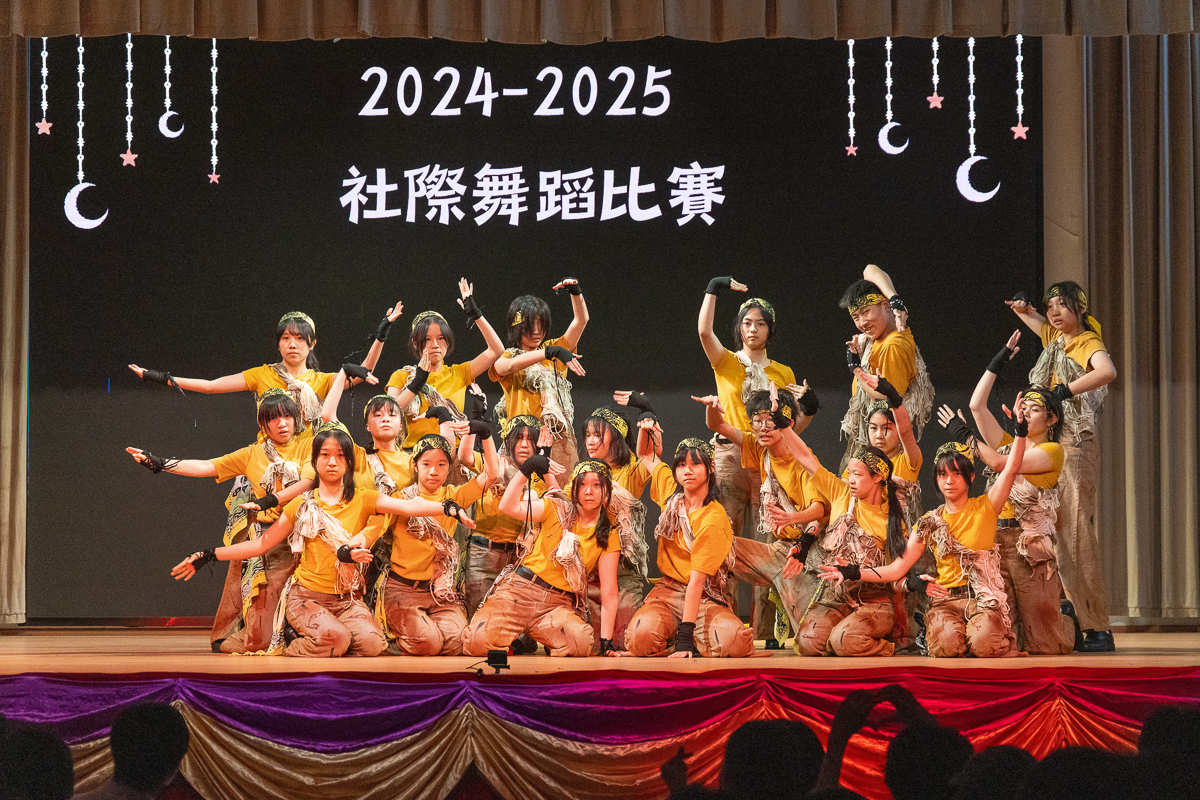
| Life-wide Learning (Including Five Essential Learning Experiences to be Provided through Key Learning Areas, Extra-curricular Activities, Co-curricular Activities, etc.) | : | There are 7 groups under the Co-curricular Activities Committee: the Students' Union, the Students’ Union Council, 4 Houses, School Teams, Academic Societies, Interest Groups and Uniform Groups. To facilitate students' balanced development, all groups devise plans and organize activities according to the school goals. The school has enjoyed many outstanding achievements in various joint school competitions in business activities, music, dance and sports. Besides organizing various exchange tours to achieve different learning objectives, since the year 2017/18, our school has organized F.4 form based Interdisciplinary Overseas Exchange learning activity for ALL F.4 students; so as to provide the best preparation for students as they embark their Senior Secondary Curriculum. |
| Others | : | For more information on scholarships, awards acquired in public and inter-school competitions, as well as exchange programmes, please feel free to visit our school’s website. |
| Direct Public Transportation to School | : | Bus routes: 39A, 39M, 30 and 30X; Minibus: 95 & 95M. |
| Remarks | : | - |
 School Map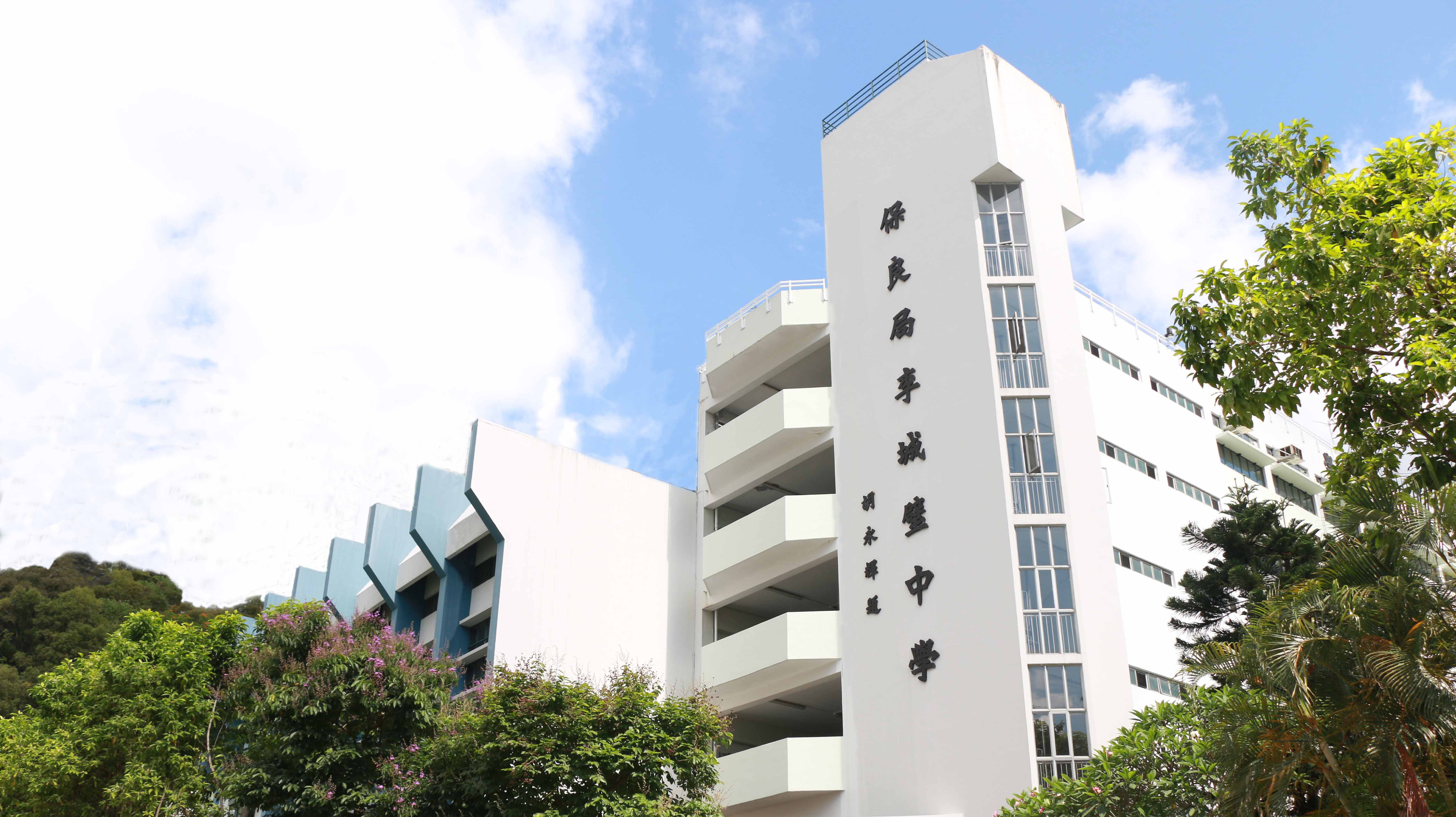
Last revision date: 5/12/2025


