 Secondary School Profiles 2025/2026


 Secondary School Profiles 2025/2026

| Address: | Area 5A Pok Hong Estate Shatin N.T. | |||
| Phone: | 26353330 | Email: | info@christcollege.edu.hk | |
| Fax: | 26364588 | Website: | http://www.christcollege.edu.hk | |
School Mission
Providing students with a whole-person education in the love of Jesus Christ is the mission of the school. We aim at developing our students' virtue, intellect, physique, sociability, aesthetics and spirituality based on the teaching of the Bible.
 School Information
 | District | : | Sha Tin |
| Other District(s) | : | |
| Supervisor / Chairman of School Management Committee | : | Mr. Siu Chun Keung |
| Principal (with Qualifications / Experiences) | : | Mr. Wong Kon Man (B. Eng.,Dip. Ed., M.A.) |
| School Type | : | Aided |
| Student Gender | : | Co-ed |
| Area Occupied by the School | : | About 5000 Sq. M |
| Name of Sponsoring Body | : | The Kowloon City Christians' Church |
| Incorporated Management Committee | : | Established |
| Percentage of School Supervisor and Managers / Chairperson and Members of School Management Committee (SMC) of Government Schools Fulfilling the Training Targets | : | Not Applicable |
| Religion | : | Protestantism / Christianity |
| Year of Commencement of Operation | : | 1953 |
| School Motto | : | Jesus said: I am the way, the truth, and the life. |
| Parent-Teacher Association | : | Yes |
| Student Union / Association | : | Yes |
| Past Students’ Association / School Alumni Association | : | Yes |
| 4Rs Mental Health Charter | : | Yes |
| Whole School Health Programme | : | Action School |
 Chargeable Fees (2025/2026)
| School Fee ($) | Tong Fai ($) | ||
| S1 | - | - | |
| S2 | - | - | |
| S3 | - | - | |
| S4 | - | $340 | |
| S5 | - | $340 | |
| S6 | - | $340 | |
| Parent-Teacher Association Fee (Annual) ($) | : $200 (Only once) | ||
| Student Union / Association Fee ($) | : $20 | ||
| Approved Charges for Non-standard Items (Annual)($) | : - | ||
| Other Charges / Fees ($) | : Four Houses fee: $20 Non-Standard items fee:$470 | ||
 School Facilities
 | Number of Classroom(s) | : | 43 |
| School Facilities | : | On top of the basic facilities, we have a STEM Base, Spring Field, Computer Assisted Teaching Centre and an Information Technology Learning Centre. All classrooms, library and the school hall are air-conditioned and equipped with Smartboards, computers and audio-visual equipment. |
| Facility(ies) for Supporting Students with Special Educational Needs | : | Accessible lift, Accessible toilet and Wheelchair Stairlift. |
 Teaching Staff Information (Including School Head) in the 2025/2026 School Year
 | Number of Teaching Posts in the Approved Establishment | : | 55 |
| Total Number of Teachers in the School | : | 59 |
| Qualifications and Professional Training | : | Percentage of Teaching Staff (%) |
| Had Received Teacher Training | : | 88% |
| Bachelor Degree | : | 100% |
| Master / Doctorate Degree or above | : | 61% |
| Special Education Training | : | 44% |
| Years of Experience | : | Percentage of Teaching Staff (%) |
| 0-4 Years | : | 23% |
| 5-9 Years | : | 19% |
| 10 Years or above | : | 58% |
 2025/2026 Class Structure
 | Number of Classes | ||
| S1 | : | 4 |
| S2 | : | 4 |
| S3 | : | 4 |
| S4 | : | 4 |
| S5 | : | 4 |
| S6 | : | 4 |
 Subjects Offered
 | Subjects Offered in the 2025/2026 School Year | : | S.1 - S.3 |
| Chinese as the Medium of Instruction | : | Chinese Language, Citizenship, Economics and Society, Chinese History, Religious Education, Visual Arts, Design and Technology (S.1-S.2), Technology and Living (S.1-S.2), Music, Physical Education, Putonghua |
| English as the Medium of Instruction | : | English Language |
| Adopt a Different Medium of Instruction by Class or by Group / School-based Curriculum | : | Mathematics*, Integrated Science* (S.1-S.3), Fundamentals of Business Studies* (S.3), Geography*, History*, Computer Literacy* |
| Subjects Offered in the 2025/2026 School Year | : | S.4 - S.6 |
| Chinese as the Medium of Instruction | : | Chinese Language, Chinese Literature, Mathematics (Compulsory Part and Extended Part (Module 1)), Biology, Chinese History, History, Citizenship and Social Development, Economics, Business, Accounting and Financial Studies, Geography, Religious Education, Information and Communication Technology, Visual Arts, Physical Education |
| English as the Medium of Instruction | : | English Language, Mathematics (Compulsory Part and Extended Part (Module 2)) |
| Adopt a Different Medium of Instruction by Class or by Group / School-based Curriculum | : | Physics, Chemistry, Mathematics |
| Subjects to be Offered in the 2026/2027 School Year | : | S.1 - S.3 |
| Chinese as the Medium of Instruction | : | Chinese Language, Citizenship, Economics and Society, Chinese History, Religious Education, Visual Arts, Design and Technology (S.1-S.2), Technology and Living (S.1-S.2), Music, Physical Education, Putonghua |
| English as the Medium of Instruction | : | English Language |
| Adopt a Different Medium of Instruction by Class or by Group / School-based Curriculum | : | Mathematics*, Integrated Science* (S.1-S.3), Fundamentals of Business Studies (S.3)*, Geography*, History*, Computer Literacy* |
| Subjects to be Offered in the 2026/2027 School Year | : | S.4 - S.6 |
| Chinese as the Medium of Instruction | : | Chinese Language, Chinese Literature, Mathematics (Compulsory Part and Extended Part (Module 1)), Biology, Chinese History, History, Citizenship and Social Development, Economics, Business, Accounting and Financial Studies, Geography, Religious Education, Information and Communication Technology, Visual Arts, Physical Education |
| English as the Medium of Instruction | : | English Language, Mathematics (Compulsory Part and Extended Part (Module 2)) |
| Adopt a Different Medium of Instruction by Class or by Group / School-based Curriculum | : | Physics, Chemistry, Mathematics |
*Subjects with Extended Learning Activities (ELA) in English
 Secondary One Admission, Orientation Activities & Healthy School Life
 | Secondary One Admission | : | Our school will accept discretionary places. Our school will participate in the Secondary School Places Allocation System through central allocation stage (Applicable for admission to S.1 in September 2026 ).A. Interview performance 35% B. Rank Order List from EDB 20% C. Students' P.5 and P.6 academic results 15% D. Conduct 20% E. Performance in co-curricular activities and awards 10% |
| Orientation Activities and Healthy Life | : | To help Primary 6 students transition smoothly into secondary school life and address their social, emotional, and psychological needs in a timely manner, our school implements comprehensive guidance and diverse learning activities. We provide a series of initiatives to support new students as they adjust to their new school environment, including a summer orientation camp, language bridging courses, class bonding activities at the beginning of the school year, a S.1 nurturing camp, and the S.1 Christian Life Coaching, which integrates religious education with multiple intelligences. Additionally, personal growth classes and the Peer Counselling – Big Brother Big Sister Program further promote students' balanced development in physical, mental, social, and spiritual aspects. Our school has established a Healthy Campus Team and a Co-curricular Activities Team dedicated to fostering healthy lifestyle habits among students, helping them adapt to their new environment with a positive attitude and the right approach, thereby laying a solid foundation for an enjoyable learning and campus experience. At the same time, our school places great emphasis on home-school cooperation. Through parent orientation sessions and educational seminars on various themes, we help parents alleviate the stress and worries associated with their children's transition to Secondary 1 . We also encourage parents to work hand-in-hand with the school to support students' healthy growth. |
 School Characteristics
 | School Management | ||
| (1) School's Major Concerns | : | The Theme of the Year: Learn Diversely, Embrace Blissfully |
| (2) School Management Organisation | : | With the implementation of school-based management, our staff are given sufficient chances to express their views and participate actively in the process of policy making. We have an Executive Committee to devise and carry out school policies. There are also various committees responsible for curriculum development, co-curricular activities, information technology, religious activities, civic and moral education as well as alumni and parent connection. |
| (3) Incorporated Management Committee / School Management Committee / Management Committee | : | Our school establishes the Incorporated Management Committee with the representatives of school sponsoring body, teachers, parents and alumna with a view to providing quality educational services. |
| (4) School Green Policy | : | Our school is concerned about environmental education. Apart from helping students acquire the knowledge related to environmental protection through formal curricula, our school establishes the Healthy School Campus Team, which plays an active role instilling the concept of environmental protection and energy saving into school life. As for the key learning area of environmental protection education, our school makes use of all the spaces available for growing various types of plants, in order to create more greenery open areas on the campus for students. |
| Learning and Teaching Plan | ||
| (1) Whole-school Language Policy | : | As our school lays great stress on the development of Bi-literacy and Tri-lingualism, English is used as a medium of instruction in some junior form classes. (Please refer to the Subject Offered for more details). In junior forms, our school arranges different classes according to students' abilities; English together with Extended Learning Activities is adopted in teaching the subjects, such as Mathematics, Integrated Science, Computer Literacy, Fundamentals of Business Studies (S.3), Geography and History, to help students consolidate their English foundation. To brush up students’ English, our school makes use of formative assessment to get a better understanding of their English standard as to adequate support. English Department organizes learning activities with special features in each junior form, for example Healthy Cooking Competition, Fashion Show Competition and so on, to help improve speaking abilities and team spirit. Besides organizing a number of language activities by the Chinese and the English Departments, our school tries its best to improve the atmosphere of learning languages, in which students participate in morning assembly announcements and sharings in English and Putonghua as to foster language learning. In addition, our school wholeheartedly promotes Chinese and English reading schemes and arranges morning reading with a view to consolidate students' language foundation. |
| (2) Learning and Teaching Strategies | : | Teaching force aims at forming learning communities, focusing on professional discussions and teaching effectiveness. Our school promotes every classroom observation exchange, collaboration, group discussion, lesson study period, open classroom and any other professional development measure to enhance teaching efficacy through mutual observations (same subject or cross subjects) and self-reflections. Our school emphasizes reading, so there are regular morning reading periods from F.1 to F.6, cultivating students’ reading habits. The Education Bureau has appreciated our school's cross-subject reading program for several times as teaching force tries hard to establish a comprehensive reading atmosphere. There is a reading scheme in every department in echo with various programme reading measures, including the activities like book exhibitions, reading sessions at hall assemblies, book sharings, floating books corners and so on, which can help widen their horizons in reading, enhance their interests and acquire profound knowledges. Through analysing the students’ feedback of questionnaires in each form, their learning needs are promptly met. What is more, students master effective learning methods through attending training courses for learning strategies, meetings for learning, seminars and special classes. Overall, our teachers provide students with various learning experiences focusing on participation and thinking, hoping that students can nurture long-life learning attitudes and abilities through experiential learning and knowledge framework. |
| (3) School-based Curriculum | : | 1. Electives: 2X. Elective subjects include: Physics, Chemistry, Biology, Information and Communication Technology, History, Chinese History, Geography, Economics, Business, Accounting and Financial Studies, Visual Arts, Chinese Literature. EMI is used in some parts of elective subjects. To provide students with ample learning opportunities, F.4 students can apply for the Applied Learning Courses. 2. Curriculum highlights: Our school offers all students wide, balanced and diversified curricula. Establishing students’ reading habits and language foundation, cross-subject reading activities are organized from F.1 to F.6. to help F.3 students develop a deeper understanding about senior form curricula, there are many elective subjects in F.3. Life-wide Learning Days are conducted in both 1st and 2nd terms so that F.1-F.5 students can learn outside the classrooms and they can even travel in Hong Kong or overseas to enrich learning as a whole. Through different learning opportunities, such as morning assembly sharings, hall assemblies, diversified extra-curricular activities, character education lessons, gospel week, religion lessons and other periods, our school emphasizes all-round education, in nurturing students with positive values and establish life optimism. |
| (4) Major Renewed Emphases in the School Curriculum | : | Our school adopts a "Whole-School Approach" to implement integrated education. Coordinated by the Student Support Team, we employ a three-tier intervention model to provide tailored support measures based on students' individual needs. These measures include the use of diversified teaching strategies, school-based support team, and the introduction of external resources to offer both academic and social support. This holistic approach promotes the overall development of students and fosters a caring and inclusive campus culture for all. |
| (5) Life Planning Education | : | 1. To coordinate different stakeholders of the school for the implementation of school-based Career and Life Planning education. 2. To help students assure themselves, develop their potential and build up a positive attitude to work and study through understanding their own abilities and career/academic aspirations. 3. To equip students with knowledge, skills and attitudes in accordance with their interests, abilities and orientation so that they can make wise enrollment or employment choices. 4. To help students connect their career/academic aspirations with whole-person development and life-long learning. |
| Student Support | ||
| (1) Whole School Approach to Catering for Learner Diversity | : | Based on the principles of catering for learning diversity and learning for all, our school is committed to providing quality education through class arrangement, teacher coordination, organizing remedial classes, hiring social workers, educational psychologists, expressive art therapists and so on. Tailor-made curricula and after-school tutorials are offered in certain subjects to foster their learning. |
| (2) Whole School Approach to Integrated Education | : | Our school adopts a "Whole-School Approach" to implement integrated education. Coordinated by the Student Support Team, we employ a three-tier intervention model to provide tailored support measures based on students' individual needs. These measures include the use of diversified teaching strategies, school-based support team, and the introduction of external resources to offer both academic and social support. This holistic approach promotes the overall development of students and fosters a caring and inclusive campus culture for all. In terms of professional development, the school constantly updates all staff about the latest trends of integrated education. Thematic talks are organized to deepen teachers’ understanding of integrated education as well as enhancing their professional capacity. Meetings will also be called to discuss and address the needs of SEN students. The school attaches great importance to home-school cooperation and has established a communication mechanism to discuss and review support strategies with parents through face-to-face interviews, sunshine phone calls, and electronic platforms. The school also collaborates with educational psychologists and other professionals to conduct meetings and assessments on individual students. Parents and students are invited to participate in meetings, develop and review the effectiveness of individual learning plans constantly. |
| (3) Education Support for Non-Chinese Speaking (NCS) Students | : | Our school provides additional support for NCS students to facilitate their learning of Chinese: providing after-school support programmes in learning Chinese; and organising activities to create an inclusive learning environment in the school. |
| (4) Measures to Provide Adaptation for Learning and Assessment | : | The policy of continuous assessment is adopted. Apart from two examinations and a uniform test, students are also assessed based on their performance in project work, group discussion, presentation, coursework and also their class participation. |
| Home-School Co-operation and School Ethos | ||
| (1) Home-School Co-operation | : | Our school puts great emphasis on the home-school co-operation and exchange. There are a number of communication channels between school and parents. Parents trust our school, respect and accept the teaching and discipline methods of our school. Parents' attitudes toward our school are friendly and supportive. Our school treats parents as co-operation partners. The Parent-Teacher Association helps promote our school development by organizing Respect Teacher Week, End Child Sexual Abuse Foundation, Teachers' Resources Centre and so on. |
| (2) School Ethos | : | To summarize the reports by the QAI and ESR, 'modesty, integrity, harmony and friendliness' are the words given to our school. Our school lays great emphasis on the implementation of whole-school approach in providing counseling services, a wide range of counseling programs and activities, for example growth groups, student leadership training workshop, multi-directional training camp, life enhancement camp and many others. They aim at implanting a positive attitude and life value in our students for their healthy growth. |
| Future Development | ||
| (1) School Development Plan | : | Based on the 3-year school development plan, the school formulates the annual school program plan to help all students and teachers have a deeper understanding and concern about the school development strategies. Through the cycle of “Planning–Implementing–Evaluating”, the school continuously makes self-improvement. The school development plan of this cycle includes the following two concerns: Major Concern 1: Utilize Diverse Learning Strategies to Enhance the Efficacy of Self-Directed Learning. Major Concern 2: Foster Positive Well-Being Education to Cultivate the Competencies of Future Citizens. |
| (2) Teacher Professional Training and Development | : | Teachers are our important asset. To promote professionalism among our teaching staff, our teachers are not only encouraged to take part in various training, a Professional Development Committee has also been set up to organize seminars, workshops and exchange programmes. |
| Life-wide Learning (Including Five Essential Learning Experiences to be Provided through Key Learning Areas, Extra-curricular Activities, Co-curricular Activities, etc.) | : | Under the Senior Secondary Curriculum, Other Learning Experiences (OLE) is one of the three components that complement the core and elective subjects for the whole person development of students. In parallel with the latest trend, our school provides students with a wide range of OLE opportunities encouraging them to participate in the five areas of OLE, namely Moral and Civic Education, Community Service, Career-related Experiences, Aesthetic Development and Physical Development. Apart from the above-mentioned five areas, our school also offers students various choices of academic and interest-related activities so as to let them experience a fabulous campus life. |
| Others | : | Learn Diversely, Embrace Blissfully This academic year marks the beginning of a new development cycle for our school. After thorough reviews and planning, we have established a new three-year school development plan with two key focuses: 1. Utilizing diverse learning strategies to enhance self-directed learning effectiveness; 2. Promoting positive well-being education to cultivate civic and moral integrity for future citizens. This year’s school theme is “Learn diversely, Embrace Blissfully.” The theme scripture, “So I do not run aimlessly; I do not box as one beating the air.” (1 Corinthians 9:26), reminds us that learning must be goal-oriented and strategic, employing different methods to strive in the right direction. The school is deeply committed to caring for the students' physical, mental, social, and spiritual needs. In this new term, we will further strengthen positive well-being education, hoping to help students build a healthy life. Last school year, we engaged in many exchanges and discussions with various stakeholders, which gave us a new class schedule and assessment arrangement for the new academic year to better align with the current curriculum and the needs of teachers and students. We thank God for His timely provision, which has allowed the school to add many new facilities. These include the installation of the latest smartboards in all classrooms, turning them into interactive learning spaces; the addition of archery equipment in the mini chapel; the replacement of all desks and chairs in the S.6 classrooms; the renovation of the English Corner and the school office; and a complete repainting of all school corridors. Combined with the earlier resurfacing of the school playground, the campus has been completely revitalized this year. You cannot make bricks without straw, therefore, we thank the Lord for providing us with a more comfortable learning environment—a fertile ground for nurturing students’ growth and establishing the work of our hands. The school continuously strives to improve its systems and environment, and we also hope for the students’ growth in mindset. American psychologist William James once said, “Watch your thoughts, they become words; watch your words, they become actions; watch your actions, they become habits; watch your habits, they become character; watch your character, for it becomes your destiny.” In other words, to achieve a successful life, the first thing we must change is our attitude. By changing our attitude, we can change our actions; by changing our actions, we can change our habits. I particularly emphasize that to successfully cultivate good habits, we can often start with small actions. These “micro-habits” may seem tiny and insignificant but it can bring about profound changes over time—even altering our destiny! I recommend that everyone tries spending a little time each day reflecting on their goals and considering what small steps they can take today to move closer to those goals. Then, strive to act on it daily. This way, we do not only establish direction but also gain momentum to practice, making it easier to achieve our objectives. This new school year is a fresh start. The school will strengthen the cultivation of “Strategic Learning” as a quality of a Christian scholar. Let us work together to integrate more positive micro-habits into our daily lives, helping ourselves to grow and make breakthroughs in the new year. May God bless you all! Thank you. Principal Wong Kon Man 1st September, 2025 |
| Direct Public Transportation to School | : | MTR: Exit B, Shatin Wai Station, Ma On Shan Railway; Bus Routes: 47X, 80X, 81K, 82K, 85A, 86A, 89B, 170, 182, 287X, 288, 798, E42 |
| Remarks | : | To enhance students' abilities in English to bridge the gap between junior and senior form curricula, our school conducts groupings for every junior form in accordance with their English standards so that they can be admitted to classes with more subjects taught in EMI or classes with more ELA. Our school also lays great emphasis on cultivating reading interests and abilities of students. In addition to various kinds of reading schemes and activities, there are regular reading lessons for F.1-F.4 students to develop their reading habits. |
 School Map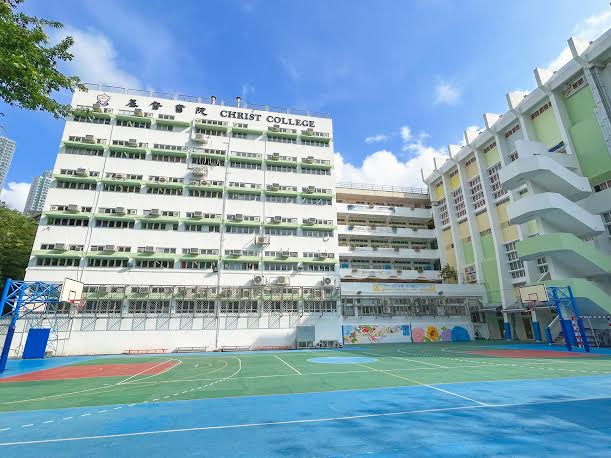

Last revision date: 5/12/2025


