 Secondary School Profiles 2025/2026


 Secondary School Profiles 2025/2026

| Address: | 10 Hoi Chak Street Quarry Bay | |||
| Phone: | 25630272 | Email: | info@canossa.edu.hk | |
| Fax: | 25628910 | Website: | http://www.canossa.edu.hk | |
School Mission
We are fully committed to offering an all-round education enhanced with the Gospel spirit and the virtues of humility, respect, kindness and love.
 School Information
 | District | : | Eastern |
| Other District(s) | : | |
| Supervisor / Chairman of School Management Committee | : | Ms. Wong Shui Kuk Anny |
| Principal (with Qualifications / Experiences) | : | Ms. Wong Pui Yue Patricia |
| School Type | : | Aided |
| Student Gender | : | Girls |
| Area Occupied by the School | : | About 4000 Sq. M |
| Name of Sponsoring Body | : | Canossian Daughters of Charity |
| Incorporated Management Committee | : | Established |
| Percentage of School Supervisor and Managers / Chairperson and Members of School Management Committee (SMC) of Government Schools Fulfilling the Training Targets | : | 100% |
| Religion | : | Catholicism |
| Year of Commencement of Operation | : | 1959 |
| School Motto | : | Humility, Respect, Kindness & Love |
| Parent-Teacher Association | : | Yes |
| Student Union / Association | : | Yes |
| Past Students’ Association / School Alumni Association | : | Yes |
| 4Rs Mental Health Charter | : | Yes |
| Whole School Health Programme | : | Action School |
 Chargeable Fees (2025/2026)
| School Fee ($) | Tong Fai ($) | ||
| S1 | - | - | |
| S2 | - | - | |
| S3 | - | - | |
| S4 | - | $370 | |
| S5 | - | $370 | |
| S6 | - | $370 | |
| Parent-Teacher Association Fee (Annual) ($) | : $90 | ||
| Student Union / Association Fee ($) | : $25 | ||
| Approved Charges for Non-standard Items (Annual)($) | : - | ||
| Other Charges / Fees ($) | : - | ||
 School Facilities
 | Number of Classroom(s) | : | 25 |
| School Facilities | : | 25 classrooms, student activity centre, English Learning Centre, School History Room, STEM room, 2 visual arts rooms, 4 laboratories, music room, geography room, library, computer-assisted learning room, multi-media learning centre, counselling room, 2 social worker rooms, 2 basketball courts, 2 covered playgrounds (with air-conditioning systems), 2 multi-purpose rooms, 3 small class teaching room, chapel, cookery room, needlework room and hall. All classrooms are installed with infrared wireless microphone system. Wireless network coverage classroom and hall. The school, adjacent to Quarry Bay Park, has a quiet and green environment with plenty resting place and facilities. |
| Facility(ies) for Supporting Students with Special Educational Needs | : | Ramp, Accessible lift and Accessible toilet. |
 Teaching Staff Information (Including School Head) in the 2025/2026 School Year
 | Number of Teaching Posts in the Approved Establishment | : | 52 |
| Total Number of Teachers in the School | : | 54 |
| Qualifications and Professional Training | : | Percentage of Teaching Staff (%) |
| Had Received Teacher Training | : | 98% |
| Bachelor Degree | : | 100% |
| Master / Doctorate Degree or above | : | 54% |
| Special Education Training | : | 69% |
| Years of Experience | : | Percentage of Teaching Staff (%) |
| 0-4 Years | : | 25% |
| 5-9 Years | : | 11% |
| 10 Years or above | : | 64% |
 2025/2026 Class Structure
 | Number of Classes | ||
| S1 | : | 4 |
| S2 | : | 4 |
| S3 | : | 4 |
| S4 | : | 4 |
| S5 | : | 4 |
| S6 | : | 4 |
 Subjects Offered
 | Subjects Offered in the 2025/2026 School Year | : | S.1 - S.3 |
| Chinese as the Medium of Instruction | : | Chinese Language, Chinese History, Putonghua, Religious and Moral Education, Life Education, Physical Education (S.3) |
| English as the Medium of Instruction | : | English Language, Mathematics, Computer Literacy, Home Economics, Music, Physical Education(S.1 - S.2), History, Geography, Citizenship, Economics and Society (S.1 - S.2), Life and Society (S.3), Visual Arts, Integrated Science (S.1 - S.2),Drama Education (S.1), Language Arts (S.2), Communication (S.3), STEM Education (S.1 - S.2), Biology (S.3), Chemistry (S.3), Physics (S.3) |
| Adopt a Different Medium of Instruction by Class or by Group / School-based Curriculum | : | - |
| Subjects Offered in the 2025/2026 School Year | : | S.4 - S.6 |
| Chinese as the Medium of Instruction | : | Chinese Language, Chinese Literature, Chinese History, Visual Arts, Ethics & Religious Studies, Religious and Moral Education (non-public exam.), Life Education, Physical Education |
| English as the Medium of Instruction | : | English Language, Business, Accounting & Financial Studies, Mathematics (with Extended Parts of Modules 1 & 2), Biology, Chemistry, Physics, History, Geography, Economics, Information and Communication Technology, Music (non-public exam.) |
| Adopt a Different Medium of Instruction by Class or by Group / School-based Curriculum | : | Citizenship and Social Development |
| Subjects to be Offered in the 2026/2027 School Year | : | S.1 - S.3 |
| Chinese as the Medium of Instruction | : | Chinese Language, Chinese History, Putonghua, Religious and Moral Education, Life Education, Physical Education (S.3) |
| English as the Medium of Instruction | : | English Language, Mathematics, Computer Literacy, Home Economics, Music, Physical Education (S.1 - S.2), History, Geography, Citizenship, Economics and Society, Visual Arts, Integrated Science (S.1 - S.2), Drama Education (S.1), Language Arts (S.2), Communication (S.3), STEM Education (S.1 - S.2), Biology (S.3), Chemistry (S.3), Physics (S3) |
| Adopt a Different Medium of Instruction by Class or by Group / School-based Curriculum | : | - |
| Subjects to be Offered in the 2026/2027 School Year | : | S.4 - S.6 |
| Chinese as the Medium of Instruction | : | Chinese Language, Chinese Literature, Chinese History, Visual Arts, Ethics & Religious Studies, Religious and Moral Education (non-public exam.), Life Education, Physical Education |
| English as the Medium of Instruction | : | English Language, Business, Accounting & Financial Studies, Mathematics (with Extended Parts of Modules 1 & 2), Biology, Chemistry, Physics, History, Geography, Economics, Information and Communication Technology, Music (non-public exam.) |
| Adopt a Different Medium of Instruction by Class or by Group / School-based Curriculum | : | Citizenship and Social Development |
 Secondary One Admission, Orientation Activities & Healthy School Life
 | Secondary One Admission | : | Our school will accept discretionary places. Our school will participate in the Secondary School Places Allocation System through central allocation stage (Applicable for admission to S.1 in September 2026 ).(1) Ranking in Discretionary Places Rank Order List/internal school report result - 40% (2) Applicant's conduct - 30% (3) Interview - 20% (4) Extra-curricular activities/others - 10% |
| Orientation Activities and Healthy Life | : | Summer Bridging Course; New Students Orientation Day in late August. Students are helped to develop their inner strength, live green and healthy, serve others through One-life-one-art/sports scheme, talks, Life Education, team building activities, English activities, spiritual development and services. |
 School Characteristics
 | School Management | ||
| (1) School's Major Concerns | : | Character formation and balanced development in moral, intellectual, physical, social, aesthetic and spiritual aspects are our main concerns. |
| (2) School Management Organisation | : | There are more than ten committees responsible for academic development, character formation and resource management. The school embraces collaborative decision-making and teachers' participation in the formulation of annual school plan and new policies. The committees implement and supervise the progress of the plans and related daily practices. |
| (3) Incorporated Management Committee / School Management Committee / Management Committee | : | Incorporated Management Committee |
| (4) School Green Policy | : | Waste separation for recycling by recycling bins on campus, promotion of environmental awareness by the Civic Education Committee and guidelines provided for the use of air-conditioners to prevent unnecessary consumption of energy. |
| Learning and Teaching Plan | ||
| (1) Whole-school Language Policy | : | 1. Our school mainly adopts English as the medium of instruction. 2. To build an English Language-rich environment, Students are encouraged to use English on campus. Announcements are to be made in English. Students are responsible for sharing and leading the prayers in English during morning assemblies. 3. Elite class is arranged in S.1 and S.2. 4. Tutorial lessons outside class time are provided for junior form students failing Chinese, English and Mathematics tests and exams. 5. S.5 and S.6 students taking only two electives have to attend extra Chinese and English lessons. 6. Academic websites and e-learning resources are provided to promote extensive reading and self-directed learning. 7. To help students adjust to the new medium of instruction, the school adopts a Language-Across-Curriculum approach that integrates the learning of English and EMI subjects in junior levels. |
| (2) Learning and Teaching Strategies | : | 1. Integrating values education, character formation and development of Canossian spirit into the formal curriculum. 2. Enhancing students' language ability through cross-curricular collaboration. 3. Enriching students' knowledge, exposure and various skills through experiential learning. 4. Developing students' ability to learn how to learn. 5. Applying e-learning pedagogy to elevate self-directed learning and motivation. 6. Equipping students with study skills, thinking skills and speaking skills to facilitate learning effectiveness. 7. Promoting the habit of taking notes and keeping vocabulary book. 8. Providing study skills training to S.1 students. 9. Organizing school-based STEM curriculum in class and STREAM-related activities after school. 10.Adopt a reading-rich curriculum and provide opportunities for students to engage in morning reading, reading across the curriculum, book sharing, and book fairs. |
| (3) School-based Curriculum | : | 1. Electives: 3X. Senior students can take three electives and Mathematics Extended Parts (M1/M2). 2. Curriculum highlights: Life Education and Religious Education are implemented in all classes to cultivate positive values and facilitate character formation and whole person development. |
| (4) Major Renewed Emphases in the School Curriculum | : | A. Moral, Civic and National Education - Foster students’ positive values and attitudes through the learning and teaching of various Key Learning Areas/subjects and the provision of relevant learning experiences. - Nurture students' twelve priority values and attitudes, which are: "Perseverance", "Respect for Others", "Responsibility", "National Identity", "Commitment", "Integrity", "Benevolence", Law-abidingness", "Empathy", "Diligence", "Unity" and "Filial Piety" through various subjects and school activities. B. Reading to Learn - Organize book exhibitions regularly to introduce new books. - Assign teachers and reading ambassadors to share books that they like. - Organize activities and competitions related to reading with various subject panels. - Recommend reading book lists and e-learning resources for different subjects to students. - Participate in the “eRead Scheme”. - Carry out cross-curricular collaboration to promote Theme-based Reading. - Subject teachers recommend reading materials for students in the morning reading periods. C. Project Learning - Carry out cross-curricular collaboration to promote students’ knowledge transfer and lifetime application of the skills learnt. D. Information Technology for Interactive Learning - Teachers use IT as a tool for learning and teaching to increase teaching efficiency and learning effectiveness, and to promote interactive learning. - Adopt a BYOD policy in S1-S6 levels. - Promote STREAM education through four areas: regular lessons, activity blocks and days, extra-curricular activities, inter-school competitions. |
| (5) Life Planning Education | : | Objectives and Highlights of Training for Each Level of Students: F.1: Building self-confidence through adventured-based training; F.2: Understanding different professions; F.3: Understanding personal interests and abilities through subject selection workshop; F.4: Learning to do reflection and setting plans through writing self-learning profile and joining life planning workshop; F.5: Understanding career planning through alumnae sharing on Life Planning Day; F.6: Strengthening personal skills and life planning through interview skills training and recollection. |
| Student Support | ||
| (1) Whole School Approach to Catering for Learner Diversity | : | 1. All subject panels formulate a plan to cater for learner diversity. Enrichment programmes are offered. 2. Outstanding students are selected to join our Talent Pool for special training. Recommend and subsidize students to join the training for gifted students offered by the EDB and tertiary institutes. |
| (2) Whole School Approach to Integrated Education | : | Our school adopts the Whole School Approach to Integrated Education. Student Support Team is formed. Members include Special Educational Needs Coordinator, core-subject teachers, school social workers, student counsellor and Education Psychologist. Our school flexibly and strategically deploys various grants to provide comprehensive services for the students through the 3-tier support model. Assessment accommodations are formulated to address the needs of individual students in order to allow students to display their competencies. |
| (3) Education Support for Non-Chinese Speaking (NCS) Students | : | Our school provides additional support for NCS students to facilitate their learning of Chinese: providing after-school support programmes in learning Chinese; appointing additional teacher(s)/teaching assistant(s) to support NCS students’ learning of Chinese; arranging intensive Chinese learning and teaching mode(s), e.g. pull-out learning if necessary, split-class/group learning, etc.; developing school-based Chinese Language curriculum and/or adapting learning and teaching materials; and organising activities to create an inclusive learning environment in the school. |
| (4) Measures to Provide Adaptation for Learning and Assessment | : | At least two different modes of assessment are to be adopted in each subject and continuous assessment is commonly used. |
| Home-School Co-operation and School Ethos | ||
| (1) Home-School Co-operation | : | 1. Arranging talks related to the school's educational objectives; 2. Parents' Forums are provided for parents of each level to keep them updated with current news about students' progress in learning and related school policies; 3. Parent Committee members and volunteers helping in organizing activities; 4. Organizing various leisure activities to enhance communication between parents and teachers; 5. Parents visiting the campus and tasting the food of lunch boxes to ensure good quality of the lunch boxes. |
| (2) School Ethos | : | Simplicity is a characteristic of the school. A spirit of warmth and care pervades all relationships with two form teachers in all forms and senior students as big sisters for S.1 students through the Foster Prefects Scheme. Our major concerns always focus on students' character formation and development of students' potential. |
| Future Development | ||
| (1) School Development Plan | : | 1. To foster a healthy lifestyle among students. 2. To nurture students' positive values and sense of national identity. 3. To nurture active learners through various teaching strategies. |
| (2) Teacher Professional Training and Development | : | 1. To equip teachers with the strategies and abilities to implement the school plans, staff development programmes always align with the major concerns of the school. 2. To enhance teachers' capability, collaborative lesson planning and sharing of teaching experience are regularly arranged. 3. All teachers exchange lesson observation with peers or panel heads every year. 4. New teachers are provided with orientation and each is supported by an experienced teacher. |
| Life-wide Learning (Including Five Essential Learning Experiences to be Provided through Key Learning Areas, Extra-curricular Activities, Co-curricular Activities, etc.) | : | Besides the four Houses and Student Council, we have 43 extra-curricular activity clubs/societies under six categories: Academic, Interest, Music, Sports, Community Service and Religious Affairs. To stretch students' potential, most activities of the clubs/societies are run by students. All S1 students are required to join either a music or sports group for a diversity of development. All S1 to S4 students must join one activity club/society. |
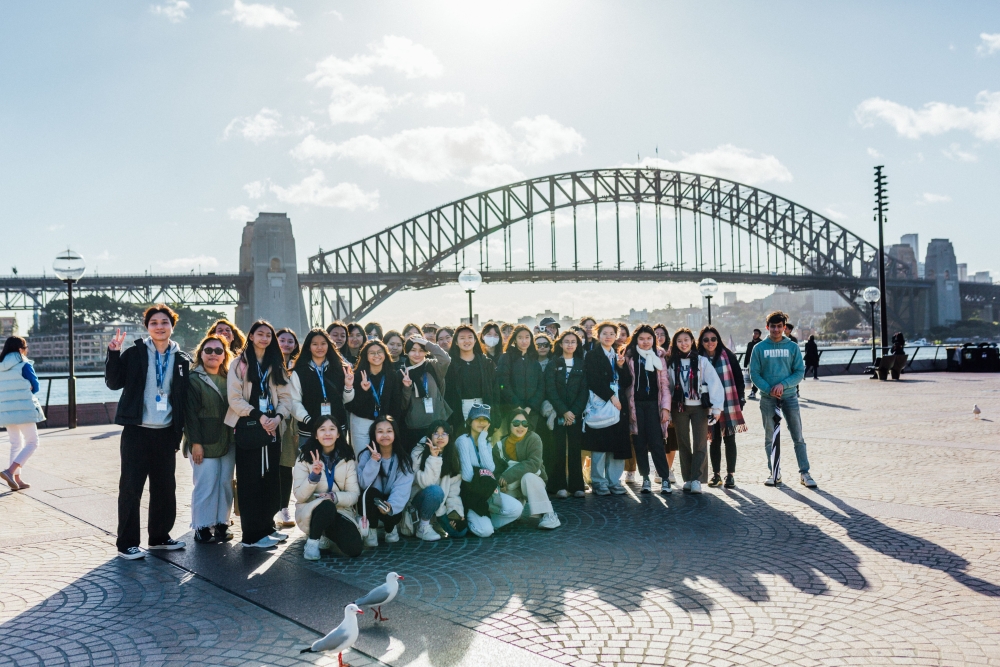
| Others | : | 1. The Religious Affairs Committee coordinates and fosters spiritual growth among students. Activities include retreat, mass, sharing, prayer sessions, service on the Mainland and running game stalls at Caritas Bazaar. 2. For cultivation of service spirit, all students are enrolled CYC members, S4 have service learning to learn to organize activities for the needy and make contributions to the community. 3. Various study trips are organized for students to gain other learning experiences, exposure outside Hong Kong, and enhance the sense of national identity. |
| Direct Public Transportation to School | : | Bus: All buses passing King's Road; Tram: All trams passing King's Road; MTR: Quarry Bay Station Exit B. |
| Remarks | : | - |
 School Map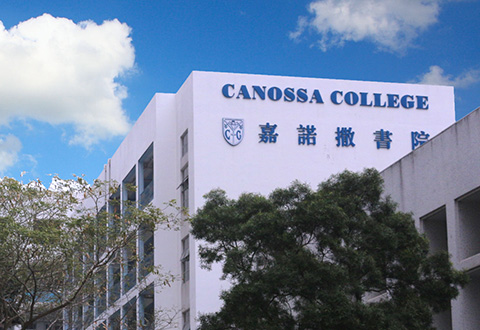
Last revision date: 5/12/2025


