 Secondary School Profiles 2025/2026


 Secondary School Profiles 2025/2026
| Address: | 38 Wah Ming Road, Fanling, New Territories | |||
| Phone: | 26794545 | Email: | info@plkmkmc.edu.hk | |
| Fax: | 26797125 | Website: | http://www.plkmkmc.edu.hk | |
School Mission
The School observes Po Leung Kuk's education policy closely - equal emphasis is placed on holistic educational goals, namely moral, intellectual, physical, social and aesthetic developments. An array of learning opportunities is created to equip students with effective life skills for a promising future.
 School Information
 | District | : | North |
| Other District(s) | : | |
| Supervisor / Chairman of School Management Committee | : | Dr. Chan Ching Yan Daniel, BBS, MH |
| Principal (with Qualifications / Experiences) | : | Mr. Ha Man Leung (BSc. (CUHK); Dip.Ed. (CUHK)) |
| School Type | : | Aided |
| Student Gender | : | Co-ed |
| Area Occupied by the School | : | About 7500 Sq. M |
| Name of Sponsoring Body | : | Po Leung Kuk |
| Incorporated Management Committee | : | Established |
| Percentage of School Supervisor and Managers / Chairperson and Members of School Management Committee (SMC) of Government Schools Fulfilling the Training Targets | : | Not Applicable |
| Religion | : | Not Applicable |
| Year of Commencement of Operation | : | 1995 |
| School Motto | : | Love, Respect, Diligence and Sincerity |
| Parent-Teacher Association | : | Yes |
| Student Union / Association | : | Yes |
| Past Students’ Association / School Alumni Association | : | Yes |
| 4Rs Mental Health Charter | : | Yes |
| Whole School Health Programme | : | Pledged School |
 Chargeable Fees (2025/2026)
| School Fee ($) | Tong Fai ($) | ||
| S1 | - | - | |
| S2 | - | - | |
| S3 | - | - | |
| S4 | - | $335 | |
| S5 | - | $335 | |
| S6 | - | $335 | |
| Parent-Teacher Association Fee (Annual) ($) | : $40 | ||
| Student Union / Association Fee ($) | : $30 | ||
| Approved Charges for Non-standard Items (Annual)($) | : $300 (Charges for specific purposes) | ||
| Other Charges / Fees ($) | : - | ||
 School Facilities
 | Number of Classroom(s) | : | 34 |
| School Facilities | : | The School is equipped with facilities of the millennium school standard. All the classrooms and the school hall are air-conditioned and networked with optical fibre to provide users with the access to the Internet. Comprehensive school facilities are installed to support students’ learning needs. Language Arts Room, History and Culture Centre, School Library, Mathematics Resource Room, Geography Room, Makerspace, Computer Room, Visual Arts Room, Multi-Media Learning Centre, Music Room, Recording Studio, Auditorium, Student Activities Centre, Self-study Room, Gym Room, Life Planning Room, Parent Resource Centre, POMA Oasis, and Indoor Sports Space, are provided to support students' all-rounded development. Meanwhile, students can always get their creative juices moving with their collaboration in the design and renovation of school facilities, which is equally important to engender their sense of belonging to school. |
| Facility(ies) for Supporting Students with Special Educational Needs | : | Ramp, Accessible lift and Accessible toilet. |
 Teaching Staff Information (Including School Head) in the 2025/2026 School Year
 | Number of Teaching Posts in the Approved Establishment | : | 67 |
| Total Number of Teachers in the School | : | 69 |
| Qualifications and Professional Training | : | Percentage of Teaching Staff (%) |
| Had Received Teacher Training | : | 96% |
| Bachelor Degree | : | 99% |
| Master / Doctorate Degree or above | : | 49% |
| Special Education Training | : | 46% |
| Years of Experience | : | Percentage of Teaching Staff (%) |
| 0-4 Years | : | 25% |
| 5-9 Years | : | 13% |
| 10 Years or above | : | 62% |
 2025/2026 Class Structure
 | Number of Classes | ||
| S1 | : | 5 |
| S2 | : | 5 |
| S3 | : | 5 |
| S4 | : | 5 |
| S5 | : | 5 |
| S6 | : | 5 |
 Subjects Offered
 | Subjects Offered in the 2025/2026 School Year | : | S.1 - S.3 |
| Chinese as the Medium of Instruction | : | Chinese Language, Chinese History, Citizenship, Economics and Society (F.1 & F.2), Home Economics (F.1 & F.2), Account and Economics (F.3), Visual Arts, P.E., Music, Geography (F.3), History (F.3), Computer Literacy (F.3) |
| English as the Medium of Instruction | : | English Language, Mathematics, Science |
| Adopt a Different Medium of Instruction by Class or by Group / School-based Curriculum | : | Geography (F.1 & F.2), History (F.1 & F.2), Computer Literacy (F.1 & F.2) |
| Subjects Offered in the 2025/2026 School Year | : | S.4 - S.6 |
| Chinese as the Medium of Instruction | : | Chinese Language, BAFS, Citizenship and Social Development, Chinese History, History, Geography, Visual Arts, Economics, Information and Communication Technology, Health Management and Social Care (F.4 & F.5), Tourism and Hospitality Studies (F.4), P.E. |
| English as the Medium of Instruction | : | English Language, Mathematics, Mathematics Extended Part Module 2 (Algebra & Calculus), Biology, Physics, Chemistry |
| Adopt a Different Medium of Instruction by Class or by Group / School-based Curriculum | : | - |
| Subjects to be Offered in the 2026/2027 School Year | : | S.1 - S.3 |
| Chinese as the Medium of Instruction | : | Chinese Language, Chinese History, Citizenship, Economics and Society, Home Economics (F.1 & F.2), Account and Economics (F.3), Visual Arts, P.E., Music, Geography (F.3), History (F.3), Computer Literacy (F.3) |
| English as the Medium of Instruction | : | English Language, Mathematics, Science |
| Adopt a Different Medium of Instruction by Class or by Group / School-based Curriculum | : | Geography (F.1 & F.2), History (F.1 & F.2), Computer Literacy (F.1 & F.2) |
| Subjects to be Offered in the 2026/2027 School Year | : | S.4 - S.6 |
| Chinese as the Medium of Instruction | : | Chinese Language, BAFS, Citizenship and Social Development, Chinese History, History, Geography, Visual Arts, Economics, Information and Communication Technology, Health Management and Social Care, Tourism and Hospitality Studies (F.4 & F.5), P.E. |
| English as the Medium of Instruction | : | English Language, Mathematics, Mathematics Extended Part Module 2 (Algebra & Calculus), Biology, Physics, Chemistry |
| Adopt a Different Medium of Instruction by Class or by Group / School-based Curriculum | : | - |
 Secondary One Admission, Orientation Activities & Healthy School Life
 | Secondary One Admission | : | Our school will accept discretionary places. Our school will participate in the Secondary School Places Allocation System through central allocation stage (Applicable for admission to S.1 in September 2026 ).Admission Criteria and weightings for S.1 discretionary places: Academic achievement 30%; Conduct 10%; ECA 5%; Awards 10%; Interview Performance 30%; Rank Order List provided by EDB 15%. |
| Orientation Activities and Healthy Life | : | The school organizes the “S.1 Orientation Programme,” “S.1 Parents’ Meeting,” and “S.1 Parents’ Seminar” to support new students in adapting to secondary school life. Teachers also maintain close contact with parents through the “Sunshine Call” initiative, keeping them informed about their children’s adjustments and learning progress. Health messages are delivered to students through morning assemblies, talks, and exhibitions. In addition, the school promotes a healthy lifestyle by organising Well-being Moments, POMA RUN (Thursday Running Day), POMA FITNESS DAY, and the annual Sports Day, encouraging all students to practise self-care and exercise together. During the peak flu season, students are required to take body temperature checks, wash their hands frequently, and follow official health guidelines to prevent the spread of illnesses. |
 School Characteristics
 | School Management | ||
| (1) School's Major Concerns | : | Pursuing quality education, nurturing talents and achieving excellence. |
| (2) School Management Organisation | : | The School has adopted a well-established management system. Besides, it has set specific goals with a comprehensive school year plan and corresponding implementation plans for teaching and learning. Team spirit is strong to achieve the goals. |
| (3) Incorporated Management Committee / School Management Committee / Management Committee | : | The School's Incorporated Management Committee was established on 1st September 2012. |
| (4) School Green Policy | : | In order to systemically monitor environmental performance of the School, a dedicated Green Manager and Assistant Green Manager were assigned to coordinate the implementations of carbon auditing work and green management measures. |
| Learning and Teaching Plan | ||
| (1) Whole-school Language Policy | : | English is used as the medium of instruction (MOI) in some S.1-S.3 classes in non-language subjects: Geography, History and Computer Literacy. English is also used for teaching Science Subjects and Mathematics in all classes in S.1. Students performing well in both English learning and overall academic results will have chances to study in classes that mainly adopt English as the MOI. |
| (2) Learning and Teaching Strategies | : | The school emphasizes the cultivation of students' good learning habits and adopts evidence-based instructional approaches to boost students’ learning confidence and effectiveness. Teachers attach great importance to curriculum delivery, utilizing a variety of teaching strategies, such as self-directed learning, flipped classroom, collaborative learning as well as e-learning so as to transform the classroom into a place where students actively engage in interactive exchange, construct knowledge, showcase their learning outcomes and build self-confidence. The lessons are designed in such a way that students are provided with ample opportunities to stretch their abilities and challenge themselves, allowing them to pursue academic excellence. |
| (3) School-based Curriculum | : | 1. Electives: 2X and 3X. Electives: 2X and 3X. 13 elective subjects are offered to students. Students can study 2X or 3X according to their abilities and interests. The majority of the F.4 students study 3X. Our school offers Applied Learning courses in Mode I, allowing interested students to study at external institutions. 2. Curriculum highlights: (1) Our school-based curriculum is closely related to real-life situations, focusing on daily-life application, connecting subject courses, extra-curricular activities, academic weeks and life-wide learning activities, enriching students' learning experience and cultivating students' knowledge, skills and attitudes. The curriculum design is based on a six-year programme, strengthening the transition from the junior to the senior secondary curriculum. Our school actively promotes interdisciplinary collaboration, allowing students to integrate knowledge from different disciplines. (2) Basic training in Chinese Language, English Language and Mathematics is stressed in the junior secondary curriculum. Students are encouraged to read, write and think more. Besides, there are after-school academic support so as to cater for students' diverse learning needs. Besides, English oral lessons in junior forms are mainly conducted by the School NET for the purpose of maximizing the oral practice opportunities provided to students. (3) Elite classes are set up for Mathematics and Science subjects. Gifted students are encouraged to participate in international assessments and EDB courses on gifted education, as well as inter-school and international competitions. (4) Assessment strategies are developed by all subjects for nurturing students' learning skills. (5) Life-wide experiential learning is offered to cultivate students' whole-person development on arts, sports, personal development and services. |
| (4) Major Renewed Emphases in the School Curriculum | : | All teachers and students are involved in the Extensive Reading Scheme, which encourages students to read independently and share with others. Our reading period is a part of students’ routine, fostering a good learning habit and appropriate attitude towards reading among students. With the introduction of an e-book system, students can read anytime and anywhere. Interactive self-learning software are used to arouse learning interest. To integrate what they have learnt (e.g. knowledge, skills, values, etc.), students need to finish projects seriously and pragmatically. The school promotes value education (including moral and civic education and Basic Law Education) through providing holistic and balanced learning experiences, including classroom learning, school assemblies and various activities (e.g. visits, exchange tours, social services). The school aims to promotes students' positive values and attitudes, and nurture the future generation into quality citizens who are self-respecting, empathetic, socially responsible and equipped with a love of Hong Kong, a sense of national identity and a global perspective. |
| (5) Life Planning Education | : | The Careers & Life Planning Committee provides Careers Development and Counselling Courses and career aptitude tests, which help students understand their interest and abilities. Apart from joining the Information Day of local universities, students are encouraged to attend the briefings of universities in China, Taiwan and other countries. Careers talks, workplace visits and work experience programs are organised to help students explore their paths for further studies and careers. Secondary Three Counselling Day, Secondary 5 Mock Exam Result Release Day and Secondary Six Graduates Goal Setting Program are also organised to help students set goals and equip themselves with the necessary skills. |
| Student Support | ||
| (1) Whole School Approach to Catering for Learner Diversity | : | Our curriculum is adjusted to accommodate students’ learning needs. Different teaching strategies, tailor-made materials and collaborative learning are adopted to enhance learning effectiveness. Guidance Committee and School Social Worker cater for the diverse learning needs of the students. |
| (2) Whole School Approach to Integrated Education | : | The main targets of the Student Support Team are students with special learning needs and their parents. Through a three-tiered support model and flexibly making use of the Learning Support Grant, the team can take care of the individual differences of students and help them solve their difficulties. Hence, they can have a more prosperous and positive school life and an inclusive school culture can be promoted. The Student Support Team is led by the Special Educational Needs Coordinator (SENCO) to coordinate, plan, implement and review the work related to the support of the students with special educational needs (SEN).It consists of the head of different groups. Support measures include counselling, group training, adjustment of assessment and individual study plans. The social workers, school-based speech therapist and the psychologist meet with students in a timely manner to help them solve their problems. Speech therapy sessions are conducted on both individual and group basis, supporting and improving the speech capability of students. Through various group training including social training, study groups, etc., students’ social skills can be enhanced and their academic performance and learning attitude can be improved. With adjustment of assessment, the team provides and adjusts the assessment content for students in need. In addition, the team invites parents of those joining individual learning programmes to attend meetings to review and strengthen the action plan for supporting students. With different types of support, students will get a more positive and healthy school life. |
| (3) Education Support for Non-Chinese Speaking (NCS) Students | : | Our school provides additional support for NCS students to facilitate their learning of Chinese: organising activities to create an inclusive learning environment in the school. Our school provides additional support for NCS students to facilitate their learning of Chinese: organising activities to create an inclusive learning environment in the school. A separate tutorial course according to students’ different levels of Chinese proficiency is offered to non-Chinese speaking students. The course comprises tailor-made Chinese teaching materials, including training on listening, speaking, reading, and writing skills, to create a context for students to read, write, listen and speak more. This aims to help them strengthen their foundation of the Chinese language, adapt to the local culture, and register for appropriate public examinations to obtain relevant qualifications in Chinese Language. |
| (4) Measures to Provide Adaptation for Learning and Assessment | : | Both formative and summative assessments are conducted with a view to fathom the strengths and weaknesses of the students so as to know their learning progress. Students are also trained to get familiar with the public examination requirements. |
| Home-School Co-operation and School Ethos | ||
| (1) Home-School Co-operation | : | Parents and teachers both play a pivotal role in educating children. To make a concerted effort to raise our children, close home-school cooperation is of great value. The Parent-teacher Association aims to promote connections and communications between parents and the school and to establish a partnership between them. Parent education is equally important in developing the potential of parents and strengthening their relationship with their children. The Parent-teacher Association has a mission to encourage parents' participation in school activities through planning and conducting a variety of developmental and recreational activities. |
| (2) School Ethos | : | The school nurtures a culture founded on love, kindness and simplicity, recognizing the indispensable nature of the rapport between students and teachers for effective learning. As such, our B.E.S.T. TEEN is the blueprint to guide the all-round development of students, cultivating their benevolence, moral values and self-management abilities with the goal of self-transcendence. Committed to providing the utmost care for our students, the school mandates that all junior form students have their lunch on campus, while also offering an array of lunchtime activities to enable students to unwind and rejuvenate, both physically and mentally. Besides, various schemes and programmes are in place to guide students through their growth towards their life goals and to develop their potential. For example, the ‘Student Achievement Recognition Scheme’ is launched to encourage students to set goals and strive for excellent performance in the academic field. In the meantime, diverse growth courses and activities are organized for students of all grades, such as the ‘Stepping onto the Path of Success Program’, the ‘S.1 Life-Wide Learning Experience Activity’, the ‘Compassionate Communication Class Period Activity’ and the ‘Life Education Program’ with an aim to foster the holistic growth of students. |
| Future Development | ||
| (1) School Development Plan | : | A 3-year development plan is drawn in a bid to keep abreast of the times and to achieve life-long learning. The focuses include: 1. Be a Proactive Learner. 2. Be a Compassionate Leader. |
| (2) Teacher Professional Training and Development | : | The school implements a comprehensive Teacher Development Program. The theme of the Teacher Professional Development Day aligns closely with the school's major concerns. The themes in recent years include Positive Education (by Professor Chiu Chi-yue), Compassionate Education (by JUST FEEL) and Positive Discipline (by Professor Ella Chan). In addition, our teachers have received a series of trainings in positive education to establish a positive school. Over the past few years, teachers have received training on ‘Responsive Classroom Management’ and ‘The Seven Habits of Highly Effective People’. This aims to help students develop from dependence to independence and interdependence, achieve effective management and build a positive community. Teachers also actively arrange collaborative lesson planning, lesson observations and learning communities to facilitate professional exchange and enhance their professional capacity. Since 2018, the school has also invited different esteemed educators (e.g. Professor Chiu Chi-shing, Principal Hon Hau Sut, Dr. Ho Sai-Mun) to serve as teaching consultants to offer valuable advice on methodology to cater for learners' diversity and cultivate instructional leaders. |
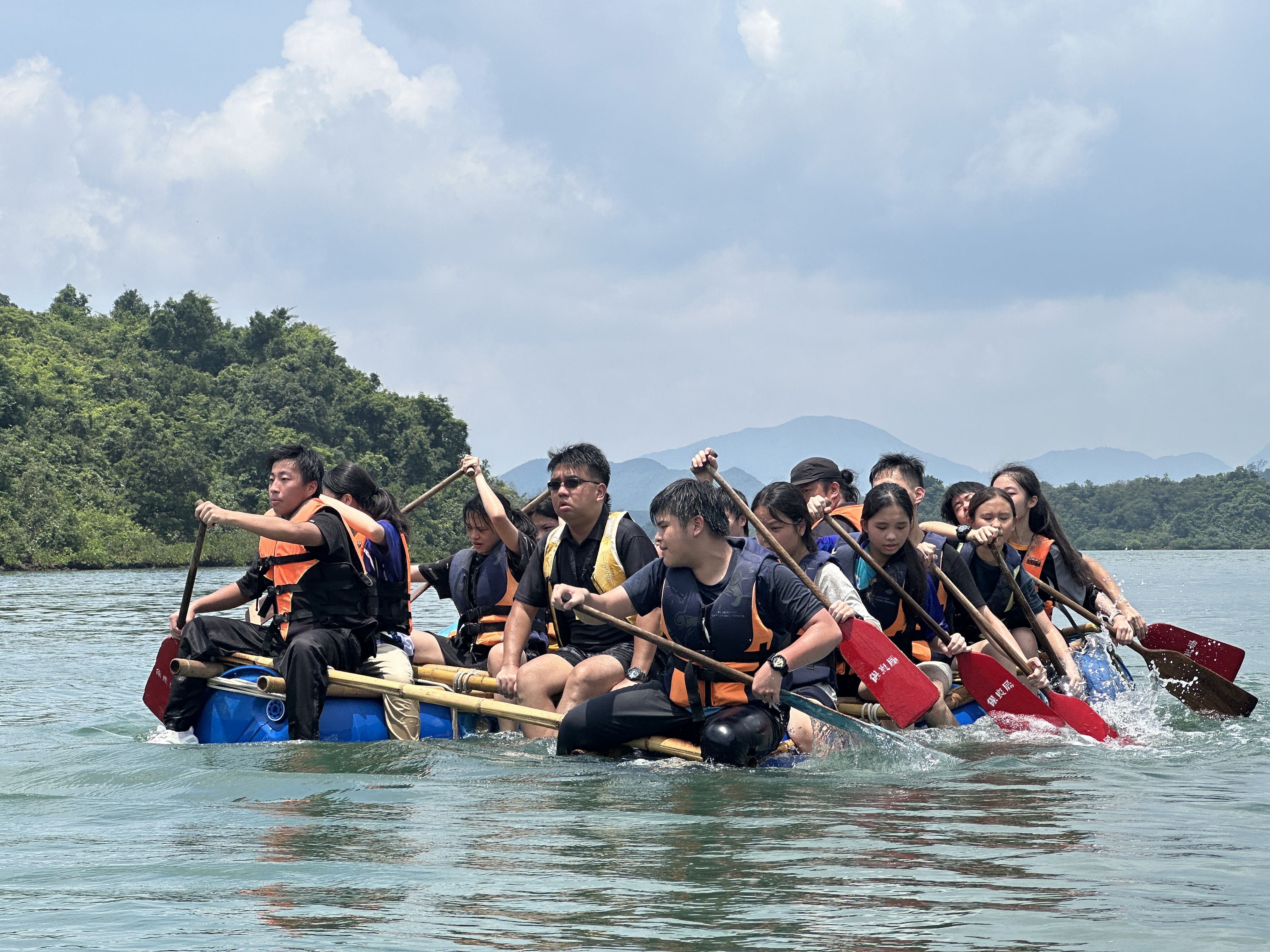
| Life-wide Learning (Including Five Essential Learning Experiences to be Provided through Key Learning Areas, Extra-curricular Activities, Co-curricular Activities, etc.) | : | The school offers over 40 extra-curricular activities, including Instrumental Classes, POMA Explorers, Film Society, Astronomy Club, Red Cross Youth Unit, and Japanese Culture Studies Society. These allow students to explore passions, cultivate a growth mindset, and develop self-improvement. Believing that “Every Student is a Leader,” the school not only provides societies and clubs but also comprehensive learning programmes and diverse leadership positions. Through active participation, reflection, and feedback with teachers, students enhance leadership qualities, beginning with self-leadership before leading others. Each second semester, “Student Leader Selection Month” is held. Teachers and current leaders conduct interviews and meetings to select future leaders. The Student Union includes both junior and senior students, symbolizing continuity. Operating under a cabinet system and elected through whole-school voting, it builds credibility, civic awareness, and student participation. At the start of the school year, the “Student Leader Inauguration Ceremony” reaffirms expectations while showcasing leadership excellence. The school also offers structured leadership training, such as POMA Pioneers (pre-leadership camp), POMA Radiance (junior leadership programme), committee workshops, and summer training camps for student teams. These programmes develop leadership potential and foster teamwork. |
| Others | : | Pegasus Cup – Hong Kong Chinese and English Writing Competition (Gold Award, Silver Award) 76th Hong Kong Schools Speech Festival – Putonghua Prose Solo (Second Place), Cantonese Taoist Poetry Recital (First Place), English Poetry Solo (Second Place and Third Place) WeChat Mini Program Global Innovation Challenge (Grand Finals) 2025 – Feilong Group (Second Prize & Cash Award) Fun Science Competition – “Pearls of Wisdom” (Senior Challenge Group, Second Prize) STEM x Marine Vessel Design and Production Competition (Team Bronze Award) Rotary Youth Greater Bay Area Innovation & Technology Study Tour – Innovation & Technology Project Competition (Second Place) Hua Xia Cup – National Mathematical Olympiad Invitational Competition (South China Regional Preliminaries) (First Prize) Mathematical Thinking Challenge (Gold, Silver, and Bronze Awards) Hong Kong Youth Mathematical Elite Selection Competition (Second Prize) Hong Kong Age Group Rope Skipping Competition – Girls Aged 15–17, Team Overall Champion Inter-School Badminton Competition – Girls Grade B (Second Place) Inter-School Badminton Competition – Girls Grade C (Champion) Inter-School Basketball Competition – Boys Junior Grade Division 1 (Third Place) “Fashion in Stitch” Design Competition and Showcase (Excellence in Design Award) 14th Hong Kong Arts Elite Painting Competition – Youth Group A, Chinese Painting (Third Place) Joint-School Music Association: Joint-School Music Competition – Secondary School Mixed Choir (Senior Group, Silver Award) Joint-School Music Association: Joint-School Music Competition – Secondary School Handbell & Handchime Ensemble (Silver Award) Joint-School Music Association: Joint-School Music Competition – Secondary School Orchestra (Bronze Award) ArtRhythm Orchestra Association: ArtRhythm Cup (Secondary School Division) – Chinese Wind Ensemble (First Prize) ArtRhythm Orchestra Association: ArtRhythm Cup (Secondary School Division) – Chinese Wind Ensemble (Third Place) 5th Guangdong-Hong Kong-Macao Greater Bay Area Youth Music Week – Piano Competition, Shenzhen Division (Youth Group, Gold Award and Silver Award) 5th Guangdong-Hong Kong-Macao Greater Bay Area Youth Music Week – Vocal Competition (Bronze Award) 1st Greater Bay Area Joint-School Talent Showcase (Hong Kong & Macao Region) – Chinese Orchestra (Secondary School Division, Team Bronze Award) Education Bureau x Community Youth Club: Charity Flower Sale (Team Second Place), Charity Green Campaign (Team Third Place) |
| Direct Public Transportation to School | : | Bus: 70K, 73, 73A, 76K, 78, 270A, 270B, 270P, 273, 273A, 273D, 277X, 278P, 278X, 373, 673A, 678, 978, E43, N73, T277; Mini Bus: 501A, 502; MTR: Fanling Station. |
| Remarks | : | - |
 School Map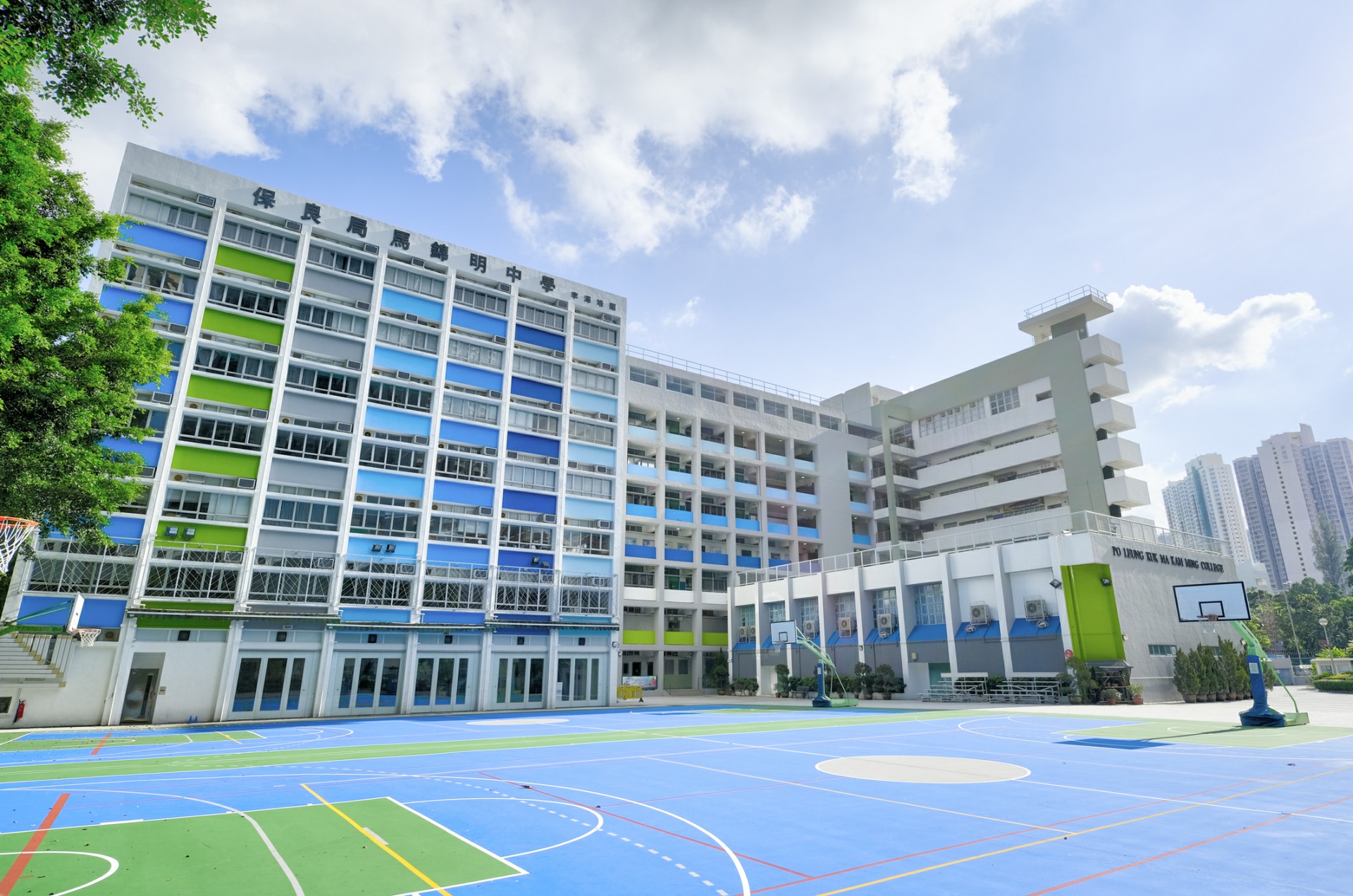
Last revision date: 5/12/2025


