 Secondary School Profiles 2025/2026


 Secondary School Profiles 2025/2026

| Address: | 14 Sycamore Street, Tai Kok Tsui, KLN; 52 Boundary Street, Mongkok, KLN | |||
| Phone: | 23944081 | Email: | school@ksyss.edu.hk | |
| Fax: | 23944082 | Website: | https://www.ksyss.edu.hk | |
School Mission
Guided by Christian principles, our school seeks to nurture students' character and values through
holistic education of spirit, mind, and body. We continually strive to inspire them to discover their
potential, pursue excellence, and fulfill their calling to glorify God through serving others.
 School Information
 | District | : | Yau Tsim Mong |
| Other District(s) | : | Sham Shui Po |
| Supervisor / Chairman of School Management Committee | : | Pastor Cham Chi Fan |
| Principal (with Qualifications / Experiences) | : | Ms. Leung Wing Mui (Bachelor of Arts, PGDE, Master of Arts) |
| School Type | : | DSS |
| Student Gender | : | Co-ed |
| Area Occupied by the School | : | About 6700 Sq. M |
| Name of Sponsoring Body | : | Seventh-day Adventist Schools Organisation (HK) Limited |
| Incorporated Management Committee | : | Not Applicable |
| Percentage of School Supervisor and Managers / Chairperson and Members of School Management Committee (SMC) of Government Schools Fulfilling the Training Targets | : | Not Applicable |
| Religion | : | Protestantism / Christianity |
| Year of Commencement of Operation | : | 1950 |
| School Motto | : | Striving for excellence |
| Parent-Teacher Association | : | Yes |
| Student Union / Association | : | No |
| Past Students’ Association / School Alumni Association | : | Yes |
| 4Rs Mental Health Charter | : | Yes |
| Whole School Health Programme | : | Action School |
 Chargeable Fees (2025/2026)
| School Fee ($) | Tong Fai ($) | ||
| S1 | $3060 | - | |
| S2 | $3060 | - | |
| S3 | $3060 | - | |
| S4 | $3060 | - | |
| S5 | $3060 | - | |
| S6 | $3060 | - | |
| Parent-Teacher Association Fee (Annual) ($) | : $40 | ||
| Student Union / Association Fee ($) | : - | ||
| Approved Charges for Non-standard Items (Annual)($) | : - | ||
| Other Charges / Fees ($) | : - | ||
 School Facilities
 | Number of Classroom(s) | : | 30 |
| School Facilities | : | All classrooms, the assembly hall, and special rooms are equipped with computer networks, air conditioning, and multimedia projectors. Other special rooms include: a library, language laboratory, computer room, music room, physics and biology room, integrated science and chemistry room, audiovisual room, student activity room, and multimedia classroom. |
| Facility(ies) for Supporting Students with Special Educational Needs | : | Ramp, Accessible lift and Accessible toilet. |
 Teaching Staff Information (Including School Head) in the 2025/2026 School Year
 | Number of Teaching Posts in the Approved Establishment | : | 0 |
| Total Number of Teachers in the School | : | 45 |
| Qualifications and Professional Training | : | Percentage of Teaching Staff (%) |
| Had Received Teacher Training | : | 67% |
| Bachelor Degree | : | 58% |
| Master / Doctorate Degree or above | : | 42% |
| Special Education Training | : | 20% |
| Years of Experience | : | Percentage of Teaching Staff (%) |
| 0-4 Years | : | 44% |
| 5-9 Years | : | 13% |
| 10 Years or above | : | 43% |
 2025/2026 Class Structure
 | Number of Classes | ||
| S1 | : | 3 |
| S2 | : | 3 |
| S3 | : | 3 |
| S4 | : | 3 |
| S5 | : | 3 |
| S6 | : | 3 |
 Subjects Offered
 | Subjects Offered in the 2025/2026 School Year | : | S.1 - S.3 |
| Chinese as the Medium of Instruction | : | Chinese Language, Mathematics*, Science*, Geography, Chinese History, History, Citizenship, Economics and Society , Computer Literacy, Religious Studies, Visual Arts, Junior Technology Education, Moral Education, Physical Education, Music* |
| English as the Medium of Instruction | : | English Language |
| Adopt a Different Medium of Instruction by Class or by Group / School-based Curriculum | : | Mathematics, Science, Geography, Music, Computer Literacy |
| Subjects Offered in the 2025/2026 School Year | : | S.4 - S.6 |
| Chinese as the Medium of Instruction | : | Chinese Language, Citizenship and Social Development, Geography, History, Chinese History, Business, Accounting and Financial Studies, Economics, Mathematics Extended Part (Module 1), Moral Education, Religious Studies, Physical Education, Music, Applied Learning |
| English as the Medium of Instruction | : | English Language |
| Adopt a Different Medium of Instruction by Class or by Group / School-based Curriculum | : | Mathematics, Biology, Chemistry, Physics |
| Subjects to be Offered in the 2026/2027 School Year | : | S.1 - S.3 |
| Chinese as the Medium of Instruction | : | Chinese Language, Mathematics*, Science*, Geography, Chinese History, History, Citizenship, Economics and Society, Computer Literacy, Religious Studies, Visual Arts, Junior Technology Education, Moral Education, Physical Education, Music* |
| English as the Medium of Instruction | : | English Language |
| Adopt a Different Medium of Instruction by Class or by Group / School-based Curriculum | : | Mathematics, Science, Geography, Music, Computer Literacy |
| Subjects to be Offered in the 2026/2027 School Year | : | S.4 - S.6 |
| Chinese as the Medium of Instruction | : | Chinese Language, Citizenship and Social Development, Geography, History, Chinese History, Business, Accounting and Financial Studies, Economics, Mathematics Extended Part (Module 1), Moral Education, Religious Studies, Physical Education, Music, Applied Learning |
| English as the Medium of Instruction | : | English Language |
| Adopt a Different Medium of Instruction by Class or by Group / School-based Curriculum | : | Mathematics, Biology, Chemistry, Physics |
*Subjects with Extended Learning Activities (ELA) in English
 Secondary One Admission, Orientation Activities & Healthy School Life
 | Secondary One Admission | : | Our school will accept discretionary places. Our school will participate in the Secondary School Places Allocation System through central allocation stage (Applicable for admission to S.1 in September 2026 ).Admission criteria and weighting for S1 discretionary places includes school academic result: 20%, interview: 20%, conduct: 20%, extra-curricular activities/services: 20%, Rank Order of applicants provided by EDB: 20%. |
| Orientation Activities and Healthy Life | : | Our school organizes an orientation programme which includes an enhancement programme, a multiple-intelligence camp and parents' day to welcome our S.1 students. This programme aims to provide our students with a positive experience at the start of their learning journey at our school. It also aims at motivating our students to maximise their learning potential and supporting them to develop a pro-active attitude and approach towards their learning. We promote healthy eating and all junior form students have their lunch at school. Through seminars, life education classes and volunteer service, we raise our students’ awareness of their physical and mental health. Life planning and personal growth training programmes are also organised to help students set their life goals at an early stage. Last but not the least, the school, the PTA and the church cooperate closely in promoting health education. Through various activities, different school stakeholders can live a healthier lifestyle. |
 School Characteristics
 | School Management | ||
| (1) School's Major Concerns | : | 1. Promote autonomous learning and enhance learning effectiveness. 2. Cultivate positive values in students and promote holistic well-being. |
| (2) School Management Organisation | : | Our school implements school-based management. The Administrative meetings, Staff meetings and Parent-Teacher Association meetings are held regularly to provide sufficient communication channels for stakeholders. As a result, all teachers are involved in the planning and implementation of school policies. The School Board also sponsors overseas study tours and offers exchange scholarships for outstanding students. |
| (3) Incorporated Management Committee / School Management Committee / Management Committee | : | The School Management Committee comprises representatives from the Sponsoring Body, the principal, teachers, alumni and parents. All stakeholders participate in decision-making so as to enhance transparency and accountability of the school management. |
| (4) School Green Policy | : | Our school has formulated School Green Policy. The school joins hands with staff and students to use resources efficiently and avoid waste. |
| Learning and Teaching Plan | ||
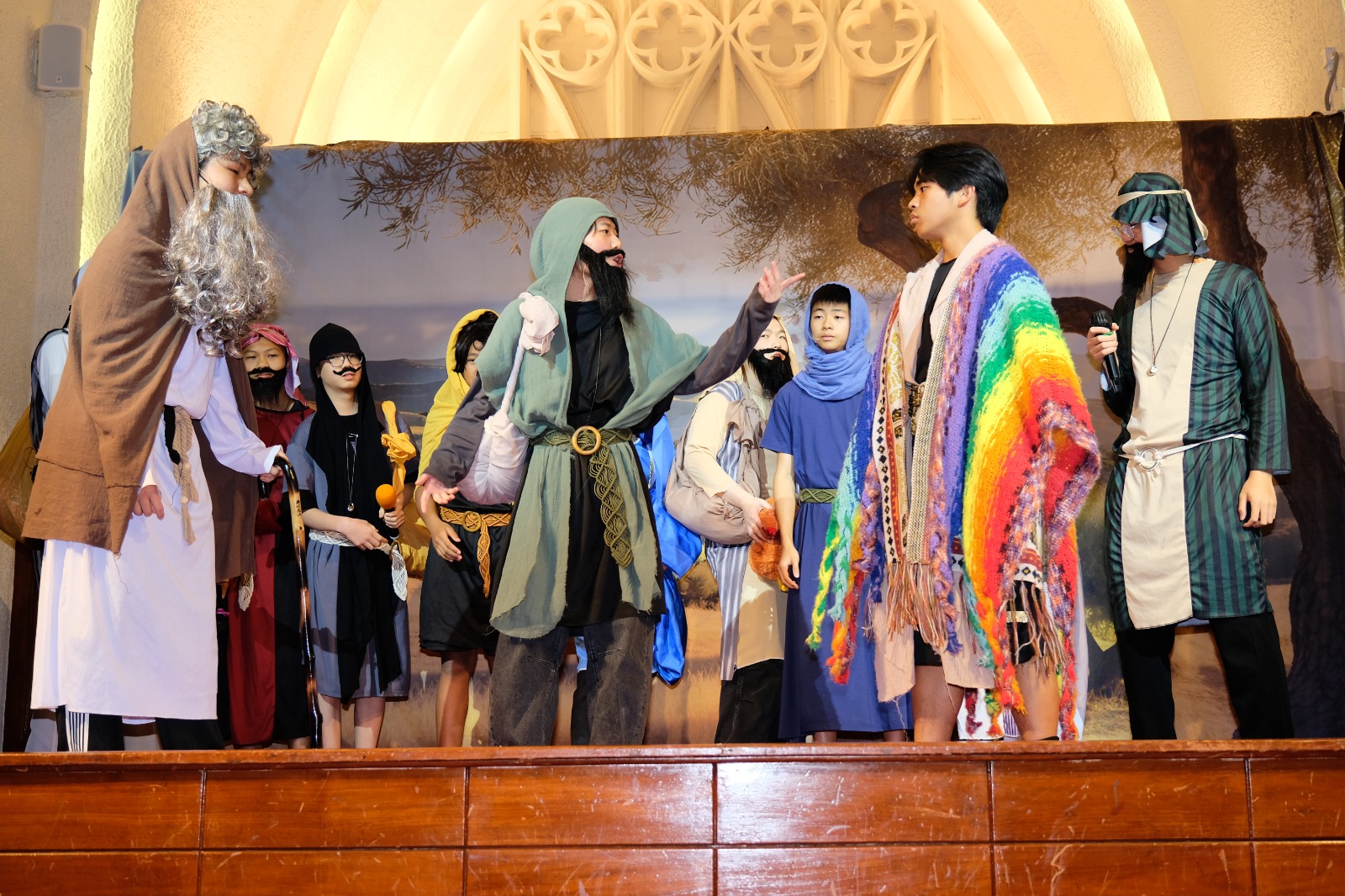
| (1) Whole-school Language Policy | : | The school aims to train students to be biliterate and trilingual. Separate English and Chinese classes according to student’s proficiency are offered in the junior secondary section. Some subjects extend English learning activities to provide and engage students in the use of the language. In their daily school life, students learn both English and Putonghua through various integrations. In addition, “Diverse English Bridging Courses and Activities” is executed after school to assist students in adapting to English learning. To further enhance English language teaching and learning, the school has employed three native English teachers, implemented a “School-Based Reading Programme”, organized English drama performances, established English ambassador team, and encouraged students to participate in Hong Kong Speech Festival. |
| (2) Learning and Teaching Strategies | : | The school adheres to a student-centred approach and restructures the curriculum for Chinese, English, and Mathematics according to the students’ abilities. Various teaching models including group teaching are implemented in English subject. Teachers employ a “tiered” teaching strategy to create opportunities for student to succeed. School sponsoring organisations provide opportunities for students to participate in cultural exchange programme overseas and in the mainland to facilitate experiential learning. |
| (3) School-based Curriculum | : | 1. Electives: 2X. Each student will select two elective subjects based on his/her abilities and interests. 2. Curriculum highlights: Teachers construct the "school-based curriculum" according to students' needs and interests, emphasizing competency-based learning, knowledge acquisition, and the establishment of a correct attitude towards life. The new Secondary school Curriculum adopts a diversified subject selection strategy and introduces applied learning subjects to cater to students' needs. The school organizes school-based gifted programs to inspire and develop students' potential, addressing learning diversity. Starting from the 2023-24 school year, GIS has been officially integrated into the junior secondary computer curriculum. In the 2024-25 school year, with the opening of the new GeoBIM LAB, BIM will further be integrated into spatial data technology, enhancing students' ICT application abilities. Our school has repeatedly won awards in external geographic spatial data technology (GIS) competitions, and the principal and teacher team have been invited multiple times to share their experiences in implementing the school-based curriculum with the public. |
| (4) Major Renewed Emphases in the School Curriculum | : | The school has established a comprehensive learning day to cultivate students' multiple intelligences and enhance their learning interests. The library hosts "Reading Morning Meetings" and promotes a "Classroom Reading" program to encourage students to actively participate in internal and external reading reward programs, fostering reading habits. Additionally, the school offers a variety of scholarships to reward students for their various achievements in multiple intelligence activities that granted nearly 300 awards annually. The school promotes e-learning, utilizing iPads for internal group discussions. Three foreign teachers are actively organizing and training students for the annual English drama performances to enhance students' English learning abilities and interests. In terms of moral and civic education, the school promotes student participation in volunteer services to cultivate a spirit of social concern. National security education is also taught in various subjects. This include comprehensive learning activities, understanding of the rule of law and national conditions, enhancing national identity recognition, and cultivating correct values and national identity. |
| (5) Life Planning Education | : | We have employed teacher and a teacher assistant to implement systematic life planning education that incorporates essential elements to learning activities. Activities including leadership training, overseas trips and company visits are organized for students which can provide different experiences to facilitate their careers planning. Every effort is made to ensure that students are given relevant useful and practical advice so as to maximize their choices while minimizing their worries and struggles. |
| Student Support | ||
| (1) Whole School Approach to Catering for Learner Diversity | : | We invite experts to help teachers recognize the development of students and develop learner-centered teaching strategies to cater for learners' diversity. Teachers in the Discipline and Guidance Team work collaboratively with social workers and psychologists to give preventive and remedial support to students. Several teachers have received training on inclusive education. There are also English literacy and citizenship courses for newly arrived immigrants. |
| (2) Whole School Approach to Integrated Education | : | School has all long been promoting IE in accordance with basic principles, namely early identification, early intervention, whole School Approach and home-school cooperation. The Learning Support Team deploys resources flexibly so as to support quality teaching in regular classroom, "add on" intervention and intensive individualised support. |
| (3) Education Support for Non-Chinese Speaking (NCS) Students | : | Our school provides additional support for NCS students to facilitate their learning of Chinese: providing after-school support programmes in learning Chinese; appointing additional teacher(s)/teaching assistant(s) to support NCS students’ learning of Chinese; arranging intensive Chinese learning and teaching mode(s), e.g. pull-out learning if necessary, split-class/group learning, etc.; developing school-based Chinese Language curriculum and/or adapting learning and teaching materials; and organising activities to create an inclusive learning environment in the school. |
| (4) Measures to Provide Adaptation for Learning and Assessment | : | Every academic year, there are two examinations and uniform tests to assess our students’ learning outcome. We also conduct continuous assessment for most subjects throughout the year via project-based learning, class presentations, portfolios, self-assessment and peer assessment. These regular assessments of our students’ learning progress allow our teachers to adapt their teaching to meet our students’ learning needs promptly. |
| (5) Fee Remission | : | Our school offers full school fee remission or 1/2 school fee remission. Needy students, including those from families receiving the Comprehensive Social Security Assistance (CSSA) and students receiving financial assistance provided by the Student Financial Assistance Agency (SFAA) could apply for fee remission. - Newly admitted students could apply for the school fee remission before 1 week(s) of commencement of the new school year. Application results will be announced within 3 month(s) after submission of applications. Scholarships are offered to students with financial difficulties or outstanding performance. - Please visit the web-link in our school’s website for details of school fee remission scheme, including the family income limits. |
| Home-School Co-operation and School Ethos | ||
| (1) Home-School Co-operation | : | Since founded in 1998, the Parent-Teacher Association enhances cooperation between the school and parents. Moreover, the school also offers Parent Talks and various recreational activities. Parents' groups are run biweekly. |
| (2) School Ethos | : | We adopt a holistic guidance approach in the pastoral care of students. With a dual form-teacher system in junior section, class teachers can pay attention to and take care of students’ personal growth in a more friendly and individual manner. Teachers make regular phone calls and meet parents to strengthen links with the family. Different career talks for students and parents are held during the school year catering for their needs. Together we create a loving and caring culture and a harmonious campus, which is recognized by the society and manifested by receiving Caring School Award for years. |
| Future Development | ||
| (1) School Development Plan | : | 1. Utilize electronic teaching platforms to strengthen students' autonomous learning. 2. Collaborating with external professional sectors to design school-based formal learning experiences that address student needs and social development trends from a career planning perspective. This includes collaboration with Tertiary institutions to introduce “Project Luminary” and with IT and business sectors to provide students with internship and work experiences. This initiative integrates the school-based geographic spatial data technology curriculum to help students grasp the digital lifestyle trends in smart cities, enhance their ICT skills, and essentially for careers in IT, surveying, and engineering, benefit them in their long-term career planning. 3. Utilize external professional sectors to drive teacher professional development, promote teachers' acquisition of new knowledge, and optimize the quality of teaching and learning. 4. Collaborating with the sponsoring organisations (the two local hospitals), the school will introduce school-based vocational experience courses to expose students to various career paths. This will be carried out through visitations, lectures, shadowing, and workshops. The sponsoring organisations also provide field trips abroad to help broaden the students’ horizon. |
| (2) Teacher Professional Training and Development | : | Our school's teaching faculty is young and passionate about education, with the majority having completed teacher training and 42% holding a master's degree. To align with digital education initiatives, half of the STEAM teachers have obtained nationally certified qualifications as Youth Drone Technology Instructors and have completed the Robotics and Autonomous Unmanned Systems Laboratory course at Fudan University. |
| Life-wide Learning (Including Five Essential Learning Experiences to be Provided through Key Learning Areas, Extra-curricular Activities, Co-curricular Activities, etc.) | : | The school has set up over 26 clubs and interest groups. These activities encompass five major areas: academic, social services, interests, fine arts and sport. Apart from these activities, multiple-intelligence enhancement courses are held to further enrich students' school life. |
| Others | : | To encourage and foster the excellence of our students’ achievements, the school offers a number of scholarships to honour our outstanding students. Most scholarships are awarded on the strength of academic merits, conduct, co-curricular activities and some on other non- academic achievements as specified by the donors. Different kinds of improvement awards are also presented to encourage students who make progress. |
| Direct Public Transportation to School | : | MTR: Prince Edward Station |
| Remarks | : | - |
 School Map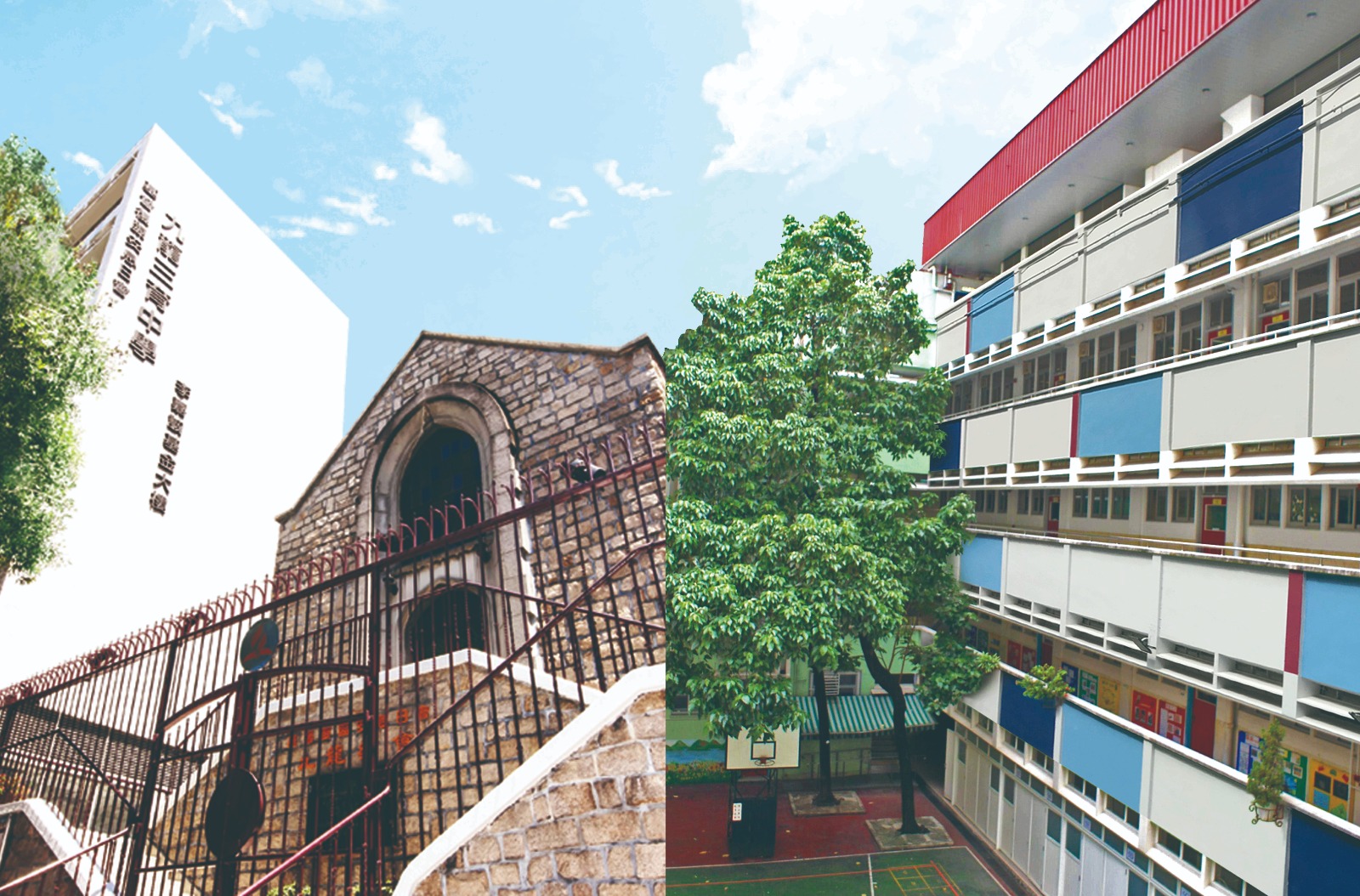
Last revision date: 5/12/2025


