 Secondary School Profiles 2025/2026


 Secondary School Profiles 2025/2026

| Address: | Fu Shin Estate, Tai Po, N.T. | |||
| Phone: | 26608308 | Email: | mail@kyc.edu.hk | |
| Fax: | 26620377 | Website: | https://www.kyc.edu.hk | |
School Mission
We aim to provide students with an ideal learning environment with which to nurture talents and abilities, as well as to instill in every student the proper moral values based on sound Christian principles. We educate our students to become responsible citizens.
 School Information
 | District | : | Tai Po |
| Other District(s) | : | North |
| Supervisor / Chairman of School Management Committee | : | Mr. Wong Man Sze |
| Principal (with Qualifications / Experiences) | : | Ms. Wan Kit Ping (BA, MA) |
| School Type | : | Aided |
| Student Gender | : | Co-ed |
| Area Occupied by the School | : | About 6337 Sq. M |
| Name of Sponsoring Body | : | Tsung Tsin Mission of Hong Kong |
| Incorporated Management Committee | : | Established |
| Percentage of School Supervisor and Managers / Chairperson and Members of School Management Committee (SMC) of Government Schools Fulfilling the Training Targets | : | 100% |
| Religion | : | Protestantism / Christianity |
| Year of Commencement of Operation | : | 1950 |
| School Motto | : | Fides, Spes, Caritas |
| Parent-Teacher Association | : | Yes |
| Student Union / Association | : | Yes |
| Past Students’ Association / School Alumni Association | : | Yes |
| 4Rs Mental Health Charter | : | Yes |
| Whole School Health Programme | : | Action School |
 Chargeable Fees (2025/2026)
| School Fee ($) | Tong Fai ($) | ||
| S1 | - | - | |
| S2 | - | - | |
| S3 | - | - | |
| S4 | - | $340 | |
| S5 | - | $340 | |
| S6 | - | $340 | |
| Parent-Teacher Association Fee (Annual) ($) | : $40 | ||
| Student Union / Association Fee ($) | : $30 | ||
| Approved Charges for Non-standard Items (Annual)($) | : Fees for Specific Purposes: $380 (S.1-S.5) / $200 (S.6) | ||
| Other Charges / Fees ($) | : - | ||
 School Facilities
 | Number of Classroom(s) | : | 29 |
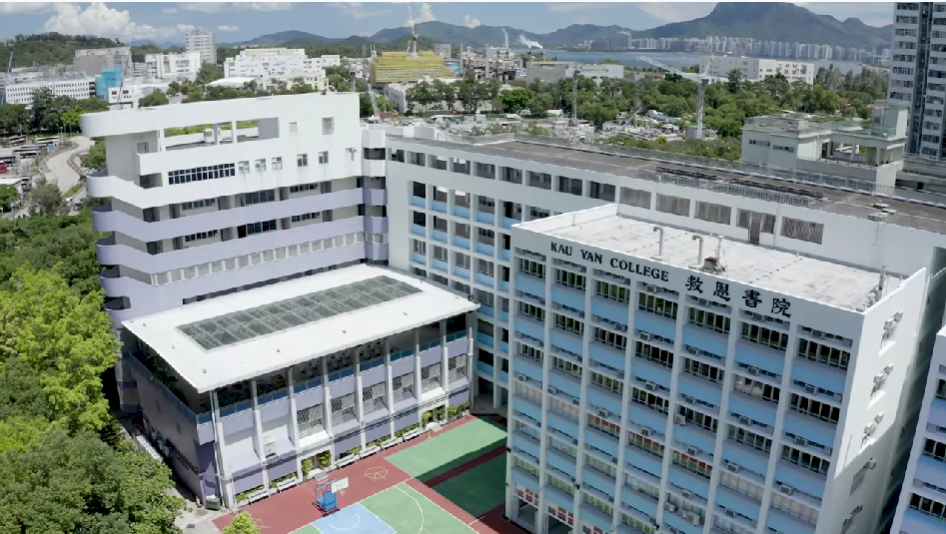
| School Facilities | : | There are 14 special rooms, an assembly hall, a chapel, a student activities centre, Career and Life Planning Room, Integrated Arts Room, a dance room, 2 playgrounds, a multi-media learning centre, 2 computer rooms and a computer-assisted learning (CAL) room. Interactive Whiteboards are installed in classrooms and special rooms to establish an e-Learning environment and communication with our sister schools worldwide. To facilitate e-learning, we provide tablets and a Wi-Fi network covering the whole campus. The Chinese Cultural Room, STEAM Room and English Room are set up for diverse student activities. At the covered playground, shows are regularly held on our “Harmonious Stage” to let students showcase their talents in music and the “LevelMind Station” will be set up for students and teachers to relax and refresh. |
| Facility(ies) for Supporting Students with Special Educational Needs | : | Ramp, Accessible lift and Accessible toilet. |
 Teaching Staff Information (Including School Head) in the 2025/2026 School Year
 | Number of Teaching Posts in the Approved Establishment | : | 55 |
| Total Number of Teachers in the School | : | 58 |
| Qualifications and Professional Training | : | Percentage of Teaching Staff (%) |
| Had Received Teacher Training | : | 98% |
| Bachelor Degree | : | 98% |
| Master / Doctorate Degree or above | : | 56% |
| Special Education Training | : | 59% |
| Years of Experience | : | Percentage of Teaching Staff (%) |
| 0-4 Years | : | 19% |
| 5-9 Years | : | 21% |
| 10 Years or above | : | 60% |
 2025/2026 Class Structure
 | Number of Classes | ||
| S1 | : | 4 |
| S2 | : | 4 |
| S3 | : | 4 |
| S4 | : | 4 |
| S5 | : | 4 |
| S6 | : | 4 |
 Subjects Offered
 | Subjects Offered in the 2025/2026 School Year | : | S.1 - S.3 |
| Chinese as the Medium of Instruction | : | Chinese Language, Putonghua, Citizenship, Economics and Society (S.1-S.2) / Life and Society (S.3), Chinese History, History, Ethics & Religious Education, Visual Arts, Music, Physical Education Lessons |
| English as the Medium of Instruction | : | English Language, Science, Geography |
| Adopt a Different Medium of Instruction by Class or by Group / School-based Curriculum | : | Mathematics*, Design & Technology*, Home Economics*, Computer Literacy* |
| Subjects Offered in the 2025/2026 School Year | : | S.4 - S.6 |
| Chinese as the Medium of Instruction | : | Compulsory: Chinese Language; Citizenship and Social Development Electives: Chinese Literature (S.5-S.6); Chinese History; History; Visual Arts; Information & Communication Technology; Business, Accounting & Financial Studies; Tourism and Hospitality Studies Non-Public Exam Subjects: Ethics/ Religious Education; Aesthetic Development; Physical Education Lessons |
| English as the Medium of Instruction | : | Compulsory: English Language, Mathematics (Compulsory Part) Electives: Mathematics (Extended Part – Module 2), Physics, Chemistry, Biology, Economics, Geography |
| Adopt a Different Medium of Instruction by Class or by Group / School-based Curriculum | : | - |
| Subjects to be Offered in the 2026/2027 School Year | : | S.1 - S.3 |
| Chinese as the Medium of Instruction | : | Chinese Language, Putonghua, Citizenship, Economics and Society, Chinese History, History, Ethics & Religious Education, Visual Arts, Music, Physical Education Lessons |
| English as the Medium of Instruction | : | English Language, Science, Geography |
| Adopt a Different Medium of Instruction by Class or by Group / School-based Curriculum | : | Mathematics*, Design & Technology*, Home Economics*, Computer Literacy* |
| Subjects to be Offered in the 2026/2027 School Year | : | S.4 - S.6 |
| Chinese as the Medium of Instruction | : | Compulsory: Chinese Language; Citizenship and Social Development Electives: Chinese Literature; Chinese History; History; Visual Arts; Information & Communication Technology; Business, Accounting & Financial Studies; Tourism and Hospitality Studies Non-Public Exam Subjects: Ethics/ Religious Education; Aesthetic Development; Physical Education Lessons |
| English as the Medium of Instruction | : | Compulsory: English Language, Mathematics (Compulsory Part) Electives: Mathematics (Extended Part - Module 2), Physics, Chemistry, Biology, Economics, Geography |
| Adopt a Different Medium of Instruction by Class or by Group / School-based Curriculum | : | - |
*Subjects with Extended Learning Activities (ELA) in English
 Secondary One Admission, Orientation Activities & Healthy School Life
 | Secondary One Admission | : | Our school will accept discretionary places. Our school will participate in the Secondary School Places Allocation System through central allocation stage (Applicable for admission to S.1 in September 2026 ).Admission criteria and weightings for S1 DP: (a) School academic results: 50%; (b) Extra-curricular activities & services: 20%; (c) Interview performance: 30%. |
| Orientation Activities and Healthy Life | : | The S.1 Orientation programme “The Freshman Academy” of our college includes English bridging courses with Language Across the Curriculum (LAC), use of e-learning tools, study skills training, lessons on Chinese, English, Mathematics, Science and Geography, as well as team building activities and discipline training. We also arrange an orientation day for parents to facilitate home-school cooperation. To promote the importance of a healthy lifestyle and build a hygienic and healthy campus, we have been taking the following measures: we emphasize the importance of personal hygiene to prevent the spread of contagious diseases, keep students’ health record and pay special attention to those in need, promote a healthy diet and regular exercise by supplying healthy and hygienic food and beverage options, and also provide anti-smoking and anti-drugs education to build a smoke-free-and-drug-free campus. |
 School Characteristics
 | School Management | ||
| (1) School's Major Concerns | : | 1. To strengthen students' learning efficacy and nurture them to be proactive and confident learners. 2. To lead students towards a positive life by elevating their self-management skills and enhancing their physical, mental and spiritual well-being. |
| (2) School Management Organisation | : | Teams and committees have been set up for different areas: learning and teaching, student character nurturing, school development, integrated education, examinations and assessments, IT support, religious education and affairs, student discipline, guidance and counselling, life planning education, moral & civic education, co-curricular activities, service learning, international education and exchange, parents and alumni affairs, external liaison and communications etc. |
| (3) Incorporated Management Committee / School Management Committee / Management Committee | : | The Incorporated Management Committee is composed of professionals who actively involve in the development of the school, and are in close contact with the faculty. School managers from different sectors could bring their insight and experience to school management. |
| (4) School Green Policy | : | 1. Save energy and water in daily uses; 2. Reduce waste by re-using and recycling resources; 3. Plant flowers and trees in the school campus; 4. Install a food waste processor to convert food waste into compost; 5. Discuss environmental issues in lessons and assemblies. Encourage students to get involved in recycling schemes and projects based on green concerns; 6. Join the “Solar Harvest” Programme organized by EMSD and teach students about renewable energy by utilizing the photovoltaic system installed. |
| Learning and Teaching Plan | ||
| (1) Whole-school Language Policy | : | We aim to enable our students to become biliterate and trilingual by creating an English-rich environment. Most classes are conducted in English in both junior and senior forms. With the learning of Language Across the Curriculum (LAC), we promote collaboration between the English and other EMI KLAs in junior secondary. To enhance students' understanding of different languages and cultures, we offer after-school Japanese and Korean classes, and we have newly introduced a German course for S.1 students. Each year, we organize overseas study tours and English learning exchange programmes, allowing students to immerse themselves in English learning and gain a deeper understanding of Western culture. Much effort has been made in enhancing the whole-school English atmosphere. Through English dramas, debate activities, assemblies, English Speaking Days and publication of KYC Post, our students become more confident in using English. Students also learn vocabularies and interesting facts when they look around the campus, where we have lots of English posters with well-known sayings and short passages in which key vocabularies are highlighted. |
| (2) Learning and Teaching Strategies | : | The Learning & Teaching Committee strives to improve teaching effectiveness and students’ learning ability by leading and coordinating different subject panels, scheduling academic activities organized by different KLAs, offering elite and remedial classes to cater for the students’ diversified learning needs and organizing book fairs to create a rich learning atmosphere. The committee also encourages teachers to develop teaching strategies using AI so that our students would then benefit more from self-directed learning by not only acquiring knowledge, but also developing learning skills while strengthening self-confidence. The Student Learning Team encourages students to become motivated learners by organizing learning skills workshops and tutorial classes, promoting gifted education programmes and setting up a school-based Student Talent Pool to enhance holistic school-based gifted education. These measures help students to build a learning routine and make their learning more effective, and finally nurture a positive school climate which encourages students to stay curious and motivated. |
| (3) School-based Curriculum | : | 1. Electives: 2X and 3X. Senior secondary students are encouraged to study 3 electives or 2 electives + 1 Applied Learning course to raise their chance to pursue further studies. S3 students study Business Fundamentals to acquire basic knowledge of Economics and BAFS for better transition to S4. 2. Curriculum highlights: I. Students are the subject of learning. They need to develop learning habits, skills and self-learning ability. Besides classroom learning, we enhance their academic level and develop different potential through extensive reading, English Language activities and life-wide learning activities. II. The importance of training in Chinese Language, English Language and Mathematics is emphasized in the junior secondary level. Small class teaching and elite class arrangement is implemented to cater for students' learning diversity and stretch their potential. We encourage the gifted students to participate in international tests and courses provided by tertiary institutes to broaden their horizons. III. The NSS courses and junior secondary curricula are systematically developed and closely linked to enhance students' learning ability and allow smooth transition to students' tertiary studies. IV. All subjects continuously develop “assessment for learning” strategies and give timely feedback to elevate students’ learning effectiveness. |
| (4) Major Renewed Emphases in the School Curriculum | : | We develop pedagogies with innovation and technology and encourage the faculty to explore and implement AI teaching strategies to enhance teaching effectiveness. Various subjects have introduced self-access learning platforms and incorporated self-directed learning strategies into lessons to help students consolidate knowledge and develop autonomous learning skills, ultimately nurturing them to be lifelong and self-directed learners. Our English Department promotes language-across-the-curriculum (LAC) with EMI subjects and continues to develop the school-based curriculum to cater for the learning needs of the gifted and more able students and join the EDB "Gifted Education School Network” for professional exchange with network schools. In the Science and Technology KLA, we continue to develop a school-based STEAM curriculum and join the HKU “IDEALS” Project, fostering inquiry-based learning and equipping students with essential knowledge and skills for self-directed exploration. We also promote service learning elements by integrating volunteer services activities into life-wide learning at all levels to nurture students’ spirit of helping others and foster their civic awareness. |
| (5) Life Planning Education | : | 1. We implement a whole-school life planning education curriculum and arrange learning activities such as class teacher periods, talks, Career Exploration Days, university visits and overseas trips. Students are expected to set targets for their life and prepare themselves for the future challenges. 2. We encouraged students to participate in job tasting programmes to discover their own strengths, weaknesses and career possibilities. By joining the open days of universities since junior secondary, they could also keep abreast of the requirements of the subjects they wish to study. They are required to take online career interest tests to make better career decisions according to their own interests and talents. 3. Making use of objective evidence, such as reports of career interest test and HKDSE predicted results, Career counselling teachers give individualized advice and relevant career information to every student. 4. We invite tertiary institutions and alumni to organize workshops and mock interviews for senior form students to help them plan ahead for the future. 5. The Career and Life Planning Room has been set up to facilitate career counselling and provide the latest life planning information and resources. |
| Student Support | ||
| (1) Whole School Approach to Catering for Learner Diversity | : | Extra funding is used to provide gifted and remedial classes of Chinese, English and Mathematics. Tailor-made materials are adopted to suit the needs of different students at all levels. |
| (2) Whole School Approach to Integrated Education | : | We strive to build an inclusive and caring campus by adopting a whole-school approach to help the students with special education needs. Our Student Health & Support Team comprises Vice Principals, the SENCO, the Guidance Mistress, SENST, two school social workers, an education psychologist and an associate teacher. We use the “Learning Support Grant” to hire outside professional services, such as attention training groups, social and language groups, emotion management programmes, language therapy, occupational therapy and after-school tutorial classes to support students’ growth through interdisciplinary collaboration. Individual Education Plans (IEP) are designed and implemented for students facing more severe learning or adaptation difficulties. To ensure that our assessment mechanism is fair to all students, we make special arrangements for internal examinations for the students with SEN and help them apply for Special Examination Arrangements in HKDSE. We also organize seminars, workshops and lunchtime board game activities to create an inclusive campus culture. In addition, our teachers attend professional development programmes, courses, workshops, seminars, webinars and experience-sharing sessions to enhance their professional capacity in supporting the students with SEN. |
| (4) Measures to Provide Adaptation for Learning and Assessment | : | In order to evaluate students equitably and accurately, and to guide them into the habit of studying with perseverance, tests and exams are held each term, and all subjects have continuous assessments. |
| Home-School Co-operation and School Ethos | ||
| (1) Home-School Co-operation | : | To forge home-school partnership, the Parents and Alumni Affairs Committee designs and holds a wide range of family activities with the Parent-teacher Association every year. Also, the “Parents Academy” is established to promote parent education. By supporting each other, our teachers and parents have developed mutual trust and a lasting harmonious relationship. Through close communication and hearty co-operation, we are actualising a shared dream that the next generation can grow happily and healthily. |
| (2) School Ethos | : | Founded upon the Bible's teaching, our college has always emphasized establishing and maintaining a loving and caring environment, and to build up students' lives by the school motto of "Fides, Spes, Caritas" (Faith, Hope, Love). Parents in the district have long been impressed by our down-to-earth style and the harmonious relationships between teachers and students. Our college aims not only at building up the students' proper attire, words and deeds, but also accomplishing their thoughts and minds. Outside the classroom, our teachers always grasp the opportunity to get acquainted with students and build in-depth relationships through activities such as devotional groups, lunch gatherings, after-class counseling, etc. |
| Future Development | ||
| (1) School Development Plan | : | 1. Enhance students’ enthusiasm and skills for self-directed learning. 2. Boost students’ learning confidence and build a positive campus culture of peer learning and sharing. 3. Promote students’ learning initiative and abilities to become global citizens with broad horizons. 4. Foster students’ sense of responsibility, resilience, respect for others, and good virtues with character. 5. Develop students’ leadership skills and further their active participation in school activities and services, strengthening their sense of belonging under a positive campus culture. 6. Enhance students’ understanding of society, our country and the world and nurture community care and national identity with contribution to the community. |
| (2) Teacher Professional Training and Development | : | Professional Development Activities are organized on Staff Development Days and teachers are encouraged to attend refresher courses and professional development programmes. Peer Lesson Observation Scheme, lesson study, collaborative lesson planning, mutual lesson observation and post-lesson reflection are implemented to enhance teaching effectiveness. |
| Life-wide Learning (Including Five Essential Learning Experiences to be Provided through Key Learning Areas, Extra-curricular Activities, Co-curricular Activities, etc.) | : | Life-wide learning experience is provided to students, and they are encouraged to develop in areas of art, sports, character and service. There are 47 co-curricular groups, including service groups, sports teams, aesthetic development clubs, academic societies and interest clubs, offering students opportunities to reach their full potential. Students are allocated to 4 different Houses when they enter Secondary One. The Student Union also holds various functions after school hours and during post-examination periods in order to develop the talents of students and to enhance inter-personal relationships and the cooperative spirit among students. |
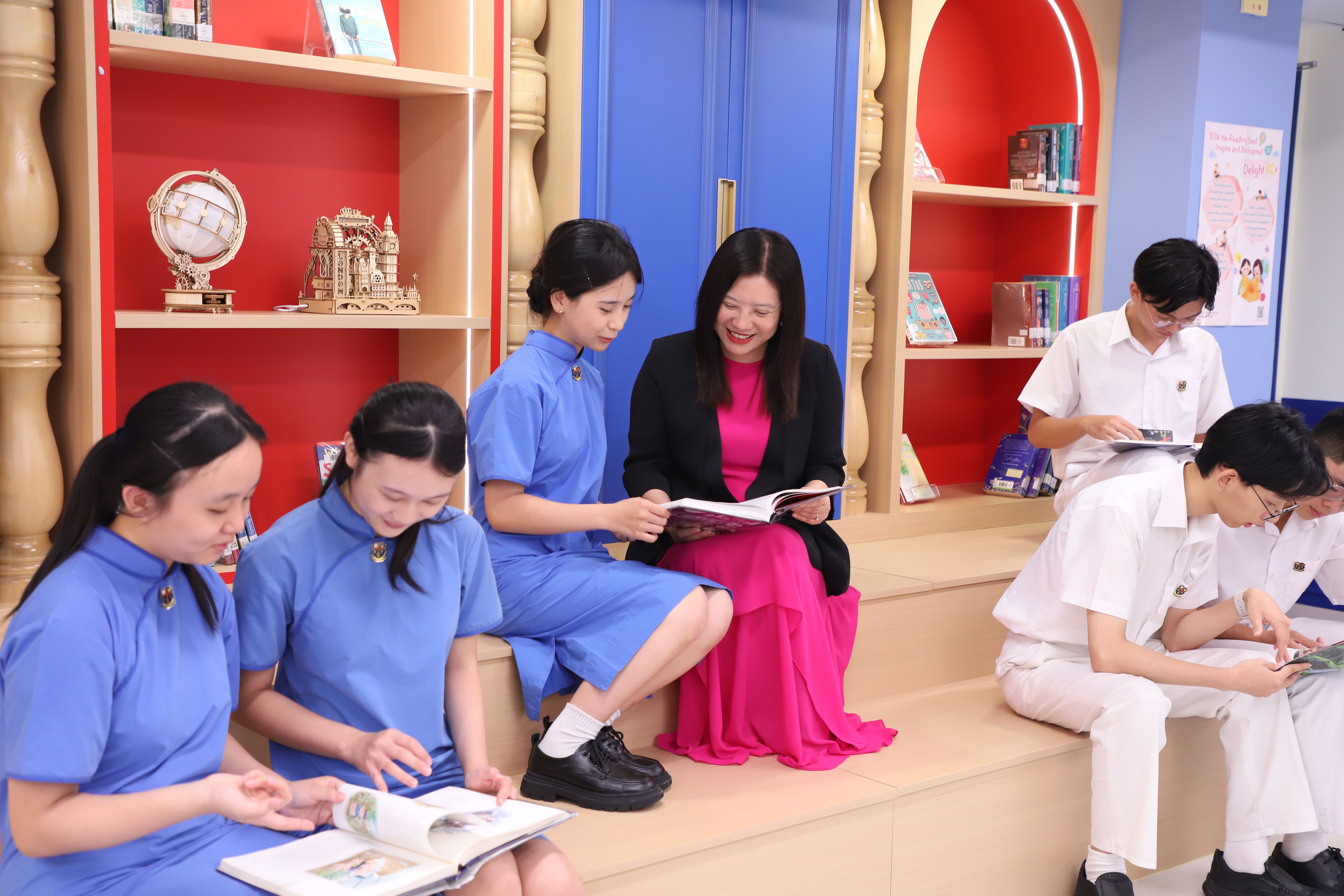
| Others | : | We develop strategies to make our students self-motivated learners: I. Reading to Learn: Students are encouraged to develop a good reading habit. The English and Chinese Departments establish Extensive Reading Schemes and prepare supplementary reading materials to promote the students’ love of reading. Every year, a book fair is held while class teachers share with the students insights from reading. Students are also trained to think critically and share their reading reviews in the morning assemblies. Hence, students not only attain language proficiency in the two languages, but also gain knowledge beyond the textbook contents to broaden their perspectives. II. Project Learning: Project learning aims to let students combine their knowledge, abilities and attitude through diversified learning experiences, and eventually build up knowledge of their own. To tie in with the senior secondary curriculum, students' abilities in handling project learning are developed since junior forms. The focus of S.1 is on defining questions, interviewing and observing. S.2 students are trained in questionnaire design and data analysis. The S.3 course emphasizes the students' ability to investigate and collect raw data. The 3-year basic training helps the students master the skills of project learning. III. Information Technology for Interactive Learning: Wi-Fi connection is available in the school campus, which allows convenient access to the Internet and e-learning resources and makes e-learning possible anywhere in the school. eClass provides virtual classes, discussion forums , online assessment and exercises and messaging functions to facilitate communication and learning among all members of the school via the Internet. Students can utilise the above tools and software to enhance self-directed learning. Also, the school explores the possibilities of using different e-learning platforms and software in order to foster students’ readiness to learn, their learning interest and learning ability by e-learning activities. IV. Moral, Civic and National Education: Through the learning activities and discussions in various subjects (especially Ethics/Religious Education and Life and Society), assemblies as well as study tours, we guide and nurture our students to be responsible citizens who have a strong sense of national identity. We use the donations from the sponsoring body, alumni and individuals who are zealous of education to set up scholarships to encourage our students to excel academically, broaden their horizons, and most importantly, uncover and develop their talents in different areas. Our students have showcased talents in STEM, sports and other areas. Students designed Mini Lunar Rovers and won the Merit Award in “Inno Expo@Tai Po 2025”. Also, members of our school korfball team represented Hong Kong and participated in competitions at the world level, such as U17 Korfball World Cup 2025. Moreover, our students were selected to participate in the Antarctica Study Tour organized by Partners Education Foundation. Through these experiences, they could broaden their horizons and have a better understanding of the polar regions and keep themselves abreast of the research and development related to STEM. |
| Direct Public Transportation to School | : | Bus Routes: K17, 71K, 72A, 73A, 73X, 75X, 271; Mini Bus: 26, 20B, 20C, 20K, 20P; MTR: Tai Po Market Station, Tai Wo Station. |
| Remarks | : | Senior secondary students may choose Applied Learning courses as elective subjects. Students may enrol in ApL courses offered by tertiary institutions according to their own interests and learning needs. Courses are conducted at those institutions and are taught by their instructors. |
 School Map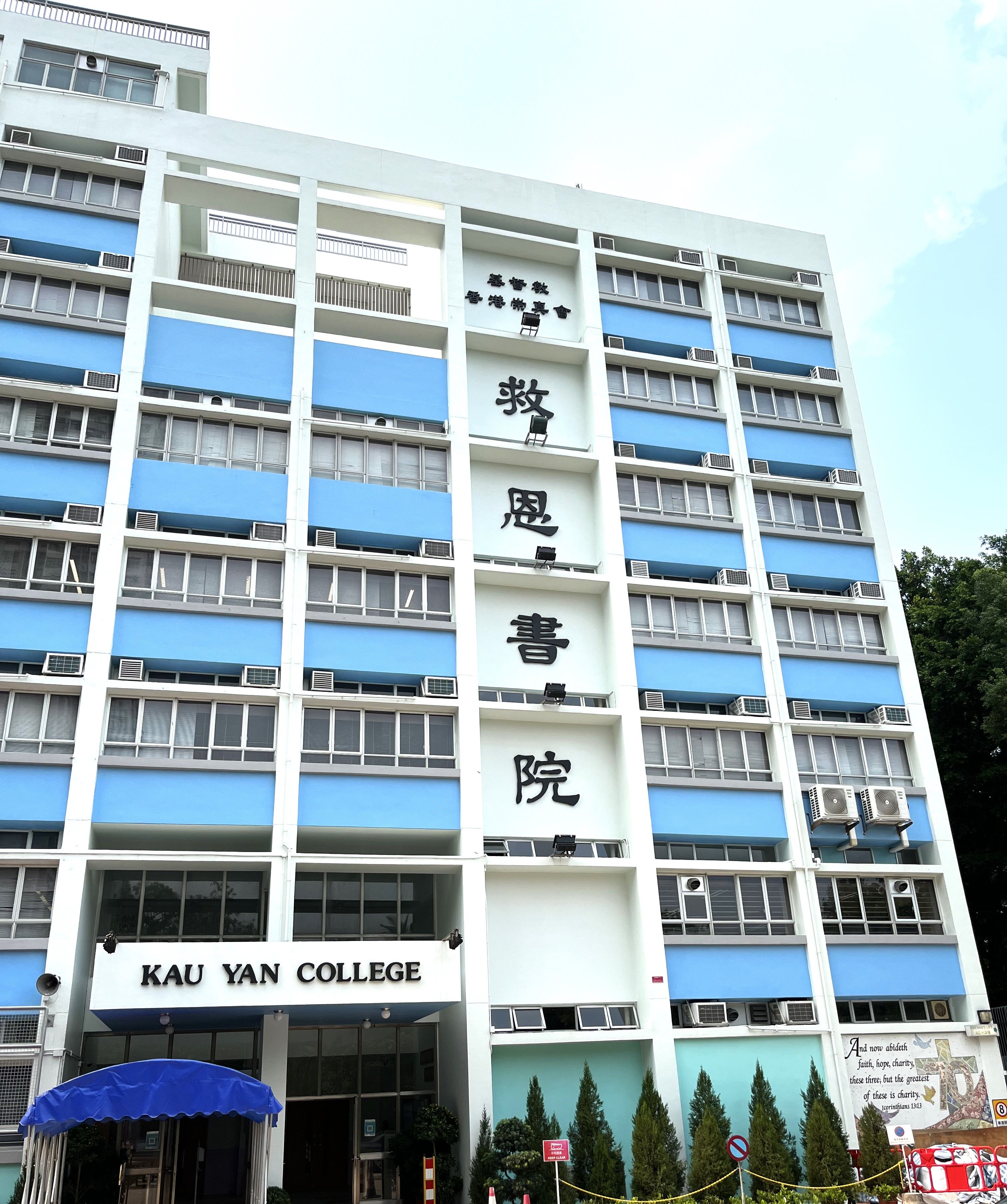
Last revision date: 5/12/2025


