 Secondary School Profiles 2025/2026


 Secondary School Profiles 2025/2026
| Address: | 15 Tseuk Luk Street Kowloon | |||
| Phone: | 23222229 | Email: | hlc-mail@holap.edu.hk | |
| Fax: | 23202414 | Website: | http://www.holap.edu.hk/ | |
School Mission
The school observes closely the belief and philosophy of Taoism, Buddhism and Confucianism in the character training of our students. We pledge to inculcate in our students a genuine concern for people in need and a readiness to make meaningful contributions to the community at large.
 School Information
 | District | : | Wong Tai Sin |
| Other District(s) | : | Kowloon City, Sha Tin |
| Supervisor / Chairman of School Management Committee | : | Mr. Yu Tai Ip, Francis |
| Principal (with Qualifications / Experiences) | : | Ms. Lai Lok Ki |
| School Type | : | Aided |
| Student Gender | : | Co-ed |
| Area Occupied by the School | : | About 4620 Sq. M |
| Name of Sponsoring Body | : | Sik Sik Yuen |
| Incorporated Management Committee | : | Established |
| Percentage of School Supervisor and Managers / Chairperson and Members of School Management Committee (SMC) of Government Schools Fulfilling the Training Targets | : | 100% |
| Religion | : | Taoism, Buddhism and Confucianism |
| Year of Commencement of Operation | : | 1969 |
| School Motto | : | To act benevolently and to teach benevolence |
| Parent-Teacher Association | : | Yes |
| Student Union / Association | : | Yes |
| Past Students’ Association / School Alumni Association | : | Yes |
| 4Rs Mental Health Charter | : | Yes |
| Whole School Health Programme | : | Action School |
 Chargeable Fees (2025/2026)
| School Fee ($) | Tong Fai ($) | ||
| S1 | - | - | |
| S2 | - | - | |
| S3 | - | - | |
| S4 | - | $340 | |
| S5 | - | $340 | |
| S6 | - | $340 | |
| Parent-Teacher Association Fee (Annual) ($) | : $20 | ||
| Student Union / Association Fee ($) | : - | ||
| Approved Charges for Non-standard Items (Annual)($) | : Fees for special purposes $210 | ||
| Other Charges / Fees ($) | : House fees: $10 | ||
 School Facilities
 | Number of Classroom(s) | : | 26 |
| School Facilities | : | The school hall, all classrooms and special rooms are air-conditioned. On completion of the school improvement project in 1998, special facilities for the physically disabled, a student activity centre, a staff common room, a parents' resource centre and an interviewing room came into being. To further enhance the facilities of fitness room, fitness equipment was donated from the Alumni Association in 2005 and in 2025. Partitions and air-conditioners were installed in the covered playground with funding from Sik Sik Yuen in 2007. On completion of the school improvement project in 2024 and 2025, English language resource room, Makerspace and School History Gallery were built. Besides, all classrooms and special rooms are equipped with interactive e-whiteboards. |
| Facility(ies) for Supporting Students with Special Educational Needs | : | Ramp, Accessible lift and Accessible toilet. |
 Teaching Staff Information (Including School Head) in the 2025/2026 School Year
 | Number of Teaching Posts in the Approved Establishment | : | 53 |
| Total Number of Teachers in the School | : | 60 |
| Qualifications and Professional Training | : | Percentage of Teaching Staff (%) |
| Had Received Teacher Training | : | 98% |
| Bachelor Degree | : | 100% |
| Master / Doctorate Degree or above | : | 47% |
| Special Education Training | : | 53% |
| Years of Experience | : | Percentage of Teaching Staff (%) |
| 0-4 Years | : | 23% |
| 5-9 Years | : | 8% |
| 10 Years or above | : | 69% |
 2025/2026 Class Structure
 | Number of Classes | ||
| S1 | : | 4 |
| S2 | : | 4 |
| S3 | : | 4 |
| S4 | : | 4 |
| S5 | : | 4 |
| S6 | : | 4 |
 Subjects Offered
 | Subjects Offered in the 2025/2026 School Year | : | S.1 - S.3 |
| Chinese as the Medium of Instruction | : | Chinese Language, Chinese History, Putonghua, Religious Education (S.1-S.2) |
| English as the Medium of Instruction | : | English Language, Mathematics, Citizenship, Economics and Society (S.1-S.2), Life and Society (S.3), History, Geography, Science (S.1-S.2), Biology (S.3), Chemistry (S.3), Physics (S.3), Computer Literacy, Home Economics, Visual Arts, Music, Physical Education |
| Adopt a Different Medium of Instruction by Class or by Group / School-based Curriculum | : | - |
| Subjects Offered in the 2025/2026 School Year | : | S.4 - S.6 |
| Chinese as the Medium of Instruction | : | Chinese Language, Chinese Literature, Chinese History, Physical Education (HKDSE) |
| English as the Medium of Instruction | : | English Language, Mathematics, Mathematics Extended Part M1 & M2, Citizenship and Social Development, History, Geography, Economics, BAFS, Physics, Chemistry, Biology, Information & Communication Technology, Visual Arts, Physical Education, Tourism and Hospitality Studies |
| Adopt a Different Medium of Instruction by Class or by Group / School-based Curriculum | : | - |
| Subjects to be Offered in the 2026/2027 School Year | : | S.1 - S.3 |
| Chinese as the Medium of Instruction | : | Chinese Language, Chinese History, Putonghua, Religious Education |
| English as the Medium of Instruction | : | English Language, Mathematics, Citizenship, Economics and Society, History, Geography, Science (S.1-S.2), Biology (S.3), Chemistry (S.3), Physics (S.3), Computer Literacy, Home Economics, Visual Arts, Music, Physical Education |
| Adopt a Different Medium of Instruction by Class or by Group / School-based Curriculum | : | - |
| Subjects to be Offered in the 2026/2027 School Year | : | S.4 - S.6 |
| Chinese as the Medium of Instruction | : | Chinese Language, Chinese Literature, Chinese History, Physical Education (HKDSE) |
| English as the Medium of Instruction | : | English Language, Mathematics, Mathematics Extended Part M1 & M2, Citizenship and Social Development, History, Geography, Economics, BAFS, Physics, Chemistry, Biology, Information & Communication Technology, Visual Arts, Physical Education, Tourism and Hospitality Studies |
| Adopt a Different Medium of Instruction by Class or by Group / School-based Curriculum | : | - |
 Secondary One Admission, Orientation Activities & Healthy School Life
 | Secondary One Admission | : | Our school will accept discretionary places. Our school will participate in the Secondary School Places Allocation System through central allocation stage (Applicable for admission to S.1 in September 2026 ).The admission criteria and weightings: A. Candidates' Academic performance (including rank order by EDB and performance in primary school) 40%; B. Interview performance (appearance and attitude, presentation and content) 30%; C. Conduct (Grade B or above) 10%; D. Co-curricular activities/services/awards/special talents 10%; E. Religious beliefs and connection with the school sponsoring body/school 10%. |
| Orientation Activities and Healthy Life | : | Our school arranges a summer bridging program and orientation activities for incoming Secondary 1 students. We aim to provide students with an initial understanding of our school and curriculum. Healthy School Programme is arranged for students to nurture healthy lifestyle and cultivate positive values and attitudes. |
 School Characteristics
 | School Management | ||
| (1) School's Major Concerns | : | To empower students to become proactive learners, to cultivate lifelong learning mindsets and habits for enhancing capacities to strive for excellence in life. |
| (2) School Management Organisation | : | The school-based management mode is adopted. The Incorporated Management Committee consists of parents, alumni, teachers, Principal and members of the public recommended by Sik Sik Yuen to monitor the school's administration and operation. All teachers attend regular meetings to set school plans, policy and major concerns. Staff review and evaluate implementation to make continuous improvement through professional dialogues and exchanges. |
| (3) Incorporated Management Committee / School Management Committee / Management Committee | : | Formed in 2005, the Incorporated Management Committee consists of parents, alumni, teachers, the Principal, individuals and representatives from the school sponsoring body. |
| (4) School Green Policy | : | In order to encourage students to practise Low Carbon Living, our school's Sustainable Development Committee (SDC) organizes various environmental education programmes, including Smart Use of Air Conditioners and Electrical Appliances, Waste Separation and Recycling Scheme, and Classroom Cleaning Competition. Our school actively cultivates future green leaders by participating in the “Student Environmental Protection Ambassador Scheme” organized by the Environmental Campaign Committee every year. This initiative enhances students' interest in organizing environmental activities. They enjoy applying their knowledge in various events, such as the Waste Recycling Competition, Oxfam Hunger Banquet, and Marine Conservation Week. |
| Learning and Teaching Plan | ||
| (1) Whole-school Language Policy | : | All subjects, except Chinese Language, Chinese Literature, Chinese History, Putonghua and Religious Education, are taught in English. Subject-based and cross-subject English programmes, diversified English activities, Speak Putonghua campaigns, reading programmes, debating contests, public speaking activities, mini dramas and overseas English exchange programmes are organized to help students master the 'Two Languages, Three Dialects'. Newspaper reading activities and forums on current affairs are also held to enhance students' ability to analyse current issues. |
| (2) Learning and Teaching Strategies | : | We regard developing of student's learning skill as our primary concern. Self-regulated learning, diversified learning activities and tailor-made curricula are adopted to cater for the needs of students of different abilities and to enable them to derive pleasure from their academic achievements. While training on study skills is given in junior forms, various cross-curricular project learning programmes are implemented in S.1 to S.3 to reinforce related skills. 13 elective subjects are offered in S.4 and students can choose any 3 elective subjects according to their interests and abilities. Different subjects aim at cultivating students' thinking skills and comprehension skills at different levels. To enhance student participation in class, interactive and self-directed teaching and learning strategies including cooperative learning, collaborative learning, group discussion, presentation and debating are adopted. To boost teaching and learning effectiveness, co-curricular learning activities, visits, field trips and life-wide learning days are organized to extend teaching and learning beyond the classroom, allowing students to learn in a real world setting. |
| (3) School-based Curriculum | : | 1. Electives: 3X. Students can choose to study 3 subjects out of 13 elective subjects. Subject combination and number of groups of elective subjects are arranged according to the abilities and interests of the students. 2. Curriculum highlights: For S.1 to S.3, a school-based curriculum is adopted to enhance learning interest and competence. It provides training of generic skills & different learning opportunities to our students in order to prepare themselves for public examination and life-long learning. |
| (4) Major Renewed Emphases in the School Curriculum | : | To equip students for the challenges of the 21st century, the school curriculum reinforces the development of students' higher-order thinking skills, explorative spirits, and self-motivation. The school has also adopted the use of Artificial Intelligence (AI) in teaching and learning to foster creativity, enhance learning outcomes, and develop students’ technological literacy. A whole-school reading scheme, including book sharing sessions, thematic reading activities, and a reading award scheme, is implemented to enhance students' interest in reading and foster self-directed learning. To prepare students for Senior Secondary education, the school implements a project learning programme in junior forms to guide students through various research and learning processes systematically. Apart from academic pursuits, the school prioritizes cultivating students' positive intelligence and ethos. Class periods, workshops, talks, regular morning sharing sessions , and other activities are held to instill positive values such as respect, gratitude, perseverance, and serving others. The STEAM curriculum, along with interdisciplinary cooperation between the Mathematics, Junior Science, Arts and Computer Literacy Departments, creates an interactive, student-centered environment to develop students’ generic skills. The integration of Artificial Intelligence (AI) tools into STEAM education further enhances students’ ability to innovate and equips them with essential skills for the future. |
| (5) Life Planning Education | : | According to the needs of students at different levels of school, our school starts to find their interests in junior secondary, and then learns about further studies and the working environment in senior secondary. At the same time, the school caters for students' learning diversity and provides corresponding career counseling for students with different needs. Our school also help students learn about the world of work and provide them with work-related learning experiences to broaden their horizons and equip them early to face the ever-changing world. |
| Student Support | ||
| (1) Whole School Approach to Catering for Learner Diversity | : | The school has introduced a whole-school participation approach to provide appropriate support for the personal growth of students at different stages. Promoting the concept of whole-person development, the school aims to fully, comprehensively, and harmoniously cultivate students' potentials in various aspects. This also empowers students to put into practice the benevolent spirit of the school motto “To act benevolently and to teach benevolence”, and give back to society with a heart of kindness. Through this, the school helps students establish good mental habits and a positive mindset, while also enhancing their collaboration and leadership abilities. |
| (2) Whole School Approach to Integrated Education | : | Our school has established a Student Support Unit, guided by the principle of whole-school approach, the team encourages class and subject teachers to develop support strategies for students with special educational needs. When necessary, parents, school social workers, educational psychologist, and speech therapist are invited to case meetings to follow up on support measures. The team conducts regular reviews of students’ learning and development, adjusts support strategies as needed, and provides assessment accommodations such as the use of special examination rooms and extended exam time. These practices reflect our commitment to early identification, referral, and support. The school flexibly utilizes Learning Support Grant to provide appropriate assistance tailored to the varying levels of student needs. Our school-based support services include clinical psychologist services, speech therapy, educational psychology, learning support, group training, and inclusive activities. We highly value home-school collaboration and have established ongoing communication mechanisms, strengthening connections with parents through the use of the “Summary of Support for Student.” |
| (3) Education Support for Non-Chinese Speaking (NCS) Students | : | Our school provides additional support for NCS students to facilitate their learning of Chinese: providing after-school support programmes in learning Chinese; appointing additional teacher(s)/teaching assistant(s) to support NCS students’ learning of Chinese; arranging intensive Chinese learning and teaching mode(s), e.g. pull-out learning if necessary, split-class/group learning, etc.; developing school-based Chinese Language curriculum and/or adapting learning and teaching materials; and organising activities to create an inclusive learning environment in the school. Adapted learning and teaching materials are provided. Moderation is arranged in Examination and Assessment. |
| (4) Measures to Provide Adaptation for Learning and Assessment | : | There are two examinations and two uniform tests in an academic year. Tests results, first term examination results and final examination results contribute 20%, 24% and 40% respectively to the result of the whole year. Continuous assessment (Dictation, quizzes, projects and book reports) will take up 16% of the annual total mark. Our school also offers individual students measures such as extended time for examinations and score adjustments as necessary. |
| Home-School Co-operation and School Ethos | ||
| (1) Home-School Co-operation | : | The Parent-Teacher Association actively cooperates with the school to organize various activities to enhance rapport and communication between parents and the school. |
| (2) School Ethos | : | We aim to create a caring, harmonious learning environment in which students can acquire a spirit of kindness, benevolence and serving others. Our students are educated to be well-rounders who have outstanding academic results, develop a growth mindset and varied talents or achievements and can make meaningful contribution to the community. |
| Future Development | ||
| (1) School Development Plan | : | The school aims to provide comprehensive, holistic education for all students. By fostering the spirit of enquiry and exploration among students, equip students to become proactive learners. Apart from academic subjects, team building, communication skills, attitude towards life and moral education are also of vital importance in the school curriculum. Continuing professional development of teachers are encouraged to maintain the quality of education. The school also emphasizes the connection with parents and the community and strives to provide high-quality whole-person education. |
| (2) Teacher Professional Training and Development | : | In line with the professional ladder set by the Education Bureau, teachers are encouraged to actively participate in professional training courses and activities. Through professional exchanges and collaboration within and outside the school, a professional learning community is established to enhance teachers' professional capacity. |
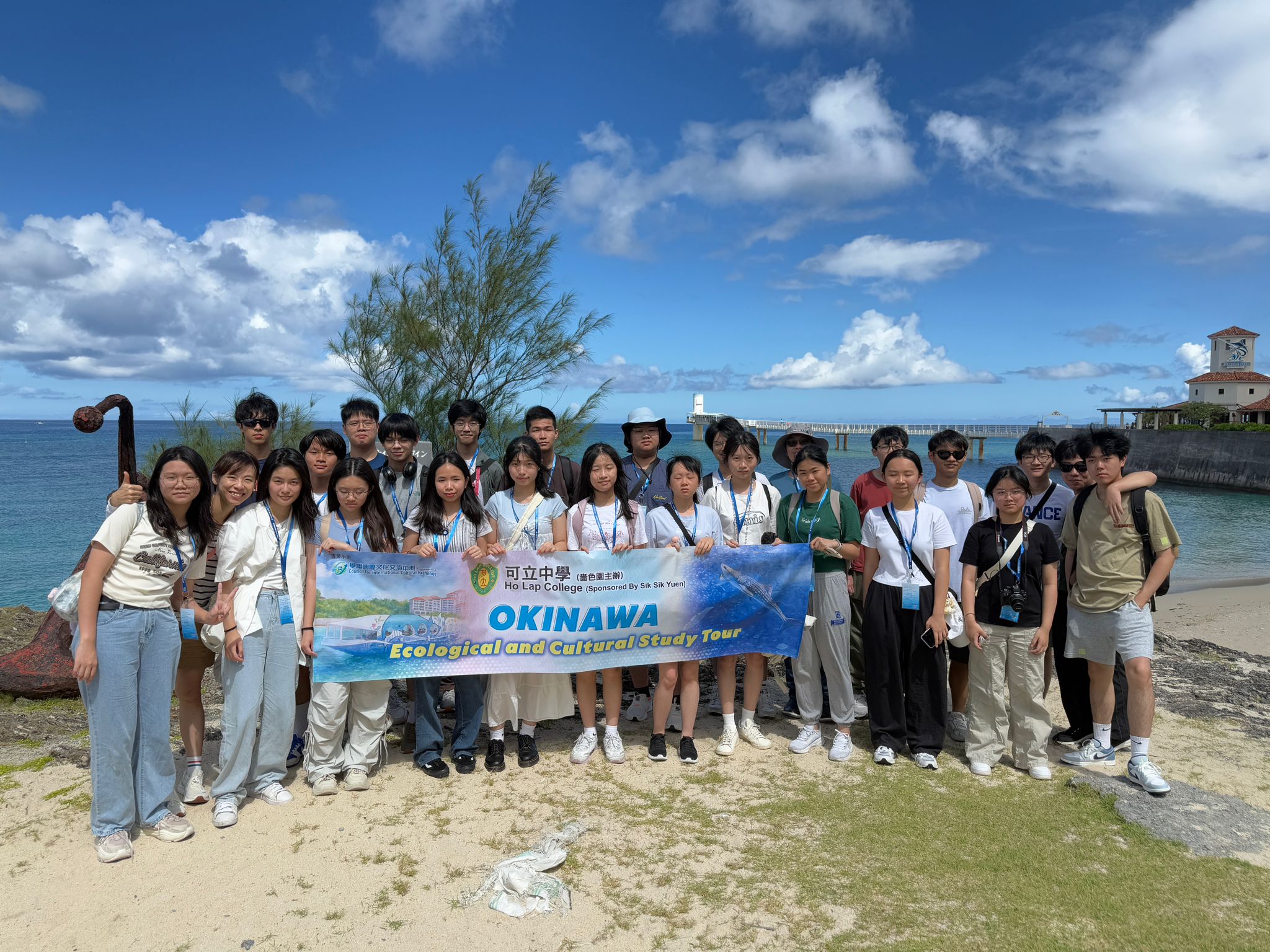
| Life-wide Learning (Including Five Essential Learning Experiences to be Provided through Key Learning Areas, Extra-curricular Activities, Co-curricular Activities, etc.) | : | We have more than fifty clubs and interest groups. Through inter-house activities and competitions, our students develop organizational abilities and a sense of belonging to the school. Co-curricular activities further enhance their knowledge outside the classroom and help them form good habits and character. To widen their horizons, boost their confidence and facilitate exchange of experiences, they actively participate in inter-school contests, charity events and cultural exchange tours. We organise thematic exchange programmes to extend students’ learning beyond classrooms and have their national identity and global citizenship nurtured. Apart from arranging for students to join study tours organised by EDB and external organisations, we organised study tours to various destinations, including Japan, Korea, Indonesia, Cambodia and Mainland, with diverse themes such as sports training, STEAM discovery, sustainable development, life planning and the Belt and Road Initiative. |
| Others | : | Various scholarships are also provided by the sponsoring body, Sik Sik Yuen and the HLC Alumni Association and the school. The Alumni Association offers various scholarships to recognize and encourage well-rounded student development. These include scholarships for holistic development, leadership, and outstanding aesthetic development, with the aim of fostering excellence and supporting students in developing diverse talents. |
| Direct Public Transportation to School | : | KMB: 3B, 5, 5C, 6D, 9, 10, 11, 21, 29M; MTR: Wong Tai Sin Station, Diamond Hill Station, Kai Tak Station; PLB: 19, 20, 20M, 52, 70. |
| Remarks | : | - |
 School Map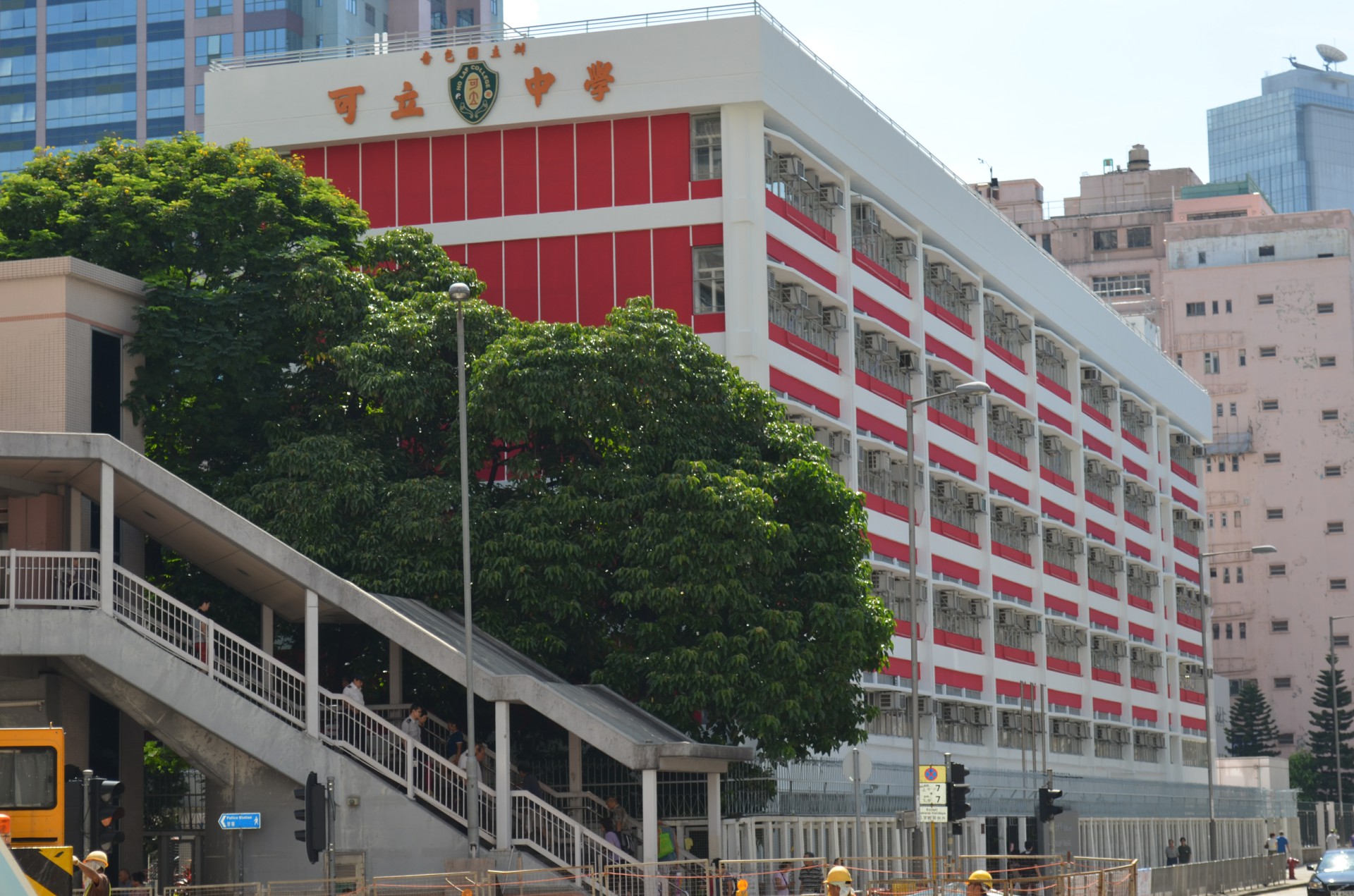

Last revision date: 5/12/2025


