 Secondary School Profiles 2025/2026


 Secondary School Profiles 2025/2026
| Address: | 28 Hospital Road Sai Ying Poon | |||
| Phone: | 28587002 | Email: | office@lstlkkc.edu.hk | |
| Fax: | 28572705 | Website: | http://www.lstlkkc.edu.hk | |
School Mission
Our school is committed to the principle that all students can learn and develop to their full capacity at their own pace. It is our mission to offer each student a balanced educational programme, which recognises the need for moral, intellectual, physical, social and aesthetic development. In addition, our dedicated teachers put emphasis on character development, hoping that students support and respect each other, have self-discipline and self-actualisation, develop critical thinking and positive learning attitude, and build up a trustworthy and responsible personality.
 School Information
 | District | : | Central & Western |
| Other District(s) | : | Wan Chai, Southern, Islands |
| Supervisor / Chairman of School Management Committee | : | Mr. Mok Man Too, Michael, MH |
| Principal (with Qualifications / Experiences) | : | Mr. Chung Yiu Kee |
| School Type | : | Aided |
| Student Gender | : | Co-ed |
| Area Occupied by the School | : | About 6050 Sq. M |
| Name of Sponsoring Body | : | The Lok Sin Tong Benevolent Society, Kowloon |
| Incorporated Management Committee | : | Established |
| Percentage of School Supervisor and Managers / Chairperson and Members of School Management Committee (SMC) of Government Schools Fulfilling the Training Targets | : | Not Applicable |
| Religion | : | Not Applicable |
| Year of Commencement of Operation | : | 1991 |
| School Motto | : | Benevolence, Love, Diligence, Fidelity |
| Parent-Teacher Association | : | Yes |
| Student Union / Association | : | Yes |
| Past Students’ Association / School Alumni Association | : | Yes |
| 4Rs Mental Health Charter | : | Yes |
| Whole School Health Programme | : | Advanced School |
 Chargeable Fees (2025/2026)
| School Fee ($) | Tong Fai ($) | ||
| S1 | - | - | |
| S2 | - | - | |
| S3 | - | - | |
| S4 | - | $340 | |
| S5 | - | $340 | |
| S6 | - | $340 | |
| Parent-Teacher Association Fee (Annual) ($) | : 40 (Annual) | ||
| Student Union / Association Fee ($) | : - | ||
| Approved Charges for Non-standard Items (Annual)($) | : - | ||
| Other Charges / Fees ($) | : Alumni Fee $100 (payable once only during the whole period of study) | ||
 School Facilities
 | Number of Classroom(s) | : | 31 |
| School Facilities | : | Our school is equipped with 31 standard classrooms, a library, an English Room, a Multimedia Learning Centre, a Digital Creativity Lab, a Music Room, a Visual Arts Room, a Geography Room, Integrated Sciences laboratories including a Biology laboratory, a Chemistry laboratory, a Physics laboratory, a standard basketball court, a rooftop activity area, a Campus TV Broadcasting Station and a stage audio and visual control panel to meet the needs of different subjects and cater for learners’ diversity. We have also been allocating resources to improve both the hardware and software of the school, such as upgrading the computer systems and installing Apple TV in classrooms and setting up a fibre optic broadband network on campus to facilitate electronic and blended learning. In 2023, a STEM laboratory measuring a total of 6,000 sq. ft. was constructed thanks to the generous contribution of our former School Supervisor, Mr. Chan Kin Ping, to promote the development of science and technology education. In addition, a well-equipped Fitness Centre measuring a total of 1,000 sq. ft. was newly constructed on the Ground Floor where students are encouraged to do more exercise and this helps promote an active and healthy lifestyle. |
| Facility(ies) for Supporting Students with Special Educational Needs | : | Ramp, Accessible lift, Accessible toilet and MacBook Air speech-to-text software and Windows Light Screen Reader. |
 Teaching Staff Information (Including School Head) in the 2025/2026 School Year
 | Number of Teaching Posts in the Approved Establishment | : | 59 |
| Total Number of Teachers in the School | : | 60 |
| Qualifications and Professional Training | : | Percentage of Teaching Staff (%) |
| Had Received Teacher Training | : | 92% |
| Bachelor Degree | : | 100% |
| Master / Doctorate Degree or above | : | 62% |
| Special Education Training | : | 67% |
| Years of Experience | : | Percentage of Teaching Staff (%) |
| 0-4 Years | : | 21% |
| 5-9 Years | : | 7% |
| 10 Years or above | : | 72% |
 2025/2026 Class Structure
 | Number of Classes | ||
| S1 | : | 4 |
| S2 | : | 4 |
| S3 | : | 4 |
| S4 | : | 4 |
| S5 | : | 4 |
| S6 | : | 4 |
 Subjects Offered
 | Subjects Offered in the 2025/2026 School Year | : | S.1 - S.3 |
| Chinese as the Medium of Instruction | : | Chinese Language, Putonghua (S.1 and S.2), Technology and Living*, Chinese History, Citizenship, Economics and Society, History, Geography, Visual Arts, Music, Physical Education, Integrated Studies |
| English as the Medium of Instruction | : | English Language |
| Adopt a Different Medium of Instruction by Class or by Group / School-based Curriculum | : | Mathematics* and Integrated Science* |
| Subjects Offered in the 2025/2026 School Year | : | S.4 - S.6 |
| Chinese as the Medium of Instruction | : | Chinese Language, Citizenship and Social Development, Economics, Chinese History, Geography, History, Information and Communication Technology, Business, Accounting and Financial Studies, Tourism and Hospitality Studies, Visual Arts, Physical Education, Music (S.4), Diversity Learning, Applied Learning, Other Learning Experiences, Integrated Studies |
| English as the Medium of Instruction | : | English Language |
| Adopt a Different Medium of Instruction by Class or by Group / School-based Curriculum | : | Mathematics, Mathematics Extended Part (M2) Biology, Chemistry, Physics |
| Subjects to be Offered in the 2026/2027 School Year | : | S.1 - S.3 |
| Chinese as the Medium of Instruction | : | Chinese Language, Putonghua (S.1 and S.2), Technology and Living*, Chinese History, History, Geography, Citizenship, Economics and Society, Visual Arts, Music, Physical Education, Integrated Studies |
| English as the Medium of Instruction | : | English Language |
| Adopt a Different Medium of Instruction by Class or by Group / School-based Curriculum | : | Mathematics* and Integrated Science* |
| Subjects to be Offered in the 2026/2027 School Year | : | S.4 - S.6 |
| Chinese as the Medium of Instruction | : | Chinese Language, Citizenship and Social Development, Economics, Chinese History, Geography, History, Information and Communication Technology, Business, Accounting and Financial Studies, Tourism and Hospitality Studies, Visual Arts, Physical Education, Music (S.4), Diversity Learning, Applied Learning, Other Learning Experiences, Integrated Studies |
| English as the Medium of Instruction | : | English Language |
| Adopt a Different Medium of Instruction by Class or by Group / School-based Curriculum | : | Mathematics, Mathematics Extended Part (M2) Biology, Chemistry, Physics |
*Subjects with Extended Learning Activities (ELA) in English
 Secondary One Admission, Orientation Activities & Healthy School Life
 | Secondary One Admission | : | Our school will accept discretionary places. Our school will participate in the Secondary School Places Allocation System through central allocation stage (Applicable for admission to S.1 in September 2026 ).Secondary 1 admission criteria: EDB’s Rank Order List (20%), school examination results (20%), performance in the interview (30%), conduct and attendance (15%) and extra-curricular activities, services and awards (15%). |
| Orientation Activities and Healthy Life | : | To help Secondary 1 newcomers familiarise themselves with and integrate into campus life, our school has specially organised a Secondary 1 Bridging Programme, an Orientation Programme for Newly Arrived Students, a Mentorship Programme, a Sunshine Youth Programme, a Parents' Day for S1 Students, and an Orientation Day. These activities allow new students to gain a comprehensive understanding of our school's unique features—from academics and campus environment to extracurricular activities. At the same time, by fostering peer support and home-school cooperation, we ensure a smooth transition for newcomers into secondary school life. "Building a Healthy Campus Together" is one of our school's key focuses for the coming year. Therefore, we provide students with numerous positive values and healthy lifestyle education activities, such as Good Character Week and Self-Care Camps, to promote their physical and mental well-being. Additionally, since our school implements a lunch-on-campus program, the nutritional value of students' lunchboxes is strictly monitored to ensure a balanced diet. Meanwhile, the school also arranges a variety of activities during lunchtime, such as inter-class competitions, to enrich students' school life. |
 School Characteristics
 | School Management | ||
| (1) School's Major Concerns | : | 1. Strengthening Learning Efficiency 2. Cultivating a Healthy School Environment |
| (2) School Management Organisation | : | The Incorporated Management Committee of Lok Sin Tong Leung Kau Kui College is ultimately responsible for all school policies. Headed by the supervisor, the Committee makes recommendations concerning the school development blueprint, supervises teaching and learning, personnel, finance, etc. The School Administration Committee, consisting of the Principal, the Vice-Principals, the Administrative Staff, and a teacher representative, manages the school affairs. |
| (3) Incorporated Management Committee / School Management Committee / Management Committee | : | The Incorporated Management Committee of LST Leung Kau Kui College has been established for years and has been functioning smoothly since then. The composition of our IMC is as follows: six sponsoring body managers; the Principal; one teacher manager; one parent manager, one alumni manager, and one independent manager. There are also one alternate teacher manager and one alternate parent manager. |
| (4) School Green Policy | : | Our school is committed to promoting environmental protection. We encourage all teachers and students to bring their own water bottles and utensils to reduce wastage. We actively promote eco-living both inside and outside the classroom, such as integrating environmental education elements into different subjects, and organising various activities to promote a green lifestyle around campus. The following awards received demonstrate our school’s dedication to promoting environmental conservation: the Silver Award of the "Hong Kong Awards for Environmental Excellence– (HKAEE) (Schools Sector)" and the Bronze, Silver, and Gold Awards of the "Hong Kong Green School Award". |
| Learning and Teaching Plan | ||
| (1) Whole-school Language Policy | : | Our school adopts Chinese as the main medium of instruction. The “allocation of time to subjects” arrangement has been adopted and English is used as the medium of instruction for specific S.1 to S.3 classes in Mathematics and Integrated Science lessons. To enhance the biliterate and trilingual proficiency of students, in addition to offering Putonghua classes in S.1 and S.2, our school aims at creating a rich language learning environment by organising a wide range of English language and Putonghua programmes and activities for the whole school. |
| (2) Learning and Teaching Strategies | : | The major concern in the upcoming school year will focus on enhancing students’ learning effectiveness through promoting extensive reading, self-regulated learning and enriching students' learning experiences. The school aims to create a learning environment conducive to students developing a variety of skills and competencies. |
| (3) School-based Curriculum | : | 1. Electives: 2X and 3X. Students are to choose two to three elective subjects among the 12 given choices. 2. Curriculum highlights: We offer Technology and Living at all junior forms to promote STEAM education and to respond to students' demand for the latest technology knowledge and skills. Through hands-on classroom activities, students are not only interested in learning about technology and using electronic devices but are also able to enhance their generic skills, such as problem-solving, collaboration, and communication. In senior forms, students can choose to take Applied Learning courses according to their abilities and interests. S.4 students who take two elective subjects participate in the diversity-learning courses to enrich their learning experience and skills. Our school implements small-class teaching to teach Chinese, English, and Mathematics at different levels. Teachers can adapt the curriculum to students' levels and cater for learner diversity. Thus, teaching effectiveness is enhanced. |
| (4) Major Renewed Emphases in the School Curriculum | : | 1. Civic and Moral Education-to strengthen value education: Following the curriculum guides which emphasise value education, all subject departments and committees offer many opportunities for students to further their civic and moral education. 2. Reading to Learn-to read across the curriculum: The school library collaborates with subject departments and committees to organise activities to promote reading regularly. Students are also encouraged to read widely through LoiLoNote and other e-platforms that promote e-reading. 3. Project Learning: At least two cross-curricular projects are assigned in junior forms, which seek to enhance students' learning autonomy and generic skills and to lay a good foundation for enhancing students' competencies in various subjects at the senior secondary level. 4. Application of I.T. to Interactive Learning: Students learn through iPads during lessons and after school. Teachers implement interactive lessons using LoiLoNote, Google Classroom, various educational software and AI technology. This helps raise the learning effectiveness. |
| (5) Life Planning Education | : | The school adopts a whole-school approach, working with subject panels and committees, PTA and class teachers to address the diverse career development needs of students. Through a school-based career and life planning curriculum, students will better understand themselves and the needs of society and develop the right attitudes and values to face future challenges. We arrange subject-sharing sessions, workplace experiences programmes, campus tours, and individual counselling to guide students to explore their career paths after graduation according to their abilities, interests, and aspirations. A career and life planning resource centre, "Know It All”, offers the latest information on further education and employment, enabling students to make informed choices. |
| Student Support | ||
| (1) Whole School Approach to Catering for Learner Diversity | : | Our SST is responsible for planning, executing, and reviewing school-based measures to implement whole-school inclusive education. We invite input from parents, educational psychologists, and teachers to attend case meetings to establish a comprehensive support system for relevant students. Our school uses the NCS-SEN Grant to employ assisting staff to provide after-school support or emotional, communication and social support for students. SST organises different activities to create an inclusive learning environment in school. |
| (2) Whole School Approach to Integrated Education | : | Our school upholds the five basic principles of early identification, early support, whole-school participation, home-school cooperation, and cross-sectoral collaboration to cater to the students with special educational needs in various areas, such as academic and social development, in the hope that they will be inspired and have fun in learning, and that a caring and inclusive campus culture will be built. SEN coordinator leads the SST to foster a more inclusive school culture and enhance the effectiveness of providing support to students with SEN. Our school uses the LSG to hire teachers to improve the teacher-student ratio and employ student counsellors and support staff to provide after-school support services and activities, such as speech therapy services, occupational therapy services, inclusion activities, social skills enhancement groups, concentration enhancement groups, career-related interest activities, study skills courses, and special exam arrangements. We hope to provide support to cater for learner diversity. We have trained Guidance Prefects to develop students' spirit of service and leadership skills, as well as to support their peers with special educational needs and to foster a culture of solidarity, compassion and personal growth. We have arranged training for our teachers, teaching assistants, and other support staff by external professionals so that all school staff can help build a caring culture. |
| (3) Education Support for Non-Chinese Speaking (NCS) Students | : | Our school provides additional support for NCS students to facilitate their learning of Chinese: providing after-school support programmes in learning Chinese; appointing additional teacher(s)/teaching assistant(s) to support NCS students’ learning of Chinese; arranging intensive Chinese learning and teaching mode(s), e.g. pull-out learning if necessary, split-class/group learning, etc.; developing school-based Chinese Language curriculum and/or adapting learning and teaching materials; organising activities to create an inclusive learning environment in the school; and hiring additional manpower and/or translation/interpretation services to facilitate the communication with parents of NCS students. |
| (4) Measures to Provide Adaptation for Learning and Assessment | : | Our school also provides special examination arrangements, such as providing extra time allowance, enlarging examination papers, providing screen readers software, speech-to-text software and exemption for eligible students. We also assist in the process of applying for public examination special arrangements and provision of home-cum-district special examination centre to ensure fairness for our SEN students who sit for public examinations. |
| Home-School Co-operation and School Ethos | ||
| (1) Home-School Co-operation | : | Our school established the Parent-Teacher Association in 1999. Rapport between parents and teachers is enhanced through various activities. Our PTA arranges regular meetings and workshops to keep parents informed about students' learning in school. The meetings also allow parents to share their invaluable parenting experience. Our PTA, moreover, organises interest classes, picnics and fun days. Through keen participation in these activities, harmonious relationships between teachers, parents and students are developed and their sense of belonging to school is strengthened. |
| (2) School Ethos | : | We are dedicated to fostering a nurturing and caring school culture through organising school-wide activities, implementing a dual-class teacher system, and promoting leadership building and peer counselling activities to ensure that our students cultivate self-discipline, personal integrity and self-awareness, pursue excellence, establish good interpersonal relations, and become problem solvers. We also nurture our students into citizens with a sense of social responsibility to one’s family, our nation and the world. Our discipline and guidance teachers are very experienced. Moral and Civic education is constantly strengthened to enlighten students from different perspectives. Every August, we arrange for new S.1 students to participate in orientation activities to help them adapt to secondary school life and cultivate resilience and a positive mindset to cope with future challenges. In addition, our school has also launched a "Big Brother and Big Sister” programme, through which senior form students bond with junior form students by regularly playing board games and sharing campus life with them. This programme aims to establish a peer support system and promote a caring campus culture. S.1 students are required to participate in self-care camps in the first semester so that they can better develop self-discipline and self-awareness. |
| Future Development | ||
| (1) School Development Plan | : | 1. Enjoy Learning 2. Positive Education |
| (2) Teacher Professional Training and Development | : | Our school attaches great importance to teachers' professional development and training and encourages all teachers to keep abreast of the times. To raise the professional standards of teachers, the school organises annual professional training activities to equip teachers with the latest skills and knowledge to meet the key concerns of the school. Teachers also participate in the Joint Teacher Development Day of The Kowloon Lok Sin Tong Benevolent Society’s secondary schools, which cover national security education, Basic Law education, blended learning, independent learning, school administration, curriculum development, assessment methods, student growth, and information technology education. Apart from attending external teacher training courses, teachers also share their experiences with their peers, including support for teachers to utilise artificial intelligence in teaching and administrative work, promoting the effectiveness of learning and teaching with innovative technology (including artificial intelligence). Multiple teachers have also received external outstanding teaching awards, recognising our teachers’ achievements in teaching and professionalism. In addition, the school has set up a mentorship programme for new teachers, with experienced teachers serving as mentors to help new teachers adapt to the school's administrative and teaching duties as soon as possible. To enhance the professional skills of our stakeholders in caring for students with different learning needs, we have arranged training for our teachers, teaching assistants, and other support staff by external professionals (e.g., educational psychologists, social workers) so that all school staff can help build a caring culture. |
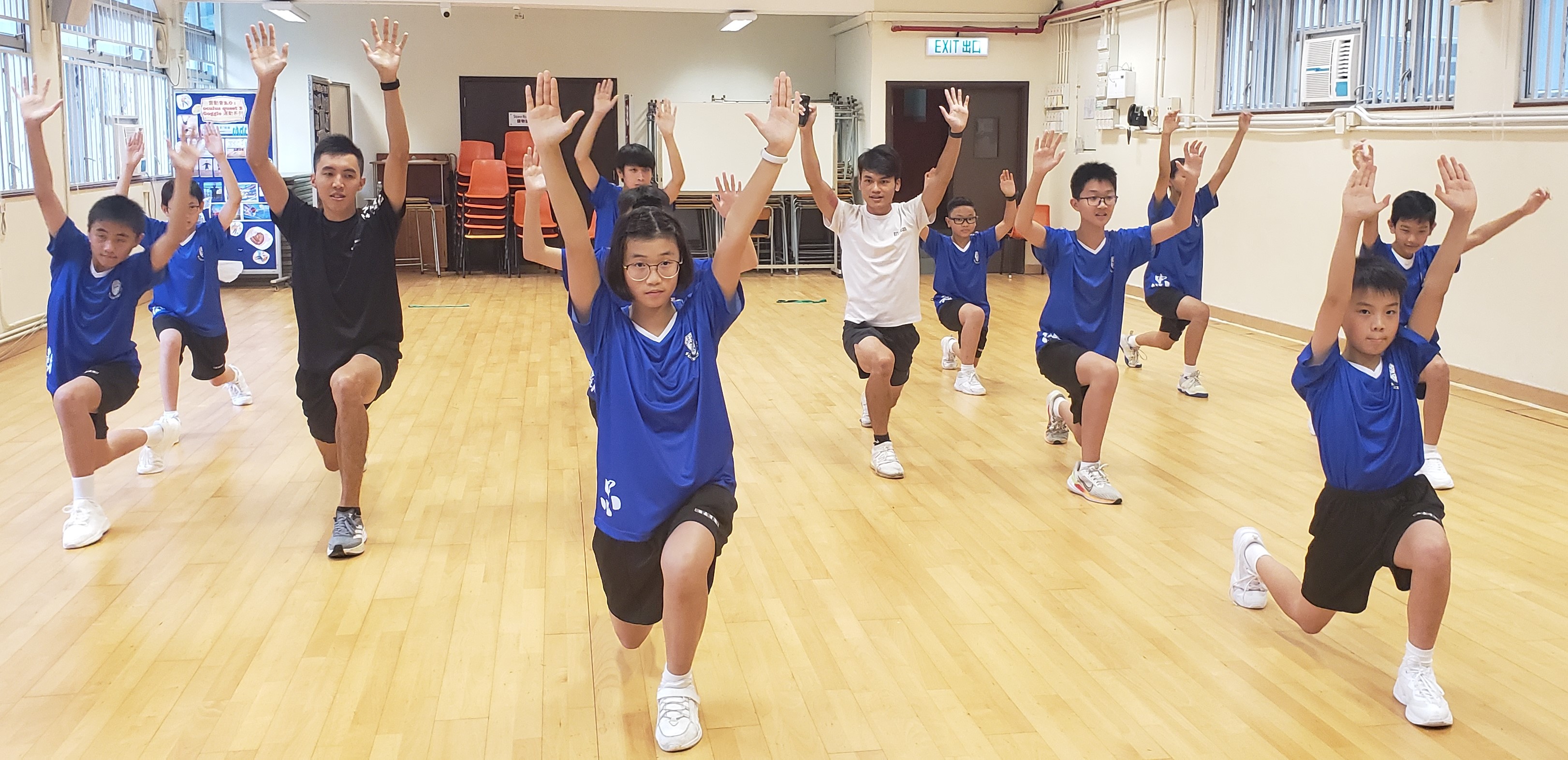
| Life-wide Learning (Including Five Essential Learning Experiences to be Provided through Key Learning Areas, Extra-curricular Activities, Co-curricular Activities, etc.) | : | With the mission of "whole-person development,” we provide students with a wide range of learning activities, including uniformed teams, arts and culture, hobbies and skills development, academics, sports and artistic talents, leadership training and community service, etc., so that students can learn about themselves, discover their potential, and develop leadership, teamwork, and social responsibility. Students are encouraged to participate in various performances, exhibitions, competitions and community services to enrich and diversify their learning experiences. Different subject groups also organise life-wide learning or cross-disciplinary activities for students, such as overseas study tours and study trips to the Mainland, allowing students to step out of Hong Kong, broaden their global perspectives, enrich their life experiences and practise the spirit of diverse learning. In terms of joint school activities, our students participate in The Lok Sin Tong Sunshine Youth Project, The Lok Sin Tong Charity Walk, The Lok Sin Tong Charity Candy Campaign, the Project WeCan, Elder Academy. These projects offer students an opportunity to get involved in the community while cultivating the spirit of teamwork and service to society. |
| Others | : | The school offers a number of scholarships to reward students and graduates with outstanding achievements in academics or other areas. Our school is dedicated to promoting environmental education. We participate in the Hong Kong Electric’s Feed-in Tariff Scheme and they purchase electricity generated by our grid-connected renewable energy power systems. With the money generated from the Feed-in Scheme, we set up The Lee Shing Put STEAM Education Scholarship to award students who have outstanding achievements in STEAM education. |
| Direct Public Transportation to School | : | The school is within walking distance of Sai Ying Pun MTR Station Exit B2 (around 5 minutes). It can also be reached by taking: 1. a tram 2. a minibus (10, 12, 22, 28, 31, 55) passing through Queen's Road West, Des Voeux Road West, Bonham Road or Hospital Road. 3. a bus (3A, 4, 5B, 7, 10, 18, 23, 23B, 26, 37A, 40, 71, 91, 101, 103, 104, 113, 905) |
| Remarks | : | To address learner diversity and improve learning, core subjects (Chinese, English, Mathematics) in S1 are split into six groups, S2 and S3 into five. In S4-S6, English is taught in five groups at each level. Over ten after-school English programmes are offered, tailored to students’ different proficiency levels and learning needs. |
 School Map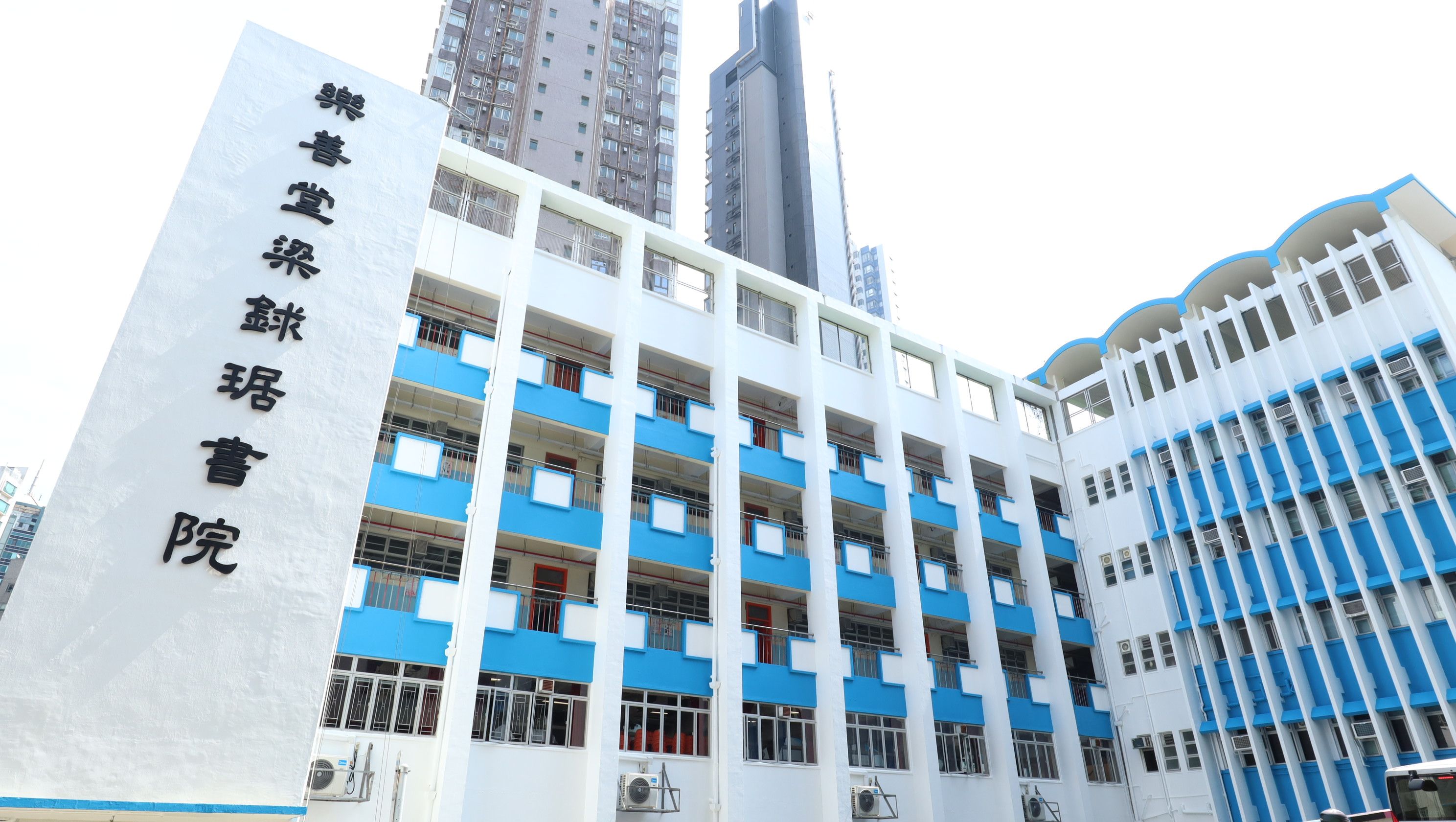

Last revision date: 5/12/2025


