 Secondary School Profiles 2025/2026


 Secondary School Profiles 2025/2026

| Address: | Estate Secondary School No 2 Lai King Estate Kwai Chung New Territories | |||
| Phone: | 27439488 | Email: | cwk@ldcwkmss.edu.hk | |
| Fax: | 27443725 | Website: | http://www.ldcwkmss.edu.hk | |
School Mission
Upholding the traditional spirit of Lingnan Education, we provide quality whole-person education. We aim to cultivate students' drive for continuous self-improvement, enabling them to grow into virtuous and talented individuals who become responsible citizens contributing to society.
 School Information
 | District | : | Kwai Tsing |
| Other District(s) | : | Sham Shui Po, Islands |
| Supervisor / Chairman of School Management Committee | : | Mr. Lai Wan Lung |
| Principal (with Qualifications / Experiences) | : | Mr. Yan Pui Kei Kevin (B.A.(Hon), Writer) |
| School Type | : | Aided |
| Student Gender | : | Co-ed |
| Area Occupied by the School | : | About 5000 Sq. M |
| Name of Sponsoring Body | : | Lingnan Education Organization Limited |
| Incorporated Management Committee | : | Established |
| Percentage of School Supervisor and Managers / Chairperson and Members of School Management Committee (SMC) of Government Schools Fulfilling the Training Targets | : | 100% |
| Religion | : | Protestantism / Christianity |
| Year of Commencement of Operation | : | 1978 |
| School Motto | : | - |
| Parent-Teacher Association | : | Yes |
| Student Union / Association | : | Yes |
| Past Students’ Association / School Alumni Association | : | Yes |
| 4Rs Mental Health Charter | : | - |
| Whole School Health Programme | : | Action School |
 Chargeable Fees (2025/2026)
| School Fee ($) | Tong Fai ($) | ||
| S1 | - | - | |
| S2 | - | - | |
| S3 | - | - | |
| S4 | - | $300 | |
| S5 | - | $300 | |
| S6 | - | $300 | |
| Parent-Teacher Association Fee (Annual) ($) | : $100 | ||
| Student Union / Association Fee ($) | : $50 | ||
| Approved Charges for Non-standard Items (Annual)($) | : F.1-F.6: $420 | ||
| Other Charges / Fees ($) | : - | ||
 School Facilities
 | Number of Classroom(s) | : | 27 |
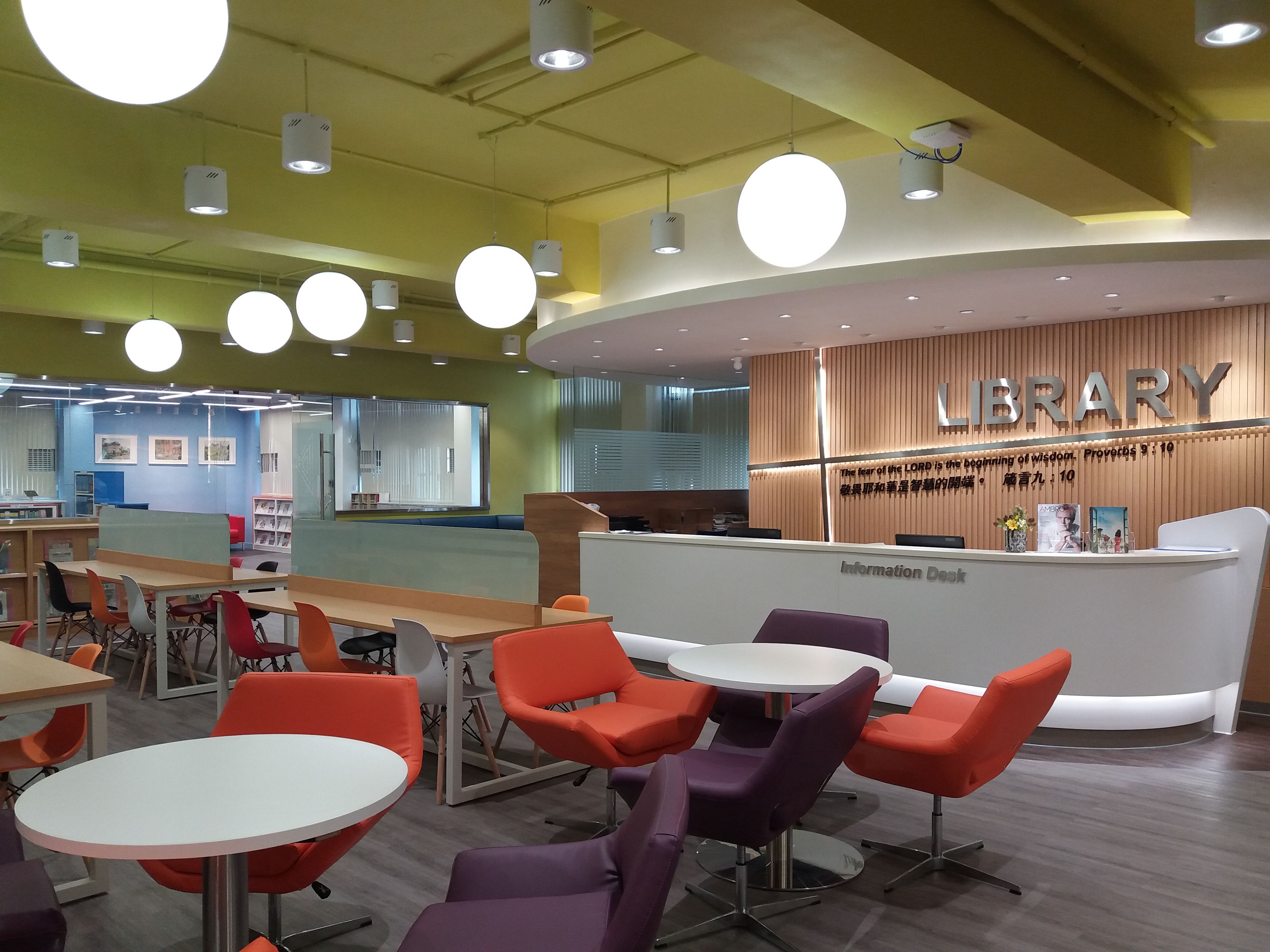
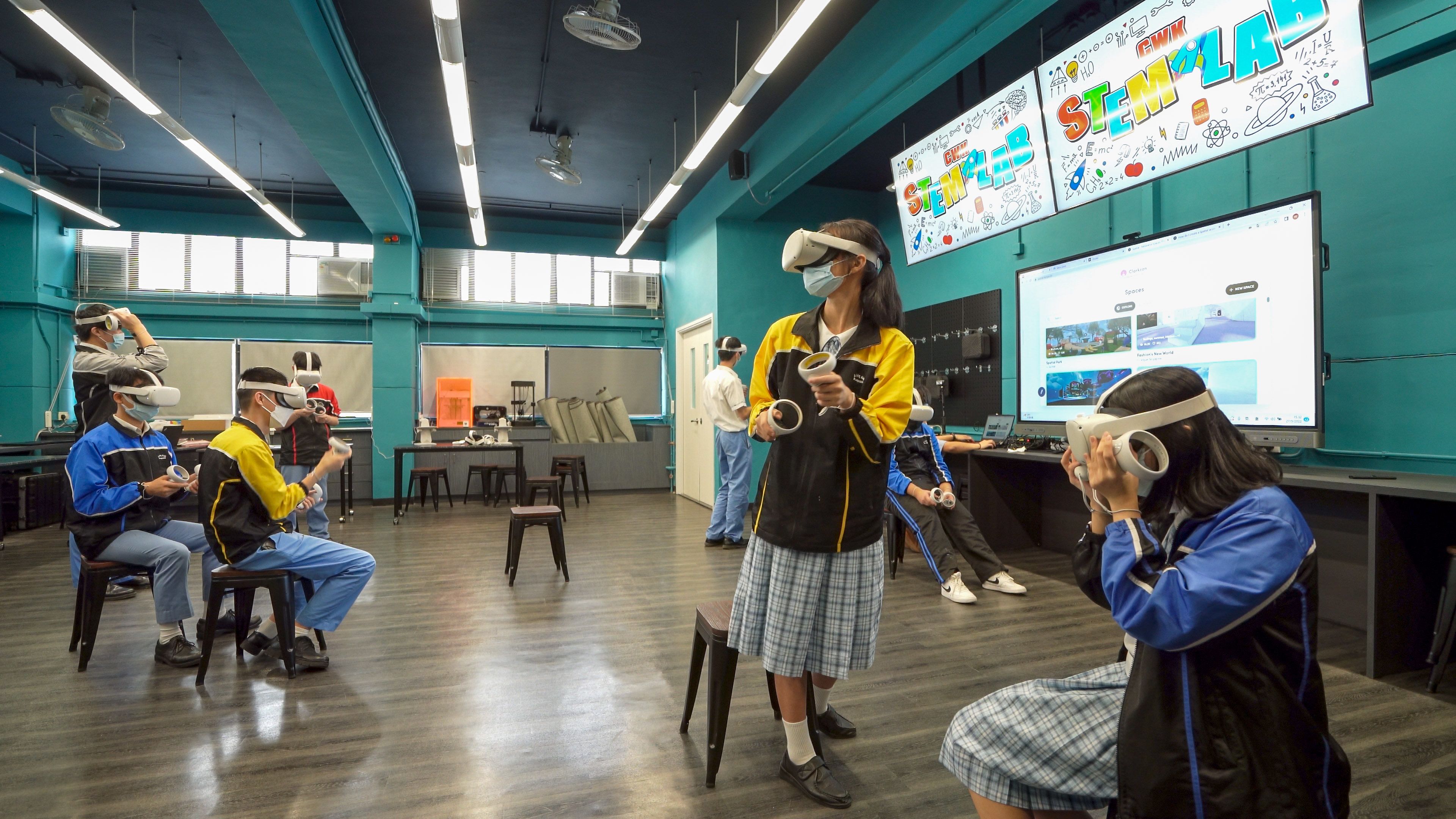
| School Facilities | : | All the rooms are equipped with air-conditioning, Wi-Fi network and projectors. Some classrooms are fitted with visualizers. There are 27 classrooms and numerous special rooms, including a multi-purpose library, a brand-new Design and Technology Room, a Home Economics classroom, a Campus TV room, English Cafe and a STEAM laboratory. On campus, there’s also a mini dormitory, a reptile building, a gym, and a platform garden. |
| Facility(ies) for Supporting Students with Special Educational Needs | : | Accessible lift. |
 Teaching Staff Information (Including School Head) in the 2025/2026 School Year
 | Number of Teaching Posts in the Approved Establishment | : | 61 |
| Total Number of Teachers in the School | : | 72 |
| Qualifications and Professional Training | : | Percentage of Teaching Staff (%) |
| Had Received Teacher Training | : | 82% |
| Bachelor Degree | : | 100% |
| Master / Doctorate Degree or above | : | 71% |
| Special Education Training | : | 46% |
| Years of Experience | : | Percentage of Teaching Staff (%) |
| 0-4 Years | : | 21% |
| 5-9 Years | : | 8% |
| 10 Years or above | : | 71% |
 2025/2026 Class Structure
 | Number of Classes | ||
| S1 | : | 4 |
| S2 | : | 4 |
| S3 | : | 4 |
| S4 | : | 4 |
| S5 | : | 4 |
| S6 | : | 4 |
 Subjects Offered
 | Subjects Offered in the 2025/2026 School Year | : | S.1 - S.3 |
| Chinese as the Medium of Instruction | : | F.1-F.3: Chinese Language, Mathematics, Putonghua, Chinese History, History, Geography, Computer Literacy, Music, Physical Education, Citizenship, Economics and Society; F.1-F.2: Science, Design and Technology, Home Economics, Life Skills, Religious Studies; F.2-F.3: STEAM, Visual Arts; F.3: Physics, Chemistry, Biology, Basic Commerce. |
| English as the Medium of Instruction | : | English Language |
| Adopt a Different Medium of Instruction by Class or by Group / School-based Curriculum | : | 1. Separate "IGCSE (International General Certificate of Secondary Education) courses" and Chinese History courses are arranged for Non-Chinese Speaking (NCS) students at all levels. 2. Assembly and "Other Learning Experience" (OLE) lessons are scheduled for each class. |
| Subjects Offered in the 2025/2026 School Year | : | S.4 - S.6 |
| Chinese as the Medium of Instruction | : | Chinese Language, Mathematics, Mathematics Extended Part (Module 1), Citizenship and Social Development, Geography, Chinese History, Chinese Literature, History, Economics, Physics, Chemistry, Biology, Information and Communication Technology, Business, Accounting and Financial Studies, Tourism and Hospitality Studies, Physical Education, Physical Education (HKDSE) Music, Visual Arts (HKDSE), ApL, Other Languages (Japanese, Korean, French) |
| English as the Medium of Instruction | : | English Language |
| Adopt a Different Medium of Instruction by Class or by Group / School-based Curriculum | : | 1. Separate "IGCSE (International General Certificate of Secondary Education) courses" are arranged for Non-Chinese Speaking (NCS) students at all levels. 2. Assembly and "Other Learning Experience" (OLE) lessons are scheduled for each class. |
| Subjects to be Offered in the 2026/2027 School Year | : | S.1 - S.3 |
| Chinese as the Medium of Instruction | : | F1-F.3: Chinese Language, Mathematics, Putonghua, Chinese History, History, Geography, Computer Literacy, Music, Physical Education, Citizenship, Economics and Society; F.1-F.2: Science, Design and Technology, Home Economics, Life Skills, Religious Studies; F.2-F.3: STEAM, Visual Arts; F.3: Physics, Chemistry, Biology, Basic Commerce. |
| English as the Medium of Instruction | : | English Language |
| Adopt a Different Medium of Instruction by Class or by Group / School-based Curriculum | : | 1. Separate "IGCSE (International General Certificate of Secondary Education) courses" and Chinese History courses are arranged for Non-Chinese Speaking (NCS) students at all levels. 2. Assembly and "Other Learning Experience" (OLE) lessons are scheduled for each class. |
| Subjects to be Offered in the 2026/2027 School Year | : | S.4 - S.6 |
| Chinese as the Medium of Instruction | : | Chinese Language, Mathematics, Mathematics Extended Part (Module 1), Citizenship and Social Development, Geography, Chinese History, Chinese Literature, History, Economics, Physics, Chemistry, Biology, Information and Communication Technology, Business, Accounting and Financial Studies, Tourism and Hospitality Studies, Physical Education, Physical Education (HKDSE), Music, Visual Arts (HKDSE), ApL (Applied Learning), Other Languages (Japanese, Korean, French) |
| English as the Medium of Instruction | : | English Language |
| Adopt a Different Medium of Instruction by Class or by Group / School-based Curriculum | : | 1. Separate "IGCSE (International General Certificate of Secondary Education) courses" are arranged for Non-Chinese Speaking (NCS) students at all levels. 2. Assembly and "Other Learning Experience" (OLE) lessons are scheduled for each class. |
 Secondary One Admission, Orientation Activities & Healthy School Life
 | Secondary One Admission | : | Our school will accept discretionary places. Our school will participate in the Secondary School Places Allocation System through central allocation stage (Applicable for admission to S.1 in September 2026 ).The criteria and weightings are as follows: 1. Academic results (Primary 5 full year and Primary 6 first term): 15%; 2. Interview performance: 30%; 3. Conduct: 15%; 4. Other outstanding achievements and awards: 15%; 5. Participation and performance in extra-curricular activities and services: 10%; 6. Rank Order List provided by the Education Bureau: 15%. |
| Orientation Activities and Healthy Life | : | About one-week bridging programme for Form 1 newcomers and a Parents' Day for new students' parents are held in mid-July every year. The orientation programme held at the beginning of the academic year aims to help S.1 students familiarize themselves with the school, while developing a strong sense of belonging to the learning community. We place great emphasis on whole-person education to strive to promote students' physical, intellectual and spiritual development. With the aim of helping students develop positive values and healthy habits, we offer subjects such as Religious Education and Life Skills lessons. In addition, we offer a wide range of other learning opportunities such as school assemblies, extra-curricular activities, voluntary social services and activities of other learning experiences to help students develop a positive attitude and strengthen their self-image, which play an important role in their whole-person development. |
 School Characteristics
 | School Management | ||
| (1) School's Major Concerns | : | 1. Enhance learning skills and enrich learning experiences; help students set personal goals and foster an achievement-oriented atmosphere. 2. Cultivate a growth mindset and promote potential development; expand activity domains and encourage students to seek self-breakthroughs. |
| (2) School Management Organisation | : | School-based management is implemented. School policies are formulated through a two-way process, incorporating both top-down guidance and bottom-up strategizing. The Incorporated Management Committee (IMC) receives regular reports and opinions from the principal and teacher managers, periodically issuing guidelines for school development. The principal, in turn, collects suggestions from administrators and teachers through the Executive Committee. Strategies and methods are developed collectively through discussion and then implemented jointly. |
| (3) Incorporated Management Committee / School Management Committee / Management Committee | : | Incorporated Management Committee |
| (4) School Green Policy | : | Our school is committed to promoting the concepts of "Health" and "Environmental Protection". Students apply these concepts into practice through subject learning, campus greening initiatives, and project-based services. Our eco-friendly facilities include filtered water dispensers and a platform garden. |
| Learning and Teaching Plan | ||
| (1) Whole-school Language Policy | : | 1. In addition to employing an experienced Native English Teacher (NET), students are grouped by English ability across all forms for small-class teaching. 2. English enrichment courses are provided for senior form students who have dropped elective subjects. 3. A school-based English learning mobile application, "CWK EAGLES", has been developed, incorporating self-learning and assessment elements. 4. Students are recruited to serve as English reporters. 5. School-based specialty courses with the theme of "Nature Literature" are developed, designing experiential activities to introduce classical Chinese literary works. 6. An online submission platform, "Award", is established to provide more avenues for students to publish their work, enhancing their passion for writing. 7. Thematic reading focused on world literature is promoted to elevate students' reading tastes and broaden their literary horizons. 8. The "We Sing" system is incorporated into Putonghua lessons, allowing students to improve their listening and speaking skills through singing popular songs. |
| (2) Learning and Teaching Strategies | : | 1. After-school Chinese, English, and Mathematics classes are offered for junior form students, including elite programs for high achievers and support classes for average performers. 2. After-school tutorial classes are conducted for senior form subjects to prepare for public examinations. 3. Chinese, English, and Mathematics enrichment courses are provided for senior form students taking two elective subjects (2X). 4. The "Lingnan Navigator Project" provides comprehensive support for top senior form students, including academic enhancement and career guidance, with plans to extend it to junior forms. 5. A well-established online homework and assessment record system is in place, accessible to stakeholders via the school intranet. 6. Past examination papers and marking schemes are uploaded to the intranet for student reference during revision. 7. Pull-out or after-school support activities are arranged for students with special educational needs (SEN). |
| (3) School-based Curriculum | : | 1. Electives: 2X and 3X. Thirteen elective subjects are offered at the senior secondary level, including Applied Learning and Other Languages (Japanese, Korean, French). Students may take up to three elective subjects. 2. Curriculum highlights: (1) School-based English Enhancement Programme: A tailored English curriculum aligned with the HKDSE is designed from Form 1 onwards, catering to students of different abilities. Significant resources are invested, including hiring additional English teachers for small-group instruction. With 18 English teachers, each form is divided into six groups to address learning diversity. The school-based English mobile app, "CWK EAGLES", incorporates self-learning and assessment elements. (2) STEAM Programme: Includes courses such as Formula 1 in Schools (model car manufacturing), VR (Virtual Reality), IoT (Internet of Things), drones, and combat robotics. Students in Forms 2 and 3 can select one course per semester. |
| (4) Major Renewed Emphases in the School Curriculum | : | 1. Continuously optimise the Chinese and English curricula to strengthen the bilingual learning environment across the school. 2. Continuously enhance the Technology Education area, expanding and strengthening the STEAM curriculum framework. 3. Improve learning and teaching effectiveness by fully implementing the Bring Your Own Device (BYOD) policy and utilising e-learning to incorporate Assessment for Learning (AfL) elements. 4. Strengthen the Christian ethos, further expanding collaboration with churches and evangelical organisations to implement holistic religious education. 5. Continue building a positive culture through appreciation and rewards, showcasing student talents in multiple aspects. 6. Implement a school-based life planning education curriculum at the junior secondary level to establish goal-oriented development. 7. A dedicated team promotes Values Education, Civic Education, and National Education through assemblies, various subjects, periodic activities, and academic weeks, providing diverse life-wide learning experiences. 8. Implement morning reading sessions during assemblies, develop an e-library, organise various reading award schemes, and host an annual Reading Carnival. 9. To promote Invitational Education and organize adventure-based challenge activities such as camping and water sports. To cultivate students’ resilience, determination, and positive attitudes when facing adversity. |
| (5) Life Planning Education | : | The Career Guidance Committee provides individual and group career planning. The Career and Life Planning Committee provides individual, small group, whole-form career planning activities and counselling support for students across different year levels. A school-based "Personal Career Planning Guidance" programme is implemented for senior form students, involving collaboration between the Counselling Department and the Class Management Committee to provide systematic guidance and personalised follow-up. The school also partners with numerous NGOs and organisations to provide multi-dimensional career planning activities and professional support for all students. Through professional services and workplace experiential activities, students can identify suitable development paths early and formulate future career plans. The school actively broadens further study pathways for Form 6 graduates, providing information on local tertiary programmes and interview arrangements, and has established partnerships with institutions in Mainland, Taiwan, Japan, and South Korea to secure exchange and higher education opportunities for graduates. |
| Student Support | ||
| (1) Whole School Approach to Catering for Learner Diversity | : | 1. To further promote a caring culture, a dual class teacher system is implemented school-wide to provide appropriate guidance for students and enhance their Other Learning Experiences (OLE) for whole-person development. 2. Each form level has a form coordinator responsible for overall discipline and class operations. 3. The "School-based Programme for Enhancing Student Learning Abilities" involves coordinating teachers and support staff who assist students facing significant difficulties through classroom adaptations, group, and co-teaching strategies to cater to learning diversity, enhance teaching effectiveness, and improve learning performance. 4. The "Reach My Peak" programme provides individual counselling and diverse small group activities during lunch, OLE lessons, and after school to cultivate a growth mindset, promote potential development, explore new areas, and seek self-breakthroughs. |
| (2) Whole School Approach to Integrated Education | : | Our school is committed to fostering an inclusive and caring campus environment. We support students with Special Educational Needs (SEN) using a "whole school approach", providing appropriate and diversified support services to enhance their learning effectiveness. To promote an inclusive culture, the school regularly reviews its inclusion policies and organises various inclusion promotion activities, implements school-based curricula, and procures external professional support services. The SENCO and SENSTs regularly communicate with class teachers regarding SEN students' progress to facilitate appropriate support and counselling. The school distributes an "SEN Student Support Handbook" to all teachers and encourages staff to participate in EDB training courses on "Catering for Diverse Learning Needs" to enhance their professional capacity. Strong home-school cooperation is emphasised. The committee maintains regular communication mechanisms and holds conferences for parents of SEN students to keep them informed and collaboratively support their children's learning and development. |
| (3) Education Support for Non-Chinese Speaking (NCS) Students | : | Our school provides additional support for NCS students to facilitate their learning of Chinese: providing after-school support programmes in learning Chinese; appointing additional teacher(s)/teaching assistant(s) to support NCS students’ learning of Chinese; arranging intensive Chinese learning and teaching mode(s), e.g. pull-out learning if necessary, split-class/group learning, etc.; developing school-based Chinese Language curriculum and/or adapting learning and teaching materials; and organising activities to create an inclusive learning environment in the school. After School programmes are provided for the non-Chinese speaking students. |
| (4) Measures to Provide Adaptation for Learning and Assessment | : | 1. For F.1-5, there are two school terms in each academic year. In each term, Formative Assessment account for 30%, Unified Test 20%, Exam 50%. As for F.6, Mock Exams are worth 50% of the subject total, while Formative Assessment and Pre-mock Exams contribute to 30% and 20% of the final subject marks respectively. 2. All junior form students are placed into classes based on their abilities. 3. Students will be grouped according to their abilities in the core subjects. For Chinese, English and Math lessons, students of each form will be separated into 4 to 6 groups. 4. Teachers are supported in providing care for students with special needs through various methods, including tailored assessments. |
| Home-School Co-operation and School Ethos | ||
| (1) Home-School Co-operation | : | The school highly values communication with parents. Besides the biannual Parent Days, breakfast meetings are arranged for parents to meet with the principal and class teachers, facilitating a better understanding of their children's school life. A parent support group assists in fostering positive parent-child relationships. The Parent-Teacher Association (PTA) serves as a vital bridge between parents and the school, enabling parents to understand and participate in policy formulation and implementation. The PTA also organises relevant seminars, sharing groups, and interest activities to provide multifaceted support for parents. |
| (2) School Ethos | : | Our school upholds a simple and pragmatic ethos, emphasising moral education and the cultivation of student behaviour. Students are generally respectful, disciplined, and well-behaved. Teacher-student relationships are harmonious and friendly, creating a supportive campus atmosphere. To enhance student care and discipline, the school employs two onsite social workers and two counsellors who work closely with the discipline and guidance team to coordinate and implement various initiatives, ensuring student growth and learning within a disciplined yet caring environment. The school values class culture and student belonging, employing a dual class teacher system school-wide and appointing form coordinators for junior levels to provide additional support. Students are actively encouraged to participate in service activities, such as student leadership roles and volunteer teams, to cultivate leadership, empathy, helpfulness, personal growth, and social responsibility. |
| Future Development | ||
| (1) School Development Plan | : | 1. Subject-based training to enhance learning skills. 2. Designing experiential learning activities within subjects. 3. Implementing a reward system for students to set improvement goals and enhance their sense of achievement. 4. Strengthening students' e-learning skills. 5. Encouraging students to set life goals to boost learning motivation. 6. Fostering a growth mindset, enhancing resilience, and cultivating a positive outlook on life. 7. Expanding the range of activities to discover students' diverse potentials. 8. Encouraging students to pursue self-breakthroughs to build confidence and a greater sense of accomplishment. |
| (2) Teacher Professional Training and Development | : | Teachers are encouraged to pursue Continuing Professional Development (CPD) to enhance their expertise. They are required to submit an annual record of their CPD hours and activities. In recent years, the school has focused on strengthening teacher professional training, optimising Professional Learning Communities (PLCs), encouraging interactive collaboration, and promoting participation in academic studies and sharing exchanges to foster teachers' professional growth and ultimately enhance student learning outcomes. |
| Life-wide Learning (Including Five Essential Learning Experiences to be Provided through Key Learning Areas, Extra-curricular Activities, Co-curricular Activities, etc.) | : | We encourage active student participation in learning activities. Beyond arranging local and overseas field studies, exchanges, and research projects for various levels, the school offers over 25 diverse student societies, school teams, interest classes, and volunteer service teams. Students from F.1 to F.5 must participate in at least one extra-curricular activity, while all F.1 and F.2 students are required to join one core society. "Other Learning Experiences" (OLE) are scheduled as formal lesson time, encompassing life planning, values education, class-based activities, social services, and physical/arts activities. Furthermore, four "Extra-curricular Activity Days" are held annually for all students to develop interests and broaden horizons. |
| Others | : | We strive to build a campus culture of mutual encouragement, trust, care, and support based on the Christian spirit of love. Through Invitational Education, the Life Mentorship Scheme, and other initiatives, we foster whole-person development, helping students realise their strengths, achieve self-improvement, and build self-esteem and confidence. Scholarship: External scholarships include the Sir Edward Youde Memorial Fund Senior Secondary Scholarship, Applied Learning Scholarship, and Project Ambition Scholarship. Internal scholarships, numbering over 20, are established by the Lingnan Education Organization, the IMC, and alumni. |
| Direct Public Transportation to School | : | Buses and Public Light Buses (minibuses) passing through Kwai Chung Road or Lai King Hill Road. |
| Remarks | : | - |
 School Map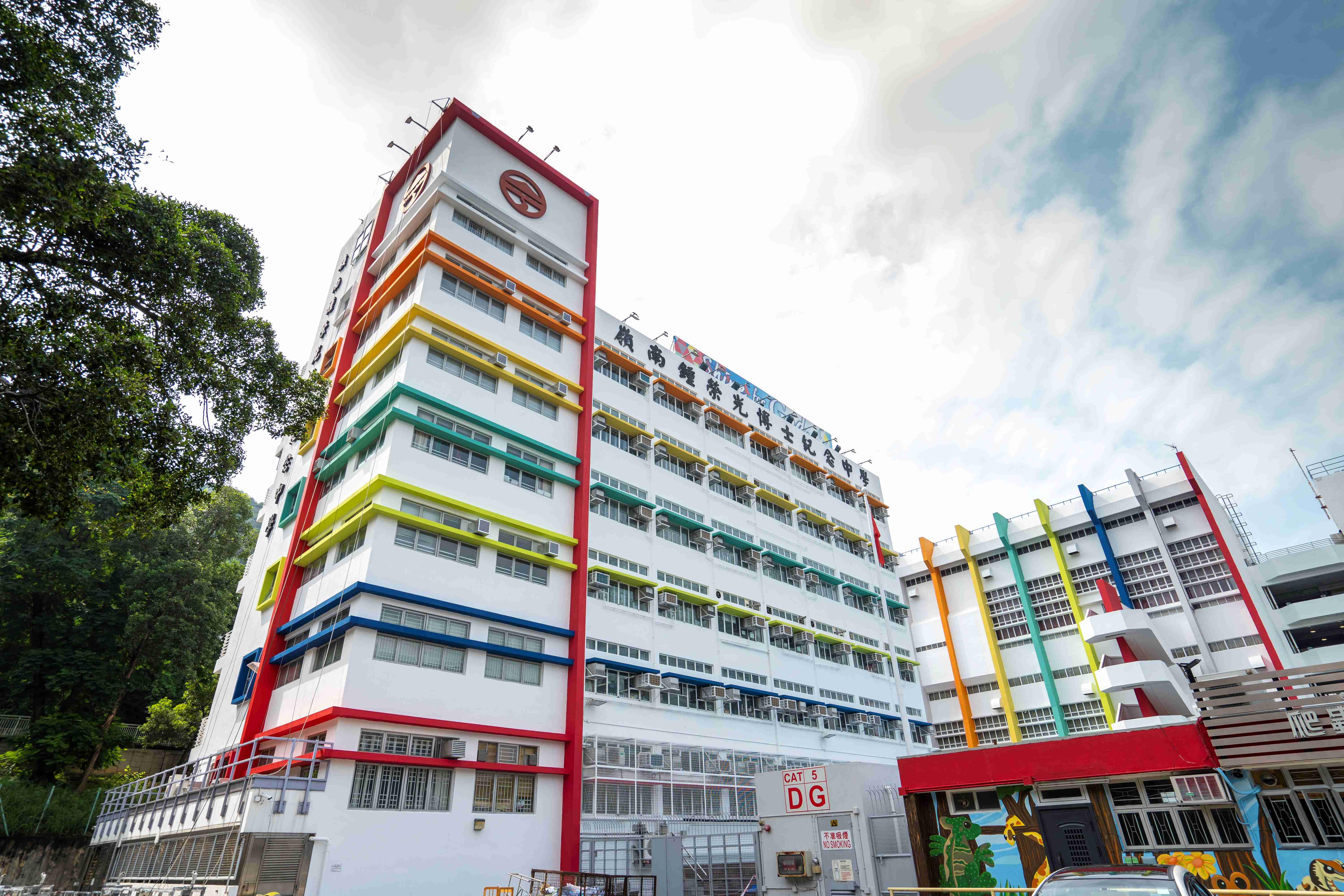
Last revision date: 19/08/2026


