 Secondary School Profiles 2025/2026


 Secondary School Profiles 2025/2026

| Address: | 1, Tin Sum Street, Tai Wai, NT | |||
| Phone: | 26991031 | Email: | master@plkcwc.edu.hk | |
| Fax: | 26030743 | Website: | https://www.plkcwc.edu.hk/ | |
School Mission
It is our mission to uncover each student's unique potential, helping them build self-esteem and confidence while enjoying a fulfilling school life. We are dedicated to nurturing students into independent thinkers and responsible citizens, equipped with the knowledge and skills necessary to contribute positively to the development of Hong Kong society. We encourage them to actively participate in community and to make meaningful contributions.
 School Information
 | District | : | Sha Tin |
| Other District(s) | : | |
| Supervisor / Chairman of School Management Committee | : | Miss Abbie Sai Kit Chan, BBS |
| Principal (with Qualifications / Experiences) | : | Mr. Chiu Man Ho (B.B.A., M.A., M.Ed.) |
| School Type | : | Aided |
| Student Gender | : | Co-ed |
| Area Occupied by the School | : | About 5800 Sq. M |
| Name of Sponsoring Body | : | Po Leung Kuk |
| Incorporated Management Committee | : | Established |
| Percentage of School Supervisor and Managers / Chairperson and Members of School Management Committee (SMC) of Government Schools Fulfilling the Training Targets | : | 86% |
| Religion | : | Not Applicable |
| Year of Commencement of Operation | : | 1985 |
| School Motto | : | Love, Respect, Diligence and Honesty |
| Parent-Teacher Association | : | Yes |
| Student Union / Association | : | Yes |
| Past Students’ Association / School Alumni Association | : | Yes |
| 4Rs Mental Health Charter | : | Yes |
| Whole School Health Programme | : | Action School |
 Chargeable Fees (2025/2026)
| School Fee ($) | Tong Fai ($) | ||
| S1 | - | - | |
| S2 | - | - | |
| S3 | - | - | |
| S4 | - | $290 | |
| S5 | - | $290 | |
| S6 | - | $290 | |
| Parent-Teacher Association Fee (Annual) ($) | : - | ||
| Student Union / Association Fee ($) | : - | ||
| Approved Charges for Non-standard Items (Annual)($) | : Recognized fees for specific purposes (S1-S5: $300, S6: $150) | ||
| Other Charges / Fees ($) | : - | ||
 School Facilities
 | Number of Classroom(s) | : | 50 |
| School Facilities | : | The facilities for the academic purposes include Remote Smart Classroom, Ecological Garden, Multimedia Experiment Center, New Library, STEAM Center, Career Resource Center, English Corner, Multimedia Learning Centre, Physics Laboratory, Chemistry Laboratory, Integrated Science/Biology Laboratory, Electronics Technology Centre, Social Science Experimental Laboratory, Computer Laboratory, Information and Communication Technology Centre and Information Technology Learning Centre. Those facilities for the non-academic purposes include Visual Arts Room, Music Room, Gym Room and Activity Room. |
| Facility(ies) for Supporting Students with Special Educational Needs | : | Ramp, Accessible lift and Accessible toilet. |
 Teaching Staff Information (Including School Head) in the 2025/2026 School Year
 | Number of Teaching Posts in the Approved Establishment | : | 53 |
| Total Number of Teachers in the School | : | 56 |
| Qualifications and Professional Training | : | Percentage of Teaching Staff (%) |
| Had Received Teacher Training | : | 87% |
| Bachelor Degree | : | 100% |
| Master / Doctorate Degree or above | : | 33% |
| Special Education Training | : | 63% |
| Years of Experience | : | Percentage of Teaching Staff (%) |
| 0-4 Years | : | 34% |
| 5-9 Years | : | 11% |
| 10 Years or above | : | 55% |
 2025/2026 Class Structure
 | Number of Classes | ||
| S1 | : | 3 |
| S2 | : | 3 |
| S3 | : | 3 |
| S4 | : | 3 |
| S5 | : | 4 |
| S6 | : | 4 |
 Subjects Offered
 | Subjects Offered in the 2025/2026 School Year | : | S.1 - S.3 |
| Chinese as the Medium of Instruction | : | Chinese Language, Mathematics*, Citizenship, Economics and Society (S.1, S.2), Life and Society (S.3), Geography, Integrated Science*, Chinese History, Physical Education, Music, Putonghua, Design & Applied Technology, Visual Arts, Information & Communication Technology, History and Business Fundamentals (S.3) |
| English as the Medium of Instruction | : | English Language |
| Adopt a Different Medium of Instruction by Class or by Group / School-based Curriculum | : | - |
| Subjects Offered in the 2025/2026 School Year | : | S.4 - S.6 |
| Chinese as the Medium of Instruction | : | Chinese Language, Mathematics, Mathematics Extended Part: Module 2 (Algebra and Calculus), Citizenship and Social Development, Physical Education, Tourism & Hospitality Studies, Chinese History (S.4 and S.5), Visual Arts, Information & Communication Technology, Geography, Business, Accounting and Financial Studies, Economics, Design & Applied Technology, Physics, Chemistry, Biology and Applied Learning |
| English as the Medium of Instruction | : | English Language |
| Adopt a Different Medium of Instruction by Class or by Group / School-based Curriculum | : | - |
| Subjects to be Offered in the 2026/2027 School Year | : | S.1 - S.3 |
| Chinese as the Medium of Instruction | : | Chinese Language, Mathematics*, Citizenship, Economics and Society, Geography, Integrated Science*, Chinese History, Physical Education, Music, Putonghua, Design & Applied Technology, Visual Arts, Information & Communication Technology, History, Business Fundamentals (S.3) |
| English as the Medium of Instruction | : | English Language |
| Adopt a Different Medium of Instruction by Class or by Group / School-based Curriculum | : | - |
| Subjects to be Offered in the 2026/2027 School Year | : | S.4 - S.6 |
| Chinese as the Medium of Instruction | : | Chinese Language, Mathematics, Mathematics Extended Part: Module 2 (Algebra and Calculus), Citizenship and Social Development, Physical Education, Tourism & Hospitality Studies, Chinese History, Visual Arts, Information & Communication Technology, Geography, Business, Accounting and Financial Studies, Economics, Design & Applied Technology, Physics, Chemistry, Biology, Applied Learning |
| English as the Medium of Instruction | : | English Language |
| Adopt a Different Medium of Instruction by Class or by Group / School-based Curriculum | : | - |
*Subjects with Extended Learning Activities (ELA) in English
 Secondary One Admission, Orientation Activities & Healthy School Life
 | Secondary One Admission | : | Our school will accept discretionary places. Our school will participate in the Secondary School Places Allocation System through central allocation stage (Applicable for admission to S.1 in September 2026 ).Applicants are assessed based on the following requirements: 1. The Rank Order List from the Education Bureau 30% 2. Interview Performance 35% 3. Conduct 25% 4. Extracurricular Activities and awards 10% |
| Orientation Activities and Healthy Life | : | 1. We organize a diverse range of orientation activities, including preparatory classes for Chinese, English, Mathematics, and STEAM, a Lunch Arrangement Program, a Parent Orientation Meeting, Orientation Day, and an Orientation Camp. These initiatives help new students familiarize themselves with the campus and ensure a smooth transition to secondary school life. 2. We encourage students to actively participate in Physical Education classes, school team training, as well as inter-class competitions, and Sports Day. This engagement fosters healthy exercise habits and promotes a balanced lifestyle, while also enhancing teamwork and social skills. 3. We organize activities focused on students' mental health to help improve resilience and ensure their well-being. |
 School Characteristics
 | School Management | ||
| (1) School's Major Concerns | : | 1. Promote differentiated instruction to enable students of different abilities to engage actively in their learning. 2. Cultivate students' international perspectives and positive values through diverse experiences and experiential learning. 3. Build a happy campus that enhances the sense of cohesion and belonging among teachers and students. |
| (2) School Management Organisation | : | 1. Incorporated Management Committee formulates the school development blueprint, and monitors the performance of learning and teaching, the deployment of human resources and the allocation of finance. 2. The Principal, Vice-Principals, Department Heads and the Representatives of teachers form the Administrative Board which formulates the detailed master school plans and organizes staff meetings to discuss and reach a decision on school policies. |
| (3) Incorporated Management Committee / School Management Committee / Management Committee | : | Our school’s Incorporated Management Committee is composed of the Chairman and the Vice Chairman of Po Leung Kuk, the Principal Education Secretary, the Chief Financial Officer, the Teacher Manager, the Parent Manager, the Alumni Manager, the Independent Manager and the Principal. |
| (4) School Green Policy | : | 1. Our school regularly hosts learning activities related to climate change and green lifestyles, aiming to raise students' environmental awareness. These events provide a platform for students to develop and apply relevant knowledge and skills, fostering positive values and attitudes that empower them to tackle the challenges posed by climate change and become responsible global citizens. 2. We prioritize campus greening initiatives and actively promote energy conservation, carbon reduction, and water-saving measures, including the introduction of solar power. These efforts not only enhance students' environmental consciousness but also encourage them to engage in sustainable practices, contributing to a better future for our planet. |
| Learning and Teaching Plan | ||
| (1) Whole-school Language Policy | : | 1. We foster a language-rich environment with an aim to provide more chances to showcase their language abilities and thus enhance the language and communication skills. 2. Students are grouped according to their abilities in Chinese Language and English Language lessons so as to cater for learner diversity. Gifted education is also in place to further boost students’ language abilities. 3. With NET teachers from The Sprouts Foundation, school-based English curriculum and project learning are devised to enrich students' English learning experiences and boost their confidence. |
| (2) Learning and Teaching Strategies | : | 1. The curriculum design integrates daily life with learning needs, providing diverse learning experiences that effectively stimulate motivation, interest, and abilities while promoting self-directed learning. 2. Students are encouraged to share their learning outcome through different tools and means. This boosts their confidence in learning and students show steady improvements in their learning. |
| (3) School-based Curriculum | : | 1. Electives: 2X and 3X. Applied Learning is part of our curriculum for our students under the 3X option while students can also opt for three elective subjects in senior forms. Students are also encouraged to take Category C subjects in the HKDSE in their own time. 2. Curriculum highlights: We are committed to implementing differentiated instruction strategies to ensure that students of varying abilities can actively engage in learning, thereby achieving the best learning outcomes. Japanese and Korean classes will be provided for junior students to cultivate their international perspectives and positive values and to further develop their language abilities. |
| (4) Major Renewed Emphases in the School Curriculum | : | 1. Strengthen support and guidance for gifted students by providing more targeted learning resources to maximize their potential. 2. Actively promote STEAM education while enhancing the application of information technology to improve innovation and practical skills. 3. Strengthen the teaching of Chinese history and culture to foster understanding and appreciation of Chinese heritage. |
| (5) Life Planning Education | : | 1. Junior students deepen their self-awareness through various activities, reflect on their future, and set academic and career goals to motivate their learning. 2. Senior students are provided with the latest life planning and career information to facilitate their further studies and future career paths. 3. Individual support is given to our students to facilitate whole-person development. |
| Student Support | ||
| (1) Whole School Approach to Catering for Learner Diversity | : | 1. We group students by their ability in different subjects to cater for learner diversity. It can ensure that students can grow and learn in an optimal setting. 2. To further support students' academic development, we actively promote gifted training to help students realize their potential and to excel academically. 3. For newly arrived students, we have established an adaptation program and English learning groups to assist them in adjusting to the new environment. |
| (2) Whole School Approach to Integrated Education | : | 1. We arrange for teachers, counselors, and speech therapists to assess, train, and provide guidance tailored to the learning differences of individual students. 2. We implement small class teaching in Language subjects to provide more targeted and sufficient support. 3. We value collaboration with parents to discuss support strategies, develop Individual Education Plans (IEPs) for students in need and conduct follow-ups and assessments. |
| (3) Education Support for Non-Chinese Speaking (NCS) Students | : | Our school provides additional support for NCS students to facilitate their learning of Chinese: arranging intensive Chinese learning and teaching mode(s), e.g. pull-out learning if necessary, split-class/group learning, etc.; developing school-based Chinese Language curriculum and/or adapting learning and teaching materials; and organising activities to create an inclusive learning environment in the school. |
| (4) Measures to Provide Adaptation for Learning and Assessment | : | 1. We conduct two learning assessments and two examinations every academic year to gain a comprehensive understanding of students' learning progress. 2. We combine formative and summative assessments to evaluate performance comprehensively and provide effective feedback. 3. We use differentiated assignments to address learning differences, adjusting based on varying abilities and needs to ensure effective learning. |
| Home-School Co-operation and School Ethos | ||
| (1) Home-School Co-operation | : | 1. Our Parent-Teacher Association aims at cultivating and fostering closer and harmonious parent-teacher-student relationships and enhancing students’ sense of belonging to the school with activities. 2. Regular meetings and activities are held to promote parent education, providing more chances for parents and children to interact and boosting the connection between parents and the school. |
| (2) School Ethos | : | 1. We place great importance on cultivating students' discipline and positive values by implementing a whole-school approach, with all teachers collaborating to support guidance and counseling efforts. 2. School-based class teacher periods are curated to promote value education. Inter-class activities are also held regularly to foster a caring culture in the school. 3. In addition to having two social workers and an Educational Psychologist on campus, we have also hired assistants and counseling social workers to help parents and children develop a closer relationship. 4. We treasure student leaders so we devote our resources on leadership training for students to develop their leadership skills and collaboration skills. |
| Future Development | ||
| (1) School Development Plan | : | 1. In order to enhance students’ learning effectiveness, we actively promote differentiated instruction, enabling students of varying abilities to engage proactively in their learning and build a solid academic foundation and habits. 2. We are dedicated to providing diverse experiences and experiential learning, creating a broad and varied curriculum that cultivates students' international perspectives and positive values. 3. We aim to establish a healthy and caring campus that supports students in discovering their strengths and goals, helping them develop healthy lifestyles. |
| (2) Teacher Professional Training and Development | : | 1. To continuously enhance teachers' professional competence and teaching quality, we provide professional learning release days and staff development days to strengthen teachers’ professional qualities and skills. 2. We are committed to creating opportunities for teachers to develop, encouraging them to share teaching experiences while absorbing the latest pedagogy to apply in actual teaching through professional exchanges and collaborative lesson planning sessions. 3. We regularly assess the effectiveness of the training to ensure its relevance and impact, aiming to establish an environment of continuous learning and growth that promotes teachers' professional development and enhances teaching quality. |
| Life-wide Learning (Including Five Essential Learning Experiences to be Provided through Key Learning Areas, Extra-curricular Activities, Co-curricular Activities, etc.) | : | 1. All subjects integrate activities into the curriculum, encouraging students to go beyond the classroom for hands-on learning and experiences. 2. We offer over forty activities in academics, arts, services, sports, and interests, providing a wide variety of choices for students to explore. 3. Junior students can develop various skills and confidence by participating in activities and uniformed groups through our unique Learning Arts and Sports Program and Sail to Success Series. 4. We design a variety of student-directed service learning sessions to boost students’ creativity with an aim for students to learn to care about others. |
| Others | : | 1. We fully support students in discovering their strengths and goals, encouraging them to participate in external competitions and achieve outstanding results. In the 2024/25, our students won awards in over seventy local and international competitions across various fields, including languages, humanities, arts, music, sports, and technology, with more than 400 participants. 2. We provide more opportunities for overseas exploration to help students broaden their understanding of different countries and cultivate an international perspective. Our school has actively applied for various learning funds to enhance overseas exchange experiences. In the past year, we have visited places such as Shenzhen, Guangzhou, Chongqing, Beijing, Korea and France, striving to ensure that our students' footprints are spread across the world. |
| Direct Public Transportation to School | : | 1. MTR: Near Tai Wai Station; 2. Buses: 46X, 89B, 88K, 281M, 87B, 86C, 286X, 85, 85B, 81C, 81M, 80, 80K; 3. Public Light Buses: 68K, 803, 804, 812. |
| Remarks | : | - |
 School Map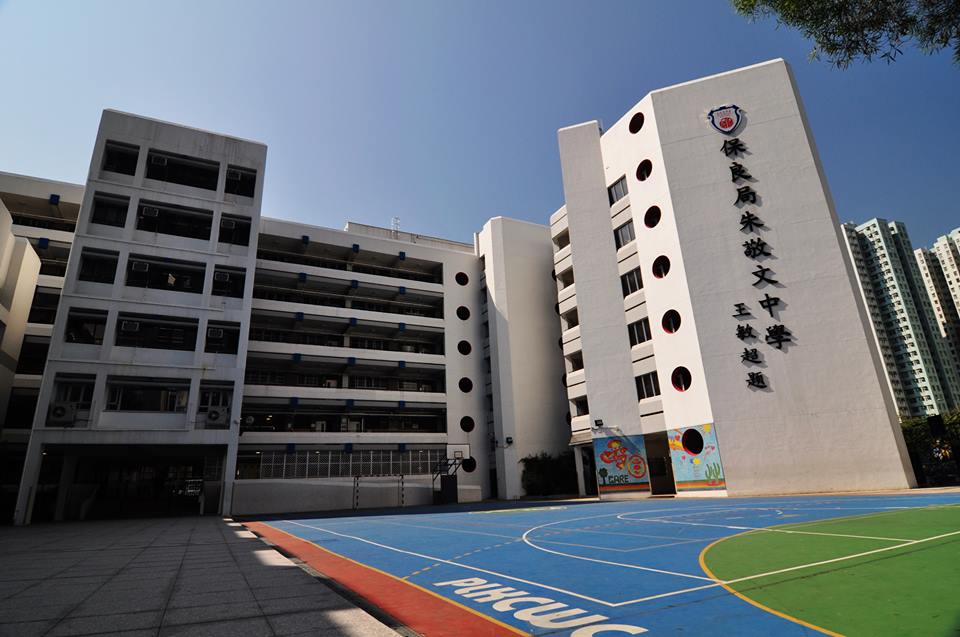
Last revision date: 5/12/2025


