 Secondary School Profiles 2025/2026


 Secondary School Profiles 2025/2026
| Address: | 4-6 Kin Tung Road Tung Chung | |||
| Phone: | 21091001 | Email: | mail_ss@hoyu.edu.hk | |
| Fax: | 21092002 | Website: | https://ss.hoyu.edu.hk/ | |
School Mission
In observance of the guiding principle of Sik Sik Yuen, "To act benevolently and to preach benevolence", which is also our School Motto, together with the teachings of Confucianism, Buddhism and Taoism, our School teaches and instills in our students a strong sense of probity, benevolence and civic duty. We emphasize whole person development for our students through moral, intellectual, physical, social and aesthetic education, leading to the enhancement of abilities for independent thinking, self-learning and life-long learning.
 School Information
 | District | : | Islands |
| Other District(s) | : | |
| Supervisor / Chairman of School Management Committee | : | Dr. Siu Tak Wa |
| Principal (with Qualifications / Experiences) | : | Mr. Mak Man Chiu (CUHK (MSc. Maths), CUHK (MEd. Counselling), PolyU (BSc. Maths)) |
| School Type | : | Aided |
| Student Gender | : | Co-ed |
| Area Occupied by the School | : | About 11148 Sq. M |
| Name of Sponsoring Body | : | Sik Sik Yuen |
| Incorporated Management Committee | : | Established |
| Percentage of School Supervisor and Managers / Chairperson and Members of School Management Committee (SMC) of Government Schools Fulfilling the Training Targets | : | 100% |
| Religion | : | Confucianism, Buddhism and Taoism |
| Year of Commencement of Operation | : | 1997 |
| School Motto | : | To act benevolently and to preach benevolence |
| Parent-Teacher Association | : | Yes |
| Student Union / Association | : | Yes |
| Past Students’ Association / School Alumni Association | : | Yes |
| 4Rs Mental Health Charter | : | Yes |
| Whole School Health Programme | : | Action School |
 Chargeable Fees (2025/2026)
| School Fee ($) | Tong Fai ($) | ||
| S1 | - | - | |
| S2 | - | - | |
| S3 | - | - | |
| S4 | - | $340 | |
| S5 | - | $340 | |
| S6 | - | $340 | |
| Parent-Teacher Association Fee (Annual) ($) | : $30 | ||
| Student Union / Association Fee ($) | : - | ||
| Approved Charges for Non-standard Items (Annual)($) | : - | ||
| Other Charges / Fees ($) | : - | ||
 School Facilities
 | Number of Classroom(s) | : | 30 |
| School Facilities | : | Biotechnology Mobile Laboratory, Biotechnology Laboratory, STEM + LAB., Ho Yu Library, Immersive Learning Room, Fitness Center, Archery and Golf Area, Nature Education Trail, Dance Room, Student Activity Centres, Multi Media Learning Centre, Digital Library, Computer Rooms, Auditorium, Home Economics Room, Mini Soccer Field, Basketball Court, Gymnasium, Running Track, Sand Pit, Climbing Wall, Greenhouse, Butterfly Garden and Farmland. |
| Facility(ies) for Supporting Students with Special Educational Needs | : | Ramp, Accessible lift and Accessible toilet. |
 Teaching Staff Information (Including School Head) in the 2025/2026 School Year
 | Number of Teaching Posts in the Approved Establishment | : | 59 |
| Total Number of Teachers in the School | : | 69 |
| Qualifications and Professional Training | : | Percentage of Teaching Staff (%) |
| Had Received Teacher Training | : | 97% |
| Bachelor Degree | : | 100% |
| Master / Doctorate Degree or above | : | 41% |
| Special Education Training | : | 50% |
| Years of Experience | : | Percentage of Teaching Staff (%) |
| 0-4 Years | : | 40% |
| 5-9 Years | : | 10% |
| 10 Years or above | : | 50% |
 2025/2026 Class Structure
 | Number of Classes | ||
| S1 | : | 4 |
| S2 | : | 4 |
| S3 | : | 4 |
| S4 | : | 4 |
| S5 | : | 4 |
| S6 | : | 4 |
 Subjects Offered
 | Subjects Offered in the 2025/2026 School Year | : | S.1 - S.3 |
| Chinese as the Medium of Instruction | : | Chinese Language, Putonghua, Life and Society* (S.3), Citizenship, Economics and Society* (S.1-S.2), Chinese History, History*, Geography*, Technology and Living, Physical Education, Music, Visual Arts, Computer & Information Technology* |
| English as the Medium of Instruction | : | English Language |
| Adopt a Different Medium of Instruction by Class or by Group / School-based Curriculum | : | Mathematics*, Science* |
| Subjects Offered in the 2025/2026 School Year | : | S.4 - S.6 |
| Chinese as the Medium of Instruction | : | Chinese Language, Chinese History, Tourism and Hospitality Studies, Technology and Living, Health Management and Social Care, Visual Arts, Physical Education |
| English as the Medium of Instruction | : | English Language |
| Adopt a Different Medium of Instruction by Class or by Group / School-based Curriculum | : | Mathematics, Citizenship and Social Development, Physics, Chemistry, Biology, Economics, History, Geography, Information and Communication Technology |
| Subjects to be Offered in the 2026/2027 School Year | : | S.1 - S.3 |
| Chinese as the Medium of Instruction | : | Chinese Language, Putonghua, Citizenship, Economics and Society*, Chinese History, History*, Geography*, Technology and Living, Science*, Physical Education, Music, Visual Arts, Computer & Information Technology* |
| English as the Medium of Instruction | : | English Language |
| Adopt a Different Medium of Instruction by Class or by Group / School-based Curriculum | : | Mathematics*, Science* |
| Subjects to be Offered in the 2026/2027 School Year | : | S.4 - S.6 |
| Chinese as the Medium of Instruction | : | Chinese Language, Chinese History, Tourism and Hospitality Studies, Technology and Living, Health Management and Social Care, Visual Arts, Physical Education |
| English as the Medium of Instruction | : | English Language |
| Adopt a Different Medium of Instruction by Class or by Group / School-based Curriculum | : | Mathematics, Citizenship and Social Development, Physics, Chemistry, Biology, Economics, History, Geography, Information and Communication Technology |
*Subjects with Extended Learning Activities (ELA) in English
 Secondary One Admission, Orientation Activities & Healthy School Life
 | Secondary One Admission | : | Our school will accept discretionary places. Our school will participate in the Secondary School Places Allocation System through central allocation stage (Applicable for admission to S.1 in September 2026 ).Our school accepts applications for S.1 discretionary places, that including Interview, Academic Performance(School results and rank order provided by the EDB), Conduct, Co-curricular activities/Services/Awards/Special talents, Religious Affiliation and Connection with the School / Sponsoring Body (e.g., Primary 6 students from schools under the same Sponsoring Body, children of alumni, etc.) |
| Orientation Activities and Healthy Life | : | 1. Orientation activities–Self Regulated Learning Week is conducted for new students during the summer holiday. There are various team and group activities as well as bridging courses for Chinese Language, English Language, Mathematics, Science, Chinese History, Citizenship, Economics and Society, History and Geography. Students and parents participate in the New Student Orientation Day activities including school introduction, various observation classes for parents and meeting with class teachers. This aims to enable parents to have a better understanding of our School’s beliefs and the method of Self Regulated Learning, so that it fostered home-school cooperation in nurturing students’ spirit of self-learning. 2. Healthy Life–The School adopts a healthy campus policy and participated in the Healthy Campus Programme to help students understand the importance of good health and a well-balanced diet and build positive values. This aims to enhance students’ ability to tackle adversity and adapt to the ever-changing society. Based on the main theme of “Love • Ho Yu”, the School also implements the self-help programme “Love • Overcoming Adversity”, the leadership programme “Love • Excellence” and the service programme “Love • Helping Others”. Our Hoyu Market and Math Bank, in line with the financial management education covered in the values education class and moral education class, aim to enable students to understand the correct financial management concepts from a young age. |
 School Characteristics
 | School Management | ||
| (1) School's Major Concerns | : | 1. Extend the dimensions of self-directed learning to accommodate the diversity of learning. 2. Strengthen value education to cultivate students into good citizens. |
| (2) School Management Organisation | : | Our School, established with one registration incorporating primary and secondary in 2003, is governed by one IMC and managed by one administrative system with one team of teaching staff. We offer continuous primary and secondary education to our students in a "Through-Train" mode of education. |
| (3) Incorporated Management Committee / School Management Committee / Management Committee | : | IMC is comprised of representatives from the School Sponsoring Body, the Principal, and representatives of teachers, parents and alumnus. |
| (4) School Green Policy | : | The school embraces the principles of sustainable development by allowing students to engage in technology exploration and research. It has created various eco-friendly setups located in areas such as the Yu Garden, Yu Herb Garden and Yu library. Hydroponics in the nursery and the organic farmland of our Yu Garden can enable students to experience the joy of farming. Besides, there are newly installed solar panels and waste separation bins for recycling. Our civic ambassador team promotes the important message of environmental protection and a clean campus in a bid to cultivate the green school culture. |
| Learning and Teaching Plan | ||
| (1) Whole-school Language Policy | : | We aim at training our students to be proficient in Cantonese, Putonghua and English by: 1. Creating a favourable learning environment for language acquisition as in the weekly English Day, English Broadcast and Festival Celebrations. Students can improve their English skills through learning activities in the "English Everywhere" environment. 2. Having Native Speaking English teachers teaching most of the English Speaking classes. 3. Mathematics, Science, Computer & Technology of some of the junior secondary classes are taught in English. Extended learning activities conducted in English are implemented in other subjects. For example, some of the modules are taught with English as the medium of instruction to enhance students' ability to use the syntax and vocabulary of English. Extra-curricular extended learning activities are also conducted in English. |
| (2) Learning and Teaching Strategies | : | 1. Teaching is focused on the differing abilities and cognitive development of individual students and designed in a learner-centered approach. 2. An inquisitive learning process is encouraged for the acquisition of general and specialized knowledge, logical thinking and calculation skills. 3. Self Regulated Learning Scheme is adopted. We hope our students can be equipped with the skills of "life-long learning" and "learning to learn". 4. 40-minute classes are conducted to allow more time for a diverse range of highly intensive activities. 5. School-based curriculum is set out for junior secondary forms according to the needs and abilities of the students in line with the NSS syllabus and assessment. 6. 'Morning Reading with teachers', Reading Awards, and online reading schemes, plus top reader recommendations are all offered to encourage a good reading habit. |
| (3) School-based Curriculum | : | 1. Electives: 3X. Elective subjects include: Biology, Chemistry, Physics, Mathematics Extended Part (Algebra and Calculus), Information and Communication Technology, Health management and Social care, Technology and Living, Tourism and Hospitality Studies, Economics, Geography, Chinese History, History, Visual Arts and Physical Education. 2. Curriculum highlights: Several school-based curricula are implemented at junior secondary level to raise students’ interest in learning. These curricula are Values Education, Biotechnology, Course of Traditional Chinese Medicine Authentication, STEM+ courses, Technology & Living, and Computer and Information Technology. |
| (4) Major Renewed Emphases in the School Curriculum | : | 1. Self-directed learning, along with adaptive teaching strategies, is implemented in junior secondary forms through the "Self-Directed Learning" and "Adaptive Teaching" programs. Students do pre-class preparation according to self-learning outline designed by the teacher. Group discussion, presentation, reading aloud, peer evaluation and teachers' guidance are conducted to enhance learning effectiveness. Our students have clearly gained thorough understanding of the meaning of learning adopting suitable methods of learning. This has enabled them to achieve good results in the Diploma of Secondary Education Examination. At the same time, students have developed the belief in life-long learning and a positive attitude. 2. Continuous efforts have been made to develop the Biotechnology curriculum over the years. In recent years, emphasis has been put on the enhancement of integrated learning of mechanical engineering, mathematics, and information and communication technology. This aims to encourage students to learn in a “hands-on” manner. As proposed by Kolb in his theory of experiential learning, experience is the starting point of learning, and each experience is turned into knowledge through sharing and reflection. This shows that students not only accumulate experience and knowledge during the learning process, they can also build a proactive learning attitude. 3. Biotechnology and Chinese Medicine Authentication: Junior students can begin learning about different types of Chinese herbal medicine, including their properties and classifications. This foundation helps them understand the origins, history, and significance of herbal teas in Guangdong Province. The senior curriculum then guides students through the process from the original plants to advanced biotechnological techniques, enabling them to analyze the DNA of various Chinese herbs and apply principles of molecular biology for identification. |
| (5) Life Planning Education | : | According to the needs of different learning stages, students can learn about themselves, further education and the employment environment, so as to explore the future direction, set academic and work goals, and set sail towards their dreams. Besides, students are introduced to information on different types of further education, counselling and tertiary programme experience, so as to assist them in choosing the appropriate pathway for further education and preparing them for further studies. To broaden students' understanding of the working life and provide them with work-related learning experiences to broaden their horizons and help them equip themselves early. Value education is strengthened for cultivating students' positive values and attitudes towards learning and financial management. |
| Student Support | ||
| (1) Whole School Approach to Catering for Learner Diversity | : | To cater for individual differences of students, our school adopts teaching in small groups and collaborative teaching. For some of the Secondary One subjects (Chinese, English, Mathematics and Science), tiered assignments are used. Teachers customize appropriate teaching materials to meet students’ individual needs and help them learn effectively. |
| (2) Whole School Approach to Integrated Education | : | Our school has established a Student Support Team to provide appropriate assistance for students with special educational needs, helping them integrate into the mainstream school environment and develop their personal potential. The main members of the Student Support Team include the Vice Principal, the Coordinator, Support Teachers, Chinese Language Teachers, English Language Teachers, Mathematics and Science Teachers, on-campus counselors, on-campus social workers, educational psychologists, and teaching assistants. At the teacher level, to enhance homeroom teachers' understanding of individual students with special learning needs and to arrange appropriate support and guidance for them, the support team communicates with homeroom teachers about the students' learning situations and discusses support measures. Our school encourages teachers to enroll in courses related to inclusive education to improve their overall professional competency in the field of special education. At the student level, to identify students' special educational needs early, our team conducts Chinese literacy assessments for new students at the beginning of school year. To strengthen support for individual students with special learning needs, our school flexibly utilizes the "Learning Support Grant" and the "Grant for Supporting Non-Chinese Speaking Students with Special Educational Needs" to hire additional support staff or purchase professional services for various training courses and group activities. Regarding parents, our school values home-school cooperation. To establishing a regular communication mechanism, we hold parent seminars and conduct individual meetings to gather parents' opinions and collaboratively support students' learning and growth. |
| (3) Education Support for Non-Chinese Speaking (NCS) Students | : | Our school provides additional support for NCS students to facilitate their learning of Chinese: providing after-school support programmes in learning Chinese; appointing additional teacher(s)/teaching assistant(s) to support NCS students’ learning of Chinese; arranging intensive Chinese learning and teaching mode(s), e.g. pull-out learning if necessary, split-class/group learning, etc.; developing school-based Chinese Language curriculum and/or adapting learning and teaching materials; organising activities to create an inclusive learning environment in the school; and hiring additional manpower and/or translation/interpretation services to facilitate the communication with parents of NCS students. |
| (4) Measures to Provide Adaptation for Learning and Assessment | : | 1. Our school values students' learning process and progress. Besides tests and examinations, periodic progress evaluations are conducted to evaluate the performance of students. 2. Our school promotes students' self-evaluation, enabling students to realize their strengths and weaknesses. 3. Adjustments built into the School's Internal Examination mechanism to meet students' needs include: simplified exam paper, extended time allowed, computer screen to help students read the exam paper. |
| Home-School Co-operation and School Ethos | ||
| (1) Home-School Co-operation | : | Through the Parent-Teacher Association activities, close liaison with parents is ensured. The school works hand in hand with parent managers and parent volunteers in the best interest of students. |
| (2) School Ethos | : | Our school puts emphasis on moral education and training students’ endurance and self-discipline. Students are taught to respect others, strive for academic excellence, and care for the school so as to create a harmonious and orderly school culture. The school organizes various activities such as the Big Brother and Big Sister Scheme and Leadership Scheme for students’ whole person development. This also helps students to have good self-understanding, develop their potential and cultivate positive values, in order to become a self-loving teenager with self respect. In addition, Quality Circle is formed at all levels. It aims to combine the resources of the class teachers of the same grade to provide comprehensive care to the students. |
| Future Development | ||
| (1) School Development Plan | : | Cultivate students’ self-respect and self-confidence; enhance students’ Self Regulated Learning ability and learning effectiveness. |
| (2) Teacher Professional Training and Development | : | Our School encourages the continuous professional development of teachers. We implement various schemes and activities for our teaching staff, including the Peer Teaching Observation, Guidance and Assistance for new teachers, and sharing of teaching experiences, to enhance their teaching capabilities. |
| Life-wide Learning (Including Five Essential Learning Experiences to be Provided through Key Learning Areas, Extra-curricular Activities, Co-curricular Activities, etc.) | : | Emphasis is put on organizing learning activities outside the classroom to enrich students’ learning experiences in “intellectual development, moral and civic education, community service, physical and aesthetic development, and career-related experiences”. For example, reading club, science exploration interest classes, volunteer services, leadership teams, peer counseling, Auxiliary Medical Service, scout activities, marching band, flag-guard team, Junior Police Call branch, Chinese orchestra, choir, hand-bell team, dance team, basketball, football and volleyball teams, kin-ball team, archery team, track and field team, balloon art, overseas cultural exchange. These diverse activities aim at boosting students’ whole-person development. In addition, our school is promoting the "Crossing Challenges to Explore the World" activity, which combines content from various disciplines to explore different themes related to the Sustainable Development Goals, guiding students to step outside the classroom and broaden their international perspectives. |
| Others | : | - |
| Direct Public Transportation to School | : | Bus: 37, 37M, 37H, E32A, E21A, E36A |
| Remarks | : | - |
 School Map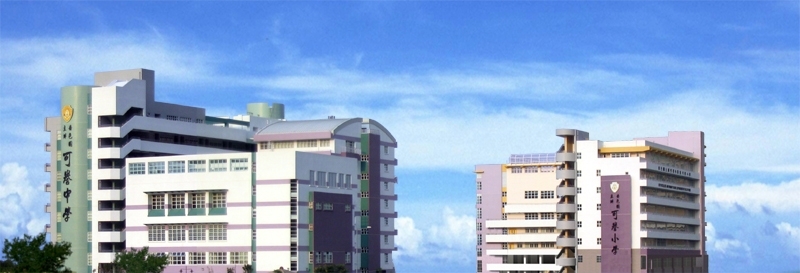
Last revision date: 24/12/2025


