 Secondary School Profiles 2025/2026


 Secondary School Profiles 2025/2026
| Address: | 9 Fung Shun Street, Wo Che Estate, Shatin, NT | |||
| Phone: | 26917217 | Email: | info@pyc.edu.hk | |
| Fax: | 26020411 | Website: | http://www.pyc.edu.hk | |
School Mission
Our school has "holistic education" as its philosophy, with "Faith, Hope, Love" as its motto. We are committed to the provision of a comprehensive range of quality education services, which promotes the moral, intellectual, physical, social, aesthetic and spiritual development of students.
We help our students grow in physical fitness, self-discipline, responsibility, independent thinking, creativity, leadership and social skills.
Seeking to nurture in our students positive attitudes and Christian values, we want to see them develop into good citizens, serving the community and contributing to our nations.
 School Information
 | District | : | Sha Tin |
| Other District(s) | : | Sham Shui Po |
| Supervisor / Chairman of School Management Committee | : | Rev. Po Kam Cheong |
| Principal (with Qualifications / Experiences) | : | Mr. Chu Ka Tim (Master of Education, PGDE, Bachelor of Engineering) |
| School Type | : | Aided |
| Student Gender | : | Co-ed |
| Area Occupied by the School | : | About 5000 Sq. M |
| Name of Sponsoring Body | : | The Hong Kong Council of the Church of Christ in China |
| Incorporated Management Committee | : | Established |
| Percentage of School Supervisor and Managers / Chairperson and Members of School Management Committee (SMC) of Government Schools Fulfilling the Training Targets | : | 100% |
| Religion | : | Protestantism / Christianity |
| Year of Commencement of Operation | : | 1978 |
| School Motto | : | Faith, Hope, Love |
| Parent-Teacher Association | : | Yes |
| Student Union / Association | : | Yes |
| Past Students’ Association / School Alumni Association | : | Yes |
| 4Rs Mental Health Charter | : | Yes |
| Whole School Health Programme | : | Pledged School |
 Chargeable Fees (2025/2026)
| School Fee ($) | Tong Fai ($) | ||
| S1 | - | $200 | |
| S2 | - | $200 | |
| S3 | - | $200 | |
| S4 | - | $400 | |
| S5 | - | $400 | |
| S6 | - | $400 | |
| Parent-Teacher Association Fee (Annual) ($) | : $100 per family | ||
| Student Union / Association Fee ($) | : $10 per student (annual) | ||
| Approved Charges for Non-standard Items (Annual)($) | : $450 (To enhance teaching and learning facilities) | ||
| Other Charges / Fees ($) | : Depending on the needs of the event. | ||
 School Facilities
 | Number of Classroom(s) | : | 30 |
| School Facilities | : | Our school periodically upgrades the existing facilities on campus, including the Music Room, restrooms, the lighting system in the school hall, and adding LED screens. To ensure a vibrant school life for our students, the four laboratories, the Visual Arts Room, the STEM Hub, the Home Economics Room, the Self-Study Room, the Chapel, the Multimedia Music Laboratory, the Bio-technology Laboratory, School History Gallery, Lecture Theatre, Roof Garden, Ecology Fishpond and solar panels have been built. Moreover, the installation of fans along the corridors on the ground floor and air-conditioners in the covered playground has also contributed to the betterment of the school environment. Aiming at providing our students with an accommodating learning environment, we conducted a renovation project this summer in which we installed a new ventilation system in all classrooms, and renovated the library and the air-conditioning system in the School Hall. |
| Facility(ies) for Supporting Students with Special Educational Needs | : | Ramp, Accessible lift, Accessible toilet and tactile guide path plan. |
 Teaching Staff Information (Including School Head) in the 2025/2026 School Year
 | Number of Teaching Posts in the Approved Establishment | : | 54 |
| Total Number of Teachers in the School | : | 63 |
| Qualifications and Professional Training | : | Percentage of Teaching Staff (%) |
| Had Received Teacher Training | : | 90% |
| Bachelor Degree | : | 100% |
| Master / Doctorate Degree or above | : | 52% |
| Special Education Training | : | 64% |
| Years of Experience | : | Percentage of Teaching Staff (%) |
| 0-4 Years | : | 32% |
| 5-9 Years | : | 8% |
| 10 Years or above | : | 60% |
 2025/2026 Class Structure
 | Number of Classes | ||
| S1 | : | 4 |
| S2 | : | 4 |
| S3 | : | 4 |
| S4 | : | 4 |
| S5 | : | 4 |
| S6 | : | 5 |
 Subjects Offered
 | Subjects Offered in the 2025/2026 School Year | : | S.1 - S.3 |
| Chinese as the Medium of Instruction | : | Chinese Language, Chinese History, Putonghua, Citizenship, Economics and Society, Religious Studies (Christianity) |
| English as the Medium of Instruction | : | English Language, Mathematics, History, Geography, Science, Information Technology, Physical Education, Music, Visual Arts, Drama Education, Home Economics (S.1 to S.2) |
| Adopt a Different Medium of Instruction by Class or by Group / School-based Curriculum | : | - |
| Subjects Offered in the 2025/2026 School Year | : | S.4 - S.6 |
| Chinese as the Medium of Instruction | : | Chinese Language, Chinese Literature, Chinese History, Citizenship and Social Development, Tourism and Hospitality Studies, Religious Studies (Christianity) |
| English as the Medium of Instruction | : | English Language, Mathematics, Economics, History, Geography, Biology, Chemistry, Physics, Business, Accounting and Financial Studies, Information and Communication Technology, Visual Arts, Physical Education, Integrated Arts |
| Adopt a Different Medium of Instruction by Class or by Group / School-based Curriculum | : | - |
| Subjects to be Offered in the 2026/2027 School Year | : | S.1 - S.3 |
| Chinese as the Medium of Instruction | : | Chinese Language, Chinese History, Putonghua, Citizenship, Economics and Society, Religious Studies (Christianity) |
| English as the Medium of Instruction | : | English Language, Mathematics, History, Geography, Science, Information Technology, Physical Education, Music, Visual Arts, Drama Education, Home Economics (S.1 to S.2) |
| Adopt a Different Medium of Instruction by Class or by Group / School-based Curriculum | : | - |
| Subjects to be Offered in the 2026/2027 School Year | : | S.4 - S.6 |
| Chinese as the Medium of Instruction | : | Chinese Language, Chinese Literature, Chinese History, Citizenship and Social Development, Tourism and Hospitality Studies, Religious Studies (Christianity) |
| English as the Medium of Instruction | : | English Language, Mathematics, Economics, History, Geography, Biology, Chemistry, Physics, Business, Accounting and Financial Studies, Information and Communication Technology, Visual Arts, Physical Education, Integrated Arts |
| Adopt a Different Medium of Instruction by Class or by Group / School-based Curriculum | : | - |
 Secondary One Admission, Orientation Activities & Healthy School Life
 | Secondary One Admission | : | Our school will accept discretionary places. Our school will participate in the Secondary School Places Allocation System through central allocation stage (Applicable for admission to S.1 in September 2026 ).1. Rank order of applicant’s academic performance provided by EDB and/or applicant’s academic performance at school (50%); 2. Applicant’s interview performance (40%); 3. Others (including conduct, extra-curricular activities, services, awards, evidence of athletic or artistic achievements, language proficiency, etc.) (10%) |
| Orientation Activities and Healthy Life | : | 1-week orientation day camp, English, Chinese and Mathematics bridging classes, Parents' Day for parents of newcomers, Newcomers' Day, Peer Counselling Scheme, Evening Gathering for parents, Parents' Meet for parents of S1 to S4 students etc. The school pays close attention to the development of students' well-being and health and is committed to incorporating this into the curriculum and school activities. Various areas will be developed, including health and fitness and values education. In addition, to enhance students' physical abilities, they will take part in physical education classes and sports activities both within and outside the campus. |
 School Characteristics
 | School Management | ||
| (1) School's Major Concerns | : | 1. Enhance student engagement and proficiency in learning 2. Nurture emotional well-being and foster readiness for challenges among students |
| (2) School Management Organisation | : | 1. Administrative Advisory Committee, Academic Committee, Discipline Committee, Student Guidance Committee, Religious Committee, Civic Education Committee, National and Global Education Committee, Information Technology and Digital Education Committee, Student Support Team, Invitational Educational Team, etc. are set up to oversee different aspects of school development. 2. Management and stakeholders share two-way communication. 3. The IMC provides professional supports. |
| (3) Incorporated Management Committee / School Management Committee / Management Committee | : | The Incorporated Management Committee (IMC) of our school was established on 31 August 2015. School-based management is achieved by the establishment of the IMC, allowing more autonomy and increasing the degree of accountability. Through the concerted efforts of the key stakeholders, the leadership and commitment of frontline teachers and the support of the Government, the mechanism will help improve the standard of teaching and students' learning outcomes. |
| (4) School Green Policy | : | The school commits to improving environmental friendliness on campus. The Civic Education Committee arranges activities such as "Environmental Protection Week" and talks, encourage paper and plastic recycling, and promote energy conservation. In 2018, the school has received a subsidy from the Environment and Conservation Fund (EE & AC projects) to build up an Ecology Fishpond and install Solar Panels. The School has been utilising funding for major repairs/alterations to install energy-efficient lighting control systems for all classrooms, laboratories and the school hall in the Old Wing since 2019. |
| Learning and Teaching Plan | ||
| (1) Whole-school Language Policy | : | In junior forms, with the exception of Chinese-related subjects, Citizenship, Economics and Society & Religious Education (Christianity), all classes are taught in English. With an emphasis on using English as the medium of instruction, students develop bilingual abilities. 1. Small-class teaching is implemented in Chinese Language lessons for S1 and English Language lessons for S1-S2. S1-S2 English oral classes are taught in groups of 8 to 9 students per class and S.3 English oral classes are taught in groups of 15 students per class. 2. The "LAC Team" helps students use English in relation to other subjects, which in turn improves students’ abilities to learn. 3. Drama classes are arranged and taught in English to boost students’ confidence and develop their foundational skills, such as concentration, imagination, observation, team spirit, communication and collaboration skills. 4. By arranging activities such as English campus newspaper (Matrix) editorial team, English Youth Forum, etc., the school hopes to enhance students' English language capacities. 5. With native English-speaking teacher, the school provides students with increased opportunities to use English in daily communication. 6. Activities within the school, such as English Fun camps and writing scripts and lyrics for the school's English musicals, the chool helps raise students' interest and ability in English. 7. Poetry writing and creative writing classes stretch students’ potential and develop their creativity and writing skills. 8. The school encourages students to participate in external competitions and courses, with the aim of increasing their interest and skills in English Language, Chinese Language and Putonghua. This allows students to broaden their horizons and unleash their potential in learning. |
| (2) Learning and Teaching Strategies | : | 1. We promote interdisciplinary collaboration, encourage curriculum mapping and share experiences on strategies in catering for learning diversity. 2. Small-class teaching is implemented for S.1 Chinese Language, Mathematics classes, and S1 & S2 English Language and Home Economics classes. S.1 and S.2 English Language oral classes are split into small groups with a teacher student ratio of 1:8-9 and S.3 English Language oral classes are split into small groups with a teacher student ratio of 1:15. 3. We enhance students’ language abilities and reveal their potential through organizing original English musicals, English Fun Camps, etc. 4. Self-directed learning skills are taught. 5. "PYCnet" facilitates self-regulated learning, knowledge management and communication between teachers, students and parents. 6. Mobile learning and STEAM education are promoted. 7. Formative assessments are conducted to allow students to check their own learning progress. 8. Self-evaluation and peer-evaluation are implemented. |
| (3) School-based Curriculum | : | 1. Electives: 3X. The school offers 12 elective subjects, among which students have to select two to three, i.e. 4+2/3X. Some students can also choose to study one of the extended parts in the Maths curriculum as an elective subject. Other Languages Subjects and Applied Learning (ApL) courses are also offered. 2. Curriculum highlights: Subjects including Information Technology, Music, Drama for junior forms and Integrated Arts for senior forms have its curricula and activities tailored accordingly to suit students’ abilities and needs. |
| (4) Major Renewed Emphases in the School Curriculum | : | 1. Citizenship and Social Development enhance students’ understanding of society and the country. 2. We promote moral and civic education with an emphasis on proper values, civic awareness, environmental friendliness and national education. 3. We encourage mobile learning and promote self-directed learning skills. 4. Storyteller Series, reading sharing activities and subject-based reading award schemes promote a reading culture. 5. We promote AI, Innovation and Technology and STEAM education. |
| (5) Life Planning Education | : | Please refer to 'Others' on the next page. |
| Student Support | ||
| (1) Whole School Approach to Catering for Learner Diversity | : | 1. The Student Support Team provides assistance to students with special educational needs. 2. Relevant professional training is provided for teachers. 3. Learners’ diversity is catered for by providing differentiated classroom activities, schoolwork and assessments. 4. After school enhancement and remedial classes are organized to meet the learning needs of different students. |
| (2) Whole School Approach to Integrated Education | : | To develop an inclusive culture through the whole school approach to support students with special educational needs (SEN). We provide appropriate and diversified support to these students so as to enhance their learning and adjustment to school life. We treasure home-school cooperation by establishing regular communication channels to facilitate parents' participation in the formulation of support strategies for students with SEN. Student Support Team (Special Educational Needs) is established by the School and one additional SEN Coordinator (SENCO) is approved by the EDB. The team assists to identify students with SEN, provides appropriate follow-up and makes arrangements of professional support to them, such as the Learning Support Grant from the EDB is deployed for hiring services from outsiders to provide speech therapy service, organising Social Groups and so on for SEN students. Our educational psychologist is also invited to provide support for students with needs and offer related training for teachers. |
| (3) Education Support for Non-Chinese Speaking (NCS) Students | : | Our school provides additional support for NCS students to facilitate their learning of Chinese: providing after-school support programmes in learning Chinese; arranging intensive Chinese learning and teaching mode(s), e.g. pull-out learning if necessary, split-class/group learning, etc.; and organising activities to create an inclusive learning environment in the school. |
| (4) Measures to Provide Adaptation for Learning and Assessment | : | There are two examinations and regular tests in an academic year. Test week is arranged for Junior Form. Some subjects adopt “formative assessment” through schoolwork, participation in classes, and peer assessment to analyze and follow up on students’ performance. |
| Home-School Co-operation and School Ethos | ||
| (1) Home-School Co-operation | : | 1. The Parent-Teacher Association organizes learning and family activities. These include talks for parents and summer Chinese, English and Mathematics bridging classes for S1 newcomers. The Association also allocates funds to set up scholarships and bursaries. 2. The school and the PTA collaborate to nurture students and establish two-way communication when discussing school policies. 3. Various platforms such as “Parents’ Academy”, “SPYC Letter”, PTA newsletters, English campus newspaper Matrix, PYCnet, PTA web page, evening gatherings for parents, Parents’ Day and seminars reinforce co-operation and communication between parents and the school. 4. Professionals and parents are invited to share about various topics in “Evening Gatherings for parents” and “Parents’ Academy”. |
| (2) School Ethos | : | 1. The school has “Faith, Hope, Love” as its motto and is committed to providing holistic education for students. 2. The school embraces “Invitational Education”, providing students with care and opportunities to take up responsibilities starting from junior levels. The school is also committed to the slogan “Let Our Students Shine”, providing opportunities to showcase their potential and build up their confidence. 3. There is a harmonious campus atmosphere and close relationships between teachers and students. Student leaders have a strong sense of responsibility and the willingness to serve. |
| Future Development | ||
| (1) School Development Plan | : | 1. Enhance student engagement and proficiency in learning 2. Nurture emotional well-being and foster readiness for challenges among students |
| (2) Teacher Professional Training and Development | : | 1. Professionals are invited to give seminars to teachers and conduct lesson observation. 2. From 1998 onwards, the school is committed to establishing the culture of lesson observation to increase teaching effectiveness. 3. The school communicates and exchanges ideas with other schools, Mainland and overseas educational organizations. 4. The school cultivates an environment conducive to professional sharing and development through exchanging valuable teaching ideas and practices through lesson studies. Teachers also work collaboratively in the design of school-based teaching materials. 5. The school provides subsidies for professional training. |
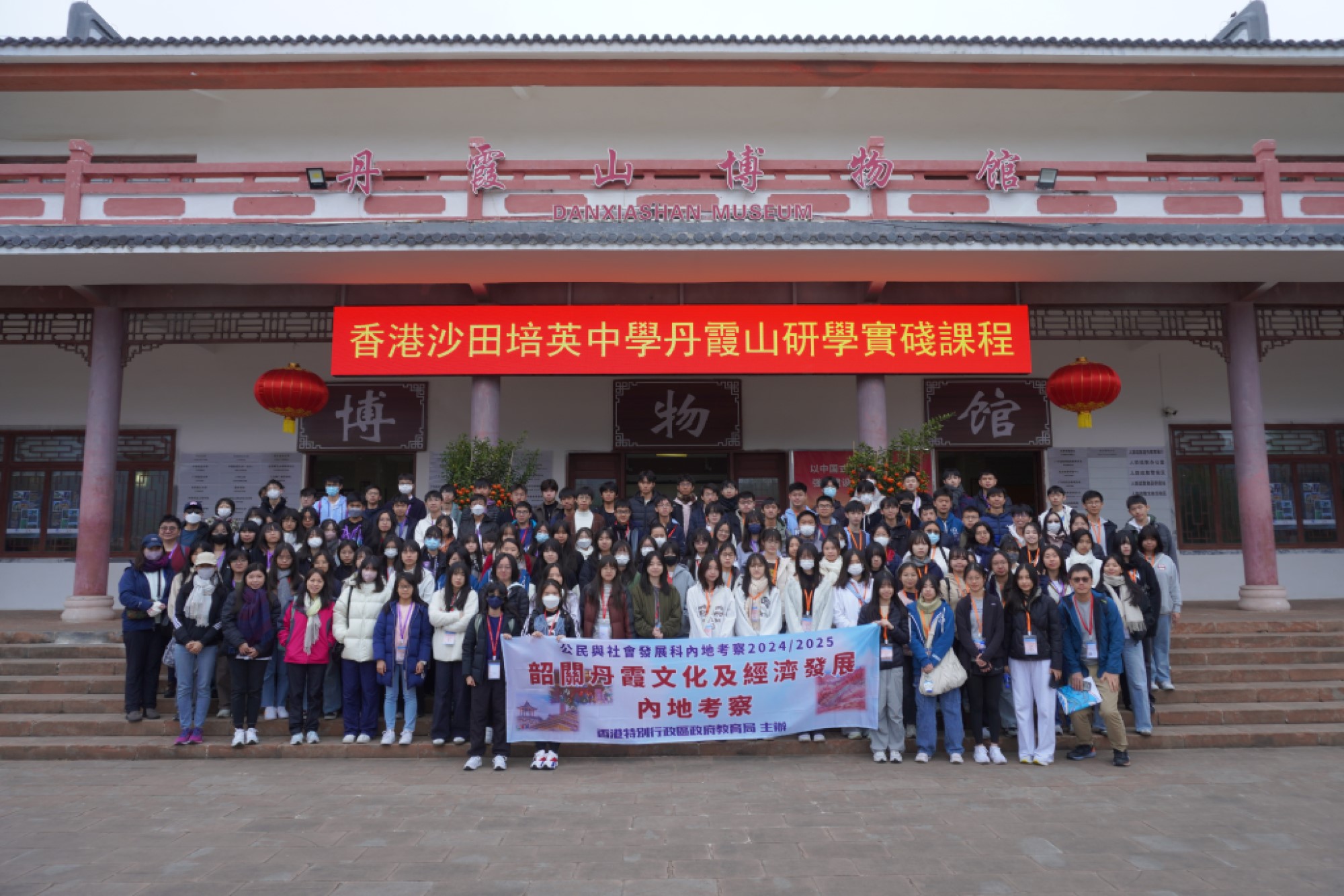
| Life-wide Learning (Including Five Essential Learning Experiences to be Provided through Key Learning Areas, Extra-curricular Activities, Co-curricular Activities, etc.) | : | Over fifty extra-curricular groups falling into five main categories, namely, academic, interest, sports and arts, community service, and religious groups, have been established and arrange regular activities and camps with various themes. Students are also allowed to form their own club. The school also produces a biennial original English musical. In addition, students in the school participate in national and school-based Mathematics competitions and take part in Mathematics Olympiad training, STEAM training, Pui Ying Cultural Cup, etc. Other activities include inter-school debate competitions, local and overseas study tours, voluntary services and enhancement activities. |
| Others | : | Our students gained commendable results in HKDSE Examination (2025): 1. Level 2 or above attainment for all subjects reached 99.4%, when compared with the Hong Kong average of 85.4%. Our school’s Level 4 or above attainment was 70.5%, compared with the 36.5% average of Hong Kong. The attainment of Level 5 or above also exceeded the Hong Kong average of 14.1%, reaching 27.8% this year. 2. The percentage of Level 5-5** of most of the subjects was better than the Hong Kong average, some of which exceeded the percentage of the Hong Kong average 2 times or more. For Chinese Literature and Visual Arts, our Level 5-5** attainment was 3.8 times the Hong Kong average. For, Chinese Language, our Level 5-5** attainment was 2.7 times the Hong Kong average. For English Language and Biology, our Level 5-5** attainment was 2.4 times the Hong Kong average. For History and Chinese History, our Level 5-5** attainment was 3.1 times the Hong Kong average. 3. 95.7% of our students met the general entrance requirements of UGC-funded institutions (332A2 or above), compared with the Hong Kong average of 38.3%. 4. 78.7% of S6 students entered degree programmes, of which 97.3% were offered by local universities, 2.7% by overseas universities. Life Planning: 1. Life planning lessons are provided to assist students of different abilities and aptitudes to discover their learning goals and areas of potential. 2. Workshops, talks and visits are organized for students to assist them in understanding their own abilities and goals. 3. In the 'Mentorship Scheme', the school invites alumni from different industries to come to the school to share about their work and arrange for students to visit and observe the workplace of alumni. 4. Work-related learning experiences are provided to encourage students' self-reflection in their different learning stages. 5. Talks and seminars are organized for parents to let them have a better understanding of the steps and procedures of subject selection and the general admission requirements of different institutes. Parents are then better-equipped to work together with our School to assist their children in life planning. 6. Training workshops and experience sharing activities are organized for teachers to encourage whole-school participation in providing students with relevant advice and coaching, allowing them to develop personal interests, abilities and goals. |
| Direct Public Transportation to School | : | Bus route Nos: 48X, 40X, 72, 72A, 80K, 280X, 81, 81K, 83K, 85, 85K, 40X, 86, 88K, 89, 269D, 285, 79, 798, 88X, A46 Green Minibus Route Nos: 60K, 62K (from Sha Tin Station) |
| Remarks | : | Apply small-class teaching to Chinese Language and Mathematics (S1) and English Language and Home Economics (S1 & S2). Reduce class size in S.1 and S.2 English Oral to 8-9 students as well as S.3 English Oral to 15 students to encourage class interaction. Arrange Other Learning Experience Days. Encourage active engagement in extra-curricular activities, e.g. overseas immersion trips to broaden horizons. |
 School Map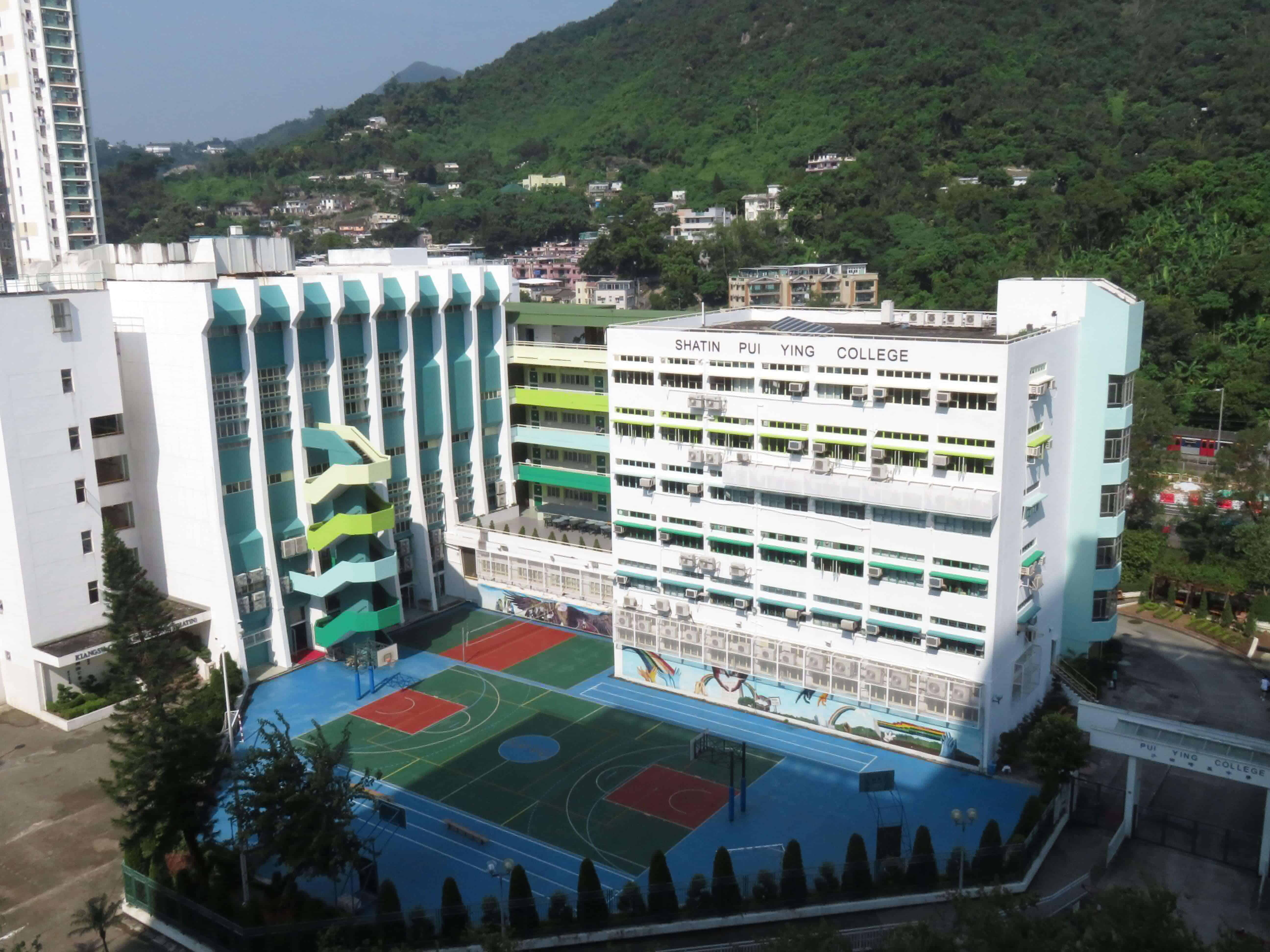
Last revision date: 5/12/2025


