 Secondary School Profiles 2025/2026


 Secondary School Profiles 2025/2026
| Address: | Sun Tin Wai Estate Shatin | |||
| Phone: | 26021300 | Email: | info@stmc.edu.hk | |
| Fax: | 26091477 | Website: | http://www.stmc.edu.hk | |
School Mission
Provide whole-person education according to the spirit of Jesus Christ; nurture abundant lives by teaching of gospel.
 School Information
 | District | : | Sha Tin |
| Other District(s) | : | |
| Supervisor / Chairman of School Management Committee | : | Rev. YU Yan Ming |
| Principal (with Qualifications / Experiences) | : | Ms. CHEUNG Chui Yee (MEd (CUHK), MA(HKBU)) |
| School Type | : | Aided |
| Student Gender | : | Co-ed |
| Area Occupied by the School | : | About 6500 Sq. M |
| Name of Sponsoring Body | : | The Methodist Church HK |
| Incorporated Management Committee | : | Established |
| Percentage of School Supervisor and Managers / Chairperson and Members of School Management Committee (SMC) of Government Schools Fulfilling the Training Targets | : | 100% |
| Religion | : | Protestantism / Christianity |
| Year of Commencement of Operation | : | 1983 |
| School Motto | : | The fear of the Lord is the beginning of wisdom, and the knowledge of the Holy One is insight. (Proverbs 9: 10) |
| Parent-Teacher Association | : | Yes |
| Student Union / Association | : | Yes |
| Past Students’ Association / School Alumni Association | : | Yes |
| 4Rs Mental Health Charter | : | Yes |
| Whole School Health Programme | : | Action School |
 Chargeable Fees (2025/2026)
| School Fee ($) | Tong Fai ($) | ||
| S1 | - | - | |
| S2 | - | - | |
| S3 | - | - | |
| S4 | - | $340 | |
| S5 | - | $340 | |
| S6 | - | $340 | |
| Parent-Teacher Association Fee (Annual) ($) | : $40 (F.1-F.6) | ||
| Student Union / Association Fee ($) | : $30 (F.1-F.6) | ||
| Approved Charges for Non-standard Items (Annual)($) | : $450 (F.1-F.6) | ||
| Other Charges / Fees ($) | : - | ||
 School Facilities
 | Number of Classroom(s) | : | 30 |
| School Facilities | : | Interactive TVs are installed in classrooms and special rooms to facilitate e-learning. There are also Student Activity Center, digital classrooms for learning and teaching, Campus TV Production Studio, English Room, Chinese Medicine Garden, Chinese Medicine and Herbs Education Centre, Eco-Green House, Plant Trail, Religious Education Center and STEAM Maker Space Centre. Besides, there are solar panels with green space on the roof for students’ learning. A school annex, Ample Campus, is located nearby the main campus. There are Activity Rooms, Robot Learning Centre and Dance Studio, providing more space for students and enhancing the quality of education. |
| Facility(ies) for Supporting Students with Special Educational Needs | : | Ramp, Accessible lift, Accessible toilet and accessible public information / service counter. |
 Teaching Staff Information (Including School Head) in the 2025/2026 School Year
 | Number of Teaching Posts in the Approved Establishment | : | 55 |
| Total Number of Teachers in the School | : | 60 |
| Qualifications and Professional Training | : | Percentage of Teaching Staff (%) |
| Had Received Teacher Training | : | 92% |
| Bachelor Degree | : | 100% |
| Master / Doctorate Degree or above | : | 48% |
| Special Education Training | : | 69% |
| Years of Experience | : | Percentage of Teaching Staff (%) |
| 0-4 Years | : | 38% |
| 5-9 Years | : | 17% |
| 10 Years or above | : | 45% |
 2025/2026 Class Structure
 | Number of Classes | ||
| S1 | : | 4 |
| S2 | : | 4 |
| S3 | : | 4 |
| S4 | : | 4 |
| S5 | : | 5 |
| S6 | : | 4 |
 Subjects Offered
 | Subjects Offered in the 2025/2026 School Year | : | S.1 - S.3 |
| Chinese as the Medium of Instruction | : | Chinese Language, Chinese History, Putonghua (F.1-F.2), Religious & Moral Education, Citizenship, Economics & Society (F.1), Physical Education |
| English as the Medium of Instruction | : | English Language, Mathematics, Science (F.1-F.3), STEAM (F.1-F.2), Computer Literacy, History, Music, Visual Arts, Geography, Citizenship, Economics & Society (F.2), Life & Society (F.3) |
| Adopt a Different Medium of Instruction by Class or by Group / School-based Curriculum | : | - |
| Subjects Offered in the 2025/2026 School Year | : | S.4 - S.6 |
| Chinese as the Medium of Instruction | : | Chinese Language, Chinese History, Chinese Literature, Citizenship and Social Development, Physical Education, Religious & Moral Education |
| English as the Medium of Instruction | : | English Language, Mathematics (Core and Extended Modules), Physics, Chemistry, Biology, Economics, Business, Accounting & Financial Studies, History, Geography, Information & Communication Technology, Music |
| Adopt a Different Medium of Instruction by Class or by Group / School-based Curriculum | : | - |
| Subjects to be Offered in the 2026/2027 School Year | : | S.1 - S.3 |
| Chinese as the Medium of Instruction | : | Chinese Language, Chinese History, Putonghua (F.1-F.2), Religious & Moral Education, Citizenship, Economics & Society (F.1), Physical Education |
| English as the Medium of Instruction | : | English Language, Mathematics, Science (F.1-F.3), STEAM (F.1-F.2), Computer Literacy, History, Music, Visual Arts, Geography, Citizenship, Economics & Society (F.2-F.3) |
| Adopt a Different Medium of Instruction by Class or by Group / School-based Curriculum | : | - |
| Subjects to be Offered in the 2026/2027 School Year | : | S.4 - S.6 |
| Chinese as the Medium of Instruction | : | Chinese Language, Chinese History, Chinese Literature, Citizenship & Social Development, Physical Education, Religious & Moral Education |
| English as the Medium of Instruction | : | English Language, Mathematics (Core and Extended Parts), Physics, Chemistry, Biology, Economics, Business, Accounting & Financial Studies, History, Geography, Information & Communication Technology, Music |
| Adopt a Different Medium of Instruction by Class or by Group / School-based Curriculum | : | - |
 Secondary One Admission, Orientation Activities & Healthy School Life
 | Secondary One Admission | : | Our school will accept discretionary places. Our school will participate in the Secondary School Places Allocation System through central allocation stage (Applicable for admission to S.1 in September 2026 ).EDB Rank Order List and academic performance: 50%; Conduct, participation in extra-curricular activities, services and prizes: 25%; Interview performance: 25%. If the interview cannot be conducted, the weightings will be adjusted as follows: EDB Rank Order List and academic performance: 65%; Conduct, participation in extra curricular activities, services and prizes awarded: 35% |
| Orientation Activities and Healthy Life | : | "F.1 Orientation Day" is held. In order to help students adapt to secondary school learning, "English and Mathematics Bridging Courses" are held in summer. At the beginning of the school year, we conduct "Introduction of Extracurricular Activities" session" for F.1 students so that they can choose some extracurricular activities of their interest. With a view to providing care and assistance for F.1 students, there are a form teacher and an assistant form teacher in each class. Besides, some of our senior-form students act as F.1 students' "big brothers and sisters" in each class to help them adapt to new school life. For F.1 students to enjoy company together, they are arranged to have lunch at school. We value home-school cooperation. We organize "F.1 Parents' Day" so that the parents can know more about our school, and we can work as a team for the students' development. For students' health development, the Catering Management Team (formed by parents, teachers and students) and the tuck shop work closely together to encourage students to build up healthy eating habits. Also, the PE Department promotes the importance of sports among students for their health. |
 School Characteristics
 | School Management | ||
| (1) School's Major Concerns | : | 1. Equip our students to master the 21st century global competencies and transform them into future-ready individuals. 2. Through Social Emotional Learning, cultivate students' intrapersonal and interpersonal competencies, enhance well-being, and equip for the future. 3. Strengthen our teachers through professional learning communities to meet the future educational needs of our students. |
| (2) School Management Organisation | : | The school adopts the school-based management. Through the Parent-Teacher Association, Alumni Association and Student Union, we strengthen our communication with different stakeholders. The members of the Incorporated Management Committee comprise professionals in different fields. They form different groups on matters relating to school-based management, school development, recruitment, performance appraisal and finance. |
| (3) Incorporated Management Committee / School Management Committee / Management Committee | : | The IMC comprises nominated and elected representatives from the school sponsoring body, alumni and parents as well as independent persons from the public. The members include 2 parent representatives, 2 alumnus representatives, 2 teacher representatives and professionals from different fields. |
| (4) School Green Policy | : | STMC is the certificated demonstration school of the “Net Zero School Project” organized by the UNESCO Hong Kong Association. Sustainable development is one of our key education values. To save paper, the school intranet is used as a platform to disseminate and exchange information among students and teachers, and Parents’ App is used to distribute announcements and notices to parents in an electronic form. To encourage students and teachers to save electricity and achieve a low-carbon campus, air-conditioning temperature is regularly monitored and solar panels are installed. In addition, we actively promote environmentally friendly activities, such as No Air-Con Day, recycling leftover materials after festivals and promoting campus greening, etc. |
| Learning and Teaching Plan | ||
| (1) Whole-school Language Policy | : | Our school adopts English as the medium of instruction. (For details, please refer to the “Subjects Offered in the 2024/2025 School Year” and “Subjects to be Offered in the 2025/2026 School Year”). We attach great importance to English teaching and learning, and strive to improve students’ biliterate and trilingual abilities. 1. English Language lessons are conducted in smaller groups in F.1-F.3: In F.1, 4 classes are split into 5 groups. There is an Express English Class in both F.2 and F.3. In F.3, 4 classes are split into 8 groups for English speaking practice. In F.5, 5 classes are spilt into 7 English Writing groups in each form each cycle to strengthen students’ writing ability. 2. In F.1-3, a Classic Chinese Literature lesson is conducted each cycle to enhance students’ Chinese language proficiency. In F.2, 5 Chinese Language classes are split into 6 groups. In F.1 and F.2, Putonghua lessons are conducted to enhance students' Chinese language proficiency. 3. Large-scale activities including morning assemblies, weekly assemblies, academic activities and large-scale ceremonies are conducted in English to create an ideal English learning environment for students. 4. "Language Across Curriculum Committee" is set up to coordinate the subjects using English as the medium of instructions and improve students’ learning in English. 5. English extended learning activities, such as English Week, English Volunteer Service, English Drama, Model United Nations Conference and Global Culture Week are held to provide students with authentic situations to apply English. 6. Other language programs are conducted after school as a learning platform for junior form students who are interested in learning foreign languages. |
| (2) Learning and Teaching Strategies | : | 1. Strengthen the English learning atmosphere. 2. Optimize and implement interdisciplinary curriculum. Interdisciplinary projects are conducted in F.1-3. 3. Advocate in-depth learning. All subjects aim to strengthen students' skills for the 21st century and 6 global competencies including critical thinking, communication, collaboration, creativity, character building and citizenship. 4. To align with the values promoted by United Nations Educational, Scientific and Cultural Organization (UNESCO), we promote Global Citizenship Education (GCED) and Education for Sustainable Development (SDG) to broaden students' global perspectives, and equip them to become future leaders. |
| (3) School-based Curriculum | : | 1. Electives: 3X. For senior secondary curriculum, there are 10 elective subjects in total. Besides, Mathematics Extended Modules I & II, Network-school DSE Music and Network-school DSE Visual Arts Curriculum are provided. There are more than 200 subject combinations. 2. Curriculum highlights: 1. Language Education: English Language Arts Courses and Classic Chinese Literature Courses in junior forms 2. STEAM Education: STEAM as an independent subject in F.1-2 and General Curriculum on Chinese Medicine & herbs in junior forms 3. Arts Education: Music Composition Course in junior forms 4. Interdisciplinary Curriculum: Interdisciplinary projects in F.1-3 5. Value Education: Life Education, Form Teacher and Religious & Moral Education lessons are conducted in F.1-6 6. Gifted Education: School-based pull-out gifted programmes in Chinese, English, Mathematics, Science, Humanities, Computer Artificial Intelligence (AI) and STEAM |
| (4) Major Renewed Emphases in the School Curriculum | : | 1. Reading to Learn: Extensive Reading Scheme, two reading lessons per cycle, Reading Across Curriculum (RAC) Scheme, Summer Reading Scheme and RAC Week. 2. Interdisciplinary Project Learning: F.1-F.2 STEAM Maths & Computer Project, F.1 Global Citizenship Project, F.2 PSHE Project and F.3 Humanities, Computer & Languages Project. 3. Information Technology for Interactive Learning: F.1-F.5 Bring Your Own Electronic Device (BYOD) Scheme and e-learning. 4. Moral, Civic and National Education: promote Life Education, cultivate character building & serving spirit among students and implement Basic Law Education, National Security Law Education, National Education and Values Education. |
| (5) Life Planning Education | : | Careers Committee aims to provide students with updated information to explore different paths of further studies and careers. We also encourage them to set goals and equip themselves based on their abilities and interests so as to adapt to the ever-changing society. Besides, we aim to widen students' horizons, expose them to the career world and explore their potential for self-assurance so that they can set goals related to further studies and careers. To achieve our aims, we offer counselling services on JUPAS and organize a wide range of activities including life planning courses, talks on further studies, visits to universities and internship programmes. Moreover, the committee disseminates information on life planning education (including activities, courses, talks and information on further studies, etc.) to all students and teachers through the Intranet and posts on noticeboards. |
| Student Support | ||
| (1) Whole School Approach to Catering for Learner Diversity | : | Junior form students are placed into mixed ability classes with streaming in Chinese, English and Mathematics so that teachers can cater for students’ diversity. Students interested in different subjects can take part in gifted education courses and competitions inside and outside school including Chinese, English, Mathematics, Science and robot-making gifted education courses. Besides, homework remedial classes are organized for junior form students to cater for learning diversity, which can also raise their confidence and train them to be self-disciplined. In 2022-23, we were visited by EDB Gifted Education Section and received positive comments. |
| (2) Whole School Approach to Integrated Education | : | Our school is committed to building an inclusive culture. We have established SEN Student Support Committee to support students with special educational needs through a whole-school approach. There is a regular communication mechanism for SEN Student Support Committee, parents and subject panels to discuss strategies and set up policies to help SEN students. The support includes learning, teaching and assessment adjustment, counselling service, social behaviour and emotion training, talks, etc. We strive to build up a positive and harmonious atmosphere together. |
| (4) Measures to Provide Adaptation for Learning and Assessment | : | A more comprehensive 'Student Performance Report' has replaced the traditional report card to assess students’ conduct and academic performance. In the academic area, self-progress is emphasized. 'Extensive Reading Scheme' is assessed separately. In the conduct area, 7 personal qualities are assessed under three categories as follows: Personality: integrity, self-discipline and courtesy; Abilities: inter-personal relationships and leadership; Attitude: learning attitude and willingness to serve to recognize students' different attributes. Students evaluate their own moral and academic performance each term and review their goals with their teachers. |
| Home-School Co-operation and School Ethos | ||
| (1) Home-School Co-operation | : | The Parent-Teacher Association (PTA) was set up in 1993 and we have a long history of home-school cooperation. Parents volunteer to promote activities organized by the PTA. The PTA organizes various activities including talks, workshops, barbecues and home-school talks to enhance communication between parents and school and promote parenting education. Besides, we have officially established "Parent Academy" this academic year, which aims to assist parents in nurturing their children's growth through systematic learning and communication. |
| (2) School Ethos | : | 1. Promote students’ balanced development in the spiritual, moral, intellectual, physical, social and aesthetic aspects. 2. Implement Life Education and promote service learning. Guide students to live a meaningful life by nurturing their respect, passion and appreciation for life, and exploring their own potential. 3. Organize multi-dimensional activities to offer opportunities to students with different talents to shine. |
| Future Development | ||
| (1) School Development Plan | : | School Development Plan is made every three years. The objectives for 2025-2028 are as follows: 1. Equip our students to master 21st-century global competencies and transform them into future-ready individuals. The competencies include: i) language literacy ready, ii) science and digital literacy ready, iii) knowledge and skills ready and iv) citizenship ready. 2. Through Social Emotional Learning, cultivate students' intrapersonal and interpersonal competencies, enhance well-being, and equip them the future. Cultivate students’ self-awareness, self-management, social awareness, interpersonal skills and the ability to make responsible decisions. 3. Strengthen our teachers through professional learning communities to meet the future educational needs of our students. Enhance teachers’ professional competence, foster professional collaboration and enrich educational support to strengthen professional networks. |
| (2) Teacher Professional Training and Development | : | Our school places great emphasis on the professional development of teachers. A Teaching Research Team has been established to coordinate the Lesson Studies Scheme, focusing on lesson design and evaluation, implementing lesson co-planning, facilitating lesson observations, and conducting post-lesson discussions. Through professional exchanges and sharing, we aim to continuously enhance the quality of teaching. In addition to subject-based teacher collaboration, we also organize cross-subject lesson observations and discussions to promote mutual professional growth. We also engage in cross-school lesson observation exchanges with different professional communities. To align with the School Development Plan, the Staff Development Team has invited experts and scholars to share their valuable experiences. For instance, we have partnered with the Quality School Improvement Project (QSIP) from CUHK, which provides teachers with more in-depth professional training and practice. Our school’s past development projects include Life Education, Gifted Education, Liberal Arts Education, etc. We are honored to have been granted the Quality Education Fund to support the development of various initiatives, such as the Life Education Project, School-based Support Scheme (PDS), and Thematic Network (QTN). Additionally, some of our experienced teachers have been on secondment to the Gifted Education Section, Liberal Studies Section, Personal, Social & Humanities Education Section, and Moral, Civic & National Education Section of the Curriculum Development Institute under the Education Bureau to engage in teaching practice and experience sharing. |
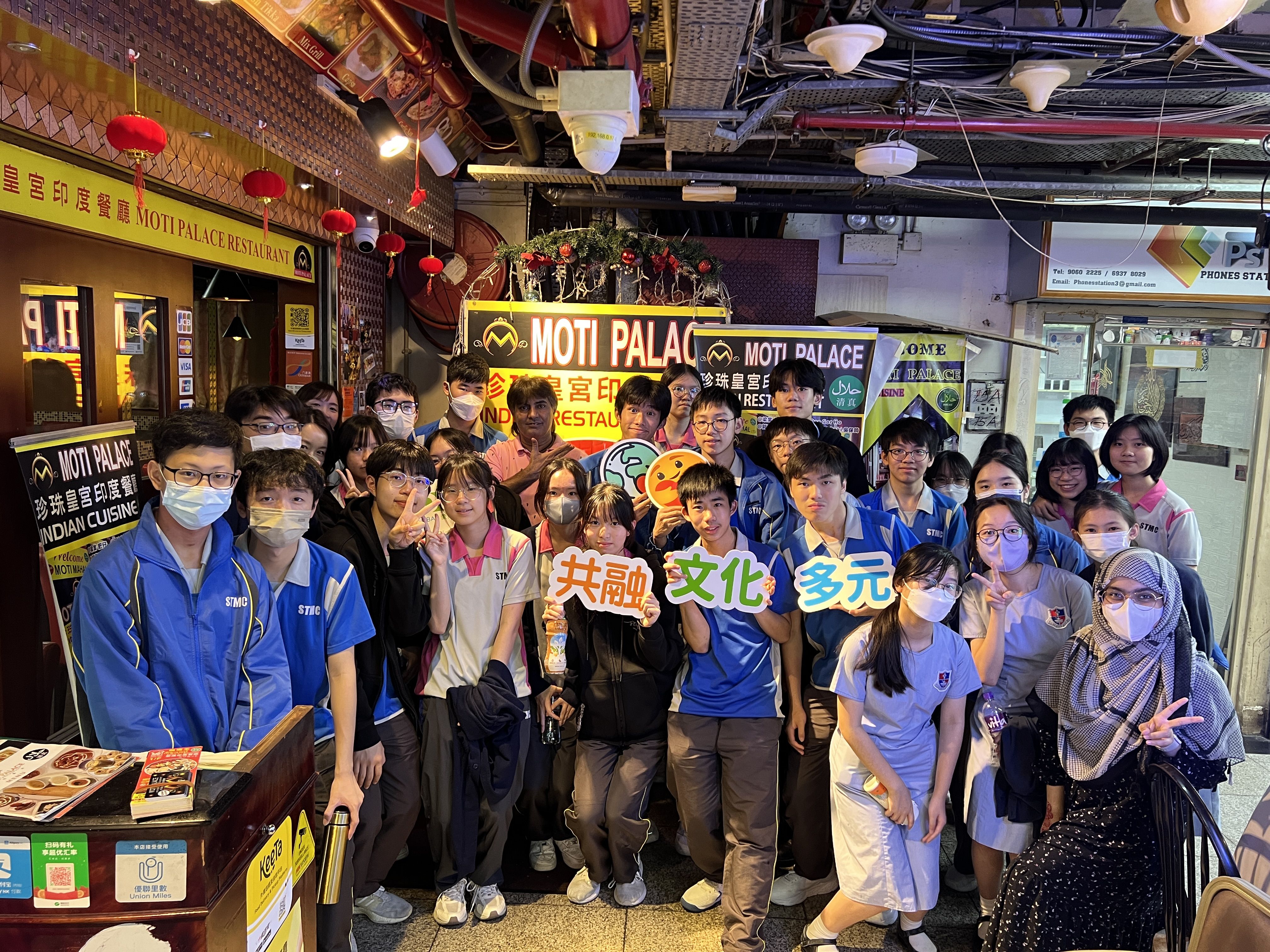
| Life-wide Learning (Including Five Essential Learning Experiences to be Provided through Key Learning Areas, Extra-curricular Activities, Co-curricular Activities, etc.) | : | Through high-quality life-wide learning activities, students can learn in authentic situations, developing their lifelong learning abilities and achieving whole-person development. The "Life-wide Learning Zone", scheduled on Fridays, provides reserved time for students to participate in a variety of experiential learning activities, including multi-intelligence courses, as well as experiential learning activities organized by various clubs, subjects and societies. In addition, meaningful life-wide learning activities are held during Post-exam Activity Days and Life-wide Learning Day, offering a range of programs designed for different purposes. These activities include: (i) Extended learning experiences to align with the curriculum, (ii) Enrich students’ learning experiences and broaden students’ horizons, and (iii) enhance student growth, covering various essential learning experiences. Furthermore, we organize and fund study tours for students to Mainland and overseas, expanding their horizons and experiences, raising their awareness of global issues, and fostering a sense of responsibility as global citizens. |
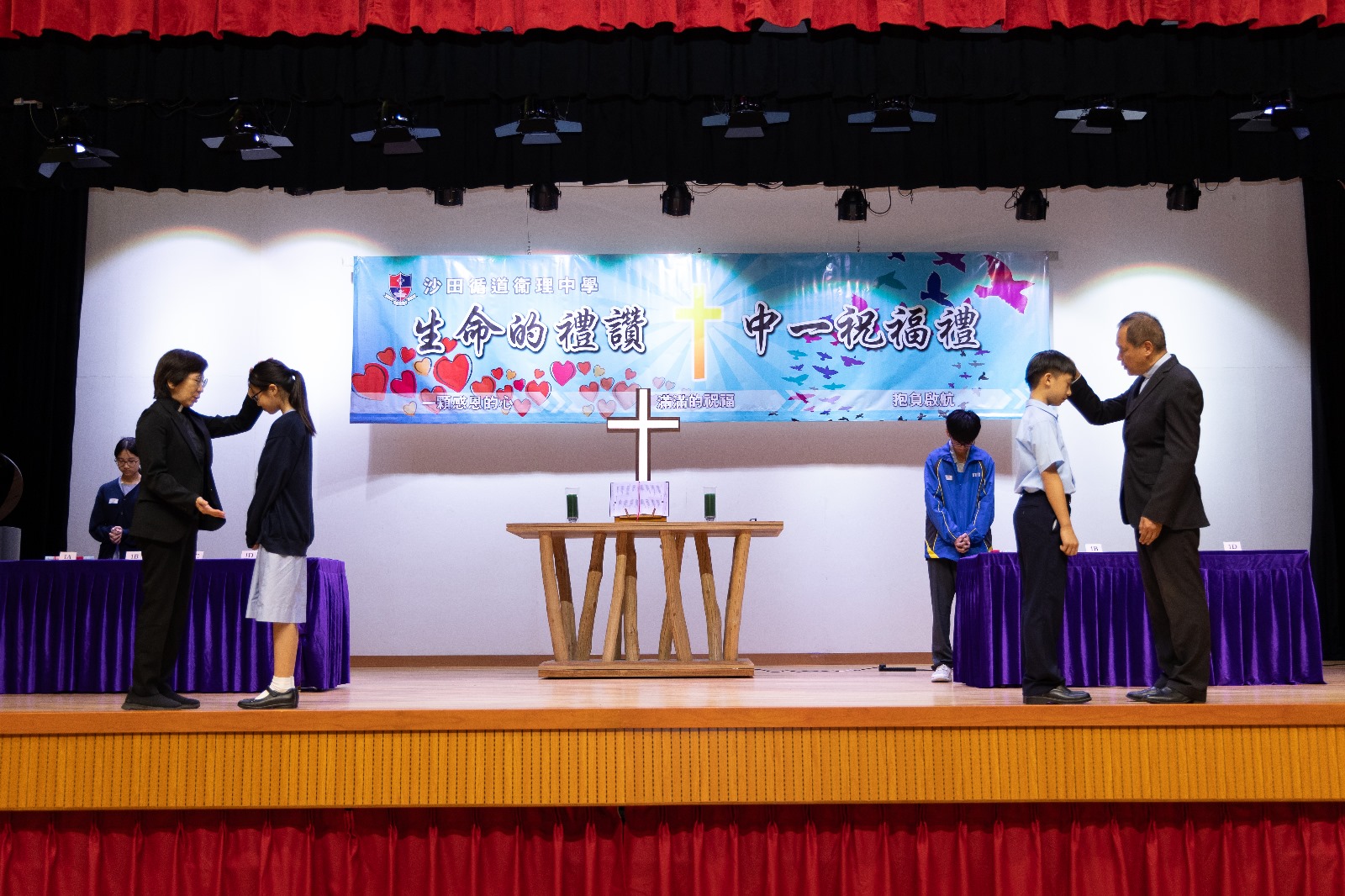
| Others | : | Life education is our key element. Through regular curriculum, extended curriculum and extracurricular activities, we guide students to explore the meaning and value of life, cherish life, explore potential and grow healthily so that they can lead a fulfilling and beautiful life. Form teacher lessons are conducted. Based on the development stages of students in different forms, the themes of the lessons vary. In F.1, the theme is “Unique Me”. To match the theme, an extended activity “F.1 Benediction Ceremony” is held so that the freshmen can welcome the new learning stage with blessings and learn to be others’ blessings. Other extended activities include F.2 Volunteers for inclusive culture, F.4 Volunteer Teams and F.6 Adulthood Ceremony. Through service learning, students can learn to be responsible and show care to the society. They can also learn the serving spirit of servant leaders. To strengthen students' identity as global citizens, we have set up "Education Fund" and "Scholarship for Students' Overseas Study Tour". With financial support from the government, our church and charitable parties, our students take part in various exchange tours and international competitions to increase their cultural exposure, enrich their experience and deepen the meaning of their learning. They have paid visits to Canada, Australia, England, Germany, Poland, Austria, Russia, Korea, Japan, Singapore, Malaysia, Cambodia, Taiwan, Beijing, Xi'an, Sichuan and Qingyuan. Having actively participated in external competitions, our students received awards and accolades. They have won a number of championships, runners-up and outstanding awards in the following competitions: EDB Sir Edward Youde Memorial Prizes (senior forms), Outstanding Student of New Territories District, Outstanding Student of Shatin District, Youth Arch Student Improvement Award, LPD Educational Foundation Outstanding School, International Mathematical Science & Creativity Competition (Gold Award), International Biology Olympiad, Asian International Mathematical Olympiad, Huaxiabei National Mathematics Olympic Invitation Competition, Hong Kong Secondary School Mathematics Creative Problem Solving Competition, Hong Kong Secondary School Biology Olympiad, Hong Kong Geography Olympiad, Science Youth Award, Creative Robot Competition, Young Learners' Progress Award, Chinese Cup National Mathematical Olympiad, Hong Kong Young Historian Award, PolyU Business Excellence Contest, Hong Kong Schools Music Festival, Hong Kong Schools Speech Festival, English Debate Competition, Hong Kong Schools Dance Festival, Hong Kong School Drama Festival, Bonsai Planting Competition, Inter-school Fencing Competition, Inter-school Swimming Competition, Secondary School and Tertiary Institution Taekwondo Competition and Hong Kong Inter-school Dodgeball Tournament. Besides, our student team was awarded "The Best Position Paper" in Model United Nations Conference, and was granted an opportunity to join a competition at the University of Cambridge, the United Kingdom. |
| Direct Public Transportation to School | : | Direct bus: 81K, 82K, 87B, 281, 282; Via bus routes: 89, 85A, 85B, 86, 74A, 47X, 80X; Via MTR: walking distance of 10-15 minutes from Che Kung Temple Station. |
| Remarks | : | - |
 School Map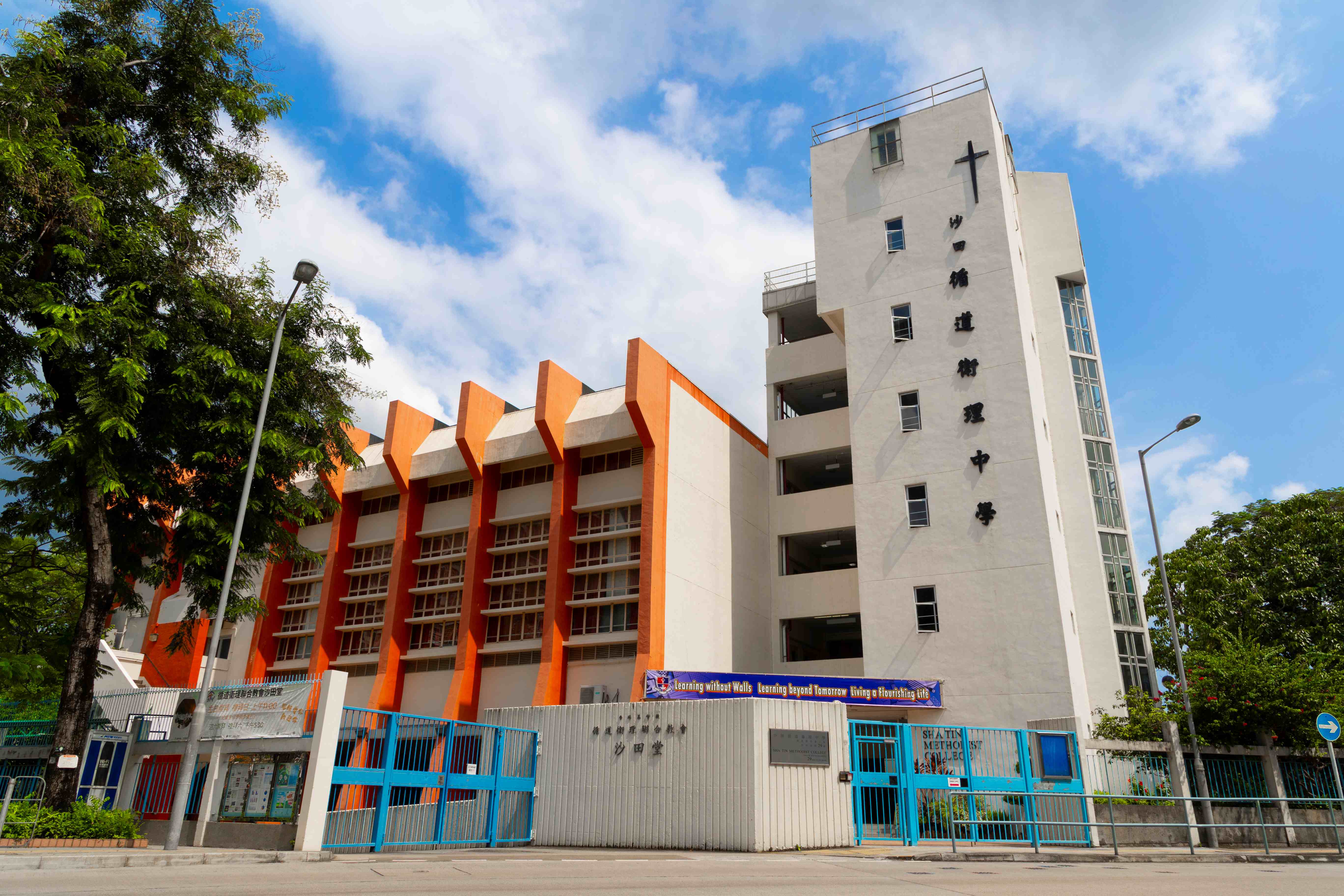
Last revision date: 5/12/2025


