 Secondary School Profiles 2025/2026


 Secondary School Profiles 2025/2026
| Address: | 42 Chai Wan Road Shaukeiwan | |||
| Phone: | 25603544 | Email: | skwgss@edb.gov.hk | |
| Fax: | 25689708 | Website: | http://www.sgss.edu.hk/ | |
School Mission
We strive to provide our students with a positive learning environment; with a moral, intellectual, physical, social and aesthetic education; to develop their potential; to prepare them for further education and encourage them to follow our school motto “VINCIT VERITAS” in the pursuit of truth, so that they become independent, confident, responsible and contributing citizens.
 School Information
 | District | : | Eastern |
| Other District(s) | : | Wan Chai |
| Supervisor / Chairman of School Management Committee | : | Ms HO Yin-ping |
| Principal (with Qualifications / Experiences) | : | Ms Yan Kin Foon, Alice (MEd, BA, PGDE) |
| School Type | : | Gov't |
| Student Gender | : | Co-ed |
| Area Occupied by the School | : | About 14258 Sq. M |
| Name of Sponsoring Body | : | HKSAR Government |
| Incorporated Management Committee | : | Not Applicable |
| Percentage of School Supervisor and Managers / Chairperson and Members of School Management Committee (SMC) of Government Schools Fulfilling the Training Targets | : | 100% |
| Religion | : | Not Applicable |
| Year of Commencement of Operation | : | 1961 |
| School Motto | : | Vincit Veritas |
| Parent-Teacher Association | : | Yes |
| Student Union / Association | : | Yes |
| Past Students’ Association / School Alumni Association | : | Yes |
| 4Rs Mental Health Charter | : | Yes |
| Whole School Health Programme | : | Action School |
 Chargeable Fees (2025/2026)
| School Fee ($) | Tong Fai ($) | ||
| S1 | - | - | |
| S2 | - | - | |
| S3 | - | - | |
| S4 | - | - | |
| S5 | - | - | |
| S6 | - | - | |
| Parent-Teacher Association Fee (Annual) ($) | : $100 | ||
| Student Union / Association Fee ($) | : $20 | ||
| Approved Charges for Non-standard Items (Annual)($) | : School-based Management Fee $200 | ||
| Other Charges / Fees ($) | : - | ||
 School Facilities
 | Number of Classroom(s) | : | 31 |
| School Facilities | : | Outdoor facilities include a beautiful garden, a courtyard with a fish pond, basketball courts, volleyball courts and a mini soccer pitch. For dance and music, there are the Student Activity Centre, the Music Room and the Music Practice & Activities Room. Other special rooms include the School Library, the Multi-function Room, the Multi-media Learning Centre, the Computer-assisted Learning Room, the English Room, the Conference Room, the Wellness Hub and the Inspiration Hub (School History Archive). All classrooms and special rooms are air-conditioned with Internet access and LCD projectors. An elevator reaches all levels of the school building. |
| Facility(ies) for Supporting Students with Special Educational Needs | : | Accessible lift, Accessible toilet and accessible public information / service counter. |
 Teaching Staff Information (Including School Head) in the 2025/2026 School Year
 | Number of Teaching Posts in the Approved Establishment | : | 53 |
| Total Number of Teachers in the School | : | 54 |
| Qualifications and Professional Training | : | Percentage of Teaching Staff (%) |
| Had Received Teacher Training | : | 90% |
| Bachelor Degree | : | 100% |
| Master / Doctorate Degree or above | : | 47% |
| Special Education Training | : | 55% |
| Years of Experience | : | Percentage of Teaching Staff (%) |
| 0-4 Years | : | 21% |
| 5-9 Years | : | 9% |
| 10 Years or above | : | 70% |
 2025/2026 Class Structure
 | Number of Classes | ||
| S1 | : | 4 |
| S2 | : | 4 |
| S3 | : | 4 |
| S4 | : | 4 |
| S5 | : | 4 |
| S6 | : | 4 |
 Subjects Offered
 | Subjects Offered in the 2025/2026 School Year | : | S.1 - S.3 |
| Chinese as the Medium of Instruction | : | Chinese Language, Chinese History, Putonghua (S.1 & S.2), Citizenship, Economics and Society (S.1 & S.2), Life and Society (S.3) |
| English as the Medium of Instruction | : | English Language, Mathematics, Geography, History, Science, Computer Literacy, Visual Arts, Home Economics, Design & Technology, Music, Physical Education |
| Adopt a Different Medium of Instruction by Class or by Group / School-based Curriculum | : | - |
| Subjects Offered in the 2025/2026 School Year | : | S.4 - S.6 |
| Chinese as the Medium of Instruction | : | Chinese Language, Chinese History, Chinese Literature, Citizenship and Social Development |
| English as the Medium of Instruction | : | English Language, Mathematics, Geography, Economics, History, Business, Accounting & Financial Studies, Information & Communication Technology, Physics, Chemistry, Biology, Mathematics Extended Part Module Two, Visual Arts and Physical Education |
| Adopt a Different Medium of Instruction by Class or by Group / School-based Curriculum | : | - |
| Subjects to be Offered in the 2026/2027 School Year | : | S.1 - S.3 |
| Chinese as the Medium of Instruction | : | Chinese Language, Chinese History, Putonghua (S.1 & S.2), Citizenship, Economics and Society (S.1-S.3) |
| English as the Medium of Instruction | : | English Language, Mathematics, Geography, History, Science, Computer Literacy, Visual Arts, Home Economics, Design & Technology, Music, Physical Education |
| Adopt a Different Medium of Instruction by Class or by Group / School-based Curriculum | : | - |
| Subjects to be Offered in the 2026/2027 School Year | : | S.4 - S.6 |
| Chinese as the Medium of Instruction | : | Chinese Language, Chinese History, Chinese Literature, Citizenship and Social Development |
| English as the Medium of Instruction | : | English Language, Mathematics, Geography, Economics, History, Business, Accounting & Financial Studies, Information & Communication Technology, Physics, Chemistry, Biology, Mathematics Extended Part Module Two, Visual Arts, and Physical Education |
| Adopt a Different Medium of Instruction by Class or by Group / School-based Curriculum | : | - |
 Secondary One Admission, Orientation Activities & Healthy School Life
 | Secondary One Admission | : | Our school will accept discretionary places. Our school will participate in the Secondary School Places Allocation System through central allocation stage (Applicable for admission to S.1 in September 2026 ).Academic performance 40%; Interview performance 30%; Extra-curricular (including talents, services and achievements in activities) 30%; Grade B or above in Conduct. |
| Orientation Activities and Healthy Life | : | Orientation Activities: 1. Pre-S.1 Bridging Programme 2. Pre-S.1 Orientation Programme 3. Pre-S.1 Parents' Orientation Day Programmes to Promote Healthy Life: 1. Students Medical Scheme 2. Healthy Eating Week 3. Joyful Fruits Day 4. Sex Education Talk 5. Health Talk 6. Keep Fit Programme 7. Healthy School Programme 8. Seasonal Influenza Vaccination School Outreach (Free of Charge) Programme 9. "Rise and shine! Energize your day and elevate your health!" Programme |
 School Characteristics
 | School Management | ||
| (1) School's Major Concerns | : | 1. To enhance learning and teaching effectiveness for academic excellence; To empower students to be proactive for lifelong learning. 2. Empowering students to achieve purposeful and well-balanced lives with positive education principles. 3. To cultivate a broader spectrum of interests and skills towards reading and navigate the world with reading competence. |
| (2) School Management Organisation | : | School Management Committee, Principal, 3 Assistant Principals & School Policy Committee |
| (3) Incorporated Management Committee / School Management Committee / Management Committee | : | The School Management Committee was set up in 1999. The Committee comprises a chairperson assigned by the Education Bureau, the school principal, 2 parent members, 2 alumni members, 2 independent members and 2 teacher members. |
| (4) School Green Policy | : | 1. Set up the Environmental Education Team. 2. Minimise waste through reduction, reutilization and recycling. 3. Inspire students to become future environmental leaders. |
| Learning and Teaching Plan | ||
| (1) Whole-school Language Policy | : | English is the main medium of instruction. For details, please refer to the subjects offered/to be offered in the 2025/26 and 2026/27 school years. The policy of bi-literacy and tri-lingualism is adopted. |
| (2) Learning and Teaching Strategies | : | Students acquire knowledge and develop generic skills through student-centred lessons, mass programmes, workshops, project work and sharing of learning experiences. These learning activities are supported by the judicious use of IT. Measures to 'enhance pedagogy' and 'cater for learner diversities' are high on the priority list of the teaching enhancement plans of individual teachers and subject departments. Developing the students' potential and enabling them to participate in other learning activities and have different experiences are also part of our school mission: 'Strive for Excellence'. We have a school-based curriculum developed in accordance with the principles of 'life-long learning' and 'whole-person development'. |
| (3) School-based Curriculum | : | 1. Electives: 3X and 4X. Biology, Chemistry, Physics, Chinese History, Chinese Literature, Geography, History, Economics, Business, Accounting & Financial Studies, Information & Communication Technology, Mathematics Extended Part Module Two and Visual Arts 2. Curriculum highlights: a. Optimization Programme (Smaller class size for English Language and Chinese Language lessons in some classes); b. 'SGSS Mentorship Programme' for S.1 students (The programme is provided by the Guidance Team and senior level students); c. Weekly 'Reading Period'; d. 'Class Teacher Periods' or 'Life-wide Learning Activities' in each cycle; e. Applied Learning courses for S.5-S.6 students; f. DSE Music classes for students. |
| (4) Major Renewed Emphases in the School Curriculum | : | Reading to learn: Reading to Learn Team aims to cultivate a broader spectrum of interests and skills towards reading and navigate the world with reading competence. Different kinds of reading activities are held every year. For example, the Chinese and English Extensive Reading Schemes and Book Sharing Sessions. Reading across the curriculum is also one of our concerns. Graded, recommended books and other subject-related extensive reading materials have been used to integrate knowledge into everyday reading and learning journeys. In particular, Wednesday Reading Period is conducted to encourage students to read extensively and regularly. Also, book recommendations have been made by both teachers and students to build a rich reading-to-learn environment that can sustain reading habits. It is hoped that in the long run, good reading habits can further enhance reading competence and train our students to become passionate, life-long learners. Information technology for interactive learning: All classrooms and special rooms have Internet access and LCD projectors to provide support for learning and teaching. Full coverage of the wireless network in the campus for mobile learning to promote students’ e-Learning and self-directed learning. To enhance learning effectiveness and promote self-directed learning, interactive learning platforms are created by subject departments to disseminate learning and teaching materials, collect and display students' assignments and to enable students to share their learning experiences. Moral, Civic & National Education: Moral & Civic education are implemented through many activities such as iTeen leadership scheme, Chinese culture week programmes, local visits, tour and talks. In terms of national education, our school has established a flag-raising team to host flag-raising ceremonies both on and off campus, and to visit various institutions such as the Ngong Shuen Chau Barracks and the Hong Kong Palace Museum, in order to enhance students' sense of national identity. |
| (5) Life Planning Education | : | The school strives to help students develop their own academic and careers aspiration in accordance to their interest, abilities and orientations, and encourage them to make informed choice on their learning and careers goals. To achieve this, life planning education programmes are supported in a whole school approach to help students through understanding oneself, goal setting and reflective thinking. A variety of careers-related learning activities such as internship, workplace visits, workshops, experience sharing and careers talks are arranged in and beyond classrooms, with the support of the alumni, community sources and universities, to link study opportunities with career options, as well as widening students’ exposure to the future working world. |
| Student Support | ||
| (1) Whole School Approach to Catering for Learner Diversity | : | Students with different learning needs are given full support by their subject teachers, class teachers, guidance teachers, school social worker, educational psychologist, discipline teachers and careers teachers. The school maintains close contact and collaboration with parents to guarantee that students' educational needs are taken care of. Apart from the above, special measures have been taken to cater for student diversity: 1. 'Bridging Programme, Orientation Programme and Mentorship Scheme' for S.1 students; 2. Tailoring of subject curriculum and adopting a variety of teaching methods to cater for learning differences of students, such as setting 'challenging questions' in examinations; 3. Employing a teaching assistant and using special facilities to help students with special educational needs; 4. Designing support measures to cater for the needs of academically gifted students or under-privileged ones, which include: a. support and enrichment measures taken by subject departments; b. use of "School-based After-school Learning Support Programme" and "Learning Diversity Grant" to provide funding for target students; c. recommending high-achievers to participate in special training programmes, exchange programmes and competitions; d. organising after -school and summer enhancement programmes which provided by external organisations. |
| (2) Whole School Approach to Integrated Education | : | Our school enhances positive thinking, inclusive education; and develop caring and supporting culture. Whole school approach is used to provide appropriate support and services to students with special educational needs through our Student Support Team, professional teams and all teachers. For example, courses for interpersonal skills, speech therapy, individual counselling, special examination arrangements and etc. are provided to enhance students’ learning effectiveness. Parents can understand their kids’ learning portfolio through different communication channels. Not only can it heighten home-school collaboration, but it also supports students’ learning and personal growth. |
| (3) Education Support for Non-Chinese Speaking (NCS) Students | : | Our school provides additional support for NCS students to facilitate their learning of Chinese: providing after-school support programmes in learning Chinese; appointing additional teacher(s)/teaching assistant(s) to support NCS students’ learning of Chinese; developing school-based Chinese Language curriculum and/or adapting learning and teaching materials; and organising activities to create an inclusive learning environment in the school. |
| (4) Measures to Provide Adaptation for Learning and Assessment | : | Junior Level: 1. Examinations, tests and coursework marks: There are two examinations in each academic year – Half-yearly and Yearly Examinations. A Mid-term Test is held in each term. A Coursework mark is given according to subject-based criteria. 2. Coursework Grade: Grades are given with reference to students’ performance in lessons, assignments and learning attitude. A Coursework grade is given according to subject-based criteria. Senior Level: 1. Examinations and tests: There are two examinations in each academic year – Half-yearly and Yearly Examinations. A Mid-term Test is held in each term. 2. Coursework Grade: Grades are given with reference to students’ performance in tests, assignments, learning attitude and lessons. A Coursework grade is given according to subject-based criteria. |
| Home-School Co-operation and School Ethos | ||
| (1) Home-School Co-operation | : | There is close collaboration between parents and school. A team of parent helpers and a parent network have been set up to facilitate communication and the active participation of parents in school activities, such as Speech Day, Open Day, Information Day for S.1 Admission, Graduation Day, Chinese Culture Week and Parents' Day. To disseminate information and for parents to give their opinions, the school employs effective channels such as school functions, talks, newsletters, school website, letters to parents and school pamphlets, etc. |
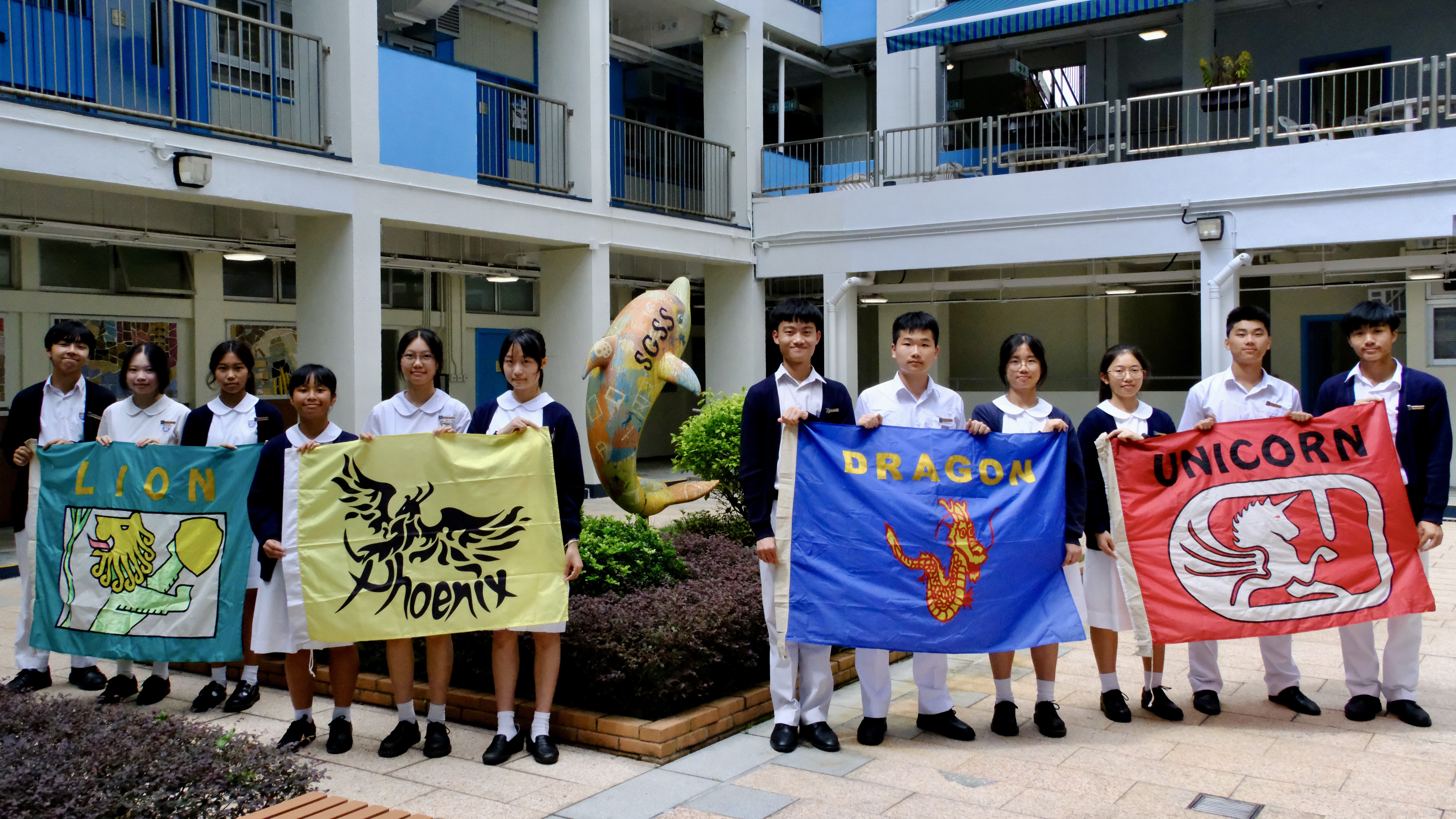
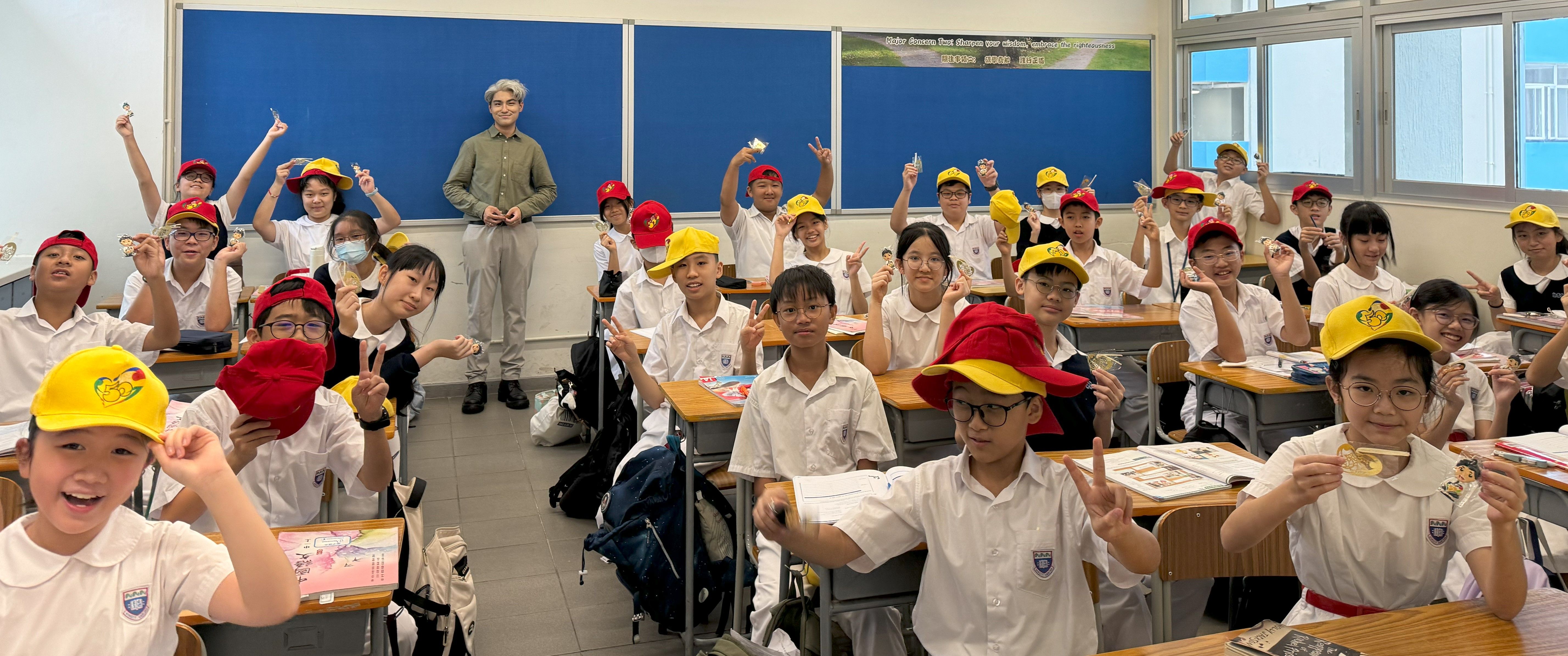
| (2) School Ethos | : | We are a school with a pure and sincere ethos. Being self-disciplined and diligent, our students lead a fulfilling school life. Various means have been adopted by the school to cater for students' academic needs and to enrich their other learning experiences and help in their all-round development. The school aim 'Strive for Excellence' gives students the impetus to develop into caring, confident, responsible and contributing citizens with a life-long passion for learning. |
| Future Development | ||
| (1) School Development Plan | : | The 2024-2027 3-year School Development Plan include the following major concerns: 1. To enhance learning and teaching effectiveness for academic excellence; To empower students to be proactive for lifelong learning. 2. Empowering students to achieve purposeful and well-balanced lives with positive education principles. 3. To cultivate a broader spectrum of interests and skills towards reading and navigate the world with reading competence. |
| (2) Teacher Professional Training and Development | : | The following measures are vigorously adopted by the school to provide resources and opportunities for professional staff training and development: 1. Induction programme for new teachers; 2. Staff professional development day and special programmes for all teachers; 3. Encourage teachers to participate in training and refresher courses and seminars organized by various institutes; 4. Enhance teaching effectiveness through collaborative lesson preparations and peer lesson observations. |
| Life-wide Learning (Including Five Essential Learning Experiences to be Provided through Key Learning Areas, Extra-curricular Activities, Co-curricular Activities, etc.) | : | There are 9 academic clubs, 5 uniform teams, 5 service groups, 13 interest clubs, 2 orchestras (symphonic orchestra and Chinese orchestra), about 20 instrumental classes and 8 sports and dance training courses. Various debating, music, drama and dance activities are organised annually. Students acquire learning experiences through activities inside/outside the classrooms and through community services. These include the many types of visits, field trips, cross-curricular learning activities, project work, talks, forum, mainland and overseas study tours and exchange programmes organised by many subject departments and teams. These activities form an integral part of the school curriculum complementing the formal classroom learning. |
| Others | : | Different varieties of scholarships: Prizes awarded to the top three ranked students in each level and top two ranked students in each subject. Prizes for high achievers in HKDSE. Prizes for Most Improved Students and outstanding achievers in reading, service, OLE and conduct award. |
| Direct Public Transportation to School | : | Bus routes: 8, 8H, 8X, 9, 14, 81, 82, A12, 106, 118, 606, 682, 694 & 780. |
| Remarks | : | - |
 School Map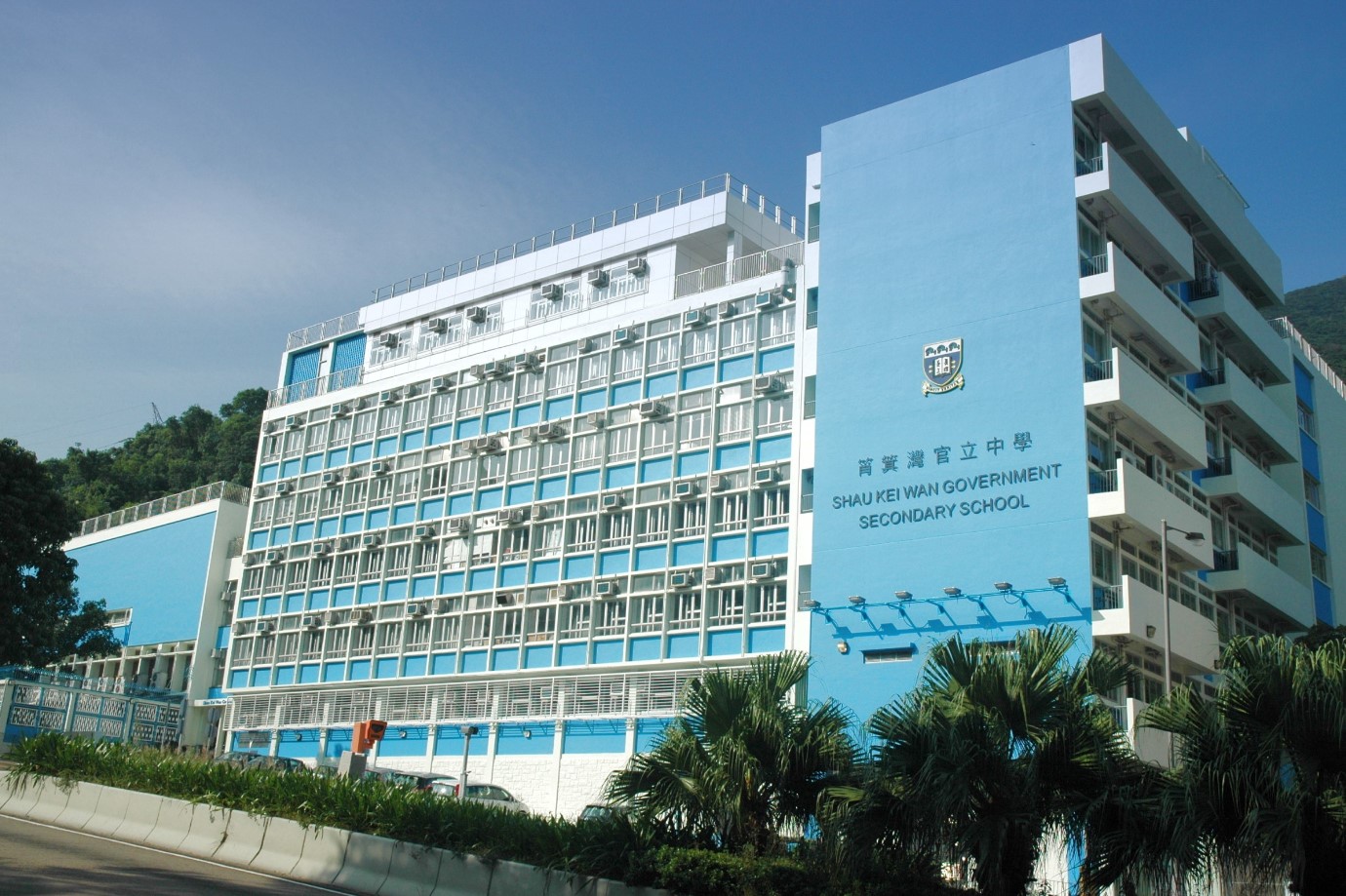
Last revision date: 5/12/2025


