 Secondary School Profiles 2025/2026


 Secondary School Profiles 2025/2026

| Address: | 18A Ventris Road Happy Valley Hong Kong | |||
| Phone: | 25773836 | Email: | spssmail@spss.edu.hk | |
| Fax: | 28824552 | Website: | http://www.spss.edu.hk | |
School Mission
To provide an all-round education, based on Christian values, that enhances the quality of life both spiritually and materially for our Paulinians so that they can contribute positively to their home, profession and society with charity, confidence, conscience, courage, creativity, competence, and commitment.
 School Information
 | District | : | Wan Chai |
| Other District(s) | : | Eastern |
| Supervisor / Chairman of School Management Committee | : | Sister Fung Choi Wa |
| Principal (with Qualifications / Experiences) | : | Ms. Tracy Cheung |
| School Type | : | Aided |
| Student Gender | : | Girls |
| Area Occupied by the School | : | About 5000 Sq. M |
| Name of Sponsoring Body | : | The Sisters of St. Paul de Chartres |
| Incorporated Management Committee | : | Established |
| Percentage of School Supervisor and Managers / Chairperson and Members of School Management Committee (SMC) of Government Schools Fulfilling the Training Targets | : | 100% |
| Religion | : | Catholicism |
| Year of Commencement of Operation | : | 1960 |
| School Motto | : | Omnia Omnibus - All Things to All Men |
| Parent-Teacher Association | : | Yes |
| Student Union / Association | : | Yes |
| Past Students’ Association / School Alumni Association | : | Yes |
| 4Rs Mental Health Charter | : | Yes |
| Whole School Health Programme | : | Action School |
 Chargeable Fees (2025/2026)
| School Fee ($) | Tong Fai ($) | ||
| S1 | - | - | |
| S2 | - | - | |
| S3 | - | - | |
| S4 | - | $290 | |
| S5 | - | $290 | |
| S6 | - | $290 | |
| Parent-Teacher Association Fee (Annual) ($) | : $50 | ||
| Student Union / Association Fee ($) | : - | ||
| Approved Charges for Non-standard Items (Annual)($) | : No more than $310 | ||
| Other Charges / Fees ($) | : Student Card/Replacement: $20 (every time); Printing Charge (Parents will be informed of the actual expenses via school circulars) | ||
 School Facilities
 | Number of Classroom(s) | : | 30 |
| School Facilities | : | There are well-equipped special rooms including School Hall, Chapel, Pastoral Care Room, Peer Power Room, Indoor Cycling Zone, STEAM Room, Open MakerSpace, Quantum Labs, Computer Rooms, Laboratories, Library, Needlework Room, Cookery Room, Music Room, Art Room, Dance Studio, Small-Group Teaching Rooms, Multi-Purpose Room, Sustainable Development Plantation Area, Wellness Hub and Chinese Mitten Crab Aquaponics Room. |
| Facility(ies) for Supporting Students with Special Educational Needs | : | Accessible lift and Accessible toilet. |
 Teaching Staff Information (Including School Head) in the 2025/2026 School Year
 | Number of Teaching Posts in the Approved Establishment | : | 66 |
| Total Number of Teachers in the School | : | 69 |
| Qualifications and Professional Training | : | Percentage of Teaching Staff (%) |
| Had Received Teacher Training | : | 96% |
| Bachelor Degree | : | 100% |
| Master / Doctorate Degree or above | : | 40% |
| Special Education Training | : | 31% |
| Years of Experience | : | Percentage of Teaching Staff (%) |
| 0-4 Years | : | 21% |
| 5-9 Years | : | 10% |
| 10 Years or above | : | 69% |
 2025/2026 Class Structure
 | Number of Classes | ||
| S1 | : | 5 |
| S2 | : | 5 |
| S3 | : | 5 |
| S4 | : | 5 |
| S5 | : | 5 |
| S6 | : | 5 |
 Subjects Offered
 | Subjects Offered in the 2025/2026 School Year | : | S.1 - S.3 |
| Chinese as the Medium of Instruction | : | Chinese Language, Chinese History, Putonghua, Family Life Education |
| English as the Medium of Instruction | : | English Language, Mathematics, Literature in English, Science, History, Geography, Computer Literacy, Visual Arts, Home Economics, Music, Physical Education, Religious Studies, Citizenship, Economics and Society (S.1- 2), Life and Society (S.3) |
| Adopt a Different Medium of Instruction by Class or by Group / School-based Curriculum | : | English Reading, Chinese Reading |
| Subjects Offered in the 2025/2026 School Year | : | S.4 - S.6 |
| Chinese as the Medium of Instruction | : | Chinese Language, Chinese Literature, Chinese History |
| English as the Medium of Instruction | : | English Language, Mathematics, Mathematics Extended Part Module 2, Citizenship and Social Development, Religious Studies, Literature in English, Economics, Geography, History, Biology, Chemistry, Physics, Information & Communication Technology, Business, Accounting & Financial Studies, Visual Arts, Music (S.4), Physical Education, Music Appreciation (S.4), STEAM lessons (S.4) |
| Adopt a Different Medium of Instruction by Class or by Group / School-based Curriculum | : | English Language Across the Curriculum (S.4-S.5), Chinese Language Across the Curriculum (S.4-S.5), English Reading Across the Curriculum (S.4-S.5), Chinese Reading Across the Curriculum (S.4-S.5) |
| Subjects to be Offered in the 2026/2027 School Year | : | S.1 - S.3 |
| Chinese as the Medium of Instruction | : | Chinese Language, Chinese History, Putonghua, Family Life Education |
| English as the Medium of Instruction | : | English Language, Mathematics, Literature in English, Science, History, Geography, Computer Literacy, Visual Arts, Home Economics, Music, Physical Education, Religious Studies, Citizenship, Economics and Society |
| Adopt a Different Medium of Instruction by Class or by Group / School-based Curriculum | : | English Reading, Chinese Reading |
| Subjects to be Offered in the 2026/2027 School Year | : | S.4 - S.6 |
| Chinese as the Medium of Instruction | : | Chinese Language, Chinese Literature, Chinese History |
| English as the Medium of Instruction | : | English Language, Mathematics, Mathematics Extended Part Module 2, Citizenship and Social Development, Religious Studies, Ethics and Religious Studies, Literature in English, Economics, Geography, History, Biology, Chemistry, Physics, Information & Communication Technology, Business, Accounting & Financial Studies, Visual Arts, Music (S.5), Physical Education, Music Appreciation (S.4), STEAM (S.4) |
| Adopt a Different Medium of Instruction by Class or by Group / School-based Curriculum | : | English Language Across the Curriculum (S.4-S.5), Chinese Language Across the Curriculum (S.4-S.5), English Reading Across the Curriculum (S.4-S.5), Chinese Reading Across the Curriculum (S.4-S.5) |
 Secondary One Admission, Orientation Activities & Healthy School Life
 | Secondary One Admission | : | Our school will accept discretionary places. Our school will participate in the Secondary School Places Allocation System through central allocation stage (Applicable for admission to S.1 in September 2026 ).Secondary one discretionary places intake is based on a student's conduct (20%), her Internal assessment in Primary 5 and 6 and position in EDB's "DP Rank Order List" (40%), her participation in extra-curricular activities, social services and awards (Primary 5 and 6) (20%); applicants who have met the school shortlisting criteria will be invited to attend an interview conducted in Cantonese and English (20%). Applications will be accepted from 2 January to 16 January 2026. Please refer to the school webpage for details. |
| Orientation Activities and Healthy Life | : | Orientation for parents is held in July; orientation and bridging programmes for Form 1 students are held in August. Throughout the school year, each Form 1 student is mentored by a teacher or school social worker under the Form 1 Companion Programme. Form 1 mentees are arranged to meet their mentors to share with them their adaptation to new school life. Group activities are also organised to promote positivity and develop a better rapport between mentors and mentees. The implementation of Peer Group Counselling Scheme aims at providing needy Form 1 students with guidance and support by trained Form 4 students. It also fosters positive thinking and a loving and supportive school environment conducive to students’ well-being. |
 School Characteristics
 | School Management | ||
| (1) School's Major Concerns | : | Please visit www.spss.edu.hk for the Annual School Plan. |
| (2) School Management Organisation | : | The school implements "School-based Management". There are committees to promote curriculum development and life-wide learning, coordinate extra-curricular activities of diversified nature, and facilitate teachers’ professional development. |
| (3) Incorporated Management Committee / School Management Committee / Management Committee | : | The Incorporated Management Committee comprises School Sponsoring Body Manager, Parent Manager, Teacher Manager, Alumnae Manager, and Independent Manager. |
| (4) School Green Policy | : | Green School Environmental Policy and Website Content: 1. To establish an environmental conservation and sustainable development culture in the school 2. To cultivate our students’ knowledge in environmental conservation and nurture our green talents 3. To develop students’ creativity and high-order thinking skills in resolving local and global environmental issues 4. To facilitate all school members’ and their family members’ effort towards putting the environmental conservation measures into practice |
| Learning and Teaching Plan | ||
| (1) Whole-school Language Policy | : | The school adopts English as the medium of instruction in all subjects and classes except Chinese Language, Chinese Literature, Chinese History, Putonghua and Family Life Education. Our school aims at enabling students to become biliterate and trilingual. There are inter-class competitions in English drama, verse speaking, debating and writing. Students actively participate in inter-school competitions and Extensive Reading Schemes organised by the EDB to strengthen their ability to master Chinese and English and appreciate literature. During the summer holiday, the school arranges for students to immerse themselves in a UK study tour. |
| (2) Learning and Teaching Strategies | : | Our school's education is centred on The Paulinian Spectrum. The seven colours of the sun's spectrum represent the seven important areas of school education: moral, intellectual, physical, social, aesthetic, emotional, and spiritual realms, which are delivered through the formal and the informal curricula. To foster a progress-oriented learning culture, the school focuses on assessment as learning to help students achieve their learning targets. The application of information technology enhances students' interest in learning. Through classroom interaction, collaborative learning, e-learning platforms, projects and presentations, they are encouraged to participate actively when collecting information on learning and expressing their views in the learning process. It boosts their analytical thinking and equips them with the necessary skills for life-long learning. Arts education, social services, field study and overseas cultural exchange are part of life-wide learning during which students showcase their talents and realise their potentials with the aim of aligning with the "learner-focused" principle of education. |
| (3) School-based Curriculum | : | 1. Electives: 3X. 2. Curriculum highlights: School-based curriculum, including Family Life Education (S.1-S.3), English/Chinese Reading (S.1-S.3), English/Chinese Language Across the Curriculum (S.4-S.5), English/Chinese Reading Across the Curriculum (S.4-S.5), STEAM (S.1-S.4) and Music Appreciation (S.4), aims at fostering students' positive mindset and personal growth, promoting self-directed learning, raising the awareness of innovation and technology and enhancing thinking skills and capability in scientific inquiry. |
| (4) Major Renewed Emphases in the School Curriculum | : | "Four Key Tasks" aim to equip students with high-order thinking, generic skills, positive values and attitudes, to cultivate their habit of self-directed learning and to develop their life-long learning capabilities. Moral and civic education: Positive values and attitudes are instilled through formal curriculum of Form Periods, Religious Studies lessons, Family Life Education lessons and diversified whole-school thematic events. Constitution and Basic Law education and National Security Education is also promoted for nurturing law-abiding citizens with a greater sense of national identity. Information technology for the integration and synthesis of learning and teaching: Equipped with advanced facilities, our Quantum Labs further promote innovation and technology development through Jockey Club AI Education Project, AI for Science Education, workshops on VR, Metaverse, Coding and Aviation, etc., so as to nurture future technology talents. The goal of interactive learning can be achieved with different IT learning tools and platforms in subject curricula. "Bring Your Own Device" is implemented in a whole-school approach which aims at developing mobile learning as a habit. STEAM Education: School-based STEAM lessons are fully implemented in junior forms for developing IT literacy and generic skills. A formal STEAM curriculum is introduced in Form 4. Students use different resources in projects and cross-curricular programmes such as "Coral Academy" and "Aquaponics Crayfish - Chinese Medicine Programme". Our STEAM Room, Open MakerSpace, and Chinese Mitten Crabs Aquaponics Room contribute to a sustainable STEAM Education environment which cultivates students’ ability to explore, problem-solve, collaborate and create. Reading to learn: We designate reading time to foster reading habit and design a student-centred, cross-curricular reading programme to heighten the efficiency and effectiveness of reading. Apart from printed texts, students are also exposed to multimodal texts, such as videos and electronic readers to enhance students’ information literacy, creativity, imagination and critical thinking. |
| (5) Life Planning Education | : | The school offers a wide range of careers guidance programmes to students, e.g. career and life planning lessons, careers quizzes, talks on S.4 subject choices, briefings on JUPAS application, talks on local and overseas university admissions, talks on the world of work, sharing sessions by past students on study skills and programme selection, a briefing on how to prepare for the release day of HKDSE results, and a school-based job shadowing programme. Students are also encouraged to participate in work experience schemes and taster programmes organised by universities or professional organisations. At different levels, Careers Teachers and Form Teachers offer guidance to students to foster self-understanding, personal planning and goal setting. A careers counsellor is employed to provide students with individual guidance on making life choices, realising aspirations and potential. On top of this, our life planning education is strengthened by multifarious functions organised by different departments and teams. |
| Student Support | ||
| (1) Whole School Approach to Catering for Learner Diversity | : | Adjustment is made to the curriculum, learning content and activities to cater for differences in students' abilities and interests. With the provision of the "Capacity Enhancement Grant", and the 'Diversity Learning Grant', the diverse and special learning needs of students with varying abilities and interests will be attended to by attending gifted programmes, remedial classes, as well as cultural and sports training activities. A Talent Pool is also set up to recognise students' talents and maximise their potential. |
| (2) Whole School Approach to Integrated Education | : | With the employment of the Learning Support Grant and Grant for Supporting Non Chinese Speaking Students with Special Educational Needs, students with special educational needs (SEN) are provided a variety of supporting programmes. The Student Support Team works in close collaboration with the teaching staff, the School Social Workers, School-based Speech Therapist and the Educational Psychologist from the Education Bureau, thus providing SEN students and their parents with the most appropriate support. |
| (3) Education Support for Non-Chinese Speaking (NCS) Students | : | Our school provides additional support for NCS students to facilitate their learning of Chinese: providing after-school support programmes in learning Chinese; appointing additional teacher(s)/teaching assistant(s) to support NCS students’ learning of Chinese; arranging intensive Chinese learning and teaching mode(s), e.g. pull-out learning if necessary, split-class/group learning, etc.; developing school-based Chinese Language curriculum and/or adapting learning and teaching materials; and organising activities to create an inclusive learning environment in the school. Our school has also developed school-based Chinese History curriculum for NCS students. |
| (4) Measures to Provide Adaptation for Learning and Assessment | : | Continuous assessment, based on homework, projects and tests, accounts for 30% and examination accounts for 70%. |
| Home-School Co-operation and School Ethos | ||
| (1) Home-School Co-operation | : | The Parent-Teacher Association is dedicated to promoting the holistic development of parents through a variety of parent-child activities, while equipping them with positive parenting and communication skills. These activities include mindfulness training, parent-child experiential workshops, health and wellness programmes, Joyful Fruit Day, parent-child outdoor fun days, and parent-child pilgrimages. Parents are also invited to participate in various school events such as Reflection Day, Chinese cultural activities, sports days, and concerts. Through these engaging experiences, parents can gain deeper insights into their children’s learning domains and needs, thereby supporting their joyful and effective learning and development. In addition to fostering a strong home-school partnership, the Parent-Teacher Association further strengthens the ties between home, school, and the community through volunteer services. These initiatives cultivate positive interpersonal relationships and a spirit of service among children, enhance their character and values, and support their overall development. |
| (2) School Ethos | : | As a Catholic school, we are dedicated to upholding the 5 core values of the Catholic Church. Students are nurtured to embrace truth, promote justice, love others as themselves, respect others and build a caring and harmonious school environment. |
| Future Development | ||
| (1) School Development Plan | : | The school theme for this year is "Transform, Transcend, and Thrive" and the school's major concerns are: (1) To cultivate students into responsible, curious and self-directed learners; (2) To cultivate students' holistic wellness - physical, mental and social wellbeing. |
| (2) Teacher Professional Training and Development | : | The school emphasises the professional development of teachers. With an eye to keeping abreast of the educational development trends and meeting our staff’s needs, in addition to the several Staff Development Days every year, our teachers actively participate in seminars, workshops, international and Mainland exchange tours, etc. held by the EDB and tertiary educational institutes so as to share the latest educational trends and enhance their teaching skills, and broaden their horizons. |
| Life-wide Learning (Including Five Essential Learning Experiences to be Provided through Key Learning Areas, Extra-curricular Activities, Co-curricular Activities, etc.) | : | Our school provides 44 clubs and teams which are categorised into areas of subject-related experiences, aesthetic development, physical development, values education, community services and career-related experiences. Diversified other learning experiences and leadership training for Prefect Board and Student Association members aim at cultivating leadership capabilities and organisational skills and providing students with a platform to showcase their talents and achieve their full potential. |
| Others | : | - |
| Direct Public Transportation to School | : | Bus: Routes 1, 19, 117, 8X; Tram; MTR: Causeway Bay Station; Green minibus: Routes 5, 30. |
| Remarks | : | - |
 School Map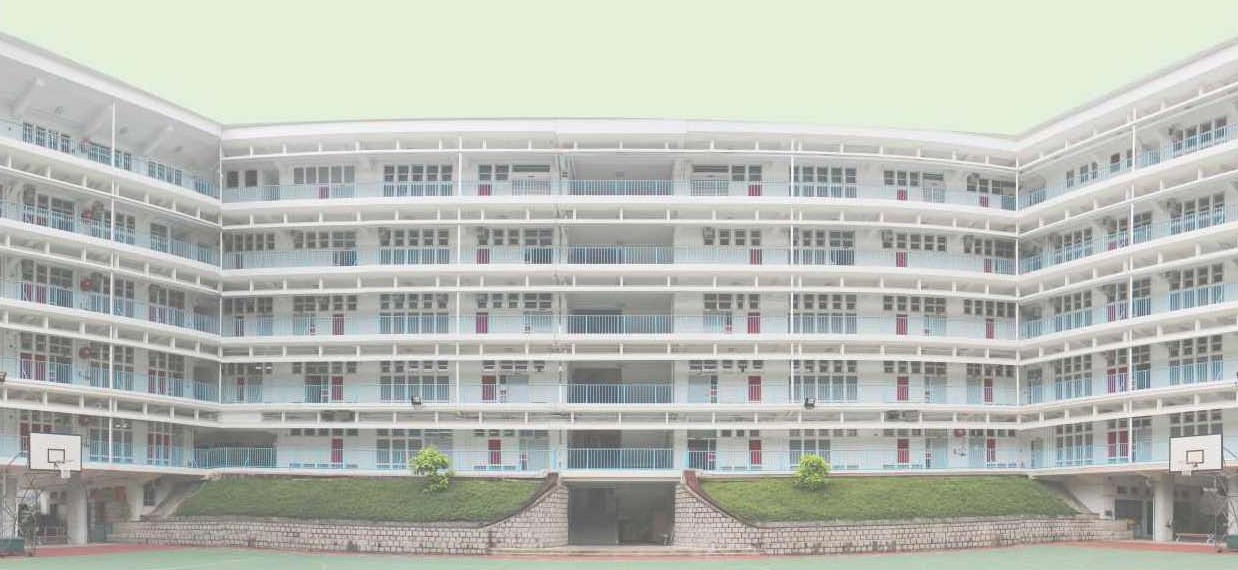

Last revision date: 17/12/2025


