 Secondary School Profiles 2025/2026


 Secondary School Profiles 2025/2026
| Address: | 55 Braemar Hill Road, North Point, Hong Kong | |||
| Phone: | 25785984 | Email: | info@sja.edu.hk | |
| Fax: | 25785725 | Website: | http://www.sja.edu.hk | |
School Mission
Upholding the five core Catholic Education values, namely Justice, Truth, Love, Family and Life, the school is devoted to promoting whole-personal development, nurturing students in a caring environment, and providing students with balanced learning opportunities in the six aspects of development, i.e. moral, intellectual, physical, social, aesthetic and spiritual.
 School Information
 | District | : | Eastern |
| Other District(s) | : | Central & Western, Wan Chai, Islands |
| Supervisor / Chairman of School Management Committee | : | Mr. Chuen Kwok Wai, Santiago |
| Principal (with Qualifications / Experiences) | : | Mr. Yuen Cheung Oi (B. Ed., M. Ed.) |
| School Type | : | Aided |
| Student Gender | : | Co-ed |
| Area Occupied by the School | : | About 4000 Sq. M |
| Name of Sponsoring Body | : | Catholic Diocese of Hong Kong |
| Incorporated Management Committee | : | Established |
| Percentage of School Supervisor and Managers / Chairperson and Members of School Management Committee (SMC) of Government Schools Fulfilling the Training Targets | : | 100% |
| Religion | : | Catholicism |
| Year of Commencement of Operation | : | 1955 |
| School Motto | : | Civic Responsibility |
| Parent-Teacher Association | : | Yes |
| Student Union / Association | : | Yes |
| Past Students’ Association / School Alumni Association | : | Yes |
| 4Rs Mental Health Charter | : | Yes |
| Whole School Health Programme | : | Action School |
 Chargeable Fees (2025/2026)
| School Fee ($) | Tong Fai ($) | ||
| S1 | - | - | |
| S2 | - | - | |
| S3 | - | - | |
| S4 | - | $340 | |
| S5 | - | $340 | |
| S6 | - | $340 | |
| Parent-Teacher Association Fee (Annual) ($) | : $100 | ||
| Student Union / Association Fee ($) | : $20 | ||
| Approved Charges for Non-standard Items (Annual)($) | : S.1 to S.5: $340 S.6: $255 | ||
| Other Charges / Fees ($) | : - | ||
 School Facilities
 | Number of Classroom(s) | : | 28 |
| School Facilities | : | There are 28 air-conditioned classrooms and 26 special rooms (include RS room, English room, Chinese Culture room, STEAM centre, E-learning centre, MMLC, multi-purpose room, music room, visual art room and lecture theatre. There are also a chapel, school hall, library, gym room, Archery Range, playground, basketball court, and counselling room in our school. |
| Facility(ies) for Supporting Students with Special Educational Needs | : | Ramp, Accessible lift, Accessible toilet and braille and tactile floor plan. |
 Teaching Staff Information (Including School Head) in the 2025/2026 School Year
 | Number of Teaching Posts in the Approved Establishment | : | 45 |
| Total Number of Teachers in the School | : | 52 |
| Qualifications and Professional Training | : | Percentage of Teaching Staff (%) |
| Had Received Teacher Training | : | 77% |
| Bachelor Degree | : | 100% |
| Master / Doctorate Degree or above | : | 52% |
| Special Education Training | : | 73% |
| Years of Experience | : | Percentage of Teaching Staff (%) |
| 0-4 Years | : | 35% |
| 5-9 Years | : | 11% |
| 10 Years or above | : | 54% |
 2025/2026 Class Structure
 | Number of Classes | ||
| S1 | : | 3 |
| S2 | : | 3 |
| S3 | : | 3 |
| S4 | : | 3 |
| S5 | : | 3 |
| S6 | : | 3 |
 Subjects Offered
 | Subjects Offered in the 2025/2026 School Year | : | S.1 - S.3 |
| Chinese as the Medium of Instruction | : | Chinese Language, Chinese History, History, Citizenship, Economics and Society, Geography*, Putonghua, Computer Literacy, Visual Arts, Physical Education, Music, Ethics and Religious Education, Life-wide learning |
| English as the Medium of Instruction | : | 1. English Language 2. For NCS students only: Mathematics, Science, Geography, History, Computer Literacy, Physical Education, Music, Citizenship, Economics and Society, Life-wide learning |
| Adopt a Different Medium of Instruction by Class or by Group / School-based Curriculum | : | Mathematics, Science |
| Subjects Offered in the 2025/2026 School Year | : | S.4 - S.6 |
| Chinese as the Medium of Instruction | : | 1. Core subjects: Chinese Language, Ethics and Religious Education, Physical Education 2. Elective subjects: Chinese History, Ethics and Religious Studies (DSE), S.4-S.6 Physical Education (DSE) |
| English as the Medium of Instruction | : | Core subject: English Language Elective subjects: Visual Arts |
| Adopt a Different Medium of Instruction by Class or by Group / School-based Curriculum | : | 1. Core subjects: Mathematics, Citizenship and Social Development 2. Elective subjects: Mathematics Extended Part, Information and Communication Technology, Physics, Chemistry, Biology, BAFS, Tourism and Hospitality Studies, Economics, Geography, 3. Other Languages: Japanese |
| Subjects to be Offered in the 2026/2027 School Year | : | S.1 - S.3 |
| Chinese as the Medium of Instruction | : | Chinese Language, Chinese History, History, Citizenship, Economics and Society, Geography*, Putonghua, Computer Literacy, Visual Arts, Physical Education, Music, Ethics and Religious Education, Life-wide learning |
| English as the Medium of Instruction | : | 1. English Language 2. For NCS students only: Mathematics, Science, Geography, History, Computer Literacy, Physical Education, Music, Citizenship, Economics and Society, Life-wide learning |
| Adopt a Different Medium of Instruction by Class or by Group / School-based Curriculum | : | Mathematics, Science |
| Subjects to be Offered in the 2026/2027 School Year | : | S.4 - S.6 |
| Chinese as the Medium of Instruction | : | 1. Core subjects: Chinese Language, Ethics and Religious Education, P.E. 2. Elective subjects: Chinese History, Ethics and Religious Studies (DSE), P.E. (DSE), Physics |
| English as the Medium of Instruction | : | 1. Core subject: English Language 2. Elective subjects: Economics, Geography, Visual Arts |
| Adopt a Different Medium of Instruction by Class or by Group / School-based Curriculum | : | 1. Core subjects: Mathematics, Citizenship and Social Development 2. Elective subjects: Mathematics Extended Part, Information and Communication Technology, Physics, Chemistry, Biology, BAFS, Tourism and Hospitality Studies |
*Subjects with Extended Learning Activities (ELA) in English
 Secondary One Admission, Orientation Activities & Healthy School Life
 | Secondary One Admission | : | Our school will accept discretionary places. Our school will participate in the Secondary School Places Allocation System through central allocation stage (Applicable for admission to S.1 in September 2026 ).Interview Content: Chinese and English proficiency, learning attitude, current affairs analysis, extracurricular activities, etc. Selection Criteria: Academic Performance 40% Conduct 20% Extra-Curricular Activities and Awards 10% Performance in the interview (communication skills in English & Chinese, Logical Thinking & Comprehension Ability, Attitude) 30% |
| Orientation Activities and Healthy Life | : | Various kinds of orientation activities for new students and their parents are organized in July and August. Orientation week, bridging courses and interest class are arranged. Healthy diet and regular exercise lead to the development of one’s healthy lifestyle. Nutritious meals are provided by our lunch supplier for all students. S.1 to S.3 students have lunch inside school. Physical Education develops students’ physical competence. An active and healthy life-style is promoted. In order to develop disciplined behavior, there are uniform groups for students to choose from. The school is dedicated to helping students establish healthy lifestyles, actively participate in physical and artistic activities, and appreciate sports and the arts. Through various student development and class management activities, the school promotes students' mental health and fosters a positive and proactive attitude. |
 School Characteristics
 | School Management | ||
| (1) School's Major Concerns | : | Adapting to curriculum trends, providing students with diverse opportunities to enrich their learning experiences. Strengthening national identity, fostering a healthy lifestyle and cultivating virtuous and talented students. |
| (2) School Management Organisation | : | The school operates under school-based management led by the Incorporated Management Committee, which sets the overall development direction and policies for the school while overseeing its operations. The management framework is clear, with three main areas: academics, student development, and school administration, each supported by dedicated committees. The Principal, along with the heads of these committees and the Special Educational Needs Coordinator, forms the School Executive Council, which holds regular meetings to lead various functional groups in effectively implementing school operations. |
| (3) Incorporated Management Committee / School Management Committee / Management Committee | : | The Incorporated Management Committee is composed of representatives of the school sponsoring body, the supervisor, the principal, the representatives of teachers, parents and alumni. School policies and plans are drawn up and periodically evaluated. |
| (4) School Green Policy | : | The Environmental Protection unit and Environmental Protection Society organizes various activities to raise awareness of environmental protection among students. The students will participate in the scheme of eco ambassador and programmes related to waste recycling and Solar photovoltaic system. |
| Learning and Teaching Plan | ||
| (1) Whole-school Language Policy | : | 1. Biliteracy and trilingualism: Chinese is adopted as the MOI in most of the Junior Secondary subjects. English is adopted as the MOI in S.1-3 Mathematics, Science and Geography by group. Putonghua is one of the compulsive subjects in S1 to S3. Bilingual medium of instruction is adopted in Senior Secondary Mathematics, CSD and some of the elective subjects. 2. Students' learning diversity is catered for in English learning. After-school English enhancement course is offered to those students who are less abled in learning English.3. Rich English learning environment: There is an English corner in each classroom. Varied English activities are organized by the NET teacher and English ambassadors during lunch time. |
| (2) Learning and Teaching Strategies | : | 1. Clear teaching objective: Diversified teaching strategies and teaching materials accommodating students' learning diversities are adopted. Establish effective learning routine: Learning and studying skills are taught. 2. Catering for Learner Differences: Enrichment classes catering for students' differences are arranged. 3. Diversified academic award schemes: Diversified academic award schemes are held so as to encourage students to develop sustainable learning habit. 4. Enrich students' learning experiences: Students are encouraged to join various kinds of academic activities and competitions. 5. Diversified life-wide learning activities are organized so as to broaden the horizons of students. 6. Diversified teaching strategies are adopted to enhance learning and teaching effectiveness. 7. Small class teaching is employed at all levels, allowing for group-based instruction tailored to students' individual learning needs. |
| (3) School-based Curriculum | : | 1. Electives: 2X and 3X. (1) 13 elective subjects including arts, science and business streams are offered. (2) DSE VA, Other Language Subjects and Applied Learning are arranged. 2. Curriculum highlights: (1) We focus on strengthening core subjects and also make good use of e-learning platform so as to enhance students' self-directed learning ability. (2) In Junior Secondary, we are developing STEAM education to tailor-make a school based curriculum and encourage creativity. (3) Both Chinese and English Reading are included in Junior Secondary curriculum. (4) Putonghua lessons are offered to Junior Secondary. Students' bilingual and trilingual abilities are enhanced. (5) The grouping of core subjects is arranged based on students' ability. (6) There are various kind of elective learning groups for the students to choose so as to cater for their needs. (7) School based Chinese Language curriculum adaptation is designed for NCS students. (8) Life-wide learning programs are arranged for students' all rounded development. |
| (4) Major Renewed Emphases in the School Curriculum | : | The school keeps abreast of the development of the Four Key Tasks suggested by the Education Bureau. 1. Through the e-Learning and BYOD policy, students' learning motivation, teacher-student interaction and thus learning and teaching effectiveness are enhanced. 2. The school adopts whole-school approach when implementing value education. Religious Education is offered to all levels, Life Education and Other Learning Experiences are offered to Junior Secondary and Senior Secondary respectively, complemented by diverse activities to promote moral and spiritual education. Additionally, Catholic education core values are gradually integrated into the formal curriculum. 3. "Extensive Reading Award Scheme" are launched. Reading E-books is also encouraged. Students learn and excel in the process of reading and develop a life-long reading habit. 4. School-based life-wide learning program and subject-based life-wide learning activities are organized. Study tours outside Hong Kong are also encouraged. |
| (5) Life Planning Education | : | It is hoped that through proper guidance and life-wide learning activities, students will be able to make well thought-out decisions about their future. Systematic and tailor-made activities are held. |
| Student Support | ||
| (1) Whole School Approach to Catering for Learner Diversity | : | Peer Counseling Scheme are held. Leadership training camp for S.2 students is organized. Various activities are organized for NCS and NAC students. In addition, we have established an SEN Team which consists of two social workers, an education psychologist and teaching assistants. |
| (2) Whole School Approach to Integrated Education | : | A student support team is established, including an Educational Psychologist, social workers, SENCO, guidance teachers and teaching assistants, to support the students with special educational needs. Our teachers develop their professional skills by enrolling in professional development courses of inclusive education. The learning support grant, the Grant for Supporting Non-Chinese Speaking Students with Special Educational Needs and other resources are used flexibly, so as to provide diversified support for the local and NCS students with special educational needs. Speech therapy and occupational therapy services, Arts therapy, pet therapy, after-school tutorial classes, lunch time board games, career life planning and after-school interest group, Positive Life Camping and integration programs are provided. To cater for learners' diversity and enhance learning effectiveness, specific measures such as teaching adaptation and assessment accommodation are implemented. We work closely with the EDB and educational psychologist. Regular case conferences and student assessments are held. Parents are also involved, so that individual educational plans can be tailor-made. The plans will be evaluated regularly so that parents can support their children. |
| (3) Education Support for Non-Chinese Speaking (NCS) Students | : | Our school provides additional support for NCS students to facilitate their learning of Chinese: providing after-school support programmes in learning Chinese; appointing additional teacher(s)/teaching assistant(s) to support NCS students’ learning of Chinese; arranging intensive Chinese learning and teaching mode(s), e.g. pull-out learning if necessary, split-class/group learning, etc.; developing school-based Chinese Language curriculum and/or adapting learning and teaching materials; and organising activities to create an inclusive learning environment in the school. Students are trained to sit for GCSE & IGCSE Chinese subjects, with outstanding results. |
| (4) Measures to Provide Adaptation for Learning and Assessment | : | There are three examinations in each academic year. With reference to the progress of teaching, continuous assessment is implemented. Various learning groups are organized by ability level, allowing for curriculum and assignment adjustments that cater to students' learning needs. Additionally, there are enrichment classes for core subjects after-school. For non-Chinese speaking students, a project-based learning model is used in the junior secondary Chinese History course as an alternative to written examinations. |
| Home-School Co-operation and School Ethos | ||
| (1) Home-School Co-operation | : | The Parent-Teacher Association was founded in 1970. Parent representatives are invited to be the members of the Incorporated Management Committee, playing an active role in the decision making for the school major policies. A variety of activities, including talks, workshops, a picnic, volunteer work and the publishing of bulletins, are organized. Parents' contribution in the school activities foster the partnership between both parties for the betterment of students' well-round development. |
| (2) School Ethos | : | A loving and caring school culture is promoted. Students are encouraged to explore their talents and potential through extra-curricular activities, voluntary work and social services. Positive behaviour is encouraged by various kinds of reward schemes. The virtues of faith, hope, charity, justice, wisdom and courage are cultivated. The school culture is established. In addition, our school adheres to the core values of Catholic Education. |
| Future Development | ||
| (1) School Development Plan | : | 1. Comprehensively review and refine the curriculum planning to ensure students receive a broad and balanced learning experience. Equip students with knowledge, skills and attitudes to become active learners. 2. Embrace a "student-led" approach to nurture students' creativity, problem-solving skills and information literacy, and continue to develop STEAM education. 3. Deepen students' understanding of our nation and national security, and enhance their sense of national identity. 4. Address student's physical, social and emotional well-being during their growth, create opportunities and provide support to help them establish and practice a healthy lifestyle. |
| (2) Teacher Professional Training and Development | : | Teachers' professional development includes: 1. Development programmes in Key Learning Areas; 2. Workshops on teaching skills; 3. Workshops on enhancing students' learning effectiveness; 4. Workshops on strengthening students’ national and global identity. |
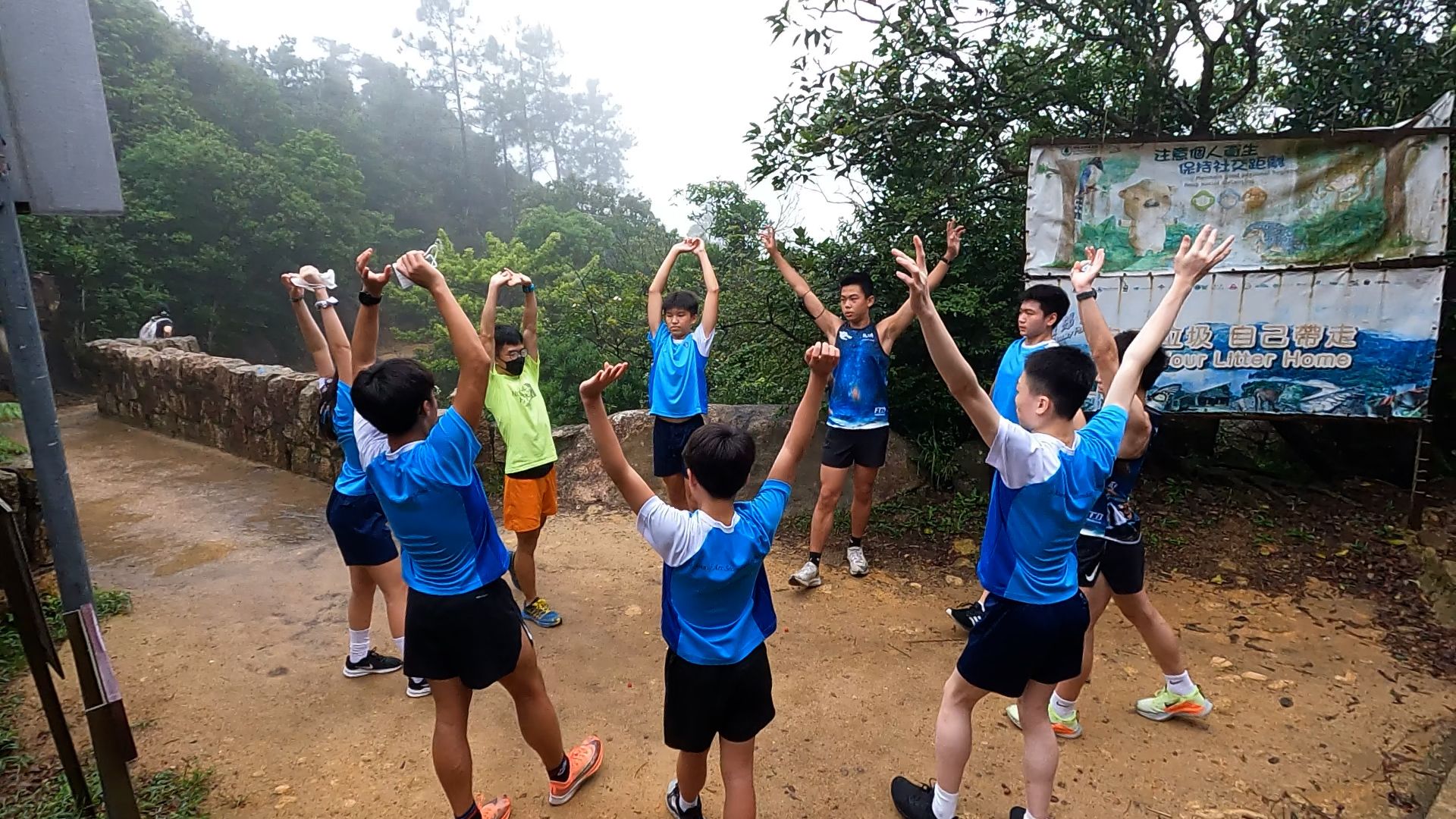
| Life-wide Learning (Including Five Essential Learning Experiences to be Provided through Key Learning Areas, Extra-curricular Activities, Co-curricular Activities, etc.) | : | There are 13 co-curricular clubs, covering academics, interests, sports, service, and uniformed groups. The school has three houses, enabling students to organize and participate in inter-house activities and competitions. With various academic and non-academic school teams, students are encouraged to participate in different internal and external competitions. Junior secondary students have access to a school-based Life-wide learning program and life-wide learning activities are organized across all levels, enriching their diverse learning experiences. Each year, the school hosts an Outdoor Activity Day, inter-house music and sports competitions, talent shows, volunteer service activities, leadership training courses, charity casual wear days, athletic meets, cross-country runs, and participates in various academic competitions. Events such as Academic Week, and Religious Week are organized, while "Other Learning Experiences" encompass five major areas outlined by the Education Bureau are provided. The school also offers a variety of interest classes, inter-class competitions, skills certificate courses, and career planning activities. |
| Others | : | Our school provides a rich and diverse learning environment with students from over ten different nationalities. We emphasize biliteracy and trilingualism, offering a rich language environment that helps students become an informed and responsible citizen with a sense of national and global identity, appreciation of proper values and attitudes as well as Chinese culture, and respect for pluralism in society. |
| Direct Public Transportation to School | : | Bus: 23B, 25, 25A, 27, 41A, 85, 85P, 85A, 108; Minibus: 25, 49M; School coach. |
| Remarks | : | For more information on scholarships, awards acquired in public and inter-school competitions, as well as exchange programmes, please feel free to visit our school’s website. |
 School Map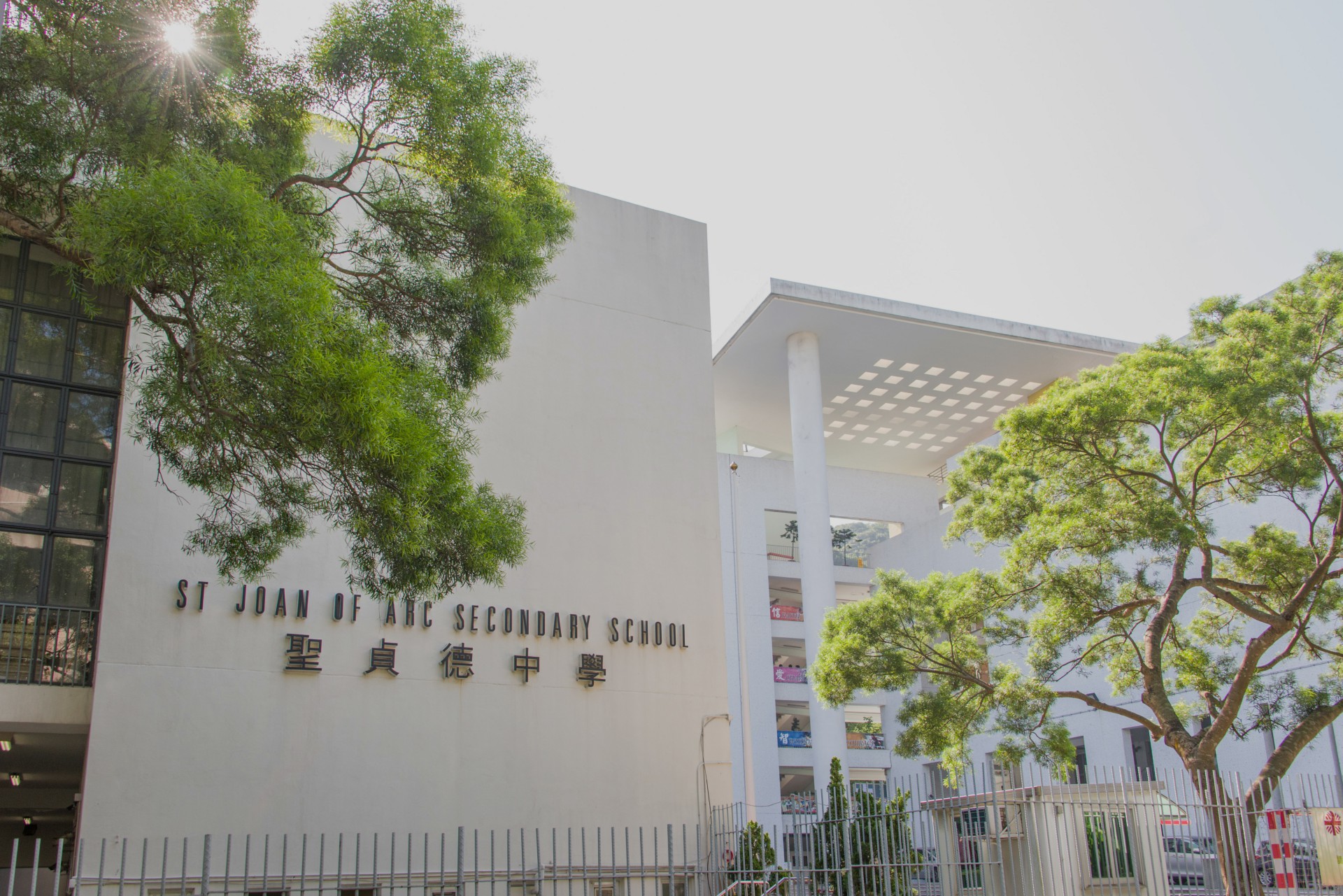
Last revision date: 5/12/2025


