 Secondary School Profiles 2025/2026


 Secondary School Profiles 2025/2026
| Address: | 66 Sycamore Street Tai Kok Tsui Kowloon | |||
| Phone: | 23944186 | Email: | contact@lwfss.edu.hk | |
| Fax: | 23914799 | Website: | https://www.lwfss.edu.hk | |
School Mission
To inherit and pursue the lofty aspirations of the worldwide Lung Kong clans (the LAU, KWAN, CHEUNG and CHIU clans). We aim to provide young people with a balanced and effective education rooted firmly in the virtues promulgated by the School Motto: 'Loyalty, Righteousness, Benevolence and Courage'. To bring forth in our students the upright qualities of prudence, moral sense and persistence, so that they may develop into responsible members of society.
 School Information
 | District | : | Yau Tsim Mong |
| Other District(s) | : | Sham Shui Po, Kowloon City |
| Supervisor / Chairman of School Management Committee | : | Mr Cheung Hung Chiu Stewart |
| Principal (with Qualifications / Experiences) | : | Dr Chan Wai Wun (B.B.A. (HKU), PGDE (HKU), M.Ed (CUHK), Doctor of Education (University of Bristol)) |
| School Type | : | Aided |
| Student Gender | : | Co-ed |
| Area Occupied by the School | : | About 4650 Sq. M |
| Name of Sponsoring Body | : | Lung Kong World Federation School (H.K.) Limited |
| Incorporated Management Committee | : | Established |
| Percentage of School Supervisor and Managers / Chairperson and Members of School Management Committee (SMC) of Government Schools Fulfilling the Training Targets | : | 80% |
| Religion | : | Not Applicable |
| Year of Commencement of Operation | : | 1977 |
| School Motto | : | Loyalty, Righteousness, Benevolence and Courage |
| Parent-Teacher Association | : | Yes |
| Student Union / Association | : | Yes |
| Past Students’ Association / School Alumni Association | : | Yes |
| 4Rs Mental Health Charter | : | Yes |
| Whole School Health Programme | : | Action School |
 Chargeable Fees (2025/2026)
| School Fee ($) | Tong Fai ($) | ||
| S1 | - | - | |
| S2 | - | - | |
| S3 | - | - | |
| S4 | - | $340 | |
| S5 | - | $340 | |
| S6 | - | $340 | |
| Parent-Teacher Association Fee (Annual) ($) | : $50 | ||
| Student Union / Association Fee ($) | : $25 | ||
| Approved Charges for Non-standard Items (Annual)($) | : (Refer to the Education Bureau approved list of fees for specific purposes in Aided Schools) | ||
| Other Charges / Fees ($) | : - | ||
 School Facilities
 | Number of Classroom(s) | : | 24 |
| School Facilities | : | Facilities include 24 classrooms, laboratories (Physics, Chemistry, Biology, Science), 2 STEAM Rooms, 2 Computer Rooms, a Visual Arts Room, Home Economics Room, Student Activity Centre, School Library, Learning Hub (Self-study Room for Senior Form Students), School Hall, English Room, Geography Room, Music Room, Campus TV Room, Band Room, playground, covered playground, Fitness Zone (Fencing and Gym facilities), etc. All venues are air-conditioned, and equipped with a computer, smart TV, amplifier system and WiFi connection. The School Hall is equipped with an LED screen. |
| Facility(ies) for Supporting Students with Special Educational Needs | : | Ramp, Accessible lift, Accessible toilet and accessible public information / service counter. |
 Teaching Staff Information (Including School Head) in the 2025/2026 School Year
 | Number of Teaching Posts in the Approved Establishment | : | 57 |
| Total Number of Teachers in the School | : | 62 |
| Qualifications and Professional Training | : | Percentage of Teaching Staff (%) |
| Had Received Teacher Training | : | 81% |
| Bachelor Degree | : | 100% |
| Master / Doctorate Degree or above | : | 53% |
| Special Education Training | : | 21% |
| Years of Experience | : | Percentage of Teaching Staff (%) |
| 0-4 Years | : | 25% |
| 5-9 Years | : | 14% |
| 10 Years or above | : | 61% |
 2025/2026 Class Structure
 | Number of Classes | ||
| S1 | : | 4 |
| S2 | : | 4 |
| S3 | : | 4 |
| S4 | : | 4 |
| S5 | : | 4 |
| S6 | : | 4 |
 Subjects Offered
 | Subjects Offered in the 2025/2026 School Year | : | S.1 - S.3 |
| Chinese as the Medium of Instruction | : | S.1-S.3: Chinese Language, Chinese History, Citizenship, Economics and Society, Visual Arts, Computer Literacy, Physical Education, Geography, History, Music S.1-S.2: Putonghua, Home Economics S.3: STEAM, Business & Economics |
| English as the Medium of Instruction | : | S.1-S.3: English Language, S.1: Mathematics, Science |
| Adopt a Different Medium of Instruction by Class or by Group / School-based Curriculum | : | S.2-S.3: Mathematics, Science S.3: Science (Physics, Chemistry, Biology) |
| Subjects Offered in the 2025/2026 School Year | : | S.4 - S.6 |
| Chinese as the Medium of Instruction | : | S.4-S.6: Chinese Language, Chinese History, Information & Communication Technology, Visual Arts, Physical Education, Citizenship & Social Development, Tourism & Hospitality, Geography, History, Health Management and Social Care, Music S.4: Applied Learning Module II (Applied Psychology, Foundation in Chinese Medicine) S.5: Applied Learning Module II (Practical Psychology, Foundation in Chinese Medicine) |
| English as the Medium of Instruction | : | S.4-S.6: English Language, Chemistry, Mathematics Extended Part Module 2 S.4-S.5: Applied Learning Module II (English for Service Professionals) S.5: Applied Learning Module II (English Communication) |
| Adopt a Different Medium of Instruction by Class or by Group / School-based Curriculum | : | Mathematics, Physics, Biology, Business, Accounting and Financial Studies (BAFS), Economics |
| Subjects to be Offered in the 2026/2027 School Year | : | S.1 - S.3 |
| Chinese as the Medium of Instruction | : | S.1-S.3: Chinese Language, Chinese History, Citizenship, Economics and Society, Visual Arts, Computer Literacy, Physical Education, Geography, History, Music S.1-S.2: Putonghua, Home Economics S.3: STEAM, Business & Economics |
| English as the Medium of Instruction | : | S.1-S.3: English Language S.1: Mathematics, Science |
| Adopt a Different Medium of Instruction by Class or by Group / School-based Curriculum | : | S.2-S.3: Mathematics, Science S.3: Science (Physics, Chemistry, Biology) |
| Subjects to be Offered in the 2026/2027 School Year | : | S.4 - S.6 |
| Chinese as the Medium of Instruction | : | S.4-S.6: Chinese Language, Chinese History, Information & Communication Technology, Visual Arts, Physical Education, Citizenship & Social Development, Tourism & Hospitality, Geography, History, Health Management and Social Care S.4-S.5: Applied Learning Module II (Applied Psychology, Foundation in Chinese Medicine) |
| English as the Medium of Instruction | : | S.4-S.6: English Language, Chemistry, Mathematics Extended Part Module 2 S.4-S.5: Applied Learning Module II (English for Service Professionals) |
| Adopt a Different Medium of Instruction by Class or by Group / School-based Curriculum | : | Mathematics, Physics, Biology, Business, Accounting and Financial Studies (BAFS), Economics |
 Secondary One Admission, Orientation Activities & Healthy School Life
 | Secondary One Admission | : | Our school will accept discretionary places. Our school will participate in the Secondary School Places Allocation System through central allocation stage (Applicable for admission to S.1 in September 2026 ).The admission criteria and weighting for S1 are as follows: 1. Academic Performance: This includes academic results, awards, and ranking from the Education Bureau (40%); 2. Interview Performance (30%); 3. Extra-curricular Activities and Awards (20%); 4. Conduct (10%). Applicants demonstrating outstanding performance will be awarded bonus marks. |
| Orientation Activities and Healthy Life | : | 1. S1 Parents Orientation Days & Bridging Course for S1 students; 2. S1-S2 Lunch at School Programmes; 3. Lung Kong Buddy Scheme; 4. Thanksgiving Month, Physical & Mental Health Month; 5. S.1 Residential Camp; 6. Coaches Outreach Scheme for School Physical Education Campaign; 7. Student Health Services by the Department of Health - Whole-School Campus Health Programme; 8. Positive Education Activities; 9. Month of Caring; 10. Reading Week; 11. Music & Arts Week |
 School Characteristics
 | School Management | ||
| (1) School's Major Concerns | : | Major Concerns: 1. Work hard: Strive for excellence in academic pursuits 2. Play hard: Broaden exposures to unlock students' full potential 3. Serve hard: Make a positive impact on our community |
| (2) School Management Organisation | : | IMC established a School-based Management Governance structure, including Core, School Executive, Crisis Management, and Complaint Management. Academic Affairs include Academic Affairs, Advancement, Exam, CloudSams Data Analysis, Learning Atmosphere, Reading, Career/Life Planning, STEAM/IT in Education, Staff Development and Welfare. Student Affairs includes Values, Moral and Civic Education, National Security Education, Discipline, Guidance, Student Support, Student Activities, Student Affairs and Admission. School Affairs include General Affairs/Administration, Finance Monitoring, School Promotion and Connections, Safety, Infrastructure and Facilities, PTA, Alumni Association and Lung Kong coordination. |
| (3) Incorporated Management Committee / School Management Committee / Management Committee | : | The Incorporated Management Committee (IMC) was set up in July, 2006. The committee members include Sponsoring Body Managers, Independent Manager(s), Parent Manager(s), Alumni Manager(s) and Teacher Manager(s). |
| (4) School Green Policy | : | Our school participated in the Green School 2.0 - Energy Smart and Solar Harvest - Solar Energy Support Scheme for Schools and Welfare Non-governmental Organisations to install a solar energy generation system. We have set up two solar power generation systems to collect electricity, and contribute to a greener campus. |
| Learning and Teaching Plan | ||
| (1) Whole-school Language Policy | : | To cultivate students who are biliterate and trilingual, and who are proficient at writing in Chinese and English. Mathematics and Science for S1 are taught in English, providing students with more opportunities to engage with and use the English language. The school morning assembly is conducted in both English and Cantonese, creating a rich linguistic environment that enhances students' language skills. |
| (2) Learning and Teaching Strategies | : | We aim to nurture students who are self-directed learners through a holistic and balanced curriculum. 1. All subjects develop teaching materials that enhance students' self-directed learning with the support of IT resources and a BYOD policy. 2. Students are guided in applying note-taking skills that promote better organisation of notes and extend their learning capabilities. 3. School-based initiatives, such as collaborative lesson planning and peer lesson observation, significantly enhance students' learning effectiveness. 4. A variety of whole-school academic activities and thematic weeks have effectively boosted the learning atmosphere. Students can enjoy authentic learning experiences with engaging and interesting learning activities. 5. Small class teaching in English for senior forms improves students' English proficiency and addresses learner diversity. Activities such as English Day, English Week, and the Inter-school Speech Festival increase students' interest in learning English. 6. The school actively promotes electronic reading to diversify students' reading pathways. Students can access a free electronic reading platform provided by the school, enabling them to read hundreds of books from various fields online anytime and anywhere, thus fostering independent learning. 7. Students are encouraged and selected to participate in a variety of activities and competitions under the "One Subject; One Competition" initiative, showcasing their learning outcomes and boosting their confidence in learning. |
| (3) School-based Curriculum | : | 1. Electives: 2X and 3X. Besides the 4 core subjects, senior form students can select 2-3 elective subjects among 17 choices. 2. Curriculum highlights: Ideas of AI, science, design thinking and innovation are incorporated into the school curriculum through STEAM lessons. |
| (4) Major Renewed Emphases in the School Curriculum | : | 1. Reading: Reading Session after lunch time is built in. Students are encouraged to read extensively through an online reading scheme, weekly newspaper reading and book sharing. 2. Moral and civic values: Students are encouraged to be caring and upright. We organise school assemblies, form periods, life planning courses and national security activities. Social service and exchange tours further heighten students’ awareness of the community and society. 3. Information Technology: Students make use of online self-directed learning platforms to consolidate learning. Online English exercises, a STEAM Room, interactive e-classroom and multimedia learning platforms (Google Classroom, OQB, AQP) are provided to enhance students' listening, speaking and self-learning abilities. |
| (5) Life Planning Education | : | Our school organises interactive level-specific activities for students, implementing career planning education tailored to the needs of both junior and senior forms. In addition to helping students to understand themselves, these activities enhance their awareness of diverse educational and career pathways. We encourage students to engage in personal planning, starting from junior forms, to think about their future educational and career directions. This fosters a positive outlook on the future, promotes lifelong learning, and prepares them to face a rapidly changing world. Our school actively promotes the policy of "One Diploma, Multiple Certificates" by providing students with additional learning resources, to encourage them to continuously enhance their skills. This helps students earn certificates and gain experience in public examinations before taking the Diploma of Secondary Education (DSE) Examination, better preparing them for their future academic pursuits. In addition to international assessments like the ICQ and ICAS in mathematics and science, the school hires specialised instructors to teach IELTS courses and offers full subsidies to senior secondary students who take the exam. The school also fully funds all Form 5 students to take the TOEIC exam, with the aim of improving their language proficiency and workplace competitiveness. Furthermore, the school provides preparatory courses for the LCCI exams for students interested in business development. Through the Alibaba Seed Programme, the school also offers AI Cloud and User Experience Design courses (Level 3 Certificate under the Qualifications Framework), as well as the Seed Foundation Internship Programme. These initiatives aim to provide students with up-to-date learning experiences and enhance their abilities. |
| Student Support | ||
| (1) Whole School Approach to Catering for Learner Diversity | : | To better facilitate student development, two class teachers are deployed for each S.1-S.6 class. Form meetings are convened to provide pastoral care and support to students. We also organise a wide array of activities for students in need. To cater for learner diversity, S4-S6 students are streamed into smaller groups for Chinese, English and Maths subjects. Various learning support measures, such as Social Skills Classes, Reading and Writing Classes, and Peer Support Groups have been adopted to support students with diverse needs. |
| (2) Whole School Approach to Integrated Education | : | Inclusive Education is carried out in a whole-school approach. The Student Support Team, together with the Guidance Committee, Discipline Committee, Social Workers, Teaching Assistants, and Student Counselor, promotes an inclusive education policy to support students' learning and growth needs. The school also works closely with the EDB and an Educational Psychologist to conduct periodic assessments. Parents are invited to meetings to work out an individual education plan for their child, evaluate the effectiveness of the plan, and learn skills that can help and guide their child holistically. The school uses the Learning Support Grant and Grant for Supporting Non-Chinese Speaking Students with Special Educational Needs to hire services such as speech therapy, social skills training, after-school support and hiring of qualified personnel who specialise in supporting SEN students. |
| (3) Education Support for Non-Chinese Speaking (NCS) Students | : | Our school provides additional support for NCS students to facilitate their learning of Chinese: providing after-school support programmes in learning Chinese; appointing additional teacher(s)/teaching assistant(s) to support NCS students’ learning of Chinese; arranging intensive Chinese learning and teaching mode(s), e.g. pull-out learning if necessary, split-class/group learning, etc.; and organising activities to create an inclusive learning environment in the school. |
| (4) Measures to Provide Adaptation for Learning and Assessment | : | To enhance learning through assessments, there is a Uniform Test Week in each term, a Mid-year and a Final Examination within each school year. For school-based continuous assessment in junior forms, coursework, assignments, class performance, project work and a wide variety of assignments are included. |
| Home-School Co-operation and School Ethos | ||
| (1) Home-School Co-operation | : | Our school’s Parent-Teacher Association (PTA) was established in 1999. In alignment with the Education Bureau's 2024 guidelines for the ‘Curriculum Framework on Parent Education (Secondary School)’, we have actively organised educational seminars for parents and parent-child workshops covering topics related to adolescent development and parent-child communication. These efforts aim to promote collaboration between home and school, enhancing students' sense of belonging to the school. Additionally, since July of 2006, we have included parent representatives on our school board to ensure open and transparent governance. Class teachers also maintain regular contact with parents, working together to support student growth and development. |
| (2) School Ethos | : | Our school stresses self-discipline and a simple way of life. School social workers work closely with the Guidance Committee to help students adapt to school life and enhance personal growth and confidence. Through school assemblies, class teacher periods, theme talks and various award schemes, values formation and other developmental programmes, students are supported with love and care. |
| Future Development | ||
| (1) School Development Plan | : | We are determined to strive for students' excellence in academic pursuits, broaden students' exposure to unlock their full potential, and make a positive impact on our community. |
| (2) Teacher Professional Training and Development | : | Professional Development Days for teachers are held three times every year. The aim is to enhance learning and teaching efficacy. Teachers are encouraged to attend training courses organised by the EDB and other institutions. Learning circles are established to facilitate professional sharing and collaborative lesson planning. School-based training workshops for using apps and IT platforms are organised regularly and when needed. |
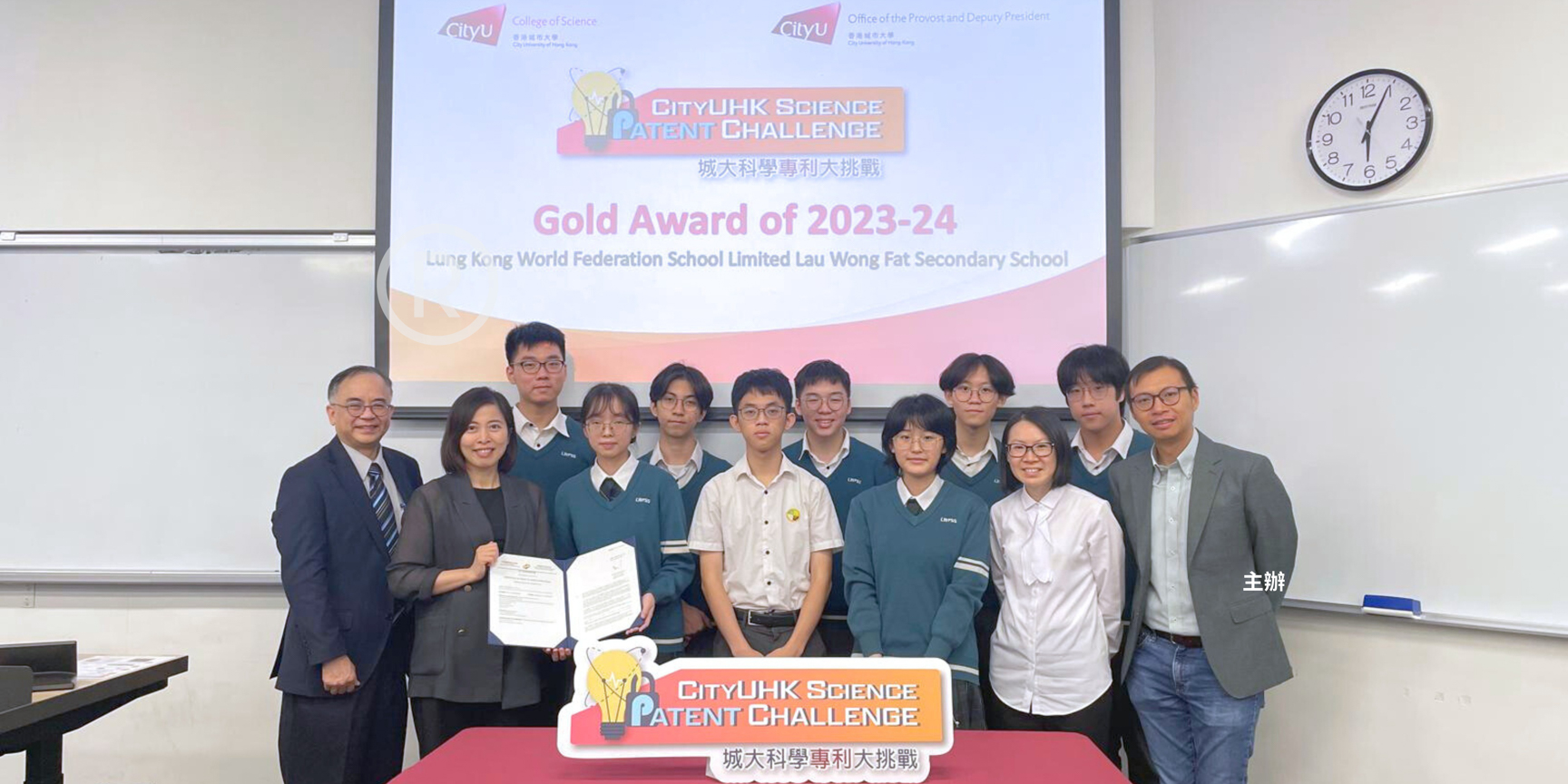
| Life-wide Learning (Including Five Essential Learning Experiences to be Provided through Key Learning Areas, Extra-curricular Activities, Co-curricular Activities, etc.) | : | Our school actively promotes holistic learning, supporting activities from various subject groups and extra-curricular activities, and allowing students to learn beyond the classroom and discover their strengths and potential. Extra-curricular activities are categorised into five areas: "Academics and Innovation," "Interests and Culture," "Sports and Health," "Music and Arts," and "Service Learning and Uniformed Groups." There are approximately 40 clubs and groups available, providing students with a diverse range of options. Among these, the fencing team, shuttlecock team, volleyball team, brass band, English debate team, and STEAM club stand out and are particularly popular among students. Subject groups also actively promote interdisciplinary theme activities, such as "National and Value Education Week", "Gratitude and Holistic Health Week", "STEAM Week", "Reading Week", "Information Technology Week", and "Music and Arts Week", enhancing students' extracurricular knowledge and learning experiences. Each year, our school organises multiple study tours to Europe, America, Japan, Korea, Taiwan, Southeast Asia, and Mainland, covering areas such as history, culture, scientific research, and English learning, and enriching students’ learning experiences through experiential learning. Additionally, our school hosts various school-wide activities, such as sports days, a school picnic, student talent shows, annual concerts, and inter-class sport competitions, allowing students to have a joyful and memorable campus life. Our school also offers leadership training programmes in terms of camps and workshops, cultivating student leaders from the "Four Houses," "Student Association", "Prefects", "Counseling Ambassadors", and "Lung Kong Ambassadors", to enhance their leadership skills and team spirit. |
| Others | : | The IMC and other sponsors offer an extensive number of scholarships to encourage and reward students for their outstanding performance in academics, non-academic areas, and services, respectively. |
| Direct Public Transportation to School | : | MTR: Tsuen Wan Line: Prince Edward Station (Exit C2) / Sham Shui Po Station (Exit A) Kwun Tong Line: Prince Edward Station (Exit C2) Tung Chung Line: Olympic Station (Exit C) / Nam Cheong Station (Exit D) Tuen Ma Line: Nam Cheong Station (Exit D) Bus: 2, 2A, 2E, 6F, 12, 12A, 18, 31B, 32, 36B, 37, 42, 43C, 44, 46, 66X, 68X, 87B, 118, 118P, 265B, 914 Minibus: 3, 46, 70, 125 |
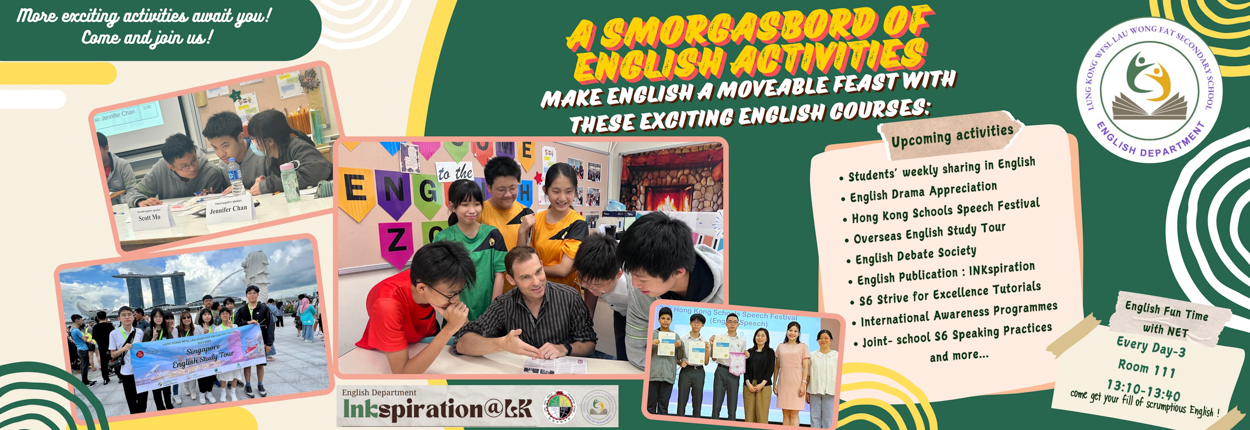
| Remarks | : | "Brilliant Fridays" programme is launched to enrich students' learning and promote holistic development. Held every Friday, it offers cultural and interest group activities. "The Young Connoisseur Academy" offers cultural activities, which are mandatory for S1-2 students, focus on both Chinese and Western cultures. The programme covers topics like calligraphy, tea ceremonies, famous quotes, and renowned paintings. There are 20 interest groups, including "Uniform Groups" for S1, while S2-3 students engage in Sports, Arts, Language, and STEAM groups. |
 School Map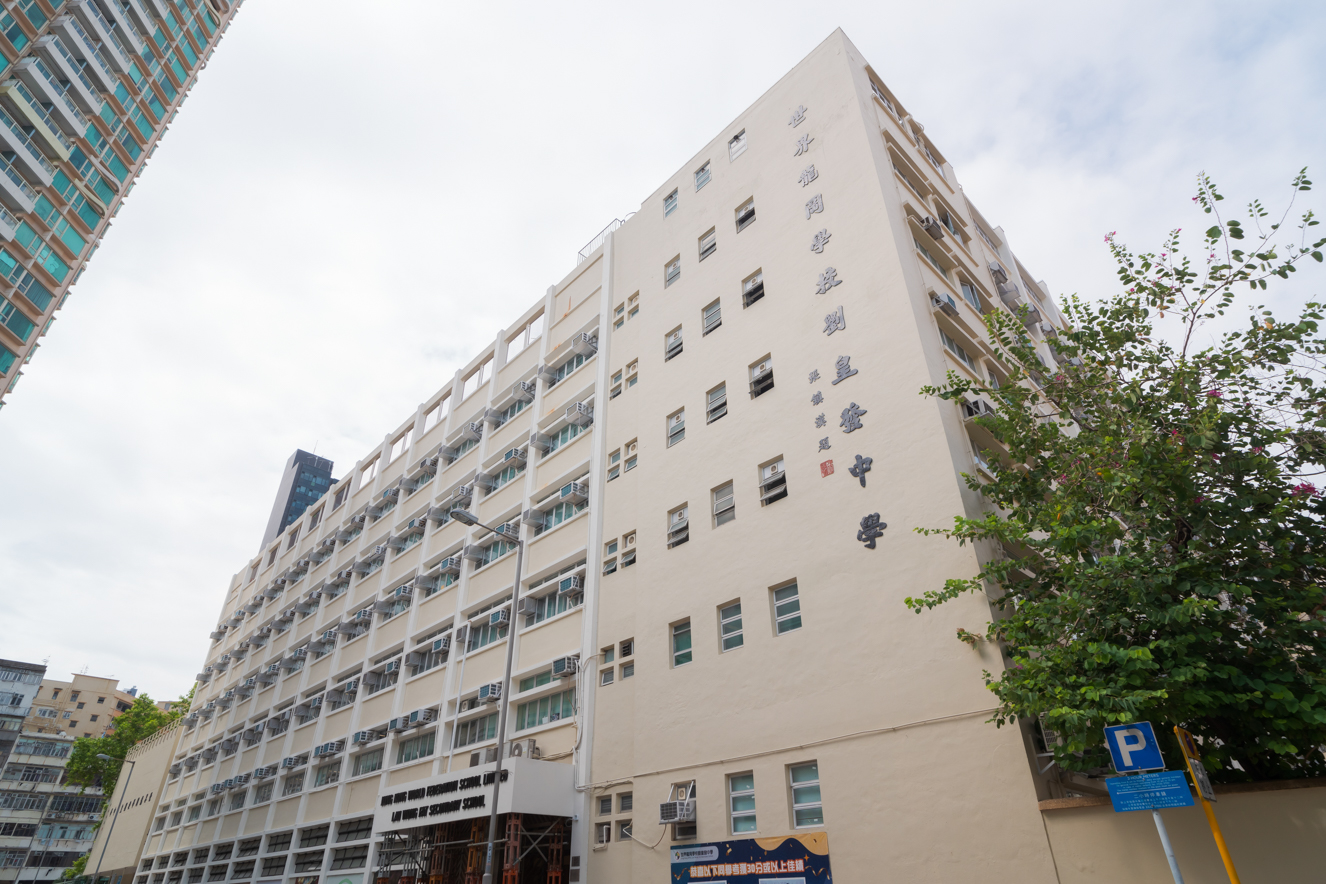
Last revision date: 5/12/2025


