 Secondary School Profiles 2025/2026


 Secondary School Profiles 2025/2026

| Address: | 2 Cliff Road Yaumatei | |||
| Phone: | 23857812 | Email: | nc@newman.edu.hk | |
| Fax: | 23854502 | Website: | http://www.newman.edu.hk | |
School Mission
Educate our youth with our Catholic vision, including personal integrity, knowledge and skill, social and national responsibility.
 School Information
 | District | : | Yau Tsim Mong |
| Other District(s) | : | Sham Shui Po, Kowloon City |
| Supervisor / Chairman of School Management Committee | : | Mr. Kwok Chi Tak Philip |
| Principal (with Qualifications / Experiences) | : | Mr. Ng Wa Piu Henry (B.Sc., PGDE , M.A. in I.T. in Edu., M.A. in L.S.) |
| School Type | : | Aided |
| Student Gender | : | Co-ed |
| Area Occupied by the School | : | About 1400 Sq. M |
| Name of Sponsoring Body | : | The Catholic Diocese of Hong Kong |
| Incorporated Management Committee | : | Established |
| Percentage of School Supervisor and Managers / Chairperson and Members of School Management Committee (SMC) of Government Schools Fulfilling the Training Targets | : | 100% |
| Religion | : | Catholicism |
| Year of Commencement of Operation | : | 1963 |
| School Motto | : | Excellence & Virtue |
| Parent-Teacher Association | : | Yes |
| Student Union / Association | : | Yes |
| Past Students’ Association / School Alumni Association | : | Yes |
| 4Rs Mental Health Charter | : | Yes |
| Whole School Health Programme | : | Action School |
 Chargeable Fees (2025/2026)
| School Fee ($) | Tong Fai ($) | ||
| S1 | - | $40 | |
| S2 | - | $40 | |
| S3 | - | $40 | |
| S4 | - | $290 | |
| S5 | - | $290 | |
| S6 | - | $290 | |
| Parent-Teacher Association Fee (Annual) ($) | : $100 | ||
| Student Union / Association Fee ($) | : $20 | ||
| Approved Charges for Non-standard Items (Annual)($) | : $280 | ||
| Other Charges / Fees ($) | : Student Handbook, Report card, Fees for House admission, Student photo, Student and Parent card: $61 | ||
 School Facilities
 | Number of Classroom(s) | : | 32 |
| School Facilities | : | To provide students with a comfortable and harmonious learning environment, a Apple Computer Centre (iCentre), a STREAM Lab., a lecture theatre, a multi-media learning centre, an extended learning and teaching resource centre (library) are built, and the newly-equipped LED in both upper and lower halls. All the classrooms, special rooms and halls have air-conditioning, computers, wireless network, electronic interactive panels, and the latest computer web-based facilities. |
| Facility(ies) for Supporting Students with Special Educational Needs | : | Accessible toilet and The elevator project is in progress. Screen readers and speech-to-text software are available for exam purposes. |
 Teaching Staff Information (Including School Head) in the 2025/2026 School Year
 | Number of Teaching Posts in the Approved Establishment | : | 59 |
| Total Number of Teachers in the School | : | 61 |
| Qualifications and Professional Training | : | Percentage of Teaching Staff (%) |
| Had Received Teacher Training | : | 88% |
| Bachelor Degree | : | 100% |
| Master / Doctorate Degree or above | : | 51% |
| Special Education Training | : | 61% |
| Years of Experience | : | Percentage of Teaching Staff (%) |
| 0-4 Years | : | 21% |
| 5-9 Years | : | 18% |
| 10 Years or above | : | 61% |
 2025/2026 Class Structure
 | Number of Classes | ||
| S1 | : | 4 |
| S2 | : | 4 |
| S3 | : | 4 |
| S4 | : | 4 |
| S5 | : | 4 |
| S6 | : | 4 |
 Subjects Offered
 | Subjects Offered in the 2025/2026 School Year | : | S.1 - S.3 |
| Chinese as the Medium of Instruction | : | Ethics & Religious Education, Chinese Language, Putonghua, Chinese History, History (S.1 & S.3), Geography (S.2 & S.3), Citizenship, Economics & Society, Computer Literacy, Life Education, Physical Education, Music, Visual Arts, Technology & Living, Design & Technology |
| English as the Medium of Instruction | : | English Language |
| Adopt a Different Medium of Instruction by Class or by Group / School-based Curriculum | : | Mathematics*, Science* |
| Subjects Offered in the 2025/2026 School Year | : | S.4 - S.6 |
| Chinese as the Medium of Instruction | : | Chinese Language, Citizenship and Social Development, History, Chinese History, Geography, Economics, Ethics & Religious Studies, Tourism & Hospitality Studies, Health Management and Social Care, Visual Arts, Physical Education, Design and Applied Technology, Health Care Practice (ApL), Vocational English (ApL), Pâtisserie and Café Operations (ApL), Everyday Japanese and Japanese Culture (ApL), Western Cuisine (ApL) |
| English as the Medium of Instruction | : | English Language |
| Adopt a Different Medium of Instruction by Class or by Group / School-based Curriculum | : | Mathematics, Physics, Chemistry, Biology, Information & Communication Technology, Mathematics Extended Part (Module 2) (Students opt for subjects taught in English according to their ability and preference) |
| Subjects to be Offered in the 2026/2027 School Year | : | S.1 - S.3 |
| Chinese as the Medium of Instruction | : | Ethics & Religious Education, Chinese Language, Putonghua, Chinese History, History (S.1 & S.3), Geography (S.2 & S.3), Citizenship, Economics & Society, Computer Literacy, Life Education, Physical Education, Music, Visual Arts, Technology & Living, Design & Technology |
| English as the Medium of Instruction | : | English Language |
| Adopt a Different Medium of Instruction by Class or by Group / School-based Curriculum | : | Mathematics*, Science* |
| Subjects to be Offered in the 2026/2027 School Year | : | S.4 - S.6 |
| Chinese as the Medium of Instruction | : | Chinese Language, Citizenship and Social Development, History, Chinese History, Geography, Economics, Ethics & Religious Studies, Tourism & Hospitality Studies, Health Management and Social Care, Visual Arts, Physical Education, Design and Applied Technology, Health Care Practice (ApL), Vocational English (ApL), Pâtisserie and Café Operations (ApL), Everyday Japanese and Japanese Culture (ApL), Western Cuisine (ApL) |
| English as the Medium of Instruction | : | English Language |
| Adopt a Different Medium of Instruction by Class or by Group / School-based Curriculum | : | Mathematics, Physics, Chemistry, Biology, Information & Communication Technology, Mathematics Extended Part (Module 2) (Students opt for subjects taught in English according to their ability and preference) |
*Subjects with Extended Learning Activities (ELA) in English
 Secondary One Admission, Orientation Activities & Healthy School Life
 | Secondary One Admission | : | Our school will accept discretionary places. Our school will participate in the Secondary School Places Allocation System through central allocation stage (Applicable for admission to S.1 in September 2026 ).Academic performance: 30%, Interview performance: 35%, Conduct & Attitude: 20%, Strength, Awards and Extracurricular activities: 15%. |
| Orientation Activities and Healthy Life | : | S.1 Students & Parents Orientation Days, Summer Bridging Courses are organized. Students' mental health is our prime concern. School-based Values Education (including life education) Scheme. Through the regular curriculum, seminars, junior-form life education lessons and student formation week etc, we hope to raise students’ awareness of their physical and mental health, at the same time establish in them positive values towards life and learning. The school has been selected as a model school for the 'JC YUP!' programme for the next five years. The additional subsidy facilitates students' well-rounded development. The whole-school approach is adopted to implement students' life planning development programmes so as to stretch their potential and raise their self-esteem and sense of achievement. Our School works in conjunction with the parents to monitor the quality of food supply, so that students grow in a healthy environment. |
 School Characteristics
 | School Management | ||
| (1) School's Major Concerns | : | Practise truth, strive for excellence; Perseverance, Commitment and Integrity; Love our home and love our country. |
| (2) School Management Organisation | : | The School Council is responsible for the planning and the implementation of policies in the areas of teaching, national education and notional security education, counselling, discipline, student support, life planning, extra-curricular activities, civic education, religious and moral education, other learning experience, information technology and other general affairs. The appraisal system is adopted to promote the culture of self-evaluation. |
| (3) Incorporated Management Committee / School Management Committee / Management Committee | : | The Incorporated Management Committee has been established on 30th Aug, 2014. The Board of Directors is made up of clergyman, parent, teacher, alumni, educationist and professionals, who are involved in the school policies. |
| (4) School Green Policy | : | 1) To raise the awareness of environmental protection and promote healthy living, teachers and students are encouraged to communicate through the Intranet in order to reduce the use of paper. 2) 'Regulations of Room Temperature' Programme is launched in the classrooms. 3) Collecting data about school waste helps the school set up a long-term waste management policy. 4) A gradual introduction of energy saving automation also helps saving energy. There are recycling bins on every floor to collect plastic bottles and papers for recycling. Having signed the Green Lunch Charter raised by the Education Bureau and the Environmental Protection Department, our school adopts an on-site meal portioning approach and all food containers and cutlery are reusable. |
| Learning and Teaching Plan | ||
| (1) Whole-school Language Policy | : | Our school aims at developing students to be biliterate and trilingual. The medium of instruction of different subjects is chosen according to the students’ ability. English is employed as the medium of instruction for Mathematics and Science in some classes of junior forms. In order to cater for learner diversity, students are streamed into different English groups. For the SS elective subjects, students can opt for learning electives in English according to their interest and ability. Besides the above measures, our school has been trying to enrich the English learning environment and raise the students’ standard of English so as to enhance their opportunities in further studies and job seeking. |
| (2) Learning and Teaching Strategies | : | We believe that every student is willing to learn and is capable of learning so that they can strive for excellence. Our school has put great emphasis on blended learning and teaching strategies and curriculum adaptation. Curriculum adaptation is implemented in Chinese Language, English Language and Mathematics in the junior forms so as to build up the foundation in Language and Mathematics in preparation for the NSS. Every effort is made to cultivate a rich English learning atmosphere in our school as all English teachers use English as a medium of communication both inside and outside the classroom. In addition, various student presentations during the morning assemblies on English Friday enable students to interact with teachers and schoolmates in English on a regular basis. Other English enhancement measures include ‘English Enhancement Workshop’, ‘English Pump Up Station’ and ‘Endeavour Programme Workshop’. Last but not least, we put emphasis on learning English through language arts in that a good number of students are trained for the annual Hong Kong Schools Speech Festival to cultivate students’ interest in English. Through developing e-learning online classroom, and School-based knowledge management system, students can further develop their creativity and enhance their interest in learning science and technology. |
| (3) School-based Curriculum | : | 1. Electives: 3X. 15 Electives, 5 Applied Learning Subjects and 1 Language Subjects of Category C. 2. Curriculum highlights: Extended English Learning Curriculum, Life Education, Junior School-based STEM Programme, Citizenship, Economics and Society in Junior Forms, Project Learning in Junior Forms and Religious Studies. |
| (4) Major Renewed Emphases in the School Curriculum | : | 1. Reading to learn: Morning reading programmes administered to facilitate students' reading and sharing. Students are encouraged to participate in the Reading across the Curriculum (RaC) Scheme with a view to developing students' reading habits and enhancing learning autonomy. 2. Utilizing IT to facilitate interactive learning and independent learning. Students can upload learning materials and take part in online assessments which promote self-directed learning and enhance their proficiency in using IT to learn interactively. 3. Project Learning: Junior-form students learn research skills in cross-curricular collaboration. Teachers would be assigned to guide students to complete their research projects and to present their findings to their classmates. 4. Moral and Civic Education: Through Form Teacher Periods, Life Education and Ethics & Religious Education, Moral Education, Civic Education, National Education and National Security Education are carried out. Students are encouraged to participate in experiential learning tours to Mainland organised by our school. |
| (5) Life Planning Education | : | We adopt a whole-school approach to develop life planning education through cultivating virtue, excellence and the core values in Catholic education. Through formal curriculum and student formation programmes, we teach students the correct values so that their personal qualities can be enhanced. A series of diversified student formation programmes equip students with self-discovery, leadership skills and stretching their potential. Thanks to the Alumni Association, Parent Teacher Association and other community resources, post-secondary education seminars, job shadowing programmes and mentorship scheme are organized for upper-form students so as to broaden their horizons and develop their goal-setting skills so that they can be better equipped when actualizing their personalized plans. |
| Student Support | ||
| (1) Whole School Approach to Catering for Learner Diversity | : | Students are streamed into different classes according to their abilities. Learning materials and activities are tailor-made to cater for learner diversity and develop the students' potential to the fullest. There are enhancement and consolidation courses provided to address individuals' needs. The enrichment and adaptation of the curriculum, the design of activities and examination paper, and the arrangement of extended learning activities are implemented to cater for students' need. |
| (2) Whole School Approach to Integrated Education | : | Our school first established the Students Support Team (SST) in 2009, aiming to plan, implement and evaluate the school-based policies and measures supporting students with special educational needs (SEN) as well as devising supportive plans and complementary measures for individual students in order to cater for their specific needs. Jesus said, “I am the good shepherd, I know my own.” We serve our students with understanding, acceptance and care in the footsteps of Jesus. Academically, we provide suitable programmes, in-class support and special exam arrangements in order to assist and encourage students to overcome different obstacles. Besides, students are encouraged to participate in various activities, and develop their potential to the fullest. Home-school cooperation is the key to promote their healthy growth. Therefore, parents are actively engaged and informed concerning the progress of their children. With the ever changing needs of different students with SEN characteristics, SST team will continuously communicate with all the teachers the latest progress updates of the students and the respective follow-up measures addressing their needs, in order to enhance the effectiveness of counselling service and pastoral care. The school also regularly exploits different resources and provides both parents and teachers with specific training. |
| (3) Education Support for Non-Chinese Speaking (NCS) Students | : | Our school provides additional support for NCS students to facilitate their learning of Chinese: providing after-school support programmes in learning Chinese; appointing additional teacher(s)/teaching assistant(s) to support NCS students’ learning of Chinese; arranging intensive Chinese learning and teaching mode(s), e.g. pull-out learning if necessary, split-class/group learning, etc.; and organising activities to create an inclusive learning environment in the school. After-school learning groups are organized to raise their reading and writing proficiency amid the diversified activities to learn Chinese. Arrangements are made to attain recognized qualifications in the Chinese Language. |
| (4) Measures to Provide Adaptation for Learning and Assessment | : | Students' learning progress is continuously assessed through three end-of-term exams. All the results including both academic and non-academic areas in daily aspects will be included in assessing the students' overall performance, so that parents can closely monitor the students' development. Other than that, special examination arrangements are offered to students with special educational needs. |
| Home-School Co-operation and School Ethos | ||
| (1) Home-School Co-operation | : | The Parent Teacher Association has been well-established in our school since 1986. Committee members of PTA are engaged in various school activities. Every year, the PTA organizes annual general meetings, annual dinners, parenting talks and pay-tribute-to-teachers activities. To encourage students with outstanding achievement and service, the PTA has set up the 'PTA scholarships and awards' for eligible students. Committee members of the PTA are involved in the election of the Parent School Manager who, in compliance with the constitution of the IMC, is involved in the school management decision making process. |
| (2) School Ethos | : | Good school ethos is of prime importance to our school. We create a learning environment with respect, trust and care for our students. We offer the power of decision-making to our students, so as to instill in them the concept of self-discipline, self-confidence, autonomy and independence as students are given the opportunity to be involved in the school policies. 'Student Ambassadors Programme' and 'Leaders Training Programme' are set up to nurture students to be leaders of the future. The Alumni Association has also set up scholarships to encourage students with outstanding academic performance. The Whole-school approach 'Newmanians Award Scheme' has been implemented to highlight and deepen the Catholic Core Values, which aims to nurture our students with a balanced development in spirituality, morality, intelligence, physique, social skills and aesthetics cultivation. |
| Future Development | ||
| (1) School Development Plan | : | 1. Our School shall adhere to the core values in Catholic education with a view to refining moral education, nurturing students’ positive values, raising their involvement and well-being, so that they can be equipped to be responsible citizens with global horizons. 2. Enriching curriculum planning to raise students' learning effectiveness and generic skills. |
| (2) Teacher Professional Training and Development | : | 1. Teachers take part in lesson observation and lesson co-planning, post-lesson observation sharing, peer lesson observation, 'Open Classroom' and learning and teaching professional exchange and they are actively involved in curriculum development, e.g. collaboration with EDB and tertiary institutions. 2. The students’ opinions are collected through questionnaires in order to enhance effectiveness in teaching. 3. The school encourages teachers' professional development, organises school-based teacher professional training, aligns with Continuing Professional Development of Teachers of the EDB, encourages and subsidises teachers to enrol in professional, development programmes, and exchange both inside and outside of Hong Kong. |
| Life-wide Learning (Including Five Essential Learning Experiences to be Provided through Key Learning Areas, Extra-curricular Activities, Co-curricular Activities, etc.) | : | Seven school teams and 3 categories of extra-curricular activities of various types including academic, religion, sports, interest and service domains are available to students. Throughout the school year, our school organizes English Week, Chinese Culture week, Mathematics Week, Science Week and National Education Week, Religion Week, Biliteracy and Trilingualism Week, International Society Civil Week, Cultural Diversity Week, Courtesy Week, Student Formation Thematic Week. England discovery exchange tour, pilgrimage, Overseas study tours, Germany Religion, History and Technology Tour, monitors & monitresses' training, Prefects' training camps, Student Ambassadors Training Scheme, Disciplinary training camp (S.1), Adventure Camp (S.2), Self-exploration training camp (S.3), Cross-boundary learning program (S.4) and Mixed forms study tours in Mainland are organized. In addition, our school strongly encourages students to actively participate in social services and various inter-school competitions. Our school also had outstanding achievement in the 76th Hong Kong Schools Speech Festival (English & Chinese Solo-verse speaking and Public speaking), winning one second runner-up and four merit awards (Chinese Language). One championship award (English Harmonic Speaking S.1 & S.2 Boys and/or Girls); One championship award, one first runner-up, one second runner-up and 49 merit awards (English Language). The above programmes enable our students to cultivate in them compassion for society and develop their potential to the fullest. |
| Others | : | The Experiential Tour Scheme enables senior-form students to take part in learning outside Hong Kong, so that they can enrich their learning experience and broaden their horizons. In addition, the Overseas Interflow Award Scheme subsidizes students in the annual summer overseas study tour so that they can have greater exposure to foreign culture and improve their English proficiency. In addition to the PTA scholarship, Alumni Association has invested a large amount of resources to establish a foundation, which aims to benefit the junior alumni through the implementation of various learning activities and award schemes. |
| Direct Public Transportation to School | : | Bus route: 1, 1A, 2, 203, 208, 234P, 234X, 238X, 281A, 35A, 41A, 6, 6A, 7, 81C, 81P, 87D, 9, N216, N241, N281; Minibus route: 2, 41A, 41M; MTR: Yaumatei Station. |
| Remarks | : | From 2012/2013 academic year onwards, girls are admitted to S.1. Girls' admission to be progressed to S.6. |
 School Map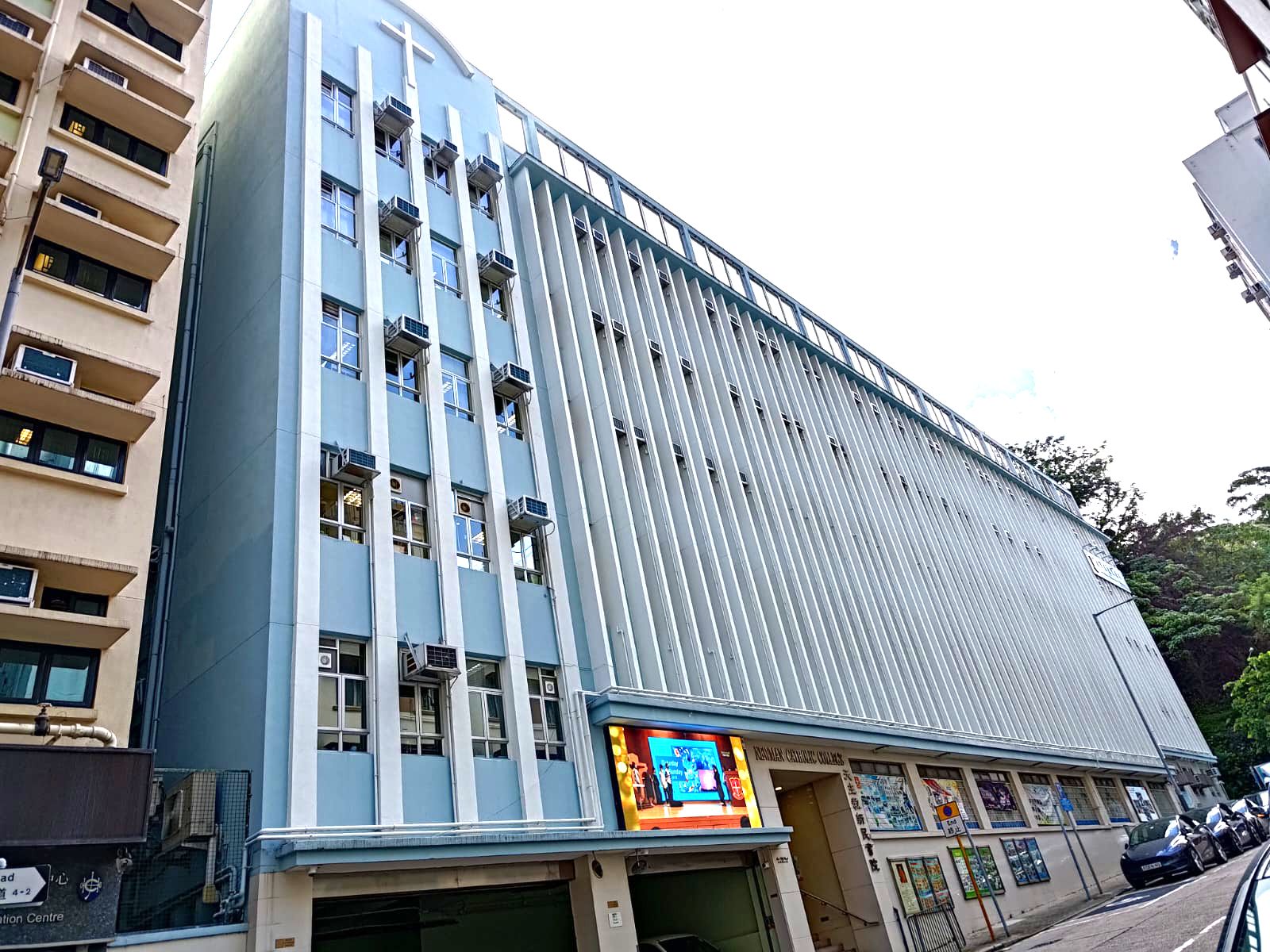

Last revision date: 5/12/2025


