 Secondary School Profiles 2025/2026


 Secondary School Profiles 2025/2026

| Address: | 1 Wai Hon Road Fanling | |||
| Phone: | 26731778 | Email: | tkpss@web.tkpss.edu.hk | |
| Fax: | 26737730 | Website: | http://web.tkpss.edu.hk/ | |
School Mission
Quality Education for Leaders of Tomorrow.
 School Information
 | District | : | North |
| Other District(s) | : | |
| Supervisor / Chairman of School Management Committee | : | Mr. Tin Wing Sin |
| Principal (with Qualifications / Experiences) | : | Mr. Chan Yee Hon (Bachelor of Science, Diploma of Education, Master of Education) by the Chinese University of Hong Kong |
| School Type | : | Aided |
| Student Gender | : | Co-ed |
| Area Occupied by the School | : | About 7000 Sq. M |
| Name of Sponsoring Body | : | Tin Ka Ping Foundation |
| Incorporated Management Committee | : | Established |
| Percentage of School Supervisor and Managers / Chairperson and Members of School Management Committee (SMC) of Government Schools Fulfilling the Training Targets | : | Not Applicable |
| Religion | : | Not Applicable |
| Year of Commencement of Operation | : | 1994 |
| School Motto | : | - |
| Parent-Teacher Association | : | Yes |
| Student Union / Association | : | Yes |
| Past Students’ Association / School Alumni Association | : | Yes |
| 4Rs Mental Health Charter | : | Yes |
| Whole School Health Programme | : | Action School |
 Chargeable Fees (2025/2026)
| School Fee ($) | Tong Fai ($) | ||
| S1 | - | - | |
| S2 | - | - | |
| S3 | - | - | |
| S4 | - | $400 | |
| S5 | - | $400 | |
| S6 | - | $400 | |
| Parent-Teacher Association Fee (Annual) ($) | : $20 | ||
| Student Union / Association Fee ($) | : $15 | ||
| Approved Charges for Non-standard Items (Annual)($) | : Top-up Accident Insurance Premium: $28 Classroom equipment improvement fee: $300 ($150 each term) | ||
| Other Charges / Fees ($) | : - | ||
 School Facilities
 | Number of Classroom(s) | : | 34 |
| School Facilities | : | School History Gallery, i-Classroom, Computer Room, Technology Education Workshop, English Corner, Student Activity Centres, Senior Visual Arts Room, Career Guidance Room, Chinese Culture Promotion Room, Putonghua Room, Band Room, Liberal Studies Room, Self-Directed Learning Room, Gym Room and so on. All classrooms are equipped with computers, visualizers and LED TVs which are installed to promote reading and to dispatch school news. |
| Facility(ies) for Supporting Students with Special Educational Needs | : | Ramp, Accessible lift and Accessible toilet. |
 Teaching Staff Information (Including School Head) in the 2025/2026 School Year
 | Number of Teaching Posts in the Approved Establishment | : | 67 |
| Total Number of Teachers in the School | : | 71 |
| Qualifications and Professional Training | : | Percentage of Teaching Staff (%) |
| Had Received Teacher Training | : | 92% |
| Bachelor Degree | : | 100% |
| Master / Doctorate Degree or above | : | 46% |
| Special Education Training | : | 21% |
| Years of Experience | : | Percentage of Teaching Staff (%) |
| 0-4 Years | : | 32% |
| 5-9 Years | : | 16% |
| 10 Years or above | : | 52% |
 2025/2026 Class Structure
 | Number of Classes | ||
| S1 | : | 5 |
| S2 | : | 5 |
| S3 | : | 5 |
| S4 | : | 5 |
| S5 | : | 5 |
| S6 | : | 5 |
 Subjects Offered
 | Subjects Offered in the 2025/2026 School Year | : | S.1 - S.3 |
| Chinese as the Medium of Instruction | : | Chinese Language, Chinese History, Putonghua (S.1 & S.2), Life Education, Citizenship, Economics and Society |
| English as the Medium of Instruction | : | English Language, Mathematics, Science, History (S.2 & S.3), Geography (S.1 & S.3), Technology Education (Business Module) (S.3), Computer and Technology, Visual Arts, Music, Physical Education |
| Adopt a Different Medium of Instruction by Class or by Group / School-based Curriculum | : | - |
| Subjects Offered in the 2025/2026 School Year | : | S.4 - S.6 |
| Chinese as the Medium of Instruction | : | Chinese Language, Chinese History, Chinese Literature, Life Education, Citizenship and Social Development, P.E. (DSE) |
| English as the Medium of Instruction | : | English Language, Mathematics, Mathematics Extended Part (Module 2), Physics, Chemistry, Biology, History, Geography, Economics, Information and Communication Technology, Business, Accounting and Financial Studies, Visual Arts, Physical Education, Music |
| Adopt a Different Medium of Instruction by Class or by Group / School-based Curriculum | : | - |
| Subjects to be Offered in the 2026/2027 School Year | : | S.1 - S.3 |
| Chinese as the Medium of Instruction | : | Chinese Language, Chinese History, Putonghua (S.1 & S.2), Life Education, Citizenship, Economics and Society |
| English as the Medium of Instruction | : | English Language, Mathematics, Science, History (S.2 & S.3), Geography (S.1 & S.3), Technology Education (Business Module) (S.3), Computer and Technology, Visual Arts, Music, Physical Education |
| Adopt a Different Medium of Instruction by Class or by Group / School-based Curriculum | : | - |
| Subjects to be Offered in the 2026/2027 School Year | : | S.4 - S.6 |
| Chinese as the Medium of Instruction | : | Chinese Language, Chinese History, Chinese Literature, Life Education, Citizenship and Social Development, P.E. (DSE) |
| English as the Medium of Instruction | : | English Language, Mathematics, Mathematics Extended Part (Module 2), Physics, Chemistry, Biology, History, Geography, Economics, Information and Communication Technology, Business, Accounting and Financial Studies, Visual Arts, Physical Education, Music |
| Adopt a Different Medium of Instruction by Class or by Group / School-based Curriculum | : | - |
 Secondary One Admission, Orientation Activities & Healthy School Life
 | Secondary One Admission | : | Our school will accept discretionary places. Our school will participate in the Secondary School Places Allocation System through central allocation stage (Applicable for admission to S.1 in September 2026 ).Admission criteria and weightings for S.1 discretionary places: Performance in school: 60% (assessment on academic results, conduct, co-curricular activities, awards and services); Interview: 40% (assessment on courtesy, dressing, verbal responses, comprehension and analytical ability, communication skills, creativity, interests, general knowledge, sense of current affairs and knowledge of our school); All applicants will be interviewed. |
| Orientation Activities and Healthy Life | : | During the summer vacation, there are English Enhancement Programmes for students of various levels and Orientation Programmes for S.1 students and their parents. In September, a Discipline Training Camp for S.1 students is held to help students establish good learning habits and create a disciplined yet pleasant school life. The school provides an all-round education. School activities such as Sports Day, Swimming Gala, school picnic, culture day, cross-border interflow activities and various life-wide learning activities, service learning and academic talks are held regularly. For the development of the physical well-being of the students, apart from PE lessons, morning exercise is part of the school routine. Guidelines are set for the school tuck shop and the lunch supplier concerning the quality of food. The importance of balanced diet is also emphasized. |
 School Characteristics
 | School Management | ||
| (1) School's Major Concerns | : | School Theme for the year: "Discipline Within, Love Beyond." Major concerns: 1. To enhance the effectiveness of learning and teaching in pursuit of learning excellence; 2. To build a healthy campus. |
| (2) School Management Organisation | : | Our school is directly managed by Tin Ka Ping Foundation. We have adopted the principles of quality management. |
| (3) Incorporated Management Committee / School Management Committee / Management Committee | : | The Incorporated Management Committee was set up on 11th August 2006 rooted in the principles of student-oriented education. Our school-based management is formed with well acclaimed professionals. Members are Mr Tin Wing Sin (Chairperson), Professor Cheung Chi Keung, Miss Cheung Peggy Po Yee, Mr Lau Hak Heung, Miss Shek Yuk Yu, Professor Leung Koon Shing, Professor Ng Fei Yin, Professor Lau Kit Ling, Mr Wong Shing Fai, Dr Rick Mo, Miss Book Sheung Lam, Mr Chan Yee Hon (Principal), Mr Chung Wai Tak (Vice-Principal) and Mr Ku Chun Cheung. |
| (4) School Green Policy | : | To nurture students' consciousness in treasuring the environment, larger scale of tree-planting and the construction of a fish pond were carried out. Students' sense of environmental protection is further enhanced with the Life Education, school air-conditioning policy and other activities. Moreover, we have received over HK$1.5 million from the Environment and Conservation Fund to implement the "on-site meal portioning". By doing so, we can avoid using disposable containers and reducing food waste. The amount of food served can be flexibly adjusted according to individual students. To promote the development of renewable energy in Hong Kong, our school joined the Solar Harvest Scheme introduced by the government. The solar energy generation system was installed on the rooftop. It is expected that the system can be integrated into teaching to enhance students’ environmental awareness. |
| Learning and Teaching Plan | ||
| (1) Whole-school Language Policy | : | EMI teaching has been adopting in all forms in our school (except Chinese Language, Chinese History, Chinese Literature, Putonghua, Life Education, Citizenship, Economics and Society, Citizenship and Social Development, PE(DSE)). To create a positive English learning environment, various English learning activities are organized regularly to allow students to use English effectively in different contexts. Some of the afternoon assemblies and announcements are delivered in English. Co-curricular activities such as Tinspiration (An English anthology produced by students), English drama, and those organized by English Society give students more opportunities to practise English. English overseas study tour is organized every year so that students are provided with greater exposure in English speaking environment to lay a good foundation in English. Teachers of all subjects adopt cross-curricular teaching and learning approaches, and strategically promote the English Supplementary Reading Scheme. The introduction of cross-subject English Study Modules enhances students' confidence in learning English. |
| (2) Learning and Teaching Strategies | : | Emphasis is laid on students' learning attitude, learning skills and learning effectiveness. Teachers make good use of IT facilities in their lessons. We especially stress the teaching of Chinese Language, English Language, Mathematics and Citizenship and Social Development, which are the fundamental subjects for students. Moreover, by adopting Citizenship, Economics and Society, Life and Society, Life Education and Co-curricular activities, students' generic skills, basic subject knowledge and learning skills can be enhanced. |
| (3) School-based Curriculum | : | 1. Electives: 3X. Senior forms students study 3 electives. 2. Curriculum highlights: Students will be encouraged to practice through participation in both internal and external competitions pertinent to their interests and abilities, thereby bringing their talents into full play and stretching their potential. Curricula will be tweaked while collaborative teaching will be conducted to cater for the learner diversity. Furthermore, after-school activities such as web-based learning project, enhancement classes, strive-for-improvement classes, junior form English bridging classes and overseas study tours will be arranged with a view to broadening students' horizons, enhancing their interest in learning, and refining their learning outcome. |
| (4) Major Renewed Emphases in the School Curriculum | : | To encourage students to learn through reading, the Reading Promotion Unit is formed. A wide range of programmes are regularly organized. Apart from book exhibitions, writers are invited to share their experience in reading and writing. School-based reading programmes being held are 'My Plan for Reading', ERS, CERS and Reading Session scheduled in the school timetable. All classrooms and special rooms are equipped with computers, also with LED TVs and visualizers. Teachers may utilize different software for interactive teaching and learning activities. There are Computer Room, Language Laboratory and Technology Education Room in which different software is available for enhancing teaching as well as individual learning. Project learning is an on-going practice adopted in the school for the junior forms. A school-based curriculum is developed with tailor-made material kits to engage students in learning knowledge and skills systematically while developing an appropriate sense of value in life and habits of mind associated with lifelong learning. School assemblies, co-curricular activities, voluntary services, student leadership training and life education are arranged regularly with a purpose of nurturing the students' qualities to be citizen of the time. With the development of teacher-student relation, a well-disciplined and joyful school campus is developed. This year, with the introduction of the dual class-teacher system to S.1 to 5 classes, teacher-student relationship will be further enhanced. Teachers' better understanding of the students' need and personal potential favour the development of effective teaching. |
| (5) Life Planning Education | : | Our school conducts school-based survey related to study or occupational choices to organize programmes/activities on career exploration, including a wide range of career and university visits, alumni sharing, Job Taster Programs and School-based career talks. Moreover, we also provide a career and life planning curriculum that enables all students to have a holistic understanding of their achievements, qualities, aptitudes, abilities and personal/ career aspirations and therefore students could formulate medium and long term goals and career/learning targets. Furthermore, we provide advisory services for senior students. We advise students individually and/or in groups, identify their career development problems and needs and coach them to find, develop and review their personal plans and career goals. Also, we help students to acquire basic work and life skills. Interview skills workshops and career related workshops are organized to advise students in their career related experiences and develop appropriate work attitude. |
| Student Support | ||
| (1) Whole School Approach to Catering for Learner Diversity | : | We adopt whole-school approach and dual class-teacher system to cater for individual differences of students. Meanwhile, we provide remedial tutorial programmes systematically in junior forms for three major subject studies, viz. Chinese, English, and Mathematics, to supplement students’ learning and enhance their learning effectiveness. Moreover, constructivist and co-operative learning, which has been implemented recently, is also an effective method to cater for learner diversity. |
| (2) Whole School Approach to Integrated Education | : | The Inclusive Education Unit under the Student Affairs Unit is led by our Vice-Principal and the Special Educational Needs Coordinator. With the Learning Support Grant, we commit to facilitating SENs-related work in a comprehensive whole-school approach. We provide evaluations by the educational psychologists from the EDB and offer a tailored study plan for individuals. Group training, peer counseling, career guidance, linguistics training, and outreach activities would be coordinated for them. The team also organizes professional training for teachers. We are devoted to supporting SENs' integration into campus life and society by strengthening their learning capacity, social skills, expression, etc. |
| (4) Measures to Provide Adaptation for Learning and Assessment | : | We have adopted continuous assessment for many years and it is proved to be effective to enhance students' learning. |
| Home-School Co-operation and School Ethos | ||
| (1) Home-School Co-operation | : | Liaison with parents: Through close collaboration with parents, our school provides an all-round education for students, establishes a firm platform for teaching at school and encourages the active participation of parents as volunteers, who know and serve our school. |
| (2) School Ethos | : | Discipline & guidance are inseparable to establish a disciplined school life and a good teacher-student relationship. Student organizations are set up to enhance communication among students. |
| Future Development | ||
| (1) School Development Plan | : | We implement Self-directed Learning (SDL) school-wide and adopt Constructivist and Co-operative Learning (CCL) for S.1 - S.2 students in main subjects. According to researches Co-operative Learning is an effective way to enhance students’ learning. Students learn interactively from one another as they come with different backgrounds, personalities and learning abilities. And they learn from others’ viewpoints by helping each other, consolidate learning and reflect on what has been taught. Mutually benefited through cooperative learning, students show a raised learning interest and deepened understanding of concepts. In carrying out SDL this year, we will focus on reinforcing students’ lesson preparation, thereby enhancing the effectiveness of classroom instruction. We will optimize collaboration among students through building up Highly Effective CL Base Groups. With regard to teaching, we will put effort to train up seed teachers so that they can facilitate CCL implementation in their subjects and coach other teachers to further acquaint themselves with SDL concepts. Teaching exchange among staff is thus expected with an eye to sharpening one another’s teaching skills. Furthermore, we will continue to optimize the curriculum of junior forms in order to achieve better bridging with that of senior forms. To further improve the efficiency in SDL of students, QEF has aided, to setup a 'SDL room' and Online learning resource bank. In addition, we implement e-Learning and Enriched IT Programme to equip our students with in-depth IT knowledge so that they can be prepared for the demand of a digitized Hong Kong. |
| (2) Teacher Professional Training and Development | : | Most teachers have received professional training in teaching and most of them are continuing their studies. |
| Life-wide Learning (Including Five Essential Learning Experiences to be Provided through Key Learning Areas, Extra-curricular Activities, Co-curricular Activities, etc.) | : | There are more than 50 different co-curricular activities in various aspects for students. Professional tutors are responsible for leading some of the activities. In addition, there is a Chinese Culture Awarding Scheme which helps promote and develop appreciation of Chinese Culture to students. |
| Others | : | 1. Dr. Tin Ka Ping Chinese Culture Awarding Scheme is held to promote Chinese culture to all students comprehensively; 2. Discipline Training Camp is held to all S.1 students to help develop self-manageability; 3. Voluntary service training programme is organized for students to uplift students' sense of responsibility to society. |
| Direct Public Transportation to School | : | Bus: 270A, 270B, 270P, 270S, 273A, 273D, 277P, 278P, 278X, 279X, 678, 978, A43, N42A, N73, T270, T277 Minibus: 502 |
| Remarks | : | - |
 School Map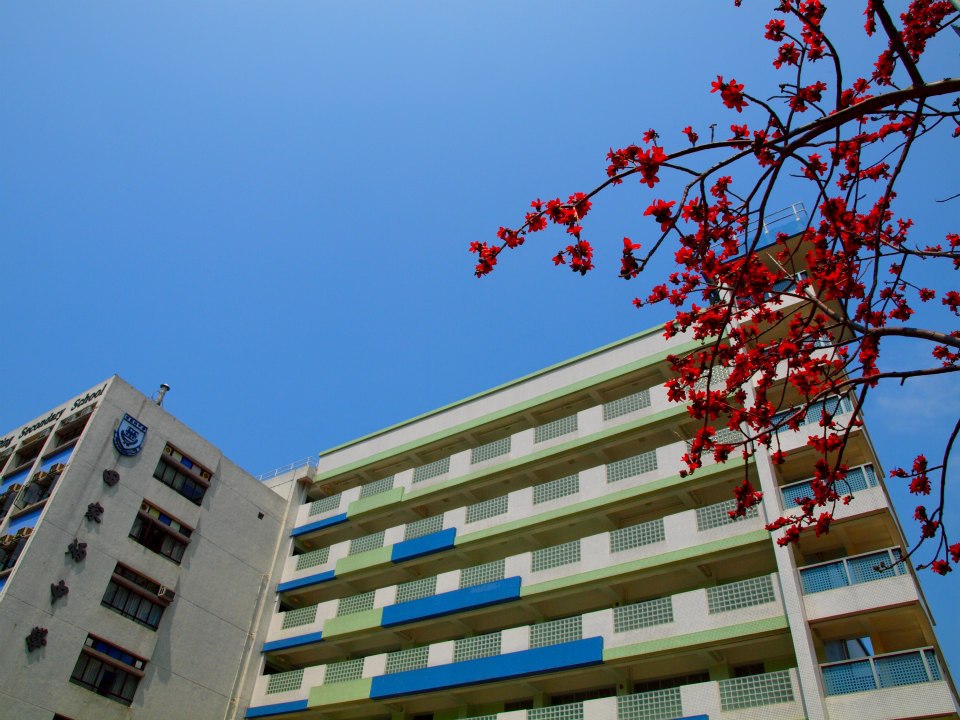
Last revision date: 5/12/2025


