 Secondary School Profiles 2025/2026


 Secondary School Profiles 2025/2026
| Address: | 2 City Garden Road, North Point | |||
| Phone: | 25701466 | Email: | hss-mail@henrietta.edu.hk | |
| Fax: | 25034603 | Website: | http://www.henrietta.edu.hk | |
School Mission
Based on the school ethos : “Train a child in the way he should go, and when he is old he will not depart from it (Proverbs 22:6)”, and the core values : "Faith, Love, Loyalty, Honesty", we provide holistic education, and aspire to be an outstanding Christian school with “Faith to the Lord”, “Love to global neighbors”, “Loyalty to learn and teach”, and “Honesty to lead”.
 School Information
 | District | : | Eastern |
| Other District(s) | : | Wan Chai, Islands |
| Supervisor / Chairman of School Management Committee | : | Prof. Chiu Chi Kwan, Warren |
| Principal (with Qualifications / Experiences) | : | Mr. Ng Ho Yin (B.Sc., Grad. Dip. (Stat), PGDE, MSocSc (Counseling), Dip. in Christian Ed.) |
| School Type | : | Aided |
| Student Gender | : | Co-ed |
| Area Occupied by the School | : | About 5762 Sq. M |
| Name of Sponsoring Body | : | Hong Kong Baptist Church |
| Incorporated Management Committee | : | Established |
| Percentage of School Supervisor and Managers / Chairperson and Members of School Management Committee (SMC) of Government Schools Fulfilling the Training Targets | : | Not Applicable |
| Religion | : | Protestantism / Christianity |
| Year of Commencement of Operation | : | 1945 |
| School Motto | : | Faith, Love, Loyalty, Honesty. |
| Parent-Teacher Association | : | Yes |
| Student Union / Association | : | Yes |
| Past Students’ Association / School Alumni Association | : | Yes |
| 4Rs Mental Health Charter | : | - |
| Whole School Health Programme | : | - |
 Chargeable Fees (2025/2026)
| School Fee ($) | Tong Fai ($) | ||
| S1 | - | - | |
| S2 | - | - | |
| S3 | - | - | |
| S4 | - | $450 | |
| S5 | - | $450 | |
| S6 | - | $450 | |
| Parent-Teacher Association Fee (Annual) ($) | : $80 | ||
| Student Union / Association Fee ($) | : $10 | ||
| Approved Charges for Non-standard Items (Annual)($) | : $310 (Students whose family suffers from financial difficulties can apply for the exemption.) | ||
| Other Charges / Fees ($) | : - | ||
 School Facilities
 | Number of Classroom(s) | : | 32 |
| School Facilities | : | Our school has 32 classrooms and 22 special rooms, including a library, the classroom of the future, Yi Wen Guan, Greenmunity Lab, Spiritual Oasis, school history corridor, campus radio station, student union room, student activity center, computer lab, small auditorium (chaplaincy department), and parent resource center, among others. All classrooms are equipped with computer networks and feature comprehensive facilities such as Apple TV, computer LCD projectors, and more. In addition to the new wing building and an all-weather outdoor running track, we also have a rock-climbing wall. The learning environment has been further improved with the completion of library optimization projects and the establishment of a new STEM maker space. The school auditorium has been equipped with an LED large screen. Whiteboards in classrooms for Form 1 to Form 5 have been replaced with non-reflective ones to create a healthier learning environment. |
| Facility(ies) for Supporting Students with Special Educational Needs | : | Ramp, Accessible lift and Accessible toilet. |
 Teaching Staff Information (Including School Head) in the 2025/2026 School Year
 | Number of Teaching Posts in the Approved Establishment | : | 56 |
| Total Number of Teachers in the School | : | 60 |
| Qualifications and Professional Training | : | Percentage of Teaching Staff (%) |
| Had Received Teacher Training | : | 92% |
| Bachelor Degree | : | 100% |
| Master / Doctorate Degree or above | : | 39% |
| Special Education Training | : | 74% |
| Years of Experience | : | Percentage of Teaching Staff (%) |
| 0-4 Years | : | 15% |
| 5-9 Years | : | 18% |
| 10 Years or above | : | 67% |
 2025/2026 Class Structure
 | Number of Classes | ||
| S1 | : | 4 |
| S2 | : | 4 |
| S3 | : | 4 |
| S4 | : | 4 |
| S5 | : | 4 |
| S6 | : | 4 |
 Subjects Offered
 | Subjects Offered in the 2025/2026 School Year | : | S.1 - S.3 |
| Chinese as the Medium of Instruction | : | Chinese Language, Chinese History, Biblical Knowledge, Physical Education, Visual Arts, Putonghua, ADC Junior, Citizenship, Economics and Society |
| English as the Medium of Instruction | : | English Language, Mathematics, Integrated Science (S.1 and S.2) |
| Adopt a Different Medium of Instruction by Class or by Group / School-based Curriculum | : | S.1-S.2: History, Geography, Music, Life & Technology (Computer, Home Economics and Design & Technology) S.3: History, Geography, Physics, Biology, Chemistry, Music, Computer |
| Subjects Offered in the 2025/2026 School Year | : | S.4 - S.6 |
| Chinese as the Medium of Instruction | : | Chinese Language, Citizenship and Social Development, Chinese History, History, Chinese Literature, Visual Arts, Physical Education, Biblical Knowledge |
| English as the Medium of Instruction | : | English Language, Mathematics, Information & Communication Technology |
| Adopt a Different Medium of Instruction by Class or by Group / School-based Curriculum | : | Business, Accounting and Financial Studies, Physics, Chemistry, Biology, Economics, Geography |
| Subjects to be Offered in the 2026/2027 School Year | : | S.1 - S.3 |
| Chinese as the Medium of Instruction | : | Chinese Language, Chinese History, Biblical Knowledge, Physical Education, Visual Arts, Putonghua, ADC(Junior), Citizenship, Economics and Society |
| English as the Medium of Instruction | : | English Language, Mathematics, Integrated Science (S.1 and S.2) |
| Adopt a Different Medium of Instruction by Class or by Group / School-based Curriculum | : | S.1-S.2: History, Geography, Music, Life & Technology (Computer, Home Economics and Design & Technology) S.3: History, Geography, Physics, Biology, Chemistry, Music, Computer |
| Subjects to be Offered in the 2026/2027 School Year | : | S.4 - S.6 |
| Chinese as the Medium of Instruction | : | Chinese Language, Citizenship and Social Development, Chinese History, History, Chinese Literature, Visual Arts, Physical Education, Biblical Knowledge |
| English as the Medium of Instruction | : | English Language, Mathematics, Information & Communication Technology |
| Adopt a Different Medium of Instruction by Class or by Group / School-based Curriculum | : | Business, Accounting and Financial Studies, Physics, Chemistry, Biology, Economics, Geography |
 Secondary One Admission, Orientation Activities & Healthy School Life
 | Secondary One Admission | : | Our school will accept discretionary places. Our school will participate in the Secondary School Places Allocation System through central allocation stage (Applicable for admission to S.1 in September 2026 ).The selection criteria are as follows: 1. EDB Rank Order List (weights 40%); 2. Interview (weights 30%); 3. Final academic results of Primary 4, 5 and 6 (weights 10%); 4. Conduct based on Primary 4, 5 and 6 (weights 10%); and 5. Extra-curricular activities and other achievements (weights 10%). |
| Orientation Activities and Healthy Life | : | Every year, our school organizes an Open Day for Form One parents and orientation activities for Form One students, a Form One Orientation Day Camp. Our school also holds a briefing session for P.6 to F.1 students and their parents. Medical organizations will be invited to the school to deliver health talks. They will also incorporate Life and Technology to help students to establish a healthy lifestyle. Students also participate in School Physical Fitness Award Scheme. Exercise and health courses are included in physical education to help students build their healthy life. |
 School Characteristics
 | School Management | ||
| (1) School's Major Concerns | : | A Journey to Aspire and to Serve. |
| (2) School Management Organisation | : | The Executive Committee, Academic Department and Student Affairs are responsible for managing the school administration, students' learning and whole-person development in order to enhance teachers' professionalism and manage plans for school development. |
| (3) Incorporated Management Committee / School Management Committee / Management Committee | : | The Incorporated Management Committee of Henrietta Secondary School was founded in 2009. It is formed by members who are professionals including university professors and principals of secondary schools. Our school proactively promotes school-based management and strengthens the transparency of administration. |
| (4) School Green Policy | : | Invite green groups to organize talks in school. Environmentally-Friendly Agreements and Resource Ambassador Scheme are implemented. To organize a team of Green Ambassador to learn various Green-planting techniques in order to promote a concept of Sustainable Living. Energy-saving lights are used. Environmentally-friendly facilities have been increased in the campus. |
| Learning and Teaching Plan | ||
| (1) Whole-school Language Policy | : | Please refer to the "Others" field. |
| (2) Learning and Teaching Strategies | : | Our school stresses the importance of self-learning. We encourage our students to reflect, question, and keep records of their learning progress to consolidate the acquired knowledge. Additionally, we make concerted efforts to facilitate students' learning. School-based Support Services from EDB: The school has joined school-based support services in STEM Education, History, Integrated Science, and Citizenship and Social Development to enhance professional discussions. Positive Education: We aim to encourage students and recognize their performance through an award scheme called the 'Well Done Card.' Additionally, students are encouraged to participate in class activities through the 'Classroom Learning Award' programme. Furthermore, several scholarships have been established to acknowledge students' efforts, including outstanding academic performance, improvements in studies, diversified learning achievements, and sports performance. Enhancing students' English levels: The school performs English musicals in S1. The school has implemented a streaming teaching policy in senior forms to enhance English proficiency. English announcements and an English reading programme are organized to provide students with more exposure to English learning. Furthermore, overseas service-learning tours will be organised before the Easter holiday to enhance English language learning, foster students' sense of service, and broaden their perspectives. Education Research Team: An Education Research Team for teaching and learning has been established, comprising teachers from different subjects. The team aims to investigate and design effective cross-curricular lessons through lesson observation and evaluation. Professional discussions and development are promoted throughout the entire school. Well-use of Information Technology in Learning: The school has introduced and practiced (BYOD) for many years. The school aims to strengthen the interaction between teachers and students and improve learning efficiency. Teachers can utilize diverse e-learning tools to monitor students' learning progress, thereby providing care and support for their academic development. |
| (3) School-based Curriculum | : | 1. Electives: 2X and 3X. A total of 228 selected combinations of subjects. 2. Curriculum highlights: Form One has Reading Lessons. ADC Junior are set up in the junior secondary levels with a view to building up students’ positive values. Aspiration Driven Curriculum (ADC) is set up among Junior form students, the curriculum consists of ‘Growth Mindset’, Project Aspirer programme and Value Education programme. We hope to nurture students’ sense of autonomy, innovation, problem-solving and communication skills, exercise their talents, and sense of strive for excellence and assistance to their lifelong learning aspiration and attitudes. A "Personal Branding" career planning course will be organized for Form Five, with a focus on students' learning experiences and individual traits, aimed at helping them achieve their goals of pursuing higher education. Additionally, a school-wide "Neighbor Watch" comprehensive learning week will be implemented, involving the participation of all students. This week will emphasize service learning and include local and international exchanges and learning activities. By integrating different cultures, communities, regions, and academic disciplines, students will have the opportunity to broaden their horizons, engage in diverse learning experiences, and develop a greater appreciation for the value and significance of such services learning activities in personal growth. |
| (4) Major Renewed Emphases in the School Curriculum | : | Education: Based on the principles of "organic integration, natural connection, multiple strategies, mutual cooperation, in-class and out-of-class, and whole-school participation," there is a focus on strengthening the learning elements, including Constitution, Basic Law, and national security education, in school activities and instructional content. Moral and Civic Education: The setting up of the Citizenship Education and Service Learning Team aims to cultivate a sense of sensible citizenship and positive values and attitudes through organizing diverse activities including exchange tours, site visits, voluntary services. We incorporate the related elements into lessons and the junior levels School-based course: Aspiration Driven Curriculum (ADC), aiming to encourage students to participate in social services. Enhancing the learning of Chinese history and Chinese culture involves promoting student participation in activities and competitions related to Chinese history and Chinese culture. Additionally, establishing training programmes for student campus ambassadors with a focus on the Constitution and Basic Law aims to enhance national identity, foster patriotism, and promote students' self-directed learning abilities. Learn through Reading: We strengthen the supervision for reading through the Reading Lesson, hoping to help students enhance their reading skills and strategies. Themed activities are held to promote the good atmosphere for reading in the school. The library will collaborate with various departments to promote cross-curricular language learning. Project Learning: According to needs of different subjects, we believe that Project Learning is an effective way to train students collect and organize information and statistical data, so as also to promote self-directed learning. We also equip students with the knowledge on information literacy to help them use information technology wisely and responsibly. Interactive Learning by Information Technology: School-based STEMs curriculum is adopted. Students actively participate in STEAM-related competitions. BYOD is also incorporated for enhancing interactive learning and self-directed learning |
| (5) Life Planning Education | : | Please refer to the "Others" field. |
| Student Support | ||
| (1) Whole School Approach to Catering for Learner Diversity | : | The School-based Support Services provided by the Education Bureau in Mathematics, History, STEM.S (S for Service) education and Integrated Science have been completed. The goal of catering for students’ diversity is achieved through the sustainable development of the Support Services. The Special Education Needs Team supports the needs of the gifted students and encourage them to enrol in the relevant courses. ‘Fellow traveller’ training program is conducted by the Counselling Team to motivate students to support each other and grow together. The entire school focuses on Henri-CAREs pastoral care to enhance communication, class management, and creating a positive class atmosphere, aiming to develop students who are an enterprising, encouraging, empathetic, and exhibit a Christ-like attitude in learning and caring for the community. |
| (2) Whole School Approach to Integrated Education | : | Please refer to the "Others" field. |
| (3) Education Support for Non-Chinese Speaking (NCS) Students | : | Our school provides additional support for NCS students to facilitate their learning of Chinese: providing after-school support programmes in learning Chinese; and organising activities to create an inclusive learning environment in the school. |
| (4) Measures to Provide Adaptation for Learning and Assessment | : | We have two school terms each academic year, one uniform test and one examination each term. During the two parents’ days, students are encouraged to plan and discuss their goals and revision strategies for the upcoming assessments, with the aim of enhancing their ability to plan and manage their own learning. |
| Home-School Co-operation and School Ethos | ||
| (1) Home-School Co-operation | : | We have developed a "Welcome in" culture with the parents in the past few years, Parent-Teacher Association was established in 1991. A Parent-Teacher Association Centre was established. Parent's Handbook is prepared to allow parents to understand the school system and activities. The aim is to strengthen the relationship and communication between parents and our school. In the Parent Resources Centre. Through taking part in parent child activities and school-based parents' seminars, parents can participate in school management in order to work closely with the school. |
| (2) School Ethos | : | We have maintained a good ethos and a good teacher-student relationship. We foster students' development with love and inspiration. We put our emphasis on nurturing students' self-discipline and bearing responsibility, so that they can enjoy the secondary school lives, reaching their goals and realizing their dreams. In accordance with students' financial needs, we have implemented the Pocket Money Subsidy Scheme to help those students in need. We mould our students to become pillars of society who care for others and contribute to society. |
| Future Development | ||
| (1) School Development Plan | : | Based on the school aspiration, mission and the educational belief, we aspire to be an outstanding Christian school with ‘Faith to the Lord’, ‘Love to global neighbors’, ‘Loyalty to learn and teach’, and ‘Honesty to lead’. We add values to students in four areas: ‘The development of faith in Christ for self-understanding’, ‘Love towards the globe and grasp the chances for growth’, ‘Be loyal on knowledge exploration and the enrichment of morality’, ‘The demonstration of integrity in leadership and serving’. Our school has a three-year cycle of school development: creating opportunities to broaden students' international perspectives, teaching students self-directed learning skills, and nurturing students' interpersonal skills. Our school is committed to deepening students' national identity, enhancing their linguistic proficiency, boosting their confidence in learning, cultivating their time and goal management skills, training their emotional intelligence, and fostering their ability to think from others' perspectives. |
| (2) Teacher Professional Training and Development | : | We create a harmonious team working ambiance, collaborate or communicate frequently with colleagues, proactively face changes, often establish rapport with students to understand their learning situation, often communicate with parents to enhance mutual understanding of their children. In terms of professional development, promoting teachers to actively pursue new knowledge related to school development needs, able to apply new knowledge to develop school and students. With the aim of encouraging continuing education among our teaching staff, a scholarship for Continuing Professional Development of Teachers has been established. There are 23 teachers with Master’s degrees this year. Through Staff Development Days, teachers are given chances to share their teaching and learning so that their efforts and achievement can be recognized. It aims to enhance teachers' development. |
| Life-wide Learning (Including Five Essential Learning Experiences to be Provided through Key Learning Areas, Extra-curricular Activities, Co-curricular Activities, etc.) | : | All students are arranged into four houses. We provide students with more than 30 school clubs and interest groups. These clubs and groups can be classified into six areas, namely, religion, study, physical education, discipline, art and interest groups. School-wide "Neighbor Watch" service-learning program shapes tomorrow's leaders, caring about the needs of the community and the world, showcasing individual talents, and guiding life goals. |
| Others | : | "Life Planning Education": We help students understand themselves and strengthen their understanding of the world of workplace, study and career path through Life Planning. Through the collaboration with other subjects, the curriculum includes organising and helping students set their goals for future studies. Additionally, professionals from tertiary institutes and universities, different business sectors and alumni are invited to share their experience of choosing subjects and jobs. We organize multiple pathways seminars, further studies and careers seminars, tertiary institutions visits, workshops on workplace exploration, company and organization visits. Students are provided with various channels and means to experience different fields of work, so that they can broaden their horizons and develop a better understanding of the career world. Individual and group counselling activities are also organised for senior forms to plan their future. To broaden students’ horizons in overseas studies, we encourage students to attend Education Fair and talks about further studies in Mainland, Taiwan, and foreign countries. In addition, we organize talks about JUPAS preparation and run mock results release workshops and invite alumni to share their experiences. We aim to equip our students with the latest information about different institutes and the strategies in application. Last but not least, we have follow-ups and collect information on our graduates' career paths in order to review our plan. "Whole School Approach to Integrated Education": Our Special Education Needs Team consists of the Vice-Principal, the Coordinator and teachers, counselling teachers, discipline teachers, English, Chinese and Mathematics teachers, counsellors, teaching assistants, and the Gifted Education Coordinator. The Special Educational Needs Coordinator (SENCO) is responsible for taking care of and supporting the students who have special educational needs and also for the gifted students to help them actualize their potentials to the full. In addition, 74% of our school teachers have completed the courses in gifted or inclusive education, in light of increasing the professional capabilities of our staff team to support the learning needs of students. ‘Talent Pool’ is set up to nurture the exceptional students systematically. We hope to provide them with the appropriate educational opportunities and thus helping to unleash their individual potentials. The School utilizes extra resources in obtaining services such as speech therapy, group or individual counselling and gifted education. If needed, we also invite parents, educational psychologists and Gifted Education Coordinator to attend case conferences so as to understand the students’ situation holistically. After the thorough understanding of the case, the school can employ suitable strategies for supporting the students’ needs and assisting them in developing their potentials. "Whole-school Language Policy" (including using Putonghua as the medium of instruction for teaching the Chinese Language Subject): Junior secondary levels: The medium of instruction of some classes is mainly English. As for Mathematics and Integrated Science, English is adopted as the medium of teaching. In light of increasing students’ exposure to Native English, the Native-speaking English Teacher (NET) conducts listening or speaking practice with students every week. Senior secondary levels: The nature of the subjects, students’ language abilities and their needs for further studies are considered when we arrange students into different subjects or groups using English or mother-tongue in teaching. We arrange split classes in English lessons to cater for learners’ diversity. |
| Direct Public Transportation to School | : | Bus: 2, 10, 18, 18P, 8X, 23, 27, 38, 42; MTR: Fortress Hill MTR Station; Minibus and Tram. |
| Remarks | : | Our school has joined the Voluntary Optimisation of Class Structure Scheme in the 2011 school year. There are four classes from Secondary 1 to Secondary 6. For years, we have split Form 4 to Form 6 classes into 5 classes, so there are presently a total of 27 classes in our school. |
 School Map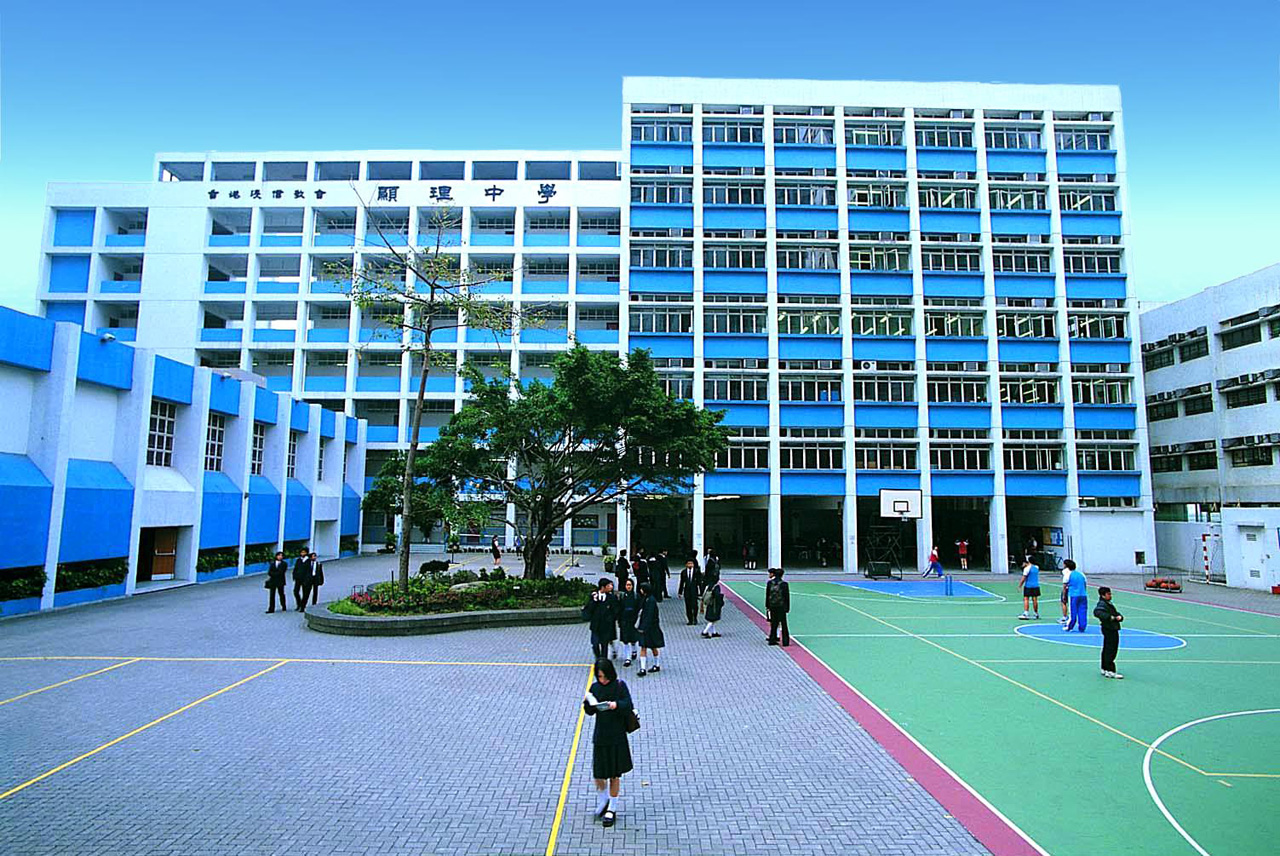

Last revision date: 5/12/2025


