 Secondary School Profiles 2025/2026


 Secondary School Profiles 2025/2026
| Address: | 4 Hiu Yuk Path, Sau Mau Ping Kwun Tong | |||
| Phone: | 27274315 | Email: | info@ccss.edu.hk | |
| Fax: | 23477376 | Website: | http://www.ccss.edu.hk | |
School Mission
We are determined to provide a quality Taoist education for the students, catering for their diverse needs and helping them become a contributive member of society: We cater for diverse abilities and nurture lofty morality. We act with propriety and teach with empathy.
 School Information
 | District | : | Kwun Tong |
| Other District(s) | : | Kowloon City |
| Supervisor / Chairman of School Management Committee | : | Dr. Chiu Kou Tai, Herbert |
| Principal (with Qualifications / Experiences) | : | Mr. Choi Chi Leung, Dickson (Bachelor of Science) (Master of Education) (Master of Philosophy) |
| School Type | : | Aided |
| Student Gender | : | Co-ed |
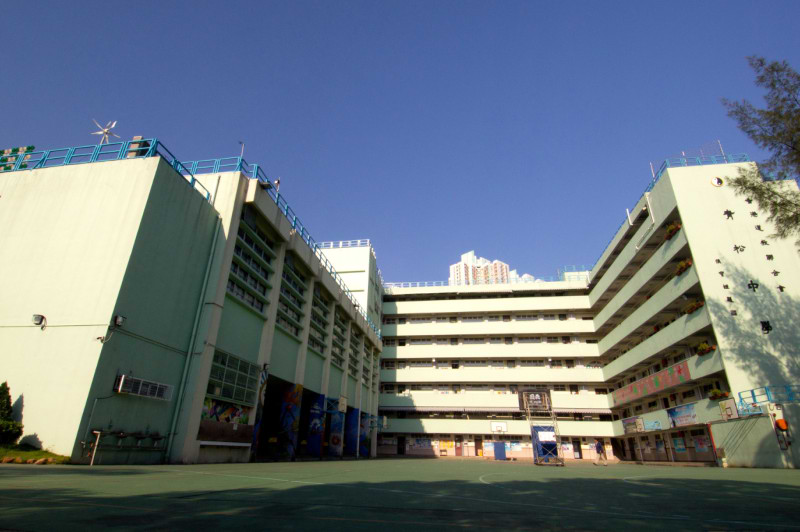
| Area Occupied by the School | : | About 5500 Sq. M |
| Name of Sponsoring Body | : | The Hong Kong Taoist Association |
| Incorporated Management Committee | : | Established |
| Percentage of School Supervisor and Managers / Chairperson and Members of School Management Committee (SMC) of Government Schools Fulfilling the Training Targets | : | 80% |
| Religion | : | Taoism |
| Year of Commencement of Operation | : | 1985 |
| School Motto | : | Ming Tao Lap Dak (Perfecting Intellect and Virtues) |
| Parent-Teacher Association | : | Yes |
| Student Union / Association | : | Yes |
| Past Students’ Association / School Alumni Association | : | Yes |
| 4Rs Mental Health Charter | : | Yes |
| Whole School Health Programme | : | Pledged School |
 Chargeable Fees (2025/2026)
| School Fee ($) | Tong Fai ($) | ||
| S1 | - | - | |
| S2 | - | - | |
| S3 | - | - | |
| S4 | - | $340 | |
| S5 | - | $340 | |
| S6 | - | $340 | |
| Parent-Teacher Association Fee (Annual) ($) | : $50 | ||
| Student Union / Association Fee ($) | : - | ||
| Approved Charges for Non-standard Items (Annual)($) | : Fees for Specific Purposes: S.1-S.5 ($350); S.6 ($250) | ||
| Other Charges / Fees ($) | : - | ||
 School Facilities
 | Number of Classroom(s) | : | 26 |
| School Facilities | : | Our School is equipped with a Student Activities Centre, Indoor Fitness Centre, Study Rooms, English Room, a Learning Support Room, Multi-Purpose Learning Centre, Computer rooms, CCSS Maker Centre and a lecture room for both practice and competition purposes. The "SchooLink Home-School Communication Platform" is used for attendance-taking and collecting fees. The whole school is completely covered with the Wi-Fi network. An interactive platform is also available on the School's homepage. |
| Facility(ies) for Supporting Students with Special Educational Needs | : | Accessible lift and 1. A special room for SEN Students; 2. Screen readers; 3. iPad electronic teaching aids; 4. Closed circuit magnifier; 5. Voice input text conversion devices. |
 Teaching Staff Information (Including School Head) in the 2025/2026 School Year
 | Number of Teaching Posts in the Approved Establishment | : | 61 |
| Total Number of Teachers in the School | : | 63 |
| Qualifications and Professional Training | : | Percentage of Teaching Staff (%) |
| Had Received Teacher Training | : | 94% |
| Bachelor Degree | : | 62% |
| Master / Doctorate Degree or above | : | 38% |
| Special Education Training | : | 22% |
| Years of Experience | : | Percentage of Teaching Staff (%) |
| 0-4 Years | : | 26% |
| 5-9 Years | : | 22% |
| 10 Years or above | : | 52% |
 2025/2026 Class Structure
 | Number of Classes | ||
| S1 | : | 4 |
| S2 | : | 4 |
| S3 | : | 4 |
| S4 | : | 4 |
| S5 | : | 4 |
| S6 | : | 4 |
 Subjects Offered
 | Subjects Offered in the 2025/2026 School Year | : | S.1 - S.3 |
| Chinese as the Medium of Instruction | : | Chinese Language, Mathematics, Citizenship, Economics and Society (S.1 - S.2), Life and Society (S.3), Geography, History, Chinese History, Science (S.1 - S.2), Physics (S.3), Chemistry (S.3), Biology (S.3), Putonghua, Religious and Ethical Education, Music, Visual Arts, Physical Education, Innovative Technology, Introduction of Technology. |
| English as the Medium of Instruction | : | English Language, English for Life (S.1 - S.2). |
| Adopt a Different Medium of Instruction by Class or by Group / School-based Curriculum | : | - |
| Subjects Offered in the 2025/2026 School Year | : | S.4 - S.6 |
| Chinese as the Medium of Instruction | : | Chinese Language, Mathematics, M1, Citizenship and Social Development, Chinese Literature, Chinese History, Geography, History, Economics, Physics, Chemistry, Biology, Visual Arts, Information and Communication Technology, P.E. (DSE), Business, Accounting and Financial Studies, Tourism and Hospitality Studies, P.E., Aesthetic Development, Religious and Ethical Education, Life Start-Up Program, Computer Game and Animation Design (S.4, S.5), Everyday Japanese and Japanese Culture (S.4), Patisserie and Café Operations (S.4, S.5), Popular Music Production (S.5), Health Care Practice (S.4), Film Production (S.4). |
| English as the Medium of Instruction | : | English Language |
| Adopt a Different Medium of Instruction by Class or by Group / School-based Curriculum | : | - |
| Subjects to be Offered in the 2026/2027 School Year | : | S.1 - S.3 |
| Chinese as the Medium of Instruction | : | Chinese Language, Mathematics, Citizenship, Economics and Society, Geography, History, Chinese History, Science (S.1 - S.2), Physics (S.3), Chemistry (S.3), Biology (S.3), Putonghua, Religious and Ethical Education, Music, Visual Arts, Physical Education, Innovative Technology, Introduction of Technology. |
| English as the Medium of Instruction | : | English Language, English for Life (S.1 - S.2) |
| Adopt a Different Medium of Instruction by Class or by Group / School-based Curriculum | : | - |
| Subjects to be Offered in the 2026/2027 School Year | : | S.4 - S.6 |
| Chinese as the Medium of Instruction | : | Chinese Language, Mathematics, M1, Citizenship and Social Development, Chinese Literature, Chinese History, Geography, History, Economics, Physics, Chemistry, Biology, Visual Arts, Information and Communication Technology, PE (DSE), Business, Accounting and Financial Studies, Tourism and Hospitality Studies, P.E., Aesthetic Development, Religious and Ethical Education, Life Start-Up Program, Computer Game and Animation Design (S.5), Everyday Japanese and Japanese Culture(S.5), Patisserie and Café Operations (S.5), Film Production(S5), the applied learning subjects for S.4 students are to be confirmed. |
| English as the Medium of Instruction | : | English Language |
| Adopt a Different Medium of Instruction by Class or by Group / School-based Curriculum | : | - |
 Secondary One Admission, Orientation Activities & Healthy School Life
 | Secondary One Admission | : | Our school will accept discretionary places. Our school will participate in the Secondary School Places Allocation System through central allocation stage (Applicable for admission to S.1 in September 2026 ).Ranking by EDB 20%,Conduct & attitude 10%,Extra-curricular activities 10%,Relative(s) attended the school 5%, Participation of activities held by the school 5%, Interview performance 50%. |
| Orientation Activities and Healthy Life | : | To help Form One students adapt to secondary school life as quickly as possible, our school has launched the "Ching Chung Summer" Orientation Programme. Firstly, a Form One Orientation Camp is held in mid-July. Through a variety of team-building activities and interest classes, students are encouraged to build harmonious friendships and enhance communication and collaboration with their peers. In addition, from mid-July to mid-August, the school organises a range of summer interest classes, including handball, basketball, dance, and handicrafts. These activities allow Form One students to make good use of their summer holidays, explore their interests, and foster personal growth. In late August, the school hosts a Parent Information Day and the "Form One Curriculum Taster" Bridging Programme. Through computer presentations, talks, games, campus tours, sports activities, and group discussions — all led by teachers and senior students — new students gain a deeper understanding of the school environment, systems, and academic expectations, helping them integrate smoothly into the Ching Chung Secondary School family. |
 School Characteristics
 | School Management | ||
| (1) School's Major Concerns | : | 1. Enhance the overall effectiveness of learning and teaching; 2. Cultivate students to become outstanding citizens. |
| (2) School Management Organisation | : | Under the supervision of the Incorporated Management Committee, the School Council comprising the principal and teaching staff reveals and formulates school policies regularly. Self-appraisals and evaluation sessions are conducted at the end of every academic year to chart the course of development for the coming year. |
| (3) Incorporated Management Committee / School Management Committee / Management Committee | : | The IMC was established on 31 August 2007 to formulate school policies in line with the School's mission statement. Its primary roles are to take on responsibility for the School's performance and to manage the human and financial resources of the School. |
| (4) School Green Policy | : | Our school is committed to promoting environmental protection. We are the first school in Hong Kong to develop a "micro wind power generation system." In addition, our school participates in the "Feed-in Tariff" scheme co-organized by the Electrical and Mechanical Services Department and CLP Power, through which solar panels have been installed on the school rooftop to generate solar energy. Furthermore, we regularly encourage students to recycle waste paper, aluminum cans, and plastic bottles. Environmental education is also integrated into the "Life Start-Up Program", allowing students to gain an in-depth understanding of environmental pollution through hands-on experiences, and to foster a strong sense of responsibility and awareness for sustainable development. |
| Learning and Teaching Plan | ||
| (1) Whole-school Language Policy | : | To enrich the English learning environment, the School will make the best use of the flexibility of the fine-tuning policy of the MOI to offer school-based and enhancement curricula (English for Life) using English as the MOI in line with the ability and aptitude of the students in the daily life context with a view to laying a sound foundation for students to use English as a medium for life-long learning. Other supporting measures for promoting "bi-literacy and tri-lingualism" include English and Putonghua announcements in morning assemblies, English lunch activities, language remedial and enhancement classes, reading programmes, joining the Hong Kong Schools Speech Festival and the online Book Recommendation Scheme. |
| (2) Learning and Teaching Strategies | : | Remedial and intensive teaching is available in specific classes in Chinese and English language. Commencing a few years back, project studies, e-learning, AI Learning and STEAM education are adopted to train students' organizing and exploratory skills with a view to enhancing their interest and enlightening their minds, alongside with our life-wide learning set in full gear. |
| (3) School-based Curriculum | : | 1. Electives: 2X and 3X. Biology, Chemistry, Physics, Chinese History, History, Geography, Economics, Chinese Literature, Business, Accounting and Financial Studies, Tourism and Hospitality Studies, Information and Communication Technology, Visual Arts, Physical Education (HKDSE), Mathematics (Extended Part Module 1), Applied Learning. 2. Curriculum highlights: (1) Remedial and Enhancement Programmes: Chinese, English and Mathematics. (2) School-based Curricula: The junior school curriculum includes Introduction to Technology, Innovative Technology, English for Life, Religious and Ethical Education; the senior high school curriculum includes Life Start-Up Program, Aesthetic Development, Religious and Ethical Education. |
| (4) Major Renewed Emphases in the School Curriculum | : | 1. Moral and civic education: focus towards values education. 2. Reading to learn: focus towards reading across curricula. 3. Project Learning: focus towards integrating and applying knowledge and skills across disciplines. 4. Information technology for interactive learning: focus towards self-directed learning. |
| (5) Life Planning Education | : | The School organizes various "Life Planning" activities and workshops as early as when students are in S.1. And when they come to senior forms, life planning teacher advisors are assigned to assist students in summing up their life experiences, to enhance students' self-knowledge and acquire information for career development and further education, which best suit their aptitudes and potentials. The school adopts a whole-school approach to career planning, incorporating elements of career planning into the curriculum and activities, and helping students to establish a clear life direction through individual counseling. |
| Student Support | ||
| (1) Whole School Approach to Catering for Learner Diversity | : | 1. Our School effectively uses the Learning Support Grant to recruit counsellor and teaching assistants, in collaboration with teachers and the Student Support Team, to provide after-school support services for the SEN students, including speech therapy, concentration training groups, social skill groups, parent groups, curriculum support and adaptation, S.1 homework tuition and revision classes, etc. Meanwhile, our School also fine-tunes exams for those students in need. Besides, our School strengthens teachers’ strategies in catering for the diversified learning needs of students through staff development and professional interflow activities. 2. To cater for students' learning differences, improve students' learning skills and enhance their learning motivation, we offer after-school support courses in Chinese, English and Mathematics, pre-examination revision classes, summer tutorial classes, junior and senior form study skills upgrading classes, etc. |
| (2) Whole School Approach to Integrated Education | : | 1. Student case conferences are held to enable all teachers to understand the learning and behavioural characteristics of students, so as to encourage teachers to adjust relevant teaching materials and strategies. 2. In promoting social integration, the School holds the Caring Ambassador Scheme and the Caring Culture Week every year, passing on the messages of a caring society and social integration. 3. The School also implements the One-page Profile Schemes, Career Planning courses, and Work-Trial Schemes, etc. for the junior and senior form SEN students to acquire a better understanding of the requirements of the job markets, to develop directions for further studies and to reflect on their life planning. 4. The school has strengthened home-school collaboration, such as seminars, parent groups and online resource platforms, to provide parents with information on learning support. |
| (3) Education Support for Non-Chinese Speaking (NCS) Students | : | Our school provides additional support for NCS students to facilitate their learning of Chinese: providing after-school support programmes in learning Chinese; developing school-based Chinese Language curriculum and/or adapting learning and teaching materials; and organising activities to create an inclusive learning environment in the school. |
| (4) Measures to Provide Adaptation for Learning and Assessment | : | Continuous assessments have been implemented in most of the subjects. They make up about 20% of the grand total marks, and are mainly based on school-based assessment criteria of the public examination, to be supplemented with regular assignments, project work and learning attitude assessment. |
| Home-School Co-operation and School Ethos | ||
| (1) Home-School Co-operation | : | The Parent-Teacher Association regularly plans and organizes parent-child activities to develop parents' potential and facilitate parent-child communication. It has been shown that parents are keen on various kinds of activities including social and voluntary services, which in turn have a positive influence on their children's academic development, physical and psychological health. Their sense of belonging to the School is also boosted. |
| (2) School Ethos | : | We encourage our students to keep improving and self-actualizing themselves, and we run a number of programs to boost their self-confidence and self-esteem. Examples include Thank You Fellow Students Scheme, Student Tutor Award Scheme, the Adventure-based Counseling Program, the Heart-to-Heart School Scheme, and the Positive Life Growth Program. |
| Future Development | ||
| (1) School Development Plan | : | This year, the School's annual theme is 'Read to Lead, Innovate to Refine; Grow to Excel, Let the Future Shine', which covers two domains: 1. Enhance the overall effectiveness of learning and teaching; 2. Cultivate students to become outstanding citizens. |
| (2) Teacher Professional Training and Development | : | 1. Three staff development days and teacher development workshops in various aspects are organized annually. Guest speakers are invited. Activities include talks, sharing of teaching methodology, middle management training, and support for newly recruited teachers; 2. Teachers are encouraged to join both internal and external professional courses to meet the T-Standard requirements. |
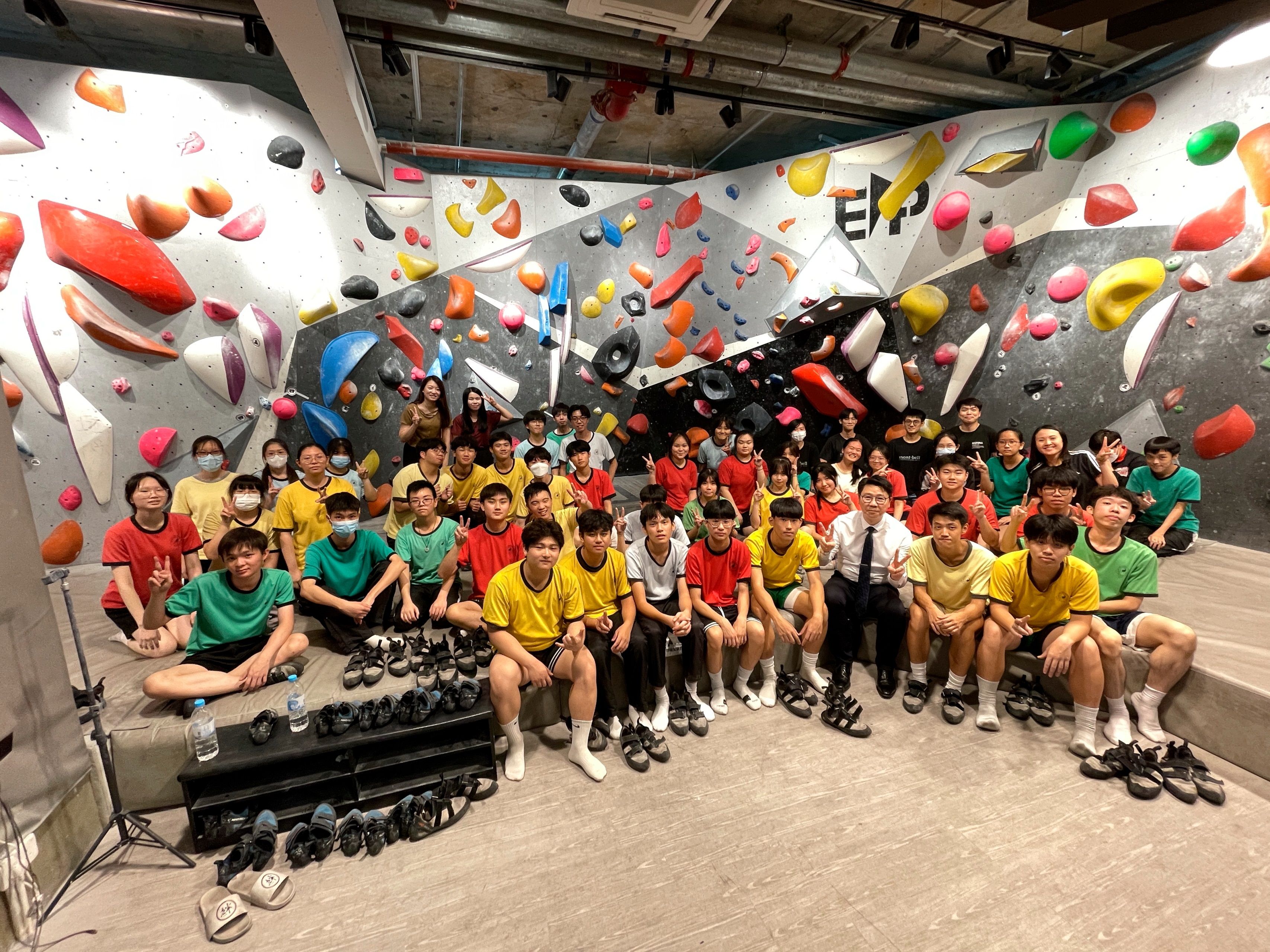
| Life-wide Learning (Including Five Essential Learning Experiences to be Provided through Key Learning Areas, Extra-curricular Activities, Co-curricular Activities, etc.) | : | More than 40 choices, including academic societies, interest groups, service groups, music groups and sports teams are available for the students. Acclaimed external instructors are recruited to coach our students in the Dance Troupe, Sports Teams and Creative Music Group. Life-wide learning is highly regarded and there are multiple major whole-school co-curricular activities to be held inside or outside the campus every year. The school runs two "Other Learning Experiences" sessions per week to enrich students' knowledge and experience in the five areas, namely moral and civic education, work-related experience, community service, arts development and sports development. The school organizes a number of overseas and local study tours each year to broaden students' horizons and cultivate their holistic development. |
| Others | : | 1. Emphasizes multiple intelligences including academic, bodily-kinesthetic and artistic developments. Scholarships are available for students with outstanding performance in conduct, academic studies and many other domains. 2. By mutual consent, our students are given preferential terms when seeking admission to the universities in the Mainland and Taiwan. 3. The School has completed the External School Review and is highly regarded in the corresponding Report: teachers show loving care for students, and students grow up in a campus which provides them with a simple and caring environment and allows them to display steady progress in academic and behavioral performance. The whole Report has been uploaded to the school website www.ccss.edu.hk. 4. An indoor Mega Gym costing 3.9 million dollars, fully sponsored by Sir David Trench Fund for Recreation, has been completed and is now open for use by students. |
| Direct Public Transportation to School | : | Bus Route: 1A, 13M, 13X, 93A, 93K, 601; Public Light Bus: 76B, 34S (Kwun Tong to Sau Mau Ping). |
| Remarks | : | - |
 School Map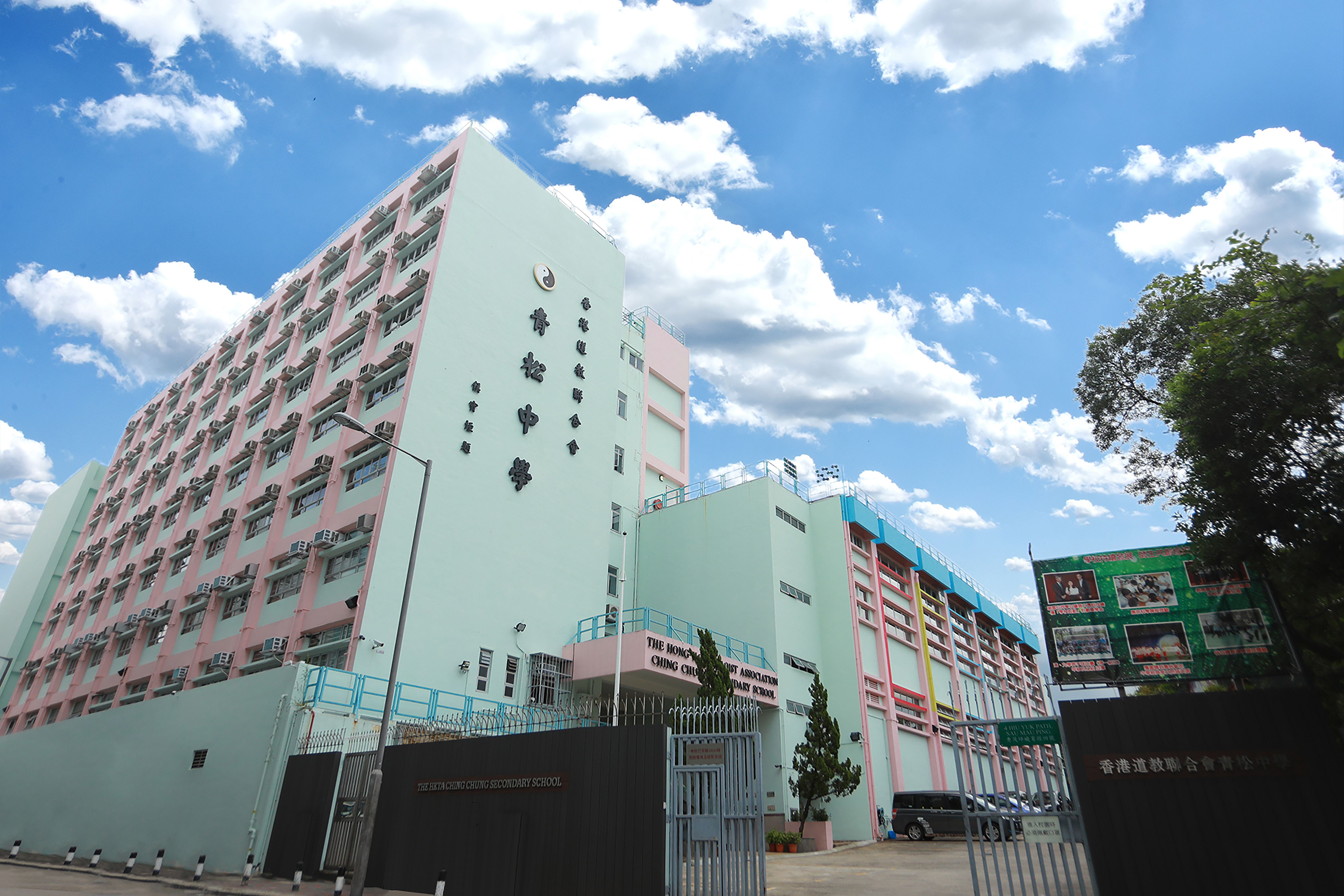
Last revision date: 15/12/2025


