 Secondary School Profiles 2025/2026


 Secondary School Profiles 2025/2026
| Address: | 42 Wo Yi Hop Road Kwai Chung | |||
| Phone: | 24271641 | Email: | hktayy1@yy1.edu.hk | |
| Fax: | 24261644 | Website: | http://www.yy1.edu.hk | |
School Mission
Our vision is to provide within a nurturing and stimulating environment a well-balanced Taoist education. In accordance with our motto Grasping Principles, Cultivating Virtues, we are dedicated to developing students into responsible, knowledgeable and compassionate citizens. Through the all-round moral, intellectual, physical, social and aesthetic development, students are imbued with sound moral values and remarkable academic achievements in holistic education.
 School Information
 | District | : | Kwai Tsing |
| Other District(s) | : | Sham Shui Po, Tsuen Wan, Islands |
| Supervisor / Chairman of School Management Committee | : | Dr. Tang Kam Hung |
| Principal (with Qualifications / Experiences) | : | Mr. Kan Wai Hung (MA in Education) |
| School Type | : | Aided |
| Student Gender | : | Co-ed |
| Area Occupied by the School | : | About 4000 Sq. M |
| Name of Sponsoring Body | : | Hong Kong Taoist Association |
| Incorporated Management Committee | : | Established |
| Percentage of School Supervisor and Managers / Chairperson and Members of School Management Committee (SMC) of Government Schools Fulfilling the Training Targets | : | 100% |
| Religion | : | Taoism |
| Year of Commencement of Operation | : | 1979 |
| School Motto | : | Grasping Principles, Cultivating Virtues |
| Parent-Teacher Association | : | Yes |
| Student Union / Association | : | Yes |
| Past Students’ Association / School Alumni Association | : | Yes |
| 4Rs Mental Health Charter | : | Yes |
| Whole School Health Programme | : | Pledged School |
 Chargeable Fees (2025/2026)
| School Fee ($) | Tong Fai ($) | ||
| S1 | - | - | |
| S2 | - | - | |
| S3 | - | - | |
| S4 | - | $290 | |
| S5 | - | $290 | |
| S6 | - | $290 | |
| Parent-Teacher Association Fee (Annual) ($) | : $40 | ||
| Student Union / Association Fee ($) | : $10 | ||
| Approved Charges for Non-standard Items (Annual)($) | : $315 (S.1-S.5); $189 (S.6) | ||
| Other Charges / Fees ($) | : House Fee: $10 | ||
 School Facilities
 | Number of Classroom(s) | : | 26 |
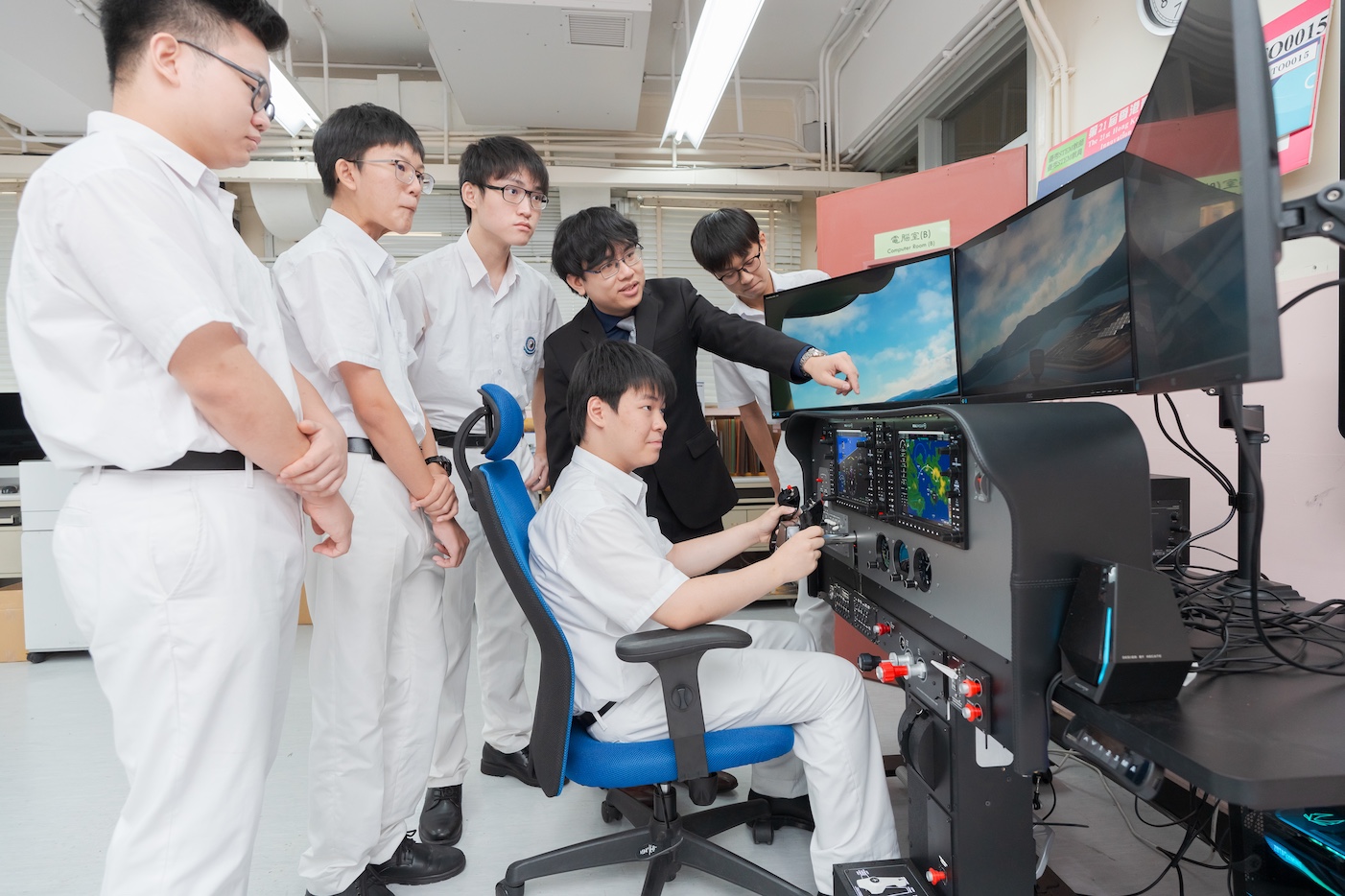
| School Facilities | : | To enhance teaching and learning effectiveness, all our classrooms and special rooms are equipped with a wireless broadband router, a computer, a digital whiteboard, a projector, a visualizer, a wireless audio system and a tablet charging cart. Teachers can apply information technology easily in a well-developed environment. To promote STEAM, there are Visual Arts Innovation Centre, InnoTech Centre, Information & Communication Technology Centre, AV Control Room, Studio, Biology Laboratory, Physics Laboratory, Chemistry Laboratory and Integrated Science Laboratory. All of them are equipped with advanced equipment, allowing students to use technology to carry out innovative learning activities. To coordinate with the school based curriculum and enhance the learning efficiency, our school has two Lecture Halls, two Fitness Training Centres, Dancing Room, Library, Self-access Language Learning Centre, Smart Classroom, Music Room, Cookery Room, Needlework Room, Geography Room and Green Roof. The favorable learning environment promotes life-wide learning and satisfies the needs of different students, so they can have a diversified and comprehensive life experience. |
| Facility(ies) for Supporting Students with Special Educational Needs | : | Accessible lift, Accessible toilet and accessible public information / service counter. |
 Teaching Staff Information (Including School Head) in the 2025/2026 School Year
 | Number of Teaching Posts in the Approved Establishment | : | 62 |
| Total Number of Teachers in the School | : | 67 |
| Qualifications and Professional Training | : | Percentage of Teaching Staff (%) |
| Had Received Teacher Training | : | 90% |
| Bachelor Degree | : | 63% |
| Master / Doctorate Degree or above | : | 37% |
| Special Education Training | : | 64% |
| Years of Experience | : | Percentage of Teaching Staff (%) |
| 0-4 Years | : | 21% |
| 5-9 Years | : | 6% |
| 10 Years or above | : | 73% |
 2025/2026 Class Structure
 | Number of Classes | ||
| S1 | : | 4 |
| S2 | : | 4 |
| S3 | : | 4 |
| S4 | : | 4 |
| S5 | : | 4 |
| S6 | : | 4 |
 Subjects Offered
 | Subjects Offered in the 2025/2026 School Year | : | S.1 - S.3 |
| Chinese as the Medium of Instruction | : | Chinese Language, Chinese History, Putonghua, Mathematics, Religious/ Ethics Education, Technology and Living, Physical Education, Music, Science, Visual Arts, History, Geography, Citizenship, Economics and Society and Integrated Technology (school-based subject is offered) |
| English as the Medium of Instruction | : | English Language |
| Adopt a Different Medium of Instruction by Class or by Group / School-based Curriculum | : | - |
| Subjects Offered in the 2025/2026 School Year | : | S.4 - S.6 |
| Chinese as the Medium of Instruction | : | Chinese Language, Chinese History, Religious/ Ethics Education (S.4), Mathematics, Citizenship and Social Development, Physics, Chemistry, Biology, Business, Accounting and Financial Studies, Information and Communication Technology, Mathematics Extended Part Module 2, Geography, History, Economics, Health Management and Social Care, Tourism and Hospitality Studies, Visual Arts, Physical Education (DSE), Physical Education, ApL |
| English as the Medium of Instruction | : | English Language |
| Adopt a Different Medium of Instruction by Class or by Group / School-based Curriculum | : | - |
| Subjects to be Offered in the 2026/2027 School Year | : | S.1 - S.3 |
| Chinese as the Medium of Instruction | : | Chinese Language, Chinese History, Putonghua, Mathematics, Religious/ Ethics Education, Technology and Living, Physical Education, Music, Science, Visual Arts, History, Geography, Citizenship, Economics and Society and Integrated Technology (school-based subject is offered) |
| English as the Medium of Instruction | : | English Language |
| Adopt a Different Medium of Instruction by Class or by Group / School-based Curriculum | : | - |
| Subjects to be Offered in the 2026/2027 School Year | : | S.4 - S.6 |
| Chinese as the Medium of Instruction | : | Chinese Language, Chinese History, Religious/ Ethics Education (S.4), Mathematics, Citizenship and Social Development, Physics, Chemistry, Biology, Business, Accounting and Financial Studies, Information and Communication Technology, Mathematics Extended Part Module 2, Geography, History, Economics, Health Management and Social Care, Tourism and Hospitality Studies, Visual Arts, Physical Education (DSE), Physical Education, ApL |
| English as the Medium of Instruction | : | English Language |
| Adopt a Different Medium of Instruction by Class or by Group / School-based Curriculum | : | - |
 Secondary One Admission, Orientation Activities & Healthy School Life
 | Secondary One Admission | : | Our school will accept discretionary places. Our school will participate in the Secondary School Places Allocation System through central allocation stage (Applicable for admission to S.1 in September 2026 ).1. Academic performance 40%; 2. Conduct grades 20%; 3. Interview (student's appearance, manners, attitude and performance in the interview) 20%; 4. Others (including extra-curricular activities, service records, awards and school remarks, etc.) 20%. |
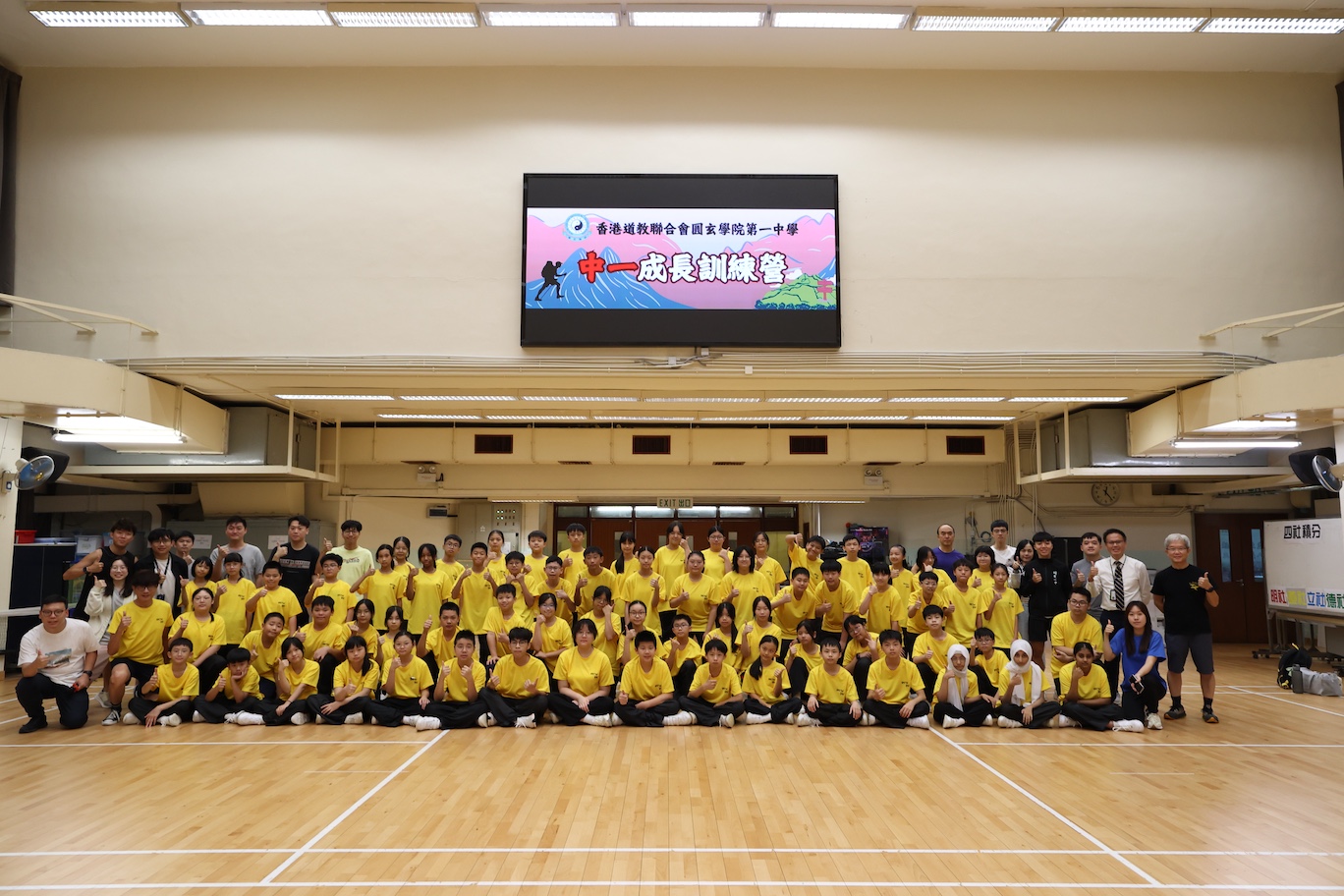
| Orientation Activities and Healthy Life | : | Orientation activities: 1. Summer Bridging Course; 2. Welcoming Talk for Parents of S.1 Students; 3. S.1 Orientation Day; 4. S.1 Personal Growth Training Camp; 5. S.1 YY1 Running Kids. Healthy lifestyle: A wide variety of activities are offered to give students the opportunity for mental and physical development. Students are encouraged to adopt a healthy lifestyle with a balanced diet and a regular exercise plan. |
 School Characteristics
 | School Management | ||
| (1) School's Major Concerns | : | 1. Strengthen the development of positive values, promote a positive campus culture. 2. Boost students to learn actively and develop effective learning skills. |
| (2) School Management Organisation | : | Since the implementation of school-based management initiative, our school has adopted a liberal and transparent approach in school management. A number of administrative committees have been set up to help formulate and review school policies. All major issues are discussed in staff meetings and teachers’ views are taken into consideration before implementation. |
| (3) Incorporated Management Committee / School Management Committee / Management Committee | : | The Incorporated Management Committee has been set up and its members include representatives of the school sponsoring body, independent professionals and representatives of parents, teachers and alumni. |
| (4) School Green Policy | : | 1. Reducing paper-consumption: online learning platform, paper-free office and e-parents letters have been adopted to limit paper consumption. 2. Reducing waste production: students are encouraged to bring their own water bottle to school and use recyclable utensils for lunch. 3. Building a green campus: with organic farming in our “Roof-top Garden” and a hydroponic farming system, numerous types of plants are grown for aesthetic and educational purposes. 4. Promoting environmental protection: recycling bins and classroom electricity consumption monitoring system have been set up to help promote the concepts of wastes classification and reducing energy consumption. 5. Procurement strategies: only energy efficient products and consumable items with less packaging will be purchased for replacement. |
| Learning and Teaching Plan | ||
| (1) Whole-school Language Policy | : | Our school aims to enable our students to become biliterate and trilingual. Small class teaching is adopted in English Language and Putonghua lessons at different levels, with the use of adaptive teaching resources and pedagogies, it caters for different learning diversity. Besides, English-medium extended learning activities are included in some subjects. This provides students a chance to learn English. Outside the classroom, the school also offers a wide variety of activities for students to participate in, including Mini-novel competition, English Festival, Story Wars, Writing Class, Speech Festival. Campus TV offers an authentic environment to host programmes in English, which fosters students’ language ability. Students are encouraged to join different competitions outside school like debate competition and writing competition. Students who take professional exams develop their language ability and make better preparation for their future careers and studies. |
| (2) Learning and Teaching Strategies | : | Our teachers adopt student-centred teaching strategies, which stress the importance of peer learning and interaction between teachers and students. The aim is to enhance students’ creativity and communication and collaborative skills. The design of learning tasks focuses on students’ development of multiple intelligence, critical thinking skills and self-expression. Field trips and other kinds of outings are regularly organized to allow students to broaden their horizons, integrate and apply these skills in their everyday life. The school also nurtures various learning skills and promotes self-directed and life-long learning. |
| (3) School-based Curriculum | : | 1. Electives: 2X and 3X. To cater for students’ abilities and interests, students can choose from a wide range of subject combinations, including arts, science and business subjects; they can also select Applied Learning including Desserts and coffee shop operations, Healthcare Practice, Western dessert, Cultural and Creative product Design, professional English, Public Relations and Multi-media Information, as their second or third elective. 2. Curriculum highlights: School-based curriculum tailoring has been adopted in our core subjects, including Chinese Language, English Language and Mathematics. The tailor-made curriculum suits our students’ learning needs; it enhances the learning efficiency. Language Arts is newly introduced in English Language for S1 students. It allows them to learn in a more lively and interactive way. Besides, we have Integrated Technology, which combines Computer Literacy with Design & Technology. This school-based subject aims at introducing students to the latest advancements in technology and helping them develop creative thinking skills by engaging them in interesting and practical tasks, e.g. artificial intelligence (AI), laser printing, 3D printing and apps programming. In addition, cross-curricular curriculum has been implemented at junior secondary levels. It entails the learning of Mathematics, Science, Visual Arts and Technology. With concerted effort of the teachers concerned, several STEAM packages have been developed to help students consolidate subject knowledge, enhance learning motivation and develop potentials for their future pursuits. Our teachers were also awarded “The 7th Greater Bay Area Excellence Award” by the Hong Kong Emerging Technology Education Association. It is a solid proof of our teachers’ innovative approach to integrating STEAM into the classroom. |
| (4) Major Renewed Emphases in the School Curriculum | : | Our school has consistently been committed to promoting reading by organizing a wide range of diverse reading activities throughout the year, such as morning reading sessions, themed book fairs, and author talks, aiming to cultivate students' reading habits and interests. Regarding moral and civic education, our school places great emphasis on nurturing students’ character and civic awareness. We offer a Religious Studies subject and utilize life education classes along with other learning experiences to conduct thematic assemblies and cultural exploration activities both locally and abroad. These initiatives help students develop morally, understand national conditions, deepen knowledge of Chinese culture as well as other cultures, and foster a sense of civic responsibility. For example, last year our school arranged study tours for students to Germany, Xinjiang, Wuhan, Liuzhou, Sichuan, Xi’an, and the Greater Bay Area to broaden their knowledge horizons. In terms of information technology education, most subjects in our curriculum incorporate e-learning elements. To promote digital teaching and autonomous learning, the entire campus is equipped with wireless broadband and uses the Google Education platform to enhance learning efficiency. Students are also free to borrow tablets and other electronic learning tools to carry out group or individual self-study projects. Our school emphasizes the development of STEAM education and encourages students to participate in various external competitions to broaden their perspectives. |
| (5) Life Planning Education | : | Our school's career planning curriculum is designed in a spiral manner. The themes are centered around "self-discovery and interest exploration," "self-understanding and skill development," and "self-breakthrough and practical application." This approach enables students to progressively explore themselves, systematically identify their interests, and ultimately determine their long-term career and further education pathways. The school collaborates with various organizations and institutions to conduct workshops, seminars, and visits that help young people discover their strengths, encourage them to seize the present, develop their potential, clarify their ideals and goals, and establish a clear concept of career planning. Additionally, senior secondary students take part in career interest assessments and post-secondary consultation programs to better understand the preparations needed for further studies or employment and to affirm their own abilities. Career planning ambassadors are also selected from each class from Secondary 3 to Secondary 6 to provide more information and career planning activities among classmates, allowing students to explore different industries according to their interests and needs and deepen their understanding of the industries or courses they are interested in. |
| Student Support | ||
| (1) Whole School Approach to Catering for Learner Diversity | : | To cater for learner diversity, it is the school’s priority to suit the needs of our students by fine-tuning our school policies. Our school adopts a dual class teacher system from S1 to S6. This allows class teachers to provide thorough care to students. In addition, our school deploys extra resources to hire additional teachers and tutors to offer homework tutorials and supplementary lessons for our students after school. |
| (2) Whole School Approach to Integrated Education | : | The school adopts whole school approach to build an inclusive and caring campus by providing a variety of appropriate supporting and remedial services for students with special education needs. A Learning Supports Team has been set up to coordinate these services and make proper use of the available fund. The members of the team include an SEN coordinator, a social worker, student counsellors and SEN trained teachers and inclusive education counselors, etc. The school also encourages teachers to attend training courses run by the EDB to update their professional knowledge and enhance their skills on catering for learner diversity. Besides, the school adopts special examination arrangements, e.g. extra time allowance, special examination rooms with screen readers, to help SEN students in examinations. To further enhance home-school cooperation and help students make steady progress in school, the Learning Supports Team makes frequent contacts with the parents concerned so that they can have a better understanding of their children’s learning and growth. |
| (3) Education Support for Non-Chinese Speaking (NCS) Students | : | Our school provides additional support for NCS students to facilitate their learning of Chinese: providing after-school support programmes in learning Chinese; appointing additional teacher(s)/teaching assistant(s) to support NCS students’ learning of Chinese; arranging intensive Chinese learning and teaching mode(s), e.g. pull-out learning if necessary, split-class/group learning, etc.; and organising activities to create an inclusive learning environment in the school. |
| (4) Measures to Provide Adaptation for Learning and Assessment | : | Enhancing students’ learning motivation and assisting them in mastering effective learning skills is one of the major concerns of the school. Continuous assessment is conducted in each subject to observe students' learning performance and provide feedback on teaching. The modes of assessment include teacher’s evaluation, student’s self-assessment, peer assessment and parent assessment. For summative assessments, there are two uniform tests and examinations each year. The SMART Goal programme is implemented to encourage students working hard and making progress. To cater for learner diversity, core subjects adopt adjustment policies and enhancement programmes to address the needs of students. |
| Home-School Co-operation and School Ethos | ||
| (1) Home-School Co-operation | : | To promote better home-school cooperation and communication, our school implements various measures like organizing regular activities and parenting education programmes, managing a PTA Resources Centre, setting up a squad of parent voluntary workers and publishing the periodical “Yuen Yuen PTA Newsletter”. |
| (2) School Ethos | : | To cultivate students’ proactive attitudes towards life, our school encourages active participation in various activities, community services, training sessions, and competitions. The campus strongly promotes a culture of care, creating an atmosphere of mutual support and appreciation, so that students regard the school as their second home. All student support groups, societies and interest clubs strive to provide learning and service opportunities beyond the classroom, enabling students to develop multiple intelligences and foster sincere interpersonal skills and a caring attitude towards society. |
| Future Development | ||
| (1) School Development Plan | : | 1. Strengthen the development of positive values, promote a positive campus culture: - Teachers implement the concept of positive education in nurturing students. Meanwhile, parents are encouraged to develop a positive mindset and cooperate with teachers, allowing students to grow in a positive environment. - Cultivate students' positive attitudes, help them understand themselves, recognize their abilities and strengths, and set future development goals. - Through different stages across school years, progressively nurture students’ values, build good character, foster a positive school atmosphere, and collectively create a culture of care. 2. Enhance students’ learning motivation and assist them in mastering effective learning strategies: - Improve the learning environment to further cultivate students’ initiative and enthusiasm for learning. - Assist students in mastering effective learning techniques to enhance their academic performance. |
| (2) Teacher Professional Training and Development | : | 1. School-based Staff Development Programmes: the school organizes seminars, workshops and training day camps for all teaching staff. 2. Professional Development: all teaching staff will formulate their own “Teacher Professional Development Plan”. The school adopts an encouraging policy to facilitate teachers to attend professional development courses. 3. Professional Interflow: the school encourages teachers to participate in local, mainland and overseas exchange programmes. |
| Life-wide Learning (Including Five Essential Learning Experiences to be Provided through Key Learning Areas, Extra-curricular Activities, Co-curricular Activities, etc.) | : | Our school provides a variety of extra-curricular activities for students, including Arts & Interests, Sports, Social Services and Academic Clubs. It strengthens students’ potential. “Life-wide Learning Day” is organized to let students extend their learning experience beyond the classroom by taking part in diversified activities. Besides, OneSports Centre has been set up. It provides professional equipment and a quick response training system. Together with the fitness training center, students can have formal physical fitness training and develop a strong and healthy body. In addition to the annual Athletic Meet, regular inter-house and inter-class sports competitions are held. It provides a platform for students to show their sports talents, stretch their potentials and strengthen the senior form students’ leadership skills. In addition, plenty of our students can achieve excellent results in various open competitions as our school encourages students to broaden their horizons and gain more experience by taking part in these contests. As a recognition of students’ achievements, “Learning Achievement Sharing Day” is held every year. Parents, teachers and students can share the joy and appreciate versatile performance. |
| Others | : | Our school provides scholarships and financial assistance to students with outstanding performances in studies, services, extra-curricular activities etc. The aim is to develop students into future leaders who are creative and internationally-minded. Our school has established sisterly relationships with some colleges and universities in the mainland and overseas. Exchange activities have been organized to provide chances for students and teachers to have mutual learning. |
| Direct Public Transportation to School | : | Bus: 31B, 31M, 32, 35A, 36B, 43A; Mini-bus: 83A, 94, 401, 403, 403P, 403X, 86, 86A, 86M, 412. |
| Remarks | : | By using the Diversity Learning Grant, Physical Education (DSE) for senior form students is provided. Applied Learning is offered as an elective subject for S.4 to S.6 students. In addition, a variety of sports, cultural and arts activities as well as life education programmes are regularly held with an aim to nurture students’ personal growth. |
 School Map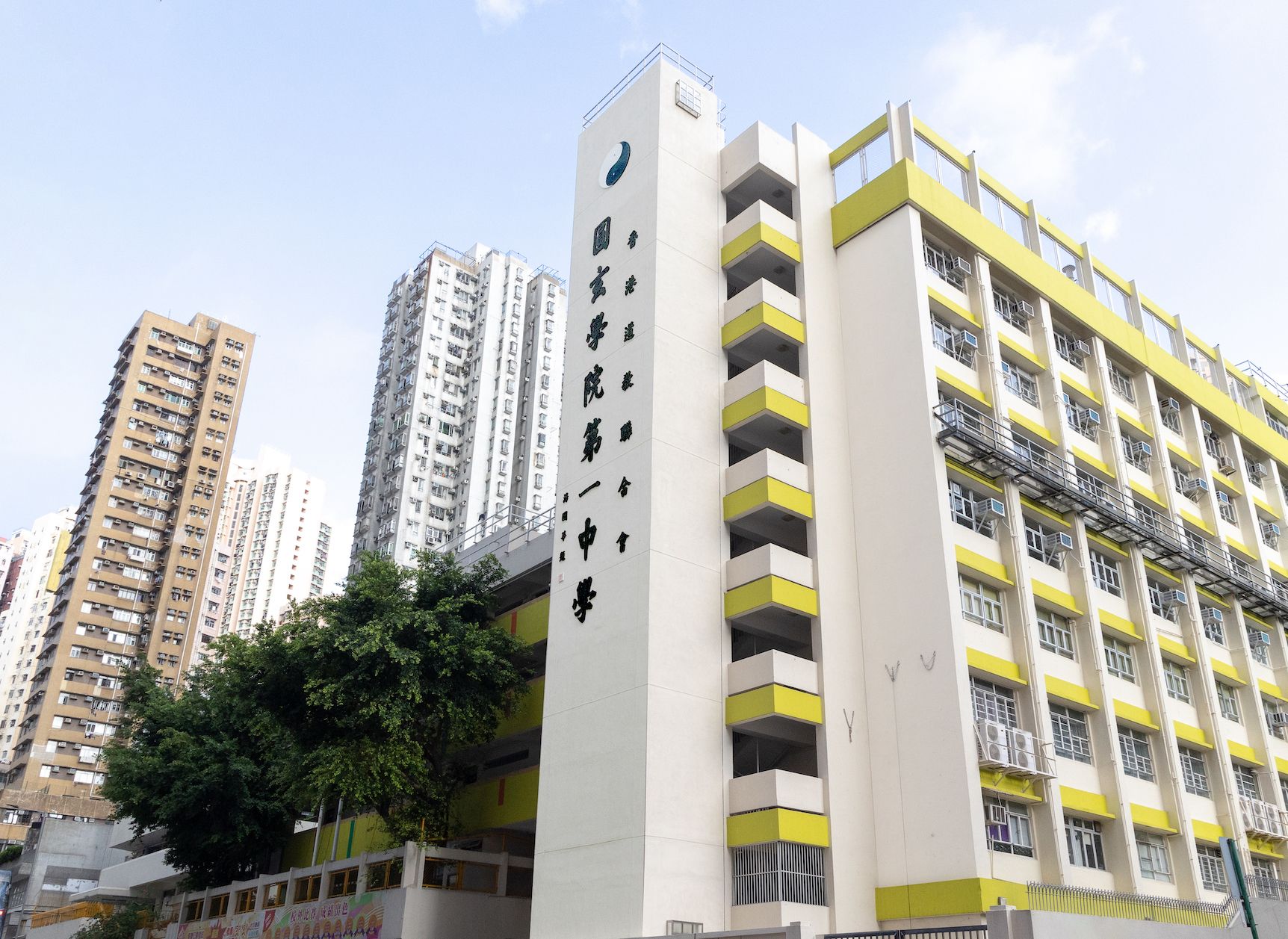
Last revision date: 5/12/2025


