 Secondary School Profiles 2025/2026


 Secondary School Profiles 2025/2026

| Address: | 8 Hoi Wang Road Mongkok (West) | |||
| Phone: | 26269100 | Email: | college@hkmadavidli.edu.hk | |
| Fax: | 26269311 | Website: | http://www.hkmadavidli.edu.hk | |
School Mission
Our mission is to provide a well-rounded education for the total development of our students, encompassing moral, intellectual, physical, social and aesthetic aspects. The College believes that each student has worth and is endowed with potential and that we develop our students to the fullest. We also believe that every child has talent and this should be nurtured. Each student should also become an effective and independent learner by learning to accept responsibility for his or her learning outcomes.
 School Information
 | District | : | Yau Tsim Mong |
| Other District(s) | : | |
| Supervisor / Chairman of School Management Committee | : | The Hon. Mr. Tien Puk Sun, Michael (BBS, JP) |
| Principal (with Qualifications / Experiences) | : | Mr. Mok Yat Fan |
| School Type | : | DSS |
| Student Gender | : | Co-ed |
| Area Occupied by the School | : | About 8000 Sq. M |
| Name of Sponsoring Body | : | Hong Kong Management Association School Ltd. |
| Incorporated Management Committee | : | Established |
| Percentage of School Supervisor and Managers / Chairperson and Members of School Management Committee (SMC) of Government Schools Fulfilling the Training Targets | : | 64% |
| Religion | : | Not Applicable |
| Year of Commencement of Operation | : | 2000 |
| School Motto | : | In Search of Excellence |
| Parent-Teacher Association | : | Yes |
| Student Union / Association | : | Yes |
| Past Students’ Association / School Alumni Association | : | Yes |
| 4Rs Mental Health Charter | : | Yes |
| Whole School Health Programme | : | Action School |
 Chargeable Fees (2025/2026)
| School Fee ($) | Tong Fai ($) | ||
| S1 | $39780 | - | |
| S2 | $40170 | - | |
| S3 | $40010 | - | |
| S4 | $38850 | - | |
| S5 | $38850 | - | |
| S6 | $38850 | - | |
| Parent-Teacher Association Fee (Annual) ($) | : $300 | ||
| Student Union / Association Fee ($) | : - | ||
| Approved Charges for Non-standard Items (Annual)($) | : - | ||
| Other Charges / Fees ($) | : Exercise Book Around $200 (Annual) | ||
 School Facilities
 | Number of Classroom(s) | : | 35 |
| School Facilities | : | A millennium-designed campus with 35 classrooms equipped with multimedia teaching facilities. Other facilities on the campus include a multi-purpose school hall, dance studio, lecture theatre, science laboratory, library, campus TV studio, Chinese culture room, counseling room, iMac computer learning room, STEAM laboratory, football pitch, basketball court, volleyball court, climbing wall and organic farm, etc. |
| Facility(ies) for Supporting Students with Special Educational Needs | : | Ramp, Accessible lift and Accessible toilet. |
 Teaching Staff Information (Including School Head) in the 2025/2026 School Year
 | Number of Teaching Posts in the Approved Establishment | : | 0 |
| Total Number of Teachers in the School | : | 73 |
| Qualifications and Professional Training | : | Percentage of Teaching Staff (%) |
| Had Received Teacher Training | : | 95% |
| Bachelor Degree | : | 100% |
| Master / Doctorate Degree or above | : | 52% |
| Special Education Training | : | 70% |
| Years of Experience | : | Percentage of Teaching Staff (%) |
| 0-4 Years | : | 16% |
| 5-9 Years | : | 21% |
| 10 Years or above | : | 63% |
 2025/2026 Class Structure
 | Number of Classes | ||
| S1 | : | 4 |
| S2 | : | 4 |
| S3 | : | 4 |
| S4 | : | 4 |
| S5 | : | 4 |
| S6 | : | 4 |
 Subjects Offered
 | Subjects Offered in the 2025/2026 School Year | : | S.1 - S.3 |
| Chinese as the Medium of Instruction | : | Chinese Language (Putonghua), Chinese History (Cantonese) |
| English as the Medium of Instruction | : | English Language, Mathematics, Citizenship, Economics and Society, History, Geography, Integrated Science (S.1 - S.2), Physics (S.3), Chemistry (S.3), Biology (S.3), Information and Communication Technology, Home Economics (S.1 - S.2), Music, Visual Arts, Health and Physical Education, Global Competency Education (S.1-S.2) and STEAM (S.1) |
| Adopt a Different Medium of Instruction by Class or by Group / School-based Curriculum | : | French, Chinese as a Second Language (Cantonese) and Chinese History (Cantonese) for non-Chinese speaking students |
| Subjects Offered in the 2025/2026 School Year | : | S.4 - S.6 |
| Chinese as the Medium of Instruction | : | Chinese Language (Cantonese), Chinese History (Cantonese) |
| English as the Medium of Instruction | : | English Language, Mathematics, Mathematics Extended Part (Modules 1 & 2), Biology, Chemistry, Physics, Business, Accounting & Financial Studies (Accounting module / Business management module), Economics, History, Geography, Physical Education (DSE), Information and Communication Technology, Literature in English, Tourism and Hospitality Studies, Visual Arts, Health and Physical Education and Music |
| Adopt a Different Medium of Instruction by Class or by Group / School-based Curriculum | : | Citizenship and Social Development (English / Cantonese as preferred by students), French and Chinese as a Second Language (Cantonese) for non-Chinese speaking students |
| Subjects to be Offered in the 2026/2027 School Year | : | S.1 - S.3 |
| Chinese as the Medium of Instruction | : | Chinese Language (Putonghua), Chinese History (Cantonese) |
| English as the Medium of Instruction | : | English Language, Mathematics, Citizenship, Economics and Society, History, Geography, Integrated Science (S.1 - S.2), Physics (S.3), Chemistry (S.3), Biology (S.3), Information and Communication Technology, Home Economics (S.1 - S.2), Music, Visual Arts, Health and Physical Education, Global Competency Education (S.1-S.2) and STEAM (S.1) |
| Adopt a Different Medium of Instruction by Class or by Group / School-based Curriculum | : | French, Chinese as a Second Language (Cantonese) and Chinese History (Cantonese) for non-Chinese speaking students |
| Subjects to be Offered in the 2026/2027 School Year | : | S.4 - S.6 |
| Chinese as the Medium of Instruction | : | Chinese Language (Cantonese), Chinese History (Cantonese) |
| English as the Medium of Instruction | : | English Language, Mathematics, Mathematics Extended Part (Modules 1 & 2), Biology, Chemistry, Physics, Business, Accounting & Financial Studies (Accounting module / Business management module), Economics, History, Geography, Physical Education (DSE), Information and Communication Technology, Literature in English, Tourism and Hospitality Studies, Visual Arts, Health and Physical Education and Music |
| Adopt a Different Medium of Instruction by Class or by Group / School-based Curriculum | : | Citizenship and Social Development (English / Cantonese as preferred by students), French and Chinese as a Second Language (Cantonese) for non-Chinese speaking students |
 Secondary One Admission, Orientation Activities & Healthy School Life
 | Secondary One Admission | : | Our school will not participate in the Secondary School Places Allocation System through central allocation stage (Applicable for admission to S.1 in September 2026 ).Our College welcomes all primary six students to submit their application forms to us in November-December and July (please refer to our College webpage for more details). |
| Orientation Activities and Healthy Life | : | Pre-S1 Bridging in Chinese Language, English Language and Mathematics as well as S1 Orientation activities are held in August; Parents' Information Day will also be held before the start of the school year. Our College organizes a wide range of programs such as G & C Ambassador, Individual Counselling Session by Class Teachers, personal development workshops, theme-based class discussions, adventure-based activities, etc. to promote the physical and mental health growth of students. |
 School Characteristics
 | School Management | ||
| (1) School's Major Concerns | : | Cultivating students' development across moral, intellectual, physical, social and aesthetic aspects, and helping them become independent and self-directed learners. |
| (2) School Management Organisation | : | The HKMA David Li Kwok Po College started its operations in September 2000. It is operated by the Hong Kong Management Association. The College operates under the Direct Subsidy Scheme of the Education Bureau. |
| (3) Incorporated Management Committee / School Management Committee / Management Committee | : | The Incorporated Management Committee (IMC) was set up in May in 2007, includes representatives of its sponsoring body, independent manager, Principal, teachers, parents and alumni. |
| (4) School Green Policy | : | To develop in all staff and students good habits for environmental protection and recognition of the sustainable development of our society and mankind through a whole school and interdisciplinary approach. |
| Learning and Teaching Plan | ||
| (1) Whole-school Language Policy | : | As the College is an EMI school, all teachers use English in the instruction of all subjects, except for Chinese Language and Chinese History, which are conducted in Putonghua or Cantonese. Citizenship and Social Development are taught in both English and Cantonese. Students are free to choose their preferred medium of instruction for this subject, which will be taken as the language to be used in the public examination concerned. To create an English-rich environment that maximises students’ use and exposure to English, the College encourages the use of English in non-teaching activities. However, cultural activities related to Chinese festivals and those activities that involve the participation of guests from outside the College may be conducted in Cantonese. |
| (2) Learning and Teaching Strategies | : | As a DSS school, the College is able to set its own curriculum in Junior Forms, though is obliged to follow the examination system in Senior Forms as mandated by the Education Bureau. The College aims to offer an academic programme that: - caters for students’ diversity in the learning of English, Chinese and Mathematics; - allows for flexibility in classroom organization, curriculum and instruction to meet the different needs of students; - provides a learning environment that promotes student learning and brings to students a sense of achievement; - provides a range of subject options for students to choose at senior secondary levels. |
| (3) School-based Curriculum | : | 1. Electives: 3X and 4X. Electives:3X. Students can take music or Physical Education (HKDSE) as an additional elective on top of the three elective subjects. 2. Curriculum highlights: Different curriculum sets are designed to cater for the diverse needs of students in learning English, Chinese and Mathematics. There are variations in the curriculum content and teaching strategies of different curriculum sets to accommodate different abilities, learning paces and styles of students. Small class teaching is also implemented so that students will benefit from more individualized attention. The College implements a “Bring Your Own Device (BYOD)” scheme, the aim of the scheme is to enhance teaching and learning, and to cultivate a student-centered learning environment for students to become digitally proficient. |
| (4) Major Renewed Emphases in the School Curriculum | : | Strengthening students’ learning strategies through feedback and cross-disciplinary learning experiences. |
| (5) Life Planning Education | : | Organize career and life planning workshops to help students understand their personal strengths, personalities and interests, enabling them to make informed decisions regarding further education and employment; facilitate experiences shared by professionals or alumni, arrange visits to institutions and internship programs to provide students with insights into the workplace environment. |
| Student Support | ||
| (1) Whole School Approach to Catering for Learner Diversity | : | In Junior Forms, different curriculum sets are designed to cater for the diverse needs of students in learning Chinese, English and Mathematics. Small class teaching is also implemented so that students will benefit from more individualized attention. Our College also offers enrichment programs and small-group learning support sessions (remedial classes) to cater to students with varying learning abilities. |
| (2) Whole School Approach to Integrated Education | : | Our College is committed to establishing an inclusive and caring campus, utilizing a "whole-school approach" to support students with special educational needs by providing them with diverse support services to enhance their learning effectiveness. The members of the "Student Support Team" include the Assistant Principal, the Coordinator for Special Educational Needs, the Head of Guidance and Counseling, teachers who have special education training, and the school social worker. The Coordinator for Special Educational Needs and educational psychologists provide training for teachers supporting students with special educational needs. Additionally, our College flexibly utilizes the "Learning Support Grant," along with other resources, to hire additional staff (including teaching assistants) and to procure professional services, such as the "Functional Support Team". |
| (3) Education Support for Non-Chinese Speaking (NCS) Students | : | Our school provides additional support for NCS students to facilitate their learning of Chinese: appointing additional teacher(s)/teaching assistant(s) to support NCS students’ learning of Chinese; arranging intensive Chinese learning and teaching mode(s), e.g. pull-out learning if necessary, split-class/group learning, etc.; developing school-based Chinese Language curriculum and/or adapting learning and teaching materials; and organising activities to create an inclusive learning environment in the school. Small groups, cultural experiences and role-play are adopted in lessons. The College also encourages students to engage in self-learning via online e-learning resources. |
| (4) Measures to Provide Adaptation for Learning and Assessment | : | In measuring student performance, the College uses two major modes of assessment: continuous assessment and examinations. Continuous assessment encompasses the following areas: homework, classwork, laboratory activities, attitude and participation, tests, and project works. Uniform Tests will be arranged for S1 to S5 in October and April. While the First Term Examination and the Final Examination will take place in January and June respectively for S1 to S5, there will only be one examination for S6, which will be held in January. |
| (5) Fee Remission | : | Our school offers full school fee remission or 1/2 school fee remission. Needy students, including those from families receiving the Comprehensive Social Security Assistance (CSSA) and students receiving financial assistance provided by the Student Financial Assistance Agency (SFAA) could apply for fee remission. - Newly admitted students could apply for the school fee remission before 2 month(s) of commencement of the new school year. Application results will be announced within 2 month(s) after submission of applications. Please refer to the school's website. - Please visit the web-link in our school’s website for details of school fee remission scheme, including the family income limits. |
| Home-School Co-operation and School Ethos | ||
| (1) Home-School Co-operation | : | Our College's PTA was established in 2001, serving as a communication bridge between the College and parents. In addition to regular meetings with school representatives, the PTA organizes various activities such as tea gatherings and seminars for parents. Parents can also utilize events like Parents' Days, Parents' Evenings, and other school activities to learn more about our College and teachers, as well as to discuss their children's learning progress. |
| (2) School Ethos | : | Our College emphasizes good conduct and discipline, and our students are well-behaved. We instill four core values among students, including respect, responsibility, perseverance and appreciation. |
| Future Development | ||
| (1) School Development Plan | : | - Strengthening students’ learning strategies through feedback and cross-disciplinary learning experiences; - Promoting self-empowerment among students and nurturing them to be responsible citizens with global vision. |
| (2) Teacher Professional Training and Development | : | Our college has a Professional Development Team that organizes Professional Development Days, the Teacher Support Scheme, Teacher Peer Lesson Observation, etc. |
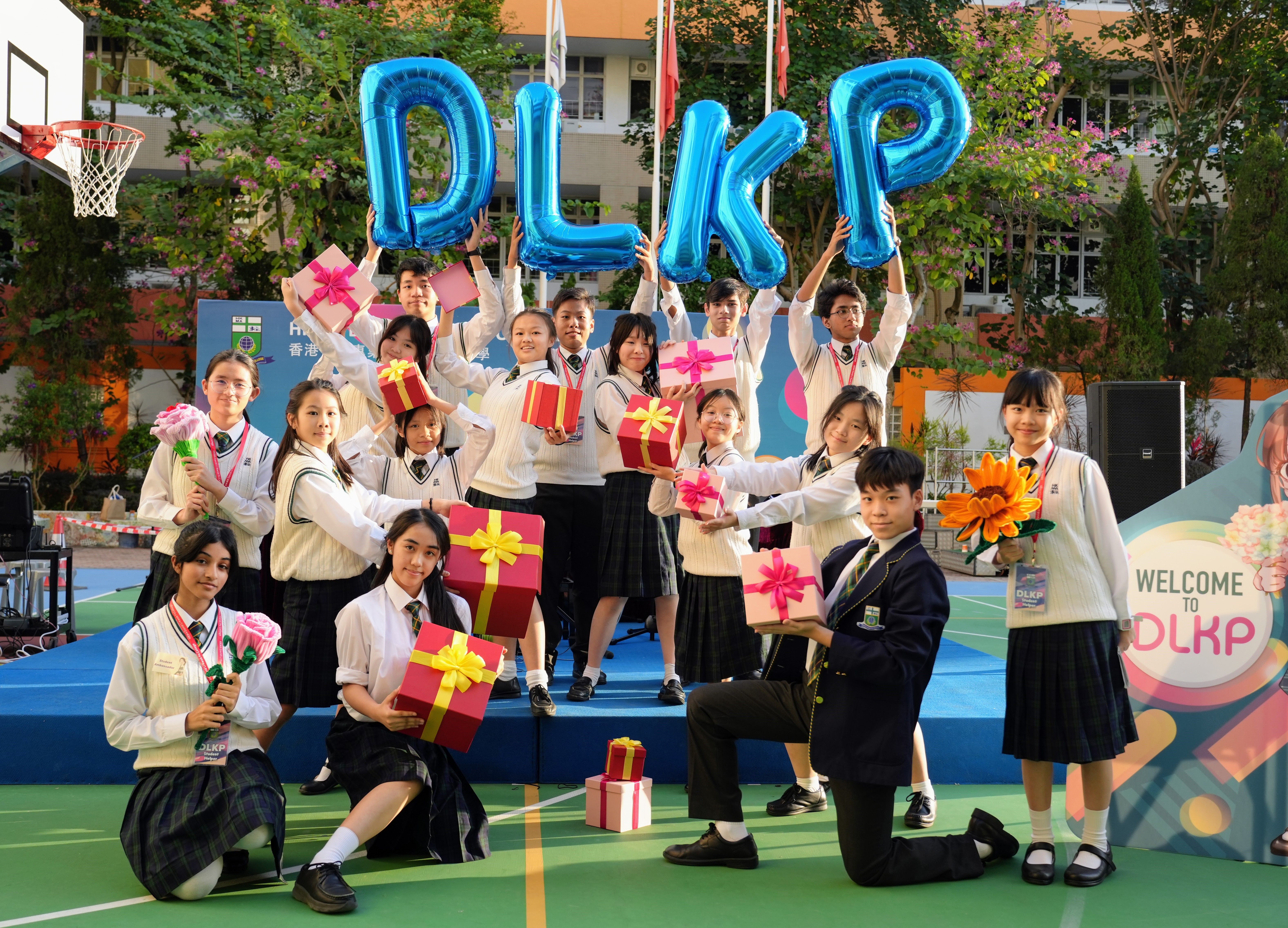
| Life-wide Learning (Including Five Essential Learning Experiences to be Provided through Key Learning Areas, Extra-curricular Activities, Co-curricular Activities, etc.) | : | Our College organizes a diverse range of extracurricular activities for students with the goal of cultivating broad interests and developing their potential. As part of the College’s moral and civic education, and to help students become caring and responsible citizens, students are encouraged to actively participate in the activities under the Community Service Scheme. Over the past few years, our College was given the ‘Caring School Award’ by the Agency For Volunteer Service. The College’s mission is to provide an all-rounded education for the total development of our students. One such initiative is the “Experiential Learning in Expeditions (ELITE) Program” for junior form students. |
| Others | : | As part of the effort to recognize outstanding S1 students, the S1 Entrance Scholarship will be offered to S1 entrants. Each scholarship holder will be granted a six-year full school fee subsidy. Our college also awards scholarships to students who excel academically or demonstrate outstanding performance in other areas. Our students have impressive achievements in English Debate, Mathematics Olympiad, STEAM, visual arts, writing, sports and music competitions. |
| Direct Public Transportation to School | : | Buses: 2E, 10, 12, 16, 20, 33A, 52X, 68X, 72X, 256B, 287X, 914, W3; MTR: Olympic Station (Exit D); Minibus: 43M (Yau Ma Tei MTR Station), 78 (Tsim Sha Tsui MTR Station), or 79K (Mongkok East MTR Station). |
| Remarks | : | - |
 School Map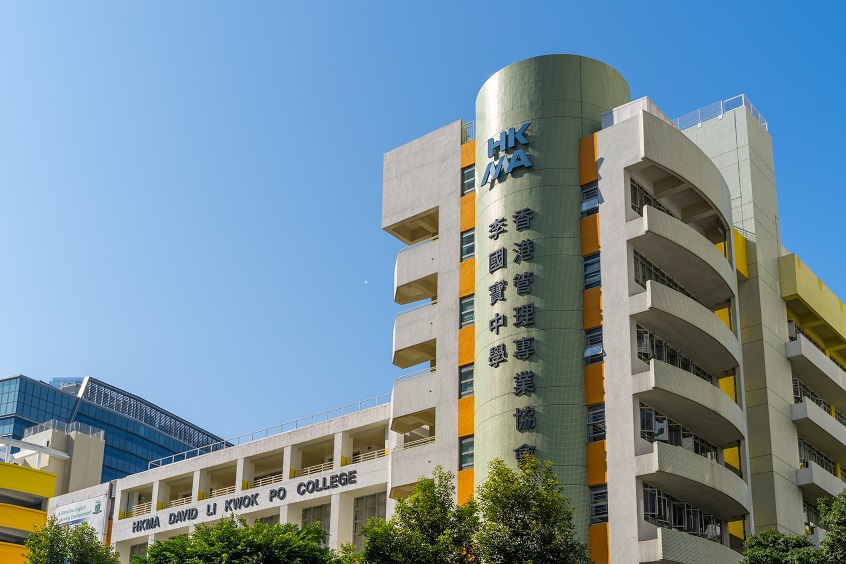

Last revision date: 5/12/2025


