 Secondary School Profiles 2025/2026


 Secondary School Profiles 2025/2026
| Address: | Fu Heng Estate Tai Po | |||
| Phone: | 26666821 | Email: | info@hkrsstpss.edu.hk | |
| Fax: | 26678029 | Website: | http://www.hkrsstpss.edu.hk | |
School Mission
Our mission reflects the beliefs of our sponsoring body. We focus on developing well-rounded students. We aim to inspire our students and inculcate self-discipline to nurture a group of young people to contribute to our society.
 School Information
 | District | : | Tai Po |
| Other District(s) | : | North |
| Supervisor / Chairman of School Management Committee | : | Mr. Ko Yu Keung |
| Principal (with Qualifications / Experiences) | : | Dr. Sze Ka Kei Patrick (M.A., M.Ed., Ed.D.) |
| School Type | : | Aided |
| Student Gender | : | Co-ed |
| Area Occupied by the School | : | About 4000 Sq. M |
| Name of Sponsoring Body | : | Hong Kong Red Swastika Society |
| Incorporated Management Committee | : | Established |
| Percentage of School Supervisor and Managers / Chairperson and Members of School Management Committee (SMC) of Government Schools Fulfilling the Training Targets | : | 100% |
| Religion | : | Not Applicable |
| Year of Commencement of Operation | : | 1989 |
| School Motto | : | To enlighten oneself and to help the needy |
| Parent-Teacher Association | : | Yes |
| Student Union / Association | : | Yes |
| Past Students’ Association / School Alumni Association | : | Yes |
| 4Rs Mental Health Charter | : | Yes |
| Whole School Health Programme | : | Action School |
 Chargeable Fees (2025/2026)
| School Fee ($) | Tong Fai ($) | ||
| S1 | - | - | |
| S2 | - | - | |
| S3 | - | - | |
| S4 | - | $340 | |
| S5 | - | $340 | |
| S6 | - | $340 | |
| Parent-Teacher Association Fee (Annual) ($) | : $40 | ||
| Student Union / Association Fee ($) | : - | ||
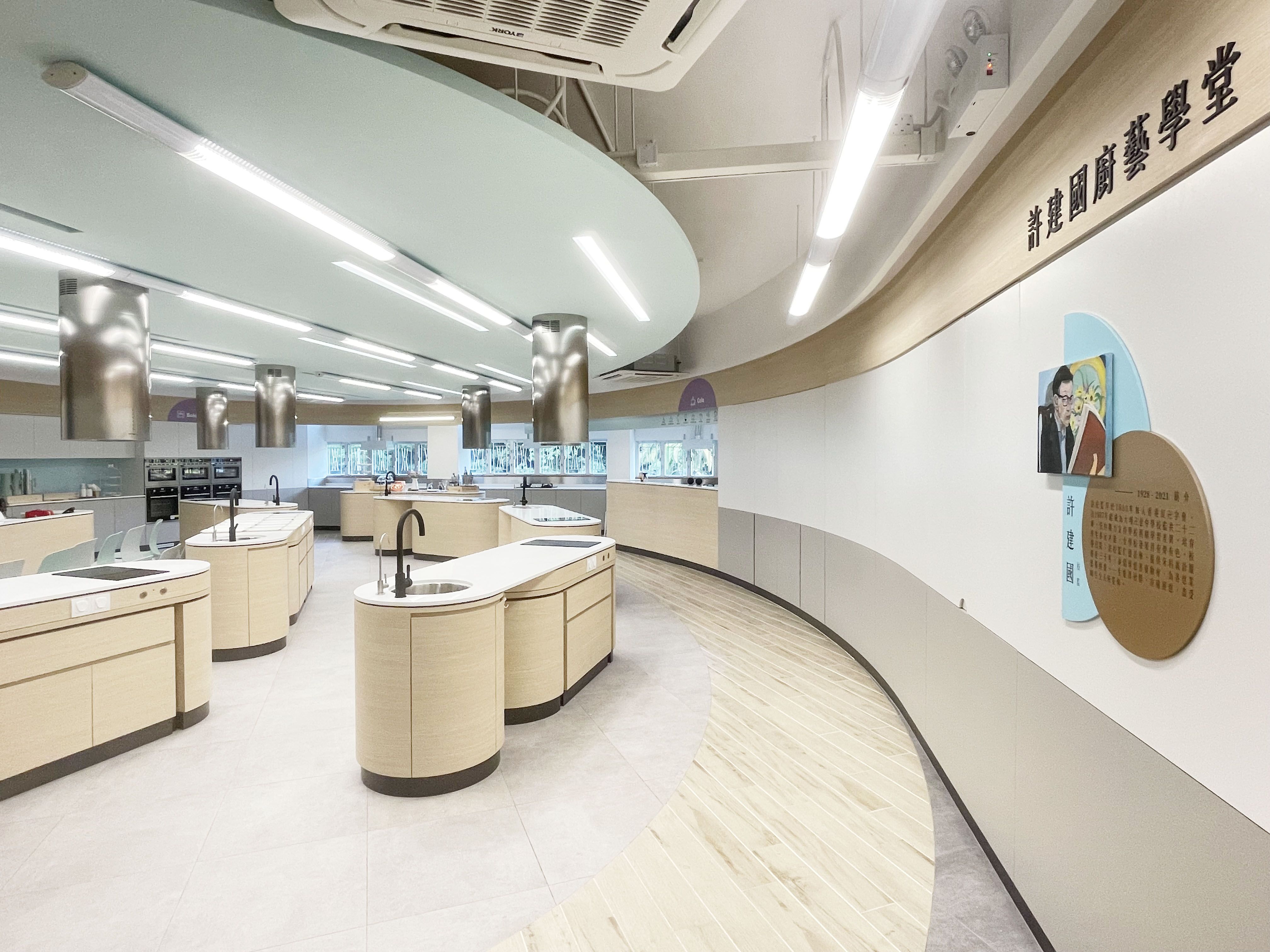
| Approved Charges for Non-standard Items (Annual)($) | : An annual fee of $450 HKD is charged to develop school-based culinary arts curriculum and continuously optimize STEAM and library facilities. | ||
| Other Charges / Fees ($) | : - | ||
 School Facilities
 | Number of Classroom(s) | : | 24 |
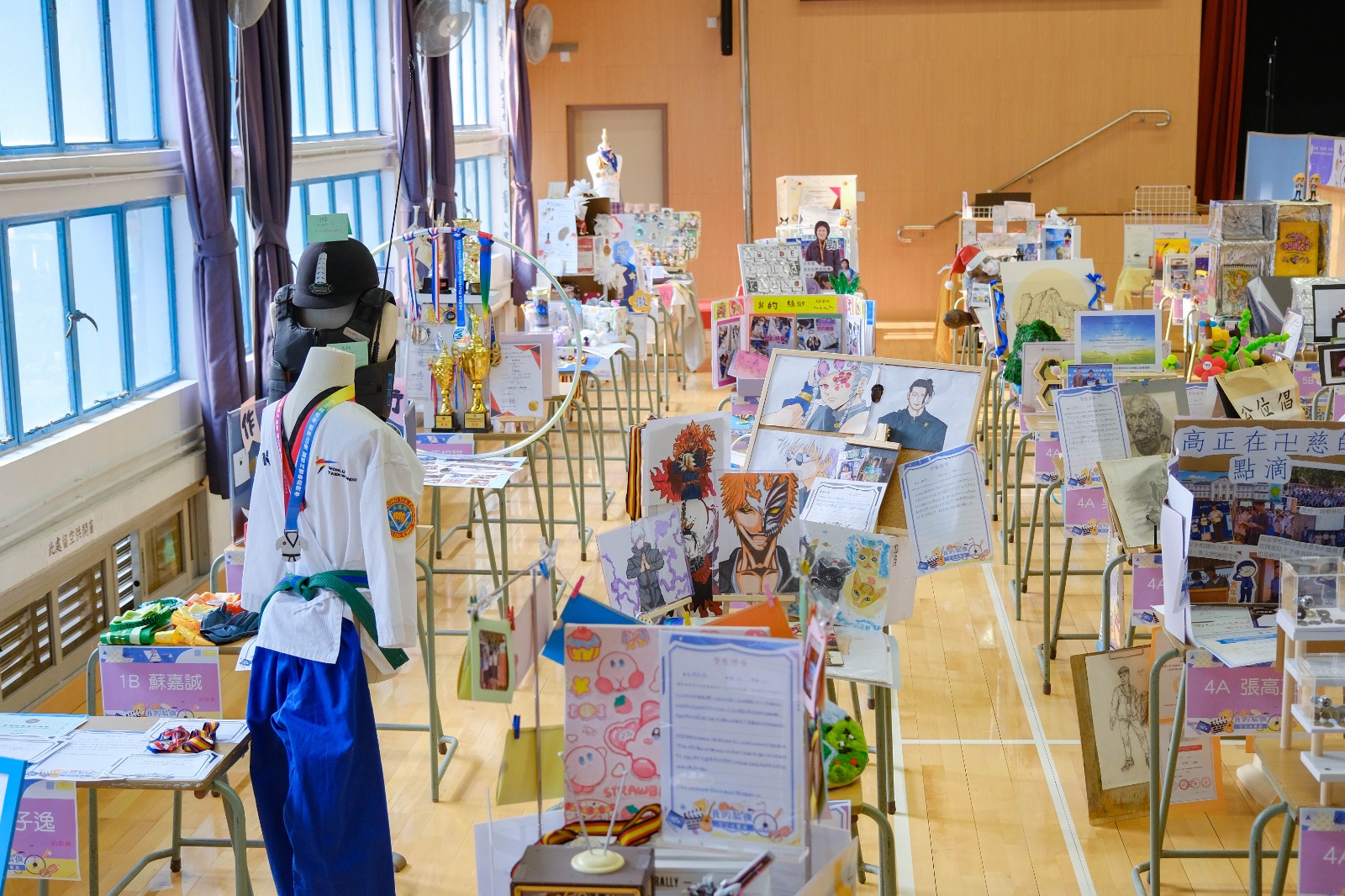
| School Facilities | : | The entire school is equipped with high-speed wireless internet, and more than 300 tablets have been acquired to promote mobile e-learning. Other facilities include: a STEM centre, two multipurpose activity rooms, a student development centre, an MMLC, a computer room, and an accessible library. The school is also fully air-conditioned, and classrooms and the indoor playground are equipped with a central broadcasting system. To cater to the varied needs of students, special rooms for diverse educational activities and a fitness training centre have been set up. All classrooms and special rooms are equipped with computer audio-visual equipment, projectors, and projection screens; classrooms have also been upgraded with interactive electronic whiteboards. Additionally, there is an air-conditioned cafeteria, an air-conditioned covered playground, and electronic bulletin boards. |
| Facility(ies) for Supporting Students with Special Educational Needs | : | Ramp, Accessible lift and Accessible toilet. |
 Teaching Staff Information (Including School Head) in the 2025/2026 School Year
 | Number of Teaching Posts in the Approved Establishment | : | 58 |
| Total Number of Teachers in the School | : | 58 |
| Qualifications and Professional Training | : | Percentage of Teaching Staff (%) |
| Had Received Teacher Training | : | 86% |
| Bachelor Degree | : | 100% |
| Master / Doctorate Degree or above | : | 41% |
| Special Education Training | : | 61% |
| Years of Experience | : | Percentage of Teaching Staff (%) |
| 0-4 Years | : | 34% |
| 5-9 Years | : | 27% |
| 10 Years or above | : | 39% |
 2025/2026 Class Structure
 | Number of Classes | ||
| S1 | : | 4 |
| S2 | : | 4 |
| S3 | : | 3 |
| S4 | : | 3 |
| S5 | : | 4 |
| S6 | : | 4 |
 Subjects Offered
 | Subjects Offered in the 2025/2026 School Year | : | S.1 - S.3 |
| Chinese as the Medium of Instruction | : | Chinese Language, Mathematics*, IS*, Chinese History, History* (S.3), Music, Visual Arts, P.E., Home Economics, Putonghua, Geography*, Innovation, Information and Technology Education*, Life and Society (S.3), Citizenship, Economics and Society (S.1, S.2). |
| English as the Medium of Instruction | : | English Language |
| Adopt a Different Medium of Instruction by Class or by Group / School-based Curriculum | : | - |
| Subjects Offered in the 2025/2026 School Year | : | S.4 - S.6 |
| Chinese as the Medium of Instruction | : | Chinese Language, Mathematics, Citizenship and Social Development, Information & Communication Technology, Business-Accounting & Financial Studies, Economics, Tourism and Hospitality Studies, P.E. (HKDSE), Geography, Biology, Visual Arts, History, Chinese History, Physics, Chemistry, Mathematics Extended Part Module 2. |
| English as the Medium of Instruction | : | English Language |
| Adopt a Different Medium of Instruction by Class or by Group / School-based Curriculum | : | - |
| Subjects to be Offered in the 2026/2027 School Year | : | S.1 - S.3 |
| Chinese as the Medium of Instruction | : | Chinese Language, Mathematics*, IS*, Chinese History, Music, Visual Arts, P.E., Home Economics, Putonghua, Geography*, Innovation, Information and Technology Education*, Citizenship, Economics and Society. |
| English as the Medium of Instruction | : | English Language |
| Adopt a Different Medium of Instruction by Class or by Group / School-based Curriculum | : | - |
| Subjects to be Offered in the 2026/2027 School Year | : | S.4 - S.6 |
| Chinese as the Medium of Instruction | : | Chinese Language, Mathematics, Citizenship and Social Development, Information & Communication Technology, Business-Accounting & Financial Studies, Economics, Tourism and Hospitality Studies, P.E. (HKDSE), Geography, Biology, Visual Arts, History, Chinese History, Physics, Chemistry, Mathematics Extended Part Module 2. |
| English as the Medium of Instruction | : | English Language |
| Adopt a Different Medium of Instruction by Class or by Group / School-based Curriculum | : | - |
*Subjects with Extended Learning Activities (ELA) in English
 Secondary One Admission, Orientation Activities & Healthy School Life
 | Secondary One Admission | : | Our school will accept discretionary places. Our school will participate in the Secondary School Places Allocation System through central allocation stage (Applicable for admission to S.1 in September 2026 ).The admission criteria and weighting for S.1 discretionary places are as follows: academic performance 20%, conduct 20%, extracurricular activities 20%, interview performance 20%, and parental support 20%. |
| Orientation Activities and Healthy Life | : | S.1 Orientation Activities: 1. S.1 Parents Day (mid-July) 2. S.1 "Joyful and Vibrant Life at HKRSS" Orientation Camp 3. S.1 "Potential Unleashed" Summer Bridging Programme Healthy Life: Whole-person health concepts are promoted through talks, activities, and voluntary service, specifically designed to meet the physical and mental needs of students. |
 School Characteristics
 | School Management | ||
| (1) School's Major Concerns | : | Catering for individual differences; maximizing each student's potential. |
| (2) School Management Organisation | : | A management culture centred on "empowerment and accountability" has been established; evaluation mechanisms have been developed to achieve the goal of "self-improvement”; "staff appraisal" has been implemented to enhance professional standards; cooperation between academic and administrative teams has been strengthened to cultivate a culture of harmonious collaboration. |
| (3) Incorporated Management Committee / School Management Committee / Management Committee | : | The school has established an Incorporated Management Committee, comprising Managers from the Sponsoring Body, Principal, Teacher Manager, Parent Manager, Alumni Manager and Independent Manager. |
| (4) School Green Policy | : | 1. The school participates in the “Waste Separation and Recycling Scheme in Schools". 2. The concept of “Green Lunch” is implemented to promote environmental conservation. 3. Efforts are made to green the environment. 4. Activities to improve energy efficiency and conserve energy are actively organized. |
| Learning and Teaching Plan | ||
| (1) Whole-school Language Policy | : | Mother tongue instruction is implemented from S.1 to S.6. |
| (2) Learning and Teaching Strategies | : | 1. Teachers regularly engage in peer lesson observation, fostering a collaborative approach to lesson planning. 2. Information technology is leveraged to assist teaching and to develop digital teaching materials. 3. A project-based homework model is introduced, incorporating online research, field visits, group projects, and presentations, making learning more effective and enjoyable. 4. A customized junior secondary curriculum is developed, with some subjects featuring tailored learning materials. 5. Subject such as “Life and Society” and “Citizenship, Economics and Society” are offered from S1 to S3, integrating teaching units to minimize overlap and boost effectiveness while enhancing students' integrated skills. 6. The "Differentiated Instruction" approach is well established, with "diagnostic tests" and "tiered materials/assignments" in place to support students with varying learning abilities and styles. 7. Tiered examination papers are provided to S1 to S5 students with additional needs, which improve students' learning progress and effectiveness. |
| (3) School-based Curriculum | : | 1. Electives: 2X and 3X. In addition, 12 Applied Learning courses (Modes 1 & 2) are offered, catering to students of diverse interests and aspirations. 2. Curriculum highlights: The school customizes its curriculum, materials, pedagogies, and assessments to meet diverse learning needs. Students are grouped by ability and given differentiated curriculums that tailor teaching objectives and content depth. Regular assessments of student performance enable personalized material selection, ensuring full engagement and success in their strengths. |
| (4) Major Renewed Emphases in the School Curriculum | : | The Moral, Civic, and National Education Team at our school is committed to nurturing students to uphold positive values and develop good attitudes and behaviors. A school-based values education curriculum is implemented during form teacher periods, enabling students to deepen their understanding and practice of positive values in everyday contexts. At the same time, the school provides a wide range of whole-person learning experiences, including assemblies, seminars, workshops, field trips, themed activities, and community exhibitions. By drawing extensively on external resources, we comprehensively promote moral education, life education, national education, education for sustainable development, health education, sex education, and mental health literacy education. Through these initiatives, we aim to help students embody positive values across the cognitive, affective, and behavioral domains, while further strengthening their sense of national identity, affection for the country, and recognition of their role as global citizens. |
| (5) Life Planning Education | : | The school is committed to providing a holistic life planning education. The goal is to help students explore their interests and unlock their potential, preparing them effectively for the future. Over the course of their six-year journey in secondary school, our students participate in a variety of activities, including lectures, workshops, and sessions led by class teachers, all carefully designed to spark early interest in life planning. For senior students, we offer practical experiences such as workplace visits and excursions to Vocational and Professional Education and Training (VPET) colleges. These outings not only allow students to experience various professional environments but also prompt them to explore tertiary education opportunities. During these visits, students witness the day-to-day work of professionals across different industries and learn about the diverse higher education courses available. Moreover, through job shadowing and experience programs, students gain deeper insights into the specific careers, with some even having the opportunity to directly shadow industry experts closely. The school also provides personalized life planning counselling, delivered one-on-one or in small groups by dedicated educators and social workers, who offer advice tailored to each student's interests and aptitude, enabling them to thoughtfully consider their future paths from an early age. |
| Student Support | ||
| (1) Whole School Approach to Catering for Learner Diversity | : | 1. Our school has added a Classroom Learning Assistant (CLA) to S.1 and S.2 class and established a resource corner to assist students with learning needs, thereby enhancing their learning efficiency. 2. Personal Education Profiles (IEPro) are created for students with Special Educational Needs (SEN). 3. Diagnostic assessments in Chinese, English, and Mathematics are conducted. 4. Suspected SEN cases are referred to the Education Bureau for formal assessment. 5. Resource classes are set up for Chinese, English, and Mathematics for S.1 and S.2 students, with teachers developing Individual Education Plans (IEP) for the students. 6. Differentiated Instruction (DI) strategies are implemented. 7. Gifted students are recommended for membership at the Hong Kong Academy for Gifted Education. 8. These initiatives aim to improve teachers' understanding of diverse student needs and enable differentiated teaching, while fostering a caring and inclusive learning culture that helps students of all abilities and orientations engage actively in classroom learning. |
| (2) Whole School Approach to Integrated Education | : | The school has implemented a "whole school approach" model to systematically support students with diverse learning needs, enabling collaborative support among teachers. In S1 and S2, resource classes provide pull-out teaching with individualized curricula and tailored assessments to meet short-term and long-term learning goals. To assess students' progress, Individual Education Plan (IEP) meetings are regularly held. From S.1 to S.2, classroom learning assistants collaborate with teachers to support students with learning needs. The curriculum is structured in a tiered approach, categorizing materials as "basic", "advanced", and "challenging" to suit various learning levels. Correspondingly, exams feature both "general" and "adapted" papers to accommodate different learning levels. To enhance support, the school optimizes internal resources and integrates external services like speech therapy and social training activities, boosting student confidence. Additionally, significant focus is placed on teacher training in special education to foster professional growth. |
| (3) Education Support for Non-Chinese Speaking (NCS) Students | : | Our school provides additional support for NCS students to facilitate their learning of Chinese: providing after-school support programmes in learning Chinese; appointing additional teacher(s)/teaching assistant(s) to support NCS students’ learning of Chinese; arranging intensive Chinese learning and teaching mode(s), e.g. pull-out learning if necessary, split-class/group learning, etc.; developing school-based Chinese Language curriculum and/or adapting learning and teaching materials; and organising activities to create an inclusive learning environment in the school. |
| (4) Measures to Provide Adaptation for Learning and Assessment | : | Three assessments are conducted annually, supplemented by continuous assessments to provide a thorough evaluation of students’ abilities in various dimensions. Adapted examination papers are provided from S.1 to S.5 to accommodate the diverse needs of students. |
| Home-School Co-operation and School Ethos | ||
| (1) Home-School Co-operation | : | Parent-Teacher Association (PTA) has been established to promote collaboration between home and school through regular activities and meetings. |
| (2) School Ethos | : | Our school fosters a disciplined culture characterized by strong teacher-student relationships. We implement a Personal Growth Education program to support student development, which includes: 1. Discipline and Self-Regulation: Partnership with external professional organizations is established to conduct activities such as S1 Orientation Camp, S1-S3 Uniform Group Camp, and S4 Growth Camp, enhancing students' self-esteem and self-discipline. 2. Arts Education: Programs in visual arts, music, drama, and dance are actively promoted, fostering students' appreciation for the arts. 3. Character Education: A school-based values education curriculum has been developed for class teachers, systematically assisting students in cultivating good character. 4. Behavioural Guidance: Various counselling activities are utilized to help students develop positive attitudes, values, and an appreciation for life. 5. Community Service: A volunteer service program has been established that embodies the ethos, “To enlighten oneself and to help the needy.” 6. Leadership Training: Leadership training courses are conducted for student leaders, with further development of leadership skills through the Student Council. |
| Future Development | ||
| (1) School Development Plan | : | 1. The school aims to promote self-directed learning to enhance the learning effectiveness of students. 2. Career planning will be optimized to enhance students' applied skills and professional qualities. 3. The school plans to expand the culture of care to cultivate character traits of compassion and empathy among students. |
| (2) Teacher Professional Training and Development | : | The school is committed to building a professional teaching team to support the diverse learning needs of students. Through various effective professional development activities, such as school visits, participation in seminars and workshops, collaborative lesson planning, and in-depth analysis of student cases, the school has successfully established a culture of intense self-reflection and the pursuit of excellence. Teachers are also encouraged to share their insights with peers from other schools. |
| Life-wide Learning (Including Five Essential Learning Experiences to be Provided through Key Learning Areas, Extra-curricular Activities, Co-curricular Activities, etc.) | : | Our school emphasizes students’ all-round development. Based on students’ abilities and interests, we offer a wide range of life-wide learning opportunities in different formats and scales. 1. We hold an annual Thematic Learning Day. From S.1 to S.5, each grade explores a designated theme that spans multiple subjects, with learning activities both inside and outside the classroom. This promotes cross-curricular collaboration and develops students’ generic skills. 2. We run a yearly “One Class, One Service” programme. All students from S.1 to S.5 take part in various types of volunteer work, such as visiting the elderly. In recent years, we have also established an Elder Academy to provide intergenerational service-learning experiences. 3. Our extracurricular activities are rich and diverse. Each term we offer over 20 interest classes in different areas, including long-distance running, darts, handicrafts, sand painting, creative drama, and handcrafted beverages, allowing junior secondary students to choose according to their abilities and interests. To cultivate self-discipline, leadership, and team spirit, all junior secondary students are required to join a uniformed group (The Boys’ Brigade, Scouts, Girl Guides, or Red Cross Youth). 4. For S.4 and S.5, we provide Other Learning Experiences (OLE) lessons with distinctive arts courses, such as 3D sculpture, creative crafts, Chinese tea culture, and film appreciation. In recent years, we have also co-organized specialized programmes with external organizations – for example, the Silver Age Guardians course on elder care knowledge and hands-on experience – to align with Hong Kong’s societal needs. 5. To nurture a sense of national identity and a global outlook, we organize exchange and study tours to Mainland and overseas each year on various themes. Examples include a study trip to our sister school in Nanjing and an English immersion study tour in Singapore. |
| Others | : | Our school collaborates with external organizations to offer Applied Learning subjects (Mode 2), which include Creative Learning, Media and Communication, Services, and more. |
| Direct Public Transportation to School | : | Buses: 71A, 71B, 71K, 72K, 72X, 271, A47X. |
| Remarks | : | - |
 School Map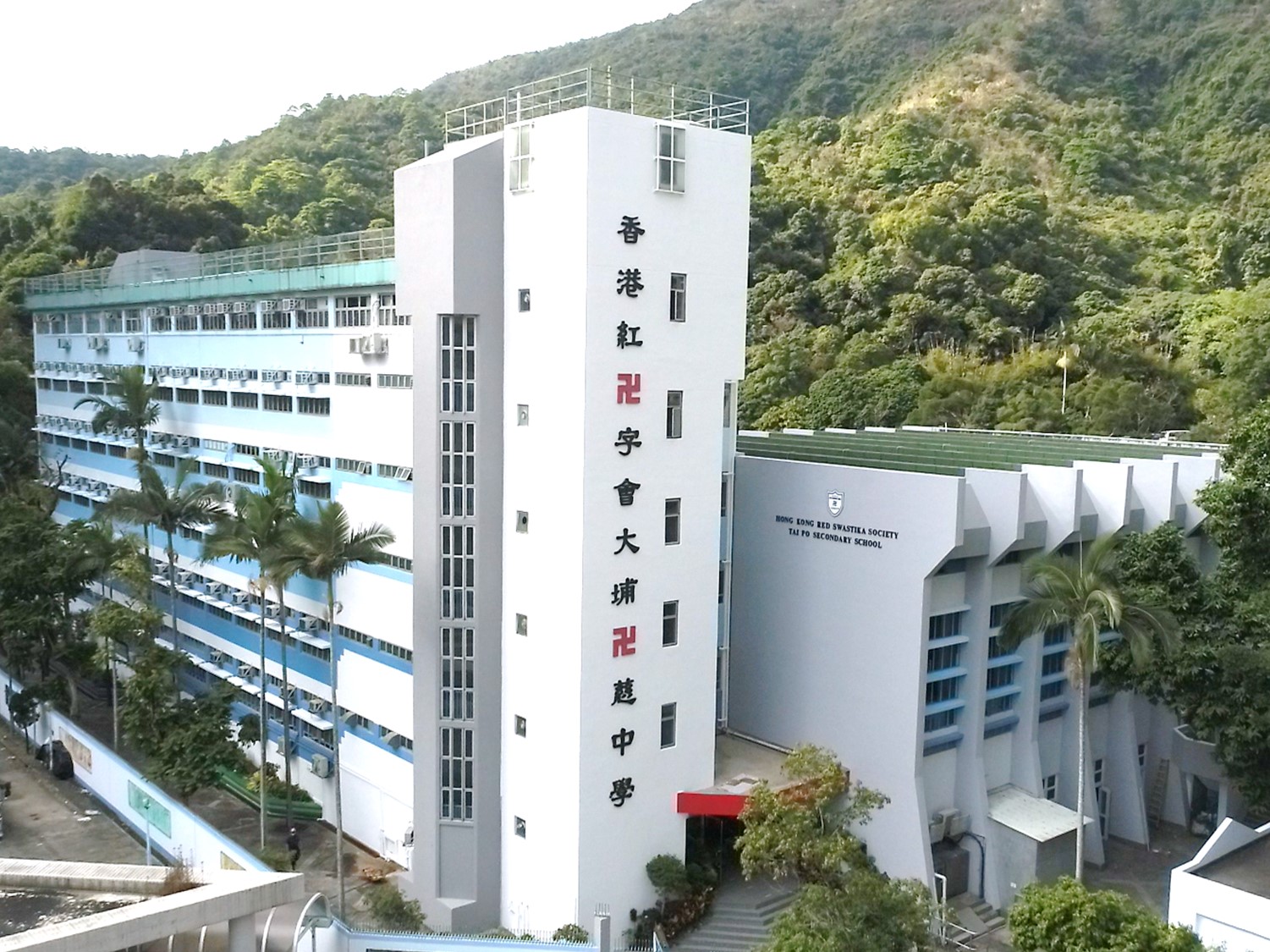
Last revision date: 5/12/2025


