 Secondary School Profiles 2025/2026


 Secondary School Profiles 2025/2026

| Address: | 7 Wu Fai Street, Wu King Estate, Tuen Mun | |||
| Phone: | 24676672 | Email: | school@blcwc.edu.hk | |
| Fax: | 24552060 | Website: | http://www.blcwc.edu.hk | |
School Mission
Upholding Buddhist principles, our school is committed to providing holistic education with emphases on virtues and cognitive development for students in a caring and supportive environment. We seek to awaken conscience and nurture civic-mindedness as well as a positive attitude towards life by inculcating moral values in students through Buddhist teachings.
 School Information
 | District | : | Tuen Mun |
| Other District(s) | : | Islands |
| Supervisor / Chairman of School Management Committee | : | Ven. Shi Hong Ming |
| Principal (with Qualifications / Experiences) | : | Ms Wong Sau Yi (M.A., B.A., Dip. Ed.) |
| School Type | : | Aided |
| Student Gender | : | Co-ed |
| Area Occupied by the School | : | About 3716 Sq. M |
| Name of Sponsoring Body | : | Heung Hoi Ching Kok Lin Association (HHCKLA) |
| Incorporated Management Committee | : | Established |
| Percentage of School Supervisor and Managers / Chairperson and Members of School Management Committee (SMC) of Government Schools Fulfilling the Training Targets | : | 88% |
| Religion | : | Buddhism |
| Year of Commencement of Operation | : | 1987 |
| School Motto | : | Awaken conscience, inculcate morality, nurture decent deeds and appearance |
| Parent-Teacher Association | : | Yes |
| Student Union / Association | : | Yes |
| Past Students’ Association / School Alumni Association | : | Yes |
| 4Rs Mental Health Charter | : | Yes |
| Whole School Health Programme | : | Advanced School |
 Chargeable Fees (2025/2026)
| School Fee ($) | Tong Fai ($) | ||
| S1 | - | - | |
| S2 | - | - | |
| S3 | - | - | |
| S4 | - | $290 | |
| S5 | - | $290 | |
| S6 | - | $290 | |
| Parent-Teacher Association Fee (Annual) ($) | : $40 | ||
| Student Union / Association Fee ($) | : $20 | ||
| Approved Charges for Non-standard Items (Annual)($) | : $300 | ||
| Other Charges / Fees ($) | : - | ||
 School Facilities
 | Number of Classroom(s) | : | 27 |
| School Facilities | : | All classrooms, special rooms, the School Hall and the covered playground are equipped with air-conditioning and multi-media facilities. In terms of learning facilities, there are a Creative Learning Center, a Meditation Room, an English Activity Room, a Chinese Culture Hall, a Campus TV Station, a "Chill Zone," a Home Economics Room, an Art Room and a Music Room. For activities, there is a Multi-purpose Student Activity Center and a STEAM Laboratory. The school has installed mobile networks to facilitate electronic learning with tablets. |
| Facility(ies) for Supporting Students with Special Educational Needs | : | Ramp and Accessible toilet. |
 Teaching Staff Information (Including School Head) in the 2025/2026 School Year
 | Number of Teaching Posts in the Approved Establishment | : | 57 |
| Total Number of Teachers in the School | : | 61 |
| Qualifications and Professional Training | : | Percentage of Teaching Staff (%) |
| Had Received Teacher Training | : | 87% |
| Bachelor Degree | : | 100% |
| Master / Doctorate Degree or above | : | 39% |
| Special Education Training | : | 36% |
| Years of Experience | : | Percentage of Teaching Staff (%) |
| 0-4 Years | : | 29% |
| 5-9 Years | : | 10% |
| 10 Years or above | : | 61% |
 2025/2026 Class Structure
 | Number of Classes | ||
| S1 | : | 4 |
| S2 | : | 4 |
| S3 | : | 4 |
| S4 | : | 4 |
| S5 | : | 4 |
| S6 | : | 4 |
 Subjects Offered
 | Subjects Offered in the 2025/2026 School Year | : | S.1 - S.3 |
| Chinese as the Medium of Instruction | : | Chinese Language, Chinese History, Mathematics*, Science*, Geography*, History, Citizenship, Economics and Society (S.1-S.2), Life and Society (S.3), Music, Physical Education, Putonghua, Buddhist Studies, Visual Arts, Computer Literacy, Home Economics (S.1-S.2), Design & Technology (Innovative Technology) (S.1-S.2). |
| English as the Medium of Instruction | : | English Language |
| Adopt a Different Medium of Instruction by Class or by Group / School-based Curriculum | : | - |
| Subjects Offered in the 2025/2026 School Year | : | S.4 - S.6 |
| Chinese as the Medium of Instruction | : | Chinese Language, Citizenship and Social Development, Tourism and Hospitality, Economics, Chinese History, Visual Arts, Buddhist Studies, Physics, Physical Education, Aesthetic Activities, Ethics and Religious Studies, Business, Accounting and Financial Studies, Information and Communication Technology, Health Management and Social Care, Applied Learning. |
| English as the Medium of Instruction | : | English Language, Chemistry, Biology |
| Adopt a Different Medium of Instruction by Class or by Group / School-based Curriculum | : | Mathematics (by class), Mathematics Extended Module (by class), Geography (by group) (English as the medium of instruction). |
| Subjects to be Offered in the 2026/2027 School Year | : | S.1 - S.3 |
| Chinese as the Medium of Instruction | : | Chinese Language, Chinese History, Mathematics*, Science*, Geography*, History, Citizenship, Economics and Society, Music, Physical Education, Putonghua, Buddhist Studies, Visual Arts, Computer Literacy, Home Economics (S.1-S.2), Design & Technology (Innovative Technology) (S.1-S.2). |
| English as the Medium of Instruction | : | English Language |
| Adopt a Different Medium of Instruction by Class or by Group / School-based Curriculum | : | - |
| Subjects to be Offered in the 2026/2027 School Year | : | S.4 - S.6 |
| Chinese as the Medium of Instruction | : | Chinese Language, Citizenship and Social Development, Tourism and Hospitality, Economics, Chinese History, Visual Arts, Buddhist Studies, Physics, Physical Education, Aesthetic Activities, Ethics and Religious Studies, Business, Accounting and Financial Studies, Information and Communication Technology, Health Management and Social Care, Applied Learning. |
| English as the Medium of Instruction | : | English Language, Chemistry, Biology |
| Adopt a Different Medium of Instruction by Class or by Group / School-based Curriculum | : | Mathematics (by class), Mathematics Extended Module (by class), Geography (by group) (English as the medium of instruction). |
*Subjects with Extended Learning Activities (ELA) in English
 Secondary One Admission, Orientation Activities & Healthy School Life
 | Secondary One Admission | : | Our school will accept discretionary places. Our school will participate in the Secondary School Places Allocation System through central allocation stage (Applicable for admission to S.1 in September 2026 ).Secondary One (S.1) Discretionary Places Admission Criteria and Weightings: 1. EDB's rank order list and Primary 5 and 6 academic results (50%); 2. Conduct, extra-curricular activities, services, awards and comments from primary schools (30%); 3. Interview (20%). |
| Orientation Activities and Healthy Life | : | S.1 Orientation Activities: S.1 Induction program, seminar for S.1 parents, S.1 Orientation Day and S.1 Education Camp; 1. Through a diversity of activities like S.1 Education Camp, S.4 Education Camp, Leadership Scheme and volunteer activities, positive values and attitudes are nurtured to serve the community; 2. The 'Health Education Team' is established to formulate policies and implement measures to encourage students to incorporate health messages into their daily lives. 3. Organise a "Mental Health Week" featuring various positive activities designed to foster healthy living, enhance physical fitness and stress resilience, and promote overall well-being. 4. Launch the "Sports Tuesday Program," which includes regular morning exercises, morning runs, and lunchtime sports activities to help develop physical fitness. |
 School Characteristics
 | School Management | ||
| (1) School's Major Concerns | : | 1. To strengthen reflection on learning and enhance the sense of achievement in learning. 2. To enhance physical and mental well-being and foster a harmonious and caring campus. |
| (2) School Management Organisation | : | Under the auspices of the Incorporated Management Committee, our school implements school-based management with the vision of catering for learner diversity. Our ultimate goal is to nurture students with versatility and flexibility to explore their full potential and serve the community. The Administrative Council formulates policies; the Learning and Teaching Committee oversees academic and curriculum matters whilst Moral and Student Affairs Committee is responsible for students' whole-person development and fostering a caring school environment. The self-evaluation culture is firmly established through both internal and external school reviews to enhance the effectiveness of learning and teaching. |
| (3) Incorporated Management Committee / School Management Committee / Management Committee | : | The Incorporated Management Committee, composed of the school sponsoring body, principal, teachers, parents, alumni and independent individuals, is geared towards enhancing transparency and accountability via advising the school on daily practices. It is actively involved in encouraging inter-school academic and teaching exchange, mock examination and overseas trips in addition to devising long-term development strategies. |
| (4) School Green Policy | : | Upholding the principle of sustainability, the school adopts e-administration process in order to reduce paper consumption and proactively nurtures students to be green citizens with eco-friendly policies in a green school environment. |
| Learning and Teaching Plan | ||
| (1) Whole-school Language Policy | : | Mainly adopt Chinese as the medium of instruction from S.1 to S.3 while teaching in English is partially introduced in Mathematics, Science, and Geography by modules in school-based curriculum as well as extended learning activities. In S.4 to S.6, some subjects are taught in English. |
| (2) Learning and Teaching Strategies | : | 1. Strengthen learning skills and enhance self-directed and peer learning. 2. Make good use of classroom observations and evaluations to promote collaborative learning and improve teaching effectiveness. 3. Collaborate with the education bureau and universities to develop professional development and exchange programs, optimising curriculum planning and implementation. 4. Promote holistic learning, encouraging students to step out of the classroom and broaden their horizons. 5. Facilitate interdisciplinary project-based learning to enhance the integration of knowledge and promote applied learning within the school. 6. Implement a personal device program to encourage students to use electronic technology to enhance learning effectiveness. 7. Use group instruction in junior secondary language and mathematics classes to address diverse learning needs better. 8. Enhance students' higher-order thinking through diversified assignment designs. 9. Establish a multi-faceted grading analysis system to deepen students' reflective learning abilities using personalized data. 10. Utilize artificial intelligence technology to improve teaching effectiveness and students' ability to use information technology. |
| (3) School-based Curriculum | : | 1. Electives: 3X. Music, Physical Education, Japanese, Korean and Applied Learning are on offer. 2. Curriculum highlights: a. Collaborate with the education bureau and universities to develop various school-based curricula for junior secondary education, tailoring instruction to individual needs. b. Offer over 12 elective subjects in senior secondary, along with options for applied learning and additional language courses, providing diverse development opportunities for students. c. Promote interdisciplinary project-based learning to facilitate collaboration across different fields of study and deepen student learning. d. Implement after-school formative assessments in junior secondary to help students establish a systematic review routine. e. Provide a series of school-based programs aimed at university admission and performance enhancement (including the Star Program, Progress Program, Skills Development Groups, and after-school reinforcement courses) to accurately improve students' success rates in public examinations and university admissions. f. Effectively utilize various types of assessments, including assessments for learning, assessments of learning, and assessments as learning, to encourage students to pursue excellence. g. Establish a dedicated team for gifted education focused on developing the learning perspectives and potential of high-achieving students. |
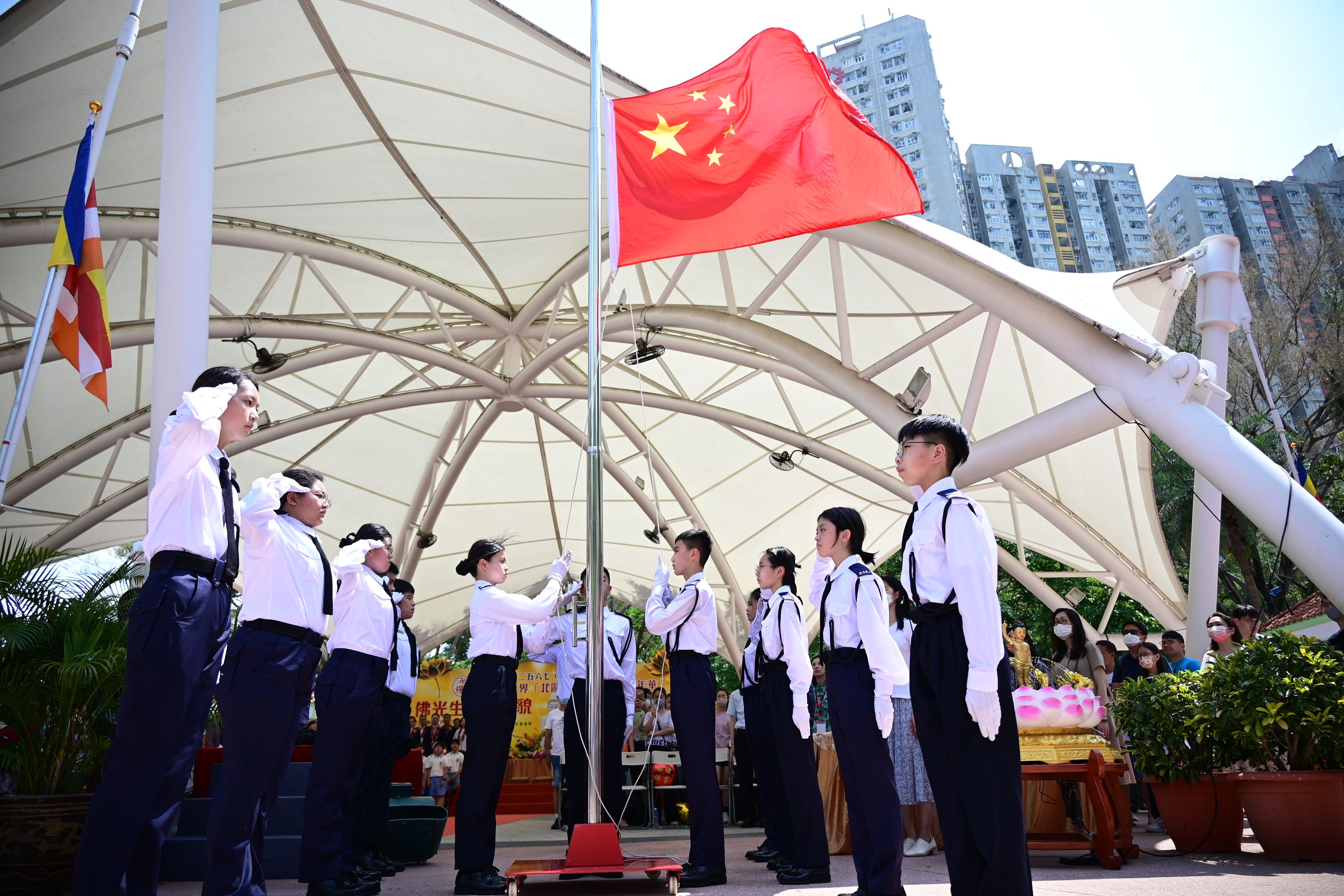
| (4) Major Renewed Emphases in the School Curriculum | : | 1. Values Education: Through assemblies, weekly meetings, exchange activities, flag ceremonies, and integrated curriculum activities, students learn about themselves, their community, country, and the world, fostering national identity and positive values. 2. Cross-Curricular Reading: Morning reading sessions and various reading programs encourage students to engage in reading across subjects. 3. Interdisciplinary Integration: Each grade features project-based learning with different subject combinations to develop interdisciplinary skills. Project study days allow students to apply their knowledge outside the classroom. 4. Self-Directed Learning: A Bring Your Own Device (BYOD) program from first to third year promotes the use of technology for learning. Online learning management systems and assessment platforms help students self-evaluate and develop self-directed learning habits. |
| (5) Life Planning Education | : | 1. Collaboration with non-profit organizations and organize various talks, workshops and visits in order to enrich students' "work-related experiences". 2. Implementation of School-Business Partnership Programme to enhance students' understanding of various fields. 3. Organize Life Planning Day and various workshops to help students set goals and acquire skills such as interview techniques, resume writing, and university admission scoring. 4. Organize Parent Evening to encourage positive involvement in their children's life planning. 5. Diverse vocational education activities such as visits and seminars to enhance students' understanding of vocational education. 6. Systematic Integration of Career Planning Elements in Junior Secondary Education: Allowing students to establish a clear vision for their future paths. 7. Administer career aptitude assessments, professional interest assessments, and adaptability evaluations to enhance students' self-assessment awareness. |
| Student Support | ||
| (1) Whole School Approach to Catering for Learner Diversity | : | 1. Provide after-school homework tutoring programs for students with special learning needs in junior secondary schools to build a stronger knowledge base. 2. Regularly review the homework design to more effectively cater for students’ learning diversity and enhance students’ motivation to complete homework and pursue excellence. 3. Adopt split classes to improve students’ learning effectiveness. 4. Nurture students to become excellent students via the "Leadership Training Program" and participate in different leadership training events; 5. Implement Dual Class Teachers Scheme in junior forms to provide better care for students; 6. The Mentor Scheme aims to guide S.1 students to adapt to school life; 7. Subsidy is provided for students to participate in exchange programmes and study tours. |
| (2) Whole School Approach to Integrated Education | : | 1. SEN Coordinator and Student Support Team to make adjustments in the learning strategies, curriculum and assessment. The Learning Support Grant provides resources to assist in addressing the diverse learning needs of students; 2. Three social workers organize activities to help students realize their potential and enhance social skills; 3. The educational psychologist, speech therapist and experts give professional advice and support to students and their parents. |
| (3) Education Support for Non-Chinese Speaking (NCS) Students | : | Our school provides additional support for NCS students to facilitate their learning of Chinese: organising activities to create an inclusive learning environment in the school. Our School provides additional after-school support for non-Chinese speaking students to facilitate their learning of Chinese. |
| (4) Measures to Provide Adaptation for Learning and Assessment | : | 2 examinations and 2 uniform tests are arranged for students from S.1 to S.4 while mock test (S.6) and 2 mock examinations (S.5 & S.6) are arranged for S.5 and S.6 students. Continuous assessment like classwork, homework, quizzes and projects is adopted in non-academic subjects in S.1-S.3. |
| Home-School Co-operation and School Ethos | ||
| (1) Home-School Co-operation | : | The Parent-Teacher Association facilitates cooperation between parents and the school. Outstanding Students Awards are established to motivate students to strive for academic excellence. School Uniform Recycling Scheme, textbooks recycling, seminar for Parents of S.1 students, Parents' Night, interest groups, outings and seminars are organised. |
| (2) School Ethos | : | The school aspires to create an ideal learning environment for our students. Our balanced approach to discipline and care has enabled students to study in a caring and supportive environment which facilitates their healthy growth. The effort of our school has been widely recognised by parents, students and the community. In general, our students are well-mannered, eager to learn, sociable and well-disciplined. They enjoy school life, love the school and feel proud to be a BLCWC student. |
| Future Development | ||
| (1) School Development Plan | : | 1. Establish a healthy lifestyle and cultivate a positive campus culture. 2. Promote active learning among students to enhance their learning effectiveness. |
| (2) Teacher Professional Training and Development | : | The Staff Development Team has devised programmes to facilitate sharing among teachers and promote educational research. Collaboration with the Education Bureau and universities enhances our professional development. The culture of peer observation, collaborative lesson preparation, coursework evaluation and teaching evaluation has firmly taken root to enhance learning and teaching quality. |
| Life-wide Learning (Including Five Essential Learning Experiences to be Provided through Key Learning Areas, Extra-curricular Activities, Co-curricular Activities, etc.) | : | 1. Life-wide learning for the five essential learning experiences including intellectual development, physical and aesthetic development, value education, community service and career-related experience; 2. Inter-disciplinary learning programmes including project learning day, training, visits, field trips, competitions, camps and study tours; 3. More than 50 clubs and school teams to develop and stretch students’ all-rounded potentials; 4. Junior secondary students are required to participate in at least one extracurricular activity to cultivate twelve essential values and attitudes, while also enhancing nine common competencies. |
| Others | : | 1. In 2025, 23 students were enrolled in bachelor's degree courses through JUPAS; 2. The academic level of our school is widely recognised by linked tertiary institutions and universities in China, Taiwan, the United Kingdom and Australia. Graduates of our school are admitted to their academic programmes based on their internal exam results, allowing our students a wider variety of choices for further studies 3. The school presents a variety of scholarships, such as the Danny HO Memorial Scholarships, the Great Venerable Kok Kwong Memorial Scholarship etc., to recognise outstanding students. |
| Direct Public Transportation to School | : | Bus route: KMB 59A, 59M, 59X, 259D; City Bus 962, 962X, B3 Light Rail: 507, 610, 614, 615 Light Rail feeder bus: 506, A52 Maxicab: 41, 44, 44A |
| Remarks | : | 1. Chinese Language, English Language and Mathematics are streamed into small classes to maximise attention to individuals and achieve better learning outcomes; 2. 4 classes are divided into 5 groups in senior forms; 3. 15 electives, including Physical Education and Music are on offer; 4. A diversified curriculum is provided, Applied Learning programmes are offered. |
 School Map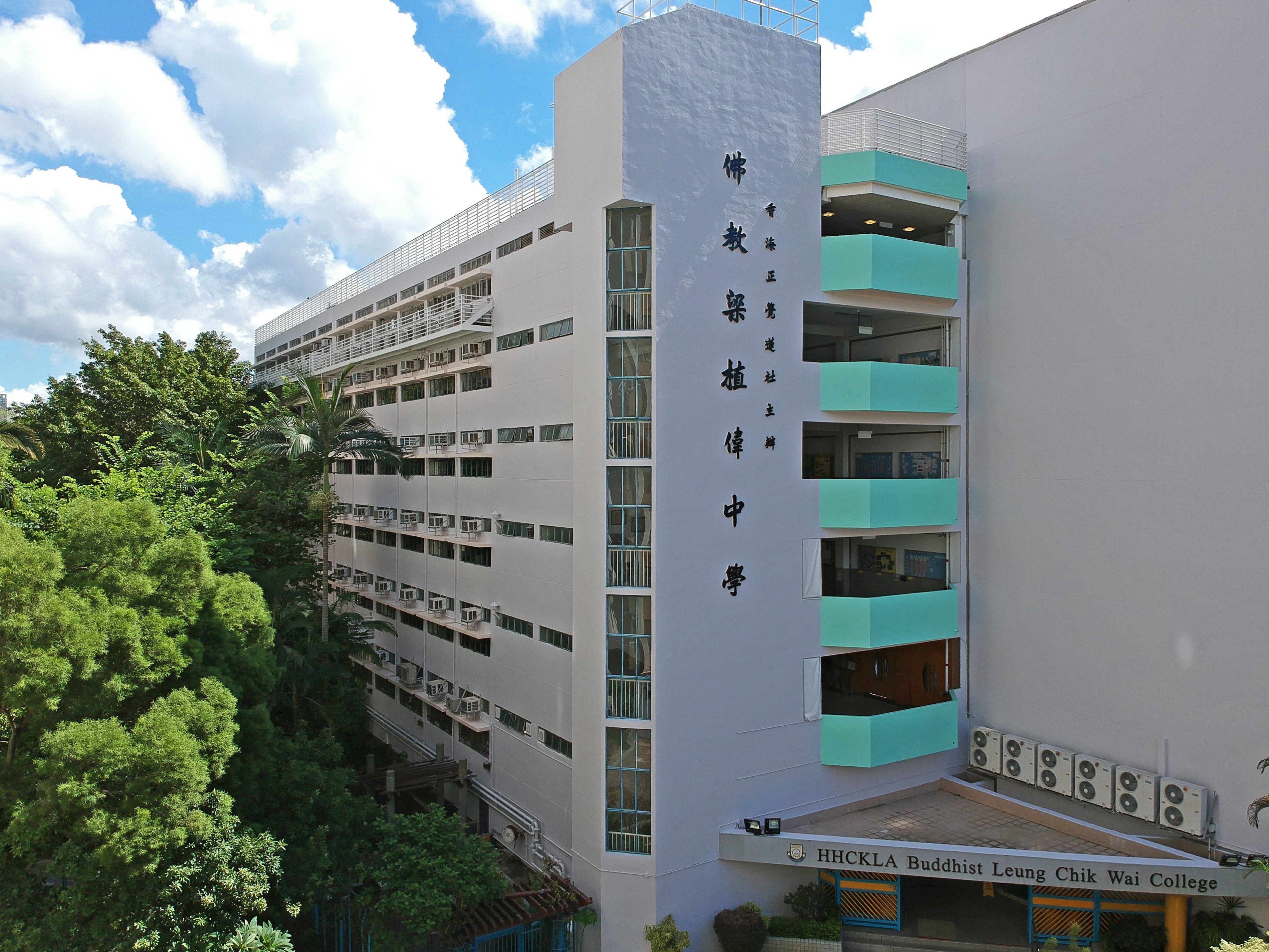

Last revision date: 5/12/2025


