 Secondary School Profiles 2025/2026


 Secondary School Profiles 2025/2026

| Address: | 12, Fai Ming Road, Fanling | |||
| Phone: | 26709229 | Email: | school@caswcmc.edu.hk | |
| Fax: | 26763870 | Website: | https://www.caswcmc.edu.hk | |
School Mission
In the spirit of Christianity, our school aims to foster whole-person development through education. We believe that every student is uniquely created by God. Therefore, we strive to nurture students’ self-esteem and help them to realize their potential and talents. We are committed to facilitating students’ spiritual, moral, intellectual, physical, social and aesthetic development.
 School Information
 | District | : | North |
| Other District(s) | : | |
| Supervisor / Chairman of School Management Committee | : | Prof. Kwan Kin Ming |
| Principal (with Qualifications / Experiences) | : | Mr. Kwong Wing Sun Vincent (B.S.Sc., Dip.Ed., Dip.Bs.,M.Ed.) |
| School Type | : | Aided |
| Student Gender | : | Co-ed |
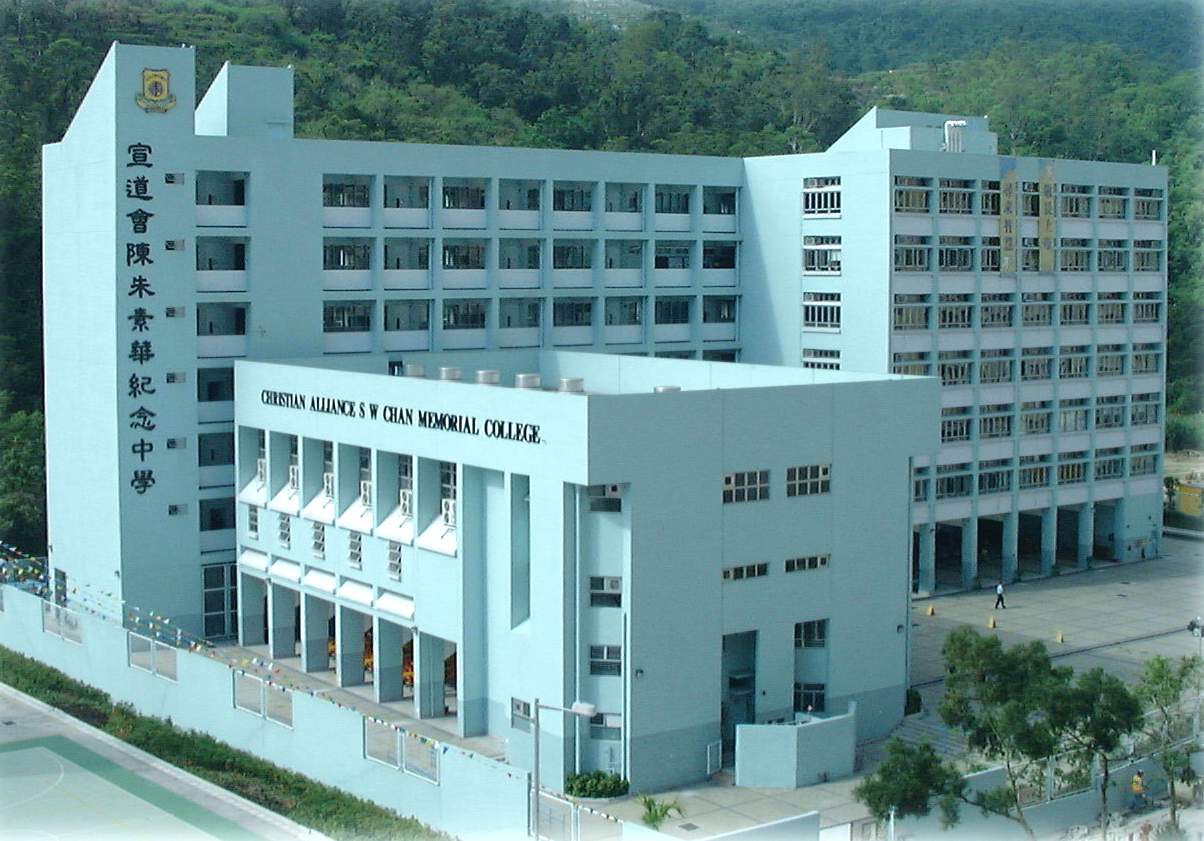
| Area Occupied by the School | : | About 8900 Sq. M |
| Name of Sponsoring Body | : | Kowloon Tong Church of Chinese Christian & Mission Alliance |
| Incorporated Management Committee | : | Established |
| Percentage of School Supervisor and Managers / Chairperson and Members of School Management Committee (SMC) of Government Schools Fulfilling the Training Targets | : | 100% |
| Religion | : | Protestantism / Christianity |
| Year of Commencement of Operation | : | 1998 |
| School Motto | : | The fear of the LORD is the beginning of wisdom, and knowledge of the Holy One is understanding. |
| Parent-Teacher Association | : | Yes |
| Student Union / Association | : | Yes |
| Past Students’ Association / School Alumni Association | : | Yes |
| 4Rs Mental Health Charter | : | Yes |
| Whole School Health Programme | : | Action School |
 Chargeable Fees (2025/2026)
| School Fee ($) | Tong Fai ($) | ||
| S1 | - | - | |
| S2 | - | - | |
| S3 | - | - | |
| S4 | - | $340 | |
| S5 | - | $340 | |
| S6 | - | $340 | |
| Parent-Teacher Association Fee (Annual) ($) | : $20 | ||
| Student Union / Association Fee ($) | : $10 | ||
| Approved Charges for Non-standard Items (Annual)($) | : Quality Campus Development Fund: $400 | ||
| Other Charges / Fees ($) | : - | ||
 School Facilities
 | Number of Classroom(s) | : | 31 |
| School Facilities | : | (1) Smart boards are installed in each classroom to enhance learning and teaching effectiveness. (2) Set up “Biotechnology Learning Centre” to develop further in the field of science. (3) Set up” Scientific Innovative Learning & Teaching Centre” to enhance STEAM development. (4) To provide students a comfortable, quiet and spacious environment to do self-study and revision, the Study Centre has been set up. (5) The tuck shop and the covered playground are also equipped with air-conditioning facilities, so that students will have a comfortable environment in hot weather. (6) We have a fitness room available for trained students to exercise and work out. |
| Facility(ies) for Supporting Students with Special Educational Needs | : | Ramp, Accessible lift, Accessible toilet, braille and tactile floor plan and tactile guide path plan. |
 Teaching Staff Information (Including School Head) in the 2025/2026 School Year
 | Number of Teaching Posts in the Approved Establishment | : | 69 |
| Total Number of Teachers in the School | : | 72 |
| Qualifications and Professional Training | : | Percentage of Teaching Staff (%) |
| Had Received Teacher Training | : | 96% |
| Bachelor Degree | : | 100% |
| Master / Doctorate Degree or above | : | 47% |
| Special Education Training | : | 57% |
| Years of Experience | : | Percentage of Teaching Staff (%) |
| 0-4 Years | : | 22% |
| 5-9 Years | : | 14% |
| 10 Years or above | : | 64% |
 2025/2026 Class Structure
 | Number of Classes | ||
| S1 | : | 5 |
| S2 | : | 5 |
| S3 | : | 5 |
| S4 | : | 5 |
| S5 | : | 5 |
| S6 | : | 5 |
 Subjects Offered
 | Subjects Offered in the 2025/2026 School Year | : | S.1 - S.3 |
| Chinese as the Medium of Instruction | : | Chinese Language, Mathematics (F.1), Citizenship, Economics and Society, Chinese History, History, Geography, Design and Technology (F.1-F.2) STEAM (F.3), Technology and Living, Computer Literacy, Music, Physical Education, Visual Arts, Putonghua (F.1-F.2), Reading lessons (F.1-F.2), Christian Education & Ethics, Other Learning Experiences (F.1-F.2) |
| English as the Medium of Instruction | : | English Language, Integrated Science (F.1-F.3) |
| Adopt a Different Medium of Instruction by Class or by Group / School-based Curriculum | : | Mathematics (F.2-F.3) |
| Subjects Offered in the 2025/2026 School Year | : | S.4 - S.6 |
| Chinese as the Medium of Instruction | : | Chinese Language, Citizenship and Social Development, Chinese History, History, Economics, Geography, Tourism and Hospitality Studies, Biology, Information and Communication Technology, Health Management and Social Care, BAFS, PE (DSE), Applied Learning (Mode 2): 1. Child Care and Development (F.4-F.5), 2. Applied Psychology (F.4-F.5), 3. Applied Japanese and Japanese Culture (F.4-F.5), , Music#, VA#, T&L#, D&T#, Sport Science#, Coding and Creative Media#, Christian Education & Ethics#, PE.#, Financial Management Education#, Science Inquiry# (# non-DSE subjects) |
| English as the Medium of Instruction | : | English Language, Physics, Chemistry, Mathematics Extended Part Module |
| Adopt a Different Medium of Instruction by Class or by Group / School-based Curriculum | : | Mathematics, Biology |
| Subjects to be Offered in the 2026/2027 School Year | : | S.1 - S.3 |
| Chinese as the Medium of Instruction | : | Chinese Language, Mathematics (F.1), Citizenship, Economics and Society, Chinese History, History, Geography, Design and Technology (F.1-F.2) STEAM (F.3), Technology and Living, Computer Literacy, Music, Physical Education, Visual Arts, Putonghua (F.1-F.2), Reading lessons (F.1-F.2), Christian Education & Ethics, Other Learning Experiences (F.1-F.2) |
| English as the Medium of Instruction | : | English Language, Integrated Science (F.1-F.3) |
| Adopt a Different Medium of Instruction by Class or by Group / School-based Curriculum | : | Mathematics (F.2-F.3) |
| Subjects to be Offered in the 2026/2027 School Year | : | S.4 - S.6 |
| Chinese as the Medium of Instruction | : | Chinese Language, Citizenship and Social Development, Chinese History, History, Economics, Geography, Tourism and Hospitality Studies, Biology, Information and Communication Technology, Health Management and Social Care, BAFS, PE (DSE), Applied Learning (Mode 2): 1. Child Care and Development (F.4-F.5), 2. Applied Psychology (F.4-F.5), 3. Applied Japanese and Japanese Culture (F.4-F.5), Music#, VA#, T&L#, D&T#, Sport Science#, Coding and Creative Media#, Christian Education & Ethics#, PE.#, Financial Management Education#, Science Inquiry# (# non-DSE subjects) |
| English as the Medium of Instruction | : | English Language, Physics, Chemistry, Mathematics Extended Part Module 2 |
| Adopt a Different Medium of Instruction by Class or by Group / School-based Curriculum | : | Mathematics, Biology |
 Secondary One Admission, Orientation Activities & Healthy School Life
 | Secondary One Admission | : | Our school will accept discretionary places. Our school will participate in the Secondary School Places Allocation System through central allocation stage (Applicable for admission to S.1 in September 2026 ).All Primary six students who apply to our school will be offered an interview opportunity. Assessment items and weightings mainly include: 1. Academic performance of internal assessment, conduct, performance in extracurricular activities and service (50%); 2. Chinese and English expression ability (25%); 3. Mathematics, creativity, logical thinking, analytical skills (15%); 4. Politeness and attitude(10%). |
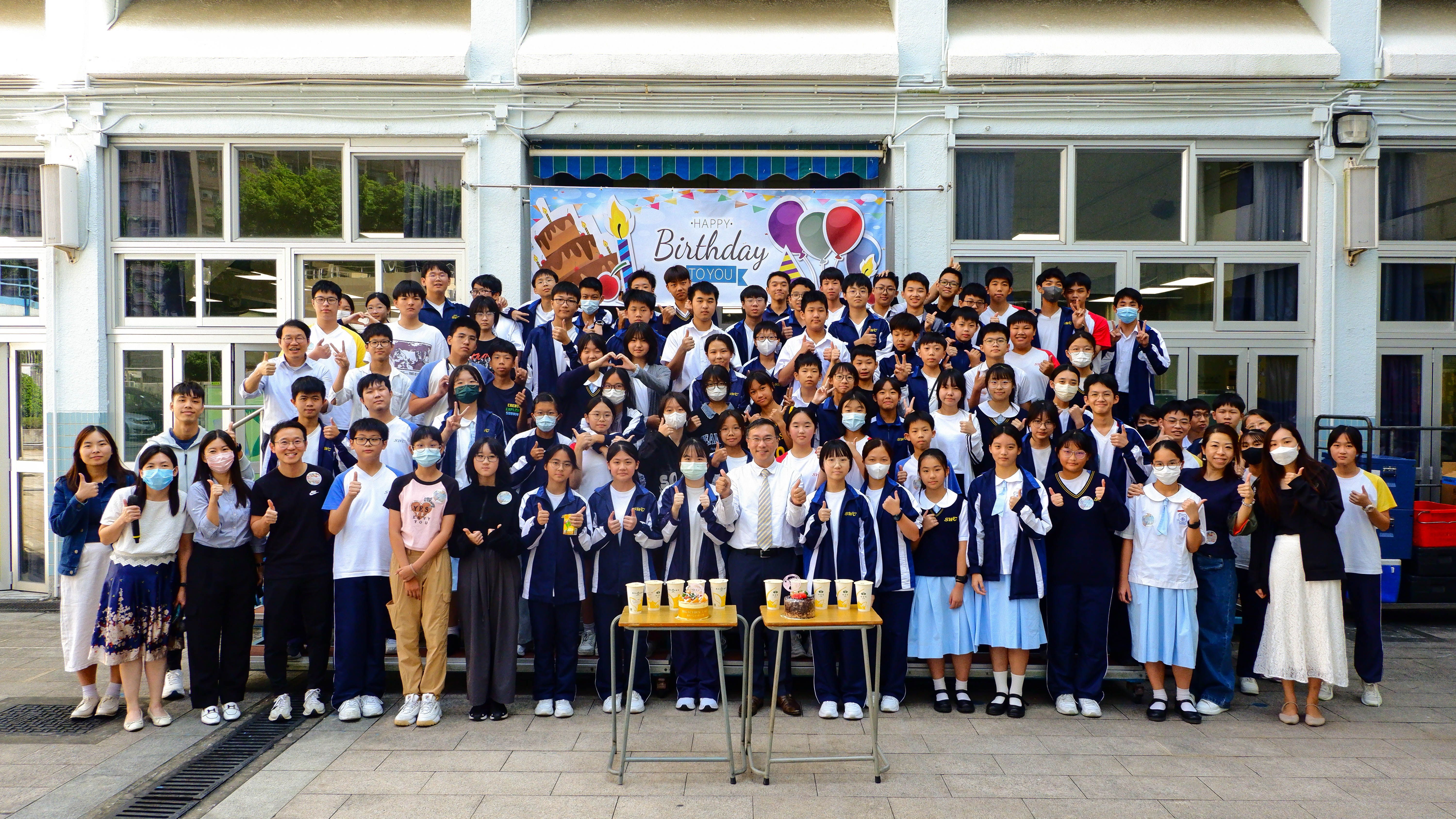
| Orientation Activities and Healthy Life | : | (1) An one-week “English Bridging Course" is organized for Primary 6 students. (2) Our school places emphasis on students' development on the STEAM subjects. A Dr STEAM scholarship is especially awarded to five F.1 students. The awardees will have the opportunity to participate in an overseas science study tour for free. (3) A series of "Secondary One Orientation Guidance Activities" will be held before the school starts. These activities aim at caring for students' whole-person growth, establishing a sense of belonging to the campus, and inheriting the culture of SWC family. (4) Through subjects and “Healthy School Programme”, “Social Care Ambassadors” , diversified activities cultivate students' healthy lifestyle habits and raise their awareness from the aspects of spirit, body and diet, etc. (5) Implement a pilot program for 'Birthday Privileges' and 'Dynamic Fridays' in the 2024-2025 academic year to foster a positive and healthy campus culture. |
 School Characteristics
 | School Management | ||
| (1) School's Major Concerns | : | (1) Positive: Promoting students to develop positive thinking and values. (2) Healthy: Promoting students to adopt a healthy lifestyle. |
| (2) School Management Organisation | : | School-based management is practised under the supervision of the principal, 2 vice-principals, 2 assistant principals and the School Administration Committee. The committee, formed by senior teachers, coordinates and oversees school matters in various committees and working groups. |
| (3) Incorporated Management Committee / School Management Committee / Management Committee | : | Incorporated Management Committee has been established. Its members include representatives from the sponsoring body, parents, alumni and teachers. |
| (4) School Green Policy | : | Elements of environmental protection have been incorporated into the curriculum of Science and Geography via extra-curricular activities in junior forms and various environmental studies through project learning. The school also has an eco-friendly kitchen on site for distributing student lunch. |
| Learning and Teaching Plan | ||
| (1) Whole-school Language Policy | : | (1) The medium of instruction in junior levels is mainly Cantonese whereas Science and Mathematics (Some classes)are taught in English. (2) English Day will be implemented once a week to create an English-learning environment. Also, English activities and overseas study tours will be organized. (3) Specialized teaching in language subjects. (4) Two native English teachers have been recruited to increase the opportunities for students to communicate in English through activities both inside and outside the classroom, in order to arouse their interest in learning English. |
| (2) Learning and Teaching Strategies | : | (1) With the support of the e-learning resource bank, a creative and specialized school-based curriculum has been developed. (2) In order to strengthen the learning ability of students as "autonomous learners" and cater for learners’ diversity, an "autonomous learning" teaching model is adopted in each subject. (3) Through a variety of project learning tasks, students are expected to develop the nine generic skills. (4) Lesson studies will be conducted in subjects in order to recognize the difficulties in students’ learning and enhance teaching effectiveness. |
| (3) School-based Curriculum | : | 1. Electives: 3X. Students can choose from 17 elective subjects in the senior curriculum. 2. Curriculum highlights: Senior curriculum: (1) In order to allow students to learn extensively, three of the five classes in the senior forms take three elective subjects, and the other two classes take two elective subjects and one Applied Learning subject; (2) Students of one of the classes take three STEAM-related elective subjects to enhance the synergetic effect among the subjects. School-based Curriculum: (1) The school-based Chinese Language Curriculum and Reading Period, experimentation and inquiry-based Science curriculum, and school-based STEAM curriculum. (2) School-based Physical and Aesthetic Education curriculum is introduced in senior forms including Coding and Creative Media, Visual Arts, Music, Sports Science, Science Inquiry and Financial Management Education, to foster students’ whole person development and explore life planning. |
| (4) Major Renewed Emphases in the School Curriculum | : | (1) In order to promote the reading atmosphere in our school, we have established Morning Reading Sessions, Secondary One and Two Chinese Reading, Chinese Extensive Reading Scheme and English Self-access Learning Scheme. (2) A great variety of reading activities are jointly held by the school library and different subjects. (3) In view of developing IT in Education, teachers and students are encouraged to make good use of online platforms. Students are also trained to use online self-learning platforms and application programmes via tablet PCs since junior forms. Smart boards have been installed in all classrooms. (4) Four teaching days are arranged as Life-Wide Learning Days every academic year and students of different forms take turns to carry out project learning. (5) A variety of moral education programs are carried out to encourage students to live by virtues. Life education is promoted through Christian Education, which are conducted in small groups. (6) Values education: making good use of the platform of ‘Speech under the National Flag’ for the weekly flag-raising ceremony, the principal and teachers share to enhance students' understanding of the Chinese national morality and development, so as to cultivate students' national identity. In addition, through the subjects of Life and Society in junior forms, and Citizenship and Social Development in senior forms, the constitution and the basic law education is promoted, and students' values of law-abiding is cultivated. |
| (5) Life Planning Education | : | (1) Our school has devoted to enhance students’ abilities of practising their life and career planning and goal setting via excursions. (2) Through activities such as Life-Planning Week, visiting local and cross-border institutes, joining summer school programmes organized by different institutes, students are guided to understand their personal potential, explore their interests and set goals. (3) We have allocated our school resources flexibly to recruit one Life Planning Counsellor, who enables students to make prudent education and career decisions through individual and group counselling. (4) The team of Life Planning Student Counsellors visit universities during information days and interview students from different courses and departments so as to gather updated course information for students at school. (5) Every year, we invite alumni to share their experiences of the workplace at the 'The Human Library' event. |
| Student Support | ||
| (1) Whole School Approach to Catering for Learner Diversity | : | (1) To help elite students strive for excellence and develop their potentials to the fullest, gifted students of different subjects are recommended to join elite programmes, experiential courses at university and inter-school competitions. (2) Learning support measures and policies to cater for different learning needs (including lesson studies and lesson observations) are coordinated by the school. (3) Revision classes and homework counselling programmes which encourage students’ reflective skills and facilitate strength development are organized. (4) During the period of real-time online lessons, teachers make phone calls to students and their parents regularly to understand students' learning progress and their daily routines so as to provide professional assistance. |
| (2) Whole School Approach to Integrated Education | : | (1) A professional team comprising of the "Special Education Needs Coordinator", "Special Education Needs Support Teachers", Educational Psychologists, Clinical Psychologists and Speech Therapists has been formed to implement the "whole school participation" model of integrated education. Student Support Allowance have been allocated and resources are used to take care of students by providing assessment, referral, counselling and training services. The team maintains close communication with parents of students with special educational needs and provide appropriate support measures for students with special educational needs. (2) After-school support programmes including executive skills and social skill classes, literacy enhancement classes are organized based on students’ diverse needs. (3) Speech therapists are hired to provide regular training of speech and communication skills to students and collaborate with teachers and parents. (4) Learning Support Committee collaborate with Discipline and Counselling Committee and Life Planning and Career Guidance Committee to organise counselling activities for students. |
| (4) Measures to Provide Adaptation for Learning and Assessment | : | (1) Providing different accommodations and support such as extended time and screen reading based on assessment needs. (2) Revision classes and homework counselling programmes are set up to help students to solve homework problems and establish good habits. |
| Home-School Co-operation and School Ethos | ||
| (1) Home-School Co-operation | : | (1) For the purpose of enhancing communication between parents and our school, a Parents’ Day and Parents’ Nights are held every year. To assist F.1 freshmen in adaptation, additional parent counseling days and seminars are held for them; (2) Different themed seminars are organized based on the needs of parents at different levels, such as introduction to secondary school subjects, F.3 subject selection, and various pathways after public examinations; (3) The Parent-Teacher Association regularly organizes diverse and positive parent education activities, such as support groups, parent-child picnics, parent workshops, and parenting courses, according to The Education Bureau "Curriculum Framework on Parent Education (Secondary School)"; and has a parent volunteer team to serve the school and the community. (4) In addition to the report cards, student performance reports which outline students learning and discipline performances are regularly distributed in order to promote home-school communication. |
| (2) School Ethos | : | (1) Our school places emphasis on both discipline and love. While practising strict rules, we also promote a caring atmosphere. (2) We advocate a whole-person education based on biblical truths. We aim at educating our students to develop a positive attitude towards life. (3) Through positive discipline and counseling, students’ growth groups and the ‘two class teachers’ policy, our teachers are able to develop an effective support network for our students. |
| Future Development | ||
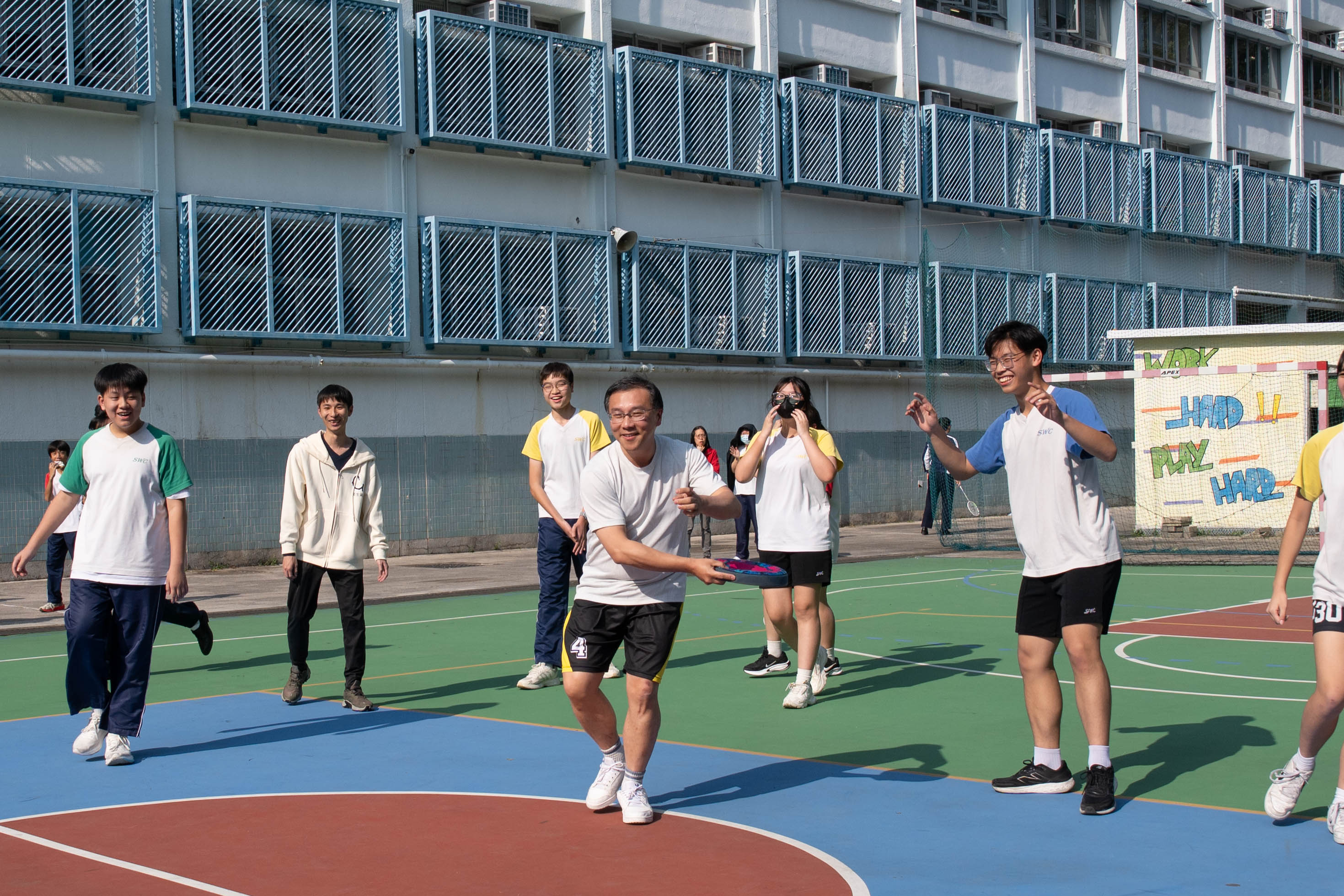
| (1) School Development Plan | : | (1) Positive Development: Promote students to establish positive thinking and values, including implementing positive education courses to help students recognize their character strengths and create a positive campus atmosphere; equip teachers with an understanding of positive teaching concepts and enhance parents' training in positive education and school-home collaboration; through grade-based class management activities, cultivate the qualities of "PRAISE" in students. (2) Health: Encourage students to establish a healthy lifestyle, including participating in the "4R Mental Health Charter," implementing the "Friday Run" program to create a relaxed, healthy, and caring campus atmosphere; promote a fitness reward program to cultivate students' habits of exercising; review and optimize academic policies, implement progressive assessments, and reduce academic pressure. |
| (2) Teacher Professional Training and Development | : | (1) To equip teachers with the knowledge of the latest educational development and get them involved in the school development, all teachers are invited to attend seminars and workshops on the three staff development days. (2) In addition, our teachers have collaborative lesson-planning sessions. There is also a lesson observation week, teaching demonstrations and new teacher mentoring scheme to enhance teachers’ effectiveness. (3) Collaborate with professional organizations to equip teachers with knowledge and practices of strengths, fostering a positive campus atmosphere. |
| Life-wide Learning (Including Five Essential Learning Experiences to be Provided through Key Learning Areas, Extra-curricular Activities, Co-curricular Activities, etc.) | : | (1) There are more than 40 extra-curricular activities ranging over six areas: Subject-based Clubs, Interest Groups, Physical and Aesthetic Activities, Community and School Services, Performing Art and Religious Activities. (2) The classes of ‘Other Learning Experiences’ tailor-made for all F.1 and F.2 students provide a variety of physical and aesthetic activities. (3) In order to facilitate whole-person development, apart from Physical Education, a host of school-based physical and aesthetic elective subjects (Music, Sports Science, Visual Art, Design and Technology, Technology and Living, Coding and Multimedia, Science Inquiry and Financial Management) are offered in senior forms. (4) Student Retreat Day allows students to reshape their growth direction, feel the support, and strengthen the motivation of life by reflecting on solitude and talking with their class teacher. (5) A student union, four clubs and ten service teams have been set up. (6) Our school has designed an innovative leadership training programme. Students are required to develop their full potential and strive for excellence through programmes like workshops, internship programme and leadership training camp. (7) The school encourages students to participate in a variety of community services. "Elder Academy" is set up by the cooperation with YWCA to provide our students the opportunities to serve the elderly in our neighbourhood. (8) The Moral and Civic Education Committee has organised a wide range of activities. |
| Others | : | (1) In the past three consecutive years, the passing and standard rates for the HKDSE in Chinese, English, Mathematics, and Citizenship have averaged over 90%. The average passing rate for more than 10 elective subjects exceeds the citywide level, with Geography, Chinese History, Business, BAFS, History, and Biology having average passing rates closer to 100%. Two recent Form 6 graduates have been admitted to the University of Hong Kong and the Hong Kong University of Science and Technology through the School Nominations Direct Admission Scheme (SNDAS). (2) One of our F.3 students won the runner-up in the "North District Outstanding Student Election 2024-2025" (junior division). (3) Our school was chosen as the Information Technology Enrichment Program partner schools (there are only eight schools in Hong Kong). Funded with six million dollars by the Government, we will carry out projects and IT enrichment courses throughout the eight-year period, from 2015 to 2022. Students’ interests, potentials and abilities in using IT can be developed. Teachers in the field of technology education also won the Curriculum Leadership Success Experience Award. (4) Our school STEAM Team has made prominent achievements in different competitions such as the China Adolescents Science and Technology Innovation Contest, the Hong Kong ICT Award and the Hong Kong Youth Science and Technology Innovation Competition. Our school is the first school which has been awarded the title of "Quality STEM School" for three consecutive years in Hong Kong. (5) We have good performance in sports and arts. Basketball Team won the championship in the “Tai Po & North District Inter- School Basketball Competition (senior division), and representing Tai Po & North District to attend “All Hong Kong Schools Jing Ying Tournament”. Handbell Team won the gold award(Intermediate) and silver award (Junior) in “Hong Kong International Handbell Olympics 2023”. (6) The school library is committed to organizing diversified reading activities and has won numerous high-quality library recognition awards. The librarian is often invited by different schools to share reading strategies and experiences. |
| Direct Public Transportation to School | : | Bus: 70K, 70X, 73A, 270A, 273, 273A, 277X, 278X, 279X; Minibus: 501A. |
| Remarks | : | All Secondary One places are allocated through Discretionary Places and Central Allocation of the Secondary School Places Allocation System. Resources are mobilized for the New Senior Secondary curriculum so as to enhance flexibility in curriculum combination. A total of 17 electives are provided and students are allowed to choose their own elective subjects according to their abilities and talents. |
 School Map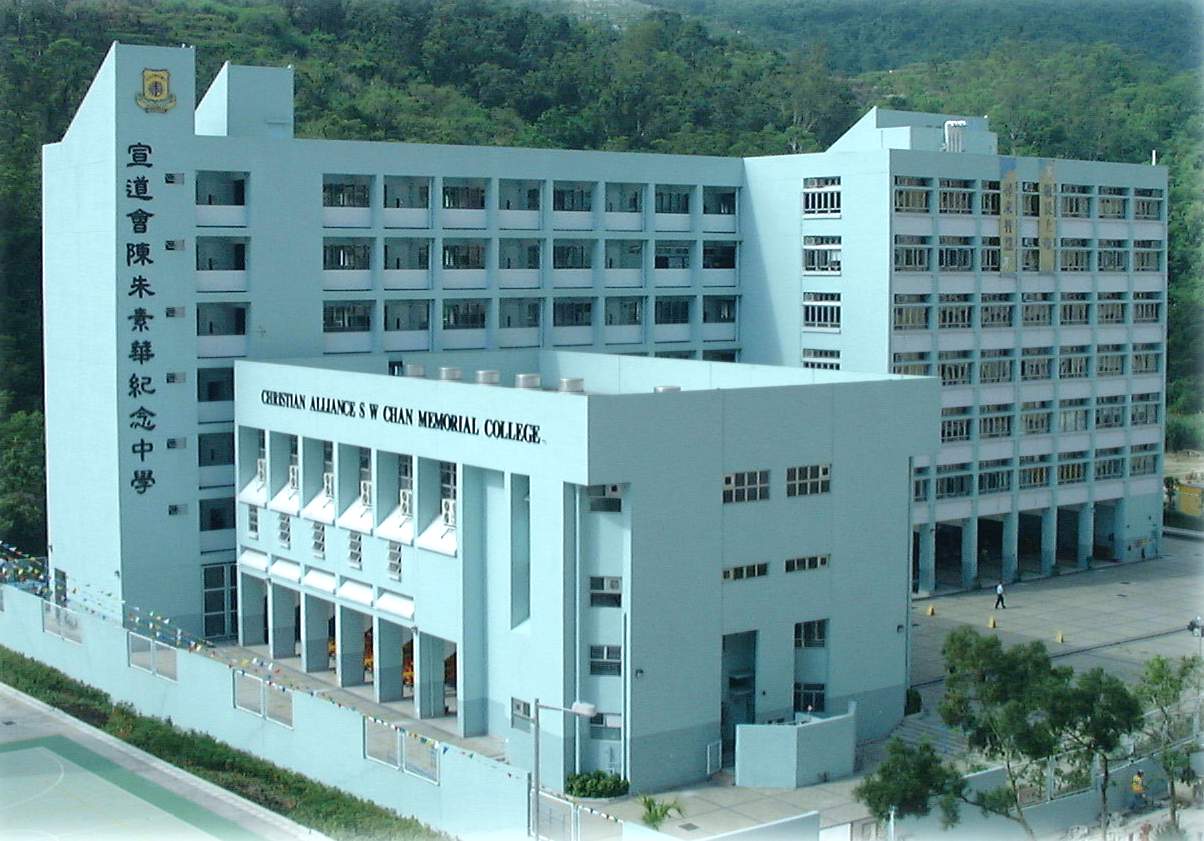
Last revision date: 9/12/2025


