 Secondary School Profiles 2025/2026


 Secondary School Profiles 2025/2026


| Address: | 50 Gascoigne Road, Kowloon | |||
| Phone: | 23843543 | Email: | admin@mckln.edu.hk | |
| Fax: | 23889466 | Website: | http://www.mckln.edu.hk | |
School Mission
To develop whole-person education based on Christian principles; and to nurture wholesome life through the preaching of the Gospel. We are here to nurture Modest, Caring and Knowledgeable Leaders of the New era.
 School Information
 | District | : | Yau Tsim Mong |
| Other District(s) | : | Sham Shui Po, Kowloon City |
| Supervisor / Chairman of School Management Committee | : | Mr. Leung Chi Shun |
| Principal (with Qualifications / Experiences) | : | Dr. Yick Doi Pei |
| School Type | : | Aided |
| Student Gender | : | Co-ed |
| Area Occupied by the School | : | About 5200 Sq. M |
| Name of Sponsoring Body | : | Methodist Church HK |
| Incorporated Management Committee | : | Established |
| Percentage of School Supervisor and Managers / Chairperson and Members of School Management Committee (SMC) of Government Schools Fulfilling the Training Targets | : | Not Applicable |
| Religion | : | Protestantism / Christianity |
| Year of Commencement of Operation | : | 1958 |
| School Motto | : | Crede Ut Intellegas |
| Parent-Teacher Association | : | Yes |
| Student Union / Association | : | Yes |
| Past Students’ Association / School Alumni Association | : | Yes |
| 4Rs Mental Health Charter | : | Yes |
| Whole School Health Programme | : | Action School |
 Chargeable Fees (2025/2026)
| School Fee ($) | Tong Fai ($) | ||
| S1 | - | $120 | |
| S2 | - | $120 | |
| S3 | - | $120 | |
| S4 | - | $370 | |
| S5 | - | $370 | |
| S6 | - | $370 | |
| Parent-Teacher Association Fee (Annual) ($) | : $50 | ||
| Student Union / Association Fee ($) | : $45 | ||
| Approved Charges for Non-standard Items (Annual)($) | : Enhancement of Teaching & Learning Facilities: $450 per annum | ||
| Other Charges / Fees ($) | : - | ||
 School Facilities
 | Number of Classroom(s) | : | 35 |
| School Facilities | : | The school comprises a Main Building, a North Wing, a South Wing and an East Wing with 24 classrooms, 5 small group teaching rooms, 3 Science Laboratories, a Computer Room, a Multimedia Learning Centre, a Lecture Room, a Library, a Senior Learning Commons, a Visual Arts Room, a Music Room, a Home Economics Room, a STEM Lab, an English Fun Room, a Campus TV Studio, a Campus TV Editing Room, a Student Activity Centre, a Student Union Room, an Open Playground, a Covered Playground, a Canteen and a Hall. The whole school, except the Open and Covered Playgrounds, is equipped with split air-conditioning. All rooms for teaching purposes are equipped with a computer, a touch screen monitor, a dual-projector system, an Apple TV, a visualizer and an infra-red wireless microphone and amplifying system. Also, all laboratories and F.1-4 classrooms are equipped with interactive smart boards. |
| Facility(ies) for Supporting Students with Special Educational Needs | : | Accessible toilet. |
 Teaching Staff Information (Including School Head) in the 2025/2026 School Year
 | Number of Teaching Posts in the Approved Establishment | : | 53 |
| Total Number of Teachers in the School | : | 56 |
| Qualifications and Professional Training | : | Percentage of Teaching Staff (%) |
| Had Received Teacher Training | : | 95% |
| Bachelor Degree | : | 100% |
| Master / Doctorate Degree or above | : | 54% |
| Special Education Training | : | 56% |
| Years of Experience | : | Percentage of Teaching Staff (%) |
| 0-4 Years | : | 18% |
| 5-9 Years | : | 25% |
| 10 Years or above | : | 57% |
 2025/2026 Class Structure
 | Number of Classes | ||
| S1 | : | 4 |
| S2 | : | 4 |
| S3 | : | 4 |
| S4 | : | 4 |
| S5 | : | 4 |
| S6 | : | 4 |
 Subjects Offered
 | Subjects Offered in the 2025/2026 School Year | : | S.1 - S.3 |
| Chinese as the Medium of Instruction | : | Chinese Language, Chinese History, Religious Education, Putonghua, Citizenship, Economics and Society / Life and Society |
| English as the Medium of Instruction | : | F.1-F.3: English Language F.1-F.2: Science F.3: Science (Physics, Chemistry, Biology), Mathematics, History, Geography |
| Adopt a Different Medium of Instruction by Class or by Group / School-based Curriculum | : | F.1 & F.2: Mathematics*, History*, Geography* F.1-F.3: Computer Literacy*, STEM, Visual Arts, Physical Education, Home Economics, Music |
| Subjects Offered in the 2025/2026 School Year | : | S.4 - S.6 |
| Chinese as the Medium of Instruction | : | Chinese Language, Citizenship and Social Development, Chinese History, Chinese Literature(F5&6 only), Ethics & Religious Studies, Visual Arts(F5&6 only) |
| English as the Medium of Instruction | : | English Language, Mathematics (and M1, M2), Biology, Physics, Chemistry, History, Geography, Economics, Business, Accounting and Financial Studies, Information & Communication Technology |
| Adopt a Different Medium of Instruction by Class or by Group / School-based Curriculum | : | - |
| Subjects to be Offered in the 2026/2027 School Year | : | S.1 - S.3 |
| Chinese as the Medium of Instruction | : | Chinese Language, Chinese History, Religious Education, Putonghua, Economics and Society/ , Life and Society/ Citizenship |
| English as the Medium of Instruction | : | F.1-F.3: English Language F.1-F.2: Science F.3: Science (Physics, Chemistry, Biology), Mathematics, History, Geography |
| Adopt a Different Medium of Instruction by Class or by Group / School-based Curriculum | : | F.1-F.2: Mathematics*, History*, Geography*, F.1-F.3: Computer Literacy*, STEM, Visual Arts, Physical Education, Home Economics, Music |
| Subjects to be Offered in the 2026/2027 School Year | : | S.4 - S.6 |
| Chinese as the Medium of Instruction | : | Chinese Language, Citizenship and Social Development, Chinese History, Chinese Literature, Ethics & Religious Studies, Visual Arts |
| English as the Medium of Instruction | : | English Language, Mathematics (and M1, M2), Biology, Physics, Chemistry, History, Geography, Economics, Business, Accounting and Financial Studies, Information & Communication Technology |
| Adopt a Different Medium of Instruction by Class or by Group / School-based Curriculum | : | - |
*Subjects with Extended Learning Activities (ELA) in English
 Secondary One Admission, Orientation Activities & Healthy School Life
 | Secondary One Admission | : | Our school will accept discretionary places. Our school will participate in the Secondary School Places Allocation System through central allocation stage (Applicable for admission to S.1 in September 2026 ).The admission criteria and weightings for S.1 are as follows: 1. Ranking in the rank order list provided by EDB (40%); 2. Interview performance (30%); 3. Non-academic performance (20%); 4. Subscription to the College's Mission (10%). |
| Orientation Activities and Healthy Life | : | To help new Form 1 students adapt to using English as the medium of instruction in their future studies, we provide a series of summer English programs. These include an English Workshop taught by our English teachers, an online English learning program, and a Mathematics preparatory course during the Summer Holidays. Additionally, there are Orientation Day, Induction Days, English and Mathematics Bridging Courses, Big Brothers and Big Sisters Scheme (year-round), and Form 1 Student Development Program (year-round). |
 School Characteristics
 | School Management | ||
| (1) School's Major Concerns | : | School direction: To nurture Modest, Caring and Knowledgeable Leaders of the New Era. |
| (2) School Management Organisation | : | In setting policies, the school values the input and team work of all teachers. All administrative functions are grouped under three divisions, and taken up by all teachers according to their specific expertise and aspirations. To strengthen the pastoral care of students, 2 class teachers are assigned to each class. Class teachers of the same level form a team, led by a form coordinator, to oversee the cognitive and social development of students, as well as to establish appropriate growth plans. |
| (3) Incorporated Management Committee / School Management Committee / Management Committee | : | The Incorporated Management Committee comprises representatives from the Methodist Church, teachers, parents, alumni and independent managers. Various sub-committees are formed to oversee and support different areas of work of the College. |
| (4) School Green Policy | : | E-notices are used to replace printed notices. Recycle bins are provided for paper, plastic and metal. |
| Learning and Teaching Plan | ||
| (1) Whole-school Language Policy | : | In the majority of classes, English is the medium of instruction for most of the subjects. We have a strong tradition of using English in most school functions. To enhance students' English, a wide range of activities, like Reading Buddies, Debating Competition, and Lunch Time English Cafe, are held throughout the year. Putonghua is also emphasized. |
| (2) Learning and Teaching Strategies | : | 1. An academic-oriented curriculum: Our emphasis is on building a solid foundation in both languages, Mathematics, social sciences, sciences and practical subjects. Other generic skills are also developed through the extended curriculum; 2. Language across curriculum: A school-based Language-Across-Curriculum course has been developed, together with rich reading materials and subject-based strategies, to strengthen students' ability to learn other subjects in English; 3. Development of thinking skills: The use of graphic organizers in learning is emphasized in all subjects. Interactive learning and development of high-order thinking skills are emphasized in classroom teaching; 4. Assessment for learning: Every subject makes use of assessment data and students' feedback to raise the effectiveness of learning and teaching; 5. Development of self-directed learning skills: Self-directed learning is enhanced through requiring students to do pre-lesson preparation and complete online learning tasks; 6. Reflection in learning: Students are guided to set learning goals and to do regular reflection for improvement; 7. Reading Programme: 2 periods per cycle in F.1 and 1 period in F.2 and F.3 are allocated as Reading Period(s) and there is a reading award scheme for the junior forms. Content area reading in different subjects is promoted in order to widen and consolidate students' subject knowledge and language skills; 8. Bring-Your-Own-Device Programme: Fully Implemented in F.1-6. E-learning strategies are employed to enhance interactive learning and students’ engagement both in and outside the classroom. |
| (3) School-based Curriculum | : | 1. Electives: In senior forms, 12 elective subjects are offered, alongside the Mathematics Extended Parts Modules 1 & 2. All students are eligible for taking 2 to 3 elective subjects. 2. Curriculum highlights: School-based curriculums are developed extensively in junior forms, covering Language-Across-Curriculum, Chinese Language, English Language, cross-subject Project Learning, etc. |
| (4) Major Renewed Emphases in the School Curriculum | : | Curriculum plans are drawn up to cultivate students’ generic skills and to enhance self-directed learning through the use of information technology, project learning and reading in various key learning areas. Our College emphasizes nurturing students with positive values and attitudes. Life education is carried out through various activities as well as incorporated into the curriculum planning and classroom teaching. |
| (5) Life Planning Education | : | Careers and Life Planning (CLP) is emphasized. School-based CLP curriculum is designed across all forms. Each form covers tailor-made lessons and activities for the sake of fitting the needs of each level and the school development. A wide range of topics, from knowing oneself to knowing the world of work, as well as knowing the spectrum of pathways leading to different careers, is included. There are also practical sessions on personal grooming, such as how to dress and conduct oneself in a job interview. In addition, the CLP committee not only provides individual counseling to students and parents, but also organizes the "MCareers Programme". In exploring the workplace, we enable students to equip themselves earlier to meet different challenges. |
| Student Support | ||
| (1) Whole School Approach to Catering for Learner Diversity | : | In some levels and subjects, students are streamed according to their academic abilities. Remedial classes for English and Mathematics are provided after school. Top and gifted students are selected into the Talent Pool where they get special training to further develop their talents in various aspects. In classroom teaching, student-centered approaches are used to raise learning motivation and effectiveness. E-learning is extensively adopted as a means to cater for different learning needs. |
| (2) Whole School Approach to Integrated Education | : | All teachers cater to students' special educational needs with the support of the SEN coordinator, the SEN support teachers, the school-based speech therapist, school social workers and the education psychologist. A variety of group activities and individual counseling sessions are organized for SEN students: speech therapy, occupational therapy, mental health workshops, art therapy, a latte art volunteer team, career planning, executive function training, dubbing training, social groups, animal-assisted therapy and remedial classes. The school provides a Summary of Support to SEN students’ parents. In 2025-26, the school will participate in EDB “AIM Project for ASD” - NGO and School Collaboration: Small group training on social adaptive skills and Strength-based Programmes to cater to students' special educational needs. |
| (3) Education Support for Non-Chinese Speaking (NCS) Students | : | Our school provides additional support for NCS students to facilitate their learning of Chinese: appointing additional teacher(s)/teaching assistant(s) to support NCS students’ learning of Chinese; arranging intensive Chinese learning and teaching mode(s), e.g. pull-out learning if necessary, split-class/group learning, etc.; and organising activities to create an inclusive learning environment in the school. Additional and appropriate Chinese Language and Chinese History learning materials; after school support in learning Chinese in tutorials; pull-out learning during Chinese language lessons; home-school cooperation through parent’s consultation sessions. |
| (4) Measures to Provide Adaptation for Learning and Assessment | : | There are 2 exams in a year accounting for 70% of the year total. The rest 30% of the year total is for continuous assessment such as course work, quizzes, tests, project work, etc. In order to develop a regular revision habit in lower forms, regular quizzes will be arranged for F.1 to F.3. There are about 2-3 quizzes for each subject in each term. Offer special assessment arrangements for students with special educational needs. |
| Home-School Co-operation and School Ethos | ||
| (1) Home-School Co-operation | : | Our Parent-Teacher Association serves as a vital bridge between home and school, organizing parent volunteers for examination supervision, meal quality monitoring, and other school operations. Through a variety of parent-child activities and parenting workshops, we foster meaningful communication and collaboration. Additionally, we actively support special events such as "Founders’ Day" to collectively promote students' holistic development in both academic achievement and character building, establishing a strong educational partnership. |
| (2) School Ethos | : | We offer pastoral care to our students, aiming at promoting positive values and self-discipline among students to develop them into global citizens. Class teachers and assistant class teachers, supported by the school social workers and the educational psychologist, provide pastoral care through regular class-teacher periods, form assemblies, school assemblies, talks, and extra-curricular activities in school. |
| Future Development | ||
| (1) School Development Plan | : | The following slogan summarizes the College’s mission: “We are here to nurture Modest, Caring, and Knowledgeable Leaders of the New Era.” To achieve this goal, we have the following emphases: 1. Enhancing Teaching and Learning: Our major concerns for 2025-2028 seek to cultivate students' self-discipline and self-reflection abilities, foster a positive and growth-oriented school culture, and develop students' dual literacy in both print and digital reading. 2. Consolidating Life Education: To further develop life education in both the formal and hidden curriculum on the foundations built in the previous years. There is one theme for each level, and it is carried out in various ways: incorporation into the subject curriculum, F.1-F.3 class teacher periods, talks, visits, camps, trips, developmental groups, and social service. 3. Promoting Christian Spirit and Culture: To spread the Gospel and build stronger teacher and student fellowships; to work closely with the Church to nurture whole-person growth of our students. 4. OLE Award Scheme for all students and “One Sport One Art” for F.1-F.3: The Schemes encourage students to gain other learning experiences for all-rounded development. 5. English-rich Environment: English is used extensively in classrooms, assemblies, MCTV broadcasts, and school activities. 6. Language-across-Curriculum: We shall go on to explore various strategies to help pupils from CMI primary schools to adapt to EMI. 7. Exposure and Global Vision: We admit exchange students from overseas. We organize excursions to different countries, and have scholarships to send our outstanding students overseas for an exchange. 8. STEM and design thinking will be developed across several subjects in junior forms. 9. E-learning will increasingly be practised. All students bring their iPads to school. Students learn how to use Artificial Intelligence to enhance their learning. |
| (2) Teacher Professional Training and Development | : | The College encourages teachers to take courses to enhance their knowledge and skills. Peer learning and collaboration are emphasized and facilitated through co-planning sessions, peer lesson observations, and post-lesson conferences. Our teachers also eagerly share within and outside the school to enlarge the repertoire of teaching strategies and hence enhance teaching effectiveness. |
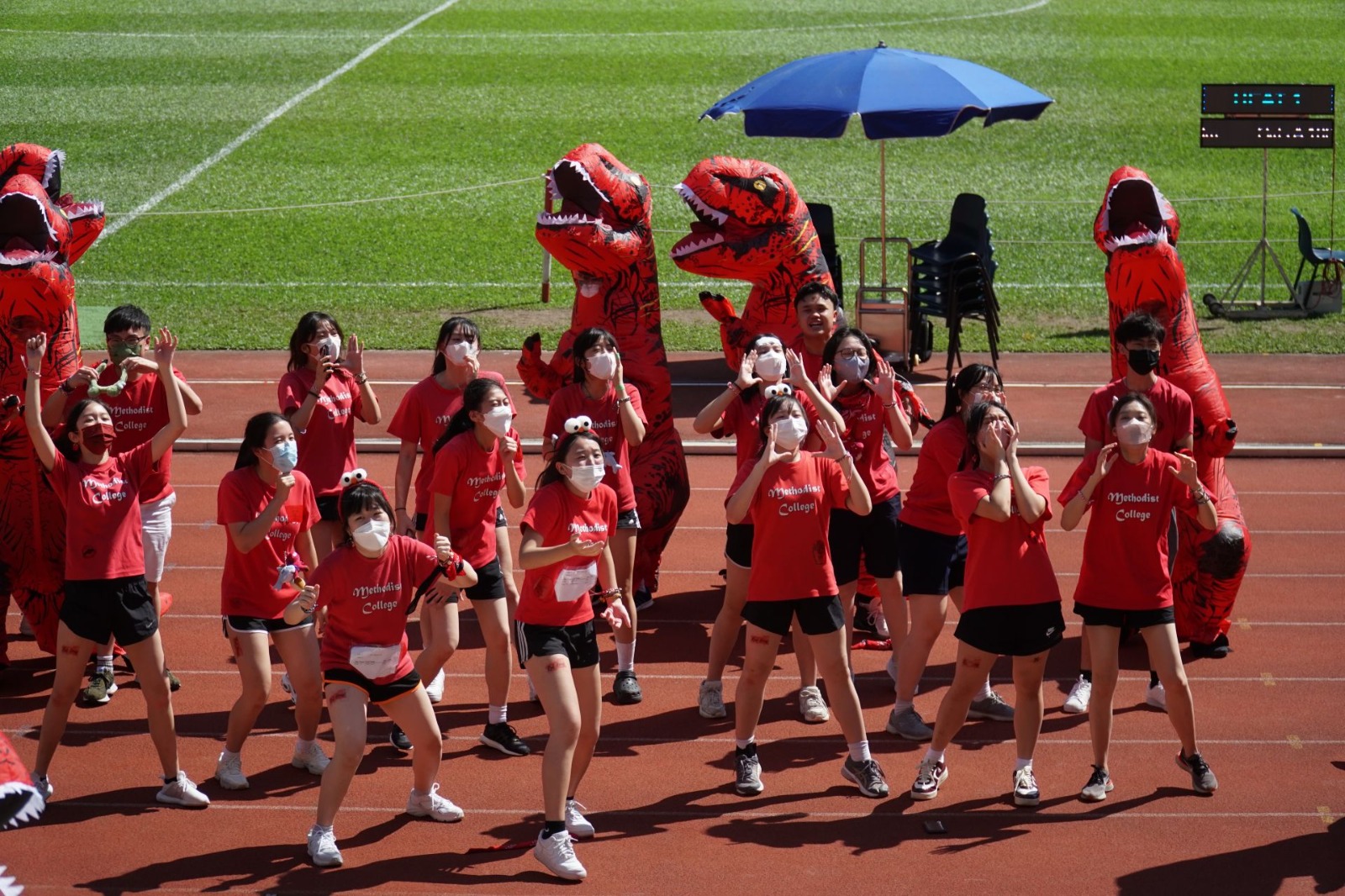
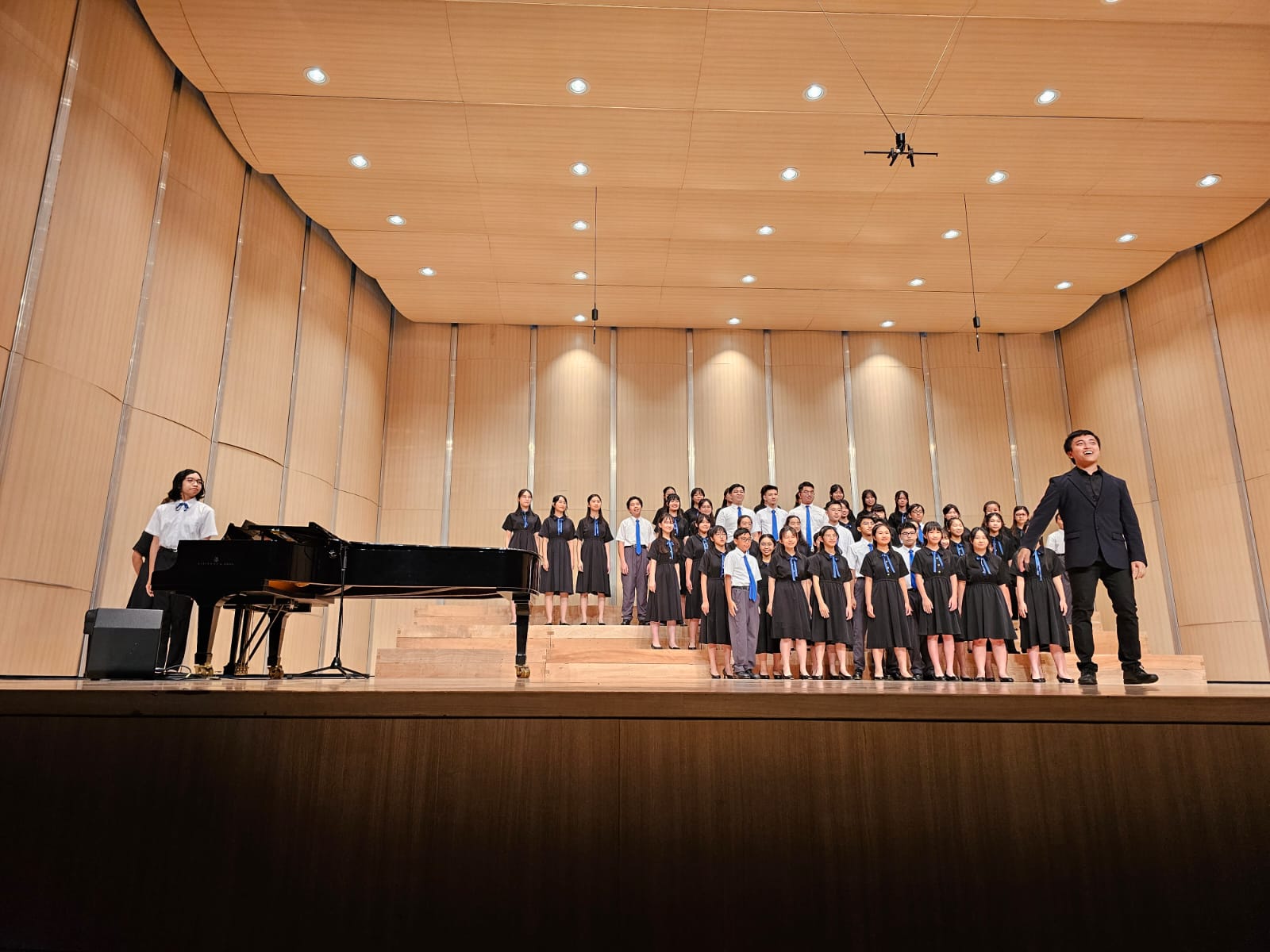
| Life-wide Learning (Including Five Essential Learning Experiences to be Provided through Key Learning Areas, Extra-curricular Activities, Co-curricular Activities, etc.) | : | We strongly encourage students to participate in activities both within and outside the school. The College boasts a democratic tradition as the Methodist College Student Union was the first elected student cabinet by one man one vote. Our form associations, which are also elected by students and rotates around 5 colours: red, yellow, orange, green and blue, demonstrate how the torch is passed onto the juniors by their seniors from generation to generation. In 2022-2023, a new vertical house system was introduced to further strengthen the connections of all levels in the school. Besides, we offer more than 50 different student bodies in the form of clubs, societies, organizations and school teams such as choir, orchestra, rock band, debating teams and sports teams for students to take part. There is also a wide range of training courses including musical instruments, foreign languages, art and design, archery etc. held over the weekend. Music and leadership training activities are the foci of development in recent years to give students a rich & vibrant school life. Our students perform well in interschool competitions and win numerous prizes in debating, speech, music, sports, art etc. The Mathematics teaching video "RHS" (side-angle-side) produced by our MCTV was widely circulated on the internet and won wide acclaim. For details, please refer to our website - www.mckln.edu.hk. |
| Others | : | Our students perform well in public examinations. Usually all of our graduates proceed to further studies, with more than 60% of them getting into degree programmes. |
| Direct Public Transportation to School | : | 1. Yau Ma Tei MTR station: Exit C; Jordan MTR station: Exit B2; 2. All bus routes that stop at Nathan Road and Gascoigne Road. |
| Remarks | : | 1. To diversify learning experiences, Senior Secondary Students may opt for Applied Learning courses (Mode 1), Other Languages (e.g. Japanese, Korean, French) or DSE Music (network programme). 2. All senior secondary students are encouraged to obtain Other Learning Experiences (OLE) through participating in a wide range of activities both within and outside school, so as to achieve balanced development. |
 School Map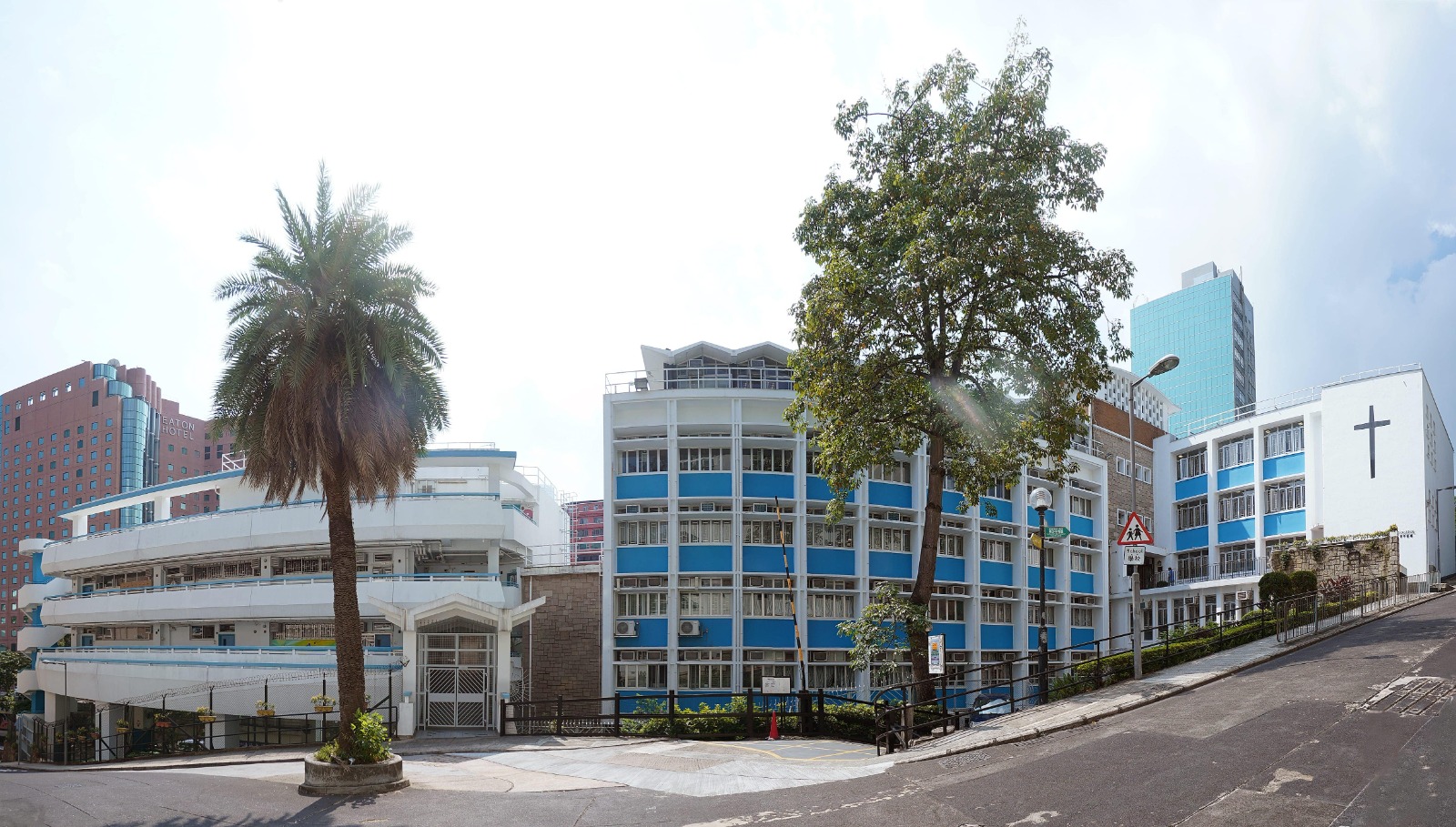

Last revision date: 5/12/2025


