 Secondary School Profiles 2025/2026


 Secondary School Profiles 2025/2026
| Address: | 57 Tin Wah Road NT | |||
| Phone: | 26175000 | Email: | info@qts.edu.hk | |
| Fax: | 26175222 | Website: | http://www.qts.edu.hk | |
School Mission
Education is the commitment to a mission and the realization of an ideal: the ideal being to collaborate towards the creation of a positive and caring environment for our students, and the development of a community in which students may realize brotherhood, neighbourliness, patriotism, and worldwide friendships. Moreover, we strive to create a self-improving environment that targets excellence and promotes professionalism.
 School Information
 | District | : | Yuen Long |
| Other District(s) | : | North |
| Supervisor / Chairman of School Management Committee | : | Mr. Tong Sau Chai Henry |
| Principal (with Qualifications / Experiences) | : | Ms. Wan Wing Sze Athena (Master of Education (TESOL), Postgraduate Diploma in Education (English), Bachelor of Science (Env. Sci.)) |
| School Type | : | Aided |
| Student Gender | : | Co-ed |
| Area Occupied by the School | : | About 8000 Sq. M |
| Name of Sponsoring Body | : | Queen Elizabeth School Old Students' Association Education Promotion Organization Limited |
| Incorporated Management Committee | : | Established |
| Percentage of School Supervisor and Managers / Chairperson and Members of School Management Committee (SMC) of Government Schools Fulfilling the Training Targets | : | 86% |
| Religion | : | Not Applicable |
| Year of Commencement of Operation | : | 2005 |
| School Motto | : | Vos Parate Ut Serviatis |
| Parent-Teacher Association | : | Yes |
| Student Union / Association | : | Yes |
| Past Students’ Association / School Alumni Association | : | Yes |
| 4Rs Mental Health Charter | : | Yes |
| Whole School Health Programme | : | Pledged School |
 Chargeable Fees (2025/2026)
| School Fee ($) | Tong Fai ($) | ||
| S1 | - | - | |
| S2 | - | - | |
| S3 | - | - | |
| S4 | - | $325 | |
| S5 | - | $325 | |
| S6 | - | $325 | |
| Parent-Teacher Association Fee (Annual) ($) | : $50 | ||
| Student Union / Association Fee ($) | : $10 | ||
| Approved Charges for Non-standard Items (Annual)($) | : $410 | ||
| Other Charges / Fees ($) | : (1) House annual fee: $10 (2) eClass App, iPortfolio and ePayment system annual fee: $94 (3) S.1 to S.6 mobile device management annual fee: $60 | ||
 School Facilities
 | Number of Classroom(s) | : | 30 |
| School Facilities | : | In addition to the standard facilities provided by the government for millennium schools, the school has invested in a variety of learning equipment, including mobile internet access installed in all classrooms, renovated and established a brand new aerospace innovation technology laboratory and purchased 300 iPads. This interactive teaching mode enhances learning effectiveness. The Campus Television encourages students to express their creativity and create a vibrant, colourful campus life. |
| Facility(ies) for Supporting Students with Special Educational Needs | : | Accessible lift and Accessible toilet. |
 Teaching Staff Information (Including School Head) in the 2025/2026 School Year
 | Number of Teaching Posts in the Approved Establishment | : | 61 |
| Total Number of Teachers in the School | : | 65 |
| Qualifications and Professional Training | : | Percentage of Teaching Staff (%) |
| Had Received Teacher Training | : | 80% |
| Bachelor Degree | : | 100% |
| Master / Doctorate Degree or above | : | 37% |
| Special Education Training | : | 57% |
| Years of Experience | : | Percentage of Teaching Staff (%) |
| 0-4 Years | : | 45% |
| 5-9 Years | : | 9% |
| 10 Years or above | : | 46% |
 2025/2026 Class Structure
 | Number of Classes | ||
| S1 | : | 4 |
| S2 | : | 4 |
| S3 | : | 4 |
| S4 | : | 4 |
| S5 | : | 4 |
| S6 | : | 4 |
 Subjects Offered
 | Subjects Offered in the 2025/2026 School Year | : | S.1 - S.3 |
| Chinese as the Medium of Instruction | : | Chinese Language, Mathematics, Science, Geography, History, Chinese History, Citizenship, Economics and Society, Life and Society, Computer Literacy, Physical Education, Visual Arts, Technology and Living, Music, Putonghua (S.1-S.2), QTS Stars (S.1-S.2), STEAM Education |
| English as the Medium of Instruction | : | English Language Applicable to NCS students: Mathematics (S.1), Science (S.1 & S.3), Geography (S.1), History (S.1), Chinese History (S.1), Citizenship, Economics and Society (S.1), Computer Literacy (S.1), Physical Education (S.1), Visual Arts (S.1), Technology and Living (S.1), Music (S.1), QTS Stars (S.1), STEAM Education (S.1) |
| Adopt a Different Medium of Instruction by Class or by Group / School-based Curriculum | : | - |
| Subjects Offered in the 2025/2026 School Year | : | S.4 - S.6 |
| Chinese as the Medium of Instruction | : | Chinese Language, Mathematics, Mathematics Extended Part Module 1 (Calculus and Statistics), Mathematics Extended Part Module 2 (Algebra and Calculus), Citizenship and Social Development, History, Chinese History, Economics, Business, Accounting and Financial Studies, Geography, Information and Communication Technology, Physics, Chemistry, Biology, Technology and Living, Health Management and Social Care, Physical Education, Visual Arts, Applied Learning, Japanese (S.4 & S.6) |
| English as the Medium of Instruction | : | English Language |
| Adopt a Different Medium of Instruction by Class or by Group / School-based Curriculum | : | Students can choose to learn Mathematics, Mathematics Extended Part Module 1 (Calculus and Statistics), Mathematics Extended Part Module 2 (Algebra and Calculus), Citizenship and Social Development, Information and Communication Technology, Physics, Chemistry, Biology, History and Business, Accounting and Financial Studies in English |
| Subjects to be Offered in the 2026/2027 School Year | : | S.1 - S.3 |
| Chinese as the Medium of Instruction | : | Chinese Language, Mathematics, Science, Geography, History, Chinese History, Citizenship, Economics and Society, Life and Society, Computer Literacy, Physical Education, Visual Arts, Technology and Living, Music, Putonghua, QTS Stars (S.1-S.2), STEAM Education |
| English as the Medium of Instruction | : | English Language Applicable to NCS students: Mathematics (S.1-S.2), Science (S.1-S.2), Geography (S.1-S.2), History (S.1-S.2), Chinese History (S.1-S.2), Citizenship, Economics and Society (S.1-S.2), Computer Literacy (S.1-S.2), Physical Education (S.1-S.2), Visual Arts (S.1-S.2), Technology and Living (S.1-S.2), Music (S.1-S.2), QTS Stars (S.1-S.2), STEAM Education (S.1-S.2) |
| Adopt a Different Medium of Instruction by Class or by Group / School-based Curriculum | : | - |
| Subjects to be Offered in the 2026/2027 School Year | : | S.4 - S.6 |
| Chinese as the Medium of Instruction | : | Chinese Language, Mathematics, Mathematics Extended Part Module 2 (Algebra and Calculus), Citizenship and Social Development, History, Chinese History, Economics, Business, Accounting and Financial Studies, Geography, Information and Communication Technology, Physics, Chemistry, Biology, Technology and Living, Health Management and Social Care, Physical Education, Visual Arts, Applied Learning, Japanese (S.5) |
| English as the Medium of Instruction | : | English Language |
| Adopt a Different Medium of Instruction by Class or by Group / School-based Curriculum | : | Students can choose to learn Mathematics, Mathematics Extended Part Module 2 (Algebra and Calculus), Citizenship and Social Development, Information and Communication Technology, Physics, Chemistry, Biology, History and Business, Accounting and Financial Studies in English |
 Secondary One Admission, Orientation Activities & Healthy School Life
 | Secondary One Admission | : | Our school will accept discretionary places. Our school will participate in the Secondary School Places Allocation System through central allocation stage (Applicable for admission to S.1 in September 2026 ).Condidering factors: interview performance (35%); academic performance (35%); conduct, participation in social service, performance in extra-curricular activities, and personal skills and talents (30%). |
| Orientation Activities and Healthy Life | : | S.1 students are provided with a Summer Bridging Programme to facilitate a smooth transition from primary to secondary education. The programme includes a library tour, English and non-academic lessons, a programme for developing students' multiple intelligences called "QTS Stars" and other activities like team-building games, campus orientation and warm-up games with class teachers. Not only does the school focus on academic performance, but it also cares about the students' all-round development and helps them to lead a balanced and healthy life. We hope they can shine in different areas. |
 School Characteristics
 | School Management | ||
| (1) School's Major Concerns | : | 1. To cultivate students as proactive learners through a growth mindset approach. 2. To foster a positive campus culture through the cultivation of resilience. |
| (2) School Management Organisation | : | Our school is managed by an Incorporated Management Committee that includes teacher and parent representatives. We emphasize a professional management model, ensuring that the decision-making process is transparent and that all members can get access to relevant information. A high level of accountability and quality assurance mechanisms have also been established to constantly review and improve the management structure. |
| (3) Incorporated Management Committee / School Management Committee / Management Committee | : | 1. The Incorporated Management Committee consists of eight to twelve school-sponsoring body managers, with one alternate school-sponsoring body manager; 2. Two teacher representatives; 3. Two parent representatives; 4. Two alumni managers and one or two independent managers can be nominated. |
| (4) School Green Policy | : | Our school implements a series of measures to encourage students to practice a green life style. For example, students bring their own reusable containers for lunch and recycle food waste. Additionally, students use reusable materials to decorate classroom and are encouraged to recycle paper. |
| Learning and Teaching Plan | ||
| (1) Whole-school Language Policy | : | To enhance students' language proficiency and interest in both Chinese and English language, our school has adopted different and diversified strategies to improve learning effectiveness and cultivate their passion for languages. Small class sizes and groupings have been adopted to increase interaction between students and teachers. After-school enhancement classes have also been arranged to assist struggling students and to give exceptional students an opportunity to expand their knowledge. In addition, our school has hired several native English speakers to organize diverse English learning activities, creating a positive English learning environment and increasing opportunities for students to use English. |
| (2) Learning and Teaching Strategies | : | The formal curriculum balances students' academic and moral development, equipping them to meet future challenges and promoting students' whole-person development. The junior form curriculum offers core and extended English courses to enhance students' English skills. The core subjects in the senior forms are divided into foundation and extended levels, while the elective subjects offer remedial and enhancement programmes. Our curriculum is differentiated to cater for the individual needs and abilities of all students. We also attach great importance to the development of students' morality. Two class teacher periods are arranged every day, allowing teachers ample time to interact with students, promote teacher-student relationships, and help students build confidence, develop perseverance and good study habits. Additionally, we hold a weekly assembly covering a wide range of activities such as academic lectures, field trips, music, drama, sports, community service, and career planning activities to help students explore different experiences and establish positive values for their future. |
| (3) School-based Curriculum | : | 1. Electives: 2X and 3X. S4-S6 students can take two to three elective subjects. 2. Curriculum highlights: Our school has offered Formal Curriculum, Pastoral Care Curriculum and Extension Curriculum to foster students' whole-person development. |
| (4) Major Renewed Emphases in the School Curriculum | : | 1. Promoting values education: Through cross-curricular collaboration, we are committed to cultivating positive values and proactive attitudes towards life in students. 2. Utilizing Artificial Intelligence in teaching: Subject groups use AI education platforms and related services to support student learning. 3. Promoting life education: Through cross-curricular collaboration, we are committed to cultivating positive life attitudes in students. 4. Enhancing STEAM education: Implement STEAM curriculum plans, such as the Soyvestor Program and Aerospace Program, to nurture future innovative talents. |
| (5) Life Planning Education | : | The Careers and life planning education group facilitates students' study and career planning. We equip students with skills to plan academic and career pathways in accordance with their interests, abilities and needs. The school provides comprehensive life planning education and guidance services for students. Also, we provide individualized and group guidance services to help students to make informed choices on their educational pathways and career goals. |
| Student Support | ||
| (1) Whole School Approach to Catering for Learner Diversity | : | In order to enhance the care of junior form students, the school has adopted small class teaching in Chinese Language, English Language and Mathematics. In addition, teachers will adjust teaching progress and strategies to meet different learning needs to enhance learning and teaching effectiveness. The school has launched a mentorship program where senior form students guide junior form students in overcoming academic challenges. After-school lessons for senior form are arranged to boost students' academic performance. Enrichment classes for S.4 and S.5 students are provided in the summer holiday to better prepare students for the HKDSE. A special summer learning programme is also designed to help students who do not meet promotion requirements. Differentiated instruction strategies are adopted to cater for and address students' diverse learning needs. The Student Support Team provides students with individualized support and education. Teachers are encouraged to take the basic, advanced and thematic professional training courses to enhance their professional capacity to support students with special educational needs. A gifted programme is also provided to fully explore and develop the potential of gifted students. |
| (2) Whole School Approach to Integrated Education | : | Our school has adopted a 'whole-school approach' to cater for the needs of students with special educational needs. The Education Administration committee, Formal Curriculum committee, Pastoral Care group and Careers and life planning education group work closely to formulate comprehensive strategies, providing thorough support and timely assessments for students in need of help. Apart from regular lessons, numerous extra-curricular activities and courses for Personal, Social & Humanities Education are provided to develop the full potential of students with special educational needs. In addition, special examination arrangements, speech therapy, professional assessments from educational psychologists, and workshops on social skills and self-management skills are rendered. Moreover, career guidance and life planning programmes are provided to students with different types of special educational needs so as to offer extensive and all-encompassing assistance to them. Our school has used the Learning Support Grant to hire extra teachers, counsellors and teaching assistants to make sure that students with special needs are well-supported. |
| (3) Education Support for Non-Chinese Speaking (NCS) Students | : | Our school provides additional support for NCS students to facilitate their learning of Chinese: providing after-school support programmes in learning Chinese; appointing additional teacher(s)/teaching assistant(s) to support NCS students’ learning of Chinese; arranging intensive Chinese learning and teaching mode(s), e.g. pull-out learning if necessary, split-class/group learning, etc.; and organising activities to create an inclusive learning environment in the school. We have carefully designed the Chinese language curriculum for non-Chinese speaking students throughout the year, pulling students out of the regular classroom for small-group instruction to better cater for learner diversity. |
| (4) Measures to Provide Adaptation for Learning and Assessment | : | Appropriate formative and summative assessment strategies are adopted to monitor student performance and progress. There are three examination periods per year. Criterion-referenced rubrics are used frequently to assess students' learning and performance and a variety of approaches and styles are used for designing homework to motivate students to learn. |
| Home-School Co-operation and School Ethos | ||
| (1) Home-School Co-operation | : | Home-school cooperation is in the form of parent education focusing on parent-child communication, parent volunteers and the Parent Teacher Association. The school continues to work closely with parents to build a learning community for the betterment of all concerned. The school sponsoring body implements the Capacity Building Mileage Programme and offers communication and computer courses to develop parents' potential and a sense of self-worth. |
| (2) School Ethos | : | The school adopts a whole-school pastoral care policy emphasizing a school culture of mutual respect, positivity and care. We cultivate students' values and sense of citizenship through a dual-class teacher system, level assemblies, activities, workshops and interdisciplinary courses, while emphasizing the importance of maintaining a balance of physical and mental health. We also encourage students to strive for excellence in their studies. |
| Future Development | ||
| (1) School Development Plan | : | 1. To cultivate students as proactive learners through a growth mindset approach. 2. To foster a positive campus culture through the cultivation of resilience. |
| (2) Teacher Professional Training and Development | : | Regular school-based staff development programmes aimed at enhancing teaching effectiveness and student learning outcomes which include peer lesson observation, lesson preparation and professional development courses are held throughout the year. The school is committed to supporting teachers in utilizing information technology and artificial intelligence for teaching, enhancing their instructional effectiveness through classroom observations, discussions and sharing. |
| Life-wide Learning (Including Five Essential Learning Experiences to be Provided through Key Learning Areas, Extra-curricular Activities, Co-curricular Activities, etc.) | : | Extension Curriculum Our school organizes various activities throughout the year as an extension of the formal curriculum to reinforce students' subject knowledge and enhance their interest in learning. These activities include gifted pull-out programmes, territory-wide competitions, and even participation in national and international events. We aim to explore each student's talents and potential, providing tailored teaching materials and creating opportunities for students to succeed. Our school has established various sports and arts teams, including the athletics team, rugby team, basketball team, football team, handball team, volleyball team, badminton team, table tennis team, swimming team, choir, Chinese orchestra, dance club, drama club, pop band, and media production team, all aimed at fostering a healthy lifestyle among students. Social Services In order to encourage students to take the initiative to care for the community and become responsible citizens, the school organizes various activities every year for S3 to S6 students. These activities include flag selling, visits to nursing homes, special schools, sheltered workshops and the elderly living alone. Through social services, students can get in touch with people in need so that they may become grateful and cherish what they have. Local Field Trips The school organizes dozens of local field trips every year, aiming to enrich students' subject knowledge and let them obtain the latest career information. Junior form students are encouraged to explore the cultural and ecological development of Hong Kong, such as the Ping Shan Heritage Trail, Hoi Ha Wan, Mai Po and Deep Bay. Senior form students regularly visit tertiary institutions, vocational training centres and government departments to have a clear career path. |
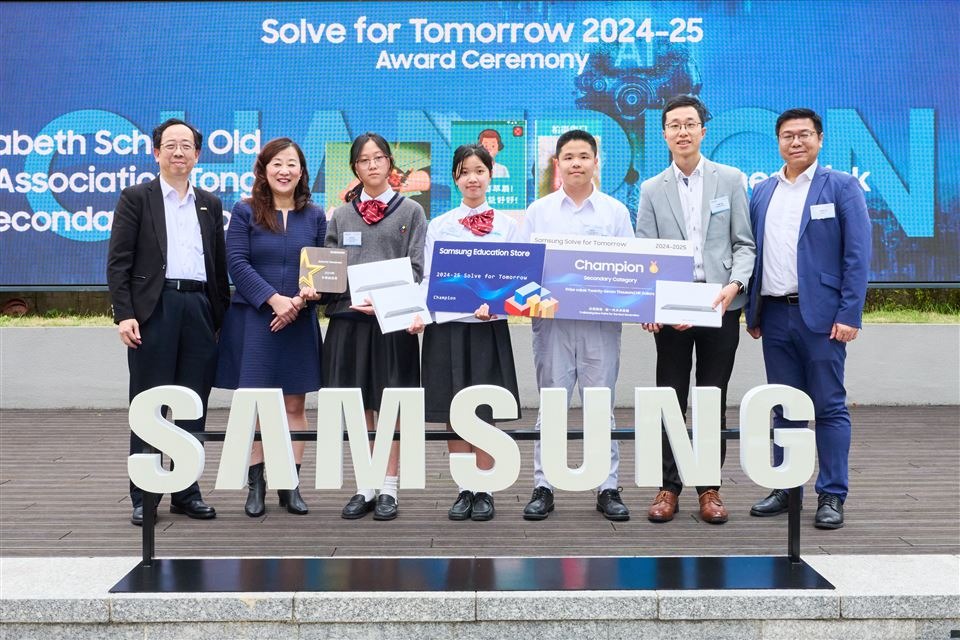
| Others | : | Our students are keen on participating in activities in the field of STEM. Last year, our students received the first prize in the China Adolescents Science and Technology Innovation Contest, the 1st runner-up in Samsung Solve for Tomorrow 2024 and a merit award at The Hong Kong Science Fair. Our students also attained brilliant results in various individual and team inter-school competitions, such as the “SOW Inspiring” Book Gifting Competition, the 41st Wuhan International Chu Cai Writing Competition, Hong Kong Schools Music and Speech Festival. The school promotes various types of sports activities, establishing and developing emerging sports and school teams, while encouraging students to participate in public competitions. Our students have excelled in rugby, with the rugby team achieving the following awards in the 2024-25 academic year: Tackle Rugby Organized by the Hong Kong Schools Sports Federation, All Hong Kong Inter-school Rugby Sevens Competition Boys' B Grade: 8th place in Hong Kong Boys' C Grade: 3th Runner Up Girls' Junior Grade: 7th place in Hong Kong Touch Rugby Organized by Hong Kong International Schools, Inter-school Touch Rugby Championship (Winter) Boys' U16: 3rd Runner Up Girls' U14: 3rd Runner Up Organized by the Leisure and Cultural Services Department and the Hong Kong China Rugby Union, Inter-school Non-Contact Rugby Championship Boys' U19: 1st Runner-up Boys' U15: Champion Girls' U15: 1st Runner-up In order to broaden students’ horizons and deepen their understanding of world cultures, our school has organized various study tours and exchange trips, such as tours to France, Poland, Germany, England, Southeast Asia, Australia and New Zealand. Since 2022, our school has organized mainland study tours, visiting cities such as Shanghai, Beijing, Guangzhou, and Shenzhen with the hope of enhancing students' understanding of the current development of China. Participating students have to conduct interviews, do research and collect data for their projects, which are presented to the whole school after their tours. Moreover, our school has formed sister-school relationships with 5 schools in Mainland. Exchange visits to sister schools are arranged to foster friendships and promote an exchange of knowledge among students. The school provides scholarships every year to outstanding students to encourage them to strive for excellence, such as the scholarships donated by the alumni of the Queen Elizabeth School Old Students' Association, the founding principal Ms. Mak Chen Wen Ning, Zonta Z Club, Ms Keung Yuen Kwan, Mr. Chan Sung Tai, King's Fund and the Parent-Teacher Association. |
| Direct Public Transportation to School | : | Bus: 69, 265B, 265M, 269B, 269C, 269D, 269M, 276B, 969, 967, A37, E37, K73 Minibus: 618, 621 LRT: 705, 706 |
| Remarks | : | In order to strengthen the support and care for the junior form students, and ability-based grouping in core subjects are adopted. Under such an arrangement, peer learning and mutual support are strengthened. Moreover, teachers can better monitor their teaching progress and use more tailor-made learning and teaching strategies for the targeted groups, thereby maximizing students' learning outcomes. |
 School Map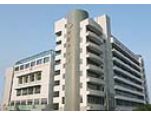
Last revision date: 5/12/2025


