 Secondary School Profiles 2025/2026


 Secondary School Profiles 2025/2026
| Address: | 18, Tin Shing Road, Tin Shui Wai, Yuen Long | |||
| Phone: | 23386122 | Email: | info@qos.edu.hk | |
| Fax: | 24482783 | Website: | http://www.qos.edu.hk | |
School Mission
Commitment to a Mission and Realization of an Ideal:
We believe that education is to awaken human conscience, leading people to seek and practice what is good. Through education everyone can grow towards goodness, use knowledge with love and rationality, and realize the magnificence of life with passion and creativity.
 School Information
 | District | : | Yuen Long |
| Other District(s) | : | North |
| Supervisor / Chairman of School Management Committee | : | Mr. Lau Siu Ki |
| Principal (with Qualifications / Experiences) | : | Dr. Law Wai Kam (Doctor of Education (EdUHK), M.A. in Teaching English as a 2nd Lang. (CityU HK), M.A. in Edu Studies (The Uni of Warwick), BPhil (Edu) (The Uni of of Birmingham)) |
| School Type | : | Aided |
| Student Gender | : | Co-ed |
| Area Occupied by the School | : | About 8000 Sq. M |
| Name of Sponsoring Body | : | Queen Elizabeth School Old Students' Association Education Promotion Organization Limited |
| Incorporated Management Committee | : | Established |
| Percentage of School Supervisor and Managers / Chairperson and Members of School Management Committee (SMC) of Government Schools Fulfilling the Training Targets | : | 90% |
| Religion | : | Not Applicable |
| Year of Commencement of Operation | : | 1996 |
| School Motto | : | Vos Parate Ut Serviatis (Prepare yourselves that you may serve) |
| Parent-Teacher Association | : | Yes |
| Student Union / Association | : | Yes |
| Past Students’ Association / School Alumni Association | : | Yes |
| 4Rs Mental Health Charter | : | Yes |
| Whole School Health Programme | : | Action School |
 Chargeable Fees (2025/2026)
| School Fee ($) | Tong Fai ($) | ||
| S1 | - | - | |
| S2 | - | - | |
| S3 | - | - | |
| S4 | - | $340 | |
| S5 | - | $340 | |
| S6 | - | $340 | |
| Parent-Teacher Association Fee (Annual) ($) | : $80 | ||
| Student Union / Association Fee ($) | : $5 | ||
| Approved Charges for Non-standard Items (Annual)($) | : $350 (S.1-S.6) | ||
| Other Charges / Fees ($) | : House Fee, $15; "Mobile Device Management App" Fee, $72; Replacement of student smart-card, $18 | ||
 School Facilities
 | Number of Classroom(s) | : | 30 |
| School Facilities | : | 1. The advanced technology and variety of school facilities exceed those of the standard millennium school design. Each class has its own home room, eliminating the need for floating classes. 2. Daily Learning and Teaching: The campus is equipped with stable Wi-Fi 900. Classrooms feature interactive TVs and Apple screen sharing. Tablets and digital data loggers have been purchased to enhance teaching and learning interactivity. 3. Self-directed and Extended learning: The school has established a STEAM Room, a DNA Technology and Molecular Biology Laboratory, and a Mac Room, which are open for observation by other schools. In addition to the regular laboratories and computer rooms, there is a Self-Study Room, a Lecture Theatre, a Student Concourse, an in-house TV studio, two VA rooms, a Gymnasium, an Orchestra Practice Room, a Dance Studio, a School History Hub, and a Parent Centre. To promote environmental sustainability, the school has also created a micro-wetland featuring numerous planters. |
| Facility(ies) for Supporting Students with Special Educational Needs | : | Ramp, Accessible lift, Accessible toilet, tactile guide path, accessible public information / service counter and visual fire alarm system. |
 Teaching Staff Information (Including School Head) in the 2025/2026 School Year
 | Number of Teaching Posts in the Approved Establishment | : | 58 |
| Total Number of Teachers in the School | : | 61 |
| Qualifications and Professional Training | : | Percentage of Teaching Staff (%) |
| Had Received Teacher Training | : | 95% |
| Bachelor Degree | : | 100% |
| Master / Doctorate Degree or above | : | 48% |
| Special Education Training | : | 58% |
| Years of Experience | : | Percentage of Teaching Staff (%) |
| 0-4 Years | : | 25% |
| 5-9 Years | : | 13% |
| 10 Years or above | : | 62% |
 2025/2026 Class Structure
 | Number of Classes | ||
| S1 | : | 4 |
| S2 | : | 4 |
| S3 | : | 4 |
| S4 | : | 4 |
| S5 | : | 4 |
| S6 | : | 5 |
 Subjects Offered
 | Subjects Offered in the 2025/2026 School Year | : | S.1 - S.3 |
| Chinese as the Medium of Instruction | : | Chinese Language; Chinese History; Citizenship, Economics and Society (S.1 & S.2)*; Integrated Humanities (S.3)*; Business Fundamentals (S.3)*; STEAM (S.1 & S.2); Putonghua (S.1 & S.2); Visual Arts; Music; Physical Education; Reading; Personal and Social Education |
| English as the Medium of Instruction | : | English Language |
| Adopt a Different Medium of Instruction by Class or by Group / School-based Curriculum | : | Mathematics; Geography*; Integrated Science*; Computer Literacy* |
| Subjects Offered in the 2025/2026 School Year | : | S.4 - S.6 |
| Chinese as the Medium of Instruction | : | Chinese Language; Citizenship and Social Development; Chinese History; History; Tourism and Hospitality Studies; Physical Education (DSE); Visual Arts (DSE); Physical Education; OLE (Visual Arts & Music); Reading; Personal and Social Education |
| English as the Medium of Instruction | : | English Language; M2 |
| Adopt a Different Medium of Instruction by Class or by Group / School-based Curriculum | : | Mathematics; Geography; Physics; Chemistry; Biology; Information & Communication Technology; Economics; Business, Accounting and Financial Studies (Business Management) |
| Subjects to be Offered in the 2026/2027 School Year | : | S.1 - S.3 |
| Chinese as the Medium of Instruction | : | Chinese Language; Chinese History; Citizenship, Economics and Society*; Business Fundamentals (S.3)*; STEAM (S.1 & S.2); Putonghua (S.1 & S.2); Visual Arts; Music; Physical Education; Reading; Personal and Social Education |
| English as the Medium of Instruction | : | English Language |
| Adopt a Different Medium of Instruction by Class or by Group / School-based Curriculum | : | Mathematics; Geography*; Integrated Science*; Computer Literacy* |
| Subjects to be Offered in the 2026/2027 School Year | : | S.4 - S.6 |
| Chinese as the Medium of Instruction | : | Chinese Language; Citizenship and Social Development; Chinese History; History; Tourism and Hospitality Studies; Physical Education (DSE); Visual Arts (DSE); Physical Education; OLE (Visual Arts & Music); Reading; Personal and Social Education |
| English as the Medium of Instruction | : | English Language; M2 |
| Adopt a Different Medium of Instruction by Class or by Group / School-based Curriculum | : | Mathematics; Geography; Physics; Chemistry; Biology; Information & Communication Technology; Economics; Business, Accounting and Financial Studies (Business Management) |
*Subjects with Extended Learning Activities (ELA) in English
 Secondary One Admission, Orientation Activities & Healthy School Life
 | Secondary One Admission | : | Our school will accept discretionary places. Our school will participate in the Secondary School Places Allocation System through central allocation stage (Applicable for admission to S.1 in September 2026 ). 1. The rank order list of Discretionary Places applicants issued by the Education Bureau (45%); 2. Conduct, performance and attitude of the applicants in the interview (40%); 3. Participation in extra-curricular activities or services of applicants and strengths of the applicants (15%). |
| Orientation Activities and Healthy Life | : | Our school aims to implement positive education to cultivate students' sense of well-being (PERMA) and encourage them to develop their character strengths. The school participates in the Education Bureau's "4Rs Mental Health Charter" and the "Harmonious Campus: Respect, Friendship, and Anti-Bullying" program, with a focus on mental health. We have established teams of Health Ambassadors and Peer Counseling Ambassadors. Every Friday, we organize "Students-Teachers Go for Fun" and "Sports Friday" to emphasize the importance of teacher-student and peer relationships. At the beginning of each academic year, school-wide orientation activities, level assemblies, and house assemblies are held to foster a positive school and class culture, and to set learning goals. These activities include writing reflective journal, autonomy training within the class, cultivating good study habits, and sharing learning achievements. During the summer vacation, a two- to three-day bridging program is arranged for incoming first-year students, covering English and Chinese enrichment, study habits cultivation, knowledge of e-learning platforms, physical fitness training, psychological seminars, and team-building activities. All students participate in the Physical Fitness Award Scheme. Through school-based PSE lessons and inter-disciplinary health education, students are taught the importance of a balanced diet and physical fitness, as well as the harmful effects of smoking, alcohol, and drug use. The school also monitors the nutritional standards of school lunches and the food provided at the tuck shop. |
 School Characteristics
 | School Management | ||
| (1) School's Major Concerns | : | 'Equip Lifelong Skills, Embrace Positive Vibes' 1. Promote active learning to enhance student learning efficacy. 2. Strengthen positive education and continually nurture a culture of appreciation. |
| (2) School Management Organisation | : | Our school management is guided by its core values and adopts a human-centered approach to achieve educational professionalism and ideals. To ensure educational quality and the school's continuous development, we have established an appraisal system, a self-evaluation mechanism, and a culture of reflection. |
| (3) Incorporated Management Committee / School Management Committee / Management Committee | : | Apart from the Sponsoring Body Managers, there are Independent Managers, Parent Managers, Alumni Managers and Teacher Managers. They possess various expertise, including university professors, lawyers, accountants, retired vice-principals, and other professionals. |
| (4) School Green Policy | : | The school has received significant recognition for its environmental policies, which are based on the "5R Principle" of sustainable development. Among its numerous awards are the Gold Award and the Outstanding Performance Award in the "Sustainable Development School Award Scheme." Furthermore, in recent years, the school's students and staff have been honored for their exceptional environmental awareness, receiving the EDB "Outstanding Teaching Award for Moral Education" and the title of "Net Zero Demonstration School" from the UNESCO Hong Kong Association. |
| Learning and Teaching Plan | ||
| (1) Whole-school Language Policy | : | 1. In junior forms, English is the MOI for subjects like Science, Mathematics, Geography, and Computer Literacy in some classes, with increased English instruction in others. 2. Secondary 1, 2, 4, 5, and 6 implement grouped English instruction. Typically, four classes per level are divided into five groups for tailored English teaching. In Form 6, five classes are further subdivided into seven groups to provide tailored academic support. 3. Our experienced English teachers have passed the benchmark tests (LPR) and completed all necessary training. 4. English is used for "English Thursday", morning assemblies, ambassadors' activities, speech days, graduation ceremonies, and sports days. An English Day Camp led by native speakers is held in summer, and we offer phonics and speaking programmes for primary schools with the same school sponsoring body. 5. Our school organizes English study tours to Singapore and Australia. Additionally, as active participants in the Caretakers of the Environment International (CEI) conference, we provide students with opportunities to discuss environmental issues with peers in English from around the world. |
| (2) Learning and Teaching Strategies | : | 1. Guided by professional knowledge: By referencing teaching theories, updated curricula, and assessment requirements, the school continuously reflects on and implements effective teaching, planning, and assessment methods. 2. Promoting blended learning: The school enforces a "BYOD" policy across all grades. Along with traditional materials, students and teachers effectively use e-learning platforms. This combination enhances learning efficiency and fosters independent learning habits. 3. Curriculum aligned with modern needs: Beyond subject knowledge, the curriculum develops lifelong learning skills, habits, and attitudes. In junior secondary, two weekly STEAM lessons, along with programming and the use of AI in computer literacy, foster design thinking. Students are also given opportunities to showcase their ideas through demonstrations and competitions. |
| (3) School-based Curriculum | : | 1. Electives: 2X and 3X. 13 elective subjects are offered for students to choose. 2. Curriculum highlights: The school excels in a well-developed curriculum that strengthens students' foundational knowledge across subjects. In junior forms, a regular STEAM program, alongside computer literacy focused on programming, fosters design thinking and problem-solving skills. Interdisciplinary projects promote the integration and application of concepts across subjects. The Integrated Science curriculum emphasizes research skills, with advanced lab equipment, including molecular biology tools, allowing students to conduct experiments for deeper academic engagement. |
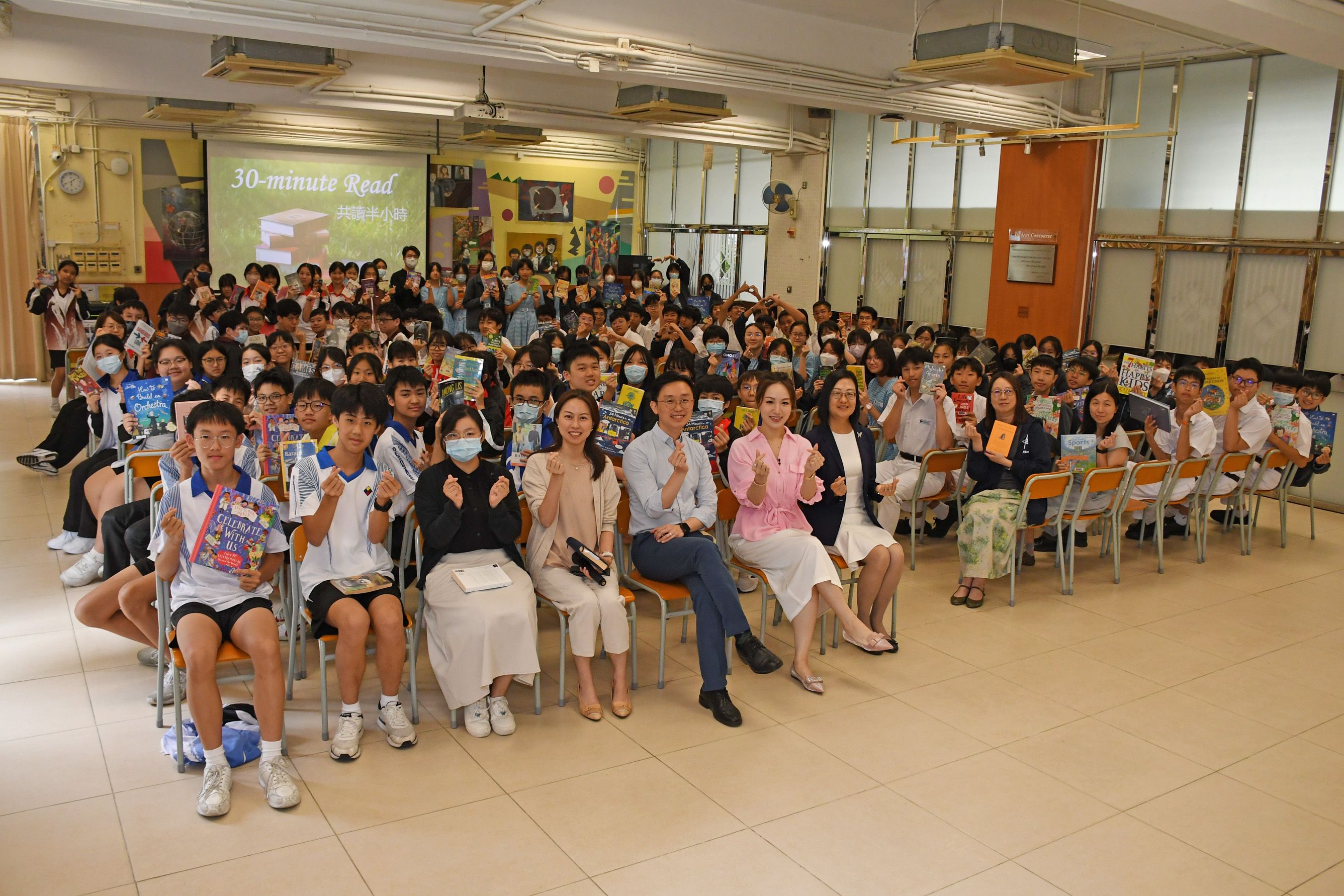
| (4) Major Renewed Emphases in the School Curriculum | : | 1. Throughout the year, we hold reading lessons (Mondays, Tuesdays, and Thursdays), inter-form "Reading Salons", "Lunch Reading Circles" and book sharings, reading awards, book crossing, immersive reading programmes and e-reading platform. 2. Our school has extensive experience in the implementation of project learning and cooperative learning, which was well recognized by the education sector in Hong Kong. Cross-curricular learning projects are implemented in Secondary 2 and 3. 3. The school emphasizes positive education and a culture of appreciation. A dual-class teacher system from Secondary One to Four, along with PSE lessons, life planning Education Curriculum, 3-tiers Leadership Training Programmes, and community service, helps students build self-esteem, values, and civic awareness. |
| (5) Life Planning Education | : | 1. The school is a resource school for the "CLAP@JC" project, offering guidance and support to network schools on career planning education. 2. From Secondary 1 to 6, the school provides a variety of career and academic exploration activities, including mock interviews for all Secondary 6 students, individual and group counseling, alumni sharing sessions, internships, workplace visits, and college tours. For junior forms, activities include senior student sharing, subject selection counseling, and self-character-strength assessment workshops. 3. Most senior students are well-prepared before public examination results are released, and in recent years, the majority have successfully enrolled in their desired degree or sub-degree programs. |
| Student Support | ||
| (1) Whole School Approach to Catering for Learner Diversity | : | 1. Classes are grouped by ability, and grouped English instruction is implemented in several forms, with adjustments to curriculum and teaching strategies. 2. Homework support, tutorials are held after school to cater for students of different abilities. 3. Opportunities to apply and extend classroom learning are offered through inter-school academic competitions, debates, field trips, and campus activities. |
| (2) Whole School Approach to Integrated Education | : | The school adopts a "whole-school approach" to promote integrated education, encouraging teachers and other professionals to jointly develop support measures for students with special needs. A Student Support Team has been established, working closely with professionals to hold regular meetings and evaluations. Progress is reported to parents, and measures are reviewed with them to ensure effectiveness. The school has applied for Learning Support Grant and Grant for Supporting Non-Chinese Speaking Students with Special Educational Needs, to provide support such as speech therapy and various group counseling sessions and social skills groups. |
| (3) Education Support for Non-Chinese Speaking (NCS) Students | : | Our school provides additional support for NCS students to facilitate their learning of Chinese: appointing additional teacher(s)/teaching assistant(s) to support NCS students’ learning of Chinese; arranging intensive Chinese learning and teaching mode(s), e.g. pull-out learning if necessary, split-class/group learning, etc.; developing school-based Chinese Language curriculum and/or adapting learning and teaching materials; and organising activities to create an inclusive learning environment in the school. |
| (4) Measures to Provide Adaptation for Learning and Assessment | : | 1. There are two examinations and two uniform tests in each academic year. 2. Formative assessments (including coursework, lesson performances) are emphasized to cultivate the learning habit of our students. 3. To help and support special educational needs students, homework is adapted according to students' learning needs and homework supporting classes are arranged. The school also offers special arrangements on internal and public examinations. |
| Home-School Co-operation and School Ethos | ||
| (1) Home-School Co-operation | : | The school prioritizes communication with parents to ensure students receive the best possible care for their growth and learning. We have an excellent relationship with parents, who consistently provide very positive feedback. Our dedicated parent volunteer team also actively contributes to the school community. |
| (2) School Ethos | : | Our school cultivates a virtuous ethos and a willingness to serve, in line with the motto, "Prepare Yourselves That You May Serve". We aim to instill in our students a proactive approach to life and strong moral character, enabling them to achieve a higher sense of integrity by contributing to society. |
| Future Development | ||
| (1) School Development Plan | : | 'Equip Lifelong Skills, Embrace Positive Vibes' 1. Promote active learning to enhance student learning efficacy. 2. Strengthen positive education and continually nurture a culture of appreciation. |
| (2) Teacher Professional Training and Development | : | 1. Half of the teachers hold a master's degree or higher, with the principal holding a doctoral degree. All teachers have received undergraduate training, and all English, Chinese, and Mathematics teachers are subject-trained and have passed the LPR. 2. The school regularly organizes professional development activities to help staff stay updated on professional knowledge and societal trends. Teacher training experts also serve as professional development advisors, encouraging reflective teaching practices. 3. Learning community: Teachers are open to new ideas and willingly share their experiences, working together to enhance student performance. They collaborate through lesson planning and peer observation to exchange teaching insights. 4. Our principal and teachers often share their expertise, contributing their professional knowledge back to the community. We are especially proud that some of our teachers have received prestigious teaching awards. |
| Life-wide Learning (Including Five Essential Learning Experiences to be Provided through Key Learning Areas, Extra-curricular Activities, Co-curricular Activities, etc.) | : | Extended curriculum activities are extensions of our formal curriculum, offering a rich variety of content and diverse modes of participation: 1. Academic Contest Teams and Societies (which have recently won numerous international and local awards in historical studies and scientific research); 2. Sports Teams (notably in rope skipping, volleyball, and soccer); 3. Cultural Teams: Orchestra, Choir, Campus TV Station, and other cultural and artistic groups. The school is also preparing for a 30th Anniversary English Musical. 4. Service Teams: Student Union, prefects, houses, guidance ambassadors, uniform groups, social service groups, etc.; 5. Interest Clubs. These activities and the whole-school leadership training programs allow students with diverse talents to develop their potential fully. Scholarships and financial support are provided to enable students to participate in activities beyond the school and overseas, including travel scholarships, awards for CEI youth conferences, courses, visits, study tours, and opportunities to experience living abroad. |
| Others | : | 1. We foster a strong academic environment to help students achieve excellent public examination results. Our students' performance in the 2025 HKDSE Examination was highly commendable, with almost 50% of candidates meeting the general entrance requirements for the eight local universities. Our students' attainment in Geography, Visual Arts, and Tourism and Hospitality Studies was above the Hong Kong average at Level 5*. The overall passing rate has consistently exceeded 95% for multiple years, surpassing the Hong Kong average. Students also attained Level 5** or 5* in subjects such as Chinese Language, Mathematics, and History. For the third consecutive year, our students secured direct admission to top-tier universities, including the University of Hong Kong (HKU) and the Chinese University of Hong Kong (CUHK), through the School Nominations Direct Admission Scheme (SNDAS). 2. Our school's six key development areas, which we've named the LEARNT focus, are: Love and Care, English Learning, Aspiration of innovation, Reading Literacy, Nature Conservation, and Talent Cultivation. 3. Outstanding Student Leaders: For outstanding students, two were selected as one of the top ten in the Yuen Long district, with one student winning the senior secondary category championship. 4. Academic Research & STEAM: Students have earned top honors in local heritage conservation and historical research. For many years, they have also won major awards in recognized local STEAM competitions, such as the Hong Kong Student Science Project Competition and the Hong Kong Budding Scientists Award. Our students have also won numerous awards at international science research competitions held in South Korea and the United States. One student received the "Hong Kong Top 10 Young Innovators Award," while another won a first prize in the "National Youth Science and Technology Innovation Contest" organized by the China Association for Science and Technology. 5. Arts and Music: Visual arts students, leveraging their creativity and marketing acumen, won the "Good Design Award" from PolyU, earning conditional offers for university admission. Our school's mature orchestra and choir have also won multiple awards from various organizations, including the Hong Kong Musicians Association and groups in the Greater Bay Area. 6. Sports Performance: Members of our rope skipping, volleyball, and soccer teams have been selected for local youth squads and have represented Hong Kong in international competitions. At the All-Hong Kong Rope Skipping Elite Competition, our students won numerous individual and team awards and were selected to represent Hong Kong at the championships in Japan and Singapore. Our cheerleading team has also been invited to perform at other schools on multiple occasions. 7. Sustainable Development: Leveraging our location, we have provided the public with guided tours of wetlands and Chinese heritage sites for many years, promoting sustainable development education. We have been recognized as an "Exemplar School for Sustainable Development Education" by the UNESCO China Sustainable Development Education Project and the National Working Committee. The school has also received the Gold Award in the "Sustainable Development School Reward Scheme" for three consecutive terms, including the highest honor, the "Outstanding Performance Award." In recognition of our teachers' and students' environmental awareness, we also received the Education Bureau's "Outstanding Teaching Award for Moral Education." 8. Community Collaboration: The school has established a wide network with various sectors of society, providing students with learning opportunities beyond geographical boundaries. By leveraging the support of old students from both Queen Elizabeth School and our own school, as well as partnerships with organizations such as the Jockey Club CLAP for Youth@JC, Hong Kong Wetland Park, the Youth Association, the Evangelical Lutheran Church of Hong Kong, the Hong Kong Resource Centre for Heritage, UNESCO Hong Kong Association, and the Caretakers of the Environment International Youth Conference, the school offers diverse learning opportunities and fosters a strong sense of mission in our students. |
| Direct Public Transportation to School | : | Light Rail: 705, 706, 751; MTR Bus: K73; KMB: 69M, 69C, 265B, 269B, 269C, 269M, 276B, E37, A37; Citybus: 967, 969; New Lantao Bus: B2P. |
| Remarks | : | - |
 School Map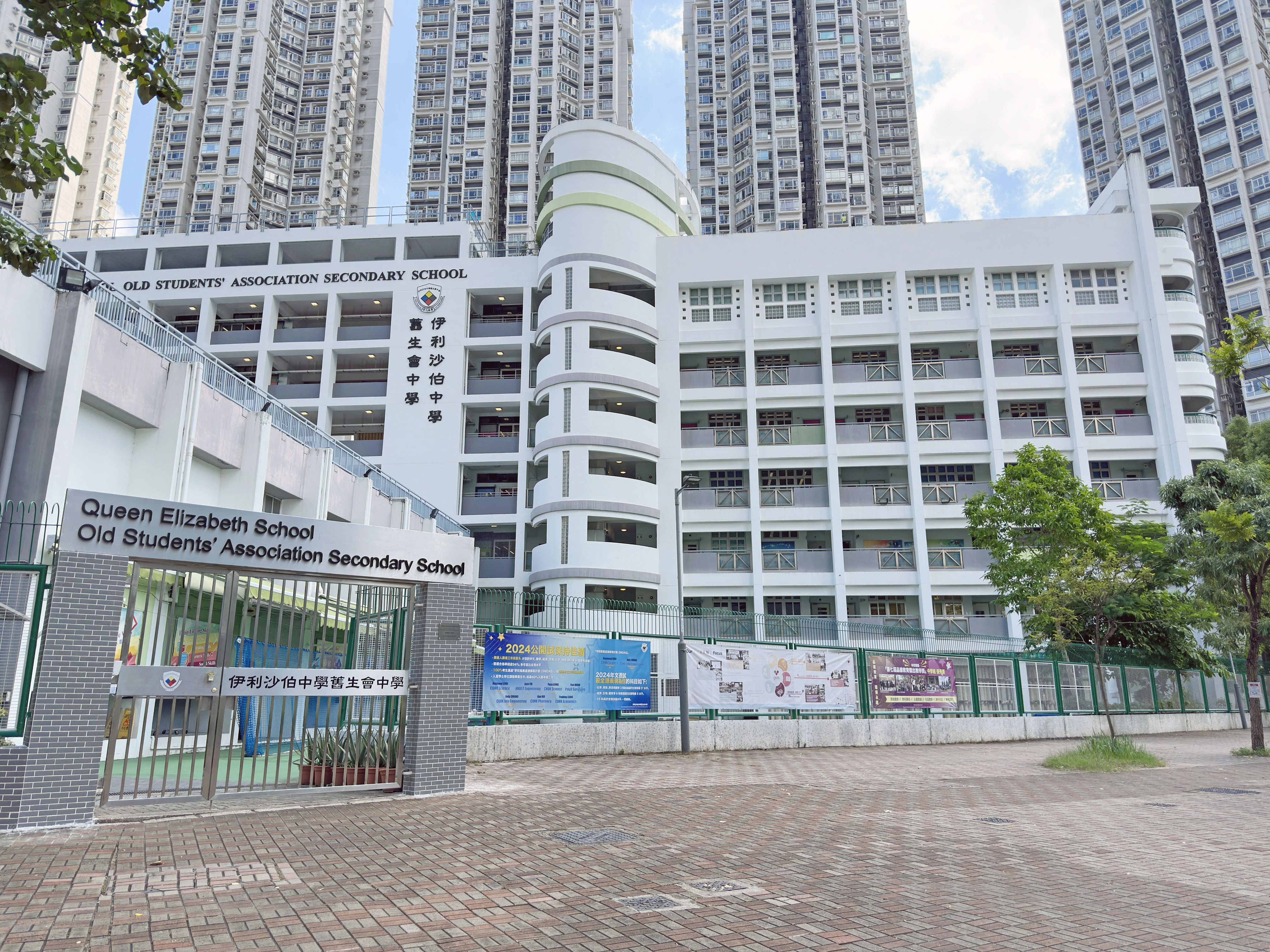
Last revision date: 5/12/2025


