 Secondary School Profiles 2025/2026


 Secondary School Profiles 2025/2026


| Address: | Ping Ha Road, Area 3, Tin Shui Wai NT | |||
| Phone: | 24461661 | Email: | message@tstss.edu.hk | |
| Fax: | 24706380 | Website: | http://www.tstss.edu.hk | |
School Mission
To cultivate balanced development in students, with 'Diligence, Friendliness, Honesty and Filial Piety' being our school motto.
 School Information
 | District | : | Yuen Long |
| Other District(s) | : | North |
| Supervisor / Chairman of School Management Committee | : | Dr. Hau Sau Fat |
| Principal (with Qualifications / Experiences) | : | Ms Choy Lai Chun (The University of Hong Kong Postgraduate Diploma of Education,The University of Hong Kong Bachelor of Economics, The University of Science and Technology Master of Arts ) |
| School Type | : | Aided |
| Student Gender | : | Co-ed |
| Area Occupied by the School | : | About 8600 Sq. M |
| Name of Sponsoring Body | : | Yuen Long Public Middle School Alumni Association |
| Incorporated Management Committee | : | Established |
| Percentage of School Supervisor and Managers / Chairperson and Members of School Management Committee (SMC) of Government Schools Fulfilling the Training Targets | : | Not Applicable |
| Religion | : | Not Applicable |
| Year of Commencement of Operation | : | 1999 |
| School Motto | : | Diligence, Filial Piety, Friendship and Honesty |
| Parent-Teacher Association | : | Yes |
| Student Union / Association | : | Yes |
| Past Students’ Association / School Alumni Association | : | Yes |
| 4Rs Mental Health Charter | : | Yes |
| Whole School Health Programme | : | Action School |
 Chargeable Fees (2025/2026)
| School Fee ($) | Tong Fai ($) | ||
| S1 | - | - | |
| S2 | - | - | |
| S3 | - | - | |
| S4 | - | $300 | |
| S5 | - | $300 | |
| S6 | - | $300 | |
| Parent-Teacher Association Fee (Annual) ($) | : $35 | ||
| Student Union / Association Fee ($) | : $10 | ||
| Approved Charges for Non-standard Items (Annual)($) | : $450 | ||
| Other Charges / Fees ($) | : - | ||
 School Facilities
 | Number of Classroom(s) | : | 32 |
| School Facilities | : | The computer network connects to all the classrooms, special rooms, lecture theatres and the hall. There is one computer room and one computer-assisted learning room for all subject teachers to use in teaching. There is a computer and a LCD projector in every classroom. Touch panels are available in classrooms for Junior form students. There is an IT corner at the library. There are over two hundred and fifty computers in school. We also have a Drama Theater established in 2019. |
| Facility(ies) for Supporting Students with Special Educational Needs | : | Accessible lift, Accessible toilet and tactile guide path plan. |
 Teaching Staff Information (Including School Head) in the 2025/2026 School Year
 | Number of Teaching Posts in the Approved Establishment | : | 57 |
| Total Number of Teachers in the School | : | 60 |
| Qualifications and Professional Training | : | Percentage of Teaching Staff (%) |
| Had Received Teacher Training | : | 95% |
| Bachelor Degree | : | 100% |
| Master / Doctorate Degree or above | : | 35% |
| Special Education Training | : | 55% |
| Years of Experience | : | Percentage of Teaching Staff (%) |
| 0-4 Years | : | 27% |
| 5-9 Years | : | 15% |
| 10 Years or above | : | 58% |
 2025/2026 Class Structure
 | Number of Classes | ||
| S1 | : | 4 |
| S2 | : | 4 |
| S3 | : | 4 |
| S4 | : | 4 |
| S5 | : | 4 |
| S6 | : | 5 |
 Subjects Offered
 | Subjects Offered in the 2025/2026 School Year | : | S.1 - S.3 |
| Chinese as the Medium of Instruction | : | Chinese Language, Putonghua, Chinese History, Drama in Value Education, Geography*, History*, Citizenship Economics and Society* (S.1), Physical Education*, Home Economics*, Maker Education*, Music* (S.1 & S.2), Computer*, Business, Accounting and Financial Studies* (S.3), Economics* (S.3), Visual Arts* |
| English as the Medium of Instruction | : | English Language |
| Adopt a Different Medium of Instruction by Class or by Group / School-based Curriculum | : | Maths (S.1-S.3)*, Science (S.1 & S.2)*, Science (S.3 including Chemistry, Biology, Physics)* |
| Subjects Offered in the 2025/2026 School Year | : | S.4 - S.6 |
| Chinese as the Medium of Instruction | : | Chinese Language, Chinese History, Citizenship and Social Development, Value Education, Chinese Literature |
| English as the Medium of Instruction | : | English Language, Mathematics, Biology, Chemistry, Physics, Economics, Mathematics Extended Part Module 1, Mathematics Extended Part Module 2, Geography, Business, Accounting and Financial Studies, Information and Communication Technology, Tourism and Hospitality Studies, History, Physical Education (HKDSE), Visual Arts, Reading Across Curriculum Programme |
| Adopt a Different Medium of Instruction by Class or by Group / School-based Curriculum | : | Mathematics, Biology, Chemistry, Physics, Economics, Mathematics Extended Part Module 1, Mathematics Extended Part Module 2, Geography, Business, Accounting and Financial Studies, Information and Communication Technology, Tourism and Hospitality Studies, History, Physical Education (HKDSE), Visual Arts, Reading Across Curriculum Programme |
| Subjects to be Offered in the 2026/2027 School Year | : | S.1 - S.3 |
| Chinese as the Medium of Instruction | : | Chinese Language, Putonghua, Chinese History, Drama in Value Education, Geography*, History*, Citizenship Economics and Society*, Physical Education*, Home Economics*, Maker Education*, Music* (S.1 & S.2), Computer*, Business, Accounting and Financial Studies* (S.3), Visual Arts* |
| English as the Medium of Instruction | : | English Language |
| Adopt a Different Medium of Instruction by Class or by Group / School-based Curriculum | : | Maths (S.1-S.3)*, Science (S.1 & S.2)*, Science (S.3 including Chemistry, Biology, Physics)* |
| Subjects to be Offered in the 2026/2027 School Year | : | S.4 - S.6 |
| Chinese as the Medium of Instruction | : | Chinese Language, Chinese History, Citizenship and Social Development, Value Education, Chinese Literature |
| English as the Medium of Instruction | : | English Language, Mathematics, Biology, Chemistry, Physics, Economics, Mathematics Extended Part Module 1, Mathematics Extended Part Module 2, Geography, Business, Accounting and Financial Studies, Information and Communication Technology, Tourism and Hospitality Studies, History, Physical Education (HKDSE), Visual Arts, Reading Across Curriculum Programme |
| Adopt a Different Medium of Instruction by Class or by Group / School-based Curriculum | : | Mathematics, Biology, Chemistry, Physics, Economics, Mathematics Extended Part Module 1, Mathematics Extended Part Module 2, Geography, Business, Accounting and Financial Studies, Information and Communication Technology, Tourism and Hospitality Studies, History, Physical Education (HKDSE), Visual Arts, Reading Across Curriculum Programme |
*Subjects with Extended Learning Activities (ELA) in English
 Secondary One Admission, Orientation Activities & Healthy School Life
 | Secondary One Admission | : | Our school will accept discretionary places. Our school will participate in the Secondary School Places Allocation System through central allocation stage (Applicable for admission to S.1 in September 2026 ).The weightings are as follows: 30% from Rank Order List provided by the EDB; 20% from the internal academic results and the conduct mark; 10% from awards gained from the school's internal and external activities and 40% from interview performance. |
| Orientation Activities and Healthy Life | : | S.1 Orientation Camp, a One-week English Bridging Course and Learning Skills Training are organised to help S.1 students with their adaptation to their secondary school life. In order to enhance S.1 students’ reflective learning and their personal growth, a ‘One-Student-One Musical-Instrument Scheme’ is implemented. We have "Self-directed Learning Programme" and "Uniform Groups" for S.1 students in order to enhance their self-learning habits and discipline. Health talks on diverse topics are held during weekly assemblies and morning assemblies, Long Distance Run to raise students' awareness of the need to lead a healthy life. |
 School Characteristics
 | School Management | ||
| (1) School's Major Concerns | : | 1. Nurturing students to become disciplined, respectful and responsible citizens. 2. Motivating students to learn, fostering life-long learning. |
| (2) School Management Organisation | : | The Incorporated Management Committee (IMC) is in place, composing representatives from parents, teachers and the community. Staff participation is highly regarded in school administration. The school administration panel, which consists of representatives from the teaching staff, meet regularly to discuss, adjust and perfect the major policies of our school. In addition to day to day teaching, teachers are to serve at functional posts to pursue their professional development and have their potentials stretched. |
| (3) Incorporated Management Committee / School Management Committee / Management Committee | : | Incorporated Management Committee was established in 2006. |
| (4) School Green Policy | : | A green school campaign is launched to encourage students to recycle BP lunchboxes and other recyclable items like plastic bottles, paper and aluminum cans. It is hoped that the value of environmental conservation can both be instilled and implemented. Co-creating a "Zero Plastic" Culture – Bottled water will no longer be sold at our school’s tuck shop. Filtered water dispensers will be offered instead. |
| Learning and Teaching Plan | ||
| (1) Whole-school Language Policy | : | In order to better develop students' abilities in English learning, junior secondary students are streamed according to their language abilities. As for senior secondary, Students may option for the EMI stream, so as to better equip themselves for their future studies. Apart from organising different English-speaking functions on the campus, the NET also conducts oral exam practices with senior students and teaches in various classes to increase students' exposure to native English speakers. Moreover, theme-based English curriculum/topics are introduced in S.1-S.3 Integrated Humanities and Integrated Science so as to pave the way for English as the MOI in senior form learning. |
| (2) Learning and Teaching Strategies | : | "Creativity, Commitment, Communication and Co-operation" are the 4 maxims of our school. We hold that students' learning is always our core business. We motivate students to learn, think and communicate through diverse learning activities and approaches. We also put emphasis on enhancing students' abilities in bi-literacy and tri-lingualism, Mathematics, application of Information Technology, self-expression and self-learning abilities. In addition to the regular subjects, we have introduced Life Education in junior forms, Value Education in Senior form. It aims to instill in students core ethical values and develop students' transferable skills. We emphasize the acquisition of desirable learning habits and to cater for the diverse learning needs of senior form students, subjects of diverse disciplines like Art, Travel and Tourism, Information and Communication Technology, Maker are offered in addition to the traditional subjects. |
| (3) School-based Curriculum | : | 1. Electives: 2X and 3X. English is also used as the medium of instruction in Maths and Integrated Science subjects in our school-based junior forms' curriculum. 2. Curriculum highlights: A school-based curriculum has been devised in Computer Studies for junior forms in order to keep pace with the times. For example, 'Video Production' has long been part of the major curriculum and the content is reviewed and updated every now and then. Also, Life Education has also incorporated the school life scenarios to boost students' interest in the subject, in hopes that students can learn to care for themselves, their community and the country. |
| (4) Major Renewed Emphases in the School Curriculum | : | 1. To increase students' exposure to different genres of reading, Departments of Chinese, English have implemented different online reading schemes. 2. To promote extensive reading interest on campus: Tuesday and Friday Morning Reading Period for the whole school to enjoy reading together. “English Reading Session” during lunch time and Book Vouchers as gifts from teachers to encourage students to buy books in school book exhibitions. 3. To provide students with the opportunity to apply the skills learnt to daily learning, different subjects have been launching a variety of projects, for example, 'English Action Club, English Speaking Days, English Morning Assemblies' for English. 4. To promote students' civic awareness and sense of responsibility: Through morning and weekly assemblies, messages of civic responsibility and environmental awareness are delivered and instilled in our students. 5."Interdisciplinary collaboration" enables students to learn how to communicate and cooperate with others in cross-disciplinary projects, while integrating knowledge from different fields. |
| (5) Life Planning Education | : | To nurture students, helping them acquire the knowledge, skills and attitude they need for choosing the most suitable pathway based on their interest and ability in order to achieve a holistic development. |
| Student Support | ||
| (1) Whole School Approach to Catering for Learner Diversity | : | To cater for learner differences, we run enrichment and remedial programmes for students in need. Through collaborative lessons, we adjust the teaching schedule and prepare tailor-made teaching materials to enhance students’ learning. |
| (2) Whole School Approach to Integrated Education | : | The Special Education Needs Coordinator is responsible for planning, implementing, reviewing the support work and establishing a "Whole-School Approach" for integrated education. 1. Catering for individual differences The SEN Coordinator, the SEN Support Teachers and experienced guidance counselors collaborate to promote the “Whole-School Approach". Class teachers, subject heads and subject teachers formulate support measures for students with special education needs and invite parents, school social workers and educational psychologists to attend Individualized Education Plan meetings to follow up on support work as needed. 2. Whole-School Approach The school collects data on incoming S.1 students with special education needs to identify their needs and arrange appropriate support for them. The school provides "School-based Speech Therapy Service" to students with speech and language impairments, aiming to identify and support students promptly. The school also flexibly utilizes the Learning Support Grant to outsource services including expressive arts therapy groups, and hiring counseling personnel to provide tailored support for students. Each year, the school provides parents of students with special education needs with a "Student Support Summary" to collect their opinions and discuss the progress of the students. 3. Examination arrangements in internal assessments. The school arranges adjustments such as extra time, enlarged test papers, screen-reading software, speech-to-text software, special arrangements for oral examination and to assist students to apply for similar accommodations in public examinations to ensure fairness in the examination process. |
| (4) Measures to Provide Adaptation for Learning and Assessment | : | All subjects devise their subject-specific assessment procedures in view of the goals of the school and students' needs. In addition to the summative assessment, formative assessment is also adopted to monitor the academic performance of students. Different kinds of learning outcomes are also assessed in the formative assessment such as projects, field trips and excursions. This aims to develop students' abilities in different domains. |
| Home-School Co-operation and School Ethos | ||
| (1) Home-School Co-operation | : | Long term goals: 1. to promote understanding and collaboration between parents and the school for raising and developing our students; 2. to strengthen the communication and relationship between parents and their children. Our school has a Parent Volunteer Team to assist daily operations of the school and special functions. Parent-Teacher Association (PTA), together with the school and students, has also established a supervision team to monitor the service of the lunch caterers and the school canteen. Besides, there is a specially designed webpage for the PTA. A Parents' Resource Centre is also built for parents to learn and support each other. |
| (2) School Ethos | : | We expect our students to be creative, good at expression, helpful and caring. Through various competitions, adventure activities, leadership training and social services, our students will become citizens with integrity and a noble personality. |
| Future Development | ||
| (1) School Development Plan | : | 2024-2027 1. Nurturing students to become disciplined, respectful and responsible citizens. 2. Motivating students to learn, fostering life-long learning. |
| (2) Teacher Professional Training and Development | : | The culture of peer lesson observation has been introduced in all subjects. This enhances teaching effectiveness and promotes desirable classroom practices. Professional development is achieved through Staff Development Day activities like sharing/ seminars, professional exchange with teachers from other schools and schools visits. |
| Life-wide Learning (Including Five Essential Learning Experiences to be Provided through Key Learning Areas, Extra-curricular Activities, Co-curricular Activities, etc.) | : | To realise the education ideal of Whole-person development, we have 4 Houses and 50 school clubs, providing students with diversified extra-curricular activities to take part in. The activities are of various types and from various domains, including academic-related activities, services, sports, art and other interests. Through the participation in these activities, students develop their self-confidence, social skills and leadership skills through our well-structured extra-curricular activities. |
| Others | : | We are proud to announce that our students' academic and extra-curricular performance has expeditiously excelled for over 25 years. Our public examination results have been improving in an astounding degree. The excellent performance has been extremely encouraging to all of our students and staff. As a quality school with rapid improvement, we have successfully become one of the popular schools in the district. Indeed, we have to thank our sponsoring body, our parents and the community for their trust and continual support. |
| Direct Public Transportation to School | : | 1. Bus:276, 276A, B1, B2P, E34, E34A, E34P, 53, K65, 69M, 69X, K75, K75P, K76, 265S, 269B, 269C, 269D, 969, 969B; 2. West Rail (Tin Shui Wai Station); 3. LRT:705, 706, 751 & 761. |
| Remarks | : | Small-class teaching is practised in S.4, S.5 and S.6 by splitting 4 classes into 5 groups. |
 School Map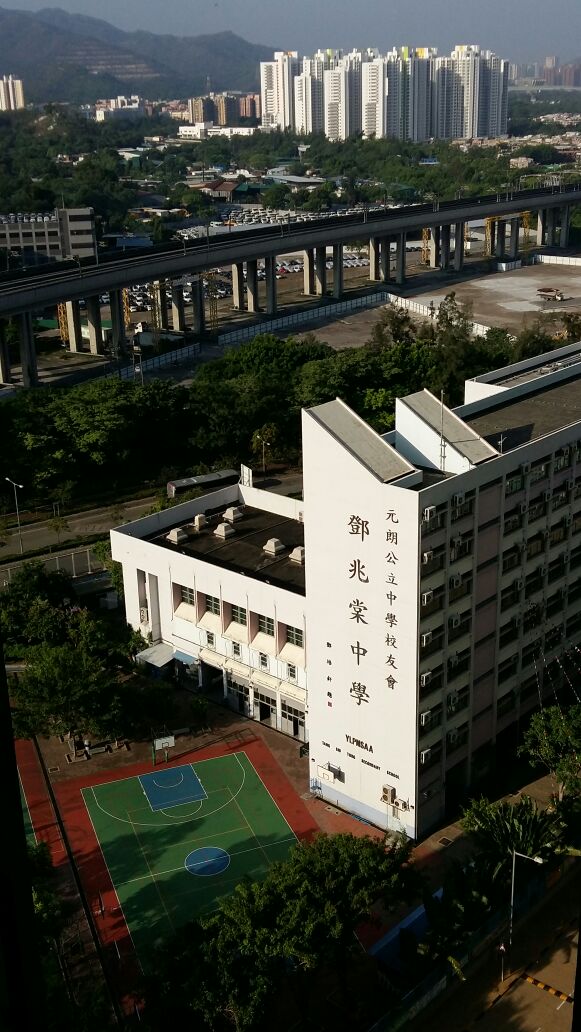


Last revision date: 5/12/2025


