 Secondary School Profiles 2025/2026


 Secondary School Profiles 2025/2026
| Address: | 1 Shing Fuk Street Kwai Shing | |||
| Phone: | 24204141 | Email: | mailbox@vclass.liymss.edu.hk | |
| Fax: | 24257518 | Website: | https://liymss.goodschool.hk/ | |
School Mission
We base our education on the words of Jesus in the hope of nurturing all-round education in our students, enabling them to meet the challenges lying ahead and we uphold the following beliefs in upbringing our students: we treasure our students, value our students for the effort that they have made, and award them for their learning outcome.
 School Information
 | District | : | Kwai Tsing |
| Other District(s) | : | Sham Shui Po, Islands |
| Supervisor / Chairman of School Management Committee | : | Mr. Tang Yi Chung |
| Principal (with Qualifications / Experiences) | : | Mr. Sham Chun Wai (MA(Architecture), MSC(Applied Maths), BA (Architecture)) |
| School Type | : | Aided |
| Student Gender | : | Co-ed |
| Area Occupied by the School | : | About 4500 Sq. M |
| Name of Sponsoring Body | : | Christian Nationals' Evangelism Commission |
| Incorporated Management Committee | : | Established |
| Percentage of School Supervisor and Managers / Chairperson and Members of School Management Committee (SMC) of Government Schools Fulfilling the Training Targets | : | 100% |
| Religion | : | Protestantism / Christianity |
| Year of Commencement of Operation | : | 1981 |
| School Motto | : | Faithfulness, Righteousness, Loyalty, Honesty |
| Parent-Teacher Association | : | Yes |
| Student Union / Association | : | Yes |
| Past Students’ Association / School Alumni Association | : | Yes |
| 4Rs Mental Health Charter | : | Yes |
| Whole School Health Programme | : | Action School |
 Chargeable Fees (2025/2026)
| School Fee ($) | Tong Fai ($) | ||
| S1 | - | - | |
| S2 | - | - | |
| S3 | - | - | |
| S4 | - | $300 | |
| S5 | - | $300 | |
| S6 | - | $300 | |
| Parent-Teacher Association Fee (Annual) ($) | : $50 | ||
| Student Union / Association Fee ($) | : - | ||
| Approved Charges for Non-standard Items (Annual)($) | : $200 | ||
| Other Charges / Fees ($) | : - | ||
 School Facilities
 | Number of Classroom(s) | : | 33 |
| School Facilities | : | The information technology teaching system has been established to provide teachers and students with a flexible and reliable learning environment. Additional facilities include the Multimedia Language Laboratory, computer rooms, an e-learning platform and tablet computers, all designed to promote student interaction and self-learning. In addition to 35 classrooms and the multimedia facilities mentioned above, there are also a number of specialised rooms, including laboratories, the Geography Room, the Visual Arts Room and the Music Room. There are also additional facilities such as the Library, the Student Counseling Room, a climbing wall, the Student Activity Centre, the Self-learning Center, the Multi-purpose Dance Studio, the Parents and Alumni Conference Room, the Life Planning ' Career Lounge', as well as the Aquaponics System, 'BBQ - Connect' and two basketball courts. Since 2016, a fully installed Wi-Fi network has enhanced the development of mobile learning. The 'STEMaker Lab', the Physical Fitness Centre and the Greenhouse were also opened in 2021/2022. |
| Facility(ies) for Supporting Students with Special Educational Needs | : | Ramp, Accessible lift and Accessible toilet. |
 Teaching Staff Information (Including School Head) in the 2025/2026 School Year
 | Number of Teaching Posts in the Approved Establishment | : | 54 |
| Total Number of Teachers in the School | : | 59 |
| Qualifications and Professional Training | : | Percentage of Teaching Staff (%) |
| Had Received Teacher Training | : | 89% |
| Bachelor Degree | : | 100% |
| Master / Doctorate Degree or above | : | 42% |
| Special Education Training | : | 74% |
| Years of Experience | : | Percentage of Teaching Staff (%) |
| 0-4 Years | : | 20% |
| 5-9 Years | : | 9% |
| 10 Years or above | : | 71% |
 2025/2026 Class Structure
 | Number of Classes | ||
| S1 | : | 4 |
| S2 | : | 4 |
| S3 | : | 4 |
| S4 | : | 4 |
| S5 | : | 4 |
| S6 | : | 4 |
 Subjects Offered
 | Subjects Offered in the 2025/2026 School Year | : | S.1 - S.3 |
| Chinese as the Medium of Instruction | : | S.1-S.2: Chinese Language, Mathematics*, Science*, History, "Citizenship, Economics and Society", Chinese History, Computer Literacy, Music, Physical Education, Design and Technology, Putonghua, Religious Education, Life Education, Visual Arts, School-based Developed Subject. S.3: Chinese Language, History, "Citizenship, Economics and Society", Chinese History, Chemistry*, Physics*, Biology, Geography, Computer Literacy, Music, Physical Education, Putonghua, Religious Education, Life Education, Visual Arts, School-based Developed Subject. |
| English as the Medium of Instruction | : | S.1-S.3: English Language, S.3: Mathematics |
| Adopt a Different Medium of Instruction by Class or by Group / School-based Curriculum | : | - |
| Subjects Offered in the 2025/2026 School Year | : | S.4 - S.6 |
| Chinese as the Medium of Instruction | : | Chinese Language, Citizenship and Social Development, Biology, Chinese History, Chinese Literature, History, "Business, Accounting and Financial Studies", Economics, Geography, Visual Arts, Information and Communication Technology, Health Management and Social Care. |
| English as the Medium of Instruction | : | English Language, Mathematics, Mathematics Extended Part (Module 2), Physics, Chemistry |
| Adopt a Different Medium of Instruction by Class or by Group / School-based Curriculum | : | - |
| Subjects to be Offered in the 2026/2027 School Year | : | S.1 - S.3 |
| Chinese as the Medium of Instruction | : | S.1-S.2: Chinese Language, Mathematics*, Science*, History, "Citizenship, Economics and Society", Chinese History, Computer Literacy, Music, Physical Education, Design and Technology, Putonghua, Religious Education, Life Education, Visual Arts, School-based Developed Subject. S.3: Chinese Language, History, "Citizenship, Economics and Society", Chinese History, Chemistry*, Physics*, Biology, Geography, Computer Literacy, Music, Physical Education, Putonghua, Religious Education, Life Education, Visual Arts, School-based Developed Subject. |
| English as the Medium of Instruction | : | S.1-S.3: English Language, S.3: Mathematics |
| Adopt a Different Medium of Instruction by Class or by Group / School-based Curriculum | : | - |
| Subjects to be Offered in the 2026/2027 School Year | : | S.4 - S.6 |
| Chinese as the Medium of Instruction | : | Chinese Language, Citizenship and Social Development, Biology, Chinese History, Chinese Literature, History, "Business, Accounting and Financial Studies", Economics, Geography, Visual Arts, Information and Communication Technology, Health Management and Social Care. |
| English as the Medium of Instruction | : | English Language, Mathematics, Mathematics Extended Part (Module 2), Physics, Chemistry |
| Adopt a Different Medium of Instruction by Class or by Group / School-based Curriculum | : | - |
*Subjects with Extended Learning Activities (ELA) in English
 Secondary One Admission, Orientation Activities & Healthy School Life
 | Secondary One Admission | : | Our school will accept discretionary places. Our school will participate in the Secondary School Places Allocation System through central allocation stage (Applicable for admission to S.1 in September 2026 ).The criteria for admission are as follows: 1. The rank order list compiled by the Education Bureau (50%). 2. Academic results and conduct in P.5 and P.6 (25%). 3. Internal and external awards, special talents or training, and interview (25%) |
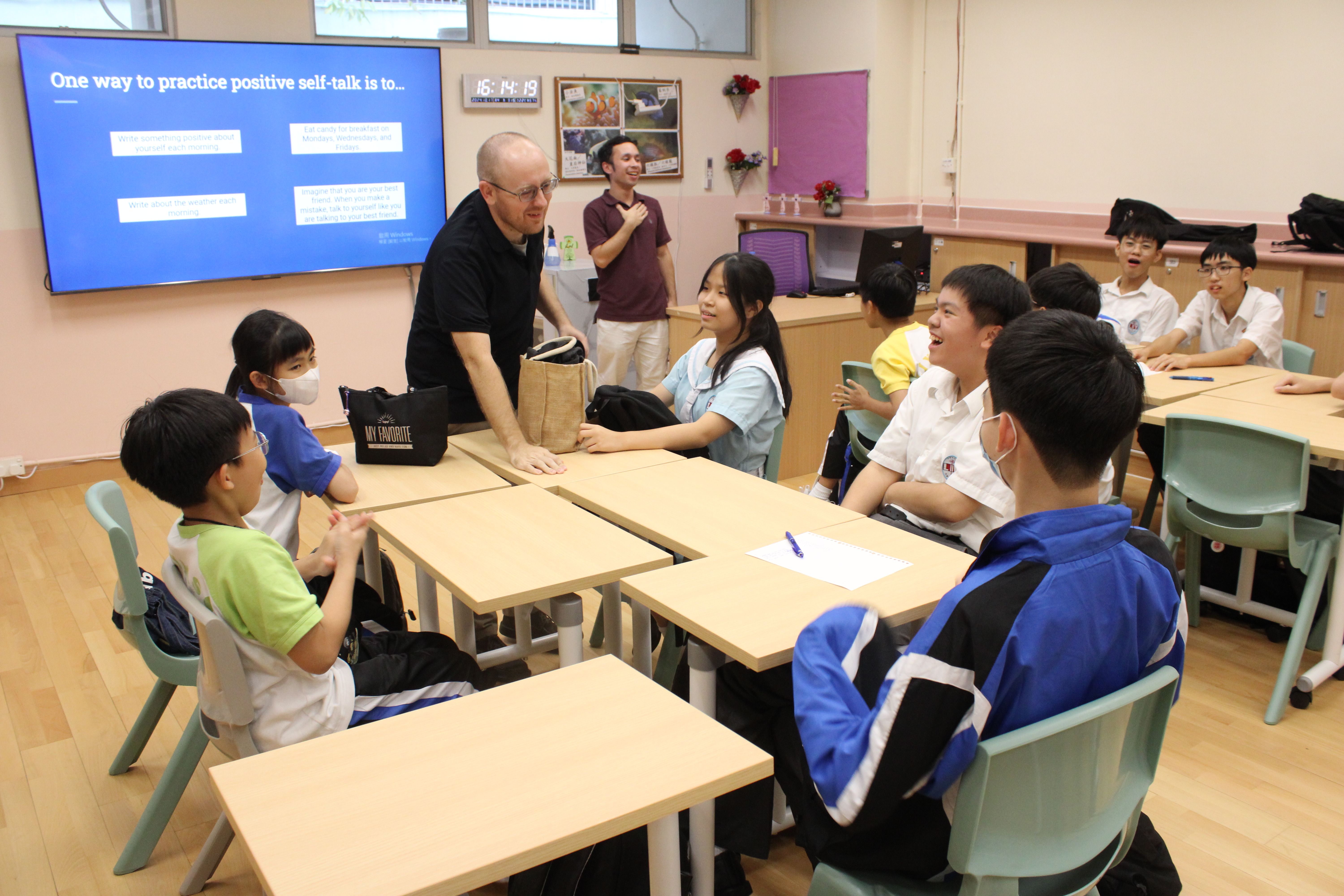
| Orientation Activities and Healthy Life | : | To help incoming students adapt more easily to their new school life, we organise a range of programmes, including Chinese, English, and Mathematics bridging courses, as well as an Orientation Day. After the school year begins, a variety of activities are also available, such as counselling groups focusing on students’ social and emotional development, the Big Brothers and Sisters Mentorship Scheme, the S.1 Learning Adjustment Period, and the S.1 Life Planning Group. |
 School Characteristics
 | School Management | ||
| (1) School's Major Concerns | : | Major Concern 1: Enhancing students’ self-learning abilities, encouraging active participation in the learning process, and fostering a positive learning environment. Major Concern 2: Promoting a healthy campus life through a well-structured routine and establishing a diverse, balanced learning rhythm. Major Concern 3: Fostering strong teacher-student relationships and strengthening campus discipline via effective class management. |
| (2) School Management Organisation | : | Long-term development is determined by the Incorporated Management Committee (IMC). Internal affairs are managed by the Principal, with assistance from the vice-principals and heads of various committees. The school management places considerable emphasis on strengthening communication with front-line teachers, enhancing the accountability of middle management, and developing the school through contributions shared by all teachers. |
| (3) Incorporated Management Committee / School Management Committee / Management Committee | : | The Incorporated Management Committee (IMC) comprises individuals concerned with educational affairs, drawn from various walks of life. Its members include professional accountants, lawyers, professors, a former president of a Bible seminary, education professionals, parent and teacher representatives, alumni, and an independent member of the public. Together, they work to ensure that all students receive a quality education. |
| (4) School Green Policy | : | The School Environment and Development Group has been established to oversee the school’s various environmental facilities and their use. Its main responsibility is to develop appropriate policies for managing the school environment, with the aim of promoting environmental conservation. |
| Learning and Teaching Plan | ||
| (1) Whole-school Language Policy | : | 1. A practical approach is adopted in school-based medium-of-instruction policy. From S.1 onwards, Extended Learning Activities in English are introduced gradually. Mathematics is taught in English in S.3 to prepare students for studying Mathematics and Science in English in senior forms. 2. To enrich the school’s English environment, three Native English teachers have been employed in order to provide students with more opportunities to communicate in English, both inside and outside the classroom. Also, a school-based English curriculum has been introduced to improve students’ English proficiency. 3. In addition to English learning, the school promotes RAC and cross-curricular learning. Besides, the school has increased training to enhance students’ Chinese writing, analytical, and presentation skills. Students are frequently required to think deeply and provide detailed comments, aiming to strengthen their communication and inference skills. |
| (2) Learning and Teaching Strategies | : | 1. The school aims to promote diverse teaching approaches which encourage interaction between teachers and students, as well as cooperative learning. Various life-wide learning activities are regularly held to develop students’ creativity, critical thinking and self-regulation in learning. This also broadens students’ learning experiences in areas such as values education, life planning, and social services. 2. Every classroom is equipped with a computer, a visualiser and a television to facilitate teaching using information technology. Tablet computers are used to enhance students' autonomy through mobile e-learning. 3. To meet the diverse needs and abilities of students and provide tailor-made teaching materials, school-based curricula are adopted in various subjects in junior forms. This helps students to acquire knowledge and develop critical thinking skills effectively. 4. In major subjects for junior forms, split groups are implemented to create a more favourable teacher-student ratio, allowing for more targeted support and catering to individual learning needs. |
| (3) School-based Curriculum | : | 1. Electives: 2X and 3X. The first and second groups each offer six electives. The third group offers 2 electives for students to choose from. 2. Curriculum highlights: The school stresses diversified curricula in order to promote students' spiritual, moral, intellectual, physical, social and aesthetic development, supporting their overall balanced growth. By encouraging student-teacher interactions and collaborative learning, students’ communication and problem-solving skills are effectively enhanced. In addition, various life-wide learning activities and cross-curricular programmes are regularly organised to develop students’ creativity and critical thinking from multiple perspectives. |
| (4) Major Renewed Emphases in the School Curriculum | : | 1. Reading is the cornerstone of learning. There is a morning reading session to foster good reading habits. In addition, there are both Chinese and English extensive reading schemes. Students are also required to read newspapers and cross-modular articles in CSD. Apart from these measures, the Best Readers Scheme is carried out to increase exposure to a rich variety of text types and to enhance student learning across different knowledge domains. Furthermore, through diverse activities held in the new library, such as the Library Cafe, the school’s reading atmosphere has been greatly enhanced. 2. An e-learning platform offers a variety of study options, such as online exercises, quizzes and forums, through which teachers and students can interact. The goal is to enable students to learn in a self-directed manner without boundaries. In recent years, the BYOD (Bring Your Own Device) policy has also been implemented to further enhance classroom interactions, promote the effectiveness of mobile e-learning and increase student engagement in the learning process. 3. The Academic Committee actively collaborates with all subject panels to implement project learning through a cooperative learning approach. 4. Various subject panels in school, including Life Education, CSD, Social Studies, Chinese History and Physical Education, along with the Discipline and Guidance Committee, organise thematic activities to help students develop positive moral values and civic awareness. Additionally, morning and weekly assemblies aim to cultivate healthy, responsible, caring and perseverant citizenship among students. |
| (5) Life Planning Education | : | Through students' self-awareness, our school aims to help students realise their dreams and foster positive values, equipping them with a variety of skills through student planning projects and experiencing different aspects of job training, ultimately assisting them in adjusting their life direction. To achieve these goals, various inspiring activities are organised according to students' different stages of learning, including life planning lessons, aptitude and professional analysis, workshops, talks, visits, the life planning group, enterprise founding group, and career week. Moreover, a life planning room, known as the 'Career Lounge', has been established. It not only provides teachers and students with a wealth of materials relating to tertiary education and careers, but also a comfortable environment for students to explore their strengths, plan their future and pursue their dreams. |
| Student Support | ||
| (1) Whole School Approach to Catering for Learner Diversity | : | Besides the splitting class arrangement in junior major subjects, the Student Support Team has also been established to formulate and oversee the school’ s inclusive policy, its implementation and training programmes. Over the past few years, teachers and student prefects have been provided with relevant training. In 2024/2025, 74.1% of our teachers have completed 30-hour or more systematic special education training courses. |
| (2) Whole School Approach to Integrated Education | : | Our school actively promotes integrated education to create a socially inclusive environment, ensuring that students with special educational needs can have the same opportunity to play to their strengths and showcase their learning in a safe and mutually respectful learning environment. The Student Support Team consists of the vice-principals, the coordinator, the support teacher, teachers from the Discipline & Guidance Committee, language teachers, social workers, the educational psychologist and the speech therapist. They meet regularly to develop suitable support programmes for students. The team consistently discusses learning, adaptation, and support measures with class teachers for relevant students. Additionally, our school is flexible in the deployment of the Learning Support Grant, which allows us to provide suitable assistance to students based on a diversified support model. These include employing additional teaching staff for individual counselling and adaptation, participating in school-based support services for students with special needs, and organising training groups and integrated activities, for instance, social skills training, literacy skills training, executive functions training, and expressive arts therapy workshop. Our school also attaches great importance to home-school collaboration so that parents understand their children’s learning progress and work together with the school to support their children’s development. |
| (3) Education Support for Non-Chinese Speaking (NCS) Students | : | Our school provides additional support for NCS students to facilitate their learning of Chinese: providing after-school support programmes in learning Chinese; and organising activities to create an inclusive learning environment in the school. |
| (4) Measures to Provide Adaptation for Learning and Assessment | : | Students are required to complete assignments so as to consolidate what they have learnt in class. Teachers are encouraged to design assignments in various forms, such as project learning, to promote independent and proactive learning among students. |
| Home-School Co-operation and School Ethos | ||
| (1) Home-School Co-operation | : | Nurturing the next generation is the responsibility of parents and teachers. Our Parent-Teacher Association (PTA), established in 1998, aims to strengthen the partnership between teachers and parents. To this end, we have organised various activities, including seminars, workshops, barbecues, picnics, and cooking classes. We have also conducted sharing sessions such as the home-school sharing session, “Talk with the Principal” and “Tea with School Managers.” We have also established the PTA fund, which awards scholarships to both special needs students and gifted students. Since 2007, provisions have been made for a parent to be elected as a parent manager on the Incorporated Management Committee, enabling closer liaison with the school on matters of mutual interest. |
| (2) School Ethos | : | Keeping in step with the spirit of Jesus Christ our Lord, and grounded in justice and love, we have fostered an excellent school spirit, with the expectation that students will develop a sense of independence and organisational skills necessary for better self-management. We believe that a good school ethos, an active learning attitude and a serious approach to teaching are key to successful learning. |
| Future Development | ||
| (1) School Development Plan | : | 1. Our school continues to adopt cooperative learning strategies and introduces new elements and resources into the curriculum, including Life-wide Learning Day and school-based developed subjects, such as STEAM and learning strategies. This ensures that teaching and learning can keep pace with the times and that students are empowered to take ownership of their own learning. 2. To systematically nurture students’ good conduct and positive life values by maintaining a strong school ethos; to enhance life planning guidance to help students explore their goals and determine their future direction. 3. To streamline administrative procedures and create more space for teachers and students, thereby fostering more effective learning. |
| (2) Teacher Professional Training and Development | : | All our teachers hold university degrees and have received teacher qualification training, with 41% of them possessing a master’s degree. Our teaching team is highly experienced. We actively encourage our students to pursue lifelong learning. Our teachers also serve as role models by engaging in continuous professional development to enhance their standards. We also organise regular professional training sessions to promote professional exchange, improve teaching quality and strengthen the capabilities of middle management, all of which are essential for the school’s sustainable development. |
| Life-wide Learning (Including Five Essential Learning Experiences to be Provided through Key Learning Areas, Extra-curricular Activities, Co-curricular Activities, etc.) | : | We aim to offer students a wide variety of extra-curricular activities in academics, music, and art. In addition, we have school teams, uniformed groups and volunteer service opportunities available for interested students. S.1 students are required to select one activity from those offered. Such an arrangement provides students with further training and development opportunities, while also nurturing their interests and multiple intelligences. We have also organised systematic leadership training programmes for students. The Student Union and the four Houses were founded to guide students in caring about their school, community and country. These initiatives aim to strengthen students' sense of belonging to the school, and to enhance the school ethos, fostering civic awareness. The efforts of the Student Union extend beyond school, with various activities and projects outside the campus. The school organises cultural exchange programmes each year to such destinations as Beijing, Shanghai, the Pearl River Delta, Nanjing, Inner Mongolia, Australia, England, Singapore, Seoul and Osaka. These programmes broaden students’ horizons through academic and cultural exchanges. |
| Others | : | Our students have recently achieved outstanding results in various inter-school or public competitions, including recitation, writing, music, basketball, cross-country running, swimming, scout activities, and social services. In addition, our alumni have excelled in their future studies and careers: 1. Congratulations to alumnus Lui Ka Sin on being awarded a First Class Honours Degree in Applied Biology from Hong Kong Baptist University. 2. Congratulations to alumnus Chang Mei Wa on being named to the Dean’s list in the Department of Engineering at the Hong Kong University of Science and Technology. 3. Congratulations to alumnus Chan Yuk Fai on receiving one of the HKU Foundation Scholarships for Outstanding Students from the Quantitative Finance Department, Faculty of Science, at the University of Hong Kong. 4. Congratulations to alumnus Wong Wai Chung for breaking the Hong Kong Half Marathon Junior Record in 2013, and ranking fifth among Hong Kong runners in the Standard Chartered Hong Kong Marathon 2018. 5. Congratulations to alumnus Ngai Kang on becoming the Chinese champion at the Standard Chartered Hong Kong Marathon 2017, and the Hong Kong runner champion at the same marathon in 2018. 6. Congratulations to alumnus Choi Wan Yu on securing a bronze medal in women's 61kg karate competition at the Asian Games in Indonesia, 2018. |
| Direct Public Transportation to School | : | Bus: 34, 37, 37M, 38 Mini-bus: 87, 87K, 89M, 94, 98, 407 |
| Remarks | : | Our school recommends students to attend off-campus applied learning course outside the school based on students’ ability. |
 School Map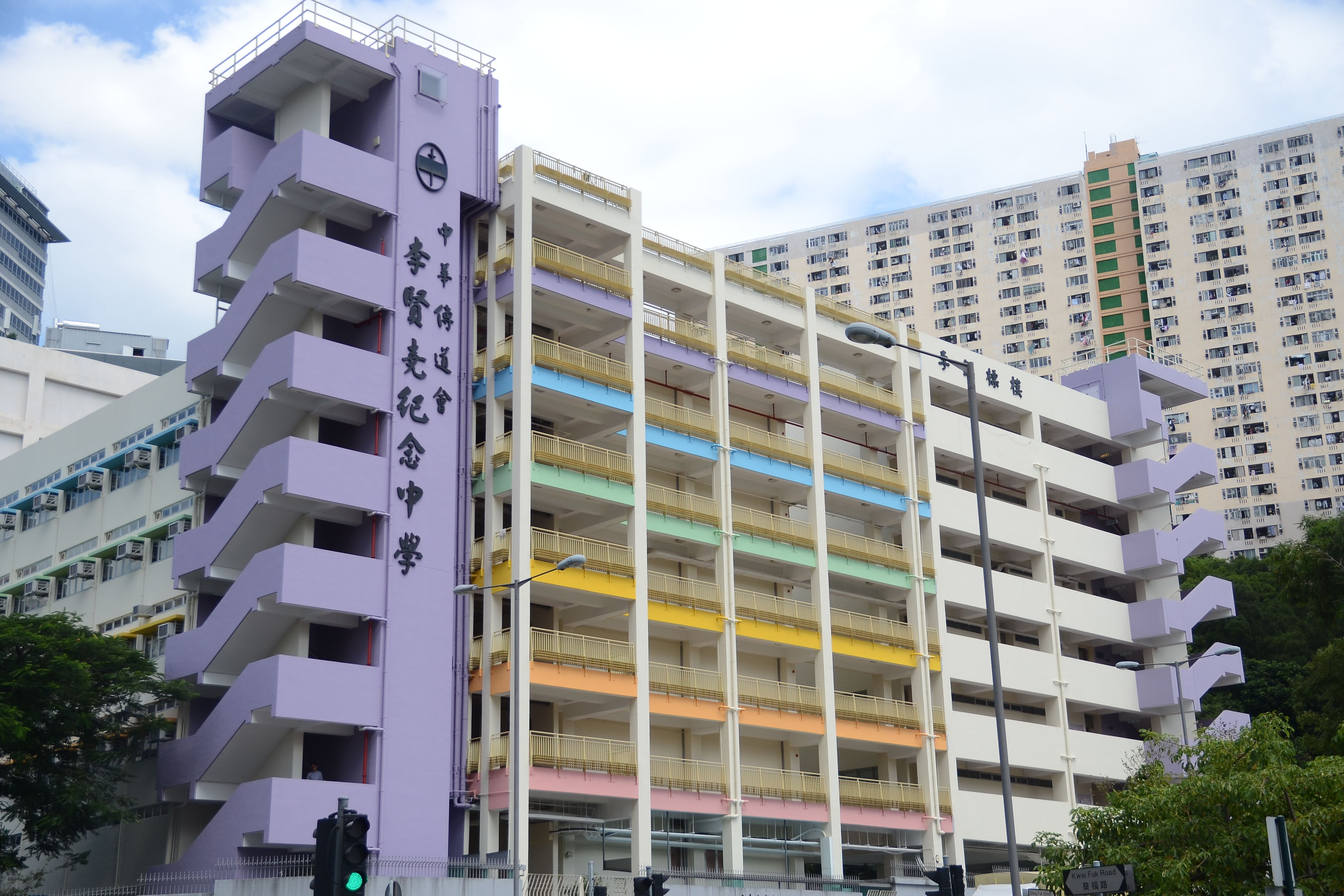

Last revision date: 5/12/2025


