 Secondary School Profiles 2025/2026


 Secondary School Profiles 2025/2026
| Address: | 22 Plover Cove Road Tai Po | |||
| Phone: | 26516033 | Email: | info@flk.edu.hk | |
| Fax: | 26509629 | Website: | http://www.flk.edu.hk | |
School Mission
Provide "holistic education".
Cultivate proper attitudes and the spirit of serving others based on Christian principles.
Develop full potential.
Build up self-esteem, develop creativity and foster independent and critical thinking.
Enhance language proficiency and empower the acquisition of new technologies in preparation for future innovations.
 School Information
 | District | : | Tai Po |
| Other District(s) | : | North |
| Supervisor / Chairman of School Management Committee | : | Mr. Au Yeung Chi Kong |
| Principal (with Qualifications / Experiences) | : | Ms. Wong Wai Shan (BSc (Hons) in Mathematics, DipEd, MSc. in Mathematics Education) |
| School Type | : | Aided |
| Student Gender | : | Co-ed |
| Area Occupied by the School | : | About 6000 Sq. M |
| Name of Sponsoring Body | : | The Church of Christ in China, Hong Kong Council |
| Incorporated Management Committee | : | Established |
| Percentage of School Supervisor and Managers / Chairperson and Members of School Management Committee (SMC) of Government Schools Fulfilling the Training Targets | : | Not Applicable |
| Religion | : | Protestantism / Christianity |
| Year of Commencement of Operation | : | 1987 |
| School Motto | : | Wisdom and discipline, knowledge and integrity. |
| Parent-Teacher Association | : | Yes |
| Student Union / Association | : | No |
| Past Students’ Association / School Alumni Association | : | Yes |
| 4Rs Mental Health Charter | : | Yes |
| Whole School Health Programme | : | Pledged School |
 Chargeable Fees (2025/2026)
| School Fee ($) | Tong Fai ($) | ||
| S1 | - | - | |
| S2 | - | - | |
| S3 | - | - | |
| S4 | - | $340 | |
| S5 | - | $340 | |
| S6 | - | $340 | |
| Parent-Teacher Association Fee (Annual) ($) | : $40 | ||
| Student Union / Association Fee ($) | : - | ||
| Approved Charges for Non-standard Items (Annual)($) | : $310 | ||
| Other Charges / Fees ($) | : - | ||
 School Facilities
 | Number of Classroom(s) | : | 25 |
| School Facilities | : | Classrooms and special rooms are equipped with computers, smart blackboards and air conditioners. There are over 600 computers and more than 200 tablets for students' use, enhancing inter active learning effectiveness. A self-study room is available for students to revise comfortably at school during non-class hours. The School's IT infrastructure is advanced, featuring four dedicated computer rooms. The school library has been fully digitalised and is actively developing more online reading resources. Besides, the school is equipped the English Corner where students can regularly communicate with non-native-speaking English teacher. |
| Facility(ies) for Supporting Students with Special Educational Needs | : | Our school provides dedicated SEN facilities, including a Multi-Learning Activities Room and interactive technologies, to enhance accessibility. For equitable assessments, assistive technologies like speech-to-text and screen reader software enable customized exam accommodations. |
 Teaching Staff Information (Including School Head) in the 2025/2026 School Year
 | Number of Teaching Posts in the Approved Establishment | : | 53 |
| Total Number of Teachers in the School | : | 53 |
| Qualifications and Professional Training | : | Percentage of Teaching Staff (%) |
| Had Received Teacher Training | : | 79% |
| Bachelor Degree | : | 100% |
| Master / Doctorate Degree or above | : | 40% |
| Special Education Training | : | 57% |
| Years of Experience | : | Percentage of Teaching Staff (%) |
| 0-4 Years | : | 41% |
| 5-9 Years | : | 19% |
| 10 Years or above | : | 40% |
 2025/2026 Class Structure
 | Number of Classes | ||
| S1 | : | 3 |
| S2 | : | 3 |
| S3 | : | 3 |
| S4 | : | 3 |
| S5 | : | 4 |
| S6 | : | 4 |
 Subjects Offered
 | Subjects Offered in the 2025/2026 School Year | : | S.1 - S.3 |
| Chinese as the Medium of Instruction | : | Chinese Language, Putonghua, Chinese History, Mathematics*, Integrated Science*, Computer Literacy*, Business Fundamentals*, Music*, Physical Education, Religious Education, Life and Society*, Citizenship, Economics and Society*, History, Geography, Technology Fundamentals, Visual Arts* |
| English as the Medium of Instruction | : | English Language |
| Adopt a Different Medium of Instruction by Class or by Group / School-based Curriculum | : | - |
| Subjects Offered in the 2025/2026 School Year | : | S.4 - S.6 |
| Chinese as the Medium of Instruction | : | Chinese Language, Mathematics, Citizenship and Social Development, Religious Education, Physical Education, Physics, Economics, Visual Arts, Biology, Information and Communication Technology, “Business, Accounting and Financial Studies - Accounting”, “Business, Accounting and Financial Studies - Business Management”, Design and Applied Technology, Chemistry, Chinese History, OLE, Applied Learning, Image Design Pre-sessional course |
| English as the Medium of Instruction | : | English Language |
| Adopt a Different Medium of Instruction by Class or by Group / School-based Curriculum | : | - |
| Subjects to be Offered in the 2026/2027 School Year | : | S.1 - S.3 |
| Chinese as the Medium of Instruction | : | Chinese Language, Putonghua, Chinese History, Mathematics*, Integrated Science*, Computer Literacy*, Business Fundamentals*, Music*, Physical Education, Religious Education, Life and Society*, Citizenship, Economics and Society*, History, Geography, Technology Fundamentals, Visual Arts* |
| English as the Medium of Instruction | : | English Language |
| Adopt a Different Medium of Instruction by Class or by Group / School-based Curriculum | : | - |
| Subjects to be Offered in the 2026/2027 School Year | : | S.4 - S.6 |
| Chinese as the Medium of Instruction | : | Chinese Language, Mathematics, Citizenship and Social Development, Religious Education, Physical Education, Physics, Economics, Visual Arts, Biology, Information and Communication Technology, “Business, Accounting and Financial Studies - Accounting”, “Business, Accounting and Financial Studies - Business Management”, Design and Applied Technology, Chemistry, Chinese History, OLE, Applied Learning, Image Design Pre-sessional course |
| English as the Medium of Instruction | : | English Language |
| Adopt a Different Medium of Instruction by Class or by Group / School-based Curriculum | : | - |
*Subjects with Extended Learning Activities (ELA) in English
 Secondary One Admission, Orientation Activities & Healthy School Life
 | Secondary One Admission | : | Our school will accept discretionary places. Our school will participate in the Secondary School Places Allocation System through central allocation stage (Applicable for admission to S.1 in September 2026 ).Secondary One Admission: 1. Interview (demeanor and politeness, communication skills, knowledge about the school, interest and daily habits): 30%; 2. P.5 and P.6 academic standard: 30%; 3. P.5 and P.6 conduct, records of merits and demerits and remarks from primary school: 20%; 4. Other performance (including extra-curricular activities, services and awards): 20%. |
| Orientation Activities and Healthy Life | : | Orientation Activities: 1. S.1 Summer Bridging Courses for new students, including morning assemblies, class teacher periods, and introductory sessions and newly emerged sports; 2. Parents' Night with S.1 class teachers to introduce school policies; 3. Orientation activities co-organised by the school and C.C.C. Kwong Fuk Church to support students' physical, mental and spiritual development, including tutorial classes and music instrument lessons, helping students adapt to a secondary school life in a caring environment; 4. Different activities tailored for S.1 students and parents following the commencement of the school term, such as training day-camp as well as parents' talk. |
 School Characteristics
 | School Management | ||
| (1) School's Major Concerns | : | Main points of the School Development Plan: 1. To enhance students' sense of national identity. 2. To cultivate students' healthy lifestyle. |
| (2) School Management Organisation | : | The IMC is the governing body of our school. It is responsible for the administration of the school via a school-based management approach. Our School Administration Committee as well as various departments and groups work together to formulate school policies. Through strategic planning, effective administration and ongoing evaluation, we strive ceaselessly for self improvement and for an enhanced development of the school. We also attach great importance to fostering team spirit amongst teachers and to the building up of a learning community. These are instrumental to the ever-growing caring culture of our school. |
| (3) Incorporated Management Committee / School Management Committee / Management Committee | : | We have an Incorporated Management Committee with representatives from the school sponsoring body, teachers, parents, alumni and the community. |
| (4) School Green Policy | : | We have been carrying out a Green School Approach, which includes the installation of a wind / solar hybrid system. Moreover, we have held some moral and civic education activities to enhance students' environmental awareness and develop their sense of responsibility towards the environment. |
| Learning and Teaching Plan | ||
| (1) Whole-school Language Policy | : | Senior form students are required to host assembly announcements so as to promote their oral communication skills as well as to strengthen their confidence. Besides, we provide different activities to promote students' bilingual ability; in Chinese, we have drama activities, Chinese Club, calligraphy workshops, Chinese Culture Week and inter-school choral speaking competitions; in English, we have S.1 lunchtime English activities, English Corner, English Week and choral speaking competitions. Extended Learning Activities (ELA) in English in some topics of non-language subjects enable junior form students to have systematic exposure to subject-related English so as to fulfill the requirement of "Language across the Curriculum". |
| (2) Learning and Teaching Strategies | : | Our teachers are dedicated to education. They are friendly and are able to create a caring and inviting environment for students. They can adopt suitable teaching strategies according to their students' ability level, and they arrange a wide variety of learning activities to arouse students' interests. Also, our school implements e-Learning to establish good student-teacher relationships, enhance learning motivation, strengthen the effectiveness of interactive teaching and ultimately make students love learning. Besides, bridging courses are provided for students promoted from primary school to S.1 and from S.3 to S.4 so as to facilitate their adaptation to the new curriculum. |
| (3) School-based Curriculum | : | 1. Electives: 2X and 3X. Selection Criteria: Based on students' preferences and academic performance. 2. Curriculum highlights: The school is committed to fostering students' all-round and balanced growth. Tailored "Other Learning Experiences" are integrated into fixed lesson periods, with diverse "life-wide learning" opportunities offered at various times to enrich their educational journey. Additionally, the school coordinates a district-wide joint-school curriculum, providing a broad and inclusive range of courses while promoting resource sharing to broaden students' perspectives. Gifted Education: The school adopts a "Three-Tier Implementation Model" to systematically nurture students' potential, encourage diverse development, and enable more students to discover and maximize their individual strengths. |
| (4) Major Renewed Emphases in the School Curriculum | : | Values Education: From Form 1 to Form 6, the curriculum encompasses values such as respect, love, diligence, responsibility, courage, and perseverance. Through committee efforts, teaching design, subject integration, and biblical practices, it systematically fosters holistic development. Activities include class rule formulation, volunteer service, workplace visits, outdoor training, and incorporating biblical verses and reflections to enhance students' character and faith. We organize “Life-wide Learning Day” to help students develop social skills through interdisciplinary studies. Moral, Civic, and National Education: National education is promoted through a whole-school participation model, with seamless indoor-outdoor collaboration. This includes cross-disciplinary themes like the National Games, class teacher lessons, assemblies, Chinese Culture Week, and mainland exchange programs, alongside national and national security education competitions. These initiatives drive diverse, all-round learning, broaden students' perspectives, and encourage focus on national and societal development, nurturing national identity. Extra-curricular Activities: Designated time slots are systematically allocated in the school timetable to encourage active student participation in a variety of extra-curricular activities, promoting holistic development. |
| (5) Life Planning Education | : | By adopting the whole-school approach, we assist students in understanding their personal characteristics and interests, and in setting short-term and long-term life goals at different stages. In addition to career planning education through various subjects, different committee-led activities, and career planning programmes, our school collaborates with business enterprises and NGOs to host a variety of career planning activities. These include activities such as simulated interviews, visits to tertiary institutions, overseas and mainland cultural exchange tours, job tasting programmes, and bazaars to explore the world of work. These initiatives aim to prepare students for further studies and employment. Students are encouraged to continue their studies locally, in Mainland, or overseas based on their interests, abilities, and academic performance. Additionally, we train career planning ambassadors to provide classmates with career planning information and address related queries. |
| Student Support | ||
| (1) Whole School Approach to Catering for Learner Diversity | : | In order to implement the whole school approach of students support mode and to cater for the needs of students, the constant activities of the Counselling Committee, the Discipline Committee and the Student Support Committee have established a culture of caring and inclusiveness throughout the school. Different levels of development have been set at all six forms to focus on setting development goals. A number of scholarships have been set up to encourage students to develop different potentials, enhance academic performance and care for poverty. The support services include supporting cross-boundary and newly-arrived children to adapt to Hong Kong's education policy and enhance English training. For the provision of professional services for students with special needs, associate teachers provide assistance and psychological assessments are carried out by Education Psychologists when needed. Parents evenings and seminars of relevance have been held many times. Many teachers have also completed professional training courses for special education organized by the Education Bureau. |
| (2) Whole School Approach to Integrated Education | : | Our school adopts the Whole School Approach to Integrated Education. Support measures are mainly planned, implemented, and evaluated by the Student Support Committee. Committee members include the SENCO, SENSTs, Student Support Committee teachers, educational psychologist, social workers, counsellors, and associate teachers. The approach is implemented in each form, and committee members work closely with class teachers, subject panels, subject teachers, and other committees to plan support measures for students with special educational needs. Parents and the educational psychologist are invited to attend case meetings if necessary. Information on new students with special educational needs is collected during the F.1 bridging course to identify the needs as early as possible, enabling timely support arrangements. Screening tools are used for early identification of learning difficulties, and students will be referred to the educational psychologist as needed. We use the Learning Support Grant to hire services including, but not limited to speech therapy, programs for the development of relational skills, training classes for dyslexia in Chinese, after-school learning groups, and potential exploration teams. Furthermore, we have employed subject teachers, counsellors, and associate teachers specifically for supporting students with special educational needs. Our school has a "Multi-Learning Activities Room" for group training in socializing and communication, E-learning equipment, such as Smart Blackboard and tablets, are utilized to enhance SEN students' learning. In addition, speech-to-text software and screen reading software are installed in specific to ensure the assessments are arranged in accordance with specific individual need. |
| (4) Measures to Provide Adaptation for Learning and Assessment | : | On top of summative assessment, such as tests and examinations, we continuously collect evidences that show students’ progress in order to improve their learning effectiveness. Besides, scholarships are recommended to those high-achievers as an encouragement. |
| Home-School Co-operation and School Ethos | ||
| (1) Home-School Co-operation | : | Our school promotes parents’ participation in school decisions and active participation in school and community activities. A cross-border parent network is established to support parents’ needs. Parents Day is held twice a year, and parent sharing sessions are held according to the needs of different levels, so as to strengthen home-school communication; Parent education lectures, parent-child picnics, parent-child workshops and activities and so on, are also organised to enhance the communication skills between parents and children, promote positive values and establish harmonious parent-child relationships. |
| (2) School Ethos | : | We aim at cultivating love, happiness and inclusion on our campus, so that students can learn and grow up in the best possible environment. Co-class teachers and form teachers are appointed to look after the needs of every student until graduation. School-based social workers and educational psychologist services are provided and the 'School Pastoral Ministry Project' is launched with the C.C.C. Kwong Fuk Church in response to the needs of our students, parents and teachers. |
| Future Development | ||
| (1) School Development Plan | : | Our school aims at providing "holistic education". The main points of School Development Plan: 1. Learning to learn, to embrace lifelong learning. 2. To develop students' full potential. 3. To nurture students' spiritual growth and cultivate a position outlook on life. |
| (2) Teacher Professional Training and Development | : | In order to actively encourage teachers to pursue professional training, the school has set up the Teacher Professional Development Committee to promote internal and external teaching exchanges, and collaborate with universities and colleges to carry out various teaching research projects to enhance learning and teaching effectiveness and develop team spirit. The school also has a knowledge sharing platform to regularly share the latest teaching information and exchange new experiences during staff meetings to foster a culture of continuous learning among the teaching team. |
| Life-wide Learning (Including Five Essential Learning Experiences to be Provided through Key Learning Areas, Extra-curricular Activities, Co-curricular Activities, etc.) | : | To complement the learning goals, aims and objectives of Key Learning Areas as well as cross-curriculum priorities, our school has been incorporating closely life-wide learning into whole-school curriculum, with a view to actualizing student learning in genuine contexts and transcending conventional classroom learning settings. With good use of community resources, multifaceted learning contexts (combinations of time, venue and people) and partnership between departments, our teachers also aim to provide students with ample meaningful learning opportunities that serve to achieve the broad learning outcomes that are more difficult to attain through standard classroom teaching alone. Our life-wide learning program includes but is not limited to visits, site visits, field trips, social service, camping, extra-curricular activities as well as thinking skill training. Besides, our school is committed to deepening students' life-wide learning through the integration of the following five essential learning experiences: i) Intellectual Development ii) Value Education iii) Community Service iv) Physical and Aesthetic Development v) Career-related Experiences This multifarious experiential learning acquired through life-wide learning empowers students to achieve the aims of whole-person development (e.g. skills, attitudes, approaches, styles and value) and enables them to develop the lifelong learning capabilities. |
| Others | : | Please refer to the School Website. |
| Direct Public Transportation to School | : | Bus: 79, 73X, 74D, 272X, A47X, E41, *B8, *64X, *65X, *74B, *74P, *74R, *75P, *271B, *271P, *272E, *272P, *274P, *307P, *907C; MTR: Tai Po Market Station; Green mini-bus: 26, 28K, 806B, 806A, 806C, *501S, *29. |
| Remarks | : | Joint-school Curriculum in Tai Po is applicable to both Senior Secondary Elective Subjects and Applied Learning Subjects. We provide Visual Arts as an elective subject, and partner with VTC and HKCT to offer Applied Learning Subjects such as Image Design and English for Business Services. Every week, two lessons are scheduled for school-based Other Learning Experience courses, including Pet Care, Sports Therapy, Digital Media Production, and Barista Certificate training. Ability-based grouping is adopted to cater for learners' diversity. |
 School Map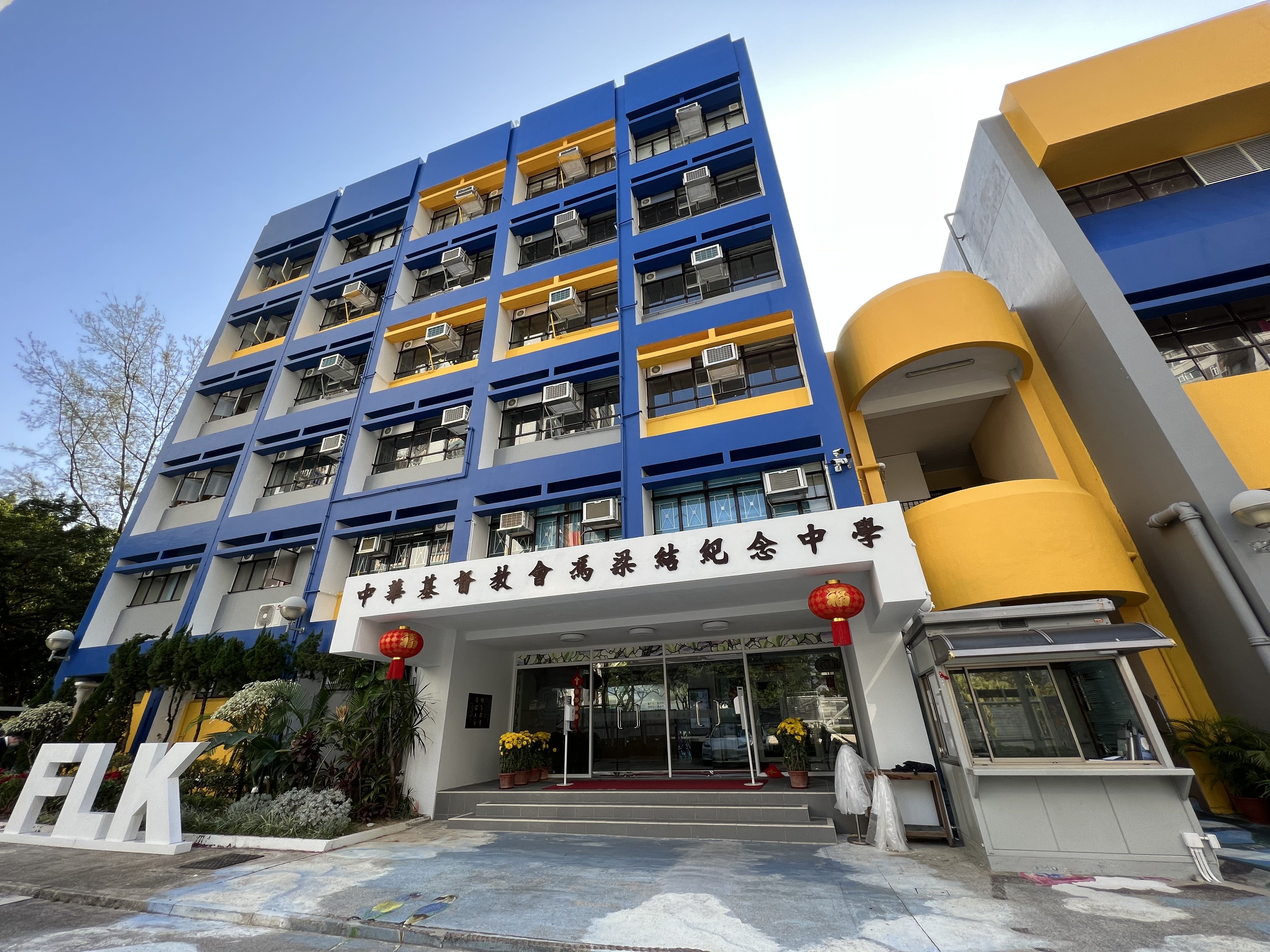

Last revision date: 15/12/2025


