 Secondary School Profiles 2025/2026


 Secondary School Profiles 2025/2026
| Address: | 16 Oak Street Tai Kok Tsui | |||
| Phone: | 23923963 | Email: | cccmkc@cccmkc.edu.hk | |
| Fax: | 21427376 | Website: | http://www.cccmkc.edu.hk | |
School Mission
We strive to provide our students with person-centred education with love and care so that they can maximize their potential to lead an abundant life, to serve the community and to glorify the Lord.
 School Information
 | District | : | Yau Tsim Mong |
| Other District(s) | : | Sham Shui Po |
| Supervisor / Chairman of School Management Committee | : | Prof. Kao Yi Tsun, Richard |
| Principal (with Qualifications / Experiences) | : | Dr. Cheung Pui Shan (BSc (Hons) (CUHK), PGDE (Distinction, CUHK), MASGC (CUHK), EdD (CUHK)) |
| School Type | : | Aided |
| Student Gender | : | Co-ed |
| Area Occupied by the School | : | About 4600 Sq. M |
| Name of Sponsoring Body | : | The Hong Kong Council of the Church of Christ in China |
| Incorporated Management Committee | : | Established |
| Percentage of School Supervisor and Managers / Chairperson and Members of School Management Committee (SMC) of Government Schools Fulfilling the Training Targets | : | 100% |
| Religion | : | Protestantism / Christianity |
| Year of Commencement of Operation | : | 1967 |
| School Motto | : | It is more blessed to give than to receive. |
| Parent-Teacher Association | : | Yes |
| Student Union / Association | : | Yes |
| Past Students’ Association / School Alumni Association | : | Yes |
| 4Rs Mental Health Charter | : | Yes |
| Whole School Health Programme | : | Action School |
 Chargeable Fees (2025/2026)
| School Fee ($) | Tong Fai ($) | ||
| S1 | - | - | |
| S2 | - | - | |
| S3 | - | - | |
| S4 | - | $320 | |
| S5 | - | $320 | |
| S6 | - | $320 | |
| Parent-Teacher Association Fee (Annual) ($) | : $80 | ||
| Student Union / Association Fee ($) | : $20 | ||
| Approved Charges for Non-standard Items (Annual)($) | : $340 for upgrading teaching and learning facilities / equipment | ||
| Other Charges / Fees ($) | : - | ||
 School Facilities
 | Number of Classroom(s) | : | 30 |
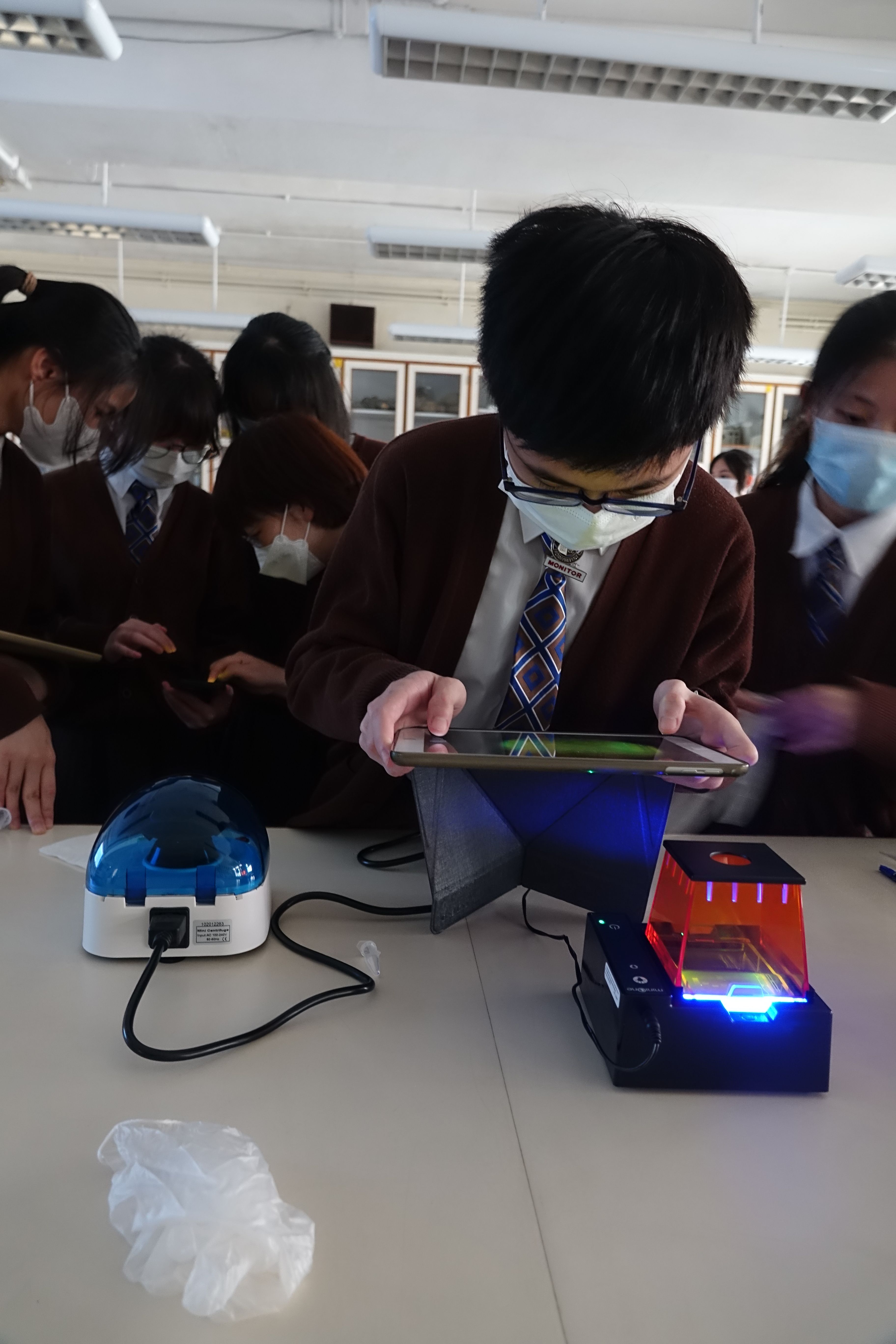
| School Facilities | : | All the 30 classrooms and special rooms are air-conditioned and equipped with full WIFI coverage, computer, projector, Apple TV and visualizer. Special rooms include: IT Innovation Laboratory (equipped with laser cutters and 3D printers), STEM Learning Centre, 2 Computer Rooms, 5 Laboratories, Library, English Activity Room, Chinese Culture Room, Geography Room, Ceramics Room, Visual Art Room, Home Economics Room, Needlework Room, Music Room, etc. The school has an assembly hall with capacity over 1300, a mini hall with equipment for drama and other performances, a canteen with capacity of 100, Religious Education Resource Centre, Gym Room, changing rooms and bathrooms with warm water supply, etc. |
| Facility(ies) for Supporting Students with Special Educational Needs | : | Ramp, Accessible lift, Accessible toilet, tactile guide path, accessible public information / service counter, visual fire alarm system and Tactile signage with Braille. |
 Teaching Staff Information (Including School Head) in the 2025/2026 School Year
 | Number of Teaching Posts in the Approved Establishment | : | 53 |
| Total Number of Teachers in the School | : | 58 |
| Qualifications and Professional Training | : | Percentage of Teaching Staff (%) |
| Had Received Teacher Training | : | 93% |
| Bachelor Degree | : | 100% |
| Master / Doctorate Degree or above | : | 55% |
| Special Education Training | : | 66% |
| Years of Experience | : | Percentage of Teaching Staff (%) |
| 0-4 Years | : | 19% |
| 5-9 Years | : | 21% |
| 10 Years or above | : | 60% |
 2025/2026 Class Structure
 | Number of Classes | ||
| S1 | : | 4 |
| S2 | : | 4 |
| S3 | : | 4 |
| S4 | : | 4 |
| S5 | : | 4 |
| S6 | : | 4 |
 Subjects Offered
 | Subjects Offered in the 2025/2026 School Year | : | S.1 - S.3 |
| Chinese as the Medium of Instruction | : | Chinese Language, Chinese History, Putonghua, Religious Education |
| English as the Medium of Instruction | : | English Language, Mathematics, Citizenship, Economics and Society (S.1, S.2), Life and Society (S.3), History, Geography, Science (S.1, S.2), Science (Physics) (S.3), Science (Chemistry) (S.3), Science (Biology) (S.3), Business Fundamentals (S.3), Computer Literacy, Home Economics, Music, Visual Arts, Ceramics, Physical Education |
| Adopt a Different Medium of Instruction by Class or by Group / School-based Curriculum | : | - |
| Subjects Offered in the 2025/2026 School Year | : | S.4 - S.6 |
| Chinese as the Medium of Instruction | : | Chinese Language, Citizenship and Social Development, Chinese History, Tourism and Hospitality Studies, Physical Education (DSE), Religious Education |
| English as the Medium of Instruction | : | English Language, Mathematics, Mathematics (Extended Module 1), Mathematics (Extended Module 2), Physics, Chemistry, Biology, History, Geography, Economics, Business, Accounting and Financial Studies, Information and Communication Technology, Visual Arts, Music (DSE), Music, Physical Education |
| Adopt a Different Medium of Instruction by Class or by Group / School-based Curriculum | : | - |
| Subjects to be Offered in the 2026/2027 School Year | : | S.1 - S.3 |
| Chinese as the Medium of Instruction | : | Chinese Language, Chinese History, Putonghua, Religious Education |
| English as the Medium of Instruction | : | English Language, Mathematics, Citizenship, Economics and Society, History, Geography, Science (S.1, S.2), Science (Physics) (S.3), Science (Chemistry) (S.3), Science (Biology) (S.3), Business Fundamentals (S.3), Computer Literacy, Home Economics, Music, Visual Arts, Ceramics, Physical Education |
| Adopt a Different Medium of Instruction by Class or by Group / School-based Curriculum | : | - |
| Subjects to be Offered in the 2026/2027 School Year | : | S.4 - S.6 |
| Chinese as the Medium of Instruction | : | Chinese Language, Citizenship and Social Development, Chinese History, Tourism and Hospitality Studies, Physical Education (DSE), Religious Education |
| English as the Medium of Instruction | : | English Language, Mathematics, Mathematics (Extended Module 1), Mathematics (Extended Module 2), Physics, Chemistry, Biology, History, Geography, Economics, Business, Accounting and Financial Studies, Information and Communication Technology, Visual Arts, Music (DSE), Music, Physical Education |
| Adopt a Different Medium of Instruction by Class or by Group / School-based Curriculum | : | - |
 Secondary One Admission, Orientation Activities & Healthy School Life
 | Secondary One Admission | : | Our school will accept discretionary places. Our school will participate in the Secondary School Places Allocation System through central allocation stage (Applicable for admission to S.1 in September 2026 ).Admission criteria for S.1 DP: Academic performance and Rank Order of applicants provided by EDB 50%; Interview 30%; Conduct 10%; Awards, services & extra-curricular activities 10%. |
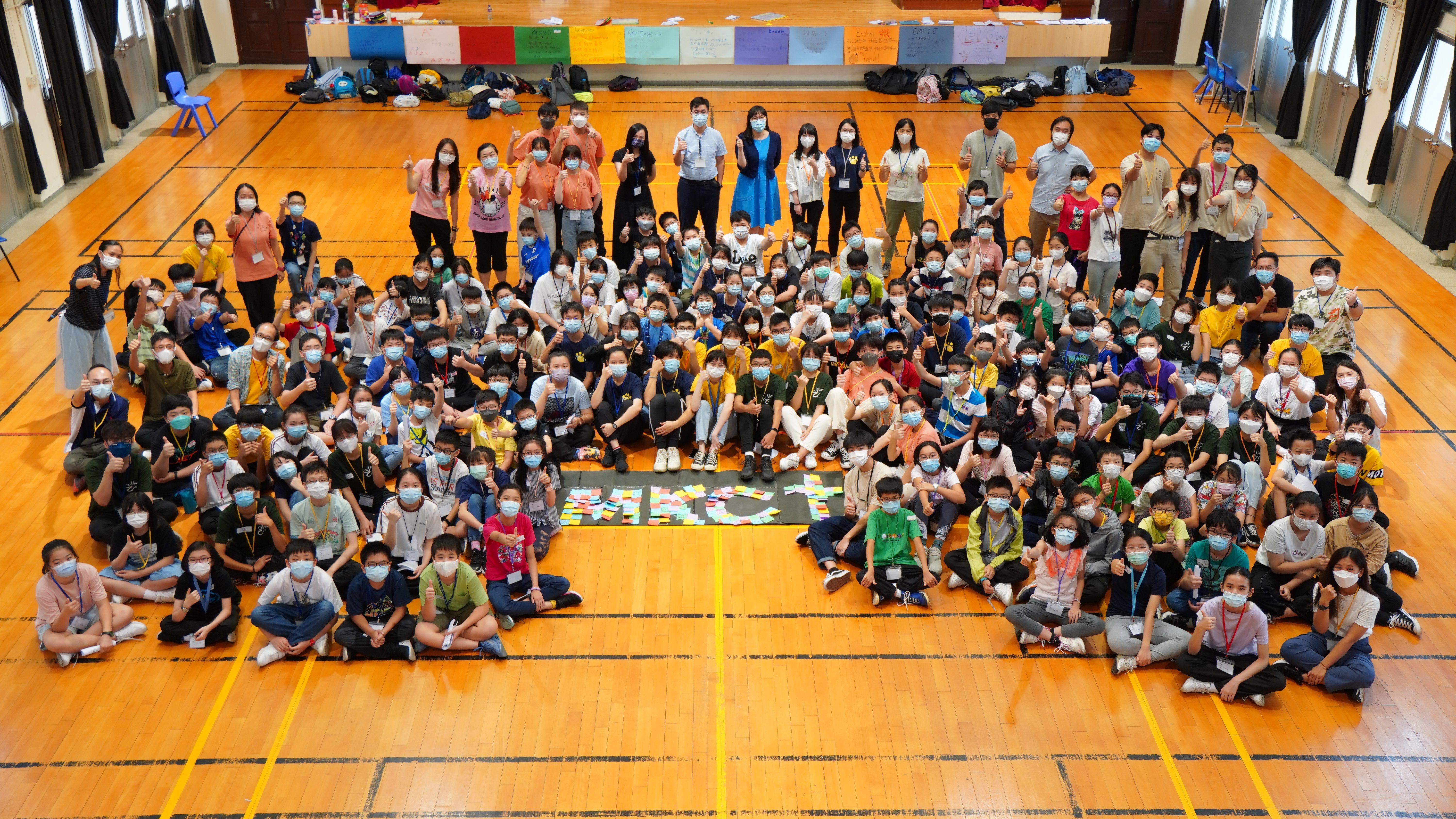
| Orientation Activities and Healthy Life | : | 1. S.1 Summer Bridging Programme to help students adapt to using English as the medium of instruction. Course content includes classroom language and an overview of generic terms in various EMI subjects. 2. S.1 orientation camp to help students build a healthy relationship among peers and to nurture students with positive attitudes. 3. Peer Counselling Scheme to help S.1 students adapt to secondary school life. |
 School Characteristics
 | School Management | ||
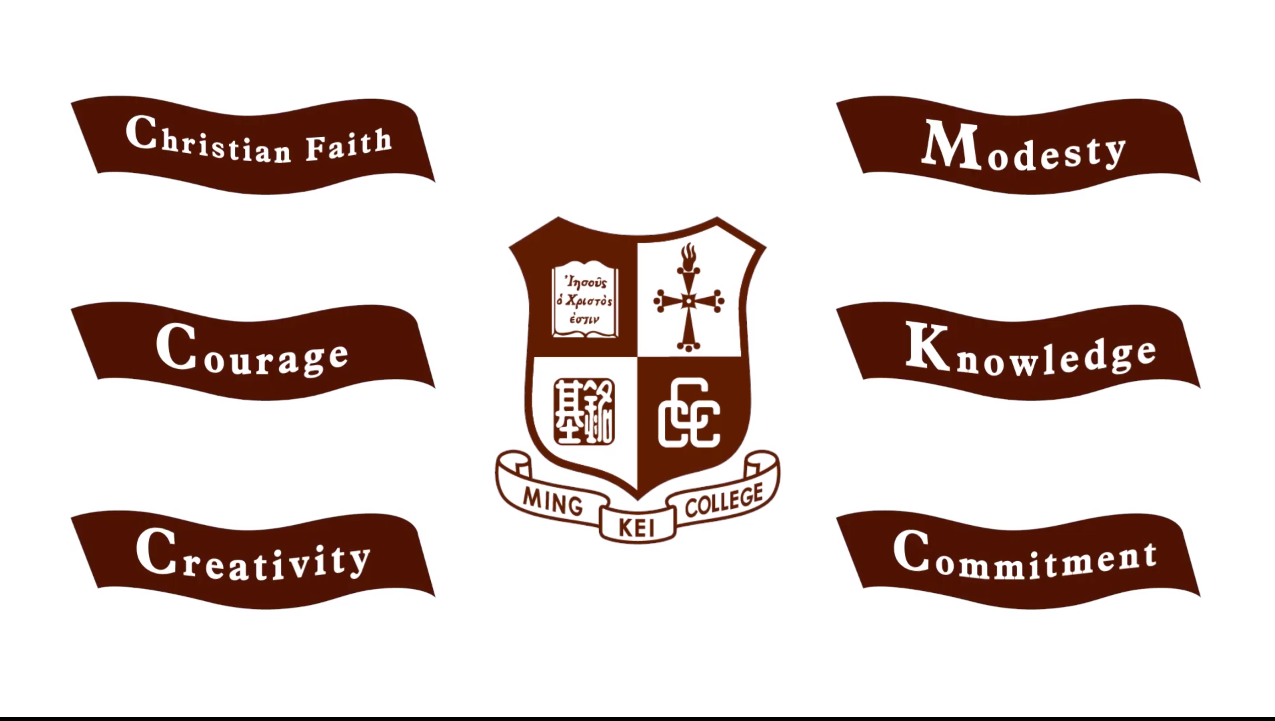
| (1) School's Major Concerns | : | Providing students with a holistic education is our goal. We strive to develop the following qualities in the growth journey at Ming Kei: Christian Faith, Courage, Creativity, Modesty, Knowledge, Commitment (CCCMKC). |
| (2) School Management Organisation | : | CCC Ming Kei College is an aided co-educational secondary school directly operated by the Hong Kong Council of the Church of Christ in China. |
| (3) Incorporated Management Committee / School Management Committee / Management Committee | : | The Incorporated Management Committee has been formed to manage, administer and operate the school. Members include the Supervisor, the Managers appointed by HKCCCC, the Principal, Teacher Managers, Parent Managers and Alumnus Managers. All the teachers participate in the planning and implementation of the school policies. |
| (4) School Green Policy | : | Raising students' environmental awareness through school policies and campus facilities, such as issuing eCirculars and online learning materials to reduce the use of paper, installation of solar photovoltaic (PV) system on rooftop. |
| Learning and Teaching Plan | ||
| (1) Whole-school Language Policy | : | Since the establishment of our school in 1967, English has been adopted as the medium of instruction. All subjects are taught in English except for the following: Chinese Language, Chinese History, Putonghua, Religious Education, Citizenship and Social Development, Tourism and Hospitality Studies, Physical Education (DSE). Our school has provided an English-rich environment to our students. School announcements, morning prayers and most of the school major events are conducted in English. |
| (2) Learning and Teaching Strategies | : | The school follows closely its mission of "providing a holistic education for all students" and the general direction of curriculum reform when designing its formal and informal curricula, taking into consideration of the resources available, the strengths of staff and the needs of students. The school has joined the Integrated Education Scheme and adopted a "Whole School Approach" to implement Integrated Education. School-based curriculum is developed. With the help of subject department heads, teachers are given full discretion to undertake curriculum tailoring for respective subjects across all levels to meet the diverse learning need of students. All teachers are strongly encouraged to use IT in their teaching. These measures help to improve the learning effectiveness of students. |
| (3) School-based Curriculum | : | 1. Electives: 3X. Our school collects secondary three students' opinion on the HKDSE electives through seminars and surveys. 2. Curriculum highlights: Students can choose three electives from a variety of subjects. They are not restricted to Arts, Science or Commercial stream. The DSE electives combination depends on the subject selection survey done in S.3. Our school offers 15 elective subjects, including Mathematics Extended Part Module 1 (M1) and Module 2 (M2). Besides traditional academic subjects, our school also offers Visual Arts, Music and Physical Education as elective subjects for the HKDSE. Students can also choose to study Applied Learning when they are in S.5. |
| (4) Major Renewed Emphases in the School Curriculum | : | 1. The elements of national security education has been integrated organically in and connected naturally with the curriculum contents of various subjects. The school promotes national education (including Constitution, Basic Law and national security education) holistically through learning activities within and beyond the classroom 2. The school fosters students' proper values and attitudes through the curriculum contents of various subjects. Values education related activities are organized by the Values Education Committee. Students are recruited to serve as ambassadors. They conduct sharing sessions in morning assemblies and assist teachers in organizing moral and values education, civic education and national education activities. 3. For S.1 and S.2 classes, there are two reading lessons in each cycle. For S.3 to S.5 classes, there is one reading lesson in each cycle. Students read Chinese and English articles about various subjects so as to promote reading across the curriculum. 4. E-learning is fully adopted with the implementation of the "Bring Your Own Device" (BYOD) policy. Students bring their tablets to school so as to encourage more interactive lessons and self-directed learning. 5. STREAM education is promoted in the curriculum, such as "molecular cuisine" in Home Economics and "tie dyeing" in Visual Arts. Reading materials about science and technology are included in the reading lessons. 6. The school provides students with diversifying life-wide learning experiences to broaden students’ horizons. 7. Every cycle, there are two self-study lessons in which students can consult their teachers for matters concerning school work or learning progress so as to nurture our students to be self-directed learners. |
| (5) Life Planning Education | : | In order to enhance and enrich life planning education, the Careers Counselling Committee has been set up to provide relevant support to students, parents and teachers as well. We have organized different careers interventions in different forms in accordance with students’ needs. To facilitate students to understand more about the job world, we have also liaised with external parties to provide ample opportunities for them to widen their horizons. Besides, our teachers will counsel students individually, identifying their aspirations, abilities, interests and needs, and coaching them to find, develop and review their personal plans and careers goals. |
| Student Support | ||
| (1) Whole School Approach to Catering for Learner Diversity | : | S.1 to S.3 students are streamed in English Language and Mathematics according to their ability and class size is smaller. This helps to enhance students' learning effectiveness. |
| (2) Whole School Approach to Integrated Education | : | The school has adopted the ‘Whole School Approach to Integrated Education’ since the 2000-2001 school year. The Integrated Education Committee has been set up to cater for the needs of the SEN students. Individual Education Planning Conferences for the SEN students are held to review their academic progress, reduce their academic pressure and improve their social skills at school. There are special examination arrangements for the SEN students. For example, for the visually-impaired students or students with special learning difficulties, their examination time is extended. At peer level, some students are trained to serve as “Integrated Education Ambassadors”, who provide assistance to the SEN students and conduct activities to promote a caring culture at school. |
| (3) Education Support for Non-Chinese Speaking (NCS) Students | : | Our school provides additional support for NCS students to facilitate their learning of Chinese: appointing additional teacher(s)/teaching assistant(s) to support NCS students’ learning of Chinese; arranging intensive Chinese learning and teaching mode(s), e.g. pull-out learning if necessary, split-class/group learning, etc.; developing school-based Chinese Language curriculum and/or adapting learning and teaching materials; and organising activities to create an inclusive learning environment in the school. |
| (4) Measures to Provide Adaptation for Learning and Assessment | : | Assessments include daily assessment and term assessment. Daily assessment includes class tests, performance in class, projects, assignments, etc. There are two uniform tests and two term-examinations for S.1 to S.5 students. There is one graduation examination for S.6 students. |
| Home-School Co-operation and School Ethos | ||
| (1) Home-School Co-operation | : | Parents' seminars, workshops and various activities are organized throughout the year. Parents' Day is held after the first term examination. |
| (2) School Ethos | : | Students maintain harmonious and cooperative relationship and get along well with their fellow classmates. Students are encouraged to join various service programmes to serve their neighbours and the society so as to live out the school motto of "It is more blessed to give than to receive". |
| Future Development | ||
| (1) School Development Plan | : | To implement measures to enhance students' language skills and learning ambience; to make effective use of various reading schemes and help arouse students' interest in reading; to make room for teachers and students in learning and teaching, so as to enhance the students' learning effectiveness; to implement measures to enhance national education and values education; to continue to implement the Integrated Education Scheme; to establish a self-evaluation culture conducive to school improvement, especially in teaching, learning and administration. |
| (2) Teacher Professional Training and Development | : | To make room for teachers' continuing professional development and encourage teachers to attend seminars/workshops in relation to pedagogy and curriculum development of subjects concerned to improve learning and teaching effectiveness. |
| Life-wide Learning (Including Five Essential Learning Experiences to be Provided through Key Learning Areas, Extra-curricular Activities, Co-curricular Activities, etc.) | : | There are over 40 clubs, training courses and school teams, such as Ceramics Club, Hand Chimes Team, Fencing Team and indoor rowing training course. There is an award scheme to encourage students to develop a balanced school life in the moral, intellectual, physical, social, aesthetic and religious aspects. Credit points will be given according to students' participation performance in the activities. Activities in which students participated and awards which they obtained will be recorded in their respective Non-academic Reports. The Non-academic Report will be issued together with the Academic Report to parents at the end of the school year. |
| Others | : | Please refer to the school web page. |
| Direct Public Transportation to School | : | MTR: Mong Kok Station (Exit C2), Olympic Station (Exit D1); Bus routes to Island Harbourview, Olympian City or Tai Kok Tsui. |
| Remarks | : | - |
 School Map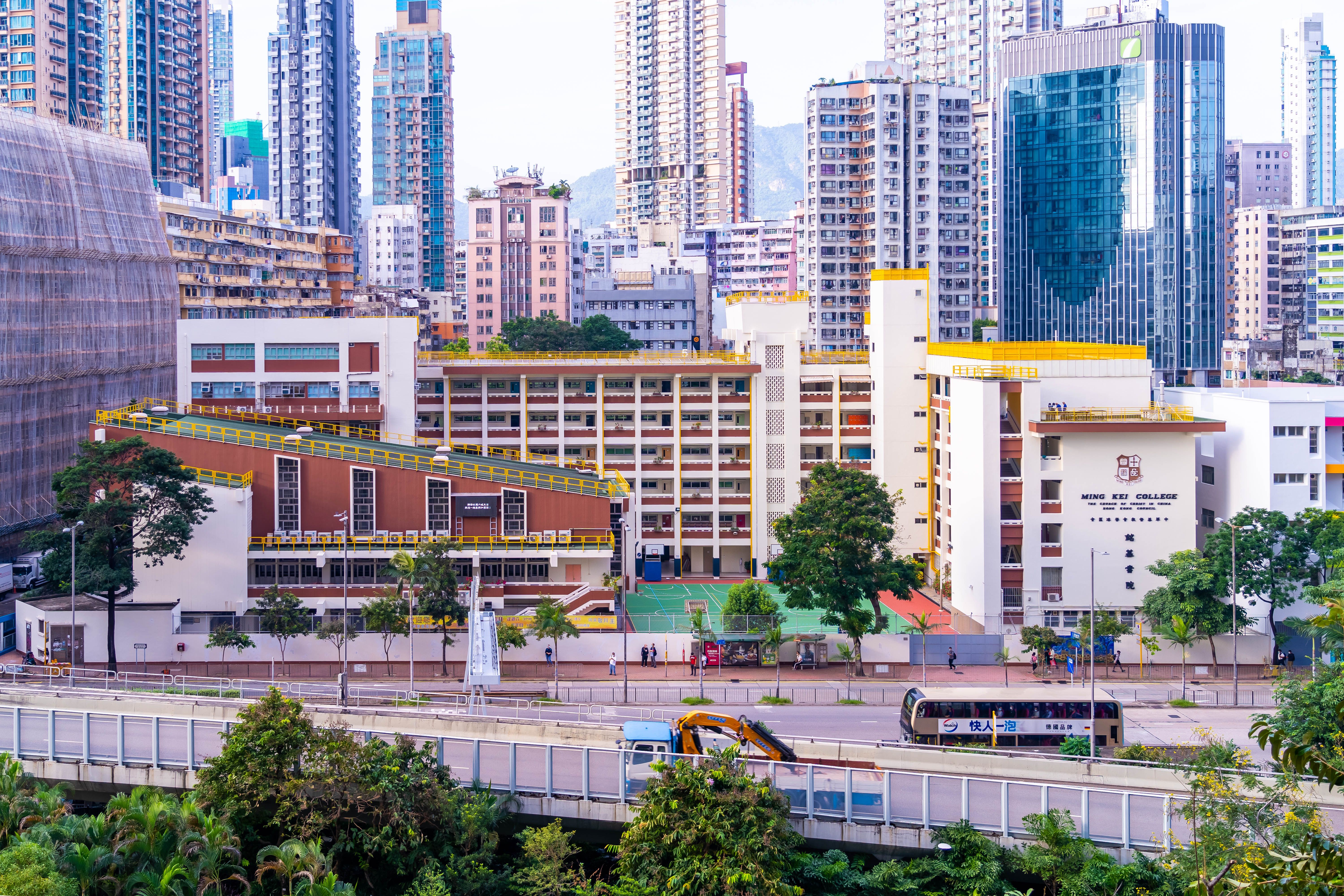
Last revision date: 5/12/2025


