 Secondary School Profiles 2025/2026


 Secondary School Profiles 2025/2026

| Address: | Cheung Wah Estate Fanling | |||
| Phone: | 26697455 | Email: | lksss@tungwah.org.hk | |
| Fax: | 26699631 | Website: | https://www.twghlkss.edu.hk | |
School Mission
We provide all-round education to our students. They are trained to be self disciplined and their potentials are fully developed to worthy causes. Teachers' professionalism is strengthened for providing high quality educational services and nurturing exceptional talents for our society.
 School Information
 | District | : | North |
| Other District(s) | : | |
| Supervisor / Chairman of School Management Committee | : | Mr. Leung Ting Yu |
| Principal (with Qualifications / Experiences) | : | Ms. Au Man So (B.Sc, PGDE, P. Dip in Guidance and Counselling & M.Ed. (CUHK) ) |
| School Type | : | Aided |
| Student Gender | : | Co-ed |
| Area Occupied by the School | : | About 7000 Sq. M |
| Name of Sponsoring Body | : | Tung Wah Group of Hospitals |
| Incorporated Management Committee | : | Established |
| Percentage of School Supervisor and Managers / Chairperson and Members of School Management Committee (SMC) of Government Schools Fulfilling the Training Targets | : | Not Applicable |
| Religion | : | Not Applicable |
| Year of Commencement of Operation | : | 1982 |
| School Motto | : | Diligence, Frugality, Loyalty and Faithfulness |
| Parent-Teacher Association | : | Yes |
| Student Union / Association | : | Yes |
| Past Students’ Association / School Alumni Association | : | Yes |
| 4Rs Mental Health Charter | : | Yes |
| Whole School Health Programme | : | Action School |
 Chargeable Fees (2025/2026)
| School Fee ($) | Tong Fai ($) | ||
| S1 | - | - | |
| S2 | - | - | |
| S3 | - | - | |
| S4 | - | $340 | |
| S5 | - | $340 | |
| S6 | - | $340 | |
| Parent-Teacher Association Fee (Annual) ($) | : $50 | ||
| Student Union / Association Fee ($) | : $14 | ||
| Approved Charges for Non-standard Items (Annual)($) | : - | ||
| Other Charges / Fees ($) | : - | ||
 School Facilities
 | Number of Classroom(s) | : | 30 |
| School Facilities | : | Our school has installed enhanced Wifi-900 infrastructure. All rooms on the school premises are air-conditioned and equipped with I.T. facilities including computers and smart interactive electronic whiteboards to enhance I.T. teaching and learning in our college. Other special facilities include a computer-assisted learning centre, a lecture theatre, a gymnasium, a self-learning centre, a student activity room and a greenhouse with water cooling systems. Our school's geography room has also installed an immersive VR virtual reality application system, providing students with a learning experience that more closely approximates real-world environments. |
| Facility(ies) for Supporting Students with Special Educational Needs | : | Ramp, Accessible lift and Accessible toilet. |
 Teaching Staff Information (Including School Head) in the 2025/2026 School Year
 | Number of Teaching Posts in the Approved Establishment | : | 67 |
| Total Number of Teachers in the School | : | 71 |
| Qualifications and Professional Training | : | Percentage of Teaching Staff (%) |
| Had Received Teacher Training | : | 90% |
| Bachelor Degree | : | 100% |
| Master / Doctorate Degree or above | : | 49% |
| Special Education Training | : | 59% |
| Years of Experience | : | Percentage of Teaching Staff (%) |
| 0-4 Years | : | 30% |
| 5-9 Years | : | 18% |
| 10 Years or above | : | 52% |
 2025/2026 Class Structure
 | Number of Classes | ||
| S1 | : | 5 |
| S2 | : | 5 |
| S3 | : | 5 |
| S4 | : | 5 |
| S5 | : | 5 |
| S6 | : | 5 |
 Subjects Offered
 | Subjects Offered in the 2025/2026 School Year | : | S.1 - S.3 |
| Chinese as the Medium of Instruction | : | Chinese Language, Chinese History, History, Citizenship Economics and Society, Music, Physical Education, Visual Arts, Moral and Civic Education, Putonghua. |
| English as the Medium of Instruction | : | English Language, Language across the Curriculum, Mathematics, Geography, Science (S.1, S.2), Science (Physics, Chemistry, Biology) (S.3), Computer Literacy, Home Economics, Design and Technology. |
| Adopt a Different Medium of Instruction by Class or by Group / School-based Curriculum | : | - |
| Subjects Offered in the 2025/2026 School Year | : | S.4 - S.6 |
| Chinese as the Medium of Instruction | : | Compulsory Subjects: Chinese Language, Citizenship and Social Development Elective Subjects: Chinese History, History, Tourism and Hospitality Studies, Visual Arts Others: Integrated Arts Education (S.4, S.5), Physical Education, Moral and Civic Education |
| English as the Medium of Instruction | : | Compulsory Subjects: English Language, Mathematics Elective Subjects: Business, Accounting and Financial Studies, Economics, Geography, Biology, Chemistry, Physics, Information and Communication Technology, Mathematics Extended Part Module 1 (Calculus and Statistics), Mathematics Extended Part Module 2 (Algebra and Calculus), Music Others: STEAM (S.4, S.5) |
| Adopt a Different Medium of Instruction by Class or by Group / School-based Curriculum | : | Japanese |
| Subjects to be Offered in the 2026/2027 School Year | : | S.1 - S.3 |
| Chinese as the Medium of Instruction | : | Chinese Language, Chinese History, History, Citizenship, Economics and Society, Music, Physical Education, Visual Arts, Moral and Civic Education, Putonghua. |
| English as the Medium of Instruction | : | English Language, Language across the Curriculum, Mathematics, Geography, Science (S.1, S.2), Science (Physics, Chemistry, Biology) (S.3), Computer Literacy, Home Economics, Design and Technology. |
| Adopt a Different Medium of Instruction by Class or by Group / School-based Curriculum | : | - |
| Subjects to be Offered in the 2026/2027 School Year | : | S.4 - S.6 |
| Chinese as the Medium of Instruction | : | Compulsory Subjects: Chinese Language, Citizenship and Social Development Elective Subjects: Chinese History, History, Tourism & Hospitality Studies, Visual Arts Others: Integrated Arts Education (S.4, S.5), Physical Education, Moral and Civic Education |
| English as the Medium of Instruction | : | Compulsory Subjects: English Language, Mathematics Elective Subjects: Business, Accounting and Financial Studies, Economics, Geography, Biology, Chemistry, Physics, Information and Communication Technology, Mathematics Extended Part 1 (Calculus and Statistics), Mathematics Extended Part 2 (Algebra and Calculus), Music Others: STEAM (S.4, S.5) |
| Adopt a Different Medium of Instruction by Class or by Group / School-based Curriculum | : | Japanese |
 Secondary One Admission, Orientation Activities & Healthy School Life
 | Secondary One Admission | : | Our school will accept discretionary places. Our school will participate in the Secondary School Places Allocation System through central allocation stage (Applicable for admission to S.1 in September 2026 ).Admission criteria and weightings for S.1 discretionary places: Academic Results (from the primary schools and also the Rank Order List provided by EDB): 50%; Interview Performance: 35%; Extra-curricular activities: 15%. |
| Orientation Activities and Healthy Life | : | 1) Orientation Activities: The English Enhancement course is held in August. Orientation Day and Orientation Camp for new students and parents are held in late August. 2) Lunchtime policy: All students from S.1 to S.3 are required to stay for lunch, and a nutritious balanced lunch is provided by our food vendor. 3) Promoting Exercise Habits: The school is equipped with a gymnasium, encouraging students to foster physical well-being. Moreover, an inter-class long-distance running competition is held annually, aiming to facilitate the development of exercise habits among students. |
 School Characteristics
 | School Management | ||
| (1) School's Major Concerns | : | We love We teach We discipline We treasure individual differences We nurture multiple intelligence |
| (2) School Management Organisation | : | The school has established the School Administration Board, Academic Development Board, and Pastoral Care Board, each responsible for various school affairs. At the same time, committees with different functions are established to provide balanced and whole-person education. |
| (3) Incorporated Management Committee / School Management Committee / Management Committee | : | Adopting School-based Management and establishing IMC to involve representatives from Tung Wah Group of Hospitals, parents, teachers and alumni in formulating school policies. |
| (4) School Green Policy | : | The Moral, Civic and National Education Committee, other committees and subject panels integrate environmental issues into their programme plans. Various activities are organised to instil green concepts into our students. |
| Learning and Teaching Plan | ||
| (1) Whole-school Language Policy | : | Developing students’ biliterate and trilingual abilities has been one of our major concerns for years. To this end, we have been implementing a range of measures and strategies including: 1. Introducing school-based English curricula, including Language across the Curriculum to junior forms in order to maximize students’ exposure to English and their opportunities to learn the language; 2. Participating in the Chinese Language SEED Project of the EDB with eight of our Chinese teachers being seconded to the EDB to promote curriculum reform, thus enabling our teachers to keep abreast of the trends in curriculum development; and 3. Enhancing students' Putonghua proficiency through Putonghua lessons and other learning activities. |
| (2) Learning and Teaching Strategies | : | 1. We provide formal curriculum education to ensure that students achieve distinguished results in personal learning and public examinations. 2. We endeavour to build up an environment conducive to learning in English through a variety of activities, including English Speaking Day, English Week, etc. 3. We actively participate in pilot programmes for various subjects, such as Chinese, English, Mathematics, and Information Technology Education. We also arrange for our outstanding teachers to be seconded to the EDB to assist in promoting curriculum development across Hong Kong. 4. To suit the needs of students, our teachers design school-based curricula, such as Chinese Language, STEAM and Integrated Arts Education. 5. We introduce new pedagogies, such as collaborative learning, drama in education, and cross-curricular project assessment. We also arrange co-planning periods for teachers and encourage them to participate in peer observation and lesson study to enhance teaching effectiveness. 6. We implement the "Bring Your Own Device (BYOD) Programme", allowing students to enhance the effectiveness of learning and teaching through self-directed learning and interactive learning modes. 7. We strengthen the training of students' thinking and self-learning abilities, establish reflective learning habits, and adapt to the needs of the times. 8. We provide students with numerous opportunities for overseas learning, allowing them to step out of the classroom and cultivate a global vision. |
| (3) School-based Curriculum | : | 1. Electives: 3X. Our school offers 15 elective subjects. Students can choose to study according to their abilities and interests. 2. Curriculum highlights: Language across the Curriculum (S.1 to S.3), Computer Literacy (S.1 to S.3), Design & Technology (S.1 to S.3), STEAM Education (S.4 to S.5), Integrated Arts Education (S.4 to S.5), Moral & Civic Education (School-based Moral Education and S.1 to S.3 Tung Wah Group of Hospitals Moral Education Curriculum are implemented). |
| (4) Major Renewed Emphases in the School Curriculum | : | 1. Language across the Curriculum: We apply the learning experiences and knowledge from English lessons to real-life situations and other subjects, helping students overcome learning difficulties and use and consolidate reading skills and strategies across various fields of study. 2. STEAM Education: We incorporate STEAM elements into all levels of our curriculum, enhancing students' critical thinking, collaboration, and problem-solving abilities, thus preparing them for future challenges. 3. Moral and Civic Education: Moral Education lessons and different training programmes are arranged for each year level to help students establish their goals and attitudes toward their studies and lives. Through school policies on social services, students are encouraged to participate in voluntary work, which helps to cultivate their civic-mindedness. 4. Interdisciplinary project-based learning: We design interdisciplinary learning activities that integrate academics and social-emotional learning. By utilising design thinking and fostering a collaborative learning environment, we aim to develop students' growth mindset and essential 21st-century soft skills. |
| (5) Life Planning Education | : | Our school has established the "My Way" career planning school-based curriculum for students, enabling them to better understand their own interests, abilities, and orientations, thereby encouraging them to make well-informed choices for their future studies and careers. Every year, the school organises a "Student Performance Review Day", where form teachers arrange individual interviews with students to help them reflect on their own performance (including academics, emotional needs, daily routines, etc.), while also paying attention to their emotional responses. Another highlight of our senior form career guidance activities is the individual and group counselling sessions. To help students develop a concrete plan for their further studies, our teachers have all participated in advising students on their career planning and JUPAS programme choices. In addition, we provide workplace experience opportunities and organise exchange tours to Mainland for further-education pathways. |
| Student Support | ||
| (1) Whole School Approach to Catering for Learner Diversity | : | Arranging small class teaching, English and Mathematics classes for elite and academically weaker students to cater for learning diversity. The Junior Elite Programme, which includes diverse activities, is established to enhance students' enthusiasm for learning, thus fostering high achievers across a range of subjects. |
| (2) Whole School Approach to Integrated Education | : | Our school has set up the Student Support Team (SST) for students with special education needs (SEN). Members of the team consist of the Principal, Vice Principal, Counselling Mistress, Discipline Mistress, SEN coordinator, educational psychologist, speech therapist, school social workers, class teachers, teaching assistants, etc. By adopting the Whole School Approach, we hope to cater to individual differences through optimizing teaching and learning strategies, providing evaluation, referral, counselling, and training services. Regarding the allocation of resources, we have holistically and flexibly utilized learning support grants together with other school's resources to provide the students in need with training on development of social skills, emotional control, executive skills, speech and language group therapy, after-school tutorial classes, homework and test and examination accommodation, and career guidance. Besides, we have not only closely communicated with parents of children with special educational needs but also encouraged parents to attend seminars so as to help them understand the learning characteristics of students with SEN and to cooperate with the measures taken by the school. To enhance teachers' professional capacity in catering to SEN students, teachers are encouraged to attend EDB's teacher professional development programmes on special education. |
| (3) Education Support for Non-Chinese Speaking (NCS) Students | : | Our school provides additional support for NCS students to facilitate their learning of Chinese: providing after-school support programmes in learning Chinese; and organising activities to create an inclusive learning environment in the school. |
| (4) Measures to Provide Adaptation for Learning and Assessment | : | Students at all levels must meet specific requirements to be promoted. Related requirements are listed on the student handbooks for parents’ reference. A continuous assessment scheme is implemented for S.1 to S.5 students to have a holistic assessment of their learning performance. This system assigns continuous assessment scores based on student's classroom performance, the quality of homework submitted, homework records, and assessments of designated assignments, thereby changing the traditional exam-based assessment approach. |
| Home-School Co-operation and School Ethos | ||
| (1) Home-School Co-operation | : | Having been established for more than a decade, the Parent Teacher Association is a channel of communication between parents and the school. The association is involved in formulating school policies and organizes a range of parent education activities involving both parents and their children. PTA is an intimate working partner of the school. |
| (2) School Ethos | : | Our school upholds a caring culture with firm discipline. Teachers take the initiative to support students, enabling S.1 newcomers to adapt quickly to school life. In addition to having social workers and an educational psychologist, we adopt a whole-school approach to discipline and guidance, implementing a four-house system and assigning two Form Teachers in each class to provide comprehensive support for students’ holistic development. |
| Future Development | ||
| (1) School Development Plan | : | 1. To strengthen English training so as to equip the students with the abilities to switch to EMI learning; 2. To promote Arts Education through various activities; 3. To promote STEAM education, developing students' generic skills through interdisciplinary learning. 4. To cultivate a positive learning attitude and promote active learning among students; 5. To nurture the qualities and sense of belonging of students, cultivate their positive values and develop their leadership traits through character building; 6. To promote positive education in collaboration with JC LevelMind, so as to enhance students’ well-being and their mental and physical health. |
| (2) Teacher Professional Training and Development | : | To encourage teachers to learn from their peers and to enhance learning and teaching effectiveness, we have been promoting peer lesson observations and co-planning lessons. The Staff Development Committee has also been established to coordinate teacher development activities, taking into account the needs of the school and its teachers. Since the 2024/25 school year, our school has also been participating in the "Quality School Improvement Project" (QSIP) organised by the Chinese University of Hong Kong, aiming to enhance teachers' assessment literacy and improve the effectiveness of learning and teaching. With support from the Bei Shan Tong Foundation, we have also actively promoted teacher training related to positive education in recent years. |
| Life-wide Learning (Including Five Essential Learning Experiences to be Provided through Key Learning Areas, Extra-curricular Activities, Co-curricular Activities, etc.) | : | There are over 40 extra-curricular activity groups, which can be divided into the categories of academic, service, interest, sports and arts. Students can choose, according to their preference, to join various extra-curricular activities organized by these clubs and societies. Every S.1 to S.3 student must participate in the "One Art for Life ". Students who have continuously participated in a particular extra-curricular activity will be awarded with certificates (from Bronze prize to Gold prize) and merit points (maximum two minor merits). |
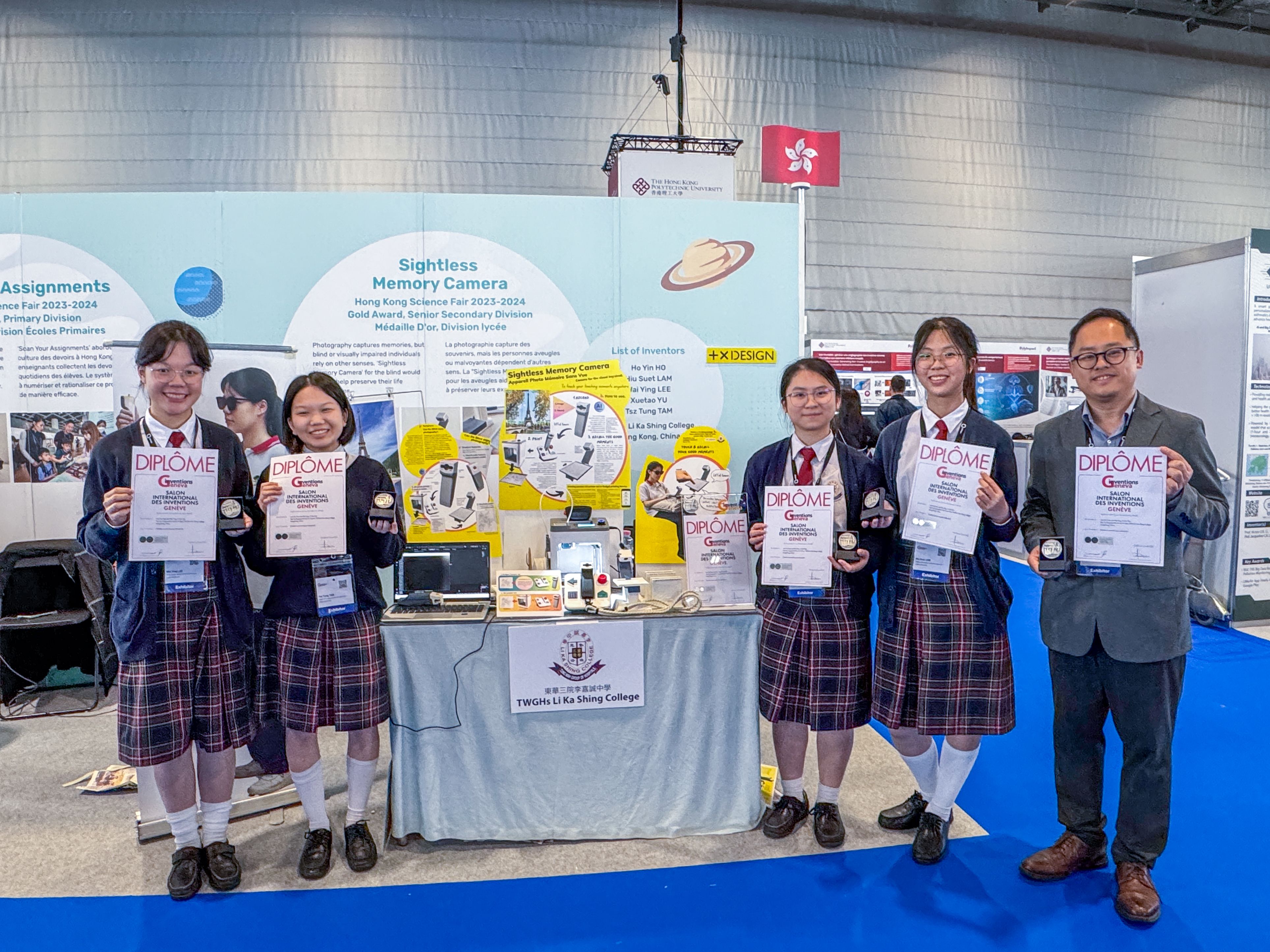
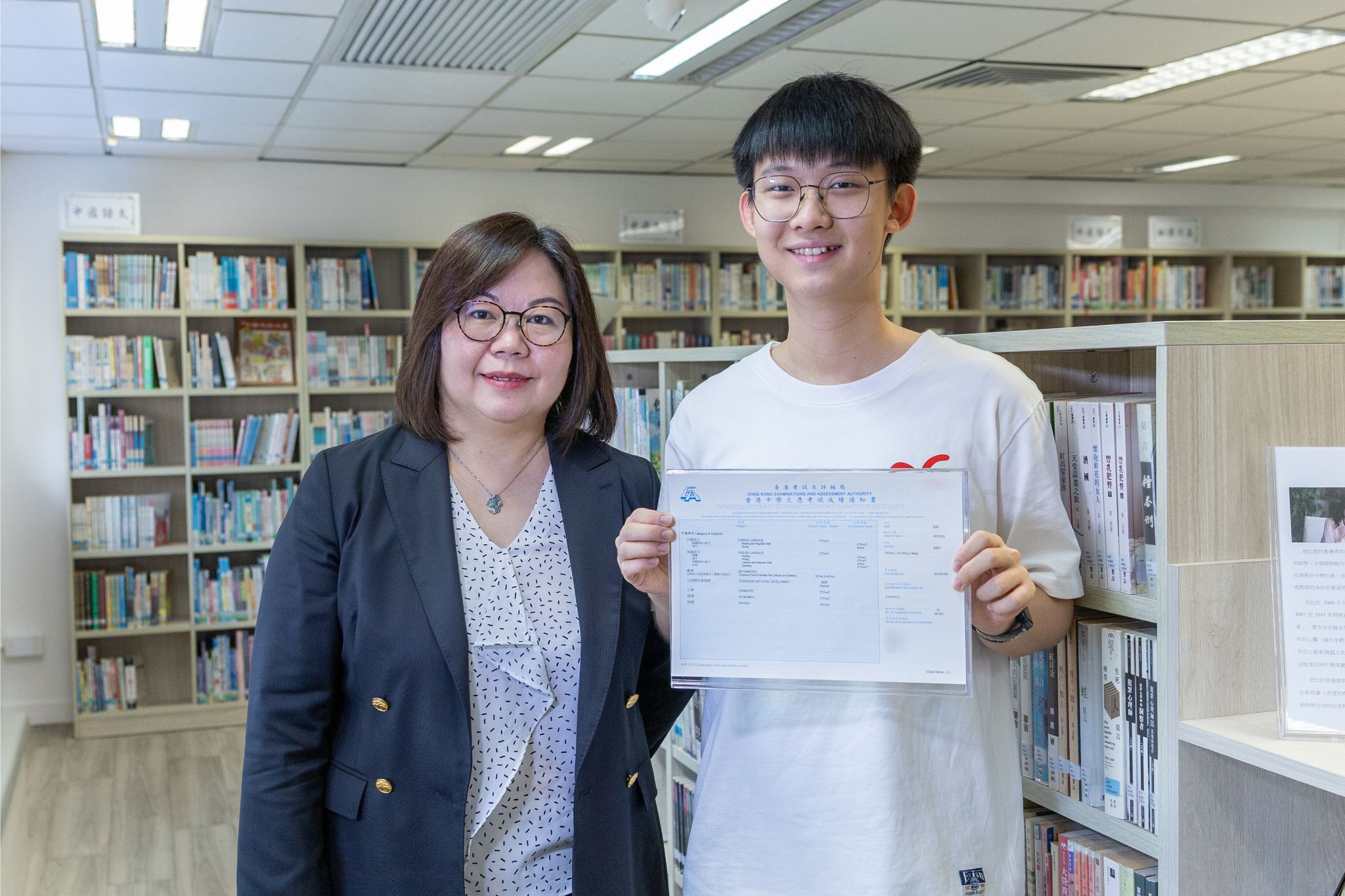
| Others | : | 1. Quality Assessment Management Accreditation Scheme (QAMAS) – Accredited School Being accredited under the QAMAS, our school is recognized for its capacity in providing fair, reliable and valid examinations and assessment for the students. It also shows that we are equipped with a high standard of examination and assessment management. 2. Students have had outstanding performance in public examinations, arts, sports, gardening and social service. For details, please refer to the school homepage. |
| Direct Public Transportation to School | : | Train: Adjacent to Fanling Station (around 10-minute walking distance) Others: Numerous bus and minibus routes arriving directly to our school |
| Remarks | : | Thanks to the provision of an additional Native-speaking English Teacher by Tung Wah, we are able to implement small class teaching in English subject in junior forms. Through the lower teacher-to-student ratio, we hope to enhance students’ learning effectiveness. |
 School Map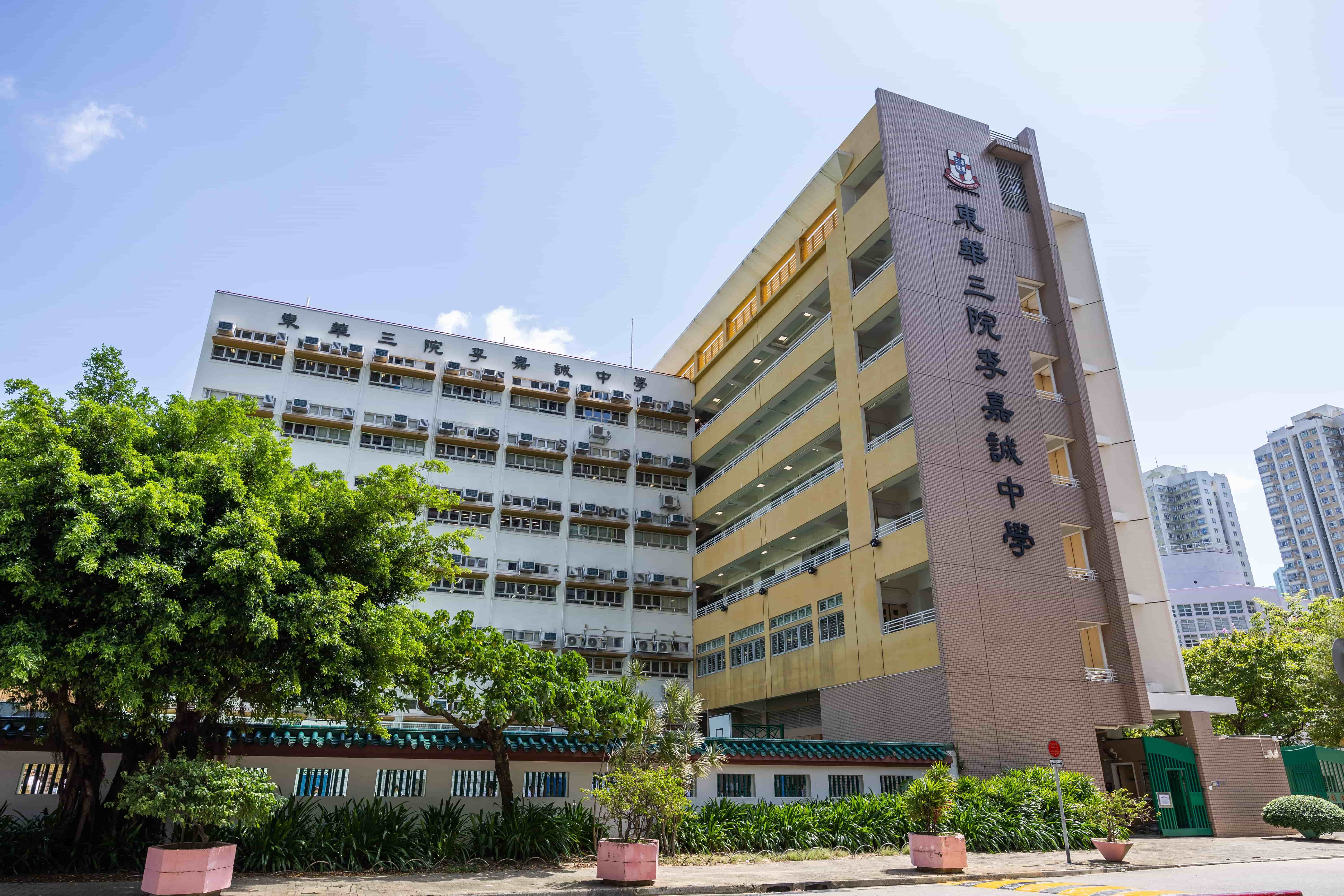
Last revision date: 24/04/2026


