 Secondary School Profiles 2025/2026


 Secondary School Profiles 2025/2026
| Address: | 8,Yat Tung Street, Yat Tung (2) Estate, Tung Chung, Lantau Island, N.T. | |||
| Phone: | 21210884 | Email: | email@tccs.edu.hk | |
| Fax: | 21094803 | Website: | http://www.tccs.edu.hk | |
School Mission
The school has adopted the through-train education mode advocated by Education Bureau in the ‘Education Blueprint for the 21st Century’. The through-train curriculum ensures continuity and consistency across different learning stages. With the belief of Catholic Education, we aim to cultivate students' moral and intellectual development, enabling them to learn and to care about their growth, and to achieve successful learning experience.
 School Information
 | District | : | Islands |
| Other District(s) | : | |
| Supervisor / Chairman of School Management Committee | : | Ms Yeung Mei Hay, May |
| Principal (with Qualifications / Experiences) | : | Mr Lam Chi Kong (B.Sc. (Hons.) (HKU), P.C.Ed. (Distinction) (HKU), Prof. Dip. in Health Promotion & Health Ed. (CUHK), M.Ed. (Dean's list) (CUHK)) |
| School Type | : | Aided |
| Student Gender | : | Co-ed |
| Area Occupied by the School | : | About 12000 Sq. M |
| Name of Sponsoring Body | : | The Catholic Diocese of Hong Kong |
| Incorporated Management Committee | : | Established |
| Percentage of School Supervisor and Managers / Chairperson and Members of School Management Committee (SMC) of Government Schools Fulfilling the Training Targets | : | 68% |
| Religion | : | Catholicism |
| Year of Commencement of Operation | : | 2000 |
| School Motto | : | Strive for personal best and spread love |
| Parent-Teacher Association | : | Yes |
| Student Union / Association | : | Yes |
| Past Students’ Association / School Alumni Association | : | Yes |
| 4Rs Mental Health Charter | : | Yes |
| Whole School Health Programme | : | Pledged School |
 Chargeable Fees (2025/2026)
| School Fee ($) | Tong Fai ($) | ||
| S1 | - | - | |
| S2 | - | - | |
| S3 | - | - | |
| S4 | - | $340 | |
| S5 | - | $340 | |
| S6 | - | $340 | |
| Parent-Teacher Association Fee (Annual) ($) | : $40 | ||
| Student Union / Association Fee ($) | : - | ||
| Approved Charges for Non-standard Items (Annual)($) | : $450 | ||
| Other Charges / Fees ($) | : - | ||
 School Facilities
 | Number of Classroom(s) | : | 32 |
| School Facilities | : | Our 'millennium' campus consists of 62 classrooms, 2 school halls, 6 playgrounds, 17 special rooms, 2 libraries, a Student Activity Centre, an English Learning Centre, a Fitness Centre, a Speech Therapy Room, a Multimedia Visual Arts Room and an IT & STEM Makerspace, Campus TV. [To support e-learning, the school is also equipped with high-speed fibre broadband internet connection.] |
| Facility(ies) for Supporting Students with Special Educational Needs | : | Ramp, Accessible lift and Accessible toilet. |
 Teaching Staff Information (Including School Head) in the 2025/2026 School Year
 | Number of Teaching Posts in the Approved Establishment | : | 73 |
| Total Number of Teachers in the School | : | 82 |
| Qualifications and Professional Training | : | Percentage of Teaching Staff (%) |
| Had Received Teacher Training | : | 85% |
| Bachelor Degree | : | 100% |
| Master / Doctorate Degree or above | : | 42% |
| Special Education Training | : | 57% |
| Years of Experience | : | Percentage of Teaching Staff (%) |
| 0-4 Years | : | 28% |
| 5-9 Years | : | 13% |
| 10 Years or above | : | 59% |
 2025/2026 Class Structure
 | Number of Classes | ||
| S1 | : | 5 |
| S2 | : | 5 |
| S3 | : | 5 |
| S4 | : | 5 |
| S5 | : | 5 |
| S6 | : | 5 |
 Subjects Offered
 | Subjects Offered in the 2025/2026 School Year | : | S.1 - S.3 |
| Chinese as the Medium of Instruction | : | S.1-S.2: Chinese Language, Putonghua, Chinese History, History*, Geography*, Life Education, STEAM*, Ethics and Religious Studies*, Physical Education*, Visual Arts*, Music*, Home Economics*, Citizenship, Economics and Society*, Information Technology*. S.3: Chinese Language, Putonghua, Chinese History, History*, Geography*, Life Education, Ethics and Religious Studies*, Physical Education*, Visual Arts*, Music*, Home Economics*, Information Technology* |
| English as the Medium of Instruction | : | S1-S3: English Language |
| Adopt a Different Medium of Instruction by Class or by Group / School-based Curriculum | : | S.1-S.2: Mathematics*, Science* S.3: Mathematics*, Science (Physics, Chemistry, Biology)* |
| Subjects Offered in the 2025/2026 School Year | : | S.4 - S.6 |
| Chinese as the Medium of Instruction | : | Compulsory: Chinese Language, Citizenship and Social Development, Physical Education, Ethics and Religious Studies, Life Education. Electives: Chinese History, Geography, History, Economics, Business, Accounting & Financial Studies, Tourism and Hospitality Studies, Information & Communication Technology, Physical Education, Visual Arts, Ethics and Religious Studies |
| English as the Medium of Instruction | : | English Language |
| Adopt a Different Medium of Instruction by Class or by Group / School-based Curriculum | : | Physics, Chemistry, Biology, Mathematics (compulsory), Mathematics (M1) |
| Subjects to be Offered in the 2026/2027 School Year | : | S.1 - S.3 |
| Chinese as the Medium of Instruction | : | S.1-S.2: Chinese Language, Putonghua, Chinese History, History*, Geography*, Life Education, STEAM*, Ethics and Religious Studies*, Physical Education*, Visual Arts*, Music*, Home Economics*, Citizenship, Economics and Society*, Information Technology*. S.3: Chinese Language, Putonghua, Citizenship, Chinese History, History*, Geography*, Life Education, Ethics and Religious Studies*, Physical Education*, Visual Arts*, Music*, Home Economics*, Citizenship, Economics and Society*, Information Technology* |
| English as the Medium of Instruction | : | English Language |
| Adopt a Different Medium of Instruction by Class or by Group / School-based Curriculum | : | S.1-S.2: Mathematics*, Science* S.3: Mathematics*, Science (Physics, Chemistry, Biology)* |
| Subjects to be Offered in the 2026/2027 School Year | : | S.4 - S.6 |
| Chinese as the Medium of Instruction | : | Compulsory: Chinese Language, Citizenship and Social Development, Physical Education, Ethics and Religious Studies, Life Education. Electives: Chinese History, Geography, History, Economics, Business, Accounting & Financial Studies, Tourism and Hospitality Studies, Information & Communication Technology, Physical Education, Visual Arts, Ethics and Religious Studies |
| English as the Medium of Instruction | : | English Language |
| Adopt a Different Medium of Instruction by Class or by Group / School-based Curriculum | : | Physics, Chemistry, Biology, Mathematics (compulsory), Mathematics (M1) |
*Subjects with Extended Learning Activities (ELA) in English
 Secondary One Admission, Orientation Activities & Healthy School Life
 | Secondary One Admission | : | Our school will accept discretionary places. Our school will participate in the Secondary School Places Allocation System through central allocation stage (Applicable for admission to S.1 in September 2026 ). Admission Criteria and Weightings: Academic Achievements: 40%, Conduct: 20%, Extra-curricular activities, services and awards: 10%, Association with our school / Religion: 10%, Performance in Interview: 20%. |
| Orientation Activities and Healthy Life | : | Orientation Activities: 1) Enhance students' sense of teamwork and discipline; 2) To enable students to understand the requirements of the teacher and Secondary 1 learning as soon as possible (e.g. adapting to the group learning mode); 3) Let parents understand their children's learning needs, pay attention to the discipline of students' lives, and expect close cooperation between home and school. Healthy Life: To build a healthy learning environment, we cultivate the awareness of personal health and hygiene, a balanced diet, regular exercise, the prevention of disease, drug safety measures, a safe environment and good mental health. |
 School Characteristics
 | School Management | ||
| (1) School's Major Concerns | : | 1. To enhance students' moral character and learning competence. 2. To actualize the core values of Catholic Education, implement values education and cultivate a healthy lifestyle. |
| (2) School Management Organisation | : | 1. The school is managed by the Catholic Diocese of Hong Kong. The Catholic Education Office, which has been set up by the Catholic Diocese of Hong Kong, provides support to the school. 2. The IMC and the Supervisor of the school are responsible for monitoring the operation of the school. 3. The Principals and heads of departments/committees are members of the School Administration Committee, which plans and reviews school policies, as well as enhancing teaching and learning. 4. Staff Meetings embody the spirit of Synodality, teacher reach compromises and build a collaborative spirit. 5. Through-train Committees are established to enhance continuity and collaboration between the primary and secondary sections. |
| (3) Incorporated Management Committee / School Management Committee / Management Committee | : | Members include Representatives of the School Sponsoring Body, the Principals, Teacher Managers, Parent Managers, an Alumni Manager and Independent Managers. |
| (4) School Green Policy | : | 1. To promote students’ awareness of environmental protection and to encourage them to contribute actively towards creating a better environment. 2. To help students foster a more responsible behaviour towards the environment through activities and programmes such as organic farming, recycling and greening. |
| Learning and Teaching Plan | ||
| (1) Whole-school Language Policy | : | The school strives to enhance students' biliterate and trilingual abilities. We adopt small-class teaching in English lessons and allocate extra resources to language teaching so as to create an English-rich campus. To ensure a continuity in the use of English as the medium of instruction, subjects offered in English in Junior Secondary (JS) are still available in English in Senior Secondary (SS). The school also offers Chinese Language Curriculum for Non-Chinese Speaking Students to prepare non-Chinese speaking students for their further studies. |
| (2) Learning and Teaching Strategies | : | 1. To put emphasis on developing students' generic skills, as well as promoting national education, national security education and values education in response to EDB's 'Learning to Learn 2+: Ongoing Curriculum Renewal'. 2. To promote student-centered learning through group-learning routines and to nurture students to be strong communicators, caring companions and competent learners. 3. To promote self-directed learning through the 'Four Learning Model': reinforcing their habits of doing pre-lesson preparation and note-taking for more solid knowledge construction and consolidation. |
| (3) School-based Curriculum | : | 1. Electives: 2X and 3X. Students choose to study 2 or 3 electives based on their personal interests/abilities. 2. Curriculum highlights: Junior Secondary elite classes allow more capable students to explore the subject matter in a broader and deeper scope. (1) Questioning: to provoke thinking. (2) Collaborative learning: to encourage cooperation and development of problem-solving skills. (3) Thinking and expressing techniques: to promote structured learning as well as deeper and wider thinking. (4) Self-management skills: to promote self-directed learning through engaging students in weekly goal-setting and evaluation exercises, pre-lesson preparation and note-taking. |
| (4) Major Renewed Emphases in the School Curriculum | : | To strengthen Moral, Civic and National Education; To enhance students’ English proficiency; To promote self-directed and student-centered learning ; To broaden students’ horizons and foster students’ ability to build innovative technology products through STEAM education. |
| (5) Life Planning Education | : | The school will provide all students with quality life planning education and career guidance services that aligned with their developmental needs at different stages of growth. Students will be supported in making informed decisions based on their interests, abilities and orientations. They will be assisted in managing and adapting to the transition from school to the workplace. The ultimate goal is to get all students, irrespective of their abilities, orientation and levels of studies to understand their own career and academic aspirations; to develop positive attitudes towards work and learning, to connect/integrate aspirations with whole-person development and life-long learning, and to utilise the acquired knowledge, skills and attitudes whenever necessary. |
| Student Support | ||
| (1) Whole School Approach to Catering for Learner Diversity | : | A Learning Support Committee is in place, implementing plans to cater for students' individual differences. Teaching is done through cooperative learning method to foster students' development of their strengths. Some schemes like a Remedial and Enhancement Scheme, "Individual Education Plans" (IEP), etc. have been set up to facilitate students' whole person development. |
| (2) Whole School Approach to Integrated Education | : | The school adopts whole school participation model, sets up student support groups, and uses the Learning Support Grant to provide students with special educational needs with diversified support, such as speech therapy, literacy training groups and concentration training groups, etc. The school also arranges teachers to enroll in inclusive education courses to enhance the professional competence of teachers in the school. At the same time, the school also provides tiered coursework and examination adjustments for students in need to enhance the learning effectiveness of students with special educational needs. School-based educational psychologists also regularly evaluate students and invite parents to participate to jointly formulate individualized learning plans for students so that parents can master skills of effectively caring for and teaching their children. In addition, the group also flexibly utilizes the Support Grant for Non-Chinese Speaking Students with Special Educational Needs to hire teaching assistants to support class enrollment, produce teaching materials, and assist in the implementation of life planning activities so that non-Chinese speaking students with special educational needs can receive appropriate support. |
| (3) Education Support for Non-Chinese Speaking (NCS) Students | : | Our school provides additional support for NCS students to facilitate their learning of Chinese: providing after-school support programmes in learning Chinese; appointing additional teacher(s)/teaching assistant(s) to support NCS students’ learning of Chinese; arranging intensive Chinese learning and teaching mode(s), e.g. pull-out learning if necessary, split-class/group learning, etc.; developing school-based Chinese Language curriculum and/or adapting learning and teaching materials; and organising activities to create an inclusive learning environment in the school. |
| (4) Measures to Provide Adaptation for Learning and Assessment | : | To reduce the pressure from tests and exams, we emphasise students' continuous effort. Hence, there are Continuous Assessments that focus on students' coursework portfolios, learning attitude and performance in classroom learning, project learning and cross-curricular learning. |
| Home-School Co-operation and School Ethos | ||
| (1) Home-School Co-operation | : | 1. To strengthen the relationship between parents and teachers; 2. To support the integration of schooling and parent education; 3. To assist in cultivating students’ virtues and values; 4. To support the school and to improve the facilities of the school, promoting the quality of teaching; 5. To promote collaboration between parents and the school and to foster home-and-school-as-one spirit. |
| (2) School Ethos | : | Our school's mission originates from Jesus' love. We nurture in our students the Five Core Values of Catholic Education, namely Truth, Life, Family, Justice and Love. Students grow up in a loving environment. We understand and accept students' transgressions while creating a positive and supportive environment for students to cultivate honesty, justice and a culture of appreciating one another. We are dedicated to providing learning opportunities for students to realise their potential and to nurture them as proactive and responsible members of society, the nation and the global community. |
| Future Development | ||
| (1) School Development Plan | : | 1. To strengthen primary-secondary collaboration in adopting the through-train curriculum (English Language, STEAM and the incorporation of the Core Values of Catholic Education in classroom teaching). 2. To enhance the quality of learning and teaching, promote Self-regulated Learning, strengthen pre-lesson preparation and note-taking. 3. To incorporate the core values of Catholic Education in the curriculum and nurture the characteristics of ‘Tung Teens’ while echoing with the priority values and attitudes established by the Education Bureau. |
| (2) Teacher Professional Training and Development | : | Our school organises various seminars, workshops, peer class observation and staff development days and teachers' time to encourage teachers to further their studies. |
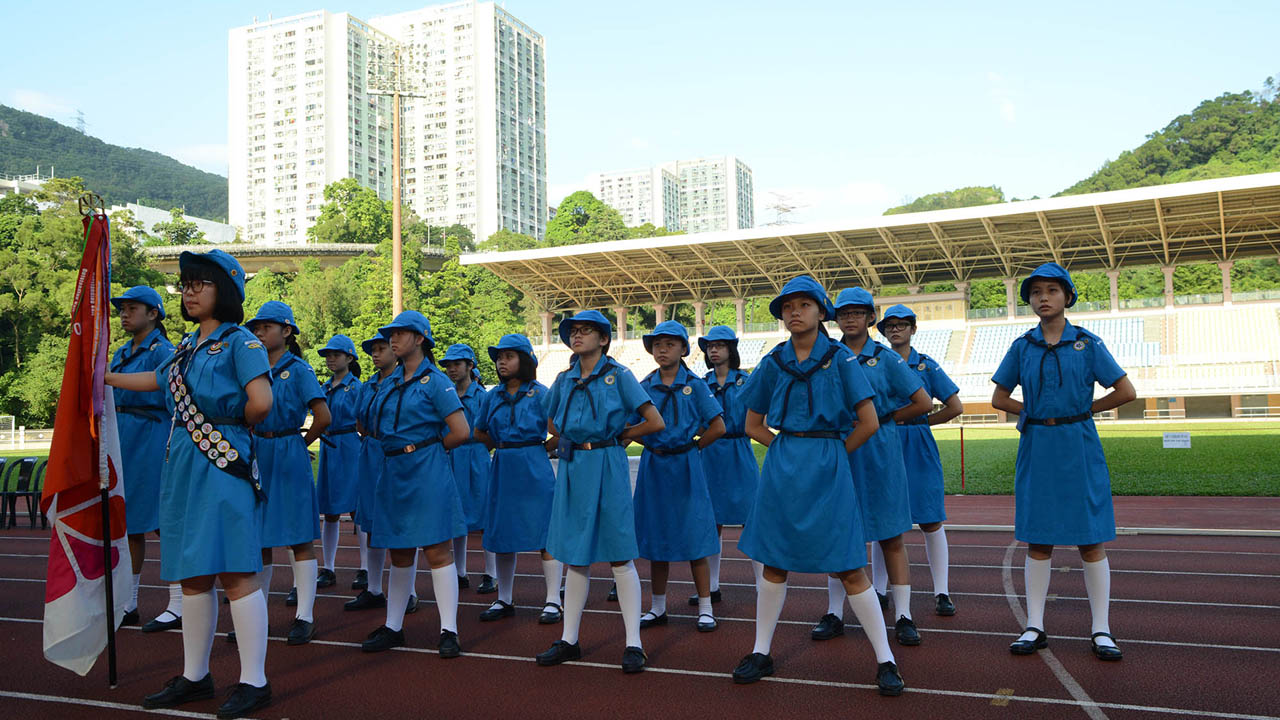
| Life-wide Learning (Including Five Essential Learning Experiences to be Provided through Key Learning Areas, Extra-curricular Activities, Co-curricular Activities, etc.) | : | Student Union Committee, Trust House, Contribute House, Cherish House, Shine House, Art Leader, Morning Assembly Group, Awards for Young People, Boys/Girl Basketball Team, TCCS Cheering Team, Chess Club, Peer Counseling Scheme, Secondary Choir, Community Youth Club, English Guides, Boys Football Team, Boys/Girl Handball Team, Angel Voices, Student Librarian, Social Issues Club, Table Tennis Team, Prefect Team, Science Club, Sweet House, Secondary Volleyball Team, Volunteer Group, Caffe Cuore, NCS Interactive Study Group, Dancing Club, Catechism Class, Swimming Team, The Civil Aid Service Cadet Corps, Catholic Society, Jesus' Club, Board Game Group, Environmental Group, Community Guided Tour, Life Sciences Club, Life Planning Ambassador, Athletic & Indoor Rowing Team, St. John Ambulance Brigade Youth Command, TCCS Photography Team, Fitness Club, Astronomy Club, Mathematics Club, Handbell Choir, TCCS Chamber Music, Girl Guides, Scout, Hong Kong Flag guards, A Cappella Ensemble, Red Cross Youth Unit, STEAM Team. |
| Others | : | Our school aims to cultivate a holistic development of students. The Holistic Award Scheme and Whole Person Education Award and Financial Assistance Scheme have been introduced to reward students' good efforts and develop their potentialities. To promote students' positive character building, we help cultivate our students’ sense of responsibility and develop their capability through using their handbooks to set up and evaluate strategic planning. To build a harmonious campus, we emphasise the culture of appreciation. The English Learning Centre, equipped with extensive learning materials of different levels and resources such as audio-visual equipment, movies, books and magazines, has been set up to cater for the diverse needs of both primary and secondary students. We offer EMI classes and emphasise the extended opportunities of fostering students’ English competence. Through various workshops, in addition to a range of competitions such as Drama, Writing, and Debating, students will be able to build up their English literacy better under the fine-tuned MOI policy. Our school actively promotes STEAM education, and students have achieved remarkable results in both local and international competitions. Our students perform outstandingly in sports competitions, winning the top 3 positions in Athletics, Cross country, Volleyball, Football, Handball, Rowing and Swimming in Hong Kong Inter-Secondary Schools Sports Competitions. |
| Direct Public Transportation to School | : | Bus 37, 38 and S64: a loop route, from Tung Chung MTR station to the school. Bus E31 and E21A: directly to the school from New Territories and Kowloon. |
| Remarks | : | Applied learning (mode 1) and Vocational English (mode 2) in S5 and S6. Our school adopts small-class teaching. The five classes in each of S.1, S.2 and S.3 are split into six classes. |
 School Map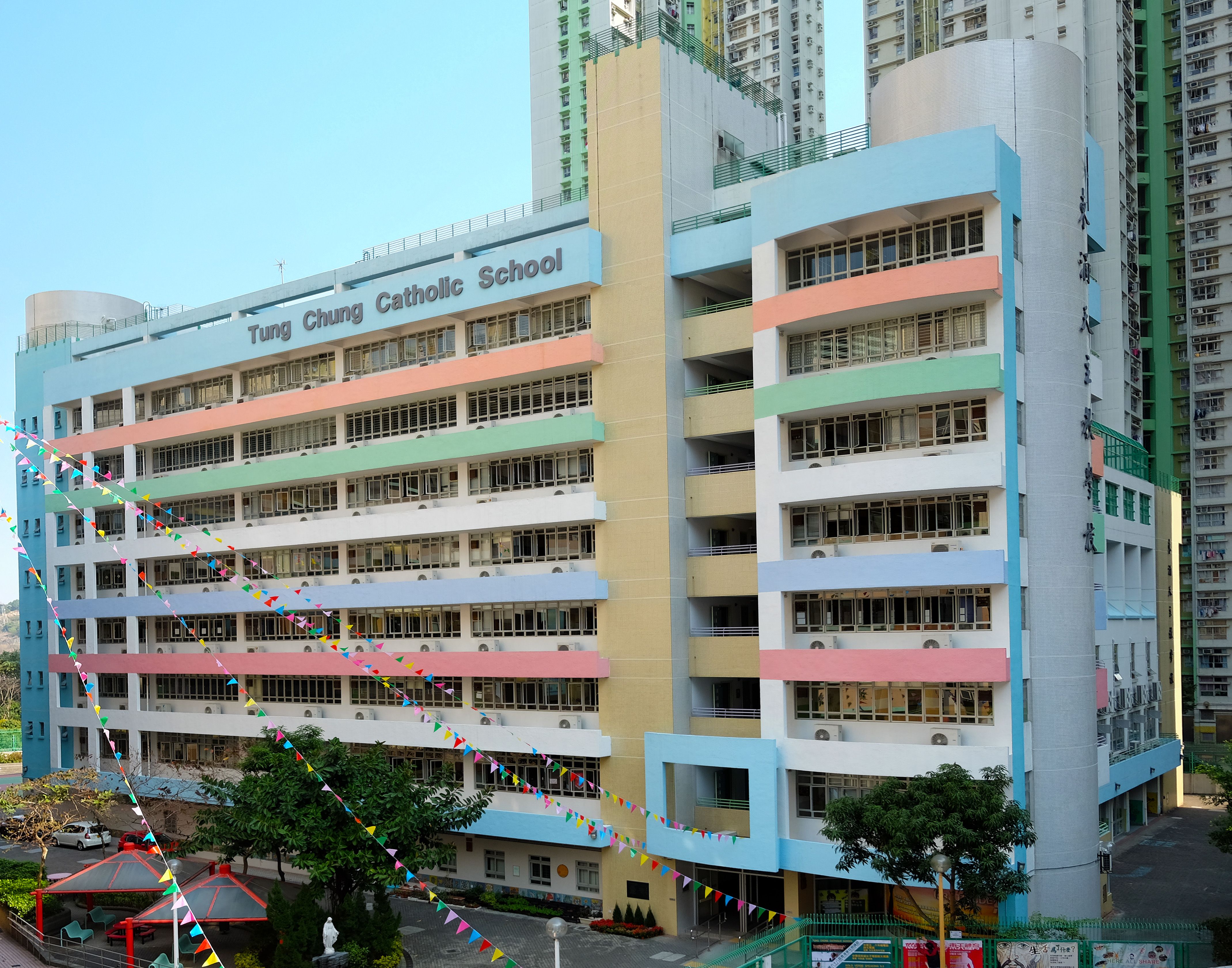
Last revision date: 5/12/2025


